

Photograph by Martha Williams
I started fantasizing about spring in January, stuck at home on an icy Sunday. Weather experts had urged folks to stay inside and off the roads. My power was on, thankfully, but I didn’t have running water due to a nearby main break; some neighbors and I had just endured the pelting frozen rain to drop off drinking water to others in the community. A self-proclaimed “fall and winter girlie,” I had reached my cold-weather limit. I was ready for spring. If my cheeks had to be chapped, I wanted it to be because of the sun. If my toes were chilled, it needed to be from wearing sandals in air-conditioning.
And if my car was covered in a thick substance, I wanted it to be pollen—the Devil’s other, other dandruff.
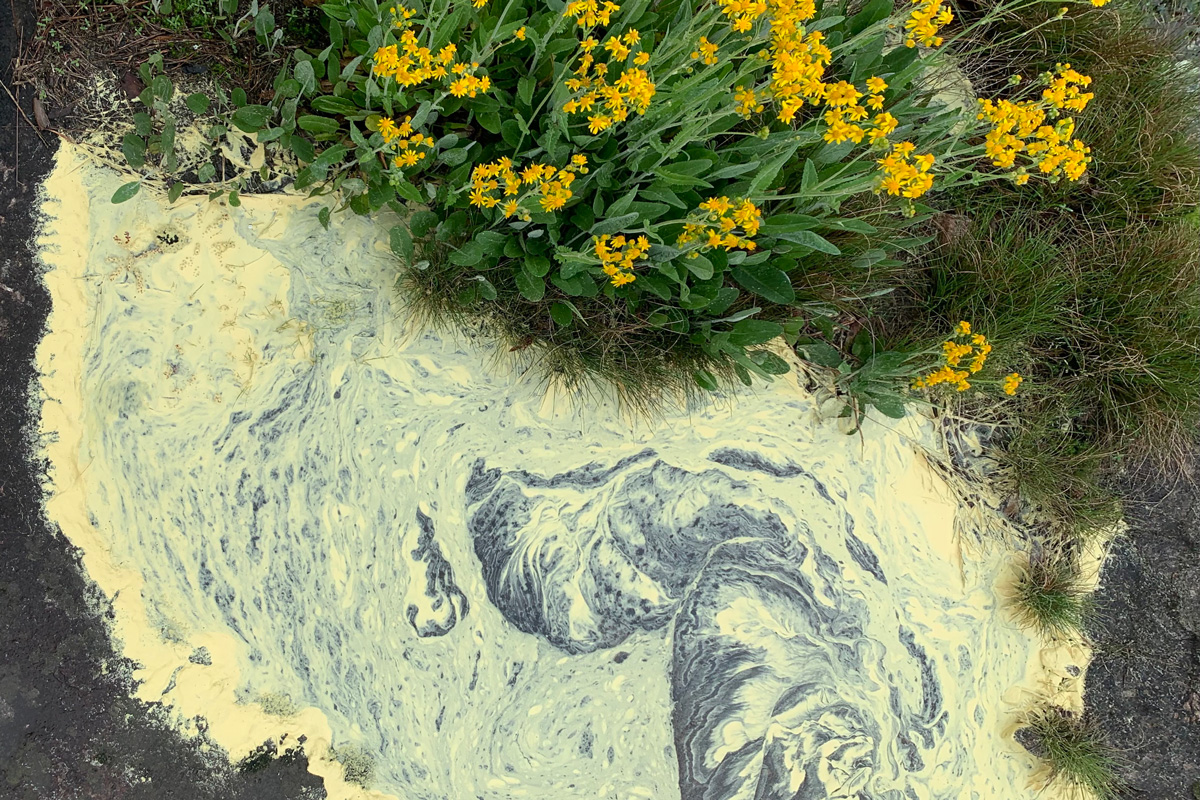
Now that it’s April, I am thrilled about our annual spring yellowing, even if it conjures allergies and practically mandates car washes. The stuff that coats our outdoor furniture and floats on our lakes and pools is nature’s way of reminding us that Atlanta is the city in the forest. It’s the small—albeit annoying—price we pay for our verdant tree canopy, vibrant azaleas, and temperate spring. When the pollen arrives, it’s a signal that Atlanta is bursting back to life.
The majority of our pollen comes, unsurprisingly, from our trees. (The rest is released by grasses and weeds. Mold spores also spike this time of year.) Birch, mulberry, pine, oak, and sweet gum are our biggest culprits. And, unfortunately, it’s getting worse: As climate change accelerates warmer temperatures, pollen spikes along with it. For the past 35 years, the allergy practice Atlanta Allergy & Asthma has posted a daily record of the city’s pollen count, which is measured by the number of pollen grains in a cubic meter of air. These days, its tracker regularly exceeds 500, which is considered “extremely high” for pollen activity. Last spring, on March 29, it recorded a whopping count of 14,801.
Despite these eye-watering numbers, we should consider ourselves lucky. According to the Asthma and Allergy Foundation of America, Atlanta doesn’t even crack the top 10 in the list of worst metro areas for seasonal allergies in the continental United States. Factoring in various pollen and allergy scores, AAFA placed Atlanta at number 40.
Like many Atlantans, I’m no stranger to seasonal allergies. My medication regimen begins in late February—sometimes earlier if we get an unseasonably warm snap after days of frigid temperatures. It’s become part of my spring ritual, as routine as my morning coffee.
Personally, I like to think of antihistamines as my admission ticket to everything I love about Atlanta spring. I’ll gladly pop a Zyrtec if it means I can sip a crisp rosé on the patio at Treehouse Restaurant & Pub, read a book on a swing overlooking the reservoir at Morgan Falls Overlook Park in Sandy Springs, or take in the spring blooms on the Atlanta History Center’s grounds. I’ll deal with the sniffles if it means I can shop at my favorite farmers markets as they open after their winter slumber. I’ll hose off my outdoor furniture so I can tend to my potted plants in my small backyard, meticulously training the ivy and jasmine to crawl in a diamond pattern across the fence.
These are the rituals that I look forward to, the ones that make spring worth the pollen-coated sacrifice. These small pleasures remind me why I love this city, this season, and—yes—this pollen.
Bring on the yellow dust; I’m ready.
This article appears in our April 2026 issue.