


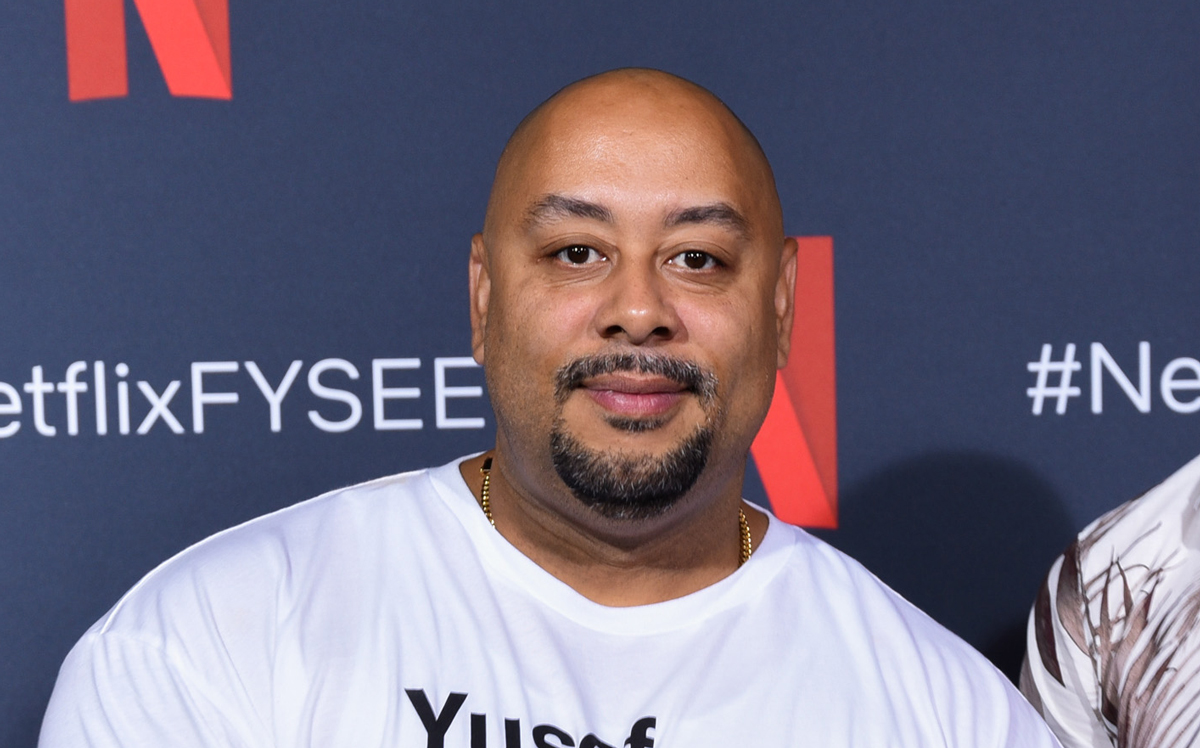
Photograph by Presley Ann/Getty Images
Raymond Santana’s first book, Pushing Hope, chronicles his experience as one of the “Central Park Five,” five Black and Latino teenagers who were wrongly convicted of a 1989 assault and rape of a woman in Manhattan’s Central Park. Santana, who was 14 at the time, spent five years in prison during the public, traumatic, and life-altering ordeal.
After the real perpetrator’s DNA and confession to solely committing the crime proved their innocence, the convictions were overturned. Santana and the other four men, known now as the “Exonerated Five,” were exonerated in 2002.
Santana later moved to Atlanta, where he purchased a home with some of the settlement money that he received after filing a lawsuit against New York City. He has worked with the Innocence Project and continues to do speaking engagements around the world. He also has a thriving clothing brand. The 2019 Netflix series about the case, When They See Us, which earned 16 Emmy nominations, came to be after Santana reached out to pitch the idea to award-winning film director Ava DuVernay via a tweet.
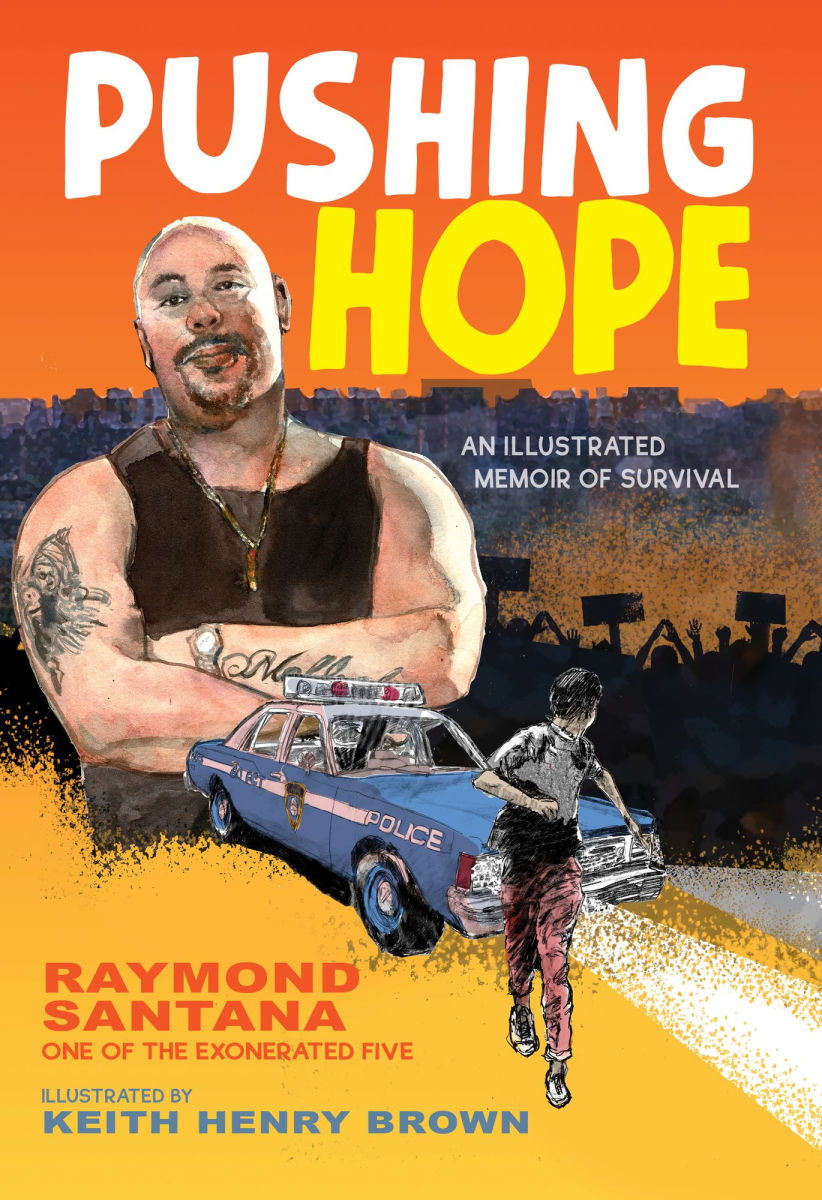
Courtesy of Calkins Creek/Penguin Random House
Pushing Hope, an illustrated memoir with artwork by Keith Henry Brown, is geared toward young adult readers and highlights the importance of hope and resilience in spite of obstacles. Santana, who now splits his time between New York and Atlanta, shares what he hopes readers will take away from the book and reveals how impactful living in Atlanta has been for his growth.
What inspired you to tell your story through a graphic novel rather than a traditional memoir?
For me, it is always about the telling of the story, the impact that it has on our people especially our young readers, so it made sense to use this medium. The book is designed and written to teach a younger audience, to give them an awareness that injustice does exist.
How did you adapt your story for a younger audience while keeping it truthful and emotionally real?
I understand that the subject matter is very real and can be graphic at times, but our audience is the younger reader, so I had to keep in mind that I want to teach them, not just [spark] negative emotions, but give my story and push my point across. I did a series of voice recordings and submitted them to Carolyn Yoder, who is the editorial director, and she helped with the structure of the book.
Revisiting that time in your life must have been difficult. What was that process like?
It is always difficult when I speak about my past experiences, the trauma, the up and down of emotions. But the work that has come out of speaking, the power to help and give back due to my experience, when I look back on the impact of the story and how many lives it touches, then the process is worth it. I live in the process, I still live in the story. I can never disconnect.
What misconceptions about incarceration do you want your memoir to help correct?
The misconceptions I want to correct about incarceration is that incarceration is not a right of passage, and isn’t a badge of honor. This is a system that operates on punishment, not rehabilitation. It’s a system that needs you to participate in order for it to exist.
How has living in Atlanta impacted your life?
New York City is very fast paced, so living in Atlanta gives me a peace of mind. It allows me the opportunity to really stand back and view the whole picture from a different lens. Atlanta also helped me grow as a man. It gave me the opportunity for home ownership and even though I’m back and forth between the two, I’m still raising my daughter in Atlanta. I’m very much invested in Georgia. I love both places.
What do you hope young readers take away from your book?
I hope that young readers take away that no matter how unfortunate a situation looks, no matter how much the deck can be stacked against you, no matter how dark things can look and feel, if you continue to push your hope and never give up, you can still come out victorious.
Catch Santana in conversation with Emory professor Carl Suddler on Tuesday, November 18 at 7 p.m. at Gwinnett County Public Library’s Duluth branch.