

Photograph by Martha Williams
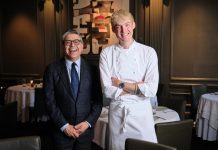
Does a restaurant need to evolve, or can it stay a snapshot in time? That’s the question I kept circling back to after two visits to Aria, the Buckhead fine-dining institution long regarded as one of Atlanta’s most elegant dining rooms. For decades, chef Gerry Klaskala’s restaurant embodied a kind of polished, old-school Atlanta glamour: soft lighting, white tablecloths, gracious service, and a clientele that came to be seen as much as to dine. Now, Klaskala has retired, and longtime general manager and wine director Andrés Loaiza is the new owner. Joseph Harrison is at the helm as the new executive chef.
Aria’s role in Atlanta dining has always been more than just a restaurant. It was a blueprint for hospitality led by Loaiza and Klaskala’s gold standard. Harrison, a James Beard semifinalist formerly of Savannah’s Common Thread, and Loaiza are now tasked with keeping that standard alive. At the same time, they also need to find a way to project their own personas into the room. That’s not an easy task with a legacy this weighty. As a result, Aria seems to straddle two worlds: one foot rooted in the past and the other testing the waters of the future.
The dining room hums with Buckhead regulars: men in finance swapping loud gossip over bourbon, and women with perfect blowouts looking as if they’ve stepped out of an old Neiman Marcus ad. During my first visit, a man at a nearby table turned to his server and announced, somewhat mournfully, “Everything is different.” He seemed personally affronted that Aria had dared to change. Funnily enough, I was sitting there thinking the menu still seemed the same. The famous lobster cocktail I had wished would leave the menu was still there as a starter, with some tweaks.
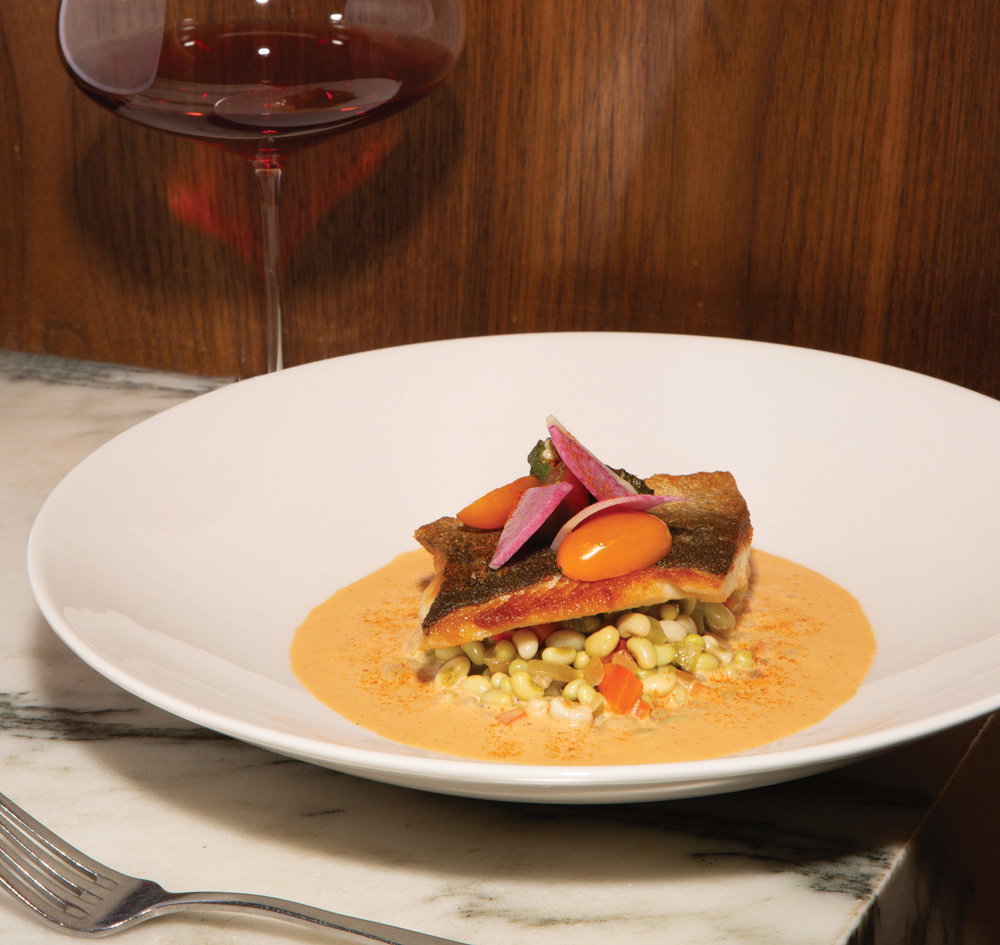
That meal was more like a carefully curated exhibit than a live performance, and there were missteps not befitting the restaurant’s reputation, such as cold bread, napkins in need of replacement, and long lulls in the clumsy service. The food, though competently executed, lacked the kind of emotional spark that fine dining needs to be relevant. Such standards as steak frites were expertly prepared but unchanged. The yellowtail hamachi sashimi was lively on the palate with ponzu sauce, but the piped spirals of avocado felt ancient. A reimagined duck breast arrived tepid, and the skin was flabby, not crisped as it should be. The mountain trout with berbere spice, field peas, okra, tomato, and lemon pointed to the kind of evolution I hope to see more of: Southern ingredients reframed with restraint and curiosity.
Desserts by Kathryn King remain a bright spot, and she is still a treasure. Her fruit-forward desserts, such as the upside-down Georgia blueberry cake paired with vanilla ice cream, consistently satisfy the craving for something sweet that isn’t an elaborate art project. [Editor’s note: In mid-December, after this article originally went to press, King announced she would leave Aria to consult on pastry programs for other chefs and restaurants.]
Photograph by Martha Williams
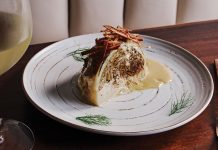
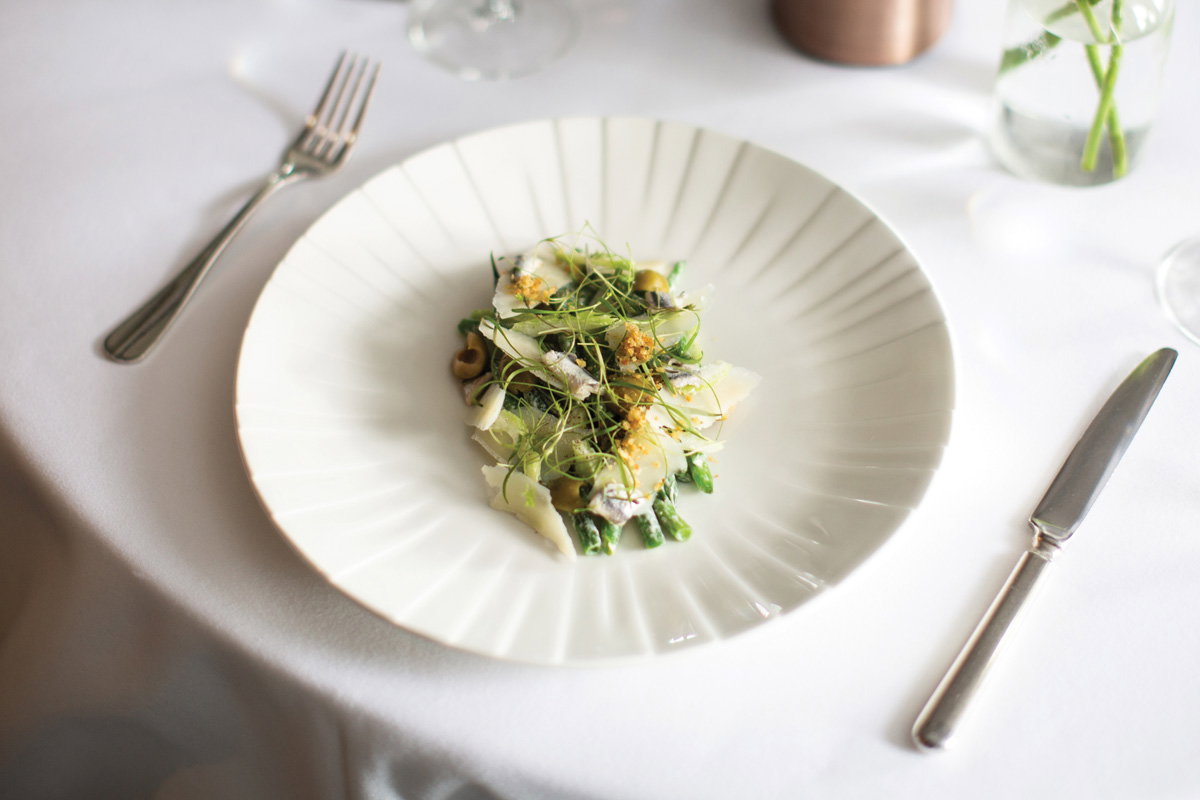
My second visit, thankfully, felt lighter and more confident. I skipped the dining room and sat at the bar, a move I now recommend. The service is much better and a better experience overall. The tone there is more hushed, more comfortable, and the menu a month later finally showed flashes of Harrison’s personality. But even beyond that, there were standouts I want to go back for. Namely, his green bean Caesar, which is excellent. It’s a clever play on texture, featuring bright, crunchy bites of celery and microherbs, including tarragon. It was the kind of salad you think about after the meal is done. The cabbage roll stuffed with duck confit is also enjoyable, a nostalgic nod dressed in new clothes, equal parts rich and theatrical. The flavors were Peking duck meets Polish grandmother. The food soothed my soul more this time.
There’s no denying Harrison’s technical talent and appreciation for ingredient-driven cooking. You can see glimpses of that in the menu, such as the lemon sole with shiitake and caper sauce. What’s missing, for now, is the confidence to break free completely. The food is careful, sometimes too cautious, as if the ghost of Buckhead fine-dining past is still looking over his shoulder.
I am rooting for Harrison. You sense his reverence for what Aria has meant to Atlanta, but he needs more freedom than is reflected on the menu at the time of writing. The dishes that moved the needle the most were those that broke the mold.
Photograph by Martha Williams
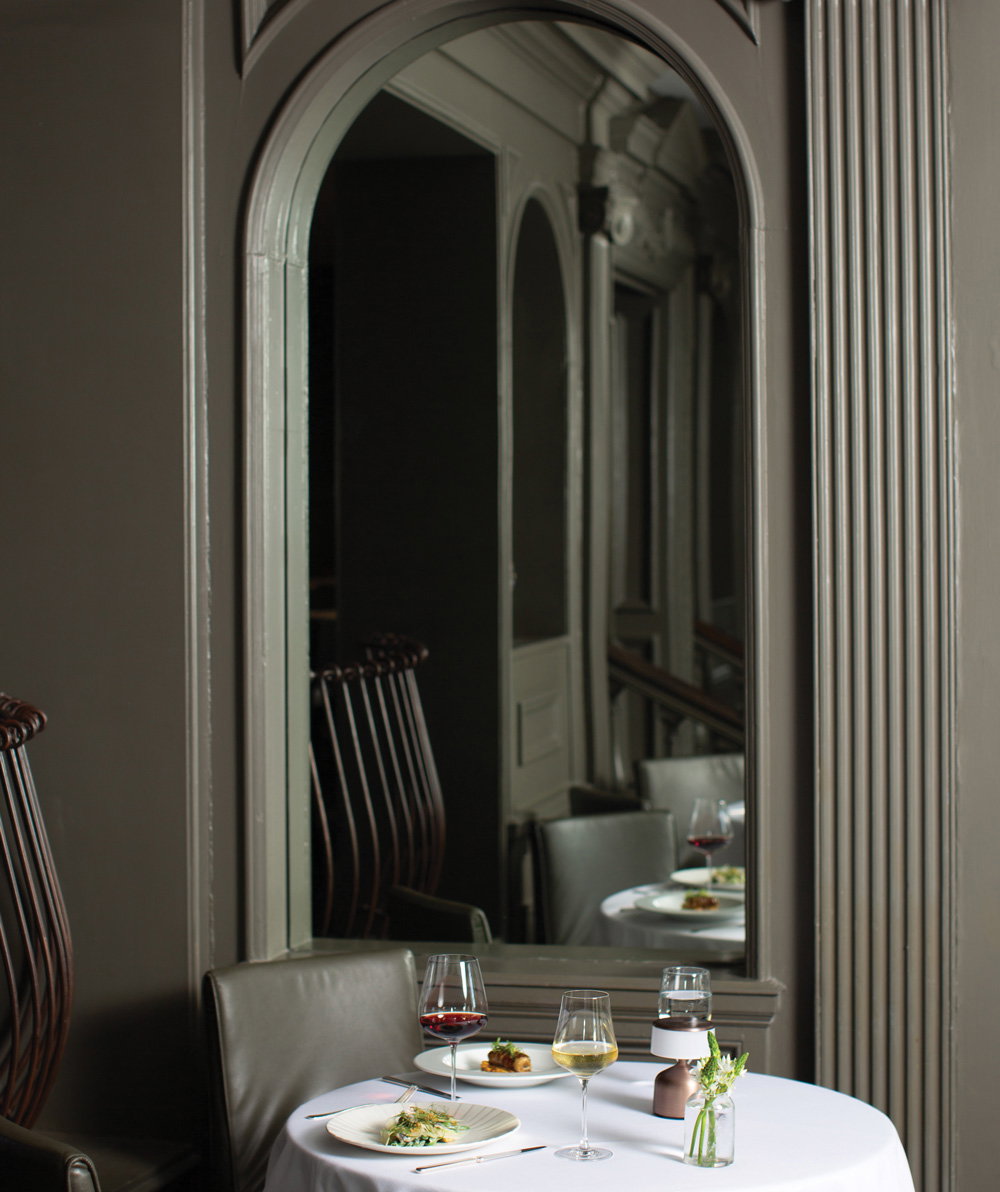
When Aria first opened, it was a different time, when fine-dining restaurants were abundant in Buckhead. Aria offered sophistication and warmth. It was where you went for anniversaries and celebrations or to feel as if you’d arrived. But it became too static, and this is its chance to finally evolve. That said, evolution doesn’t happen overnight. Aria is undergoing visible changes, with new china, glassware, and subtle cosmetic updates, all of which are good signs.
Aria has all the right ingredients: an experienced kitchen, a talented front of house, and a loyal audience willing to pay for the experience. What it currently lacks is a clear sense of risk. That could be the natural tension of a restaurant in transition that’s trying to respect its legacy while daring to redefine it. But Atlanta doesn’t need another temple to nostalgia. It requires restaurants that reflect our current state. Aria could do that—if it just got the nerve.
This article appears in our December 2025 issue.