
Home 2025

Archives

F&W Style founder Alexandria Alli shares how creating handbags for Beyond the Gates could only happen in Atlanta

Alexandria Alli
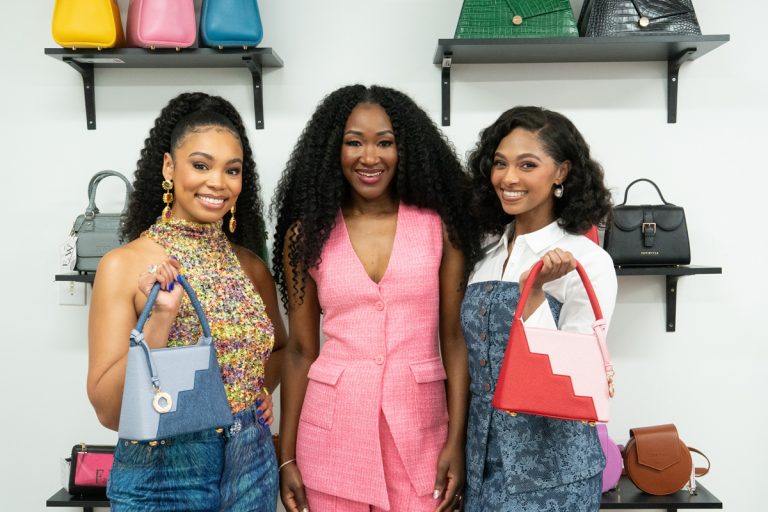
Beyond the Gates actresses RhonniRose Mantilla (left) and Colby Muhammad (right), who play cousins Chelsea and Kat, with F&W Style creator Alexandria Alli (center). The show’s ChelseaKat bags were designed by Alli.

Photograph courtesy of CBS

F&W Style luxury handbag founder Alexandria Alli had no expectations when she attended the Atlanta edition of the popular Black Excellence Brunch back in February. Like the other guests, she was there to celebrate the new CBS soap opera Beyond the Gates—the first ever anchored by a Black family on network television in the genre’s nearly 80-year history. And though the soap is set in Washington D.C., it’s filmed right here in Atlanta.

Because that celebration was a week before Beyond the Gates premiered, when Alli met executive producer Sheila Ducksworth there, she thought at best she could place her bags in some of the episodes. She never imagined she would soon be working with the show’s Emmy-winning costume designer Jeresa Featherstone to help power the show’s popular storyline of cousins Chelsea Hamilton (RhonniRose Mantilla) and Kat Richardson (Colby Muhammad) launching their own luxury handbag line, dubbed ChelseaKat. And Alli certainly never expected to appear on the show with those bags.

“I’d already made samples of the bags, and they already picked what they wanted, and then they just called me one day and said, ‘What would you think about playing yourself on the show?’” Alli explains to Atlanta of her September appearance which she celebrated with the BronzeLens Film Festival, Spelman, and Beyond the Gates days before.

“I just thought they would just have me there on the side, and I’d be nodding, but they had lines for me. So I started learning my lines. I went on set, and they did the whole hair, makeup, wardrobe, all the things, and we got to shoot with the actresses. So it was amazing,” she says.

Alexandria Alli
Designer Alexandria Alli had a cameo role on Beyond the Gates.

Photograph courtesy of CBS

Reception for the ChelseaKat Dream bag, which currently comes in six colors, has also been amazing. Four of the colors are currently sold out. The bags are crafted from vegan leather but are designed to look like denim with two-tone paneling, with one color more prominent and the other more subdued. Color schemes include red and pink, gray and charcoal, pink and green, as well as the singular colors of pumpkin, blue, and green.

Alli, who was born in Houston but raised in Nigeria until her family relocated to Atlanta when she was about 14, is grateful to live out her designing dreams here.

“I’m so thankful that this is where we moved to because it seems like I’ve grown with Atlanta,” beams the University of West Georgia and Collinsville High School grad. “Atlanta has grown in fashion and music and movies, and my brand has grown with Atlanta.”

Alli credits her passion and innovation as a fashion designer to her mother. “Growing up in Nigeria, my mom had a design studio where she would make contemporary clothing out of African fabric,” she recalls. “In a time where people were sewing more traditional clothes, she would have suits and pants and shorts and skirts.”

The joy she witnessed also made a huge impression. “One thing I saw from her is just how women were just so happy leaving her studio. They would come there for clothes, but then they would be there kicking it and talking about other things,” she continues. “The way she used color and the way she had fun with what she was doing, I knew I wanted to do something like that. She’s one of my biggest inspirations.”

The former banker first dipped her toe into the fashion pool 15 years ago before going full-time eight years ago. She credits the support she’s received here as the main catalyst behind her continued success.

“I feel in bigger cities, you can get lost, but here in this city, you can be who you want to be and people support it, and especially as a Black-owned brand, just the support from all women, all races,” she says.

“Atlanta was where I first started with Bloomingdale’s, and now we’re in several stores. I don’t think that would have happened if somebody at Bloomingdale’s here in Atlanta didn’t see the value in us,” she adds.

As a wife and mother of two, however, she admits that maintaining work-life balance is not easy. “I’m not going to lie, it’s not balanced. It’s more of, I’ve learned to juggle and just pay attention to where I am at that moment,” she says. “Right now is very busy for me. We’re doing ChelseaKat. The business is booming so I am spending more time [on that]. But I have such a great support system with my mom, with my dad, my husband, and that has really helped me so I can really focus on this.”

In addition to a new ChelseaKat bag dropping next month, F&W Style just released Big Kandi, a slightly bigger version of their popular croc-embossed leather signature, touting it as “the bold evolution of our classic Kandi bag.”

Alexandria Alli
F&W Style’s Big Kandi bag

Photograph by Elle Wood Photography

Even with all this success, Alli is not limiting her ambitions. “The goal is to become a household name, and we’re starting out with handbags,” she says. “At some point, I do want to go to shoes and clothing, but I’m a big believer in being the best you can in one area first.”

And Beyond the Gates, she says, is giving her a huge boost towards that goal. Still Alli is very clear from where the wind beneath her wings in business emanates. “We’re here in a show that is being shot right here in Atlanta, and they’re using an Atlanta designer,” she says. “So Atlanta has been everything. I don’t think my journey would have been the same if I wasn’t here.”

British clothing brand Boden chooses Avalon for its first U.S. store

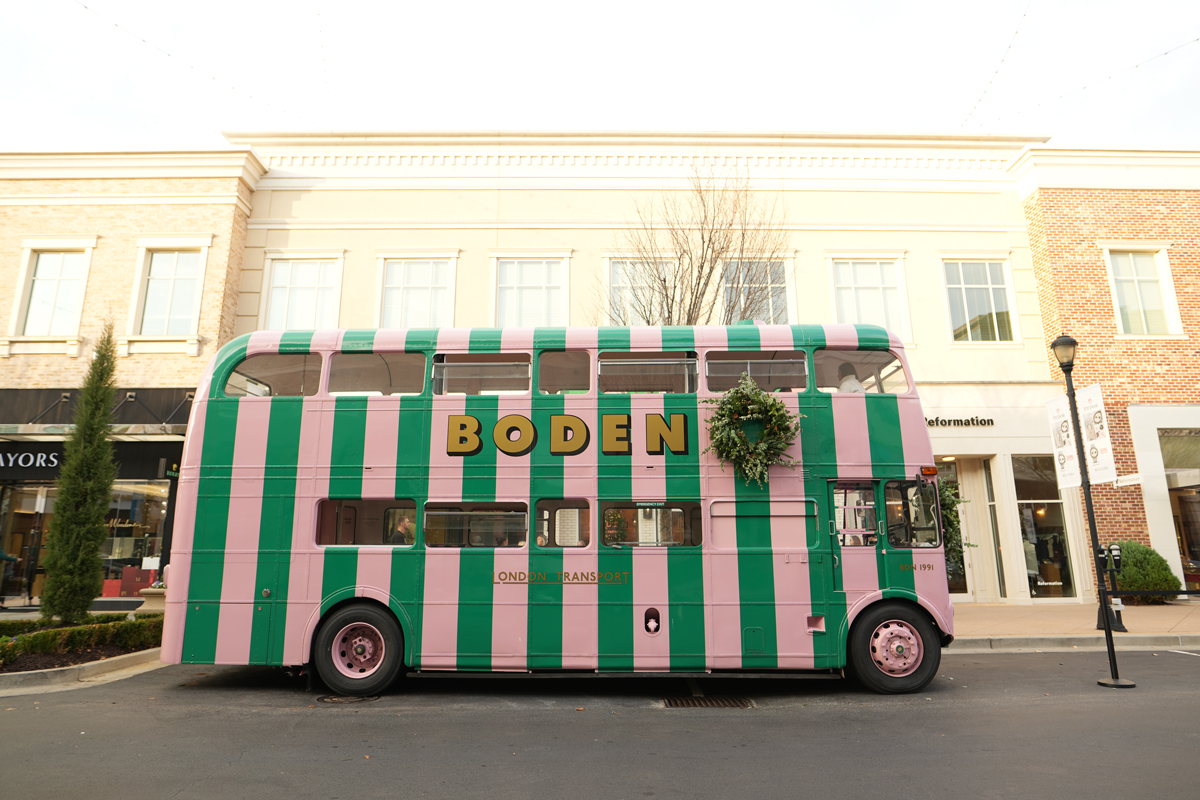
For the opening weekend, Boden had a 1969 double-decker bus reimagined and brought to Avalon.

Photograph by Marquise Eppinger

Boden, the United Kingdom-based women’s and children’s brand, launched its first U.S. concept store this week at Avalon. While the brand has been in the U.S. via its online direct-to-consumer sales for many years, this is its first brick-and-mortar in the country.

“Atlanta is dead-on our customer,” says Katherine Danneberg, the Chief Commercial Officer of Boden. “I knew immediately this was the place, and that our customer was here.” That instinct was backed up by data, with Danneberg noting that they conducted extensive focus groups for current and target customers. “The customer acceptance here is much higher, versus someplace like Soho,” she says. It’s part of a strategy that could see Boden open up two to three additional stores in similar areas around the region over the next year or so.

Boden Avalon

Photograph by Marquise Eppinger

Boden Avalon

Photograph by Marquise Eppinger

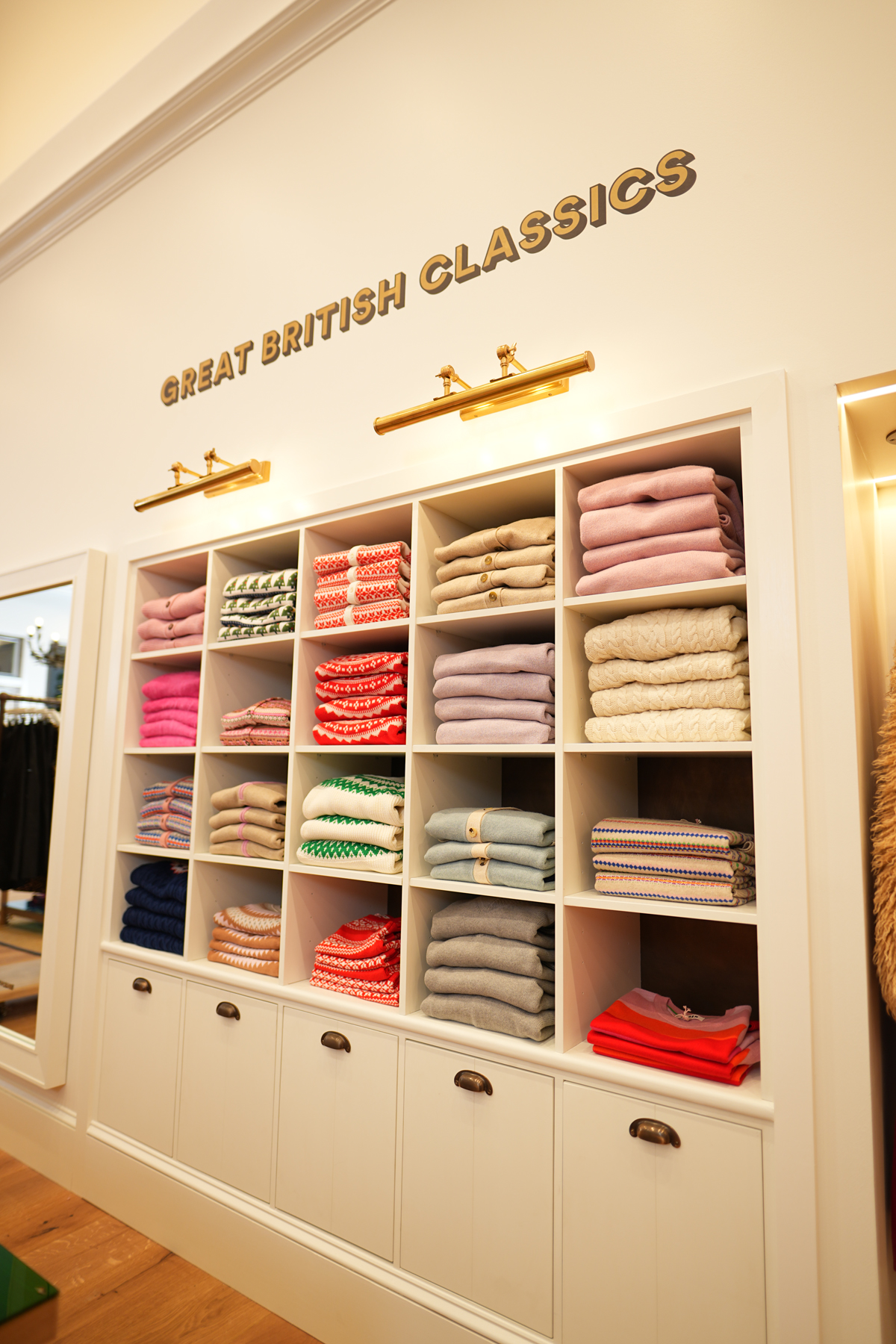
The 2,000 square foot Avalon store will focus primarily on womenswear, highlighting a selection of the brand’s extensive offerings. Each month will see a refresh, in addition to core key items. During specific times of year, select “Mini Me” items from the brand’s popular Mini Boden line for children ages newborn to 14 years will also be offered, as will its popular swimwear.

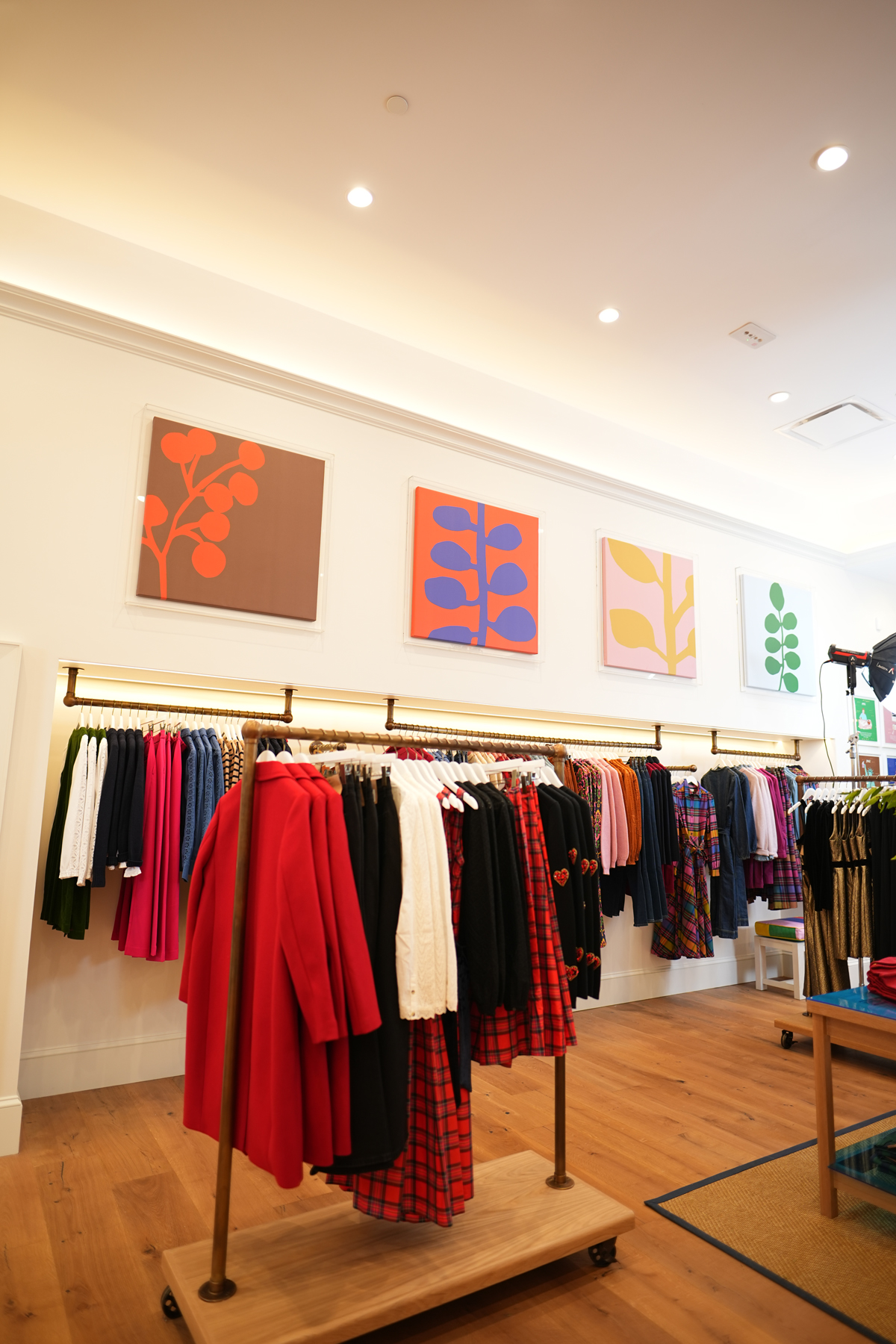
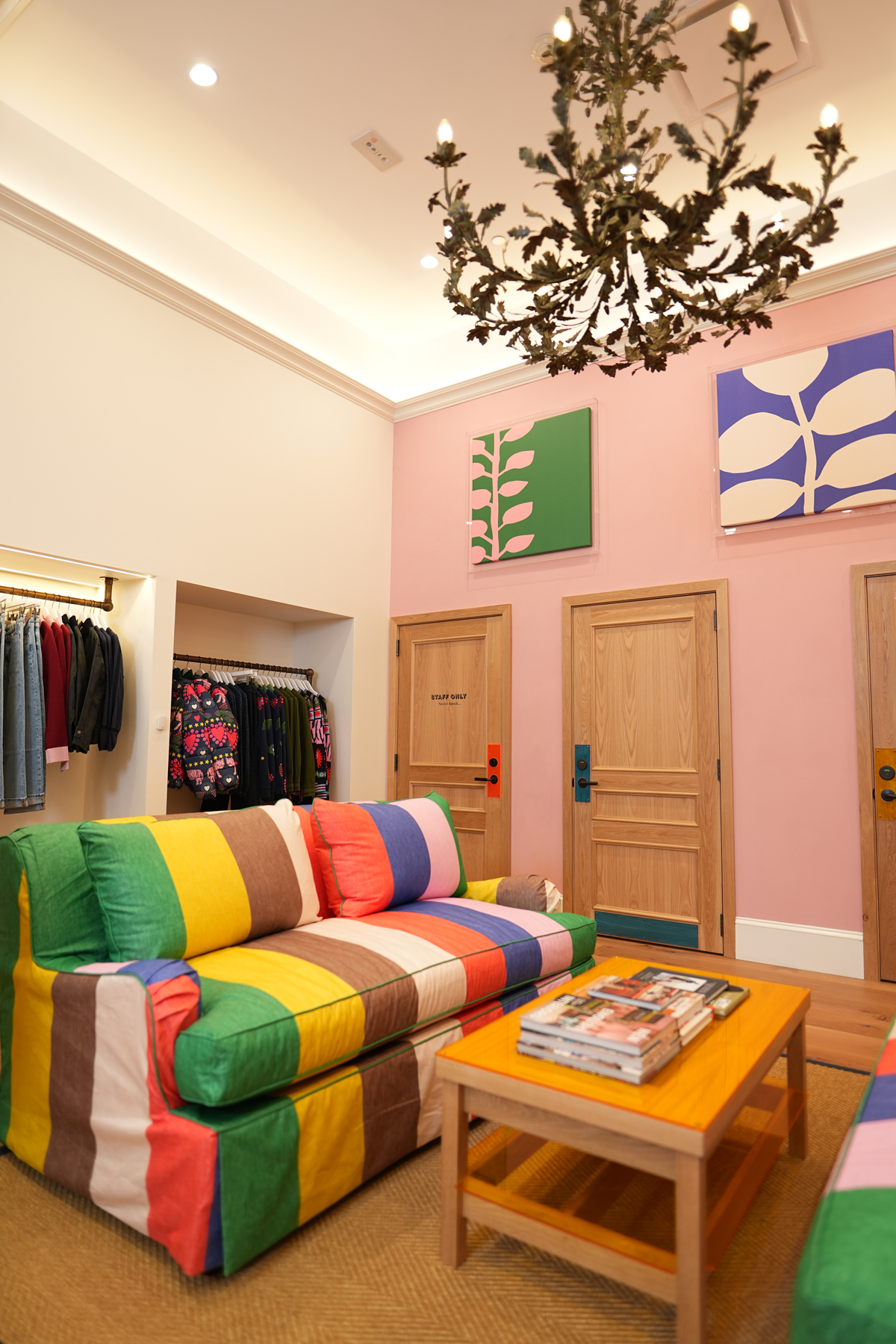
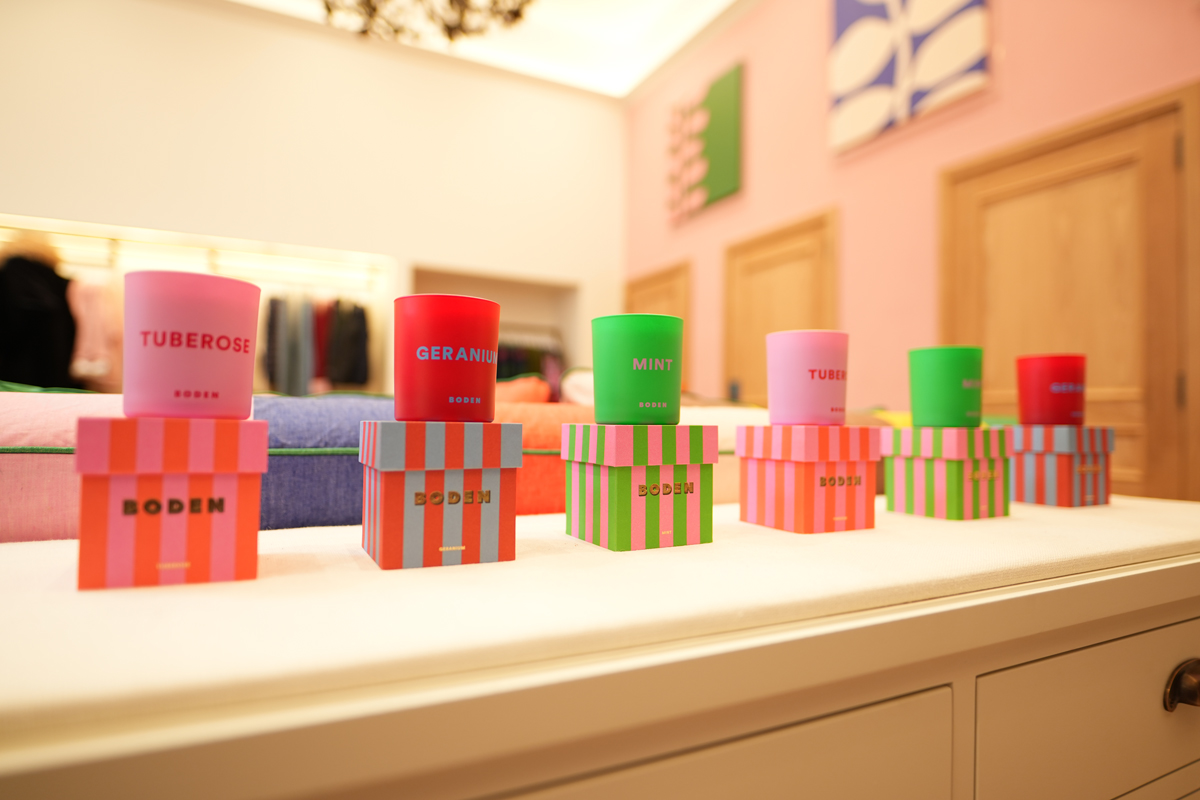
Inside the store, the brand’s colorful whimsy and British roots are on display. “The grounding element of the store on the exterior and interior is our brand stripe; we’re known for our stripes,” says Danneberg. To bring European flair to the store, there is oak flooring, English cabinetry, and a chandelier designed in Britain and made in Italy by Richard Taylor Designs. The signature bright stripe is woven throughout, such as in the couches near the dressing room and bench cushions outside.

Boden Avalon

Photograph by Marquise Eppinger

Boden Avalon

Photograph by Marquise Eppinger

A custom wallpaper with quirky English elements envelops the dressing rooms, and founder Johnnie Boden hand-selected the artwork on display. Additional illustrations highlighting the brand’s milestone years by British artist Charlotte Farmer greet guests upon entry.

For the opening weekend, Boden had a 1969 double-decker bus reimagined and brought to Avalon. It also sports the brand’s signature stripes in pink and green, and everything inside has been reworked as the perfect place for photo opportunities. You can find throughout opening weekend, including at Avalon’s Tree Lighting on Sunday, November 23.

Secondwind Gear Shop has you covered from Blue Ridge to the Beltline

0
Co-owner Jason Seagle outside his gear-packed storefront
Co-owner Jason Seagle outside his gear-packed storefront. He says plans for a second location, likely outside the perimeter, are in the works.

Photograph by Martha Williams

Secondwind Gear Shop is more than a place to score a discounted pair of Scarpa hiking boots or a sun-faded Patagonia fleece. Tucked away in an unassuming retail space on North Highland Avenue (formerly Highland Row Antiques), Secondwind is an outpost where conversations about gear and mountain getaways become one.

“We like to say we’re your friendly neighborhood outdoor gear and consignment shop,” offers co-owner Jason Seagle. “We have your needs covered from the Blue Ridge to the Beltline to backyard barbecues.”

Seagle and his business partner and wife, Amanda Sautter, run Secondwind as a one-stop shop for local adventurers and far-flung travelers alike. Racks of gently used shirts, pants, shoes, kayaks, bikes, backpacks, snowboards, skateboards, and more stretch from the floor to the ceiling.

For Seagle, opening Secondwind is a homecoming that was decades in the making. A Chamblee High School class of ’91 grad, he joined the Peace Corps and studied at the University of Montana in Missoula.

Somewhere along the way—in the ’90s—he struck up a friendship with the owner of the original Secondwind location in Bozeman, Montana, and began hanging out at the store “all the time.”

Fast-forward to a few years before the Covid-19 pandemic broke out: Seagle and Sautter traveled to Montana for a friend’s wedding. In Bozeman, they paid a visit the shop’s current owner, Brad Baumann. He floated the idea of expanding operations and asked if Atlanta might be a good fit for Secondwind.

Three months later, Seagle was back in Bozeman, learning the business.

As pandemic restrictions lifted, Seagle and Sautter converted a 20-foot cargo trailer into a mobile shop and began selling wares at the Grant Park Farmers Market. They also made appearances outside of breweries and bike events.

In August of 2024, they moved to their current brick-and-mortar location. While addressing the balance of organization and clutter in the shop, Seagle pays homage to his teenage years spent hanging out in Little Five Points’ legendary skateboard shop Crazy Lou’s (1984–1989).

“Honestly, the look and feel of walking into that tiny space—how it was packed with so much stuff, and you really wanted to look at everything—influenced how I put this space together,” Seagle says.

For those looking to consign items, Secondwind offers cash and store credit: For anything that sells up to $350, the seller gets 60 percent of the sale price in store credit; higher than $350, and they get 65 percent credit. A cash payout takes 10 percent off of that deal.

Atlanta’s Secondwind joins a growing network of sister stores in Denver, Bend, Oregon, and Scottsdale, Arizona, offering high-quality secondhand gear with a focus on affordability and keeping good stuff out of the landfill. In Poncey-Highland, that philosophy lands right at home, where trail runners, Beltline cyclists, and backyard fire-pit aficionados overlap.

“I use the term franchise lightly,” Seagle says. “I like to think of it as a partnership. We all have flexibility to pursue our individual markets and branding.”

In a neighborhood that thrives on porch hangs and park loops, Secondwind is an outfitter with DIY ethics and soul rooted in reuse and fueled by the call of the great outdoors.

This article appears in our October 2025 issue.

Seen more 1996 Olympics apparel recently? It’s coming back.

0
T-shirts sold ahead of the Atlanta Olympics in April 1996

Photograph by Matthew Stockman/ALLSPORT/Getty Images

In the vintage clothing world, there’s a moment when one day you’ll find your childhood wardrobe on sales hangers. About five years ago, CC Indivero and Mike Huddleston of GVG Events, a pop-up host, started seeing clothes that they wore as kids in the summer of 1996. “These kids, who weren’t even alive then, began to bring duffel bags to our markets full of Atlanta Olympics shirts,” says Indivero. “At first, I laughed, like they think what I wore when I was 11 is cool, but now, it’s everywhere.”

Pass a vintage clothing market in Atlanta, and you’ll probably find gear from the 1996 Olympics. According to Indivero and Huddleston, Olympic apparel became a hot commodity just before the pandemic and has remained so. T-shirts, originally bought for around $20, sell anywhere from $30 to $50 in all sorts of colors and patterns: a dark-green backdrop to an orange fire emanating colorful stars, the electric-blue official mascot Izzy dancing on gray, and white polos with purple Olympic rings crisscrossing green branches.

Beyond shirts, there are huge sponsor banners, wide straw hats, Izzy plushies, purple, green, and orange fanny packs, and more that can have price tags well over three figures. “For me, the ’96 Olympics are a throwback to a simpler time, but I can’t pin down the reason why everyone else loves it,” Indivero says.

Izzy, the official mascot of the Atlanta 1996 Summer Olympics

One reason could be the look. Keooudone Inthirat has been a vintage reseller for more than a decade, who frequents many of GVG’s pop-ups with his brand, Timeless Classics. “I think the Olympics saw Atlanta and decided they could do some cool [stuff] here with the digital age,” he says. The best example is Izzy, a computer-generated cartoon figure who holds a torch of multicolored stars. “All of that color and abstract patterns actually reflected the fashion sense of the ’90s. No other Olympics before had that.”

When he saw the vintage market for ’96 Olympics apparel explode, he started selling duplicate Olympic shirts from his own closet. Now, Inthirat focuses on obscure 1990s clothing from Atlanta via online finds and estate sales, the Olympics being his centerpiece. “Everyone wants to be part of Atlanta culture, and the Olympics are the perfect visual medium,” he says. “The young crowd gets something to latch onto that’s Atlanta, and the older folks get the nostalgia.”

The market for something in demand like the ‘96 Olympics showcases the tricky challenge of the vintage world: The finite supply of the past dwindles fast. Some replicas have even popped up, such as a T-shirt of the ’96 torch from Old Navy.

Tabitha Lee, the founder and owner of Vintageland ATL, a brick-and-mortar store in Little Five Points, expects prices for this nostalgia wear to rise even more. Lee started reselling vintage clothes in 2021, scouring estate sales for pieces. “If I found really rare Olympics stuff, it would put a notch in my belt as a reseller,” she says. “If estate sales even preview Olympics apparel, you have to get there at five or six in the morning to get it, and there’s gonna be a line.”
This article appears in our September 2025 issue.

Photos: The festive fashion of Shaky Knees 2025

0
A concertgoer shows off their tattoo at Shaky Knees Music Festival

Photograph by Martha Williams

For its 12th year, Shaky Knees Music Festival moved both its location (from Central Park to Piedmont Park) and its season (from spring to fall). But there was no shortage of talent thanks to headliners like Blink-182, Deftones, Cage the Elephant, Lenny Kravitz, My Chemical Romance, and Vampire Weekend, and certainly no shortage of creative concertgoer outfits. Here, a small sampling of some of the looks we saw while out and about at the festival.

As told to photographer Martha Williams

Mother and daughter Heidi and Jude
Heidi: This is my alien-from-the-stars-inspired outfit.
Jude: I’m going to see Blink-182 today, but we are here all weekend!

Isa from Atlanta
This is my old prom dress that I altered. I ripped up some tights and just shaved my head.

Karen from Miami
I’m here to see Alabama Shakes, Blink-182, Vampire Weekend . . . the list goes on. I’m wearing this rainbow jumper and a bathing suit top.

Nyla from Atlanta
I’m mostly looking forward to Wet Leg, but I’m here for 4 Non Blonds and Blink, too.

My name is Poncho. Easy to remember cause—the poncho.

Kimmy from Fort Wayne, Indiana
This is my boho-chic look.

Bianca
I love butterflies and the outdoors and thought the flowered headband would be good with the skirt.

Elizabeth from Atlanta
Trying to keep it simple today—I like witty T-shirts and simple black jeans.

Karina and Zack from Atlanta
Karina:
This is what I normally wear!
Zack: I’m wearing an Ice Nine Kills concert T-shirt and my “concert pants” with six different pockets

Alyssa from Kansas
I’m here to see Blink-182.

Kaylin from Memphis, Tennessee
I had a friend make this top for me, and I bought the pants at a thrift store.

Grainne 
I’m came from Tampa, but I’m originally from London. I’m here to see Stereophonics, and I’m here with my flags—I’m the flag lady!

At Wanderstate Mercantile, shopping is an experience, not just a transaction

0
Stephanie Young started Wanderstate Mercantile as a pop-up in 2022.

Photograph by Martha Williams

It’s a common complaint: Items in big-box stores, from furniture to clothing, lack the quality of years past. In a race for low prices and consumer convenience, today’s major retailers generally opt for cheaper materials and substandard labor practices to pump out cheap, overly abundant goods.

Retailers like Stephanie Young, who owns Wanderstate Mercantile in Chamblee, want to change that.

“Using our hands to make things is very important,” Young says. “When you can connect with a person or a small company that is making the product, there’s definitely a lot more nostalgia and connectivity to us as humans.”

The vast majority of Wanderstate’s lifestyle goods are handcrafted. Most items come from within the United States, including locally made goods from metro Atlanta and Athens, but Wanderstate also sources from Australia, Germany, India, and Japan. Manufactured items for sale in the shop come from companies that set high sustainability and labor standards.

Stepping into Wanderstate is a respite from the daily exasperations of city life. Inside the shop, a Japanese shoji screen repurposed into window shades softens the eastern sunlight’s glare, notes of incense hang in the air, and soft music plays in the background.

Wanderstate’s calming aesthetics are rooted in Japandi, the intersection of Japanese and Scandinavian design. The hybrid style is denoted by clean lines, organic shapes, high-quality materials, and the marriage of form and function, as well as an affection for bringing nature indoors. Picture a minimalist ash wood table, accented by a practical yet beautiful ceramic teapot: That’s the essence of Japandi.

Young, who studied fashion and merchandising and then worked in fashion and home design, says she was naturally drawn to the aesthetics of Japandi. She visited Japan for the first time in 2016 and quickly fell in love with the country’s culture and design philosophy. That affinity ultimately led to the genesis of Wanderstate Mercantile, where the inspiration can be found in the handmade shelves lining the walls, soft hues, and an emphasis on wabi-sabi, a Japanese concept that finds beauty in things imperfect, impermanent, and incomplete.

“I chose my interpretation of Japandi aesthetic for Wanderstate because I love Japanese minimalism and craft, but I also have a love for Scandinavian hygge, or coziness,” Young says. “Japandi is such a trendy design buzzword, so I wanted to make sure that the design of the shop—and more so how people feel in the shop—was true to my viewpoint.”

Young started Wanderstate Mercantile as a pop-up in 2022, setting up at coffee shops, art markets, and breweries, with a focus on such smaller goods as jewelry and candles. The opportunity for a permanent home came through a pop-up she held at a Chamblee yarn shop: The building’s landlord happened to be in the store that day, and Young explained her goals for Wanderstate in between sales.

Three months later, Young received a call from the landlord letting her know the yarn shop had closed; would she be interested in setting up a physical location? “I had a gut feeling that I needed to try it out,” she says.

Two years later, Wanderstate Mercantile is thriving in a steadily growing downtown Chamblee. Young feels fortunate to have moved into the area when she did, at the forefront of Peachtree Road’s recent growth spurt.

“Chamblee seemed really charming: still not too crazy, but busy enough where you had foot traffic, and people were starting to explore the area more,” she says. 

Young now uses her physical space to support the next generation of pop-ups: Recent events have included a dumpling workshop with Soupbelly, a charm-necklace bar with Rising, and a holiday crafting workshop with Ritual Atlanta.

One of the great strengths of having a brick-and-mortar space, Young says, is that it creates opportunities for customers to meet the makers of the goods they see for sale. This, in turn, encourages people to think about what they’re buying—and where they’re buying it.

“I have customers come in and tell me they probably would have bought [something] from Target or Amazon in the past, but they wanted to come in and support the shop and the makers of that [same item],” Young says. “They were excited to find products that they didn’t have to go to Amazon to purchase.”

This article appears in our August 2025 issue.

7 looks that capture the essence of ADAMA’s Flowers & Seeds Gala

0

Arts patronage met creative expression against the backdrop of the Flowers & Seeds Gala, an annual fundraiser for the African Diaspora Art Museum of Atlanta (ADAMA).

The event, which celebrated Black art and culture from across the African diaspora, honored sculptor Curtis Patterson and painter Hasani Sahlehe with the Nellie Mae Rowe Award, supported by the Judith Alexander Foundation. The money raised from Flowers & Seeds will support the museum’s capital campaign and building fund.

Here, selected gala guests describe their evening look, which capture the essence of the event and the artists it championed.

Salah Ananse
As a DJ, my approach is to always give the crowd something they don’t expect. Jumpsuits aren’t common for men outside of workwear, and this one, made by Wow Wow by Wunmi, brought a tailored approach with African flair. The fabric was dyed in Togo. What could be more appropriate for an ADAMA event? As soon as Wunmi showed us the fabric, my wife and I knew we had to have jumpsuits made.

Nia Umoja-Khalid
As an artist, I like to be the art and wear the art; this vintage dress was perfect for expressing my style. I have over 50 sequin vintage pieces that I have collected over the years. This dress was gifted to me over 10 years ago, when I graduated from college. It came from my mentor, who owns a vintage boutique. She reminded me to shine bright, be bold, and stay in a divine flow like the ocean. Today, I make art that is healing and embodies that connection to nature.

Issa Gray
I wore a custom suit designed by Atlanta’s own Sylvia Mollie. The fabric, a handmade indigo batik, was produced in Ghana and features the Adinkra symbol Bese Saka, which represents unity, power, and abundance. This symbol holds deep meaning for me, as it’s shared by both ADAMA and my company, Ire Aje, as our logos. While the designs differ slightly, the message is the same—and it felt powerful to show up fully aligned with that spirit.

Lisa and Kamau Bobb
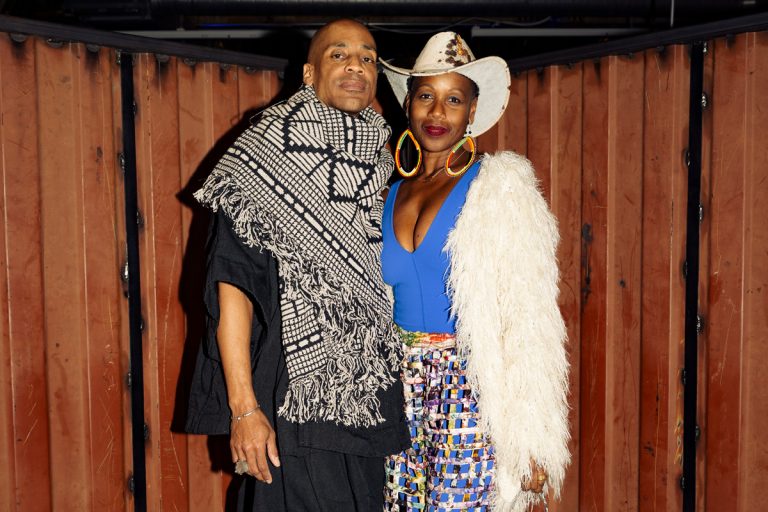
My “Western-Afriq” look was inspired by Afro-futurism and, of course, [Beyonce’s album] Cowboy Carter. I wanted to incorporate bold color and a contemporary African woven textile and mix it with glitzy country-western staples. My pants were handmade in Ghana from a sustainable clothing line that weaves all of their materials for minimal waste. My husband Kamau’s look was an artistic take on his minimalist “daily uniform” of black jeans, a black T-shirt, and black boots. He went big with a traditional Ghanian fugu, in an infinity wrap fastened by a truly oversized safety pin. One accessory was all he needed to turn his minimalist look into maximum style. —Lisa

Vikki Millender-Morrow
After a recent trip to Zanzibar curated by Jamila and Fahamu Pécou, I was inspired to wear attire that represented the regalness of our African ancestors. I paired this blue and white dress, which I previously purchased from the luxury African clothing boutique Etal & Co. in Phipps Plaza, with my Valentinos and a head wrap I ordered via Amazon. I wanted to embrace the theme of ADAMA’s Flowers & Seeds Gala, where attendees were encouraged to embrace Afro-opulent attire to make fashion a part of the experience.

Tre Hamilton
My style was inspired by the people of the African continent, and I wanted my look to consist of items from different parts of Africa. As my statement piece, I chose the shúkà to represent the Maasai in eastern Africa. Then I selected a tailored suit that complemented yet contrasted the shúkà’s colors. My sneakers were a Nike release called “Little Accra,” which is an amalgamation of inspiration from different facets within Ghanaian culture. I wore rings and other jewelry from Egypt, Zanzibar, and Kenya.

Iman Lemma
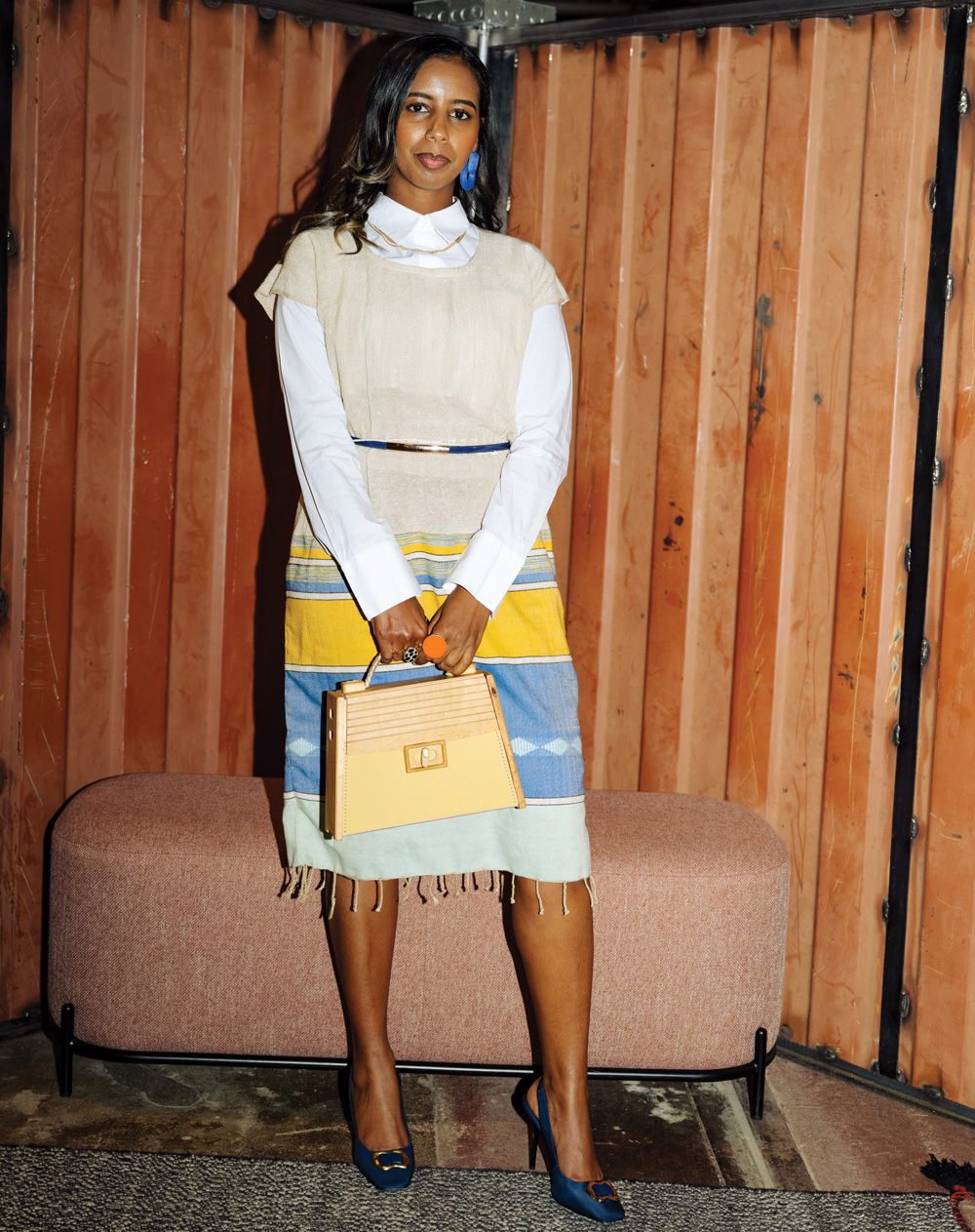
The rich cultural heritage of Ethiopia inspired my outfit. I wanted to wear something traditional from my home country, Ethiopia, but with a modern twist. The linen material is incredibly comfortable, and I loved how the blue and yellow complemented each other so well. I enjoyed accessorizing the dress.

This article appears in our June 2025 issue.

Lauren Amos Fashion Project gives a multimillion dollar gift to the High Museum to support fashion exhibitions, programming

Lauren Amos Fashion Project gives a multimillion dollar gift to the High Museum to support fashion exhibitions, programming
Lauren Amos

Photograph by Ahmad Barber of AB+DM

Lauren Amos, founder of two of Atlanta’s most cutting-edge fashion destinations, ANT/DOTE and Wish ATL, has long been an style leader in the city. She’s equally known for her philanthropic efforts, supporting important Atlanta institutions such as Meals on Wheels Atlanta, Spelman College’s Museum of Fine Art, SCAD, and the High Museum of Art, where she’s been a board member since 2013.

Now, with a multimillion dollar gift provided by her The Lauren Amos Fashion Project, the High can attract a dedicated fashion curator and expand its fashion exhibit offerings and programming. The upcoming Viktor&Rolf exhibit, which opens this fall, will be the first in a series of dedicated fashion exhibits over five years.

“I’m excited about helping fund a curator and developing a department that’s serious about fashion. The goal is to get someone in who is focused on everything fashion and who is dedicated to having these types of exhibitions continuously come here,” says Amos, who was heavily involved in the High’s past fashion exhibits, including Iris van Herpen: Transforming Fashion and Virgil Abloh: Figures of Speech.

The first exhibit, Viktor&Rolf. Fashion Statements, will showcase one of haute couture’s most celebrated brands. Founded by Dutch fashion designers Viktor Horsting and Rolf Snoeren, the brand is known for its technical prowess, construction details, and conceptual artistry. The High is the exclusive American stop for their retrospective, which will contain over 100 of their creations from the past 30 years. “People don’t often have the opportunity to see these types of pieces in person,” she says. “I’m excited to bring a show of this caliber to show off their breadth of work and what they’ve accomplished in their careers.”

Amos is excited to see the response the first exhibition funded by The Lauren Amos Fashion Project will bring. “I’ve been in retail in Atlanta for a long time. The community here is very into fashion and loves these exhibitions, and I know they’d like to see more. They are very passionate about self-expression. I want to give back to the community and continue to educate myself and everyone else about fashion, history, and art,” she says.

Viktor&Rolf. Fashion Statements opens at the High Museum of Art on October 10 and will run through February 8, 2026.

Kennesaw State University is betting big on dance

0
Students with KSU’s department of dance

Photograph courtesy of Kennesaw State University

Dr. Ivan Pulinkala arrived as a dance professor at Kennesaw State University in 2005 with a big job: Build the university a dance department. “We had theater, music, and the visual arts, [but] the missing component was dance,” says Pulinkala. He started with a dance minor, which drew 140 students by the second year. Next, he convinced the Board of Regents to add a dance major, and then, in 2012, an entire department. It’s since become the largest collegiate dance program in Georgia and highly regarded throughout the dance world.

Now, after years of concerted effort by Pulinkala and his colleagues, and thanks to a generous bequest by the late Robert (Bob) S. Geer, former vice president of the railway company Norfolk Southern, KSU’s arts departments will get a grand new home: an arts corridor at Chastain Pointe, adjacent to the original Kennesaw campus. The Geer family gift of $10 million will provide the university’s College of the Arts—comprising dance, theater, music, and visual arts—with seed funding to build a sweeping new set of buildings and artistic space over several years. “This will give us room to expand and grow,” says Pulinkala.

Dr. Ivan Pulinkala
Dr. Ivan Pulinkala

Photograph courtesy of Kennesaw State University

Pulinkala, now the university’s provost and executive vice president of academic affairs, believes the dance department’s success offers a preview of how further investment in the arts could cultivate distinctive excellence for the university. “A great university can be defined by many things; one of those is athletics, and another is the arts,” says Pulinkala.

The plans to develop Chastain Pointe date back to 2009, when the fast-growing dance department began hungering for more space. KSU had recently purchased the property, which was aptly referred to as “warehouse row” at the time. “So I went to the president and provost and said, ‘Give me one of those warehouses,’” Pulinkala recalls. “‘I promise you, we just need big, empty spaces.’”

Over the past decade, the dance department, along with the School of Art and Design’s painting and drawing and printmaking programs, have relocated to a renovated portion of the Chastain Pointe complex. But Geer’s gift makes it possible to bring into reality the full vision: an arts corridor with about 200,000 square feet of space, enough to house all four schools of the College of the Arts, along with outdoor performance venues, green space, and modern studios and classrooms.

Though that full facility is still underway, KSU’s investment in its dance department is already paying dividends. The new Chastain Pointe home includes studios with sprung floors and Marley dance surfaces, and costume and set shops. The 435-seat KSU Dance Theater, located nearby on the Marietta campus, was designed specifically for dance performance.

Marsha Barsky, current chair of the dance department, says the upgraded facilities have had an immediate effect on students: “You can literally see the expansion in their bodies,” she says. “Having this much space transforms the way they move.”

It has also transformed the program. Home to the competitive Eleo Pomare–Glenn Connor Summer Choreographic Residency, the department has achieved national and regional recognition, having been selected several times to perform at the Kennedy Center in Washington, DC, one of few college dance programs to receive the honor. The company frequently performs at events held by the American College Dance Association and hosts an annual high-school dance festival for aspiring young dancers.

Bringing together the entire College of the Arts—renamed the Robert S. Geer Family College of the Arts in honor of Geer’s contribution—is more than just a practical vision. Autumn Eckman, assistant professor of dance, believes the physical proximity between arts disciplines will facilitate creative connections among students.

“Interdisciplinary collaboration is already happening,” she says. Gathering the four schools together “will physically open the door to new possibilities for students.”

This article appears in our February 2025 issue.

Mysterious Vintage is a choose-your-own-adventure for thrifting

0
Dara Schaier
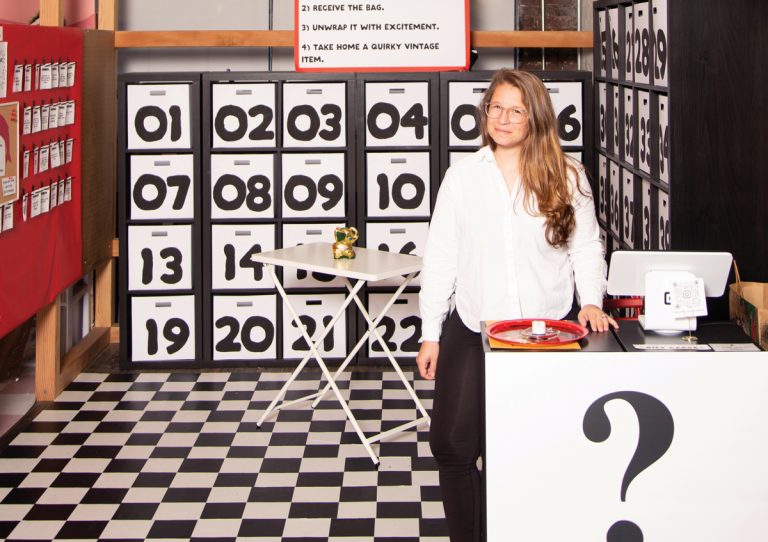
Dara Schaier’s Mysterious Vintage incorporates the element of surprise into the shopping experience.

Photograph by Martha Williams

Out with the new, and in with the old: Vintage shoppers, thrifters, and connoisseurs of midcentury-modern furniture all feel strongly that “dated” items were made better than the latest products. Older pieces, especially clothing and housewares, were built to last for years rather than the next fashion cycle. And if you look in the right places, you’ll spend a fraction of what you’d pay for brand-new items, all while embracing sustainability.

“I love things but I hate waste,” says Dara Schaier, the Atlanta-based entrepreneur behind Mysterious Vintage, a shopping experience that combines sustainability and surprise. “So a business centered around vintage and secondhand objects just felt right to pursue. I was also thinking about creating a shopping experience where the act of getting the thing is just as fun as the actual thing.”

In her own life, Schaier realized she often had to choose between spending money on items or experiences: “It just occurred to me, why couldn’t you have both?” So she incorporated her love of mysteries, games, and surprises into secondhand shopping and launched Mysterious Vintage in March 2024.

A wall of clues

Half of the retail space is adorned with slips of paper, each printed with an alphanumeric code, clue, and item cost. Each mystery item has an individual clue, such as “elegant, peaceful, and useful,” “Grand Canyon,” or “gift for a teacher.” Shoppers pick their favorite clue and head to a wall of storage cubbies lined with numbered bins. A staff member helps each shopper match the clue to the corresponding bin, which contains a wrapped item—the answer, if you will. No matter whether you keep it for yourself or gift it sight unseen, the object has an undeniable element of surprise. The handwritten clues are vague enough so the game can’t be reverse engineered. “It’s a gamble—you really don’t know what it’s gonna be,” Schaier says. “It could be any number of vintage things that we sourced from estate sales and thrift stores.”

Despite that gamble, or perhaps because of it, Mysterious Vintage resonates with shoppers. “People have sent me Instagram messages saying, ‘Thanks. You really brightened my day,’” Schaier says. “And it’s made me feel like I’m onto something that brings people joy.”

A vintage, gold elephant

Mysterious Vintage began as a pop-up, often appearing at GVG Events’ outdoor markets. People loved the choose-your-own-adventure concept, and Mysterious Vintage quickly snagged a home in Ponce City Market’s Citizen Supply. From there, Schaier says, the power of Ponce City Market as a marketing engine has been a “complete and utter whirlwind.”

Schaier now has a second location in Mother Lode Vintage in Decatur and has launched a website to explore Mysterious Vintage’s potential as an e-commerce experience.

“There’s already so many things existing in the world: Let’s give some other object a second chance before we consume something else,” Schaier says. “There’s this unique aspect to some of these items and the time periods and places that they were made.”

This article appears in our February 2025 issue.

Follow Us

69,386FansLike
144,836FollowersFollow
493,480FollowersFollow

NEWSLETTERS