
Home 2025

Archives

Atlantan Lauren Irving helms “The Greatest Show on Earth,” Ringling Bros. and Barnum & Bailey’s reimagined circus

0
Lauren Irving
Irving plays Aria, something of the classic circus ringmaster, sans top hat.

Photograph by Alex Martinez

The smell of buttery popcorn takes native Atlantan Lauren Irving back to her childhood, when she’d visit the circus with her family and stare, captivated, at the trapeze artists as they swung to and fro. She recalls her father waxing nostalgic about seeing the mile-long circus train pull into town and the excitement it would elicit. But never, in her wildest dreams, did Irving—an actress, singer, and dancer—consider joining the circus.

But join the circus she did. Today, Irving, who graduated from Peachtree Ridge High School and Shorter College (now Shorter University) in Rome, is one of three “show guides” in Ringling Bros. and Barnum & Bailey’s reimagined show, touring in the United States through April 2025. Her character, Aria, serves as the voice of the show, guiding unicyclist Wesley through his first day at the circus. Along the way, she sings five songs—including the opening and closing numbers—and directs guests’ attention to acts around the 360-degree stage. She’s like a ringmaster, sans the black hat.

That’s just one of the ways Feld Entertainment has reimagined the 154-year-old experience. After shuttering the circus in 2017, the company started brainstorming what “The Greatest Show on Earth” would look like in the modern era, says Jonathan Vaught, Feld’s senior vice president of production and touring show operations, who cited a “challenging regulatory environment” and a business model that “no longer fit” as reasons the circus closed. Ticket sales had declined in recent years, and advocacy groups had waged lengthy and expensive battles against the circus’s use of animals, especially elephants. Feld Entertainment decided any new production would feature no live animals, and began to envision a new version of the classic circus.

“We did a lot of research and found there was tremendous love for Ringling because it evokes so many memories,” says Vaught. “But we wanted to make it something today’s audience would relate to and keep the pace moving.”

The Freestyle Riders perform a high-flying BMX show accompanied by a live guitarist
The Freestyle Riders, who perform a high-flying BMX show accompanied by a live guitarist

Photograph courtesy of Feld Entertainment

Without animals, the focus would need to be 100 percent on the performers. Feld held auditions all over the world and put together acts reminiscent of the past, but with new, daring twists worked in. There’s a triangular highwire and crisscrossing flying trapezes. BMX riders flip from ramps to trampolines, and four stuntmen somersault 30 feet above the ground on the spinning Double Wheel of Destiny. “One Wheel Wonder” Wesley even breaks his world record during every performance, riding a unicycle that is 34.6 feet tall. During intermission, behind-the-scenes videos play, helping the audience get to know the performers on a more personal level. “Other shows might focus on the production,” Irving says. “This is really just showcasing what a human being is capable of.”

Gone are the bumbling, red-nosed clowns; instead, Equivokee, a Ukrainian comedic trio, engages the audience. With show guides and an immersive theater, there’s no need for blackouts or audience-viewed set changes. Close-up video also offers a detailed view of performers during their feats. There’s even a dance-off between a robot puppy named Bailey and human performer Alejandro Licea Pellon, who plays the character Nick Nack.

Equivokee, a Ukrainian comedy trio
Equivokee, a Ukrainian comedy trio.

Photograph courtesy of Feld Entertainment

“The soul of what Ringling has always been is still there,” Irving says. “It’s just presented in a different way.”

When the show stops at State Farm Arena and Gas South Arena this month, it will be the first opportunity for many of Irving’s friends and family members to see her perform. She started her career with a college program at Walt Disney World, entertaining at shows and parades and, later, charming guests at the American Idol Experience at Hollywood Studios. She played Catherine of Aragon in the Norwegian Cruise Line performance of Six the Musical and “singing sorceress” Celestina Warbeck at Universal Studios’ Wizarding World of Harry Potter.

When a colleague of her former Disney manager recruited her for the circus, Irving had no idea the show was returning to the stage. “I remember when the circus announced that they were taking their final bow, so I asked a lot of questions about the revival,” she says. “When I got the role, there were so many emotions. There’s so much history with Ringling. It’s chilling to think I get to be a part of its comeback.”

Irving sings while flanked by the cast of “The Greatest Show on Earth”
Irving (top right) sings while flanked by the cast of “The Greatest Show on Earth”

Photograph courtesy of Feld Entertainment

As a newcomer, she was initially concerned that she wouldn’t fit in with the other cast members. Some, like human cannonball Skyler Miser, are legacy performers literally born into the circus. But Irving’s fears quickly abated once she got to know everyone. “It turned out so wonderfully. We’re such a big family and genuinely have fun on and off the stage,” she says. The show’s cast and crew travel by plane and charter bus and stay in hotels, rather than the classic train-car circuses of old, but they still spend a great deal of time together.

Eventually, Irving wants to work on artist development, “molding performers into being the best they can be,” she says. But for now, she believes she’s right where she belongs. “In high school, my teacher asked, ‘If you could do anything in the world without getting paid, what would it be?’” she continues. “My answer was singing and performing.”

Irving’s favorite part of the show? When people clap their hands, tap their toes, and sing along to new songs. “I want them to take that energy and fun home with them,” she says—just as she brings the smell of popcorn home with her each night.

This article appears in our February 2025 issue.

The Adeboyé brothers explore an experimental theater project that lit up Atlanta 40 years ago

0
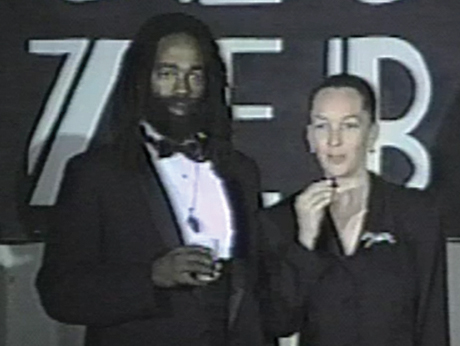
Live at Club Zebra poster
The Adeboyé brothers mixed original and archival footage for the film

Photograph courtesy of The Adeboyé Brothers

The Adeboyé brothers didn’t know exactly which subject they’d pursue for their next film project, but they wanted it to involve Pearl Cleage. Matthew and David Adeboyé, cocreators of the production company the Palette Group, had just worked with Cleage, the award-winning playwright and author, on Sit-in, an animated short written by Cleage and produced by the Alliance Theatre in 2021 and 2022.

Inspired by Cleage’s fascinating life and family lineage, the Adeboyé brothers thought she would make an ideal subject for a documentary about Atlanta’s creative scene. After several ideas fizzled out, Alliance Theatre’s coartistic director Christopher Moses proposed a new one: Had David and Matthew ever heard of Cleage’s old floating speakeasy show, Club Zebra?

Zaron Burnett Jr. and Pearl Cleage

Photograph by D’angelo Dixon

“We were like, What the hell is Club Zebra?” recalls Matthew. “We googled it and nothing came up.” To share the history, Cleage and her husband, the writer Zaron Burnett Jr., who cocreated the show, invited the brothers over for dinner, along with some friends who were involved with Club Zebra back in the day.

“We were just blown away hearing all these stories,” says David. “We realized all we were missing was our cameras.”

From that dinner party emerged the feature documentary, Live at Club Zebra. The show, dreamed up by Cleage and Burnett under the auspices of the radical theater company Just Us Theater, was both a live performance and a nightlife event that ran from 1985 to 1995. A pop-up before pop-ups were cool, Club Zebra featured live readings, music performances, poetry, dance, and everything in between. The audience watched from small cabaret tables and sipped beer and wine purchased via donations since the show had no alcohol license; it was a speakeasy, after all.

“I liked the idea of a speakeasy because every single person in there is breaking the same law,” says Burnett. “So nobody is above or below anybody, and they can relax and be themselves.”

It was a fertile time for artists in Atlanta, especially Black artists, Cleage notes. As mayor, Maynard Jackson had ushered in more municipal support for the arts, and with it more funding for small independent arts companies. “If you were a theater artist, a visual artist, a musician, you could apply for money,” Cleage says. “We went berserk. We hired our friends, we started shows, we wrote our own material.” Shirley Franklin, who had previously served as Jackson’s commissioner of cultural affairs and was an ardent supporter of the arts, helped Cleage and Burnett secure space at Atlanta Civic Center.
Word of mouth boosted Club Zebra’s popularity, and soon the couple was hosting five or so shows a year, at venues such as the West End Performing Arts Center and 14th Street Playhouse, as well as at the annual National Black Arts Festival. Atlanta jazz titan Joe Jennings helmed the show’s music while Burnett, dressed in a rakish tuxedo, served as emcee, offering spontaneous, charismatic musings on Black life in America.

Joe Jennings
Joe Jennings

Photograph by D’angelo Dixon

“It saved Just Us Theater and generated a huge audience for new artistic expression in Atlanta,” Burnett says of Club Zebra. “People were looking for something less old-fashioned but not so avant-garde that they didn’t understand it.”

Cleage and Burnett drew on their sprawling creative networks to invite high-profile performers, including actor and director Ossie Davis and poet Haki Madhubuti. The documentary includes footage of many such performers, thanks to filmmaker D’Angelo Dixon, who shot nearly every performance. The Adeboyé brothers were delighted to find the footage had been faithfully archived at Emory University’s Rose Library, so they could bring Club Zebra to life for a new audience.

“[Dixon’s] work really aligned with our sensibility as storytellers,” says David. “It really feels like a coming-home story for us.” The Adeboyé family has deep connections to the Atlanta art scene: David and Matthew’s grandmother Lee Lowe was a well-known painter who was involved in the Neighborhood Arts Center—another piece of Atlanta’s creative history they hope to tell. They’re planning more screenings of Live at Club Zebra in 2025, with details to come.

“Our mission is to put these stories about Atlanta out there,” says Matthew. “There are many stories people don’t know. But now we have the opportunity to dig into the archive and show that there was a Harlem Renaissance, but there was also an Atlanta Renaissance.”

This article appears in our January 2025 issue.

Let the light in and get your creativity out at ATL Glassworks

0
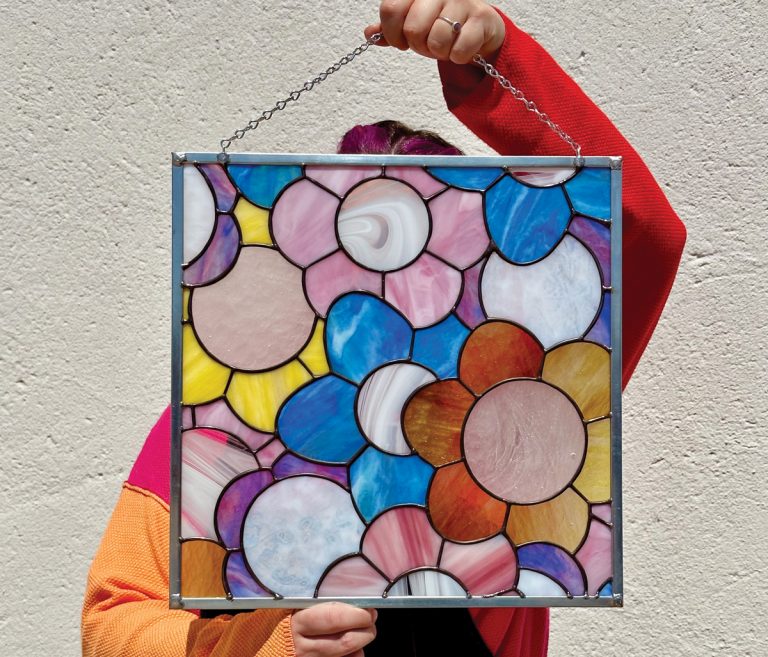
A Day Kennedy creation

Photograph courtesy of Day Kennedy

In a ground-floor studio of Met Atlanta, a creative office complex in the West End, you’ll find ATL Glassworks, a haven for stained glass makers and enthusiasts. The space is cheerily designed: Bubblegum-pink accents line the concrete walls; a lime-green couch anchors a sitting area while suncatchers adorn the windows. In the back, a workspace awaits artists looking to make their own creations or take a class.

Then there’s the glass: Thousands of glass panels line bookshelves, inviting stained glass makers to peruse the offerings. “Glass is magical,” says founder Day Kennedy as she lays a smooth, blue-green glass sheet on an illuminated light table, revealing watercolor swirls. “There are so many different color combinations and textures.” It’s no wonder that her customers come from as far as Alabama to shop for glass and tools or to pick up some of her art.

Kennedy founded ATL Glassworks in 2021, after stumbling across stained glass–making by accident a few years before. “I’ve always been a hobby collector,” she says. “I’ve done everything, like watercolor and embroidery. Technically I know how to knit,” she adds with a laugh, “even though I’ve never completed anything.”

In 2017, Kennedy was watching YouTube videos to teach herself to weld when the algorithm presented her with another tutorial—this one for making stained glass. “I bought a terrible quality starter kit and started playing around with it,” she says. “I was hooked and immediately fell in love with it.” Kennedy worked in graphic design at the time but began a side business selling her suncatchers at markets around town.

One of Kennedy’s abstract flower designs

Photograph courtesy of Day Kennedy

A Day Kennedy creation

Stained glass is an ancient art form that had its cultural heyday during the medieval period, when cathedrals installed stained glass windows depicting biblical scenes. Kennedy presents a modern twist on the art: Her first pieces were birds, peaches, and art deco–inspired designs. Since then, her work has evolved to include geometric-meets-abstract creations and more cheeky pieces, such as butts (yes, human butts) in various shapes and sizes. But Kennedy says she’s most proud of her pet portraits. Unlike an abstract, the pet portraits require accuracy, as she attempts to match the dog’s likeness using glass.

Early artists used hot irons to cut glass, but today’s modern tools simplify the process. Kennedy creates a pattern using a digital design program, then traces it onto the glass before scoring it into separate pieces with a handheld, wheel-shaped cutter. “Then we wrap it in copper foil and solder it all together,” she explains. “Picking out glass for designs, I think, is the hardest part—so many options.”

A student at a stained glass workshop

Photograph courtesy of Day Kennedy

Kennedy offers classes several times a month, during which the stained glass curious can dip their fingers into the craft. Students select from a list of design options, like a cowboy boot or a flower. They then spend four hours learning about the process of stained glass making, which includes cutting glass, grinding the edges, and then soldering the whole piece together. “If you like the process, we sell all the stuff to get you started, and you can set up a home studio, or we do open studio time as well,” says Kennedy.

Since Kennedy first began selling her wares, she’s noticed that more people are interested in making their own stained glass, and that buyer enthusiasm for stained glass art is increasing. “That’s one of the reasons why I like having the shop,” says Kennedy. “I want to foster that community. I want everyone to be in love with stained glass.”

This article appears in our January 2025 issue.

James Keith has A-listers clamoring for his hats

0
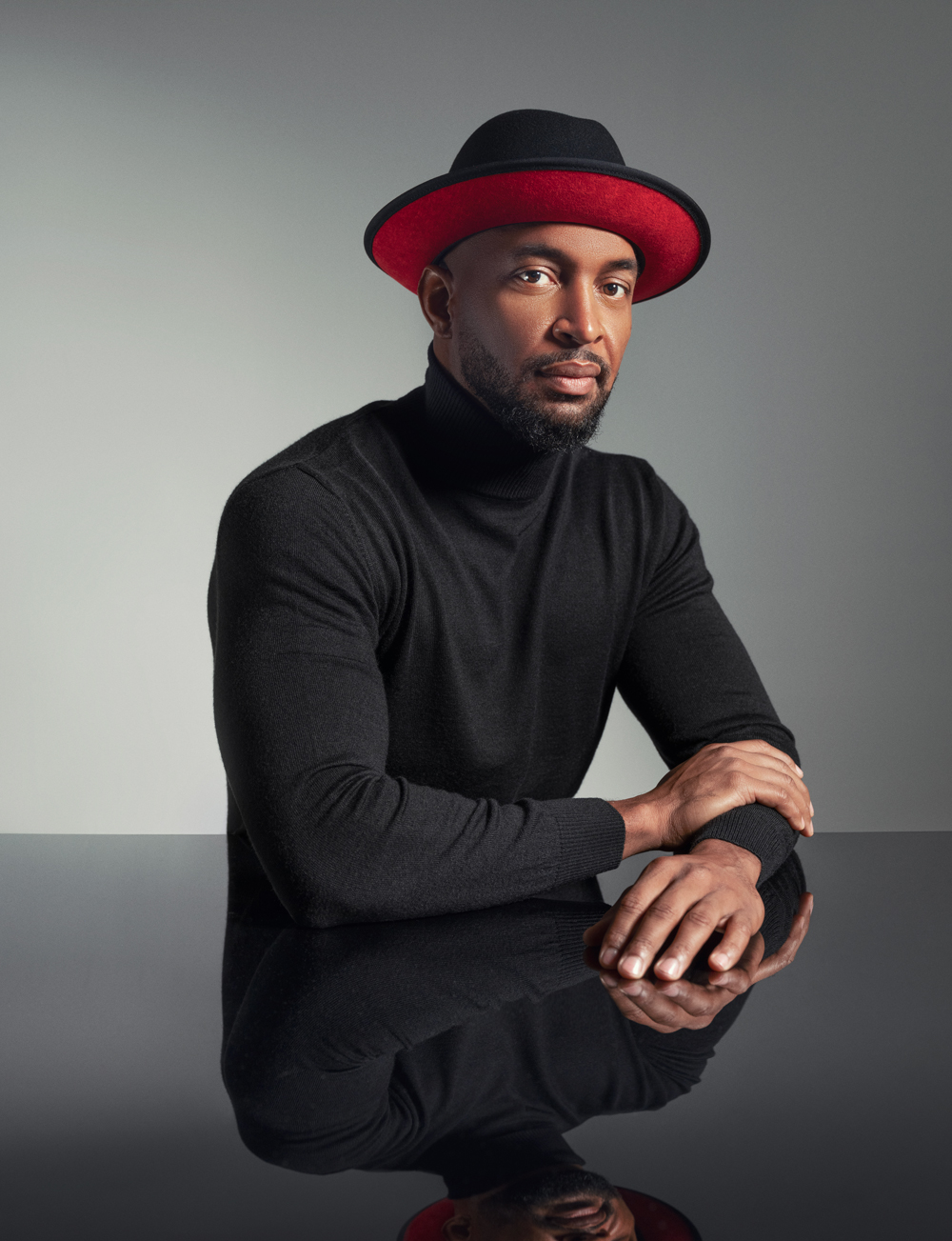
James Keith
James Keith chose his signature red to symbolize love and unity.

Photograph by Alex Martinez

James Keith wanted to wear a fedora with his outfit for New Year’s Eve 2015, but he couldn’t find one that quite fit the bill. Instead of shrugging off that disappointment, he began sketching one on paper, adding a striking red under the brim for a punch of color. It took a few tries to find the right manufacturer (a company in business for 180 years), but a year after he conceived his design, he finally got the hat he wanted on his head.

He wore it out immediately, and the reception was overwhelming, which got Keith thinking. “I’d never had everyone compliment me like that before, and I thought, Wow, I think I need to create a brand for this,” he says. On the back of that one fateful night—and hat—he founded his brand, Keith James.

While his name is now synonymous with style, Keith grew up far from the spotlight, in Riegelwood, a tiny town in North Carolina where the population hovers around 700. It’s not the launch pad one expects from a successful fashion brand, but Keith was interested in style from an early age.

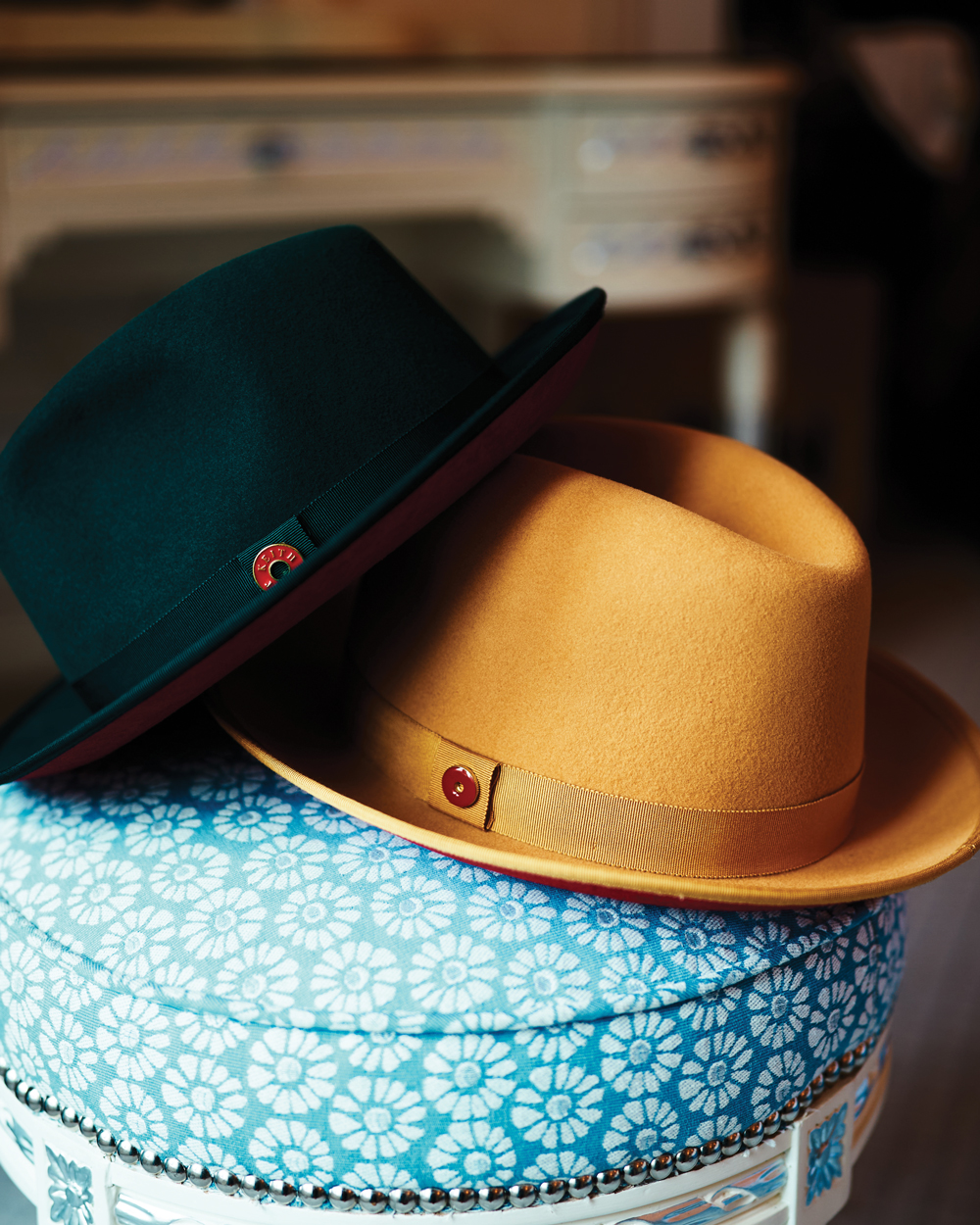
The King, a center-pleated fedora, shown in canary yellow and mean green
The King, a center-pleated fedora, shown in canary yellow and mean green.

Photograph by Christopher Andreou

His father and grandfather—both named James—grew up in the church and emphasized the importance of looking your Sunday best. “We always got dressed up to go to church, and that meant putting a hat on,” says Keith. (Plus, “I’m bald now too—I’ve got to cover that up,” he quips.) The brand name is an ode to his family, as it puts his last name and all its history first.

Even as Keith earned a bachelor’s degree in psychology and an MBA, entrepreneurship was always top of mind. He sold clothing, including hats, out of the back of his car in college and worked in a wide range of settings, from a tax preparation office to the men’s floor at Saks Fifth Avenue in Atlanta. His lack of experience as a fashion designer didn’t deter him from creating his fedora.

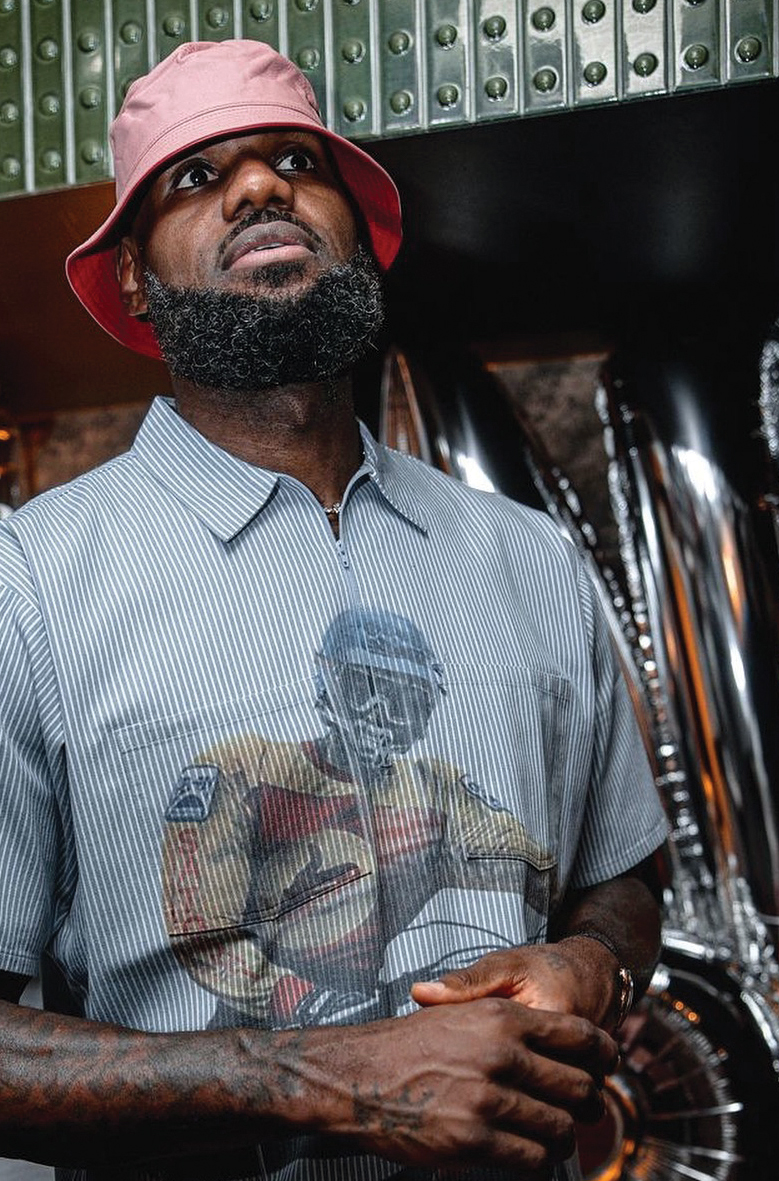
Keith makes it seem so simple, and indeed, the brand has had a relatively straightforward path. Celebrities organically found him on Instagram, where he has been posting shots of his style for some time. (Keith has over 100,000 followers and regularly posts celebrities wearing his hats, as well as new styles and highly styled photos of himself in dapper outfits.) “People embraced it quickly,” he says. “I think people embrace what they like, and it was an easy sell for me because the product is so good. I didn’t have to do too much. Celebrities reached out to me.” His clientele now includes A-listers such as Beyoncé, LeBron James, Paris Hilton, Snoop Dogg, and Martha Stewart, who owns the Queen fedora in golden honey and jet black.

LeBron James of the Los Angeles Lakers wears a Keith James bucket hat. Finishing touches on a wool fedora include ribbon trim and signature logo pin.

Photograph by Latrelle Yancey

Another high-profile customer is none other than accessories designer Christian Louboutin, whose iconic shade of red is similar but not exact to Keith’s. Louboutin and Keith met at an Art Basel event at the Christian Louboutin boutique in the Miami Design District. “I had my hat on, and he was amazed by it,” says Keith. “He said he loved it and needed one for himself. The next thing I know, he’s doing photo shoots wearing my hats.”

His signature red underbrim didn’t come about by chance. The hue has significance for Keith. “It represents unity and love. I call the brim the circle of love.” That style is carried through in the fall 2024 line. The collection features staples such as the King, a classic fedora with a two-and-a-half-inch curled brim available in more than 20 colors, including hot pink, tiger orange, and trendy canary yellow, and the Queen, a fedora with a wide, flat red brim and a teardrop crown, also available in a bevy of colors.

Newer styles include the Western, as seen on Beyoncé, which features a five-inch curved red brim, and the Bucket, a lightweight nylon style. Keith has branched out beyond classic hat shapes to include beanies, fragrances, sunglasses, belts, silk scarves, and leather goods such as top-handle bags, backpacks, duffels, totes, and wallets, all at the request of his discerning customers. “Accessories are the key pieces to an outfit,” he says. “All our [other] accessories go hand in hand to complement the hats.”

Stitching the seam of a hat A teal hat

Keith moved to Atlanta from North Carolina for a relationship that didn’t work out, but he ultimately chose to stay and create his business here. He now splits his time between Los Angeles, for its industry and opportunities, and Atlanta, where he spends about one week a month, partly to visit his family here. His adopted hometown will forever be a draw thanks to its sense of community and support. “There are a lot of entrepreneurs in Atlanta, and that helps motivate me to create,” Keith says. “When I first arrived, I saw people who looked like me who were successful, and that gave me more confidence.”

He also loves the accessibility the city has to offer. “I don’t think I could have started Keith James anywhere other than here,” he says. “It’s all about the mixing and the mingling. Something is going on every day, and people know how to enjoy themselves. There’s visibility, and people like to dress up here.”

This article appears in our January 2025 issue.

Atlanta’s new accessories craze is an oldie but a goodie: charm jewelry

0
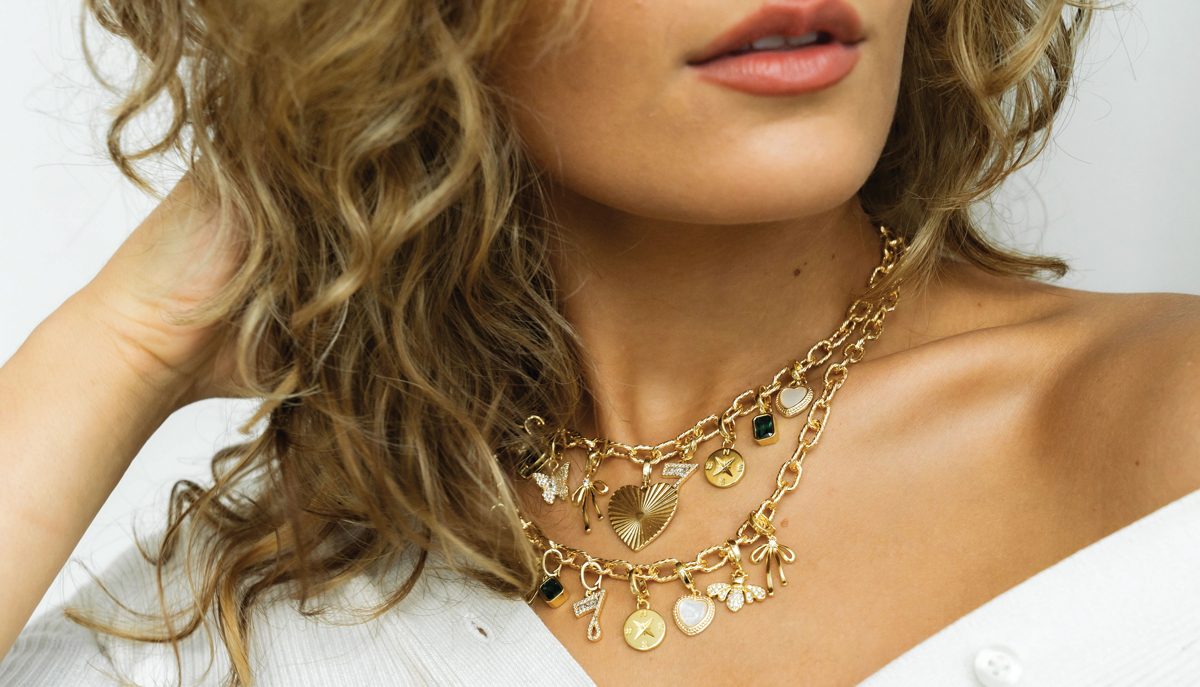
The EverChanging Charm Necklace by It’s Especially Lucky

Photograph courtesy of It’s Especially Lucky

Charm jewelry, once enjoyed mostly by octogenarians and tweens, has proven its staying power, with newfound popularity that goes beyond social media’s confines.

For Yasmin Rahimi, founder of charm jewelry brand It’s Especially Lucky, the backlash against the conformist, minimalistic styles of the last few years makes sense. “I’ve always been a maximalist, and I love that people have a newfound love for it—of mixing and matching, of wearing whatever they want, however they want,” she says.

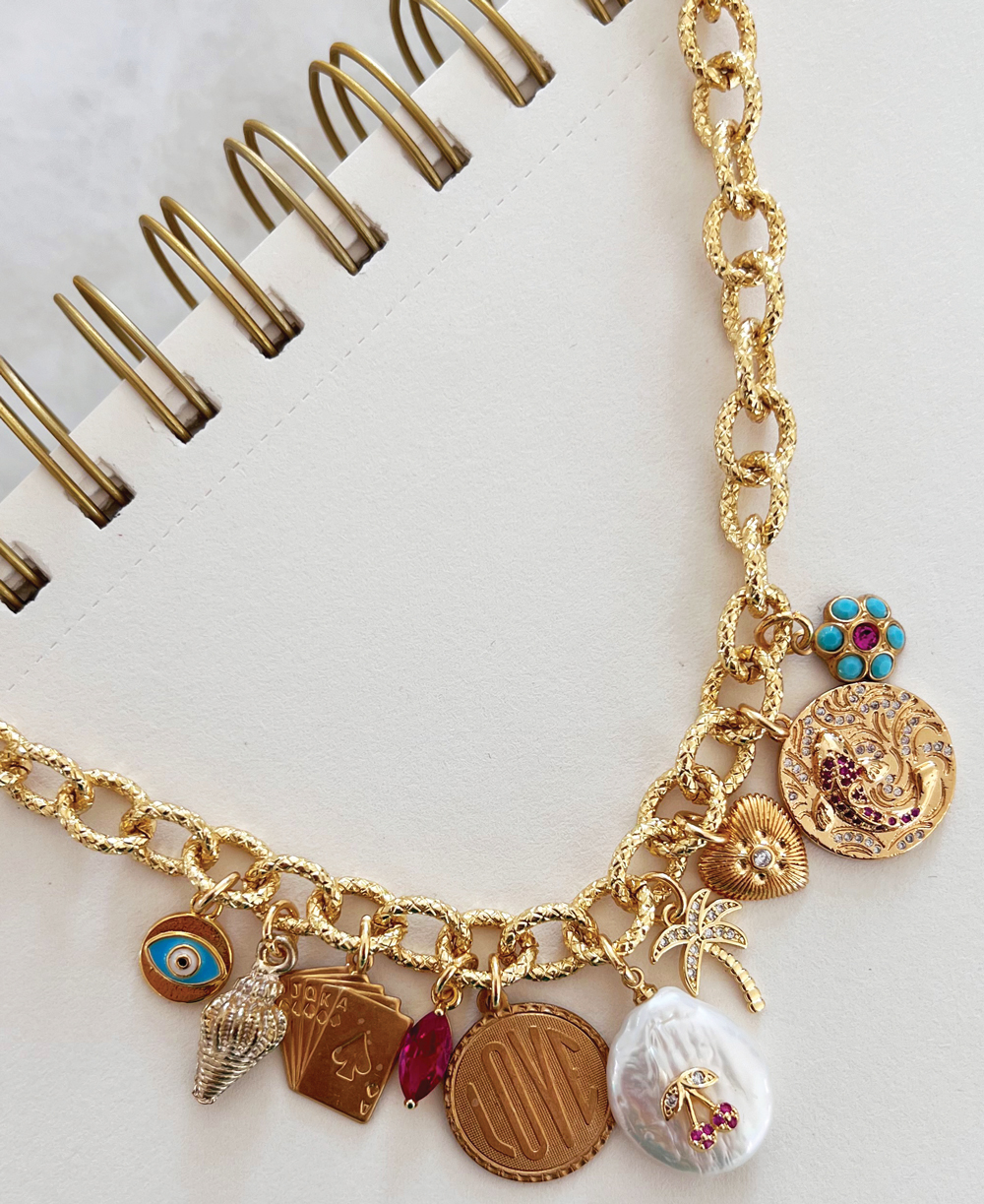
Rahimi, who began making jewelry while in school at UGA, now has charm jewelry in over 500 boutiques across the country. She’s been especially successful, though, with her local pop-ups selling charm necklaces—the newest iteration of the classic style, which began with bracelets. “I had a lot of leftover inventory [from wholesaling], so I started doing pop-ups heavily again last year,” she says. Her charm bars, as she calls the in-person customization experience, have taken off, and Rahimi now pops up around town at Buckhead Village, Ponce City Market, and other locations. Her charm selection includes popular of-the-moment pieces such as evil eyes, bows, and initials, and allows customers to choose what speaks to them. One pop-up even had customers waiting in line for three hours after a TikTok featuring the brand went viral.

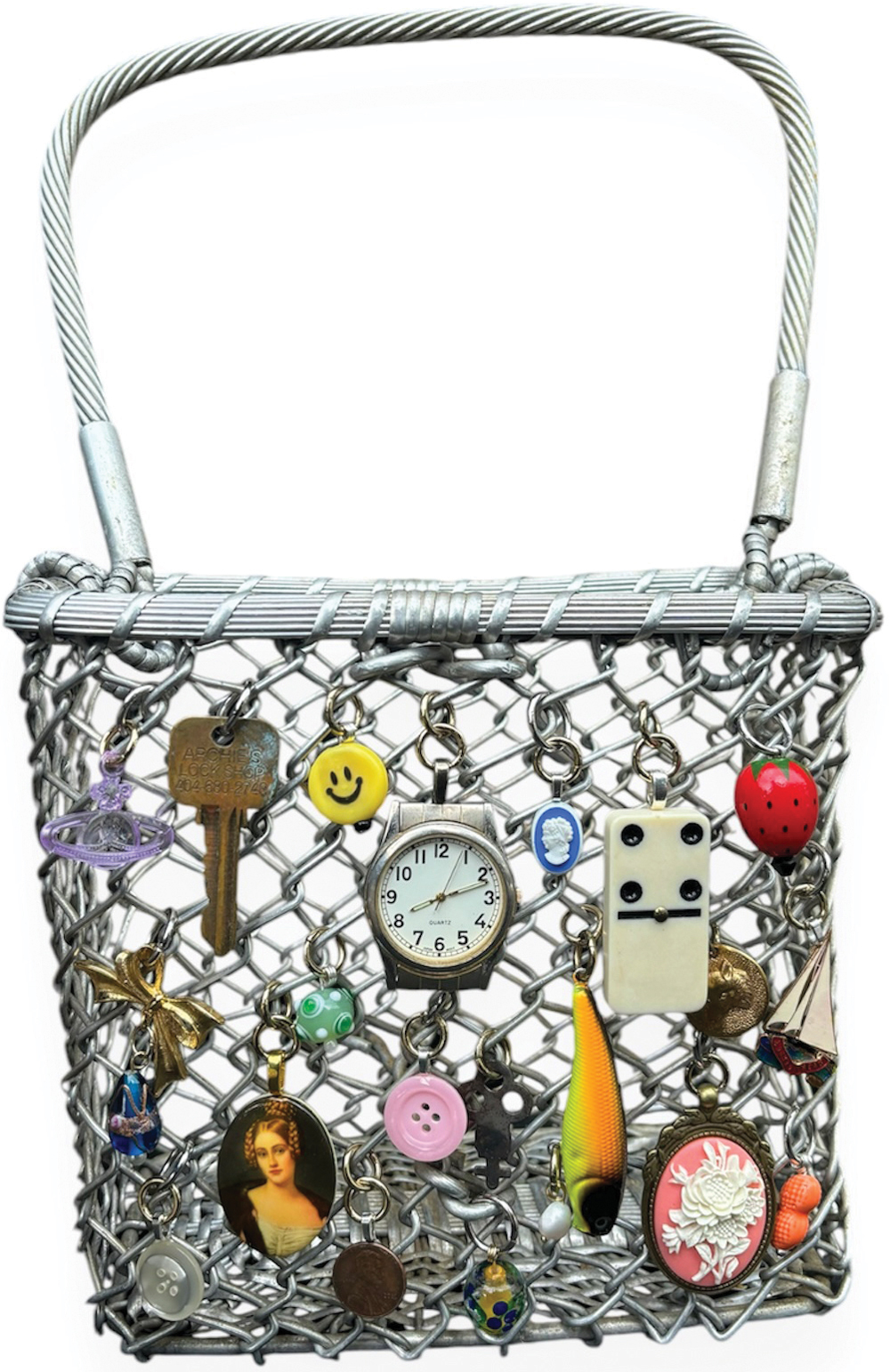
Prettiest Lobster’s charms adorn a vintage basket purse

Photograph courtesy of Prettiest Lobster

The desire for individualism in style speaks to Jessie LaMay, the owner of the charm necklace company Prettiest Lobster. LaMay does only one-of-a-kind pieces, sourcing vintage and antique charms from Georgia and the surrounding states. “Charms have this ultimate cool-older-sister vibe,” LaMay says. Their process is simple—they find the charms and make them into necklaces, to be sold the following week at Space Queen in Candler Park and various outdoor markets. Currently, LaMay’s into fishing lures. They remove the hooks, clean them up, and dangle gold or pearl pieces for sparkle.

LaMay says nostalgia is a huge part of charm culture, and they believe charm jewelry should be made of found objects to get the full effect. “Trend cycles are so fast now, but charm jewelry forces you to slow down,” LaMay says. “They have to look collected to look unique. You can’t just pick one up at Urban Outfitters.”

Fine Line Necklace, by It’s Especially Lucky

Photograph courtesy of It’s Especially Lucky

Charms were traditionally gifted over many years at some of life’s biggest moments, often reflecting the recipients’ particular interests, such as a book for avid readers or a suitcase for those with wanderlust. Now, a collection is often built in one single session via the act of making the jewelry. Lauren Cohen of Always Pretty Busy, a craft-party business, has carved out a niche helping others make charm jewelry at workshops in her Sandy Springs studio. She posits that the classes she began earlier this year have taken off for several reasons: Charm jewelry is relatively easy to make, a class allows you to do something with your hands instead of scrolling on your phone, and it’s an opportunity to spend dedicated time with friends and family. With business partner Abby Kelley, she’s also recently launched Craft Lab Atlanta, an elevated craft experience where they bring the charm party to you. Cohen loves the sense of accomplishment that creating gives her students, in addition to the wearable results. “They’ve picked out every single element, and it feels special,” she says.

This article appears in our December 2024 issue.

Nic Morgan of Hireth Jewelry on the power of a good skull ring

0

Nic Morgan of Hireth Jewelry on the power of a good skull ringThis time of year, the sheer volume of Halloween goods can make the macabre feel mundane. And yet, for those whose spooky sensibilities know no season, it can be difficult to find quality items more in the tradition of a memento mori than a winking “witch’s brew” wineglass. Enter Nic Morgan of Hireth Jewelry, a talented metalsmith creating wearable works of art primarily in silver and polished stone. Hireth’s motifs revolve around the natural world—living and dead—with a touch of the supernatural.

Morgan creates permanent homages to impermanence, with heavy emphasis on skulls, the cycle of life, and an otherworldly essence. (Whether that includes her popular Ouija planchettes is in the eye of the summoner.) While she does take commissions, most of Morgan’s pieces are inspired by her personal inklings and “goth-lite” tastes. “I tend to make things that I would want to wear,” she says. “If I’m not interested in it, it’s hard for me to do.”

Hireth pieces feel like the kind of items that probably aren’t possessed, but if a soul were looking for something to inhabit, they’d be a great option. After all, the name “Hireth” is derived from hiraeth, a Welsh word based in the longing for what has been lost. And what is a haunting if not a yearning for what once was?

Nic Morgan of Hireth Jewelry on the power of a good skull ring
A collection of bouquet, coffin, and mini Ouija planchette pendants

Photograph courtesy of Hireth Jewelry

Nic Morgan of Hireth Jewelry on the power of a good skull ring
Ouija planchette ring with a glass doll eye; skull rings in oxidized sterling silver, sterling silver, and bronze

Photograph courtesy of Hireth Jewelry

Yet it’s the permanence of the Hireth collection that truly stands out. The hefty pieces have the literal mark of their creator—each piece is handmade in Morgan’s East Atlanta studio, and no two are exactly the same. Morgan’s experience in sculpture and drawing visibly influences her jewelry, resulting in unique rings and necklaces with discernible depth. “I like things to look like they have a secret to them,” she says. It’s the kind of pendant you feel thumping against your sternum as you walk, keeping beat like a telltale heart, or a ring that imbues every gesture with weight.

But, like the costume parties that define spooky season, there’s levity to Morgan’s output, and she delights in witnessing the connection patrons feel with her work. Morgan’s customers are often investing in their first piece of art-as-jewelry, and she enjoys seeing them welcome a side of themselves that has been quietly lurking. “I am so thrilled I get to be the person who just pushed [them] over the edge,” she says of those who go from hesitant and unadorned to absolute converts. (Skull rings are the most common entry point.) Morgan’s customers are often repeat buyers, her pieces serving as mini billboards for the attuned. They find their way to her via her online shop or at local artisan pop-ups, including EAV’s Argosy Market.

Though Morgan knows her work isn’t for everyone, when it connects, it really connects. “I made something weird that is going to go on for a very long time, hopefully,” says Morgan. “Your grandkids will be like, ‘What do you think Granddad was into?’”

This article appears in our October 2024 issue.

Stylist Metta Conchetta launches her own clothing line, ATTEM

Stylist Metta Conchetta launches her own clothing line, ATTEM
Metta Conchetta made her mark styling looks for hip-hop’s elite. She’s shown here dressed from head to pointed toe in items from her ATTEM fashion line.

Photograph by Theo Preiswerk

On a recent morning, she’s dressed in an oversized black blazer, black shirt, and baggy denim, with her hair slicked back and sculptural silver jewelry on display. She has a distinct point of view. Heads turn to watch her as she moves through the coffee shop: How did this superstylish woman end up in Atlanta?

Düsseldorf-born stylist Metta Conchetta has called Atlanta her home base for the last nine years. “All of my music heroes came from Atlanta, and I was extremely influenced by hip-hop music,” she says. “I said, ‘Why not?’ to Atlanta.” After arriving here, she sent a cold email to famed hip-hop photographer Zach Wolfe. That email led to her first styling job, for a magazine featuring Metro Boomin. Wolfe was unable to take that gig, so she worked with photographer Diwang Valdez. “Diwang and his crew, Motion Family, became big mentors throughout my career,” she says. From there she made a name for herself, making the rounds on commercial and editorial shoots and popping up at the hottest fashion events in town. She has styled some of the biggest names in music for publications, brands, and events, working with clients such as Jack Harlow, Ice Spice, 6LACK, and SoFaygo.

She was at the top of her game by anyone’s standards. But Conchetta began to feel a creative itch. “I had collaborated with and been around the biggest names in fashion, magazines, and music. I had worked for so long to create images for other people, but I still felt like I had another calling in me to create something for myself,” she says. In November 2023, after two years of work, she launched her own line, ATTEM.

Meaning “breathe” in German (in addition to spelling Metta backward), ATTEM is a representation of Conchetta’s personal style, which leans toward the androgynous. “I love experimenting with the feminine and masculine,” she says. It’s a combination of the professionalism that Conchetta says was ingrained in her German upbringing, and her street-style perspective. Inspired by this mashup, the collection marries items like oversized dress shirts and blazers with denim, leather skirts, and hoodies. “I wanted to do something beyond the shallow, a little niche, that felt like it catered to me and people like me, not the whole world,” she says.

Conchetta likes the flexibility her line has given her creatively, showcasing her style across a variety of categories, from shoes to accessories to ready-to-wear. All items are under $250. “I wanted to give a portion of myself that was affordable and of good quality,” she says. With her drop business model, she’s able to share her fashion with the world when the inspiration strikes, rather than when dictated by a seasonal schedule. Shoes, for example, are inspiring her right now and selling well, so she’s planning to focus her future energy there.

“My goal with ATTEM is to give people a platform,” Conchetta says. “You don’t have to know what to do with this oversized dress shirt, but that’s on you [as the customer] to be creative. It’s there for you to experiment.”

This article appears in our July 2024 issue.

Atlanta native Meghna Davé brings Indian-inspired apparel and textiles to Maelu in Grant Park

Atlanta native Meghna Davé brings Indian-inspired apparel and textiles to Maelu in Grant Park
Meghna Davé says Maelu is a lifestyle shop for both her creations and other local brands.

Photograph courtesy of Meghna Davé

Like many, Meghna Davé left Atlanta after school for the bright lights of New York City. She grew up in an Indian family in Dacula, where textiles were the family business—her mom created niche, high-end costumes for local dance groups. “I wasn’t interested in continuing in the family business or entrepreneurship,” she says. “I wanted to work in corporate America in NYC. That was my dream.”

After two years in New York City, though, she realized that life as a forensic litigation consultant wasn’t necessarily for her, either. She quit and traveled around Asia, beginning to think about becoming an entrepreneur. Surprisingly to her, her business ideas revolved around textiles, but with one key difference. “I realized that my own thing didn’t have to be exactly like my parents’ business, but rather a combination based on my heritage and how I grew up American,” she says.

What that business was going to be, though, she didn’t quite know. During her sabbatical, Davé enrolled in a dressmaking school in Thailand, then went to India to research natural dyes. She had no goal other than to learn new skills and meet artisans. While in India, she met a local family who block-printed traditional fabrics, and began experimenting with the possibilities of their fabrics. A year later, with the help of her parents, she began delving into business conversations to make a clothing line a reality.

Now in its 12th year of operation, Maelu is the marriage of Davé’s Indian heritage and American spirit. Collaborating with three block printers in India that specialize in different techniques, she combines the traditional with the modern. Her focus is on natural fibers, sustainable practices, and well-made pieces. She works with an NGO in India for sampling and manufacturing that provides resources to women who have suffered from domestic violence, teaching them sewing skills and offering the support they need to work with the organization or start their own microbusinesses.

Maelu comes from the Thai phrase mai ru, which loosely translates to “I don’t know,” a perfect fit for Davé’s philosophy of figuring things out as she goes. “The nature of the unknown appealed to me,” she says. “I didn’t want to put a vision on it. It was more about doing one step at a time.”

She began her business in Atlanta, but after she met her husband, they moved to Portland. Her line of dresses, pants, tops, pillows, and more has blossomed into an avenue for community since they moved back to Atlanta in 2022, after the birth of her son. She opened her retail space in Grant Park in September 2023. While she wasn’t actively searching for a brick-and-mortar, she was, once again, open to possibilities unknown. It more than worked out. “I’m five minutes from my house,” she says. “I take my son to the park across the street.”

She enjoys having a physical space to help customers and amplify local brands. Right now, that includes a section for such specialty foods as Spicewalla spices and Portrait Coffee, and a kids section with small runs of toddler- and baby-sized clothing in Maelu prints, plus toys and accessories. There’s jewelry from Grant Park–based Connie n’ Jack and Decatur-based Fossil & Hide, and fragrance from Sandy Springs’s Eidecker Studio. She’s planning more events this year, continuing to build the community that has supported her so passionately. “We’re a lifestyle store. We’re creating a story, a feel. We want this space to feel welcoming for all,” Davé says.

This article appears in our June 2024 issue.

Two Atlanta-based brands team up for a new pickleball collection

Two Atlanta-based brands team up for a new pickleball collection
The CROSBY by Mollie Burch x La Point collection, shown alongside the Tippy Tap cocktail truck and florals from M. Delia Designs for Lucy’s Market

Photograph by Katie Michelle Photo

Pickleball is undeniably hot across Atlanta. It’s not surprising, perhaps, given how much Atlantans love tennis. Pickleball is tennis’ louder, more social cousin and if the debut of places like Painted Pickle are any indication, the sport will have longevity in our city.

For some, dressing the part is just as important as how you play the game. A new collection, CROSBY by Mollie Burch x La Point, debuted from two Atlanta-based brands recently to help those who want to look stylish while playing achieve that goal. CROSBY by Mollie Burch is a ready-to-wear brand that was founded in 2015, is known for its bold and bright original prints in feminine, easy-to-wear silhouettes.

La Point, founded last year by Lindsey Catone, is a pickleball paddle and accessory brand. “Our philosophy is that pickleball doesn’t have to always be so casual, it can be fancy and fun. We want to meet performance with fashionable designs,” she says.

Two Atlanta-based brands team up for a new pickleball collectionTwo Atlanta-based brands team up for a new pickleball collectionCatone originally reached out to Burch to talk about collaborating on a paddle, communication that was fortuitous as Burch was thinking about launching an active line. “It was very serendipitous, and we loved Lindsey’s philosophy of making pickleball pretty but functional. We loved supporting another small, women-owned, Atlanta-based business, too,” says Burch. The timing was right, and the two launched the CROSBY by Mollie Burch x La Point line this spring.

Featuring paddles and matching dresses, the collection is available in five vibrant prints with names like Palm Beach, Ace It, and Pickle Plaid. The paddle collection is available on both websites and the corresponding activewear can be found on the CROSBY by Mollie Burch site, with the pieces available at select in-town boutiques like East Magnolia in Marietta and Barnett & Co in Peachtree City.

Two Atlanta-based brands team up for a new pickleball collection

Two Atlanta-based brands team up for a new pickleball collectionIt’s been fun for the two to see the collection out and about around town and see the response. “Putting our prints on paddles hits a niche market,” says Burch. “We definitely hit on something that was missing. Our paddles play well, but they look really pretty and come in a beautiful branded case people like to show off.” Catone, who is an active pickleball player, recalls a recent run-in. “I was at a tournament, and there were so many women that showed up with the paddles and in the dresses or skirts. A team of two signed up, and the pair did the Palm Beach pattern. They had the paddles, and one was in a dress and one was in a skirt. That was really cool to see,” she says.

Follow Us

69,386FansLike
144,836FollowersFollow
493,480FollowersFollow

NEWSLETTERS