
Home 2015

Archives

Where are they now? Billy Payne

1996 Olympics Billy Payne
Billy Payne

Photograph by Matthew Stockman/ALLSPORT via Getty Images

In 1990, when Atlanta beat out Athens to host the 1996 Centennial Olympic Games, it was an impressive come-from-behind win, even for a former University of Georgia football star. William “Billy” Porter Payne, an All-SEC defensive end for the Dawgs and Dunwoody real estate lawyer, dreamed up Atlanta’s quixotic bid and served as CEO of the Atlanta Committee for the Olympic Games. As the face of the Games, Payne earned local hero status—and a bronze likeness in Centennial Olympic Park. But the accolades were followed by a sour period. In wake of the scandal surrounding Salt Lake City’s Olympic bid, media outlets—AJC columnist Colin Campbell in particular—scrounged for dirty laundry in Atlanta’s records. Payne retreated into privacy. Today he serves as chairman of the real estate investment firm Centennial Holding Co., which he cofounded with his son.

But Payne’s profile is not entirely low. In recent years he’s achieved notoriety of a different sort. Since 2006 he’s been chairman of Augusta National Golf Club, home of the Masters. Under his leadership the all-male club in 2012 admitted its first two female members (including Condoleezza Rice). Maybe someday he’ll even reopen the waiting list for badges!

Pep talk
“The real legacy of the Games is that the people of Atlanta felt for themselves the legacy of possibility. We can do anything we set our minds to.” Payne in Atlanta magazine, November 1999

From our archives: Read 1998’s “A Private Payne” by Rebecca Burns, a profile of Payne and his quest for privacy after the Salt Lake City Olympics scandal.

Back to the 90s

This article originally appeared in our March 2015 issue.

How Georgia boy Ralph Reed shaped national politics

Photograph by Landov

God works, as they say, in mysterious ways, and for Ralph Reed, He did so in a Washington, D.C., bar called Bullfeathers, where one night in the mid-1980s, the former executive director of the College Republicans felt a divine whisper prompting him to attend church. He chose a congregation from the phone book and was born again the next day. A decade later, as head of the Christian Coalition, Reed shaped national politics. Rivals lusted after his charisma and savvy; reporters marveled at his seemingly unaging face. In 1995 “Time” put him on the cover with the headline “Right Hand of God.”

At the end of the 1990s, Reed turned his focus homeward; as chair of the Georgia GOP, he helped Sonny Perdue become the first Republican governor since Reconstruction. Reed’s own 2006 bid for lieutenant governor was not a success; today he runs the Faith & Freedom Coalition, which he has described as “the NRA for people of faith.”

Back to the 90s

This article originally appeared in our March 2015 issue.

The Powerpuff Girls epitomized 90s girl power

Photograph courtesy of Cartoon Network

Sugar, spice, and everything nice. These were the ingredients for Cartoon Network’s stealth hit. The Turner cable channel had launched in 1992 as a home for animated classics. But a series of original shorts, “What a Cartoon!,” launched many of CN’s eventual all-stars—including “The Powerpuff Girls,” which premiered in 1998 to massive ratings and merchandise sales and remains one of CN’s biggest hits. Echoing a 1990s riot grrrl spirit, the kindergarten crime fighters epitomized Girl Power, but pop culture references and hapless villains made them a hit with boys and adults, too. Proof of the show’s staying power: a new iteration of “PPG” will debut in 2016.

Back to the 90s

This article originally appeared in our March 2015 issue.

Where are they now? Matt Moseley

0
Photograph by Getty Images

On April 12, 1999, as flames and smoke consumed a five-story building under renovation in the Fulton Bag and Cotton Mills complex, the Atlanta Fire Rescue Department’s Matt Moseley dangled from a helicopter at the end of a 50-foot rope. Swinging above the inferno, Moseley used hand signals to guide the pilot toward a 220-foot-high crane, its gondola ablaze. Crane operator Ivers Sims had escaped the scalding metal walkway by climbing onto the concrete counterweights, where Moseley grabbed hold of him and then carried him as the chopper transported them to safety.

Sims was virtually unharmed, requiring treatment only for smoke inhalation and heat exposure. Moseley, the heralded savior, seemed to suffer from a mild case of embarrassment. “We don’t like to be called heroes,” he told CNN. “We had a job to do, and we went out there and did it.”

Moseley returned to the job for nine years, until budget cuts in the AFRD compelled him to seek a lieutenant’s position in Johns Creek. “I’m getting older and roller coasters make me nauseous,” he said then. “I want to be in a place more like a carousel.”

Two years ago, he left the carousel for the Canton real estate market. Now instead of helping you out of a collapsing building, Moseley wants to help you into a sound one.

Back to the 90s

This article originally appeared in our March 2015 issue.

Red state rising: The last days of Georgia’s two-party system

Illustration by Michael Witte

Georgia politics in the 1990s was like a murky twilight zone with two galaxies spinning away from each other.

On one side were the remains of the old Solid Democratic South, still dominant at the beginning of the decade but best glimpsed in ghosts and caricature-like light from vanished stars. So though Andrew Young, Zell Miller, and Roy Barnes were the main combatants in the 1990 Democratic primary for governor, I also interviewed Lester Maddox, making a quixotic run for the job he had last held in 1971. He proudly showed me his watch with its chicken leg for an hour hand and pick handle for a minute hand, memorializing his 1964 stand against integration at his Pickrick restaurant. “Those Spiro Agnew and George Wallace watches were pin-lever movements, cheap pieces of junk,” he said. “This is a 17 jewel.” When we said goodbye, he got into his Chrysler Fifth Avenue, with “Guy Lombardo: 50 Years, 50” Hits in the cassette deck, and headed home.

On the other side: the Solid Republican South, gathering mass and best represented by Newt Gingrich—who, lest we forget, was the only Republican in Georgia’s 10-member congressional delegation at the decade’s start. I’d drive out to Vittles Restaurant in Cobb County, where Gingrich improvised orations like a white-bread version of Ornette Coleman, spinning out endless variations of good Republican words (freedom, opportunity, empower) and bad Democratic ones (sick, pathetic, traitors) in giddy soliloquies. It was like watching Fox News before it even existed.

Then with remarkable speed, those galaxies changed places. In 1990 there was only Gingrich. Ambitious white politicians like Miller and Barnes were still Democrats. After the 1992 redistricting, there were four Republicans and seven Democrats in Georgia’s Congressional delegations. Two years later, there were seven Republicans and four Democrats (three black; one white).

“Moderate-conservative Democrats in the South are a dying breed, but I never thought the Republicans would become the majority party this fast,” Roy Rowland, a six-term Democrat whose retirement from Congress opened the door for Saxby Chambliss, told me after the 1994 elections. “My history pulls me to the Democrats, but I know if I were running as a young man now, I’d be running as a Republican too.”

It was remarkable to witness that short window of transition. Yes, whites were trending Republican, but Jesse Jackson was registering black voters across the South. You could have made an argument the state could go either way: that a coalition of black and white Democrats could be a winning formula, that there didn’t have to be a club the white folks joined that automatically controlled Georgia politics. There’s renewed talk of that coalition, but the 2014 election results don’t exactly bolster the case. Maybe a new twilight zone of a two-party Georgia lies over the horizon, but I’m not sure I’d bet my Guy Lombardo cassettes on it.

New York Times Atlanta bureau chief from 1989 to 1994, and now deputy national editor, Applebome is the author of Dixie Rising: How the South Is Shaping American Values, Politics, and Culture.

Back to the 90s

This article originally appeared in our March 2015 issue.

Where are they now? The Morning X

Photograph by Troy Plota

In an inspired move, Atlanta Top 40 station 99.7 FM, Power 99, rebranded itself in October 1992 as 99X—with a lineup of Gen X-skewing grunge rock and attitude-laced talk. One of the most influential modern rock stations of the decade, 99X catapulted the careers of Atlanta-based acts like Shawn Mullins, Marvelous 3, and John Mayer; drove the rock charts; and even drew the older guard. Everyone from Paul McCartney to Warren Beatty angled to drop by the studio. In 1997, 99X even snagged David Bowie to play a breakfast concert at Smith’s Olde Bar.

The morning show went through a number of incarnations, but the most popular was The Morning X, with pop culture fan/jock Steve Barnes, station program director Leslie Fram, and wisecracking Jimmy Baron. Collectively named On-Air Personalities of the Year in 1996 by Billboard, the trio grabbed high ratings. But as grunge faded in favor of pop and rap, so did the audience for 99X; eventually it swapped signals with hits-driven Q100.

Today Fram, Billboard’s 1998 Program Director of the Year, works in Nashville as a senior vice president for CMT. Barnes owns Barnes Creative Studios, an Atlanta firm that creates drone videos for high-end clients. And since 2011, Baron has been a Realtor (he’s now with Keller Williams) and has sold homes for Barnes and even his former radio foe, Larry Wachs of The Regular Guys. He recalls his most surreal 99X moment: “I was on the golf course and my phone rang. It was a listener who wanted to get in touch with this kid songwriter we’d put on the air at 5:30 after he won a station contest. So I ended up giving John Mayer’s phone number to Elton John.”

Back to the 90s

This article originally appeared in our March 2015 issue.

Back in the day: Kasim Reed

Photograph courtesy of Kasim Reed

When I hear 1990s, the first thing I think about is my time at Howard University and that high-top fade hairstyle I used to have. I had to work really hard at it too. You had to find a barber who could cut it just right. It was the decade Atlanta really became a force in the music business—folks like Rico Wade, the Dungeon Family, Outkast, Goodie Mob, and TLC. At Howard, when you turned on the radio, it was very likely you’d hear an artist from home.

I graduated from law school in 1995, had my first job and was looking for my first place. I was a lawyer just getting started. I used to get to work really early. My dad was fanatical about this. He told me, “You’ve got to be there before anyone else.” So one morning, I’m reading the newspaper at 5:30 or 6, and there was a Colony Square condo listed for, I think, $72,500. I picked up the phone to make sure they weren’t joking. I wanted to shut this thing down. I was in full baby lawyer mode. I couldn’t practice my way out of a paper bag yet! I put the earnest money down and bought it that day. I still own it. My mother lives there now. It turned out to be a pretty good investment.

As told to Richard L. Eldredge

Back to the 90s

This article originally appeared in our March 2015 issue.

Back in the day: Karyn Greer

Photograph courtesy of Karyn Greer

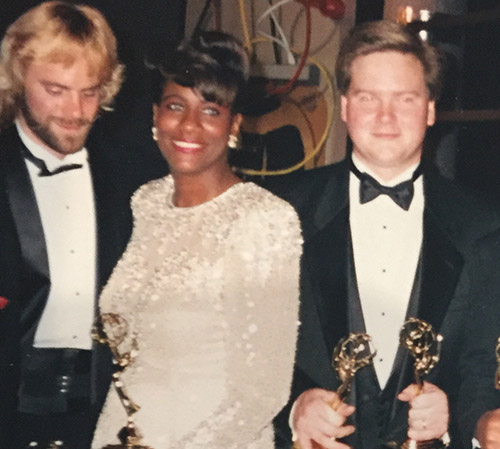
I started anchoring the evening news at Channel 46 in 1990. I was a girl in my 20s, working in a major market in my dream job. It was exciting. I felt like Holly Hunter in “Broadcast News.” In 1991 I won my first Emmy for “Battle with AIDS,” covering the epidemic. This was back when many of us were learning we had a friend or a loved one with AIDS. People were going to a lot of memorial services. Viewers wanted to know what patients went through.

We used to go out after work. Dante’s Down the Hatch was a big hangout; the Paul Mitchell Trio played there. I remember the Palm opening and all those caricatures on the wall. My other big hangout was Rupert’s, the club in the Disco Kroger shopping center. We used to go dancing after work on Fridays.

One night at Club 112, this trio of girls came up to me, introduced themselves, and said, “Hey TV news lady, you’re going to know our name one day.” That’s how I first met TLC. I reminded them of that years later when Chilli arranged to have me cover their concert at Philips Arena.

As told to Richard L. Eldredge

Back to the 90s

This article originally appeared in our March 2015 issue.

NationsBank Plaza, now Bank of America Plaza, rises up

0315_90s_nationsbank_oneuseonlyIn September 1992, a family festival with opera performances and puppetry marked the opening of Atlanta’s tallest building: NationsBank Plaza, a 55-story colossus of red granite and glass, topped with a skeletal golden pyramid of girders. Not everyone was enamored. One critic called the building’s shaft “conventional,” while noting its apex “looks peculiarly like a pencil.” Today the building is emblematic of changing fortunes. Rechristened Bank of America Plaza after a series of corporate mergers, it changed hands again in a 2012 foreclosure sale. While it remains the tallest U.S. building outside of Chicago and New York, it also remains half empty.

Back to the 90s

This article originally appeared in our March 2015 issue.

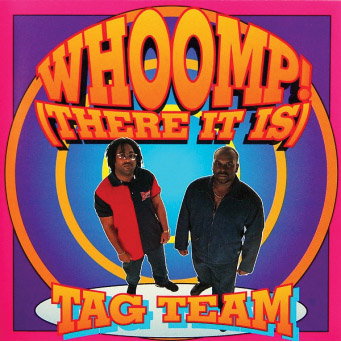
Da bomb party song: “Whoomp! (There It Is)”

0315_90s_tagteam_oneuseonlyAs Tag Team, Cecil Glenn, aka DC the Brain Supreme, and Steve “Rolln” Gibson may be one-hit wonders, but oh, what a hit. The thumping bass, gleeful spirit, and endless chants of the title phrase have made 1993’s “Whoomp! (There It Is)” one of the most enduring party songs of the past 25 years. Inspired by an expression used by the dancers at the Magic City strip club, best friends Glenn and Gibson recorded the song with a loan from Glenn’s parents. It became a smash at Magic City (where Glenn deejayed) and clubs throughout Atlanta. A record deal followed, and “Whoomp!” earned the number two spot on Billboard’s year-end Hot 100 chart and went quadruple platinum. Thanks to a flawed contract, the duo earn only a fraction of the zillions generated by their hit—ranked sixth on Rolling Stone’s “20 Biggest Songs of the Summer: The 1990s” list. After money woes for both and a prison stint for Gibson (busted with 600 pounds of weed), there’s been a “Whoomp!” resurgence. It’s popped up in movies (“Elf”), TV shows (“Scrubs”), and ads for i­Phones and diapers (“Poop! (There It Is)”). The song now powers an Android campaign.

Back to the 90s

This article originally appeared in our March 2015 issue.

Follow Us

69,386FansLike
144,836FollowersFollow
493,480FollowersFollow

NEWSLETTERS