

As a 41-year-old mother who has two very small children, has ADHD and an autoimmune disease, and works a 40-hour work week running a business, I never know how to answer the question, “Are you stressed?” While I don’t currently feel outwardly stressed, I know my body is in fight-or-flight all day, and I never feel rested because I assume it’s still hyperactive while I sleep.
I’ve tried every therapy possible to cure my chronic tightness: facial massage to relax my tight jaw, myofascial release to unstick my hips, energy healing to release energy blockages, cranial sacral massage to coax my cervical spine back into place. So when I saw a new-to-me treatment called psychosomatic bodywork, I jumped at the chance to try it.
Maha Taylor, the founder of Psychosomatic Recovery, describes what they do as a combination of emotional coaching and trauma-informed bodywork that is nervous-system led rather than muscle-led. Psychologically, coping mechanisms and limiting belief patterns can be held within the fascia (connective tissue) and the nervous system, Taylor says.
“I help rehabilitate the nervous system’s response,” says Taylor, who is one of the few psychosomatic bodywork practitioners in Atlanta. “We are trying to reeducate and care for the nervous system so that it can respond differently to the stress in our lives.”
Taylor told me it’s like couples counseling for the mind and body, with the ultimate goal of a reset. “We are trying to create new neural pathways within the brain and tone the vagus nerve so that you can address things with more confidence and security,” they say.
Taylor, who also has an Alpharetta location, says anyone could benefit from the bodywork. Still, this work might be most helpful to those in two categories: people who have chronic pain and people who are looking to level up their self-awareness. “It’s a lot of information at once, so it’s good for people who have some familiarity with their psychological patterns,” they say.
I ticked both of those boxes and was excited to work with Taylor, who specializes in queer, neurodivergent, and soft tissue dysfunction clients. The first appointment began with a lengthy intake, where I was instructed to elaborate on everything from physical traumas, such as C-sections and car accidents, to emotional sticking points. Taylor could see patterns in my life and thinking, how I make decisions, and how those decisions might activate my nervous system, coaching me through them using internal family systems (IFS) and emotional liberation principles.
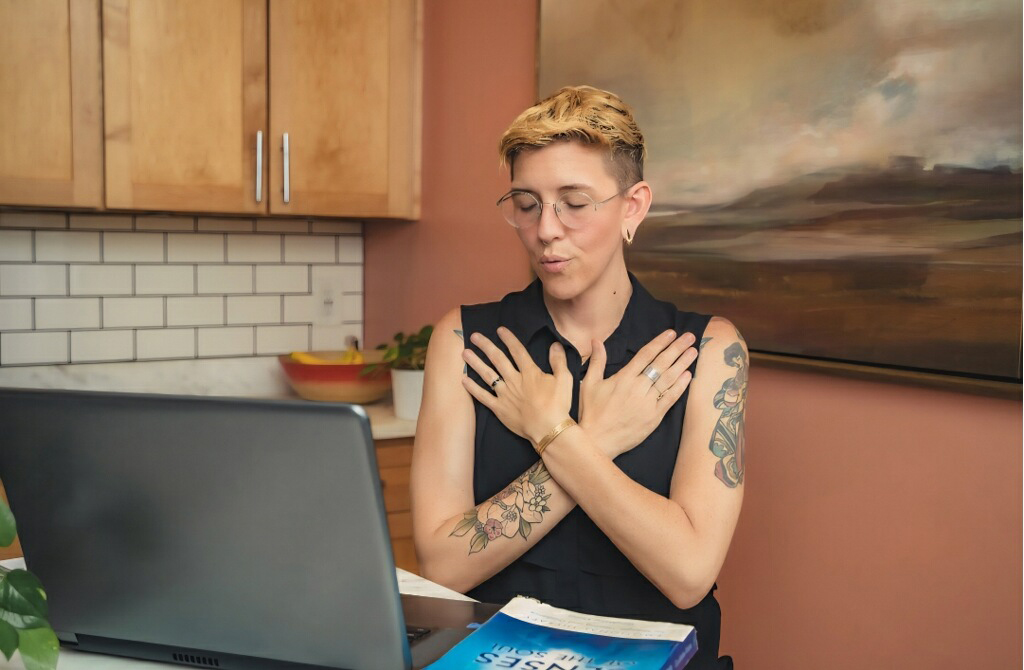
Then, we made an emotional body map and practiced a somatic check-in, similar to a guided meditation, to see what came up.
The second appointment was physical. Taylor is a licensed massage therapist and holds many certifications, including those in emotional liberation coaching, physiology, and Kundalini and Kripalu yoga. They use a combination of massage therapy techniques, such as myofascial release, cranial sacral massage, and the Traeger method, a gentler, rhythmic approach, among others. There’s a breathwork element and a validating, calming dialogue as well. The goal is to see how the nervous system’s reactivity is held in fascia lines and to soothe them, not necessarily to release a tight muscle. It’s a continual work in progress, more akin to physical therapy—hence the name Psychosomatic Recovery—than a singular spa massage.
Despite that caveat, I left feeling more aligned and at peace, excited about the concrete strategies and techniques Taylor armed me with. I’ve been sleeping better overall, and while it will take more sessions to get me out of fight-or-flight mode fully, it was a great first step.