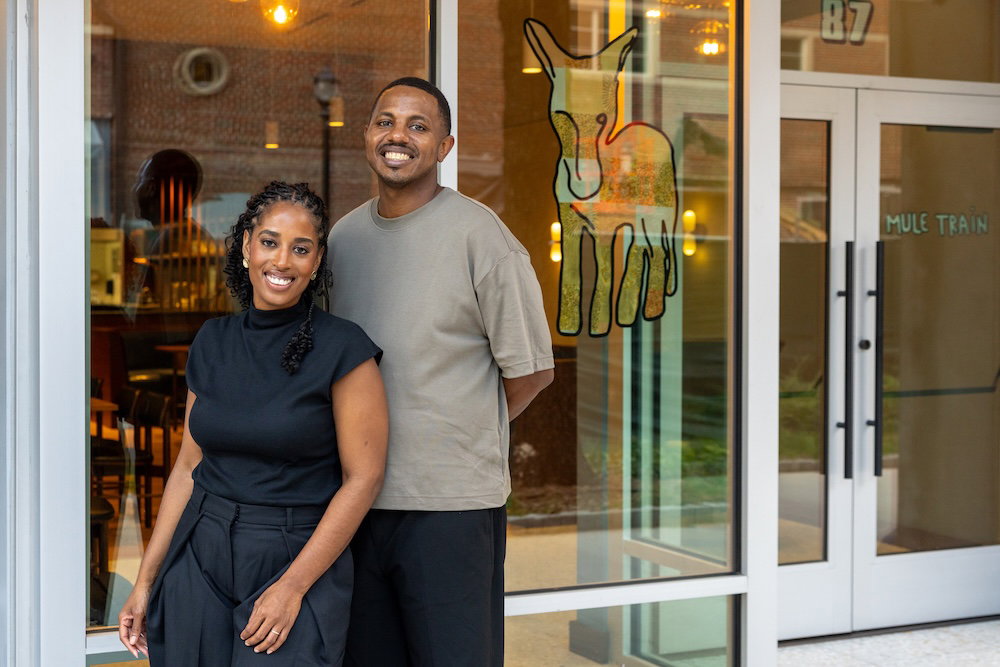
After nearly a decade of pop-ups, Mike and Shyretha Sheats have opened their first brick-and-mortar restaurant, Mule Train, in South Downtown. The 40-seat contemporary Southern restaurant grows out of The Plate Sale, the couple’s longtime pop-up, inspired by the community plate sales they knew growing up, when neighbors sold food at churches and in front yards.
Mule Train’s name harkens back to a family shack in rural Northeast Georgia that served as a stopping point for friends and neighbors to sip moonshine and eat whole-hog barbecue. The new restaurant carries forward that sentiment of an open-door gathering spot.
Its South Downtown address also is personal to Shyretha, who attended Georgia State University nearby. “I’m excited to be a part of the up[swing] of Downtown and be a part of an area that was once integral to the city,” she says.
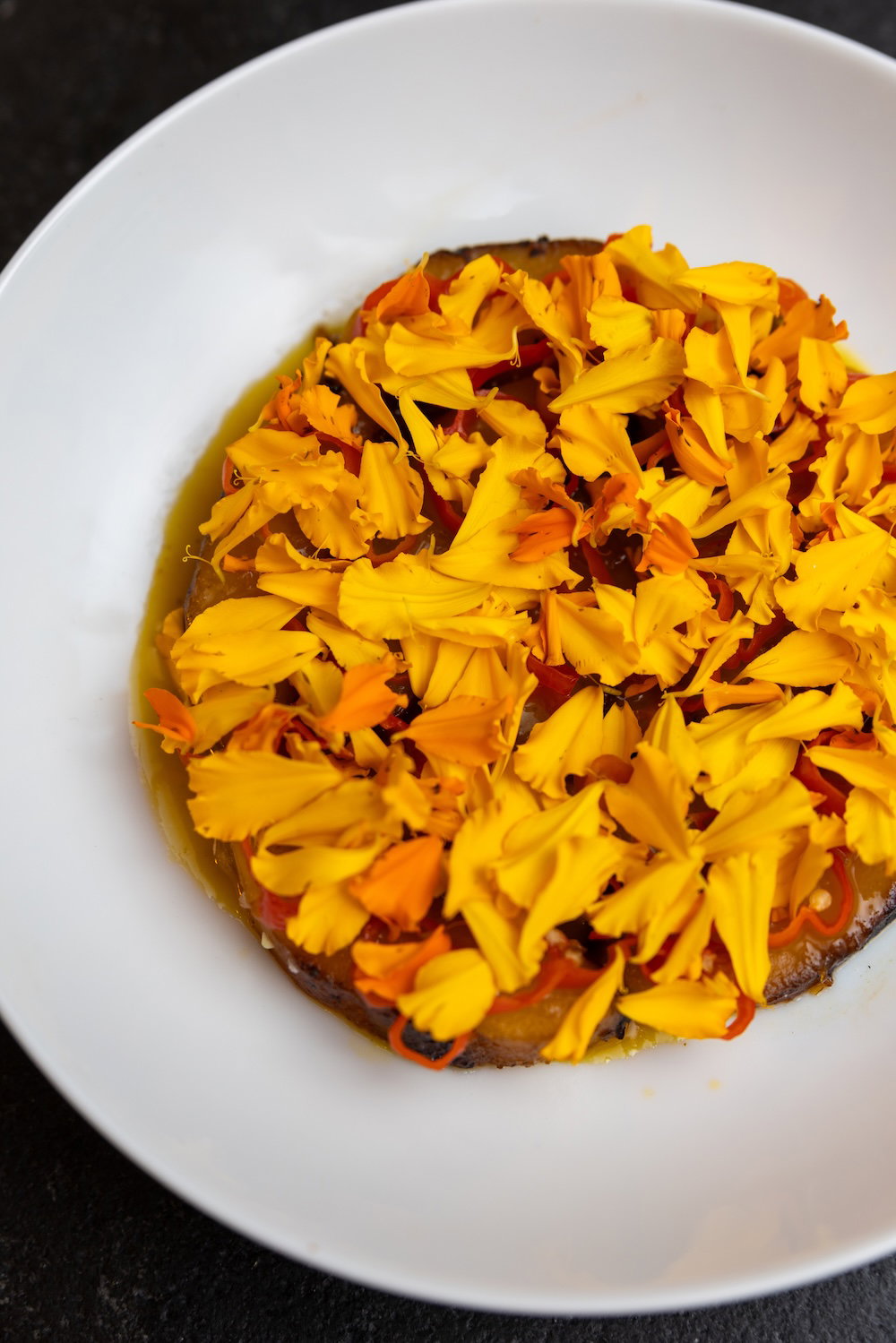
Candy roaster squash with habanada and marigold
Photo by Lynsey Weatherspoon
The cooking
The initial menu shows how Mike is translating Southern cooking into Mule Train’s compact format. Drawing on experience at Muss & Turner’s and Staplehouse, he pairs Georgia-grown ingredients and familiar preparations with less expected flavor combinations, giving vegetables and roasted meats equal weight.
Lunch will not follow a conventional meat-and-three format. Instead, its five-item menu is conceived as a condensed “power lunch,” with options for a protein, vegetable, salad, and dessert. The selections will change with the seasons, generally every four to six weeks.
Rather than dividing dishes into traditional categories like appetizers and mains, the restaurant simply lists the items available that day and lets diners assemble their own experience.
“It allows you to discover a new flavor and experience the menu as a whole,” Shyretha says. “It’s like if you go to a friend’s house, you’re served what they’re making that evening.”
The kitchen will course selections rather than crowding the table all at once, with the menu designed to be shared. An additional prix fixe offering may come early next year. For now, look for candy roaster squash with habanada (a heatless pepper) and marigold, and aged pork with wisteria and okra.
The bar
Photo by Lynsey Weatherspoon
The bar program
As beverage director, Shyretha is following a similarly tight approach to the drink lists. Expect full-size and tasting-size pours of classic and seasonally inspired cocktails. On draft features include a cocktail, a nonalcoholic option, and house-made soda. She’s currently excited about muscadine and is excited to share her dry gin and sherry “more approachable, martini-like drink.”
The wine list will offer about six to eight bottles, plus a handful of wines by the glass, all either generational winemakers or New World producers who share an emphasis on sustainable growing and meticulous technique. Local beers will round out the offerings, including large-format bottles chosen because they “drink more like wine” and complement the food, Shyretha says.
Inside Mule Train
Photo by Lynsey Weatherspoon
The space
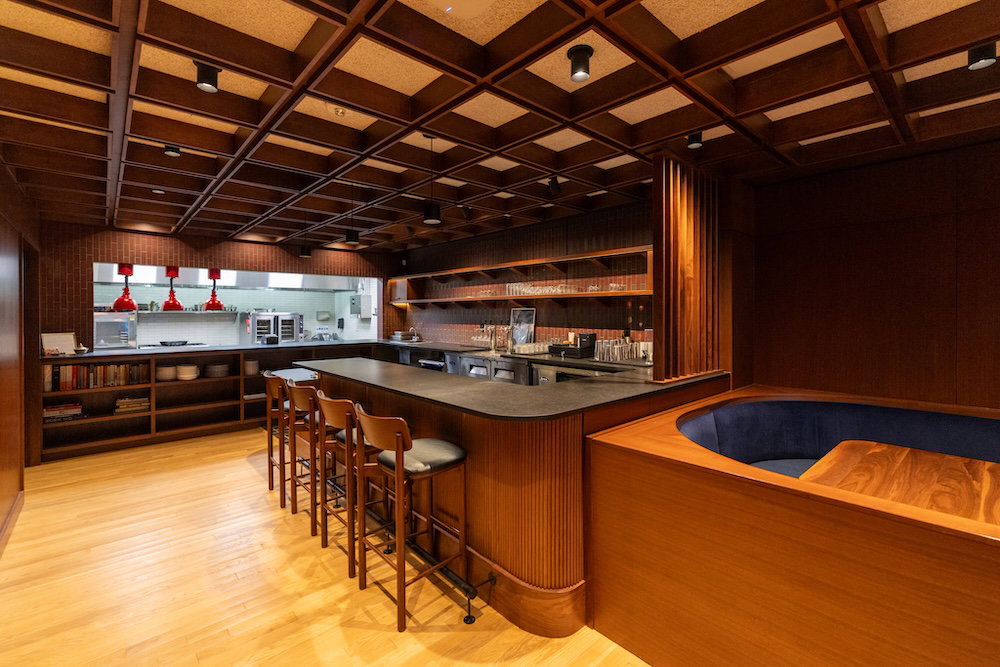
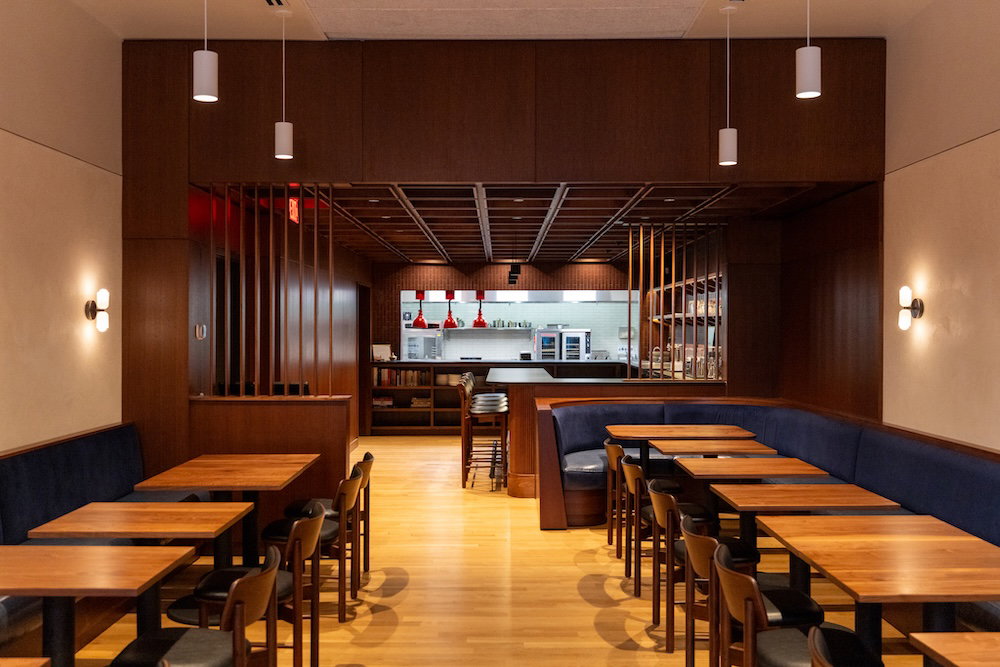
Mule Train has a shotgun-style layout with direct views into the kitchen. Banquettes line both sides of the narrow room, upholstered in blue leather and velvet to create a close, communal feel. The four-seat bar is wrapped in dark walnut paneling reminiscent of a grandmother’s Southern home, with burgundy tones and a black granite bar top adding a moodier note. Together, the details support the couple’s aim for a space that feels like walking through a home: minimal and modern but layered with touches of old and new.
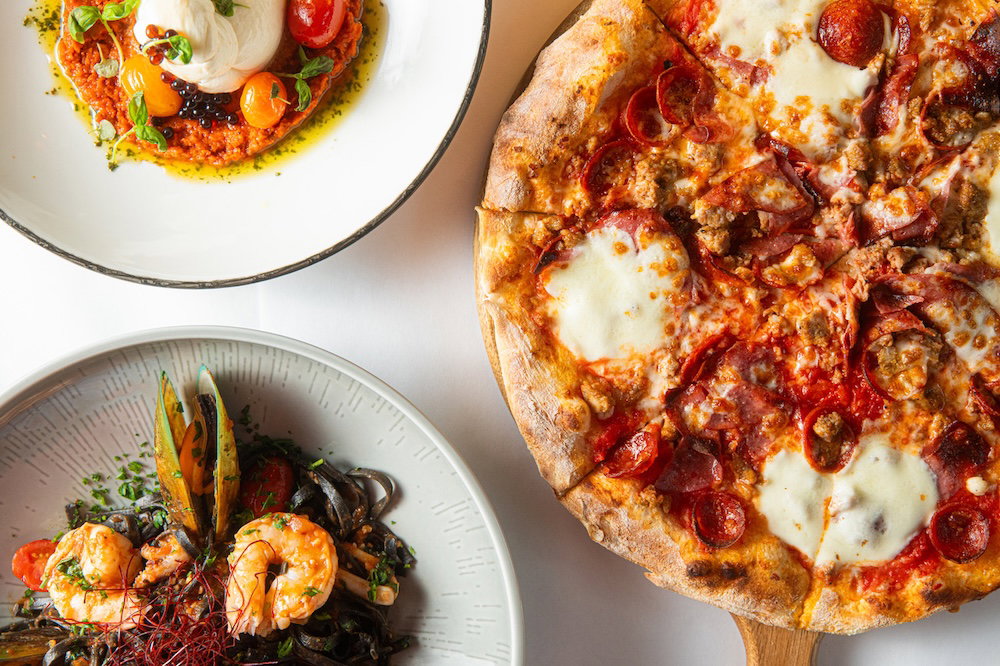
Speziato pizza (right), burrata (top left), fra diavolo (bottom left)
Photo by Morgan Evans
After nine years operating Stockyard Burgers & Bones in Vinings Jubilee, chef Scott Kinsey and his wife Alexis Kinsey have started a new chapter in the same space. They opened Cotto Modern Italian in late September, serving dinner nightly as well as weekend brunch.
“We have a very similar demographic in Vinings and thought Cotto would be great here,” Alexis Kinsey says.
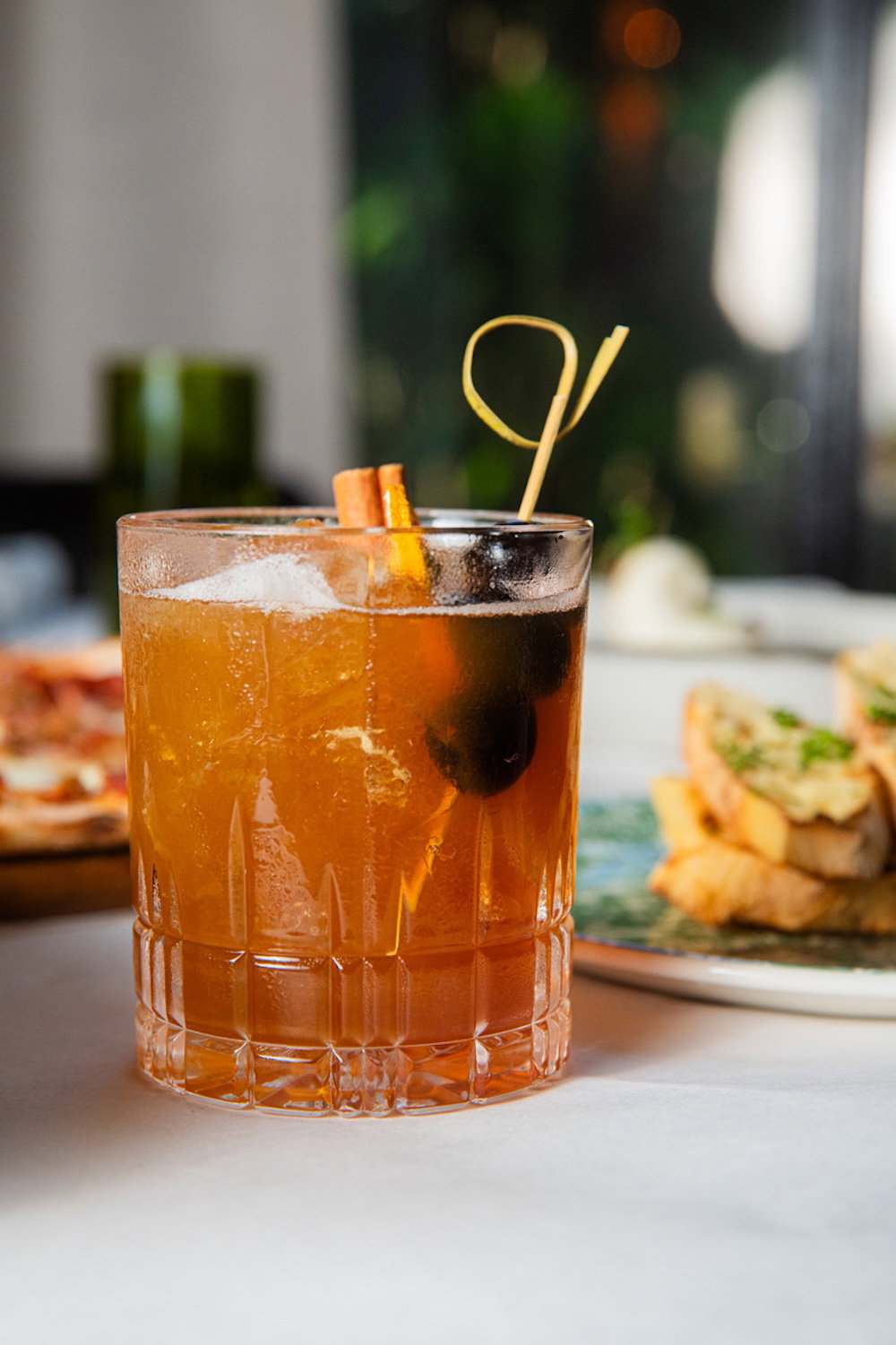
Tuscan Ember cocktail (Bulleit bourbon, amaretto, apple liqueur, amaro, apple juice, and lemon)
Photo by Morgan Evans
As executive chef, Scott oversees the culinary direction for all the Kinseys’ restaurants, while leading Cotto Vinings’s kitchen each night. His menu features traditional Italian dishes, spanning antipasti, pasta, mains, and 10-inch wood-fired pizzas. Most items are designed for sharing. Early favorites include gnocchi, pollo saltimbocca, and cacio e pepe.
Behind the bar, Italian darlings like limoncello and spritzes sit alongside classics like old fashioneds and espresso martinis. One of the seasonal drinks, Fly Me to the Moon, mixes vodka, lemon, apricot, Italicus, and amaro for a smooth, refreshing option. Wine is also a focus, with 85 Italian offerings.
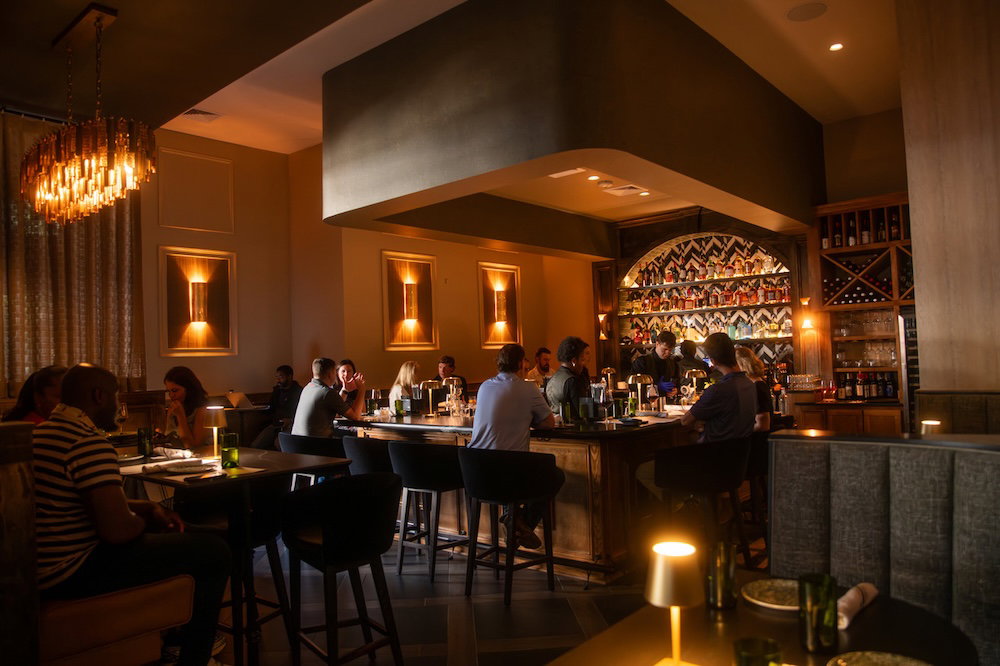
The Kinseys completely renovated the Stockyards space, relocating the bar and removing half walls to open up the dining room. They added arches and niches to bring an Italian touch, plus stucco wall coverings, neutral tones, and olive-green accents as a nod to the country’s olives. The restaurant seats 75 inside, plus 40 people on the open-air patio. Both reservations and walk-ins are accepted.
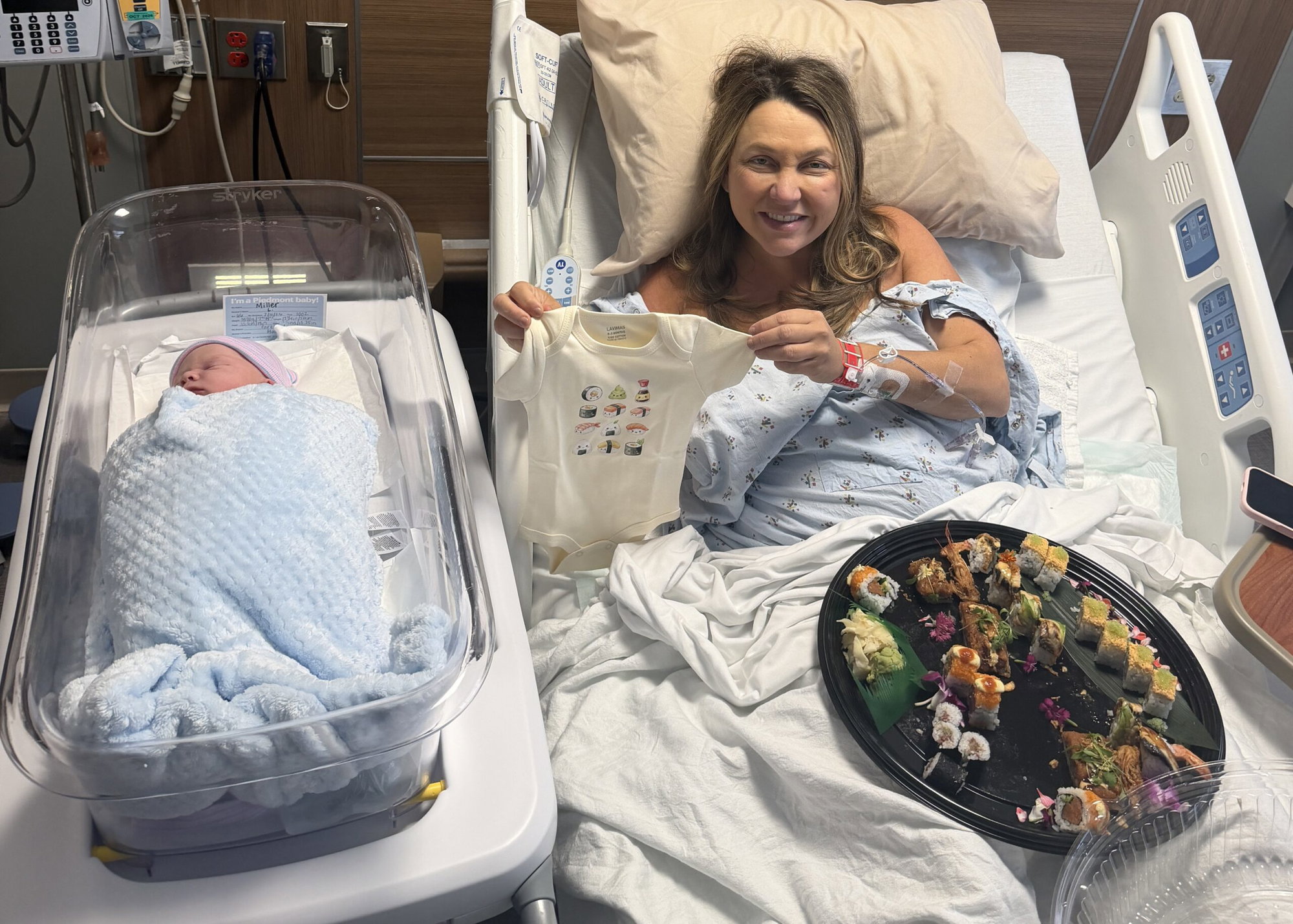
A new mom receives a platter of sushi from Nakato Japanese Restaurant, which has launched a new free sushi delivery service to area hospitals.
For many pregnant women, counting down 40 long weeks is not just about waiting for the baby. They’re also waiting for the moment when the many forbidden fruits in the garden of Eden, such as alcohol, soft cheese, and raw fish, are safe to enjoy again.
Once the little bundle of joy is born, the gourmand world reopens, with treats like sushi given the green light. So why not eat some right at the hospital?
This was the idea behind a new service launched by Nakato Japanese Restaurant: the “New Mama’s Sushi Delivery Experience.” The Japanese restaurant, which has been an institution in Atlanta for more than half a century, will deliver sushi to any hospital within a 10-mile radius of their location on Cheshire Bridge in Atlanta. If the order totals more than $125, Nakato will deliver free-of-charge. Orders can be placed online directly through the New Mama’s page on the restaurant’s website using the promo code SushiForMom.
“Over the years, we’ve received so many requests from guests who have been dreaming about their favorite sushi rolls, sashimi and nigiri for nine very long months,” says owner Sachi Nakato Takahara. “As soon as they deliver … their Nakato sushi order can’t be delivered fast enough.”
Nakato was opened in 1972 by Takahara’s grandmother, Tetsuko Nakato, before it passed to Takahara’s mother, Hiroe Nakato. Takahara, now the owner and manager, is proud to represent the third generation of women at the restaurant’s helm. As family is a cornerstone of Nakato’s business, Takahara says they are happy to serve new moms.
The fish, she notes, is flown in fresh daily from the waters of Japan before it is prepared by Sushi Chef Yoshi Kinjo. The menu includes a wide range of standard sushi, sashimi and nigiri, as well as specialty rolls and assorted platters. You can find the menu here.
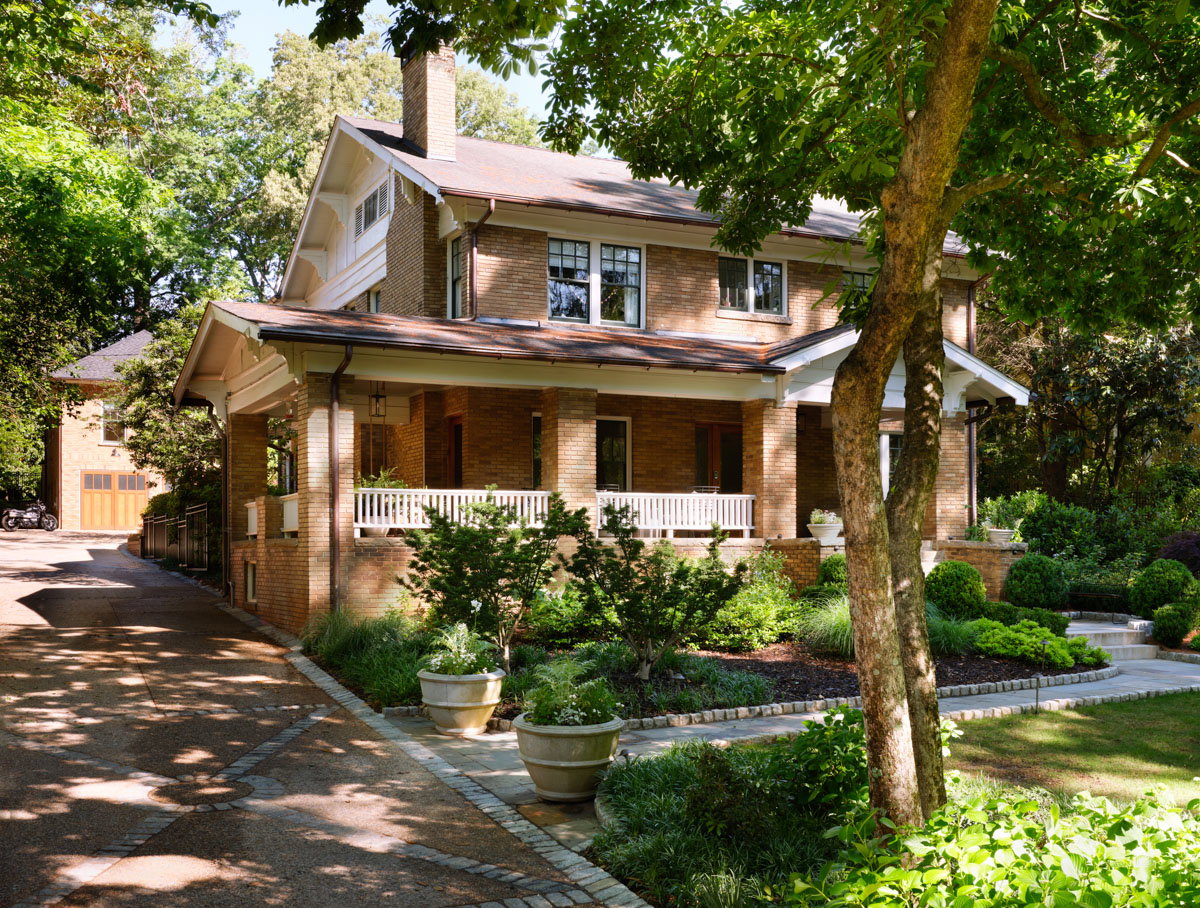
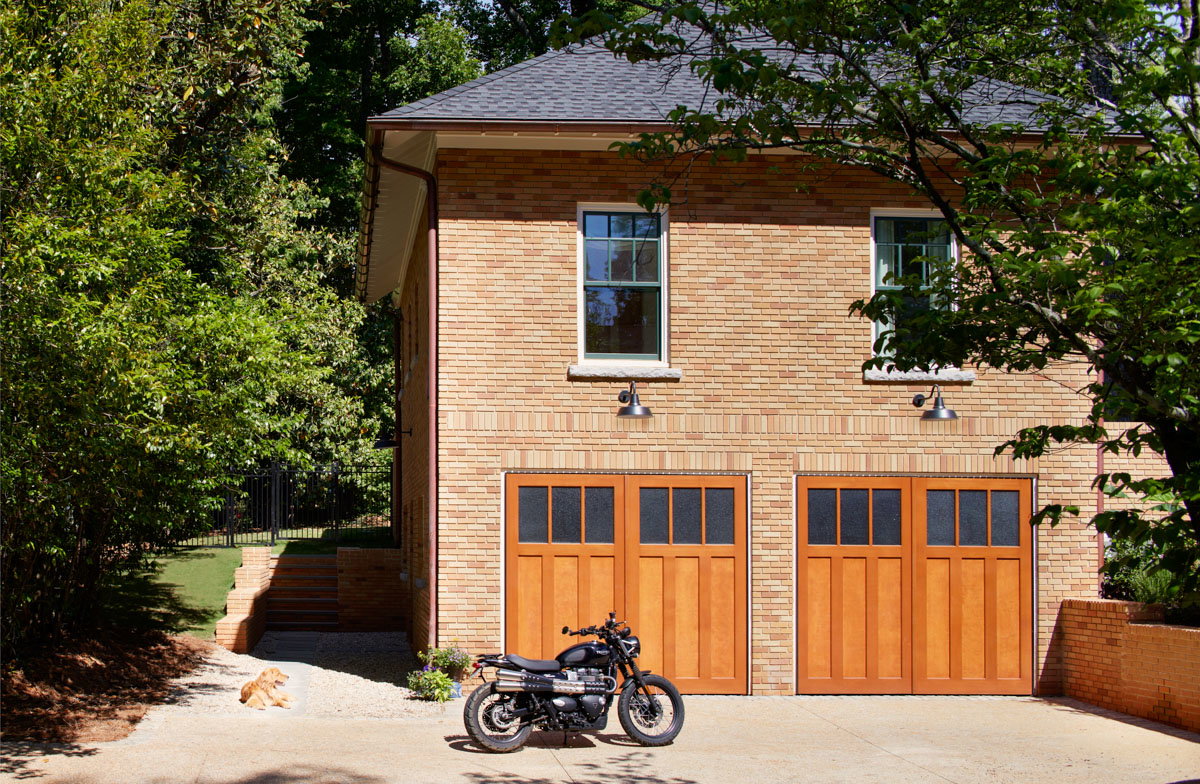
This once dilapidated carriage house in Druid Hills was redesigned and renovated by Copper Sky Design + Remodel. All photos by Mali Azima.
by Mali Azima
When an Atlanta couple sought to transform their dilapidated carriage house into an oasis from city life, they immediately turned to Copper Sky Design + Remodel, a local design-build firm that specializes in preserving and modernizing older homes. Given the neighborhood’s historical designation, they knew the project would require a company with a meticulous approach as well as experience working with time-honored properties.
According to Copper Sky lead designer Jaime Dupes, the couple’s primary residence—a stately Druid Hills home that dates to 1915 and falls within one of Atlanta’s historic landmark districts—was in good shape. The adjacent carriage house, however, was in a state of disrepair.
A teardown and a complete rebuild were needed, but renovations in a historic district follow a different process than renovations elsewhere in the city. “We had to show that the new carriage house would increase the historical integrity of the property,” Jaime says, noting that a significant part of that task was ensuring that the structures coordinated, right down to the bricks. “As you can imagine, it’s difficult to match brick from more than 100 years ago.”
The team ultimately stained the bricks on site to make certain they harmonized with the ones on the main structure. Custom windows, exposed rafter tails, and copper gutters further tie the two houses together; the garage doors reflect the materials available during original construction.
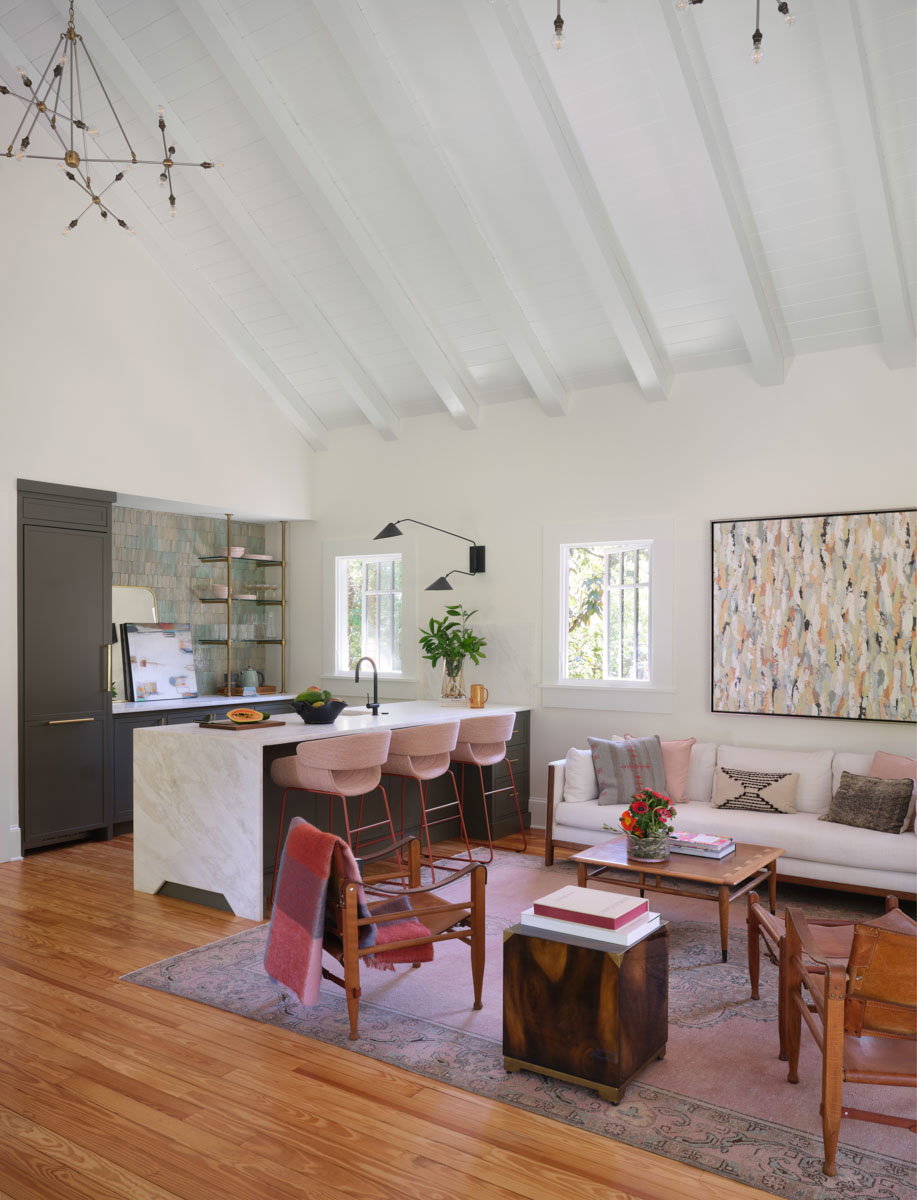
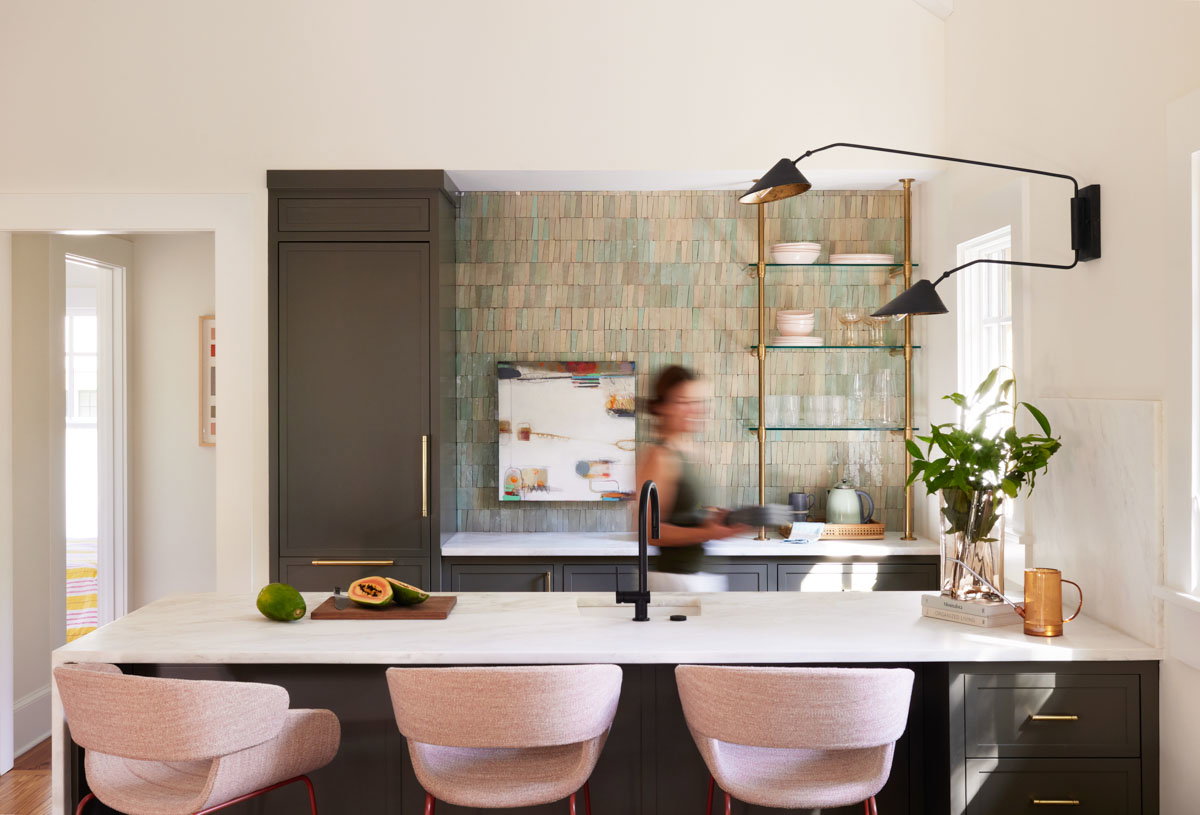
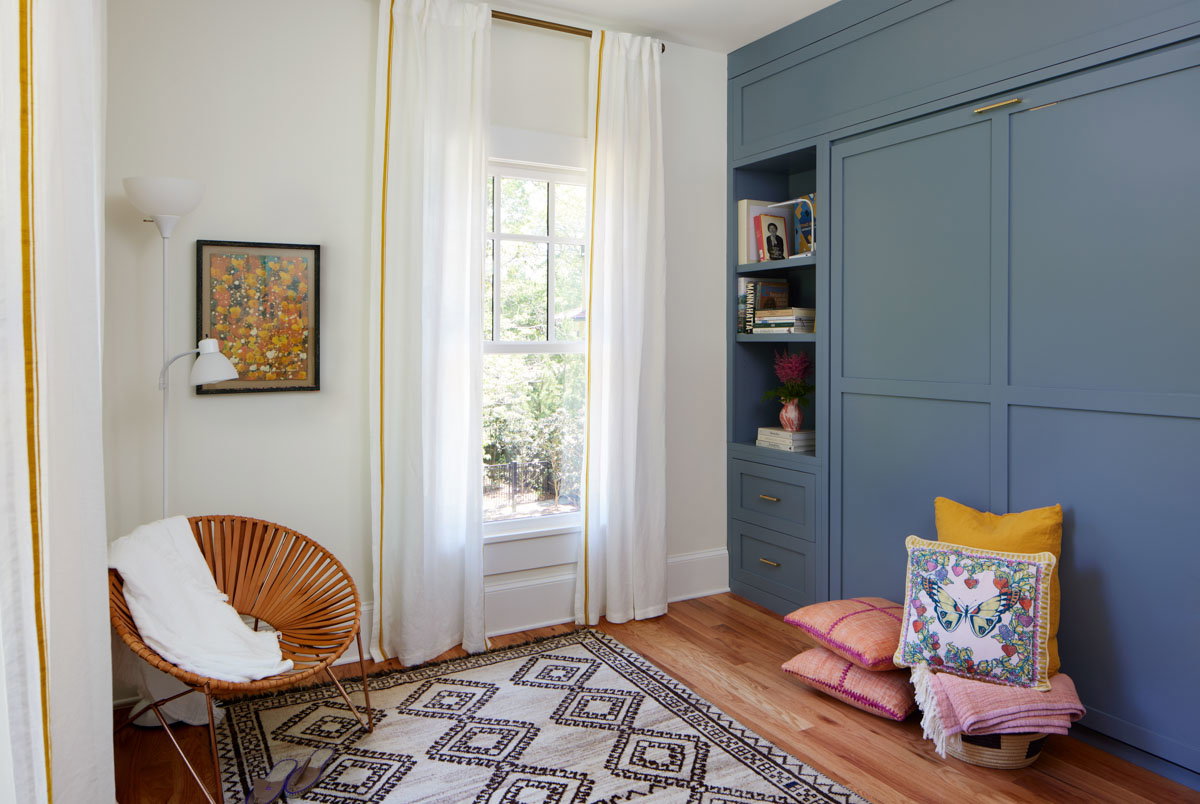
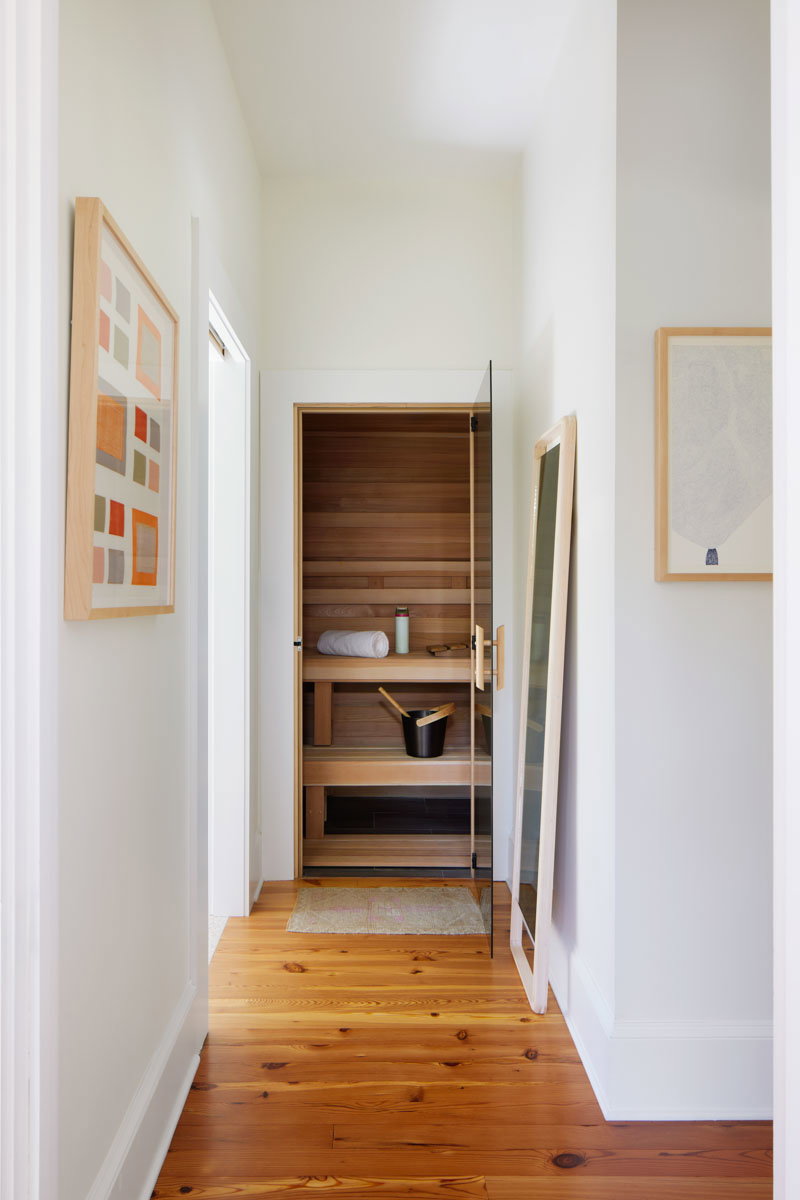
The new 1,720-square-foot carriage house packs a lot of style and efficiency into a small footprint. In the living room, large custom steel doors open onto a covered porch that overlooks the backyard. The kitchen features a Moroccan tile backsplash, a honed marble waterfall peninsula, and unlacquered brass hardware that will patina over time. The guest bedroom, which incorporates a custom Murphy bed, doubles as a yoga room. And a sauna of Western Red Cedar provides a serene spot to rest and unwind.
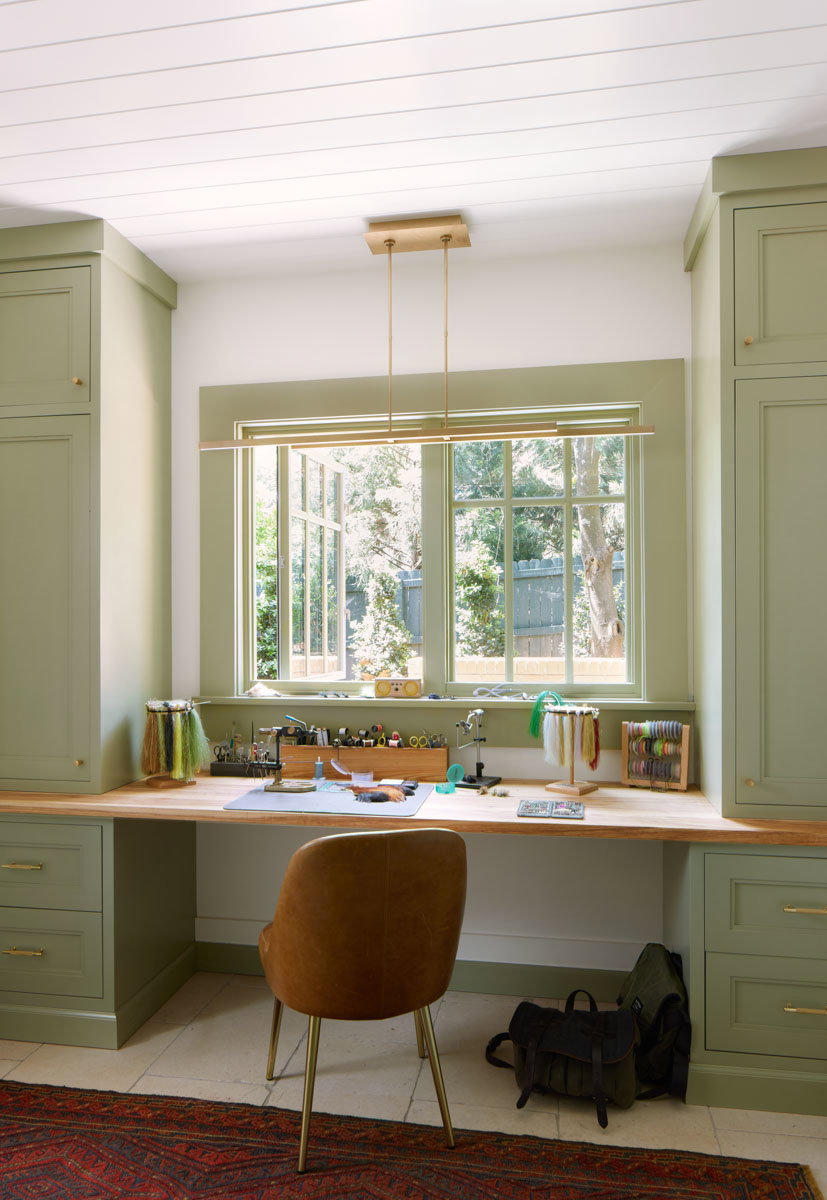
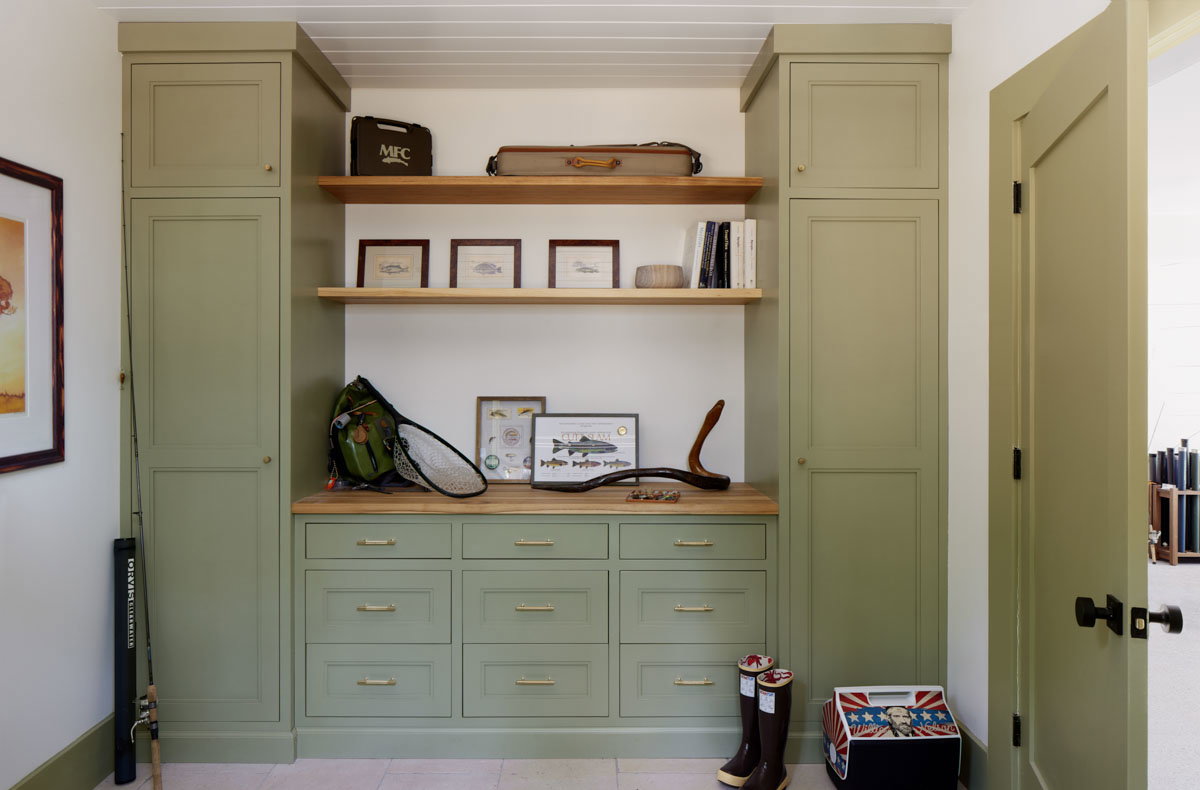
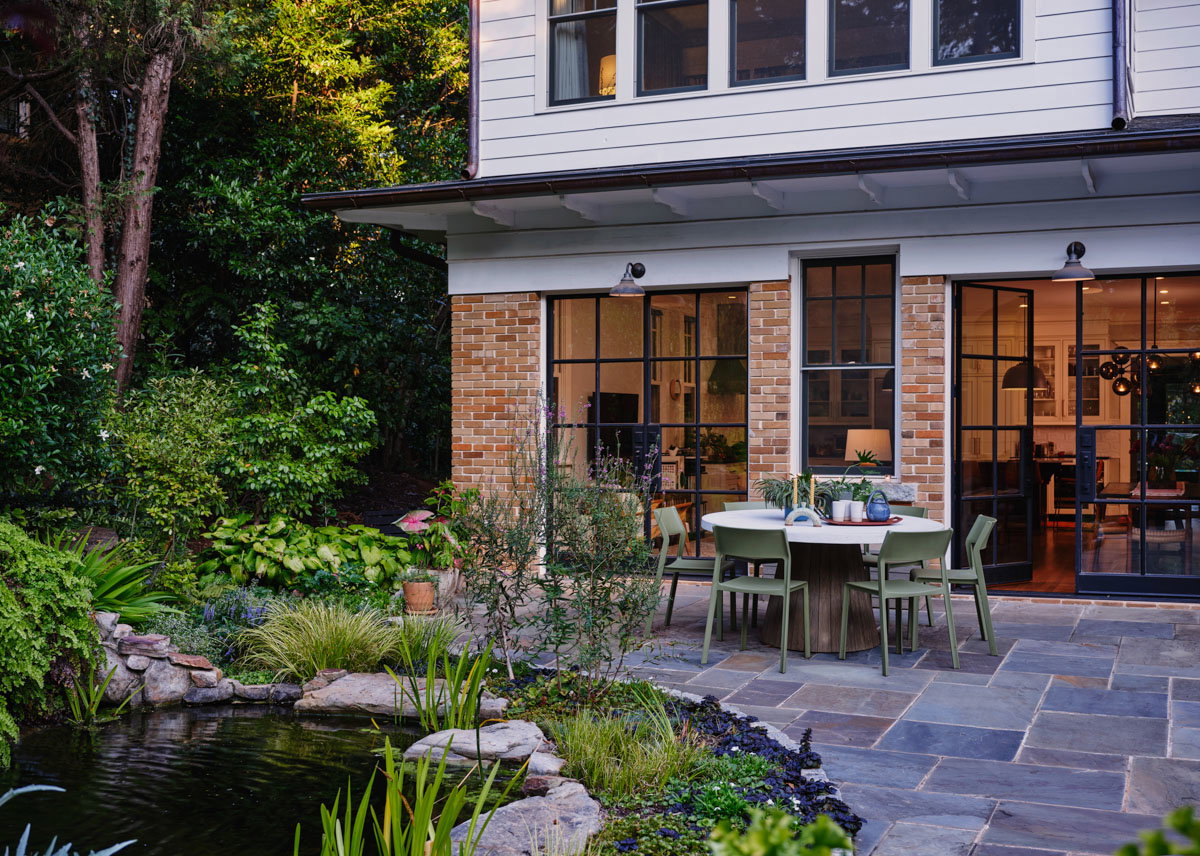
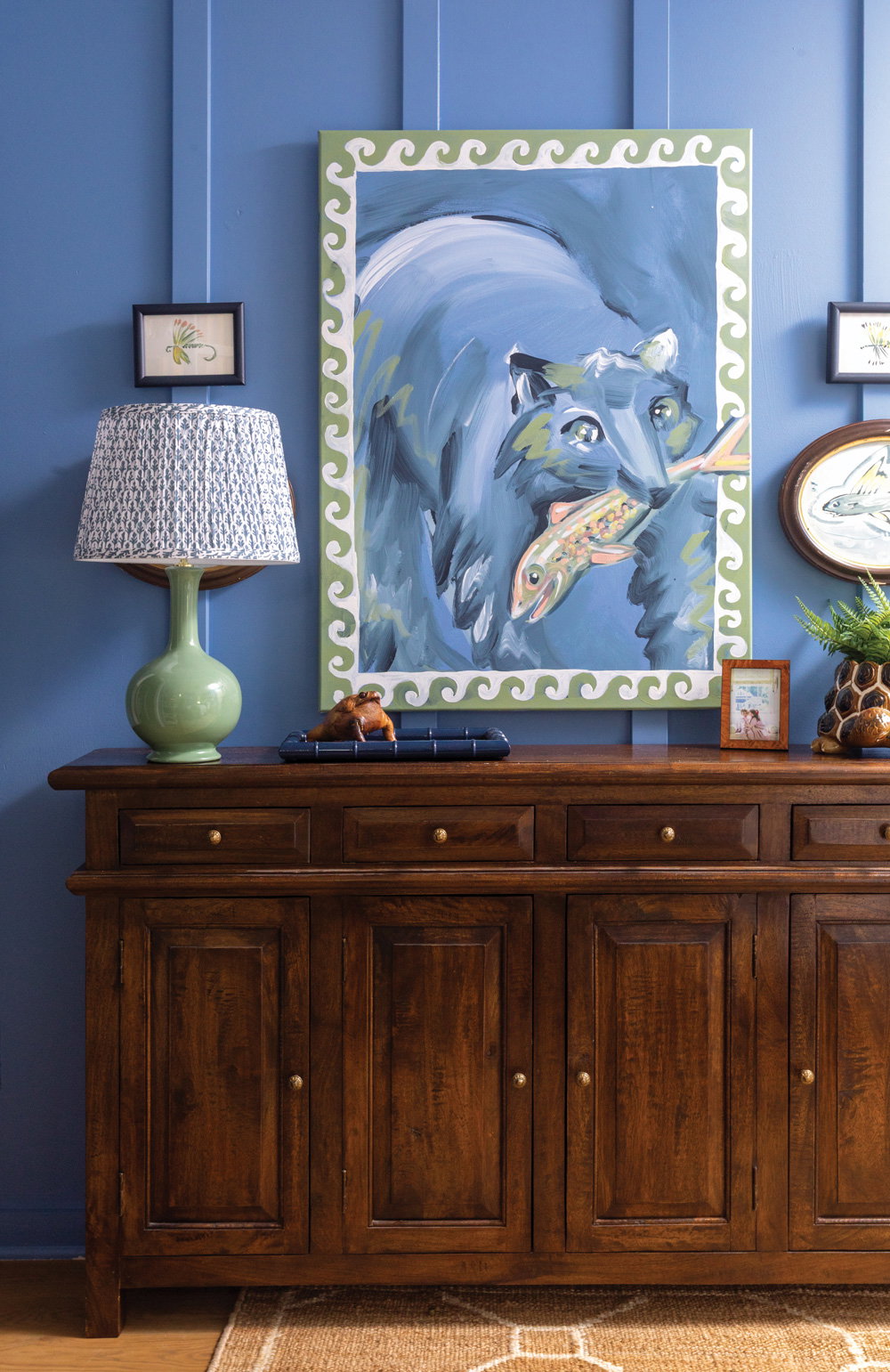
On the lower level, the design team focused on the couple’s love of fly fishing with a dedicated hobby space. “They like to tie the flies themselves,” Jaime says, noting that the finishes in the room are light and bright, so that if a fly falls on the floor it’s easy to find. Also on the first level are storage rooms and a two-car garage. Connecting the carriage house and the main home is an outdoor patio that incorporates bluestone pavers, a water feature, and a large brick fireplace.
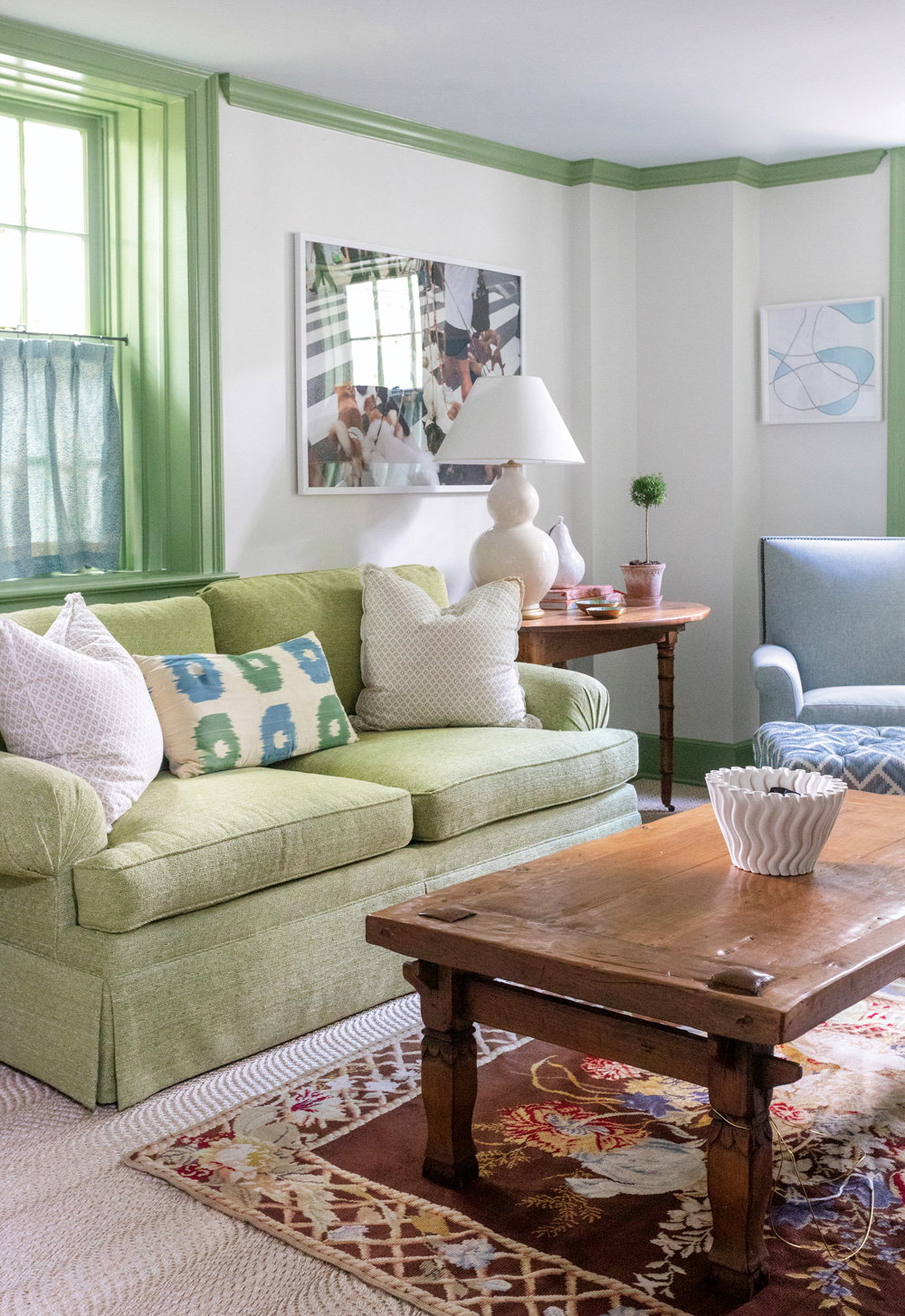
The furnishings and decor are a blend of old and new, mirroring the couple’s interests and offering visual contrast.. “The rugs and most of the furnishings are vintage,” says Balance Design founder Stephanie Andrews, who outfitted much of the home’s interior. Some of the pieces were repurposed from the main house while others were collected from the couple’s travels. Additional furnishings and accessories, including artwork and lighting, are decidedly modern, which keeps the living spaces feeling calm and uncluttered.
Both designers agree that the result is unique. “I love that we were able to marry traditional architectural roots with a more whimsical interior,” Jaime says. “Somehow it all just works together.”
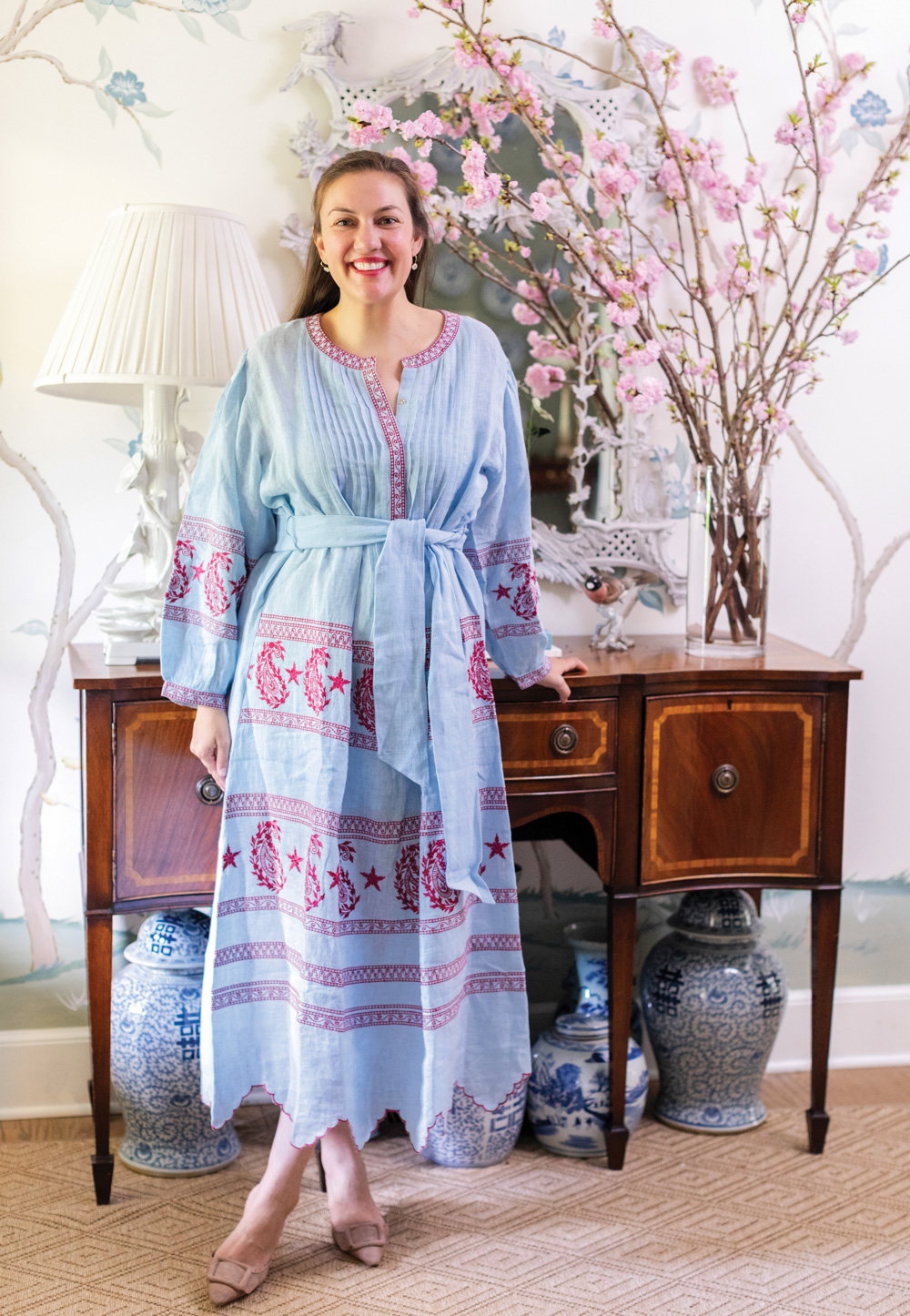
Elizabeth Cook is an Atlanta-based design enthusiast, entrepreneur, content creator, and influencer who is known for her expertise in finding discounted antiques, vintage decor, and designer items. The Columbus, Georgia, native first realized she had a flair for thrifting as a child. “My grandmother loved museums and design centers and exposed me to beautiful interiors and decorative arts,” she says. “My mother, on the other hand, could spend an entire day hopping from one thrift store to the next. Looking back, I realize I received two valuable educations—one in design and the other in the thrill of the hunt.”
Elizabeth attended Southern Methodist University, where she studied sociology, and later the Parsons School of Design, where she studied accessory design. She has built businesses in public relations, consulting, and content creation, but throughout every career chapter she has maintained a passion for finding beautiful items with history, character, and personality. She recently purchased her first house and is working to transform it into a dream home on a budget, she says, noting that it includes a mix of thrifted finds, online auction purchases, estate sale discoveries, and sample sale scores. “My decorating style is classic but not predictable. I love storied objects and want a home to feel collected rather than decorated.”
Last year, Elizabeth launched a Substack newsletter, in which she regularly shares advice and discount codes with her subscribers. As for the future, she hopes to continue building resources that make collecting, decorating, and living beautifully more accessible to everyone. “I’ve made it my mission to help people discover that great design doesn’t have to come with a luxury price tag,” she says.
We recently talked with Elizabeth about her thrifting philosophy, sourcing secrets, and design inspiration. We also got her best advice on how to shop without overspending.
Georgia Design:What’s the difference between thrifting and antique shopping? Elizabeth Cook: To me, thrifting is the broadest category. It usually involves shopping secondhand stores where inventory turns over quickly and includes everything from furniture to housewares. Antique shopping tends to be more curated, and the pieces are often older and rarer. The thrill of thrifting is the surprise; the thrill of antique shopping is the education. When I walk into an antique store, I’m often learning about a period, a maker, or a style.
Georgia Design: Estate sales, auctions, and sample sales—do you have a preference? And how exactly do they differ? Elizabeth: Each one offers a different experience. Estate sales are deeply personal. You’re stepping into someone’s home and getting a glimpse into how they lived. Auctions are ideal when you’re looking for something specific, and online platforms have opened up a world that was previously reserved for dealers and designers. I’ve purchased everything from furniture to fabric through auctions. Sample sales are different because the merchandise is typically new. They’re great for accessories and home goods, but they don’t offer the history that makes estate sales and auctions so exciting. If I had to choose a favorite, it would be estate sales because some of my best finds—and best stories—have come from them.
Georgia Design: The terms vintage and antique are often used interchangeably. Is there a difference? Elizabeth: Yes. Generally speaking, an antique is at least 100 years old. Vintage refers to items that are older and representative of a particular era but don’t meet the 100-year threshold.
Georgia Design: Can you negotiate with vendors? Elizabeth: Absolutely, but respectfully. Antique dealers and estate sale operators expect reasonable negotiation, especially on higher-priced items or when you’re purchasing multiple pieces. At estate sales, you can potentially negotiate on the final day, dependent on the consignor terms.
Georgia Design: What should buyers look for before purchasing an item? Elizabeth: Always inspect condition carefully. For furniture, look for structural issues, water damage, repairs, and signs of woodworm or insect activity. For ceramics and glass, check for chips, cracks, and restoration work. With artwork, look for signatures, labels, or provenance when available. I encourage people to flip things over. The underside often tells the story. You’ll find maker’s marks, stamps, dates, labels, and clues about authenticity. A quick Google image search is also helpful and easy.
Georgia Design: What should you ask a seller about pieces you’re interested in? Elizabeth: Whenever possible, learn about the history. How did the seller acquire the piece? Who owned it? Has it been restored? Even if the answers don’t change your decision, the stories make the pieces more meaningful.
Georgia Design: What are the best cities in Georgia for thrifting, estate sales, and antique shopping? Elizabeth: Atlanta is hard to beat because of its size and inventory turnover. The estate sale scene is fantastic, and there are excellent antique dealers throughout the city. Savannah is another favorite because of its rich history and architecture. The antiques there often have wonderful provenance and Southern character. Madison is an underrated gem. It’s one of Georgia’s most beautiful historic towns and has some fantastic antique shops. I’d also put Thomasville on the list for anyone who enjoys traditional Southern antiques.
Georgia Design: Name three items you can get through thrifting that can cost-effectively elevate your home. Elizabeth: First would be lamps. Vintage lamps are often better made than new ones and can transform a room. Second is artwork. Original art and framed prints add personality and are often available for a fraction of gallery prices. And third would be small pieces of furniture like side tables, stools, and benches. Those items often present the biggest value.
Georgia Design: Is it true that you can even purchase plants at estate sales? Elizabeth: Absolutely. For me, it started with an estate sale at the late Charles Loudermilk’s property in Atlanta. While exploring the grounds, I was struck by the variety of plants—azaleas, tea olives, gardenias, and more—that had been lovingly maintained and were available at a fraction of retail cost. With the help of the on-site landscaping crew, I was able to purchase and relocate a large portion of those plants to my own home. They have survived beautifully, and what makes them so special is that they’re mature, established specimens with years of growth and character behind them. I also sourced pre-owned pea gravel, which became the foundation for a DIY alfresco dining area in my backyard. Over time, I’ve layered in additional estate-sale finds, including fig trees, boxwoods, and even a Summer Classics outdoor dining table. A cedar shake birdhouse from a Holland MacRae warehouse sale became the finishing touch.
Georgia Design: What’s the best item you’ve scored through thrifting? And what’s the one item you’re still hoping to find? Elizabeth: Some of my favorite scores have been antique furniture pieces that anchor a room and look like they’ve always belonged there. The item I’m always searching for is the next great painting. Original artwork is what excites me most because it’s completely unique and can transform a space instantly.
Georgia Design: How about your favorite estate sale find? Elizabeth: One of my favorite estate sale finds happened in Atlanta. I stumbled upon two large Pierre Frey Sans Papillons curtain panels and nine rolls of matching wallpaper. I paid around $400 for the curtains and about $10 per roll for the wallpaper. While I was shopping, I noticed a gentleman carrying a pair of beautiful, framed intaglios. He clearly knew what he was doing, so I introduced myself and showed him my find. As it turned out, he was a well-known Atlanta designer who owned a showroom at ADAC. He immediately offered me double what I had paid! That experience taught me two things: first, don’t underestimate what you’re looking at; and second, don’t be afraid to talk to people at estate sales. Some of the most knowledgeable collectors and designers are walking the same rooms.
Georgia Design:What’s your best advice for someone who is just getting started? Elizabeth: Begin by shopping often rather than spending a lot. The people who consistently find incredible pieces aren’t necessarily luckier; they simply look more frequently. Also, learn to focus on quality over category. I don’t care whether something comes from a thrift store, an auction house, or a luxury showroom. But I do care whether it’s well-made, useful, and beautiful. One of my earliest Atlanta estate sale purchases was an upholstered club chair covered in a Quadrille fabric. I bought it because I loved the statement it made, and I couldn’t believe the price. When it no longer worked in my home, I sold it for a profit. Great design often holds value in a way that mass-produced furniture doesn’t. Also, stop assuming that luxury items are only available through luxury retailers. Estate sales and auctions are full of opportunities. Finally, and most importantly, buy the things you genuinely love. The best homes aren’t built in a weekend; they’re layered one meaningful find at a time.
Ping Ping at the Chengdu Research Base of Giant Panda Breeding.
Courtesy of Chengdu Research Base of Giant Panda Breeding
The panda-monium was reawoken Thursday when Chinese President Xi Jinping was at the White House for talks with President Trump. In his opening remarks, Xi said two pandas would soon arrive in Atlanta, within days, as an envoy of friendship between the Chinese and American people.
While the public was made aware back in April that new pandas—which are rare at zoos in the U.S.—would come from China, the exact timing of their arrival was unknown. Jinping’s comments Thursday threw the panda press into a frenzy. When would the lovable black-and-white bears arrive? Panda lovers everywhere pleaded to know.
Well, they have arrived.
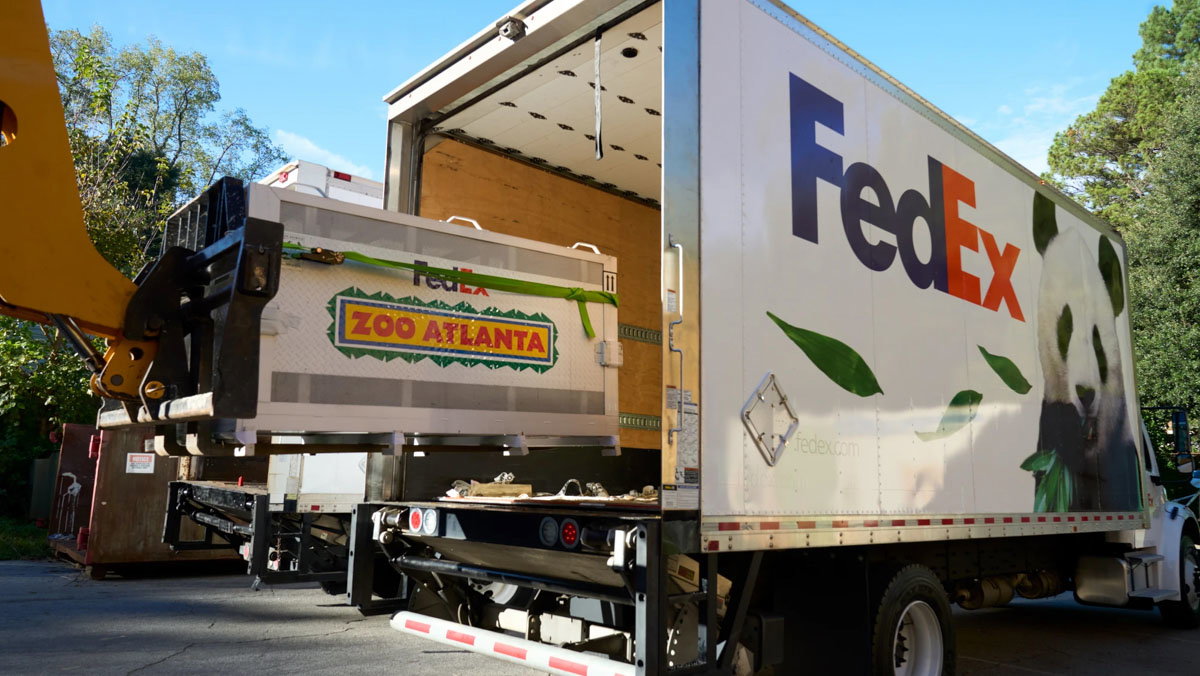
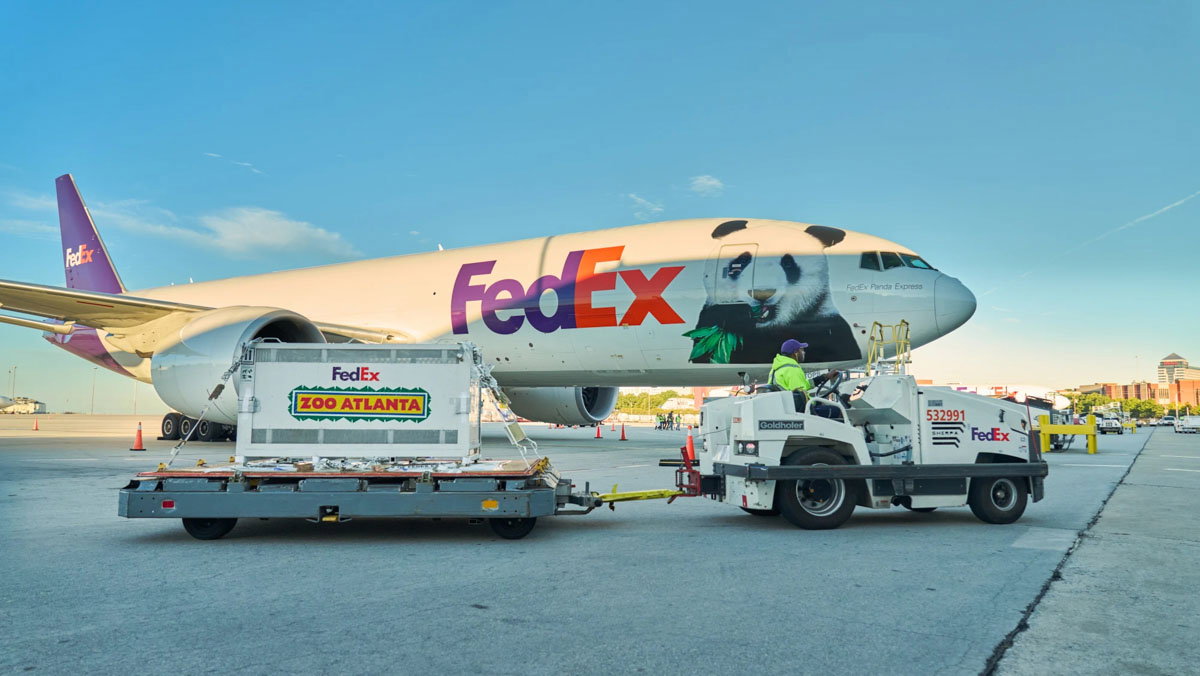
They arrived via a dedicated FedEx plane dubbed the Panda Express yesterday, Sunday September 27. The Boeing 777 aircraft, which was donated for the transport, carried two giant pandas, Ping Ping and Fu Shuang. Ping Ping’s name, says the zoo’s press release, represents a blessing for a smooth and healthy life. Fu Shuang’s name (pronounced Foo Shwong) comes from “Fu Lu,” a reference to her and her mother meaning “happiness”. The pandas were born in China at the Chengdu Research Base of Giant Panda Breeding on March 17, 2020, and October 18, 2020, respectively.
Ping Ping and Fu Shuang are transported in a Zoo Atlanta crate after flying from China on the plane nicknamed the Panda Express.
Courtesy of FedEx
The exchange was coordinated by a new International Cooperative Research Agreement on Giant Panda Conservation initiated between Zoo Atlanta and the China Wildlife Conservation Association.
It’s not the first time the lovable black-and-white bears have been used in diplomacy. For 25 years, Zoo Atlanta was home to Lun Lun and Yang Yang who also gave birth to twin offspring Ya Lun and Xi Lun. The bear family was beloved by Atlantans for years—Atlantans who were heartbroken when the pandas were sent back to China in October 2024 as the long-standing loan agreement with China concluded.
Right before the bears left, fans from far-and-wide came to say goodbye. Atlanta Journal-Constitution reporter Rodney Ho noted one couple drove three hours from Columbia, S.C., because they’d gotten hooked on the panda cams during the pandemic. A woman who had donated to the original campaign to bring the pandas also came to say goodbye. Sam Rivera, the zoo’s vice president of animal health, flew to China with the pandas to see them off.
Ping Ping at the Chengdu Research Base of Giant Panda Breeding.
Courtesy of Chengdu Research Base of Giant Panda Breeding
“It was sad and very emotional,” he told me in 2025, but noted he knew they were going to a good facility.
After the pandas were gone, their enclosures and dedicated retail stands at Zoo Atlanta sat quiet and empty, awaiting the day they could once again be buzzing with visitors to see pandas munch on bamboo.
Fun Fact. Did you know Zoo Atlanta even had a team of “Bamboo Hunters” that traveled around Atlanta to gather bamboo for the bears? A hotline allowed callers to report bamboo they wanted to donate, and Georgia Power would call as they had patches to cut down. When the Zoo Atlanta had four pandas, the hunters harvested roughly 500 pounds a day, Rytis Daujotas, Zoo Atlanta’s kitchen manager once told me. Unconfirmed, but surely the hunters will be back in action soon.
So what happens next now that Ping Ping and Fu Shuang are here? The bears will be housed in a biosecure area of Zoo Atlanta’s new giant panda complex for a routine quarantine period of roughly a month. Zoo Atlanta will announce more as the plan unfolds. Stay abreast of all things panda on the Panda Page on zooatlanta.org.
The FedEx plane that transported Atlanta’s two new giant pandas was donated for the transport and featured pandas on the exterior.
Chef Linton Hopkins’ experience is as broad as it is deep. The James Beard Award-winning chef is known for his burgers (H&F Burger), his steaks (C. Ellet’s), his fried chicken (Hop’s), encouraging mixology (Holeman & Finch Public House), and fine dining (defunct Restaurant Eugene). Hopkins also ran The Buttery, a bakery and market that grew out of his wholesale operation, before closing in 2024. Its Manchester Street space “wasn’t the right location for it,” he says.
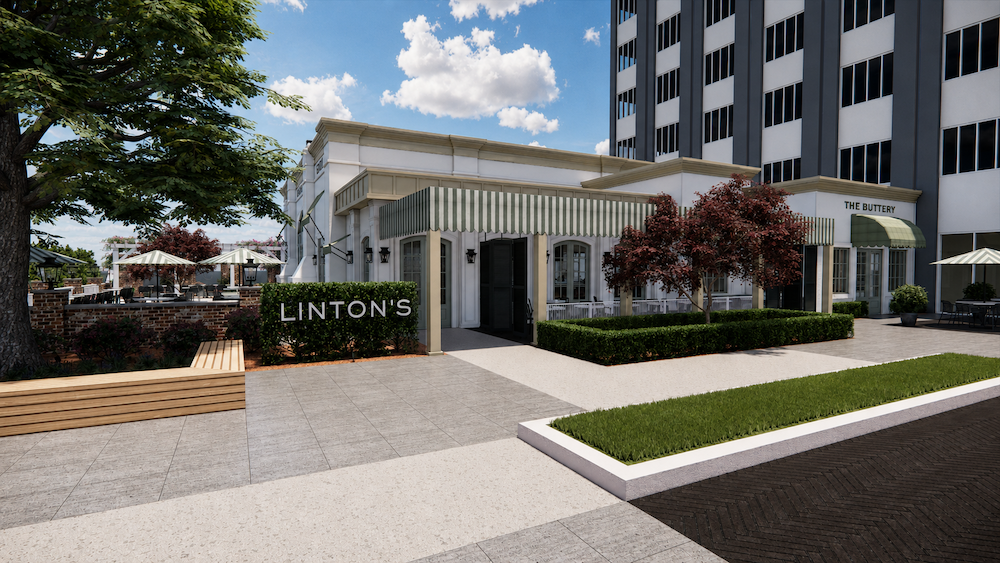
Come March or April, The Buttery is slated to reopen in a more prominent location: The former Brio Tuscan Grille on Peachtree Road in Buckhead. This time, it will offer café seating, a more concise set of offerings, and connect to a full-service bar and grill called Linton’s. Together, the two eateries will comprise 7,000 square feet and seat 300 guests.
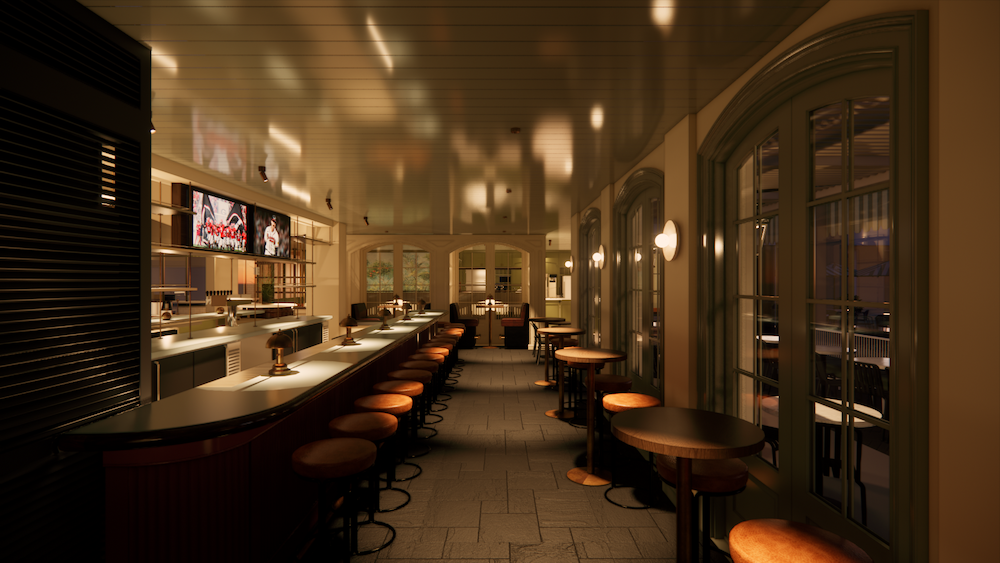
A rendering of the bar at Linton’s
Courtesy of ASD | SKY
Linton’s
The direction of Linton’s is straightforward: simple dishes Hopkins enjoys eating. The restaurant will be structured around the staples of an American bar and grill: vegetables, rotisserie, pasta, pizza, meat, and drinks.
The rotisserie will be a major part of the kitchen, with room for 36 chickens at a time, dripping over potatoes and onions as they cook. Hopkins is also considering rotisserie pork bellies and loins, along with roasted cabbages and beets.
Linton’s will use Brio’s wood-burning stove to make pizzas. The dough will be naturally leavened, made with three flours, and fermented for 72 hours. Varieties include sesame seed and anchovies, nduja with hand-sliced pepperoni, and Sapelo clams. Both personal pizzas and 14-inch pies will be offered.
Linton’s will serve breakfast, lunch, dinner, and weekend brunch. Brunch dishes will include pancakes with blueberry compote, waffles, eggs Benedict, and Vegemite on toast. Pasta will be made in house, with hand-cut gnocchi, tagliatelle, aglio e olio with garlic and Parmesan, and marinara.
The broader menu will include steaks, rack of ribs with Hopkins’ aunt’s barbecue sauce, Atlantic salmon, Arctic char, paillard, pork schnitzel, and entrée salads at lunch. In the dining room, an old-fashioned dessert cart will tempt diners with vanilla-poached pears, chocolate mousse with whipped cream, cakes, and pies.
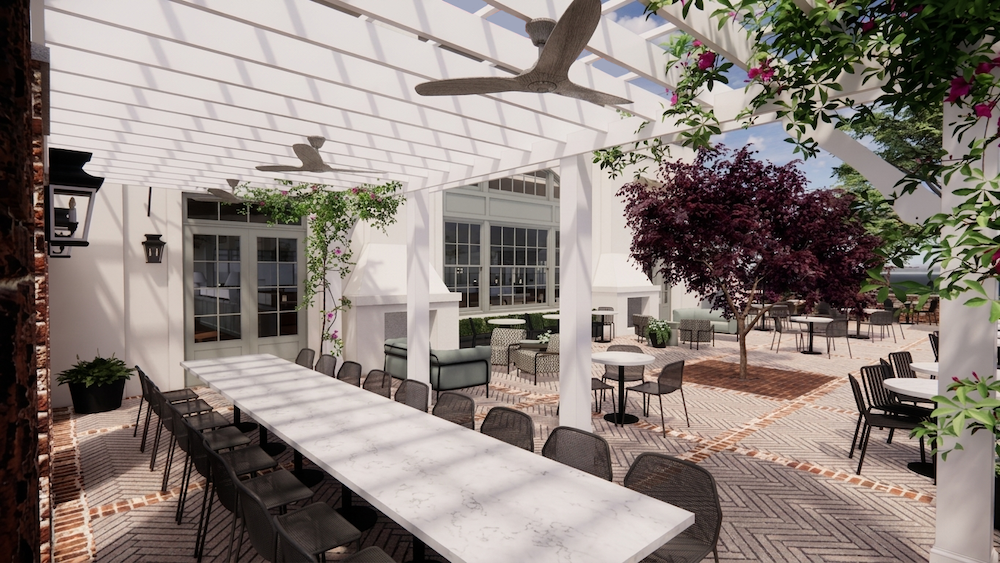
A rendering of the patio
Courtesy of ASD | SKY
A large, double-sided bar will face both the dining room and the patio. The beverage program will feature 100 to 150 wines, primarily from the West Coast (Willamette Valley in particular), France, and Italy. Cocktails will follow the from-scratch approach of Holeman & Finch. Hopkins says bar staff will be able to excellently execute 100 classic cocktails, such as the Bee’s Knees and Bloody Marys, and five to seven original drinks and non-alcoholic offerings.
Beer will lean classic and concise: four drafts, one cask, and a handful of bottles and cans. Options will be a mix of local (Creature Comforts and Monday Night Brewing) with cider, Guinness, Miller High Life, and a New Orleans-style schooner. Espresso drinks and affogato will be available.
Like C. Ellet’s, Linton’s will incorporate TVs into the space, with Hopkins imagining guests watching a game over “a great plate of ribs.” The buildine features midcentury vaulted ceilings, two fireplaces, large windows, abundant natural light, and views of the greenery outside.
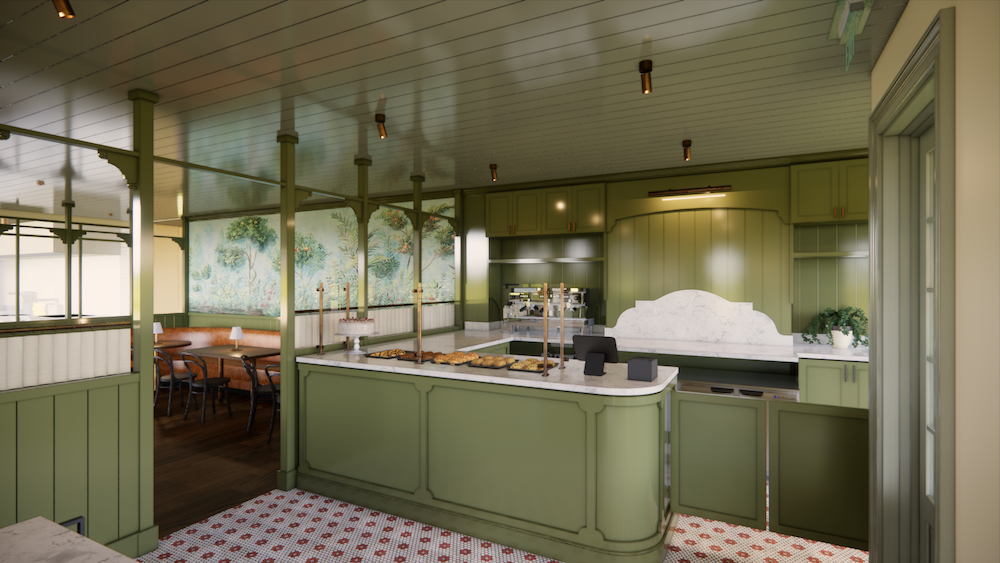
A rendering of The Buttery
Courtesy of ASD | SKY
The Buttery
Hopkins describes The Buttery 2.0 as a return to the role pastry and dough play in the kitchen. “As a chef I can’t think about cooking without dough and pastry around me,” he says. “I miss that in my soul.”
The new Buttery will have more seating, a better layout for guests, and a more focused menu. Unlike the original location, it will be retail only, not wholesale. It will also have the support of Linton’s full kitchen, which Hopkins says will help reduce waste.
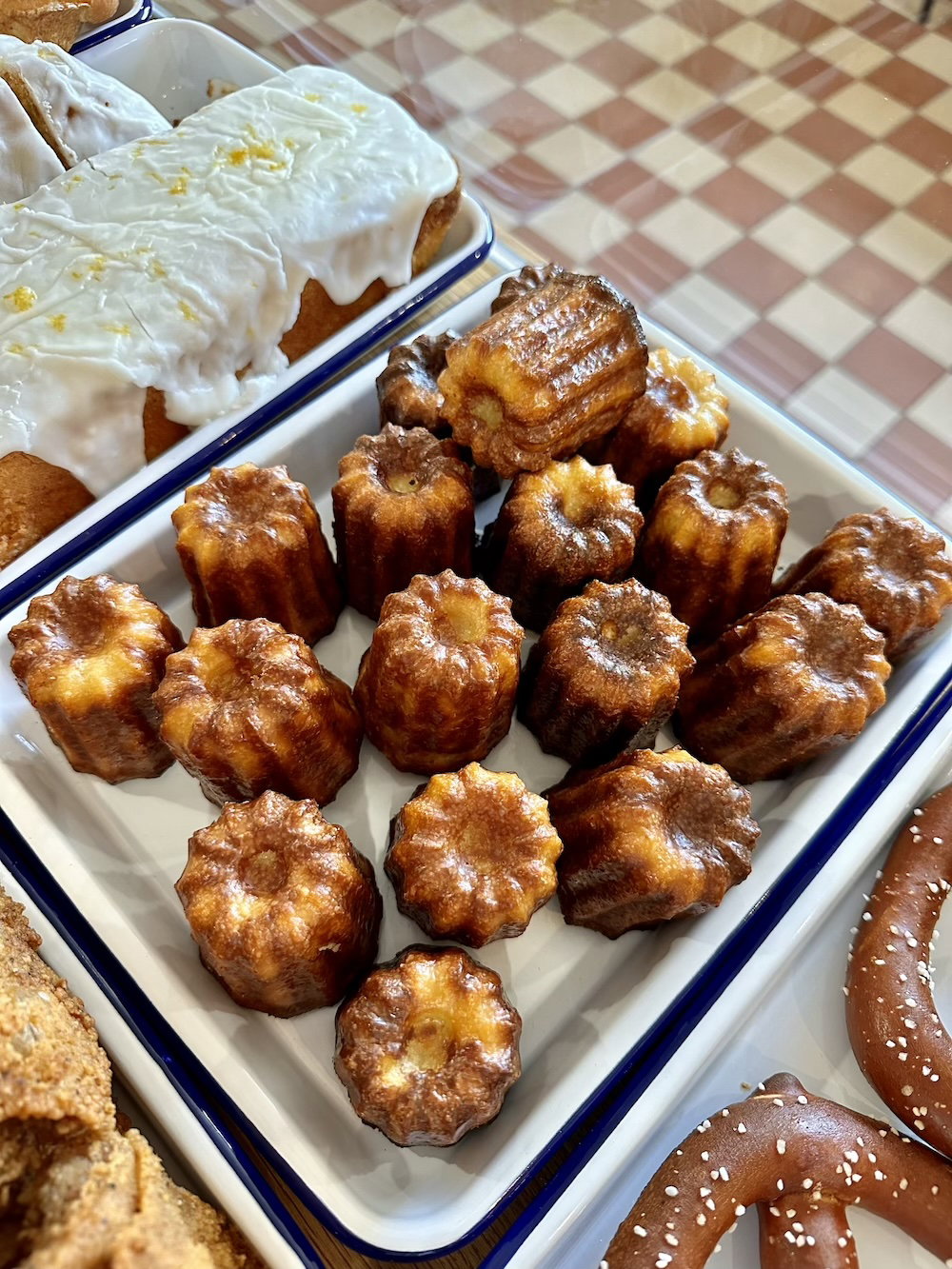
Canele from the The Buttery
Courtesy of Hopkins and Company
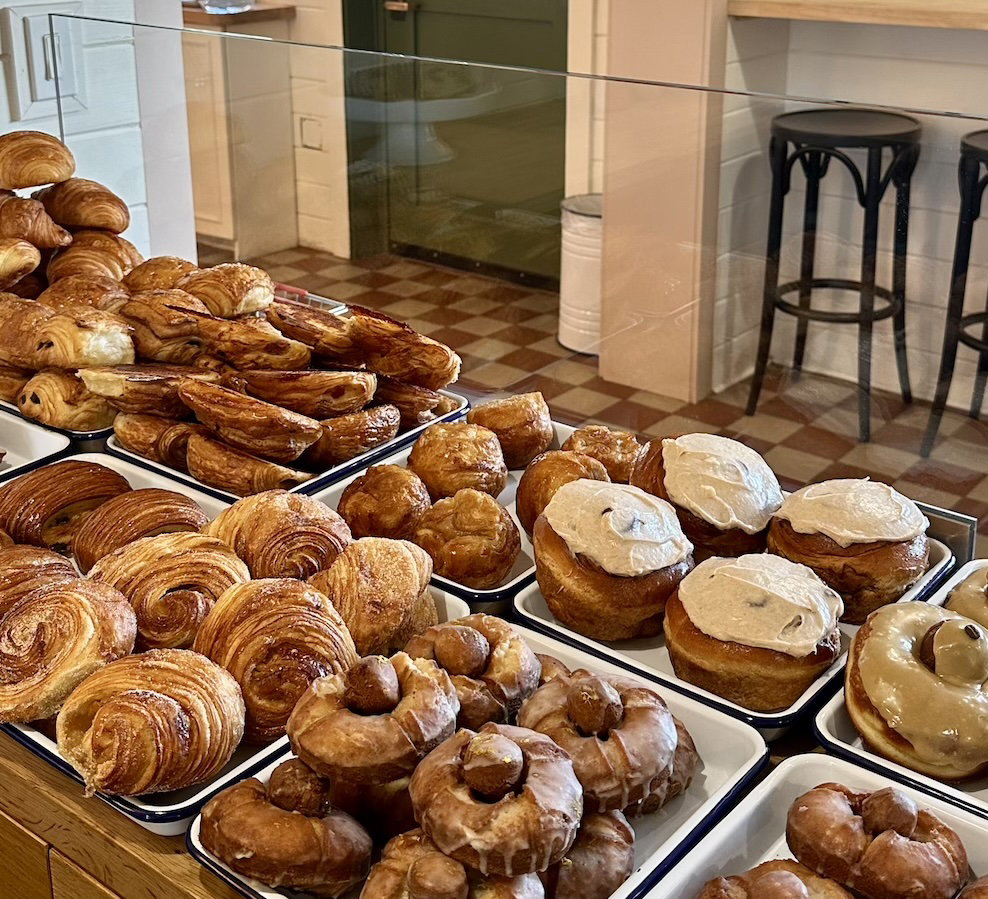
The former Buttery had “a bunch of cheese and meat,” Hopkins says. This version will not. Instead, it will function as a bakery, coffee shop, and café, with grab-and-go items such as chicken pot pie and rotisserie chicken, plus made-to-order sandwiches and salads.
Pastry will be central to the operation. EinKornelius, Hopkins’ 15-year-old dough starter, is expected to show up in pizza dough, burger buns, and croissants.
Soft serve is also planned with toppings like cracking caramel and chocolate shells, compotes made from seasonal fruit, and olive oil and sea salt.
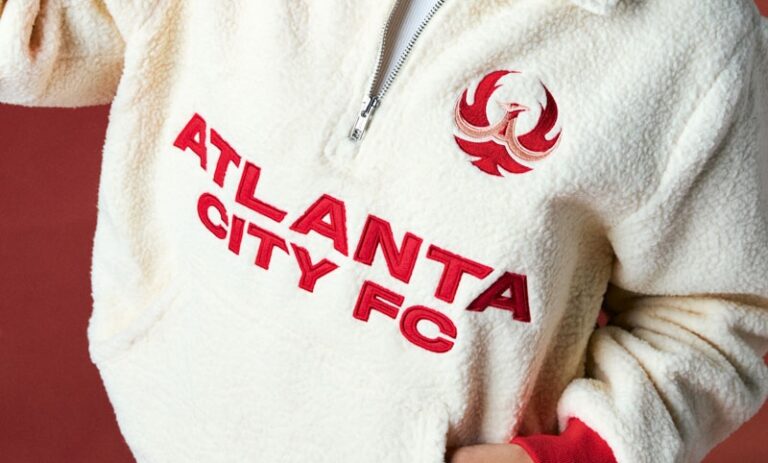
A sweatshirt features the phoenix from the new crest for the Atlanta City Football Club. The team’s name and crest was revealed publicly on September 28, 2026.
Photo by Erin Olivia Dickman, courtesy of NWSL
On September 28, Arthur M. Blank Sports and Entertainment (AMBSE) publicly announced that Atlanta City Football Club will be the official name for Georgia’s National Women’s Soccer League (NWSL) franchise. The new team will debut in March 2028 and play its games at Mercedes-Benz Stadium as the NWSL’s 17th team.
The new Atlanta City FC crest features a phoenix rising.
Courtesy of NWSL
Along with the name, the club also rolled out its crest and colors. The border of the crest is an Atlanta red (although lighter than the reds of Atlanta United FC or the Falcons) around a gradient peach phoenix with its chest in the shape of an A. The white backdrop is dogwood-shaped with a chevron texture that nods to Atlanta United’s familiar pattern. Detailing around the crest includes colors of black char and platinum metallic, meant to represent the city’s cultural luster and resistance to tarnish. The team’s kits, and how the colors will display on the jerseys, have yet to be released.
“Our hope was to have a literal connection of wearing the city on your chest,” says AMBSE Creative Director Tucker James Brooks. “I think some of those details like the hidden ‘A’ are things we hope people latch onto and are proud of.”
AMBSE spent several months surveying both fans and key figures in the city—such as Mayor Andre Dickens, hip-hop photographer Cam Kirk, and CEO of Butter.ATL Brandon Butler, among others—on what they wanted to see behind the team name and crest. Symbols such as the phoenix, dogwood, and fire were common responses that eventually worked their way into the design.
The team name breaks from the standard of featuring a mascot as do many other NWSL franchises, such as the Chicago Stars, Washington Spirit, and North Carolina Courage. “We wanted to have a more soccer-forward name,” says Deandra Duggans, vice president and chief business officer of Atlanta City FC. She added that the naming decision allowed the club flexibility to use more Atlanta imagery in its crest. (Alternative names, such as Dogwood City and Atlanta Phoenix or Flames, were also under consideration.)
With the announcement, Atlanta City launches two merchandise lines: Nike for typical fan gear, and Peace Collective as a premium option that includes windbreakers, jackets, and sweaters. The team’s official nickname—ATL CTY—is featured on several items. “With a team coming onto the market, we wanted to feel fresh and modern,” says Kiana Miree, AMBSE vice president of retail and merchandising. “You’ll see bold colors, bold placement, and bold symbols like the phoenix to meet the moment.”
Apparel featuring the new Atlanta City FC brand.
Photo by Erin Olivia Dickman, courtesy of NWSL
Although under the same umbrella, AMBSE leadership says that Atlanta City FC will operate largely independent of Atlanta United in respect to business management. “We’ve done one million and one things with the look of Atlanta United, so we asked ourselves: How can we be different? How can we make this woman forward?” says Kacey Covino, AMBSE director of business operations. “I feel we landed with the look of something new and distinct.”
Now that the secret is out, the club will host fans for a free launch party on October 4 from 12 to 4 p.m. at the Southern Exchange Ballrooms, and also appear at other local events, such as on a float in Midtown for the Pride Parade October 11.
Although Atlantans will need to wait two years for the team’s debut, President of Soccer for Atlanta City and Atlanta United, Mauricio Culebro, says that Atlanta City has received approximately 5,000 Founding Member deposits so far.
“This [announcement] is a great moment for us and Atlanta,” he says. “We’re very excited to start the process.”
A tee-shirt promoting the National Women’s Soccer League. Atlanta announced the name of its new team coming in 2028—Atlanta City FC.
Photo by Erin Olivia Dickman, courtesy of NWSL
An aerial shot of Mercedes Benz Stadium in downtown Atlanta. The stadium will host Atlanta’s new women’s soccer team—the Atlanta City Football Club—starting in 2028.
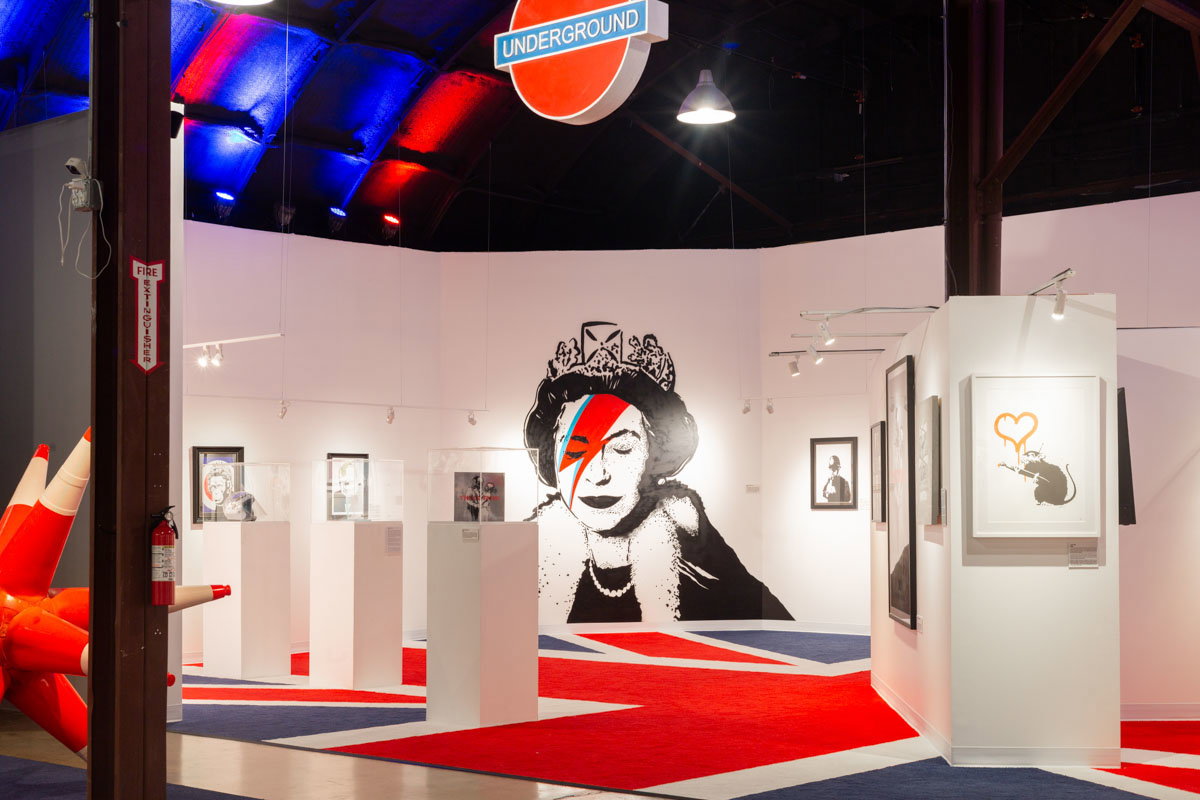
All photos from a prior showing of The Art of Banksy: Without Limits.
Photos courtesy of The Art of Banksy, GTP Exhibitions Ltd.
There is a moment near the beginning of The Art of Banksy: Without Limits when you realize you’re in the presence of a whole lot of Banksy.
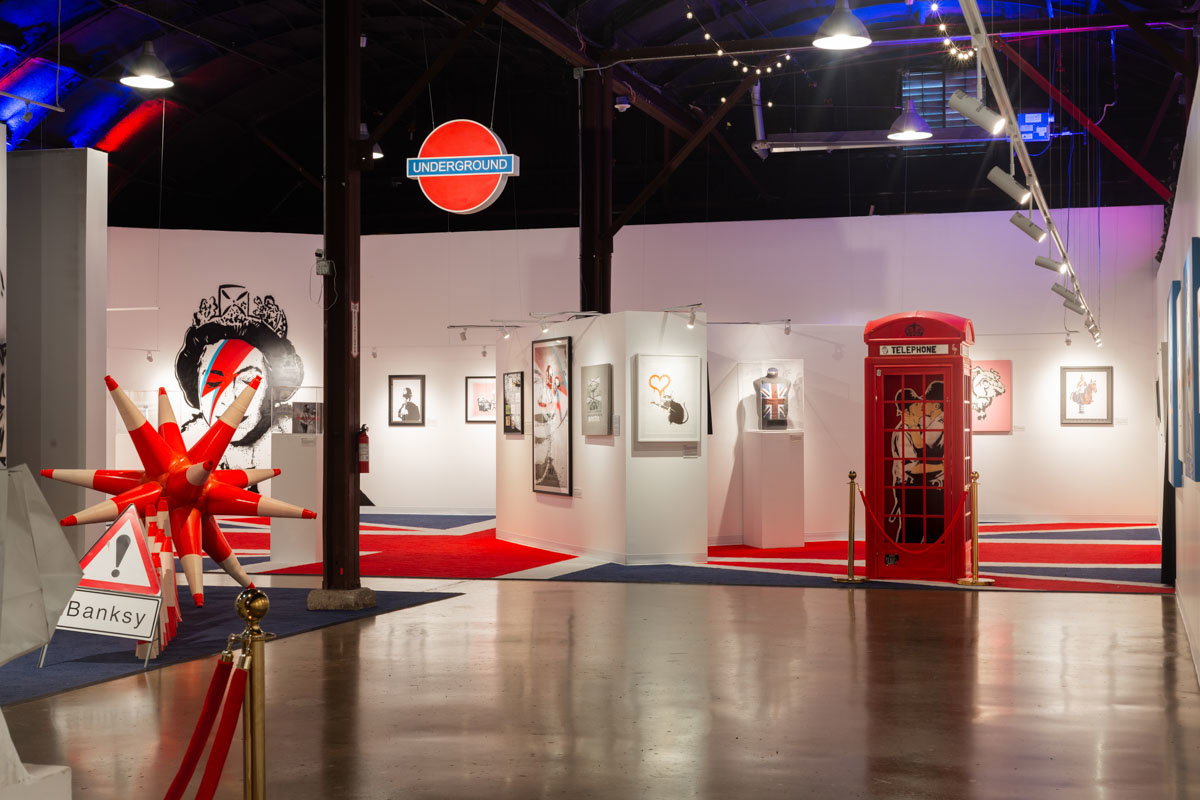
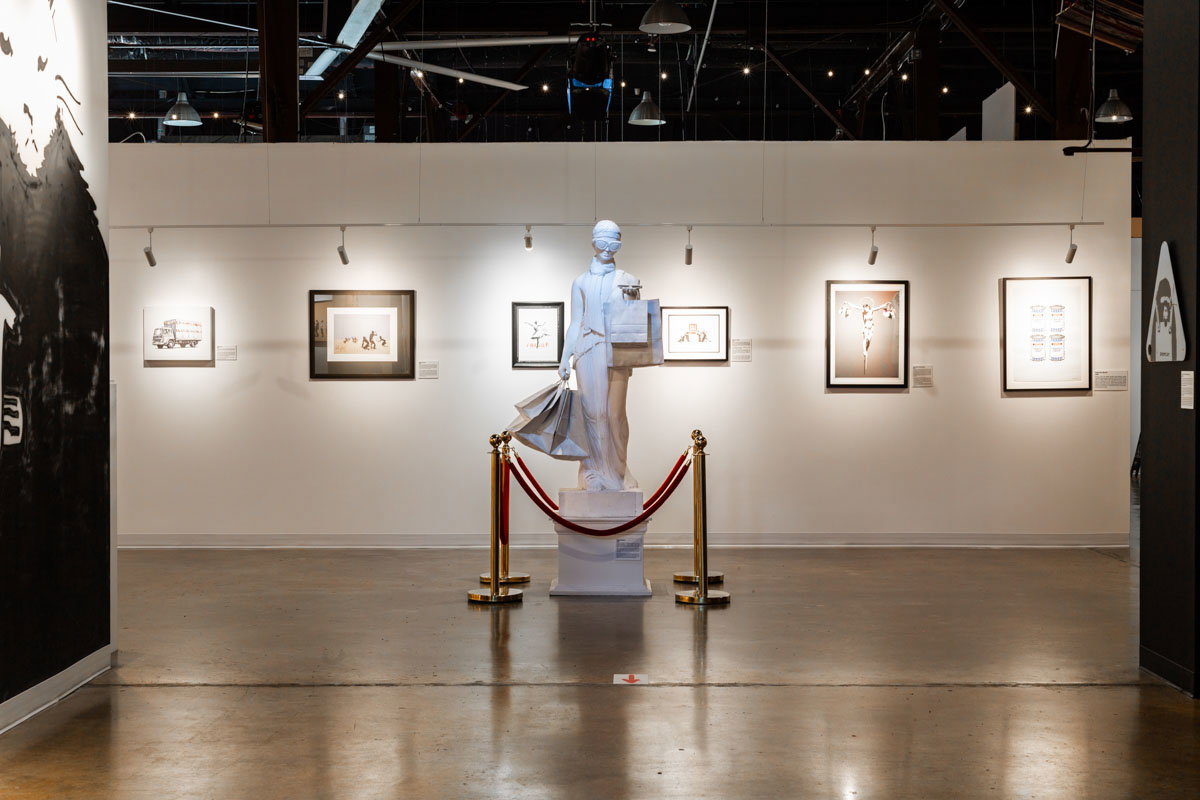
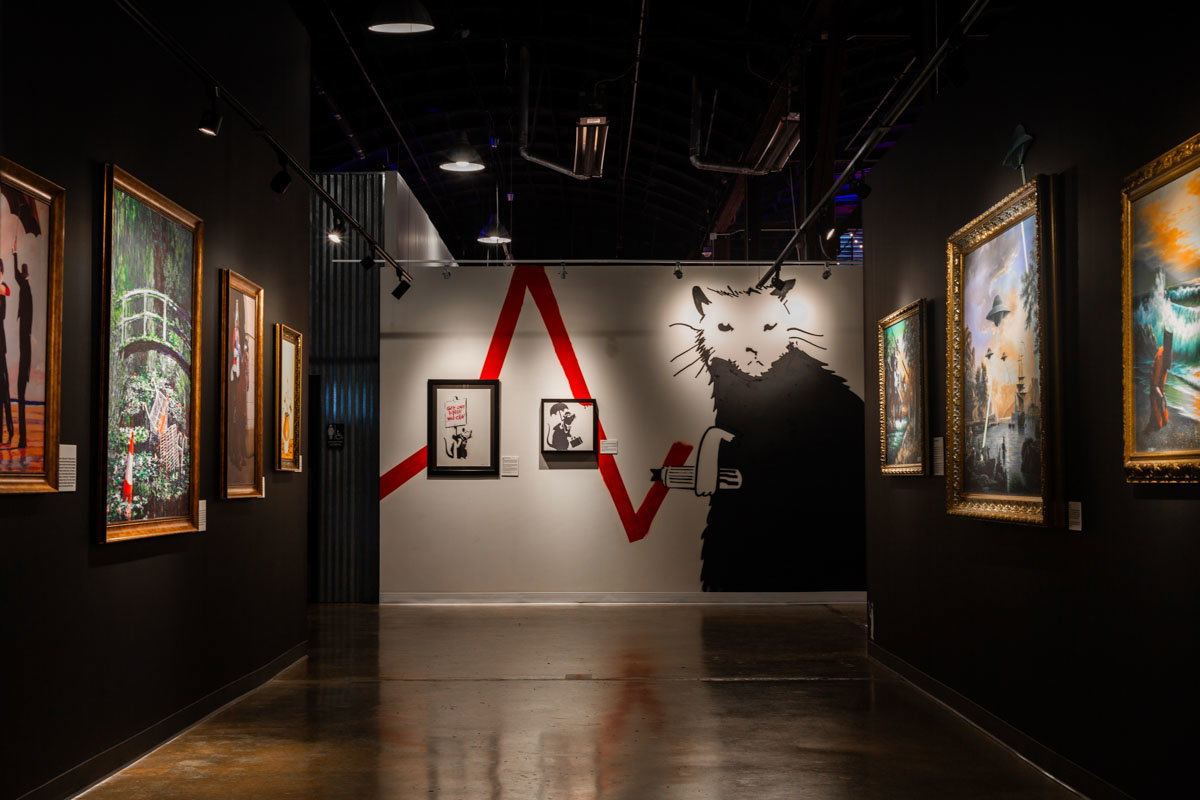
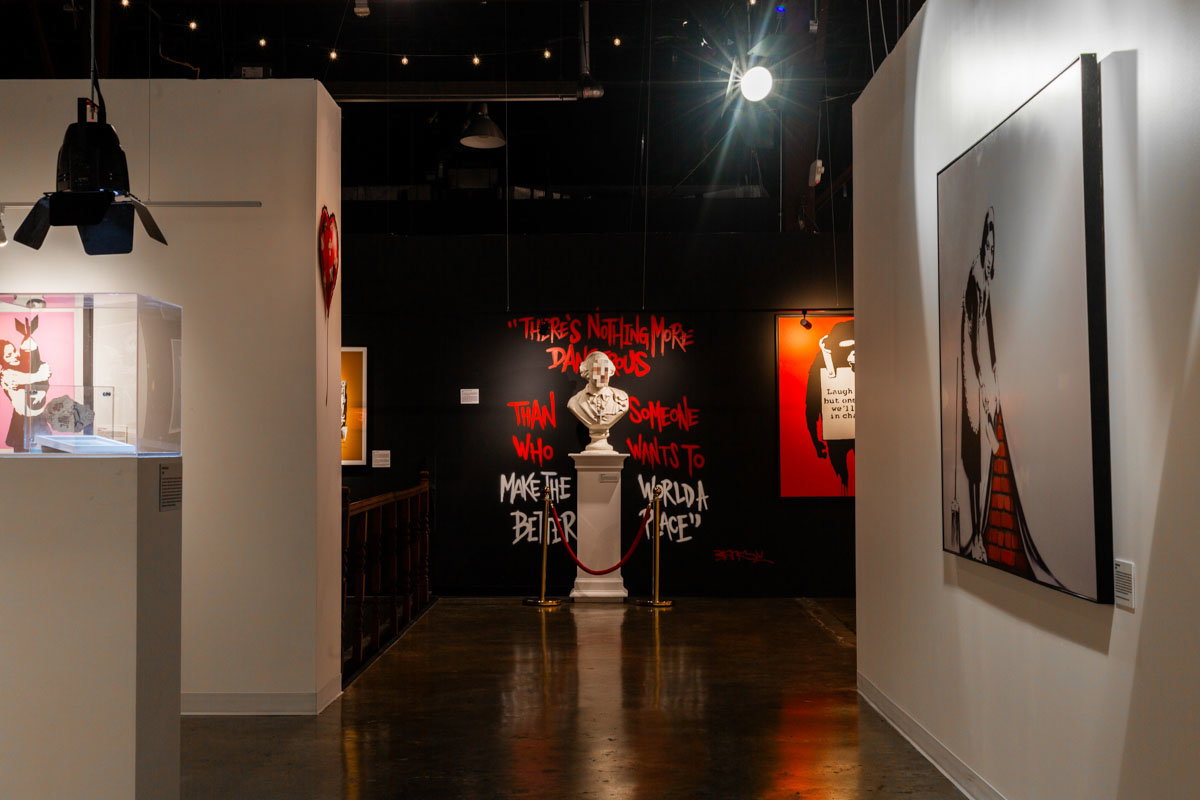
Opening at Pullman Yards, the traveling exhibition contains more than 200 pieces, including what organizers describe as 60 verified Banksy originals. There are prints and photographs, sculptures and murals, a room devoted to his Dismaland project, video mapping, an infinity room, and a hologram. Some of the murals are reproductions crafted using Banksy’s stencil technique specifically for the display.
There is, however, one important thing the exhibition cannot provide: Banksy’s permission.
Banksy himself has long disavowed this style of commercial show. His official website warns the public about a “spate” of unauthorized exhibitions, making clear they are organized entirely without his consent, knowledge, or involvement.
That makes this return—following the exhibition’s 2021 run at Underground Atlanta—an unusually complicated proposition. You can walk into The Art of Banksy wanting to see Banksy and still spend much of your visit wondering what, exactly, you are looking at.
I attended prior to the September 25 public opening, expecting to have reservations but arriving with an open mind. Years ago, I saw the documentary Exit Through the Gift Shop and liked the Banksy it presented: anonymous, funny, elusive, skeptical of the art world, committed to his vision, and apparently more interested in getting an image onto a wall than becoming a celebrity brand.
So I was willing to give Without Limits a chance. The exhibition begins with a timeline before sending visitors through a maze of rooms and installations inside the warehouse. The space fills quickly with work and visitors. On opening night, there were plenty of phones in the air, but there was also something encouraging: people were actively talking about the art. They stopped in front of pieces, pointed out details, and seemed genuinely engaged.
If anything, the audience itself is one of the exhibition’s strongest arguments for existing. Banksy may be one of the most recognizable artists in the world, but seeing his work in person is not a routine opportunity in Atlanta. For a young person who knows the rats, balloons, and protest imagery primarily from screens, this may be the only way to spend an hour surrounded by a large body of his work.
The problem is not that people want to see Banksy. The problem is what happens to Banksy when seeing his work becomes a packaged experience.
First, the exhibition advertises its 60 verified originals prominently. But as a visitor, I found it surprisingly difficult to tell which among the hundreds of pieces were those originals. The labels do not consistently clarify the distinction. I recognized Di-Faced Tenner, the signed and numbered print released by Pictures on Walls, as a real Banksy work. I also saw a signed and numbered CND Soldiers print (32/350), with a label explaining the 2005 release format. But nowhere in the immediate space is there plain-spoken signage explicitly signaling: This object is an original; that one is a re-creation.
In theory, that distinction matters less with Banksy than with traditional painters. Stencil art relies on repetition; reproduction is baked into the medium. Re-created mural walls built by local artists can be convincing and compelling without claiming to be newly discovered original street art. Watching artists cut stencils, layer spray paint, and deliberately retain drips to mirror street conditions is an enjoyable illusion. But once an exhibition uses the number of originals as a central marketing hook, it owes the visitor clarity on where those originals actually sit. Without clear labeling, “60 verified originals” functions less as useful information and more as atmospheric branding.
The wall text introduces another hurdle. At the entrance, a timeline opens with an extraordinarily bland summary: “Banksy has been active on the graffiti scene since the early 1990s.” It continues in this vague tone, tracing his career without conveying much sense of the artist or the weight of the work.
Much of the accompanying text relies heavily on over-explanation. Christ with Shopping Bags is labeled as a critique of consumerism’s impact on sacred life. A panel next to Lenin on Rollerblades notes that Banksy “mocks historical figures” to question authority through absurdity. By constantly asserting what the work means, the exhibition leaves little room for visitors to interpret it for themselves.
This is especially jarring for art that relies on context. A Banksy image discovered unexpectedly on a city wall derives its force from scale, location, impermanence, and raw accessibility. Inside a warehouse, everything has been curated, illuminated, and explained. The street has been replaced by a lesson plan.
Seeing so much of his work grouped together had an unexpected side effect: some of it felt flatter than remembered. Images that once carried a jolt of subversion begin to look like generic symbols of “Banksy-ness.”
The protester throwing a bouquet of flowers remains a clever image, as does the Pulp Fiction parody featuring bananas instead of guns. Girl With Balloon leans close to sentimentality. In the Ukraine section, imagery that carried immense weight when painted directly onto war-damaged buildings loses its immediate charge when framed as just another stop in a gallery sequence.
Contextual shifts don’t render the imagery meaningless, but they highlight its limitations. A figure bathing on a ruined wall in a war zone is striking because of where it exists. Transported to a commercial exhibit surrounded by photo ops, it runs the risk of feeling prepackaged.
Where the exhibition succeeds is in the smaller details. Banksy’s signature rats remain quick, witty, and full of personality. Reconfigured traffic cones retain their street-level magic—the work of a trickster taking the mundane and making it strange.
Similarly, a quoted line painted on one wall—”Nobody ever listened to me until they didn’t know who I was”—feels funny, sharp, self-aware, and historically resonant.
Yet the commercial machinery is always visible. There is a “hologram” of Banksy (closer to a projection on a transparent screen than a true 3D visual), a mirror room (far less arresting than Kusama’s Infinity Rooms at the High Museum), a mini Dismaland gallery, photo booths, and, inevitably, a gift shop. Premium ticket holders ($54.45) can spray-paint a stencil onto a T-shirt, with $2 allocated toward refugee aid, while standard admission starts at $27.23.
The scale of the setup is what feels most surreal. Exit Through the Gift Shop served as a warning against street art becoming a mass-market commodity. Walking through Without Limits, the distance between that film’s ethos and this event is hard to ignore.
There is value in providing access to a broad collection of Banksy’s visual culture in Atlanta. Audience reactions are generally warm, even if critics remain skeptical. The current iteration is noticeably larger than the 2021 edition—expanding beyond 155 works to more than 200 while adding multi-media rooms. The enthusiasm of the crowd gives the event its energy. Watching visitors step up to an image they’ve only ever seen digitally and discuss it in real time carries genuine worth.
Yet access is not the same as authenticity, and looking at an artist’s work is not the same as consuming a branded experience of him. The Art of Banksy: Without Limits offers plenty of the latter.
That outcome may be inevitable. Banksy’s images long ago escaped the street to become global iconography. They are printed, worn, sold, and shared endlessly online. The show doesn’t invent that commercial cycle; it simply embraces it.
The core paradox remains unchanged: the artist did not authorize or approve the show. After spending an hour inside, the primary question isn’t whether a specific print is certified, but a broader one: What happens to an artist whose work was meant to disrupt the commercial world when someone builds a commercial world around it?
The Art of Banksy: Without Limits. September 28 through January 10. Pullman Yards. 225 Rogers Street Northeast, Atlanta. Tickets start at $27.23 and can be purchased at artofbanksyus.com/atlanta/.
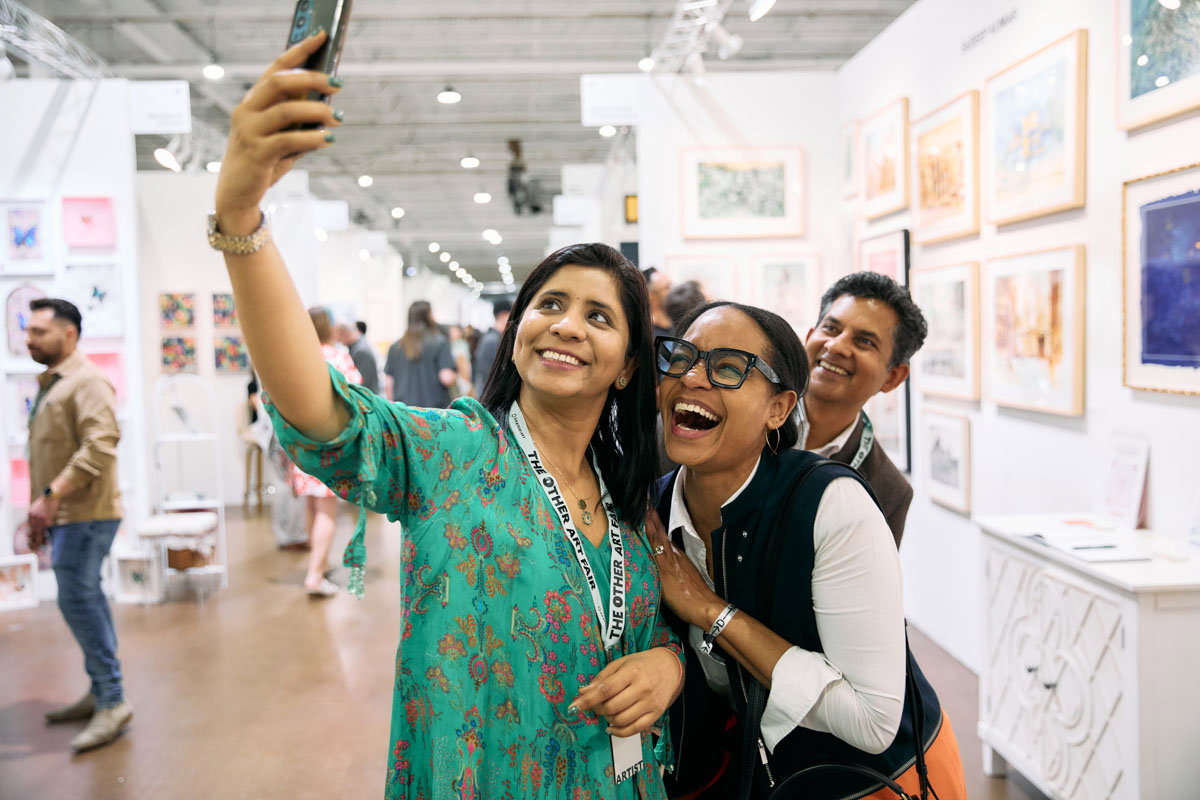
An attendee at a previous The Other Art Fair poses for a selfie with artist Guarii S Kumaar.
Courtesy of The Other Art Fair.
The Other Art Fair marks its Atlanta debut October 1-4, bringing 100 artists together to Grant Park’s Enspire Mercantile for what’s billed to be “an art fair like no other.”
Presented by online art gallery Saatchi Art, The Other Art Fair is dedicated to supporting independent artists and making art more accessible.
“A lot of people feel intimidated walking into a gallery,” says Nicole Garton, The Other Art Fair’s global fair director. So, the fair leans into a convivial feel centered on discovery and in-person connection. Atlanta attendees can peruse and purchase original artwork while meeting the artists onsite.
The Other Art Fair’s launch in Atlanta marks the fair’s first foray in the Southeast, following fairs in major cities across the globe including London and Los Angeles.
“On the world stage, Atlanta holds its own,” Garton says, noting both the city’s rich history and contemporary appeal. “But also, [Atlanta] seems poised to continually reinvent itself … Emerging artists are such a great community to highlight within that milieu because it’s all about breaking new ground and trying new things and experimenting.”
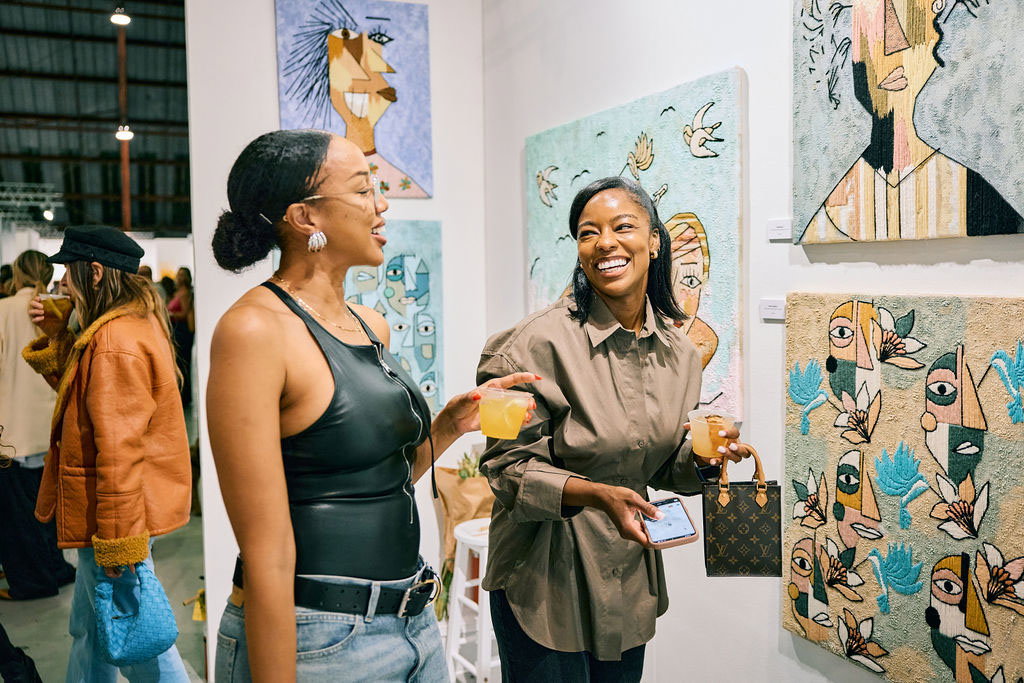
Attendees peruse art at a previous The Other Art Fair.
Courtesy of The Other Art Fair.
The Other Art Fair aims to showcase such talent, but organizers also offer the artists mentorship and professional support. It’s part of the reason Atlanta artist Audrey Beharie-McGee says the fair feels different than other shows.
“I think as an artist you suffer from [thinking], you know, ‘are you good enough? … is this going to be strong enough?’” she says. “But the way we’re supported is so amazing.”
A singer-songwriter, Beharie-McGee is not a traditionally trained artist. Rather, she discovered her craft later in life after Hashimoto’s Disease affected her singing voice.
“[Art] was cathartic insofar as it was giving me life again, because I really thought I’d died when I couldn’t sing anymore,” Beharie-McGee explains. She refers to her exploration of fine art and photography as “soulism.”
“Because it really is,” she says, “my soul being rejuvenated again.”
Throughout the fair, attendees can hear such stories and learn about each artist’s creative process. Other highlights beyond the traditional booths include a DJ, food trucks, immersive exhibits and an area where works are specifically curated by price point. The special installations include an interactive mural where attendees can color, a live poet who will craft impromptu works on a typewriter, and the Karmacy, where participants can choose a bottled dose of “higher vibrations,” such as peace or encouragement. The good vibes are then passed on as each participant replaces the message inside with a note of their own.
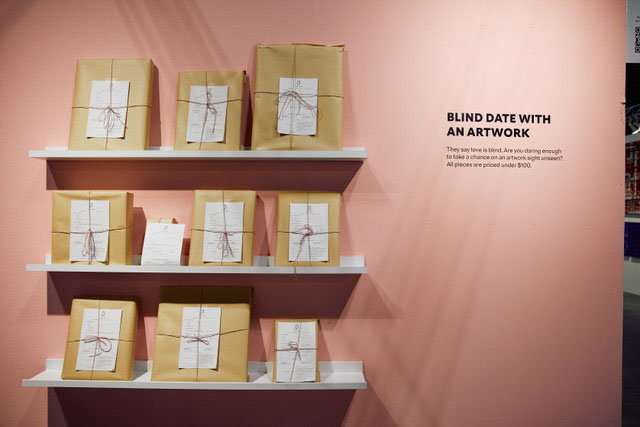
Artworks concealed from view for Blind Date with an Artwork
Courtesy of The Other Art Fair.
For the adventurous, Blind Date with an Artwork is a particularly popular attraction that offers the chance to buy artwork sight unseen. In that special exhibit all artworks are wrapped and concealed from view; buyers only get a few clues about the contents before they purchase. Garton says the experience is a fun departure from the concept that one should only buy what they love.
“I think the joy of discovery and surprise is also a factor that some people enjoy,” Garton says.
“Once you’ve seen a lot of art you think ‘Okay. I’ve kind of seen it all,’” she adds of her own experience. “But that’s never the case. My eyes are continually opened to people innovating in new ways.’”
The Other Art Fair. October 1-4. Enspire Mercantile in Grant Park, 259 Milton Avenue SE, Atlanta. Thursday’s opening night tickets are $55. Friday-Sunday tickets are $20. Tickets can be purchased at theotherartfair.com/atlanta/tickets/.