
Home 2026

Archives

Everything you need to see, eat, and do on a central North Carolina road trip

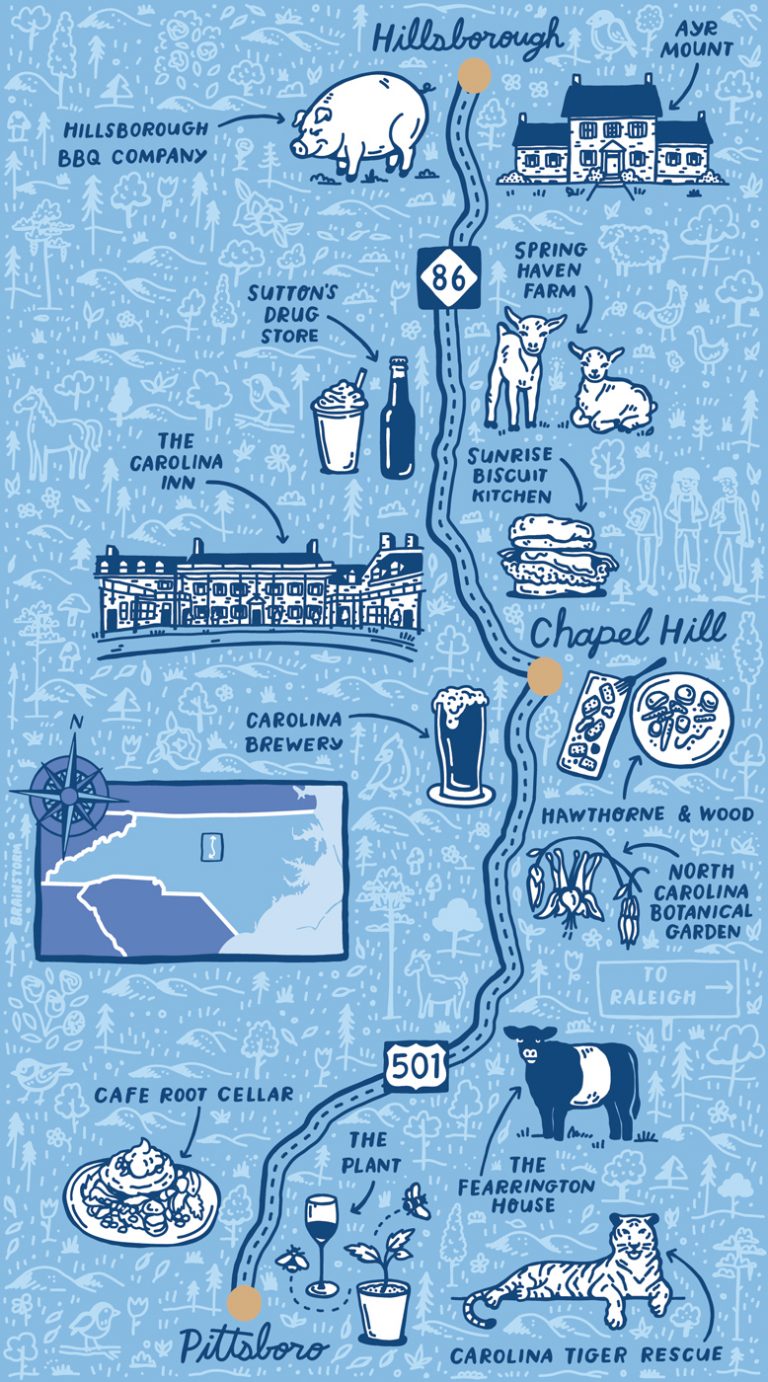
While there’s plenty to recommend a visit to the heart of North Carolina any time of the year, springtime in this part of the world is something special. A road trip over the rolling hills of the state’s Piedmont region promises farm-fresh fare, an explosion of native wildflowers, and a bumper crop of newborn animals.

Begin in historic Hillsborough, founded in 1754 along the Great Indian Trading Path. One of the superhighways of early America, the trail connected the Occaneechi, Saponi, and Catawba tribes and facilitated commerce between these peoples as well as European traders. Expect a rainbow of blooms on flowering plants along the Eno River and adorning the grounds of the 100-plus 18th- and 19th-century homes and other structures in the city’s historic district.

Continue south to Chapel Hill, home of the University of North Carolina, where even the fire engines are painted Carolina blue and school spirit pervades iconic stops such as Sutton’s Drug Store, the Carolina Inn, and the original taproom of Carolina Brewery. Along the way, revel in baby goats at Spring Haven Farm, and pay a visit to the North Carolina Botanical Garden.

For still more animal encounters and pastoral pursuits, plan a stay (as well as afternoon tea and dinner) at the renowned Fearrington House just north of downtown Pittsboro. Then head into town to shop the strip of independent boutiques before visiting nearby Starrlight Mead for a tasting at North Carolina’s oldest honey winery.

• • •

Ayr Mount

Courtesy Richard Hampton Jenrette Foundation

Ayr Mount
Built in 1815 by Scottish-born merchant William Kirkland, this house—the first constructed of brick in the state’s Piedmont region—was meant to impress, and its location, at the intersection of the Great Indian Trading Path and the Eno River, ensured that travelers passing through Hillsborough would recognize Kirkland’s status and wealth. Today’s visitors will discover impressive architectural details, from 14-foot ceilings to elaborate plasterwork, and a host of treasures, including Duncan Phyfe furniture, Zuber panoramic wallpaper panels, and a map of the Carolinas drawn by Thomas Jefferson’s father, Peter.

Hillsborough BBQ Company

Courtesy Hillsborough BBQ Company

Hillsborough BBQ Company
After several years managing this popular Hillsborough restaurant, Jared Meyers bought the establishment and committed to making everything—from ranch dressing to banana pudding—from scratch. And while the hickory-and-oak-smoked proteins, particularly the pork, are the main event, the sides are breakout stars and include a trio of coleslaws, a baked bean medley, and poppable hush puppies (a cornerstone side in the state’s barbecue culture).

Baby goat yoga at Spring Haven Farm

Courtesy Spring Haven Farm

Spring Haven Farm
Ten years ago, the Crihfield family began welcoming the public to their Chapel Hill farm, and from the beginning the animals were the big draw. Visitors can commune with Flemish giant rabbits and diminutive Kunekune pigs, a trio of donkeys and a host of free-ranging chickens and ducks, along with Wilbur and Orville, a pair of Scottish Highland cows. But the undeniable stars of the show are the dozens of Nigerian dwarf goats, which eagerly participate in Easter egg hunts, yoga classes, and movie nights under the stars, as well as the barnyard piece de resistance: Baby Goat Zen, private 50-minute snuggle and play sessions with the kids.

Vintage bottled sodas and Tar Heel pride at Sutton’s Drug Store

Sutton’s Drug Store
Established in 1923, Sutton’s Drug Store in Chapel Hill has been a gathering place for Tar Heel Nation for more than a century. The UNC faithful pack the small counter and dozen or so tables and booths for burgers and dogs, deli sandwiches (like the popular Reuben), and specialties such as chicken and waffle bites, pieces of chicken dipped in syrup and waffle batter then fried golden brown. Milkshakes are also a must, and a wall of vintage bottled sodas—Nehi, Moxie, Cheerwine—and buckets of penny candies offer nostalgia to-go.

North Carolina Botanical Garden

Courtesy North Carolina Botanical Garden

North Carolina Botanical Garden
Take a winding journey across the state at this expansive conservation area and display garden in Chapel Hill. Follow the boardwalk through North Carolina’s distinctive landscapes, beginning in the longleaf pine forests of the eastern sandhills, moving through the cypress groves of the coastal plain, then reaching the shady woodlands of the western mountains, lush with azaleas, rhododendrons, and ferns. Stroll the Piedmont habitat to identify spring wildflowers—Stokes’ aster, lobed tickseed, and prolific eastern columbine—that line the roadsides and blanket the meadows in this part of the state.

Carolina Brewery

Courtesy Carolina Brewery

Carolina Brewery
Just after graduating from UNC in 1995, fourth-generation Tar Heel Robert Poitras became an early pioneer in the state’s microbrewery movement, opening what is now Chapel Hill’s oldest brewery. In the last three decades, his craft beers have taken top honors at the Great American Beer Festival and the World Beer Cup, and his commitment to serving made-from-scratch dishes that match his artisanal pours has made the Franklin Street pub a dining destination. Stop in for a pint of Sky Blue Kolsch and a plate of the popular potato chip nachos.

Carolina Inn Lobby

Courtesy The Carolina Inn

Carolina Inn
Built in 1924 by UNC alum John Sprunt Hill, this acclaimed Chapel Hill hotel enjoys an unrivaled location at the heart of campus as well as pride of place in the school’s lore and culture. Often referred to as the university’s living room, its grand corridors are lined with a century’s worth of championship team photos and school memorabilia. Known for its distinctive architecture, evoking George Washington’s Mount Vernon as well as Greek Revival plantation houses, the AAA Four Diamond hotel has welcomed luminaries including President Barack Obama and musician James Taylor.

Flounder at Hawthorne & Wood

Courtesy Hawthorne & Wood

Hawthorne & Wood
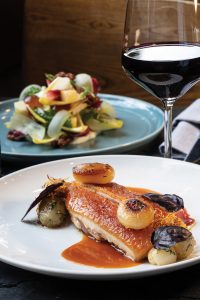
Chef Brandon Sharp’s roots run deep in Chapel Hill. While he was a UNC student, he worked in local kitchens and, upon returning to town after cooking in locales from New Orleans to Napa, he served a couple of years at the Carolina Inn. In 2019, he opened this polished local favorite featuring cuisine inspired by his years in California, such as Little Gem lettuce and Treviso salad and flounder with coconut-lemongrass broth. In recent years, the esteemed chef has added two more acclaimed establishments to his growing culinary empire: Bluebird, a buzzy French bistro, and Próximo, a cozy Spanish tapas joint.

Sunrise Biscuit Kitchen

Photo by Curious Notions Photography

Sunrise Biscuit Kitchen
Owner David Allen learned the art of biscuit making from his grandmother and credits the Southern staple with giving her the grit to birth 17 children and live almost a century. In 1978 he founded his breakfast and lunch spot in nearby Louisburg and in 1984 opened this Chapel Hill outpost, the state’s first drive-thru restaurant. Pull up for a sack of hot, buttery sandwiches swaddled in wax paper (go for the favorite chicken and cheese or try the unexpected BLT) and picnic at tables overlooking Bolin Creek.

Afternoon tea snacks at The Fearrington House

Courtesy The Fearrington House

The Fearrington House
What began in 1980 with the opening of the now-acclaimed Fearrington House Restaurant by R.B. Fitch and his late wife, Jenny, has grown into one of the South’s most celebrated properties. Situated on the grounds of a historic dairy farm between Chapel Hill and Pittsboro, this family-owned Relais & Chateâux retreat combines the elegance of European country inns with the warmth and welcome of the Carolinas. Guests can choose from 34 elegantly furnished rooms and suites surrounded by formal gardens and shop the handful of upscale boutiques in the adjacent English-inspired village. Not to be missed are a visit with the iconic Belted Galloway cows, afternoon tea, and Chef Paul Gagne’s seasonal tasting menu (opt for the wine pairing).

The Plant

Courtesy Pittsboro-Siler City Convention & Visitors Bureau

The Plant
Reinvention is rooted in the history of this social district just east of Pittsboro. In the mid-20th century, the site was home to one of the nation’s largest flower farms. In the ’80s, it became the location of a Cold War alloys factory. And in 2004, the industrial site began its transformation into a business park and gathering place featuring an art gallery, candle boutique, and (fittingly) a flower shop and plant nursery. Visitors can feast on jerk pork and oxtails at Kingston 99 Kitchen or carnitas tacos at Ta Contento. There are also plenty of pours on tap, from sake flights at Koshu Sake Bar to craft beers at BMC Brewing to honey wine tastings at Starrlight Mead.

Summer Crab Cake at Cafe Root Cellar

Courtesy Cafe Root Cellar

Cafe Root Cellar
This Pittsboro spin-off of the longstanding Chapel Hill establishment is where chef and owner Sera Cuni pulls out the big guns, showcasing bold flavors and impressive portions. While the menu offerings change seasonally—if not weekly, depending on the local ingredients inspiring her creations—diners can count on finding a couple of longtime favorites: shrimp empanadas with avocado-poblano dip and the wonderfully large crab cake made with plenty of meat the way she learned in her native Connecticut. Hit the dessert case to snag treats like buttermilk pie and salted caramel cookies to go.

Roman the lion at Carolina Tiger Rescue

Courtesy Courtesy Pittsboro-Siler City Convention & Visitors Bureau

Carolina Tiger Rescue
In 1973, UNC professor Michael Bleyman established this facility outside Pittsboro to breed threatened and endangered carnivores. Over the years, the 55-acre site began accepting rescues and redefined its mission, discontinuing the breeding program and focusing on providing refuge to big cats and other exotic animals once kept as pets or held in failing, unaccredited zoos and parks (such as the one featured in the Netflix series Tiger King). Twenty years ago, the sanctuary began offering public tours, and today visitors may encounter 13 species, including tigers, lions, and cougars, as well as lesser-known cats such as servals and caracals.

DETOUR: SAXAPAHAW
A former 19th-century cotton mill and dye factory set alongside the Haw River is today home to a happening village of craftspeople just a half hour west of Chapel Hill. Peruse the artists collective and vintage record and clothing store, catch a show at the Haw River Ballroom, or enjoy an unexpectedly good meal at Saxapahaw General Store, “your local five-star gas station.”

This article appears in the Spring 2026 issue of Southbound.

L’Ostrica’s seasonal desserts are a study in perfect balance

The strawberry rhubarb torte at L’Ostrica

Courtesy L’Ostrica

Sam Allen has loved baking since she was 17. The Johnson & Wales–trained pastry chef owned her own bakery for seven years, but just over a year ago, she scored her dream job: crafting artful desserts at L’Ostrica in Charlotte, North Carolina. Committed to showcasing fresh, local ingredients, Allen uses seasonal produce from nearby growers like Barbee Farms to create desserts such as the strawberry rhubarb torte. Temperature and timing are big factors in its creation.

“There’s a lot of going in and out of the freezer, so each layer stays intact while the next is prepared,” says Allen. Following a base made from pine nuts, the next layer is strawberry marmalade, then strawberry mousse, and finally a bright rhubarb gelée on top. For some crunch and a well-rounded finish, she creates baked meringue “kisses,” then adds toasted pine nuts, fresh honeycomb, and nettle gastrique, a “super earthy” element that balances the sweetness.

“Part of my baking style is integrating savory flavors that are unexpected,” she says. And even though her focus is pastry, she’s got a favorite entree she suggests trying prior to dessert. “When I see the steak frites go out from the kitchen, I just stare at it—the hand-cut fries and the quality of the beef—it’s mouthwatering.”

This article appears in the Spring 2026 issue of Southbound.

My South: Jenn Lyon on Maggie Valley, North Carolina

Jenn Lyon has appeared in Claws and Justified. Her new comedy, Stumble—in which she plays a cheerleading coach—premiered in November on NBC and is streaming on Peacock.

Illustration by Colleen O'Hara

I was born and raised around the foothills and mountains of North Carolina. My dad is a Methodist minister, and we moved a lot because he was constantly sent to a new church. But every summer we would go to Maggie Valley. Now my parents have a little house nearby, so I still have strong ties to the town. It’s a beautiful hidden gem in the Smoky Mountains right off the Blue Ridge Parkway, and it’s populated with quaint mom-and-pop stores.

My brother and I would always go to the Bargain Book Shop, which is this low-slung cinder-block building. You just get lost in there because every aisle is stacked with books. It’s like a treasure hunt. And the store is still going strong!

Joey’s Pancake House is a family-run business founded in 1969, and it has the best pancakes you’ve ever had in your life. I say this as a pancake connoisseur. Oh my god, they’re exactly the right thickness and hold syrup like a miracle. Ammons Drive-Inn has great burgers and soft-serve ice cream. Maggie Mountaineer Crafts is so cute and has the best fudge. Can you tell I have a sweet tooth?

You can also hike up in the mountains and see waterfalls, and Lake Junaluska is five minutes away if you want to go swimming and rent canoes and paddle boats. In October, you can see all the leaves change and go to the annual Smoky Mountains Bluegrass Festival at the Maggie Valley Festival Grounds.

This is really one of my favorite places because it’s a real warm hometown and not overrun with tourists. The people there just want to raise their families and make their crafts and love nature. I’ve been a New Yorker for about 20 years, and I love going to Maggie Valley if I want a slower pace. You ask for directions, and you better sit down because it’s going to be 10 minutes. They’re going to help you find your way—and ask how your mom is doing and if they can make you a plate.

This article appears in the Spring 2026 issue of Southbound.

In Durham, I found the writing desk that once belonged to Virginia Woolf

0
From the desk of

Illustration by Harry Tennant

The first time I pass by the desk, I miss it. The four of us are already in the next room when I spot the sign featuring her name: Virginia Woolf. I retrace my steps, followed by my husband, our daughter, and her fiance. Sure enough, there it is: Virginia Woolf’s writing desk, on display in Duke University’s Rubenstein Library.

My husband and I are in North Carolina visiting our daughter, a graduate student at UNC. That Saturday, the Tar Heels are playing the Richmond Spiders, and she informs us that parking around Chapel Hill will be impossible. So instead of visiting her campus, we head to nearby Durham to visit Duke, where her fiance is a law student.

Woolf’s desk is a light gray. On its slanted top lies Clio, the muse of history, which Quentin Bell, Woolf’s nephew, painted after she gifted him the desk. Clio is propped up on one elbow and holds a golden trumpet to her lips. A banner flaps in the wind beneath the trumpet, orange against a blue sky. A placard informs me that Duke acquired the desk as part of the Lisa Unger Baskin Collection. Later, I would learn that Baskin assembled more than 8,600 books, manuscripts, and artifacts—all evidence of women at work.

I read A Room of One’s Own, Woolf’s essay on women and fiction, when I was a teenager in Egypt and again as a young immigrant to the United States. Hungry to become a writer, I scoured the book for evidence that I had that magic in me, only to find out that what I needed was privilege—money and the freedom to think in privacy, unencumbered by anger or need.

My old copy of that book still stands on a bookshelf in my home office in West Virginia. I have underlined many phrases, including Woolf’s assertion that “we think back through our mothers if we are women.” Just as women needed money and privacy to write, they also needed a tradition of women writers to inspire them. Back in 1928, Woolf lamented how women, historically, were deprived of the educational and financial opportunities necessary for them to express their gifts.

Standing in front of Woolf’s desk, I think of all the women before me—my mother, who placed the first book in my hands; my paternal grandmother, who always had a book in hers; my mentor in college, who assured me I was a writer; Woolf, who explained women’s writing within its historical and social context; Baskin, who collected women’s work and gifted it to Duke’s library. Our love of books and writing has spanned continents and generations, encompassed countless other women, and now extends to my daughter, who is earning a dual master’s degree in public administration and library studies, determined to save the libraries. Women inspiring other women, all of us both muses and creators.

At some point, Woolf’s desk lost six inches—Bell’s wife had the bottoms of the legs sawn off to turn the standing desk into a sitting one. Now, the desk stands on a platform, restored to the height Woolf intended. Somehow, this feels like a small triumph.

• • •

RAJIA HASSIB was born in Egypt and moved to the United States when she was 23. She is the author of two novels: In the Language of Miracles (a New York Times Editors’ Choice) and A Pure Heart. She has written for the New York Times Book Review, the New Yorker, and Literary Hub. She lives in Charleston, West Virginia, and teaches English and creative writing at Marshall University.

This article appears in the Winter 2026 issue of Southbound.
Weekend Getaway Guide: Raleigh, North Carolina

Downtown Raleigh

Raleigh has little to prove as the hub of government, business, and education in North Carolina, but the city’s newfound creative identity has added significant intrigue. Founded in 1792 as one of the few planned capital cities in America, the “City of Oaks” earned its nickname from towering trees that still shade wide boulevards. Today, former warehouses contain craft breweries and design studios, and public art dots downtown streets. James Beard–recognized chefs have put Raleigh’s dining scene on the national map, and Michelin’s inaugural American South guide arrived last November, cementing Raleigh as a culinary hotbed. Add world-class museums, transformative outdoor developments, and that unbeatable North Carolina hospitality, and you’ve got a city worthy of a weekend escape.

FRIDAY

Heights House

Courtesy Heights House

CHECK-IN ➞ Heights House sits pretty in Boylan Heights, the city’s most coveted historic neighborhood. Husband-and-wife team Sarah and Jeff Shepherd spent years walking past this 1858 Italianate mansion, dreaming of what it could become. After a meticulous restoration, their nine-room boutique hotel now showcases 15-foot ceilings, original hardwoods, and 10 working fireplaces. Upon arrival, you’re greeted with Champagne and an actual room key (don’t miss the lobby’s jewel-box-like, stained-glass cupola). Modern touches like Counter Culture coffee setups and frame TVs blend seamlessly with period details. The honeymoon suite is a favorite, featuring a spacious living area and clawfoot tub.

Guest Suite at Heights House

Courtesy Visit NC

EVENING ➞ Begin your evening with an aperitivo at the Parlor, Heights House’s bar serving Italian-inspired cocktails in whimsical Ichendorf Milano glassware. For dinner, reserve a table at Ajja, where rockstar chef Cheetie Kumar creates a menu that journeys from the Mediterranean to the Middle East. Kumar and co-owner Paul Siler perform together in the band Birds of Avalon and bring that creative energy to the kitchen. Order the namesake mezze platter of three dips (complete with a bread basket and za’atar oil), anything from the veggie-centric market section (the crispy eggplant and halloumi is a wise start), and the whole fried trout with vibrant tamarind-pepper glaze and lemon schug.

Cap the evening at Bend Bar, Trophy Brewing’s newest neighborhood spot set in a renovated bungalow and featuring local craft beer on tap, along with wine and cocktails, from a hip, 16-seat curved bar designed to resemble a stereo speaker.

SATURDAY

MORNING ➞ Start with Heights House’s European-style breakfast of housemade yogurt, granola, and local, fresh-baked pastries. Cold brew coffee and sparkling waters are stashed in the dining area’s refrigerated drawers for thirst-quenching throughout the day.

Nashona

Courtesy Visit Raleigh

Next, explore Raleigh’s vibrant shopping scene: Nashona, where Tanzanian designer Lilian K. Danieli creates stunning clothing with vivid African textiles; Raleigh Denim’s handcrafted jeans (fans include Brad Pitt and North Carolina–raised rapper J. Cole); Father & Sons Antiques for vintage finds; funky gifts at Deco Raleigh; sustainable fine jewelry at Quercus; and bean-to-bar sweets at Videri Chocolate Factory. Keep your eyes peeled in between shops for standout murals like Sarah Rosa Glickman’s Female Firsts of North Carolina.

Be sure to save time for a trip out to the Raleigh Market, a flea market that transformed from six humble tables in the 1970s into a sprawling 20,000-square-foot indoor treasure hunt at the State Fairgrounds. Over 500 vendors now peddle everything from vintage finds to quirky collectibles.

AFTERNOON ➞ For brunch, hit Hummingbird, a New Orleans–inspired spot showcasing chef and owner Coleen Speaks’ culinary roots. The restaurant is tucked inside a converted 1950s A&P warehouse and occupies what used to be the bathrooms, complete with original green tile, transforming industrial grit into a favorite place for locals to dine year round on the patio. Staples include the fried oyster po’ boy and the chicken and waffles.

The North Carolina Museum of Art’s Art Park

Courtesy Visit NC

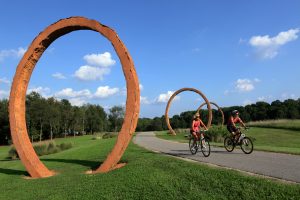
Spend the afternoon at the North Carolina Museum of Art, one of the city’s best—and free—attractions. The diverse collection spans classical to contemporary works, including Auguste Rodin sculptures and rare Pablo Picasso pieces. The real magic happens outdoors in the museum park, where installations like Danish artist Jeppe Hein’s mirrored labyrinth and Thomas Sayre’s Gyre—three monumental ellipses sculpted directly into the earth—merge art with nature.

So & So Books

Courtesy Visit Raleigh

As afternoon melts into evening, stroll through Historic Oakwood, the state’s largest intact 19th-century residential neighborhood. Admire preserved Queen Anne, neoclassical, and Victorian homes, and stop into So & So Books and Edge of Urge gift shop.

EVENING ➞ Saturday night belongs to Oakwood, hands down Raleigh’s best eating neighborhood. Start with a pre-dinner cocktail at William & Company, where owner and mixologist Lily Ballance crafts a mezcal, tequila, and agave spirit-focused menu.

Crawford & Son

Courtesy Visit Raleigh

Dinner is at Crawford & Son, renowned chef Scott Crawford’s flagship. Must-orders include the hamachi crudo, bone marrow beef tartare with Béarnaise and crispy shallots, and the Manchego biscuits. Having learned kitchen skills from some of the best in the country, chef de cuisine Aaron Salita brings impeccable technique to dishes like seared duck and lion’s mane mushroom schnitzel. If available, order Salita’s longanisa sausage, a sweet and savory Filipino pork sausage nodding to his roots.

After dinner, descend into Sous Terre, an enter-by-key underground bar (diners at Crawford’s restaurants get access), home to the best Ramos gin fizz that drinks like a cloud soufflé. End at Two Roosters for artisanal ice cream. You can’t go wrong with strawberry and honey or double-fold vanilla, but branch out with one of their creative rotating flavors, like ube coconut or berry sriracha honey, often concocted by local chefs.

SUNDAY

MORNING ➞ Rise and shine for breakfast at Boulted Bread, the bakery behind Raleigh’s legendary grits bread and sourdough creations. Be prepared for a queue—and grab a loaf for the road.

Continue to Dix Park, which is having a major moment with new developments transforming the sprawling greenspace—with the downtown skyline as the backdrop. The Gipson Play Plaza, an 18.5-acre playground with a sand pit, waterfall, climbing tower, and gardens, is perfect if you’re traveling with kids.

Peregrine

Courtesy Visit Raleigh

If time allows for brunch, head to Peregrine, one of Raleigh’s best new restaurants. The menu reflects chef Saif Rahman’s migration from Bangladesh to the American South through dishes like falafel sliders with mango chutney and black-eyed peas on a butter roll, or hot honey cured egg with lemon yogurt, chilies, and herbs on sourdough. If you’re in the passenger seat for the ride home, the Fried Green Tomato Mary—vodka, green tomato, tomatillo, sumac, harissa, and chicken cracklin’—is the perfect twist on a brunch classic.

• • •

Caffeine and Beyond
Raleighs cafe scene refuses to be one-dimensional

The Bike Library does double duty as a full-service bike shop and a cafe offering honey-cinnamon oat lattes and locally made vegan pastries. Founded by Cameron Zamot, it started in a shipping container and now hosts community rides and repair workshops, so you can tune up your ride while sipping Left Hook Coffee.

Heirloom transforms from a hip, plant-filled cafe with coffee, tea, and breakfast by day into a full-fledged dinner stop with standout Laotian and Taiwanese dishes and an impressive sake selection.

Feature Flora operates as a botanical design studio, tea lounge, and shop selling Japanese–inspired tea ware, kitchen utensils, and home goods. Owner Deana Nguyen serves house-made matcha alongside afternoon tea service among the fresh floral arrangements.

This article appears in the Winter 2026 issue of Southbound.
Behind the scenes of the Biltmore Estate’s holiday transformation

0
Lizzie Whitcher’s title may simply be “floral manager,” but there’s nothing simple about her job. At Asheville’s Biltmore, she oversees floral design for the entire estate, including the epic annual Christmas celebration. She shares how her team pulls off the big celebration.

Courtesy the Biltmore Company

One year on a family visit to Asheville, Lizzie Whitcher fell in love with Biltmore—so much so that she studied floriculture at Texas A&M with hopes of eventually working at the estate. Soon after, she made that dream a reality. In addition to managing decor for events, her team of 10 designers directs the installation of more than 100 trees, hundreds of thousands of lights, and thousands of feet of garland for Christmas at Biltmore. “It’s rare to be able to say that you’re doing the job you dreamed of having forever ago,” she says. “I feel very lucky.”

Blue (Spruce) Christmas
“George Vanderbilt moved into the house in October 1895. It was still under construction, but his focus was already on inviting his family for Christmas. We don’t have any historic decorations, but we cherish documentation that we do have and use it to make history come alive. For example, when the young son of an employee was fetching a Christmas tree, he accidentally cut down one of Mr. Vanderbilt’s prized blue spruces. When the horrified employee confessed, Mr. Vanderbilt graciously forgave the boy and said he hoped they would enjoy it. Most of the trees we decorate are Fraser firs, but we always put a blue spruce in George’s bedroom.”

Christmas tapestry gallery

Courtesy the Biltmore Company

Where It All Begins
“While Christmas is still up, we start planning for the next year. We decorate more than 40 different spaces, and we create a new experience every year. After plans are approved, we pull out the bins of decorations. If several designers want the same ornaments, I have to negotiate—or get more. This year the Tapestry Gallery will have a Noah’s Ark theme, so we’ll need more animal ornaments.”

Dreamy Themes
“This year I’m decorating the Banquet Hall. It has a 70-foot ceiling and will have a 30-foot tree, but my goal is to make it feel cozy. I’ll be using lots of nuts and holly inspired by a carving over the mantle. Other fun themes will be a Starry Night in Bethlehem, a German holiday market, an Asian tree with Chinese lanterns and dragons, and a blue-and-white Delftware tree inspired by the Vanderbilt family’s ties to the Netherlands.”

Christmas banquet hall

Courtesy the Biltmore Company

Behind the Scenes
“It takes us six weeks to decorate for the holidays. We refresh live greenery and flowers every week or two, and the Banquet Hall tree is switched out midseason. The electrical side is the hardest thing. We set lots of complicated timers. Also, there’s the challenge of working in a historical setting. We can’t just pop in a nail when we wantThi to hang a garland. To avoid insects that could eat books in the library, we freeze high-risk items like fabric or paper for two weeks before bringing them into the house. It’s a labor of love.”

This article appears in the Fall 2025 issue of Southbound.

See the sugary showstoppers that won this year’s National Gingerbread House Competition

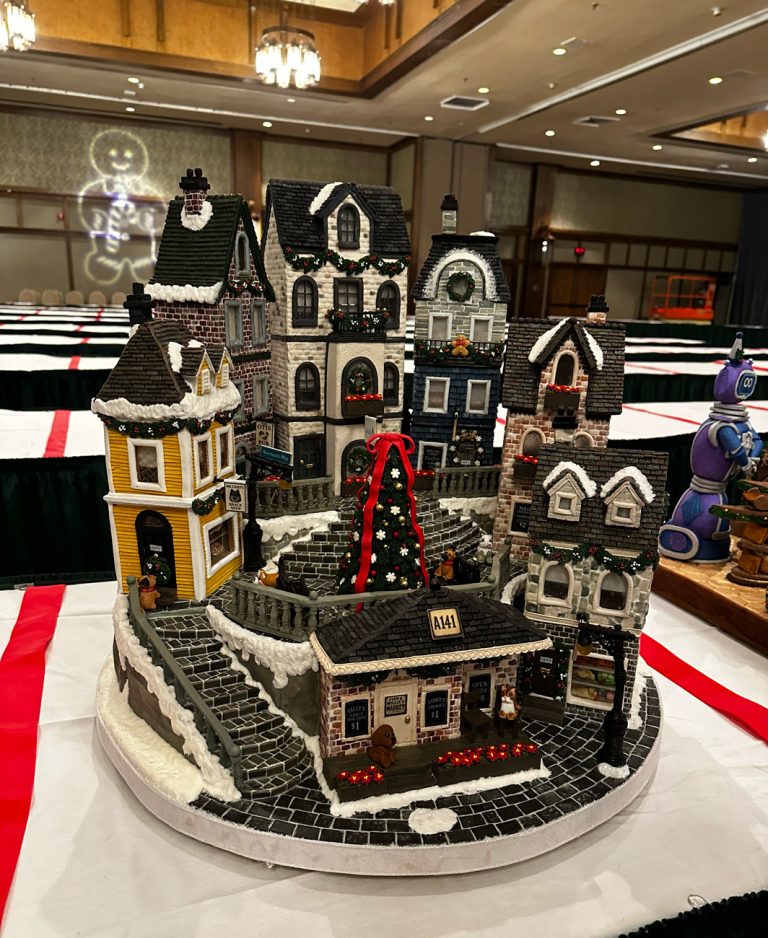
The Omni Grove Park Inn & Spa welcomed back the National Gingerbread Competition this year after Hurricane Helene forced a cancellation in 2024. The celebrated holiday tradition returned stronger than ever, with 235 entries representing 25 states across the country—the most in the event’s history. Dating back to 1992, the competition attracts a mix of pastry professionals and spirited hobbyists who compete in four different age groups: Adult (18+), Teen (13–17), Youth (9–12), and Child (5–8).

To qualify, each structure must be entirely edible and made up of at least 75 percent gingerbread. This year’s panel of judges assessed entries based on overall appearance, originality, creativity, difficulty, precision, and consistency of theme.

Gingerbread displays are on view throughout the Omni Grove Park Inn until January 4. Non-guests can visit the property to view displays anytime Monday through Thursday, or after 6 p.m. on Sundays. While there, don’t miss the resort’s own whimsical creation: a life-sized gingerbread house cafe, built in the historic hotel’s likeness, that serves homemade hot chocolate and other sweet treats. 

“The Tiny Gnome Builders” by Mary Hulsman, a resident of Concord, North Carolina, was the Grand Prize Winner for 2025

Courtesy The Omni Grove Park Inn & Spa

Heather Nadeau of Cary, North Carolina, brought home second place in the Adult category for “The Birch Mouse Burrow,” which utilized quinoa as the tree’s leaves

Courtesy The Omni Grove Park Inn & Spa

Michael Villella traveled to the competition from New York, New York, snagging third place for his creation, “Wassail Break”

Courtesy The Omni Grove Park Inn & Spa

“Mosaic Stairway of Ginger” was the first-place winner in the Teen category. Made by students from Courtland High School in Spotsylvania, Virginia, the piece was also awarded for the Best Use of Color.

Courtesy The Omni Grove Park Inn & Spa

Emma Rhinehart from Columbia, Tennessee, won third place for her Masters-inspired structure, “The Green Jacket & Red Suit.” It also won Best Use of Sprinkles award.

Courtesy The Omni Grove Park Inn & Spa

Bailey Nadeau celebrated a win alongside her mother, Heather, for “Muddlefoot’s Mushroom Madness,” which received the first-place prize in the Youth category

Courtesy The Omni Grove Park Inn & Spa

Navarra Fritz from Barnardsville, North Carolina, received a third-place win in the Youth category for her “Caterpillar in the Chrysalis”

Courtesy The Omni Grove Park Inn & Spa

First place in the Child category went to Finley Doyle from Midlothian, Virginia, for “Grammy’s Kitchen”

Courtesy The Omni Grove Park Inn & Spa

“I Spy a Gingerbread Candy Factory” by Callie Caldwell of Mooresville, North Carolina, received the second-place award in the Child category

Courtesy The Omni Grove Park Inn & Spa

A kindergarten class from Black Mountain, North Carolina, received third place in the Child category for “A Christmas Wagon”

Courtesy The Omni Grove Park Inn & Spa

After 172 years, the North Carolina State Fair remains picture-perfect

Fireworks displays are a nightly affair, and the State Fair Flyer, which transports visitors above the bustling Midway, offers the perfect vantage point to enjoy them.

Photo by Justin Kase Conder

Since 1853, the North Carolina State Fair has drawn huge crowds to Raleigh by showcasing the best livestock, produce, and crafts from around the state. Throw in some thrill rides, indulgent fare (battered bologna fries, anyone?), and nightly fireworks, and you’ve got what is now one of the nation’s most popular state fairs. Here’s a glimpse of all the blue-ribbon fun that went down.

No fear of heights here! Laughter fills the air as a group of friends rides the Downdraft. The retro thrill ride is one of Carnival Midway’s nearly 100 attractions. Other popular options include the Super Cyclone roller coaster and the Zero Gravity spinning ride.

Photo by Justin Kase Conder

Two brothers go head-to-head for a bite of chicken and waffles on a stick—a favorite among the fair’s artery-busting offerings. More than 30 vendors sell everything from hot dog–stuffed fried pickles to candied oatmeal pies.

Photo by Justin Kase Conder

Sunflowers bloom in front of the SkyGazer, North America’s largest traveling Ferris wheel. Standing 155 feet (or 15 stories) tall, the towering ride takes 800 hours to assemble and offers glimpses of downtown Raleigh’s skyline.

Photo by Justin Kase Conder

Livestock shows are a fair centerpiece, with farmers from around the state showcasing their prized dairy cattle, steers, goats, and ewes—all in hopes of earning the coveted Grand Champion ribbon. Here, young handlers share a moment of anticipation before showing their cattle.

Photo by Justin Kase Conder

In the Village of Yesteryear, more than 75 artisans showcase and sell the crafts of their forebearers. Some carve fiddles, while others cure soaps. Still others demonstrate Native American methods by hand-coiling pottery and adorning jewelry with intricate beadwork, stones, or porcupine quills. Here, Jeffrey Gottlieb of Whittier, North Carolina, demonstrates the art of basket weaving.

Photo by Kendrick Brinson

At the Great Pumpkin and Watermelon Weigh-Off, giant gourds net giant dividends. This 2,206-pound monster was last year’s winner. The top three pumpkins earn between $1.50 and $3 a pound. The watermelon world record is 350.5 pounds, and if a farmer brings one that’s heavier, the new record breaker earns $2,500—on top of the standard $3 to $6 a pound.

Photo by Kendrick Brinson

Jeremiah Proctor has served as a “guesser” at the fair for the last six years. He claims he can figure out anyone’s weight within three pounds, age within two years, or birth month within two months. There’s always a win: If he’s right, there are claps all around; if he’s wrong, the fairgoer takes home a stuffed animal (and perhaps a bruised ego).

Photo by Kendrick Brinson

This article appears in the Fall 2025 issue of Southbound.
Waters of Wilmington: Dive deep into one of North Carolina’s coolest towns

0
Wilmington, North Carolina

Photo by Samule Cruz

Bordered by the Cape Fear River on one side and breezy beaches on the other, Wilmington is undoubtedly a refreshing destination. It’s known for its acclaimed surfing and scuba-diving, but you’ll quickly find that it teems with other diversions to discover, both in the water and on dry land.

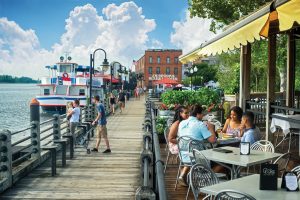
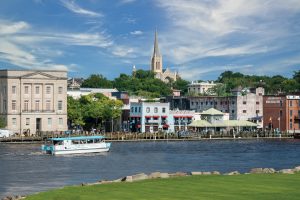
Wilmington, like many Atlantic seaside towns, emerged as an important port city during the colonial era. Its position on the river made it a military stronghold during the Revolutionary and Civil Wars, and British and Union troops occupied it at various times throughout the years. Still, plenty of historic Georgian and Victorian architecture remains intact, lending downtown Wilmington loads of historical charm. The riverfront district is its heart and soul, with the bustling restaurant- and shop-lined Riverwalk flanking nearly two miles of shoreline.

Follow the central waterway down to the ocean, where an abundance of activities, such as stand up paddleboarding and sailing, await. Those seaside pleasures and plenty of in-town fun make this destination shine. Here’s our guide to experiencing Wilmington’s water-based wonders.

Wrightsville Beach

Photo by Wentao Liu

Hit the Beach
Choose your own seaside adventure

With 31 combined miles of shoreline, Wilmington’s three main beaches—Wrightsville, Carolina, and Kure—are part of the Cape Fear barrier islands between the Atlantic Ocean and the Cape Fear river. With that expanse comes a variety of vibes, from laid-back to sporty to retro.

Just across the causeway from Wilmington, a roughly 20-minute drive from the historic district, is Wrightsville Beach. It features one main road lined with pastel, multilevel vacation rentals and oceanfront resorts. Visitors often come for the watersports—surfing, paddleboarding, kiteboarding, sailing, and fishing, to name a few—but you’re just as likely to find families simply building sandcastles and sunbathing. Head down to Johnnie Mercers Fishing Pier, which juts more than 1,200 feet into the Atlantic, to watch surfers hang ten and fishers reel in their catch, or stroll to the beach’s north end for one of Wrightsville’s hidden gems: a mysterious mailbox. Flip through the journals kept inside to find heartfelt messages left by fellow beachgoers.

Fort Fisher State Recreation Area

Courtesy of Wilmington and Beaches CVB

Farther south, you’ll find Carolina Beach, known for its upbeat, family-friendly atmosphere and seaside boardwalk dating back to 1887—one of only a few historic ones remaining in the country. Like Wrightsville, Carolina Beach is known as a surfing haven. Beginners can take lessons through the renowned Tony Silvagni Surf School, helmed by Silvagni himself, a professional surfer with international acclaim. Back on the boardwalk, shop for kitschy souvenirs, cool off with an ice cream cone, and relax on a swinging chair overlooking the sand dunes. Come nightfall, it lights up with old-fashioned fun, including carnival games and amusement rides.

North Carolina Aquarium at Fort Fisher

Courtesy of Wilmington and Beaches CVB

If peace and quiet are what you crave, dog-friendly Kure Beach is an unspoiled escape. The Fort Fisher State Recreation Area offers six miles of protected shoreline between the ocean and the river; a two-mile trail winds through wild marshlands (and past a WWII bunker), ending at an observation deck with views of Zeke’s Island, a shorebird haven. The North Carolina Aquarium at Fort Fisher is just steps from the park.

On Dry Land: Destination Dining

Italian and Spanish influences meet North Carolina and New Orleans flair at downtown’s Olivero. And yes, those seemingly disparate flavor profiles do mesh well—so well that the dinner-only spot was named one of USA Today’s best restaurants of 2025. The menu changes seasonally, but expect dishes like sweet and savory beignets topped with mortadella and Calabrian hot honey and croquetas with North Carolina crab and basil pesto.

Open since 1939, Britts Donut Shop is a Carolina Beach staple during the warm-weather months. There’s only one thing on the menu—homemade glazed doughnuts—but you can order a coffee to enjoy with them. Stake out a spot in line before it opens at 8:30 a.m., and bring cash (though you won’t need much, as each doughnut rings up to just $1.25).

Seafood tower at Seabird

Photo by Baxton Miller

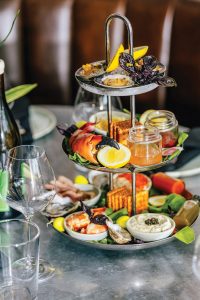
With 2025 James Beard Outstanding Chef semifinalist Dean Neff at the helm, Seabird sets the standard for seasonal ocean fare within a light, nautical-inspired downtown space. Go big with the seafood tower, which includes snow crab, harissa-smoked tuna, and deviled eggs topped with North Carolina Osetra caviar.

Oceanic at the Crystal Pier has an expansive deck overlooking Wrightsville Beach’s sandy shores. You can’t go wrong with the Carolina crab dip, tuna poke nachos, or the Calabash-style (lightly battered and fried) seafood platter.

The owners of Wilmington’s Rx Chicken & Oysters take sea-to-table seriously: They farm their own oysters and catch or spear fish to serve on dry land. Start with a dozen raw and follow it with a plate of perfectly crispy fried chicken served with a housemade hot-honey sauce you’ll want to drizzle on every bite.

The espresso-martini craze shows no signs of waning, and that’s especially apparent when you look at the packed firepits at Wilmington’s Concorde Espresso Bar. The unique concept opens at 7:30 a.m. each day for coffee service, then adds cocktails to the lineup starting at 11 a.m. By nightfall, servers are making the rounds with trays full of espresso-martini flights, which feature a classic, a mocha-inspired variety, and another made with cookie butter.

Paddle Away
Float your boat (or kayak)

There’s no shortage of spots to drop in your canoe, kayak, or stand-up paddleboard (SUP) around Wilmington and its beaches. To see the city from a fresh perspective, rent your watercraft of choice from Mahanaim Adventures and take to the Cape Fear River for views of the bustling Riverwalk on one side and the enormous Battleship North Carolina on the other. Another option on the edge of the city is the 250-acre Greenfield Park, where you can rent equipment and navigate the expansive urban lake and cypress swamp.

Kayak trips double as treasure hunts at Coconut Jack’s Black Water & Fossil Adventures in Carolina Beach. Paddle out to Sharks Tooth Island, and with the help of an experienced guide, search for shark teeth, shards of Native American pottery, glass from centuries-old pirate beer bottles, and—if you’re really lucky—massive megalodon teeth. Some material on the island dates back 40 million years, and you never leave empty-handed.

Riverwalk

Courtesy Visit NC

Don’t miss the chance to stand-up paddle at Wrightsville Beach, regularly named one of the best SUP hubs in the country. The variety of settings—from open ocean to tidal creeks—and calm summer wind patterns make it a popular spot for the sport. Wrightsville SUP offers equipment rentals (including LED-lit night paddles), yoga SUP classes, and social “SUP and Sip” events.

Don’t Miss the Boat
Let the experts be your guide

Wilmington Water Tours

Courtesy Wilmington and Beaches CVB

Sit back, relax, and let someone else take over the navigation on one of Wilmington’s many water-based tours. Embark on a relaxing Cape Fear River cruise with Wilmington Water Tours, departing every hour from the Riverwalk. Order a drink from the full bar and listen as the captain shares information about the area’s history and ecology.

Shamrock Sailing

Courtesy Shamrock Sailing

Wrightsville Beach Scenic Tours offers several boating options, including a birding tour that takes visitors on a cruise along the Intracoastal Waterway and inlet passages with views of the barrier islands and Wrightsville Beach (plus some of its jaw-dropping shoreline properties, such as Sandra Bullock’s former home). Captain Joe, an experienced naturalist, will help you spot black skimmers, common terns, and American oystercatchers. If sailing is more your speed, set out on Shamrock Sailing’s classic 42-foot yawl with Captain Jim, who has nearly 30 years of experience navigating the local waters and will happily share his knowledge of coastal ecology and local conservation efforts.

On Dry Land: Pristine Parks

Trade views of sand and surf for those of blossoms and butterflies at Wrightsville Beach’s Airlie Gardens. The 67-acre paradise is resplendent with hydrangeas in summer, but its 400-year-old namesake live oak, remarkable 17-square-foot glass-bottle chapel, and glistening lake teeming with wildlife make it a gorgeous destination any time of year.

Airlie Gardens

Courtesy of Wilmington and Beaches CVB

Fun fact: Venus flytraps only grow in the wild within a 70-mile radius of Wilmington. Check out the fascinating native plant and other carnivorous species, including sundews and pitcher plants, at Carolina Beach State Park. Join a ranger for a free guided tour on Saturday mornings (except in winter) to learn more about these incredible plants and watch them in their natural habitat.

Dive Deep
Explore the ocean depths

Go below the surface to discover even more of Wilmington’s wonders, including ancient fossils, shark teeth aplenty, and 19th-century shipwrecks (which helped saddle the North Carolina coast with the nickname “Graveyard of the Atlantic”).

Carolina Beach Scuba

Courtesy Carolina Beach Scuba

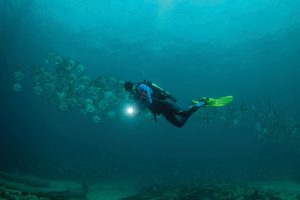
Wrightsville Beach is home to a handful of explorable shipwrecks, including the Normannia, a Danish freighter that fell victim to rough seas in 1924, and the John D. Gill vessel, which a German U-boat sank in 1942. Each wreck has become an underwater oasis for marine life, including sand tiger sharks and schools of tropical fish. Charter a dive boat with Carolina Beach Scuba or Aquatic Safaris Scuba Center to explore both sites, along with more than a dozen others.

Aquatic Safaris Seafood Center

Courtesy Aquatic Safaris Seafood Center

The Condor in Kure Beach is one of the state’s best-preserved shipwrecks, making it a perfect spot for divers and snorkelers to explore. The Civil War ship, a steamer built for blockade running, ran aground on her maiden voyage in 1864 but has remained mostly intact, resting in 25 feet of shallow water 700 yards off the beach. You’ll have to explore this one on your own, but the North Carolina Office of State Archaeology provides dive slates with site maps that can be taken below the surface, and a number of local outfitters offer equipment rentals.

Climb Aboard
Immerse yourself in military history

Battleship North Carolina

Courtesy Wilmington and Beaches CVB

With its gargantuan silhouette visible from downtown Wilmington and the Riverwalk, the Battleship North Carolina dominates the horizon. Moored in the Cape Fear River, the ship earned 15 battle stars, participating in every major naval offensive in the Pacific during World War II. Explore its nine maze-like decks—from the bottom of the hull to the top of the fire-control tower—including the crew’s quarters, gunpowder-handling room, bakery, and laundry rooms. Sailors’ transcribed memories allow you to step into the personal experiences of the more than 2,000 naval crewmembers who called the ship home throughout its six-year tour of duty.

On Dry Land: Splashy Stays

You’re not quite on dry land when you’re staying at the Cove Riverwalk Villas in downtown Wilmington—you’re bunking down on a stationary, two-story houseboat docked in the Cape Fear River. Each of the 35 options has a different design (from the pretty-in-pink Harmony to the bright and sunny Amalfi), but all include upper decks with comfy lounge furniture, perfect for unwinding after a day exploring.

Cove Riverwalk Villas

Courtesy Cove Riverwalk Villas

Formerly known as the Blockade Runner, the completely renovated Trailborn Surf & Sound in Wrightsville Beach opened under new ownership this spring. With one side facing the ocean and one facing the sound, the adventure-focused resort with a coastal-chic vibe offers excursions (sunset cruises and cocktail sails), experiences (surf lessons, yoga classes), and equipment rentals for all types of water-based fun.

Check into Michelin Key property Arrive Wilmington for a chic boutique stay in the heart of the commercial district. The 34 light and airy guest rooms feature pops of pale pink and turquoise, floral patterns, and gold fixtures. Head to the sunny gazebo bar in the courtyard garden for snacks, spritzes, and bocce ball.

This article appears in the Summer 2025 issue of Southbound.

Before I traveled the world, I traveled a single shoreline

“A Shared Inheritance”

Illustration by Harry Tennant

When I was a kid, my dad and grandfather would wake me before dawn and whisk me off to bodies of water I was too young to locate on a map. In their company, I floated rivers in canoes and explored lakes in bass boats. Often, we’d get home just before bedtime, unpacking stories along with the gear stored in mud-splattered trucks. But when I turned 12, they decided that I was old enough to go on a camping trip: two nights on Lake James.

North Carolina’s Lake James is dotted with small, wooded islands. Not long after the idea of a camping trip was suggested, we headed to an island my grandfather knew well and set up tents on a small beach. As we worked, my grandfather told me that the island belonged to our family. He called it my inheritance.

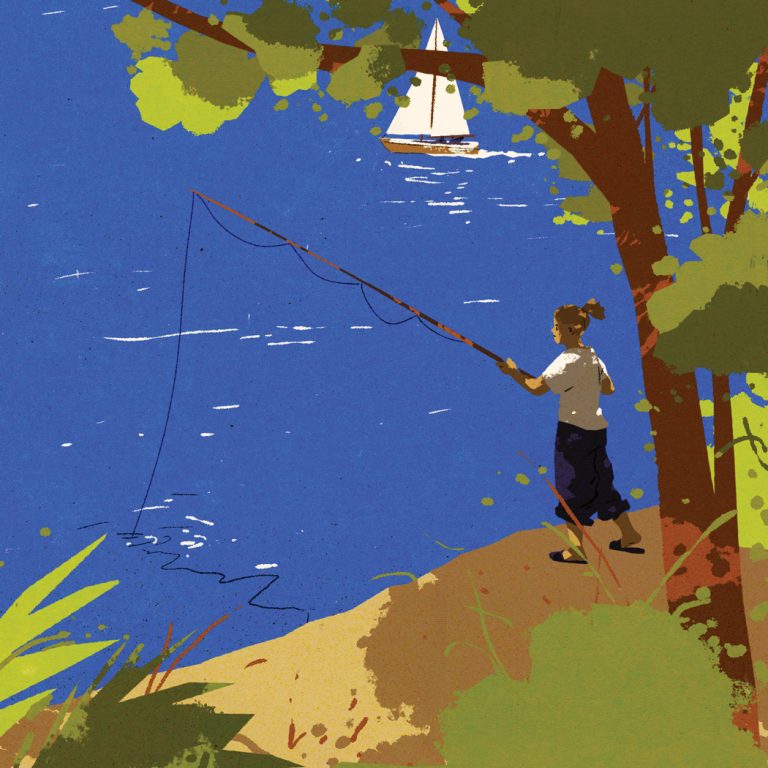
He was a tall-tale teller, my grandfather. But, to this day, I hold fast to the way that he—a man who had never broken eggs in a kitchen—cooked a full breakfast on the shoreline of that island. At some point during the trip, he gave me a pole very different from the fiberglass ones he usually placed in my hands. It was made of cane. It didn’t have a complicated reel. And my guardians let me wander off with it on my own.

There’s no way to know how long I spent with that cane pole in hand, traversing the edges of the island, alone with my preteen thoughts. But I still remember the weight of mysterious things pulling on the other end of my pole. I remember a sailboat passing. It was the first of its kind that I’d ever seen up close—and when wind caught in its billowing sails, I imagined all the places a boat like that might take me.

The experience imprinted. I can still conjure light glinting off the lake, the lapping of water. I felt at home, even though I knew my family had no real claim to the island. My grandfather was many things, but he was no real estate mogul.

In the decades since that camping trip to Lake James, I’ve spent nights in deserts and rainforests. I’ve swam with sharks on the Great Barrier Reef, watched wildebeest migrate through the Serengeti. I’ve seen the Northern Lights. I’ve ridden schooners and boats of all kinds. A myriad of influences led me to those places and experiences. But when I try to trace my love of outdoor travel back to its origins, my memory often lands on that lakeside beach, eggs sizzling on a camp stove, cane pole held high, my beloved elders giving me just enough freedom so that they might be able to reach me quickly if I called. Childhood fishing trips gave me a thirst for adventures large and small. And my time on Lake James taught me that, even if we don’t hold deed to any islands, the natural world belongs to us all.

Leigh Ann Henion is the New York Times bestselling author of Night Magic: Adventures Among Glowworms, Moon Gardens, and Other Marvels of the Dark and Phenomenal. Her writing has appeared in the Washington Post, Smithsonian, Garden & Gun, Men’s Journal, Backpacker, and a variety of other publications. She is a former Alicia Patterson Fellow, and her work has been supported by the Alfred P. Sloan Foundation. Henion lives in Boone, North Carolina.

This article appears in the Spring 2025 issue of Southbound.

Follow Us

69,386FansLike
144,836FollowersFollow
493,480FollowersFollow

NEWSLETTERS