Murder gets literary—but hopefully not literal—at Wesley Chapel-William C. Brown Library’s monthly true crime gatherings.
Photograph by Getty Images
Something macabre is brewing at Decatur’s Wesley Chapel-William C. Brown Library. At its monthly Murder & Mocktails event, assistant branch manager Angela Morris gathers true-crime enthusiasts in a small room behind the bookshelves, where they dissect juicy, sinister, or downright peculiar criminal cases, paired with themed nonalcoholic drinks.
Morris got the idea for Murder & Mocktails at a conference, when a fellow librarian presented about a true crime podcast meetup she hosted at a bar. Morris kicked off her own event in June 2025; it quickly developed a loyal community of true-crime lovers. “People are listening and communicating without judgment,” Morris says. “You are not just talking into the void.”
This new library event reflects a broader cultural wave of interest in true crime. The number of weekly U.S. true-crime podcast listeners nearly tripled from 6.7 million in 2019 to 19.1 million in 2024, according to Edison Research. Nearly half of surveyed listeners said they enjoyed exploring the underlying psychology behind crimes, a curiosity Morris shares.
“As a librarian, one of my main focuses is to promote free thought and information,” Morris says. “I add layers to what they already know. I focus on the psychological and sociological aspects of the crime that are sometimes overlooked.”
The recent true-crime blitz has also led to a wave of citizen sleuthing, in which people not associated with law enforcement attempt to collectively solve cases. Websleuths, a popular online hub for such detective work, has seen its membership increase by 81 percent since 2018. And where better to learn digital-research skills than at the library: Morris uses her librarian training to dive deep into noteworthy crimes, sharing archival news clippings and using library resources such as Kanopy or Libby. “Although [Murders & Mocktails] could be hosted somewhere else, I believe in bringing people back into the library to showcase everything it offers,” Morris says.
May’s gathering explored cult-related crime, including the 1978 Jonestown massacre; the evening was paired with “Jim Jones Flavor-Aid,” made with ginger beer. In June, attendees sipped sour apple mocktinis while discussing bizarre cases, such as the teenage fugitive Colton Harris Moore, the “Barefoot Bandit” from Washington who taunted the FBI by taking a selfie inside a stolen Mercedes. This month’s event (October 26), fittingly, will focus on crimes of the occult.
“I love true crime,” Morris says of her inspiration to start Murder & Mocktails. “And [I] realized that a large percentage of the population shares that same sort of morbid curiosity.”
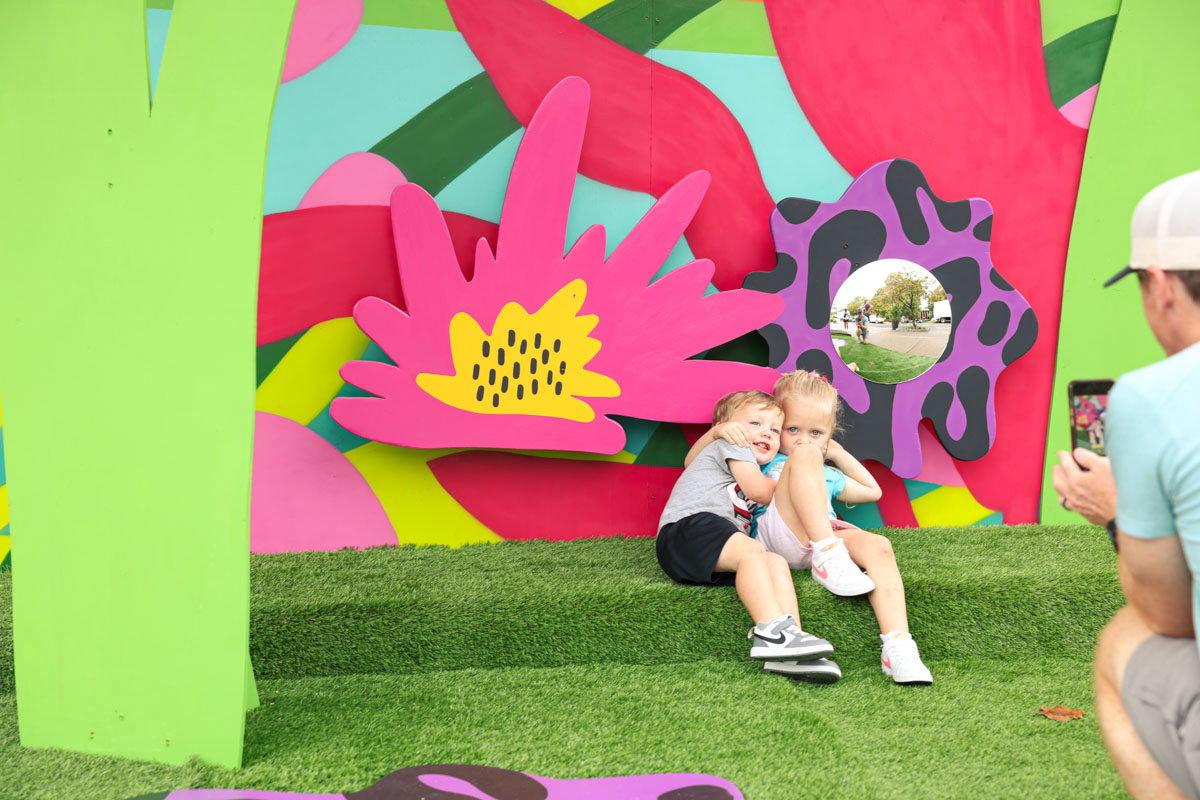
Two young visitors kick back inside Grow Here, an art installation created by Lisette Correa, also known as ArrrtAddict. The installation is built inside an abandoned bank teller drive-through in Skin Alley in Historic Norcross.
Photo courtesy of Explore Gwinnett.
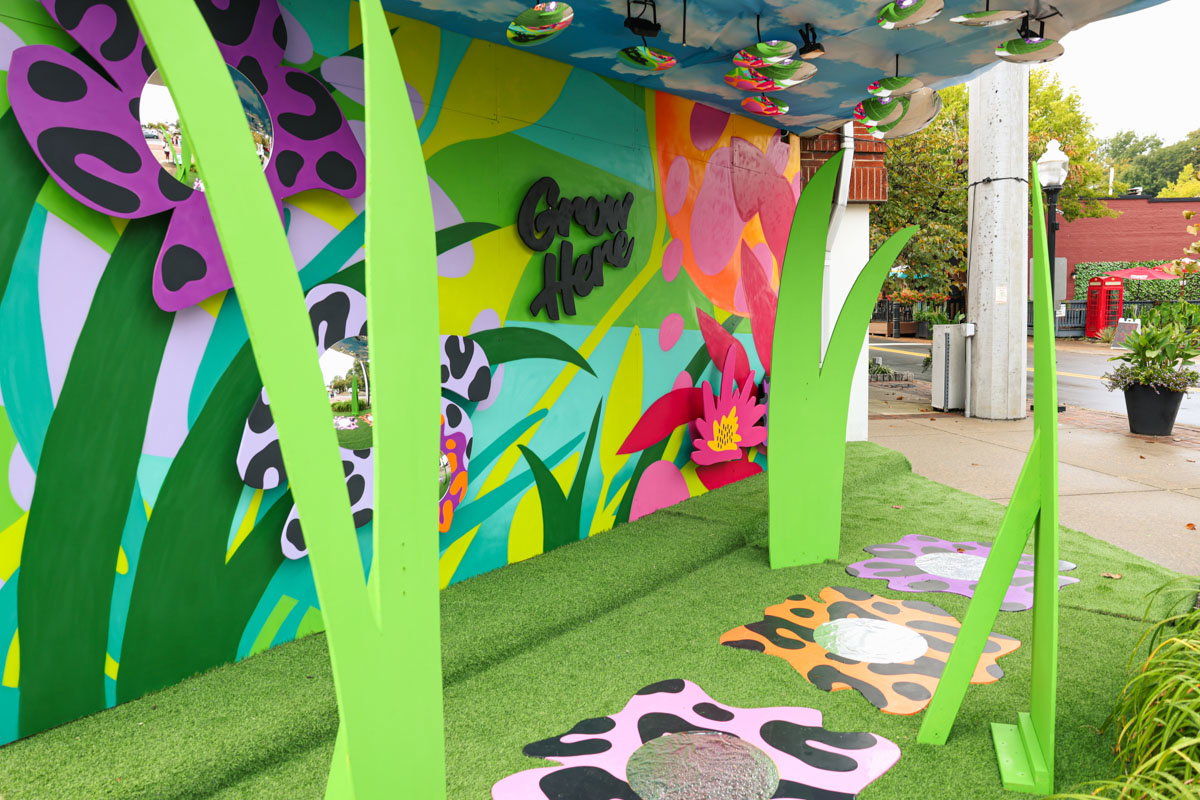
In the heart of Historic Norcross, an immersive installation known as Grow Here offers the opportunity to step into a garden of mirrored flowers, gigantic grass shoots and a blue sky with fluffy clouds. Created by local artist Lisette Correa (@arrrtaddict on Instagram) inside a defunct bank teller drive-through in Skin Alley for Gwinnett County’s Artober celebration, the installation is one of several ways the county is encouraging residents to get in an artistic frame of mind.
Grow Here is a whimiscal art installation built inside an old bank teller drive through in Historic Norcross. It was created by Lissette Correa, a.k.a. ArrrtAddict and is on display through November 8.
Photo courtesy of Explore Gwinnett.
Artober was launched a decade ago by Explore Gwinnett, the county’s tourism organization, with the mission to connect and inspire the 17 cities of Gwinnett. According to Executive Director Lisa Anders, Artober celebrates the area’s existing arts and cultural assets across the county, plus creates additional programming all month long.
“It’s expanding into more unincorporated parts of Gwinnett, and organizers look forward to making the month bigger and better [every year],” she says.
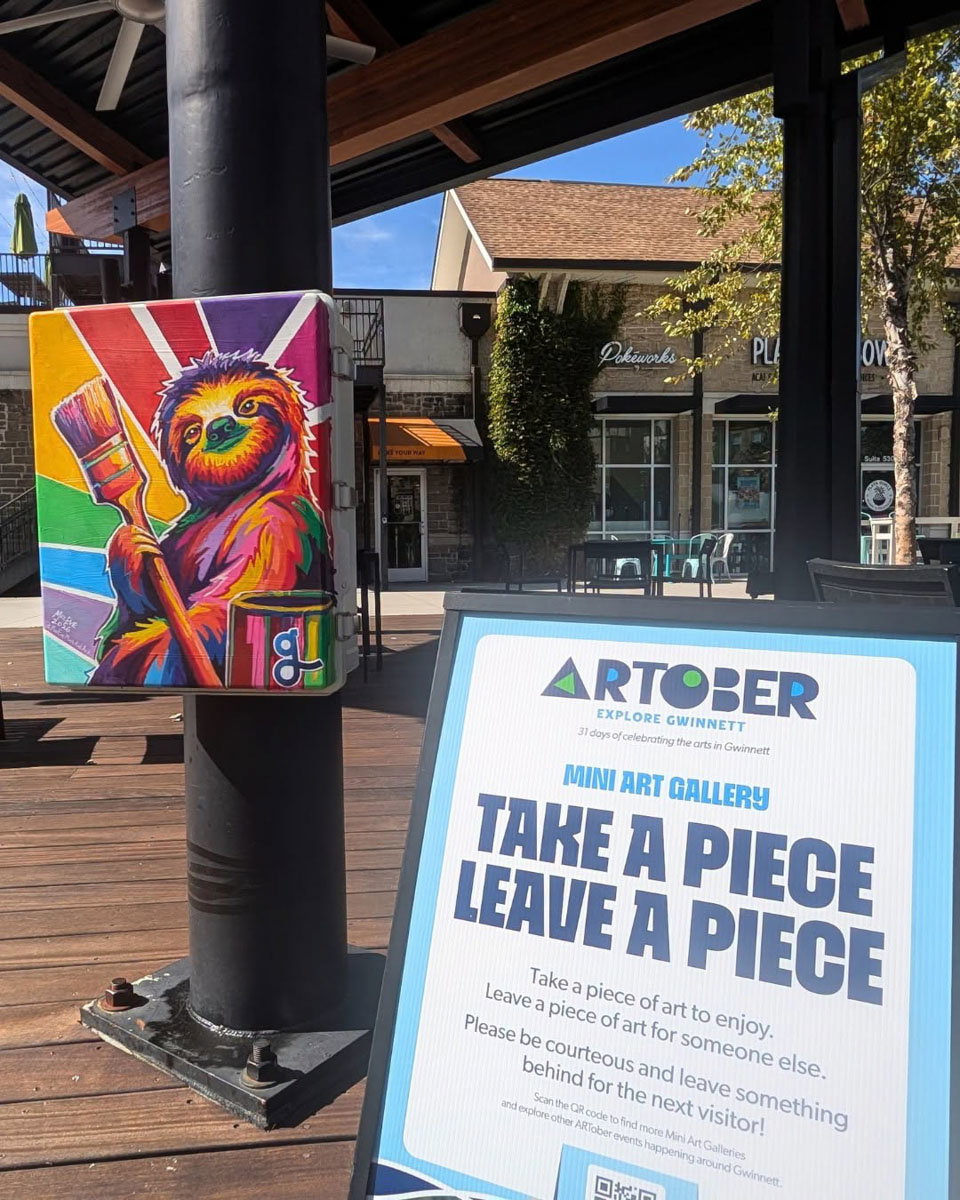
A Mini Gallery is built inside a decommissioned utility box and painted by Max Eve.
Photo courtesy of Explore Gwinnett.
New in 2026, organizers introduced Mini Art Galleries. Built inside three decommissioned utility boxes, the galleries serve as mini community art exchanges. Inside each box—which have been colorfully painted by local artist Max Eve (@maxevemusicandart on Instagram)—visitors will find art supplies and artworks. They can make and leave their own art using the materials in the box, or take art they admire. There are three locations at Peachtree Corners Town Green, Suwanee Circle and at Eye Candy Art Studio in downtown Duluth. The Mini Art Galleries will remain on display through October 31.
“Exploring and finding the boxes is part of the fun,” says Madison Chucci, senior community development manager for Explore Gwinnett.
Also new in 2026 is the comprehensive, 31-day calendar to help residents see what’s going on across the entire county.
“We put the events together so there’s something to do in the county every single night in October,” Anders says. “Instead of staying in the city of Buford or Norcross, it’s more cohesive.”
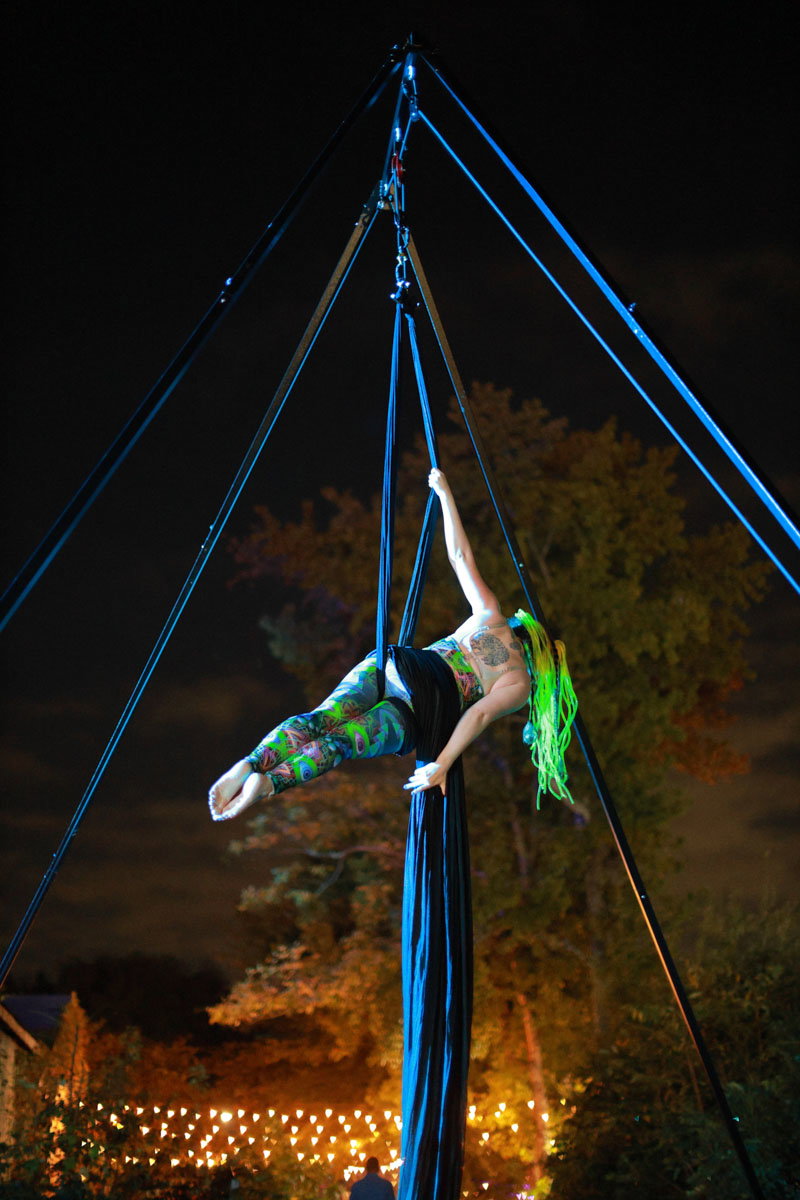
An aerial performer at Not Your Mother’s Art Fest in 2025.
Photo courtesy of Explore Gwinnett.
Arts and crafts vendors at the 2025 Not Your Mother’s Art Fest.
Photo courtesy of Explore Gwinnett.
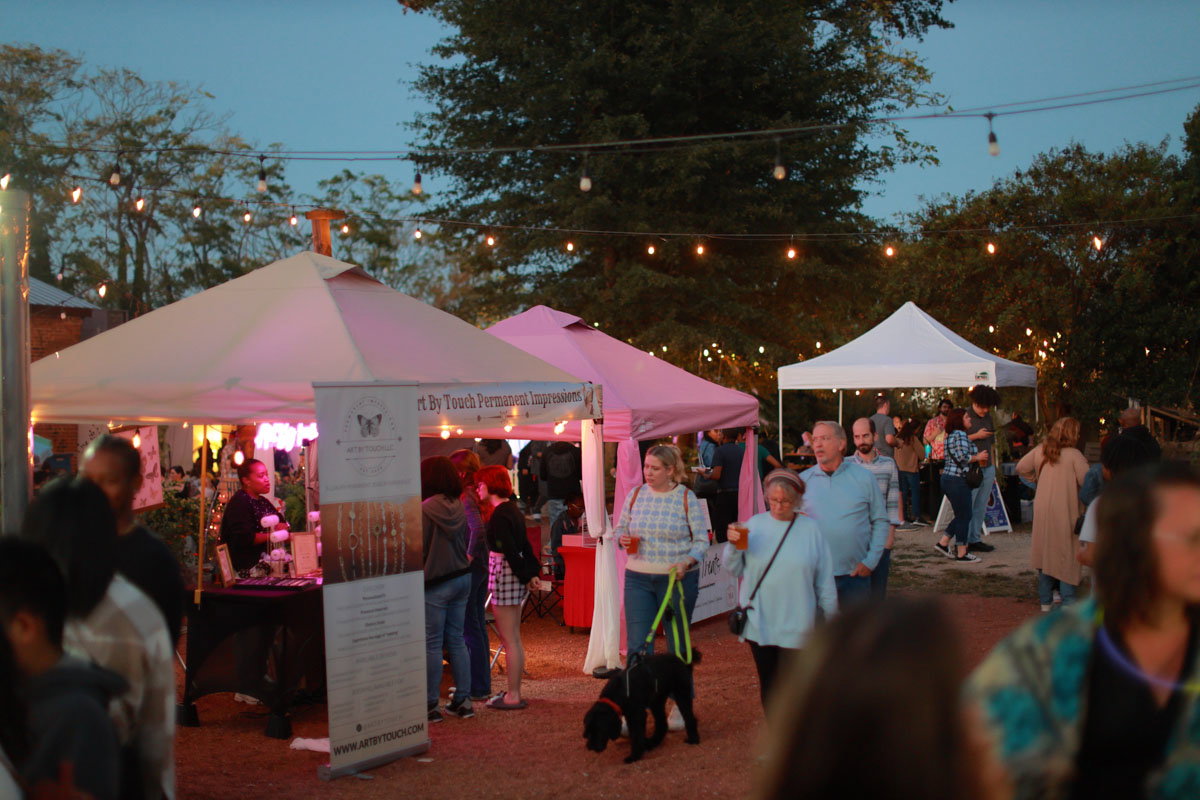
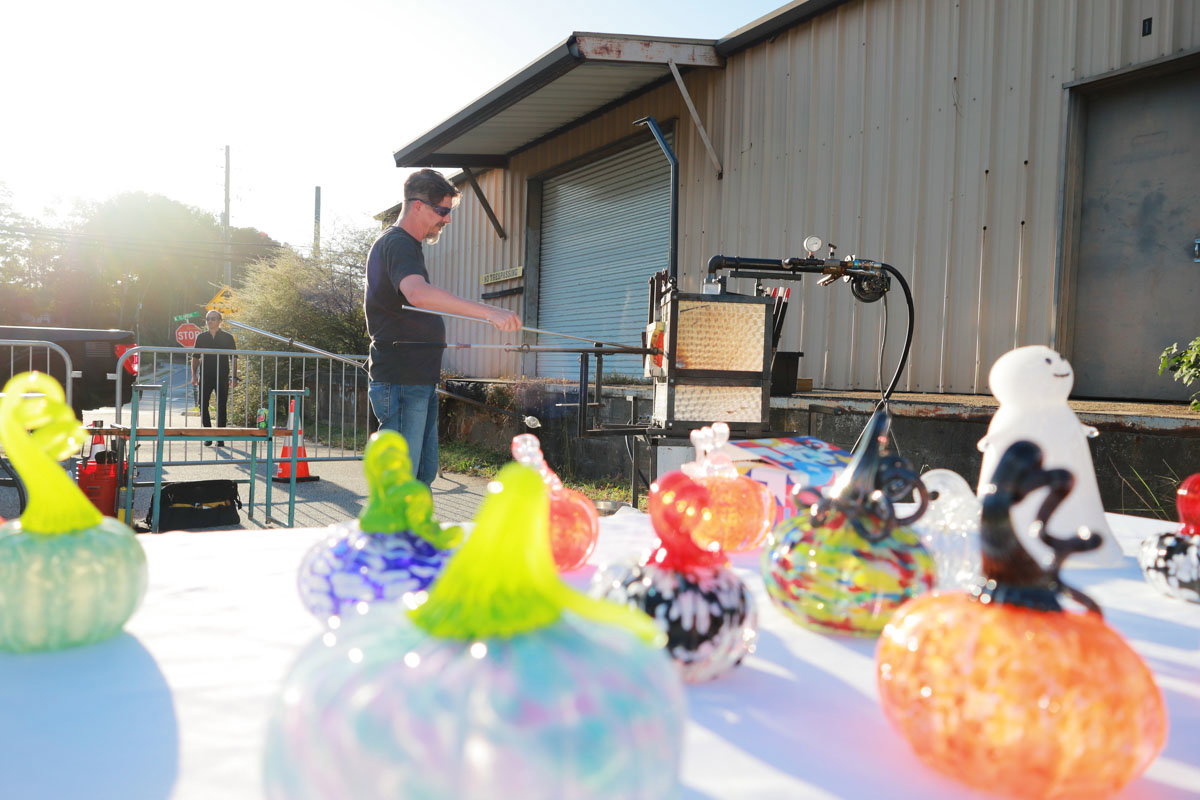
A highlight of Artober, Not Your Mother’s Art Festival, will take place this Friday night, October 16, at Slow Pour Brewing Company in downtown Lawrenceville. Now in its third year, the festival promises unusual demonstrations such as taxidermy, pin striping, and tile painting, plus performances like breakdancing and fire play. Plenty of art vendors will be on sight, along with food and dessert trucks.
Anders and Chucci agree that each year they’ve planned Not Your Mother’s Art Festival has been easier than the last as more artists attend or hear about the event and express interest. The evening is family-friendly and pet-friendly and draws a young crowd of creatives.
“We had college students and young adults last year, a younger demographic than usual,” says Anders.
A glassblower creates art at the 2025 Not Your Mother’s Art Fest.
Photo courtesy of Explore Gwinnett.
Artober also kicks off a donation drive for the Gwinnett Creativity Fund (GCF), which offers project grants to creative endeavors across the county. Now in its seventh year, the fund can cover everything from theaters and libraries, to filmmaking and arts-related nonprofits. Project applications for the 2027 grant cycle opened October 1 and remain open through January 31, 2027. The GCF has awarded more than $1.5 million since it started in 2020.
“It’s hugely important, and we awarded 28 grants last year across Gwinnett,” Anders says. “Being able to give [these arts and culture entities] the opportunity to grow and expand is exciting.”
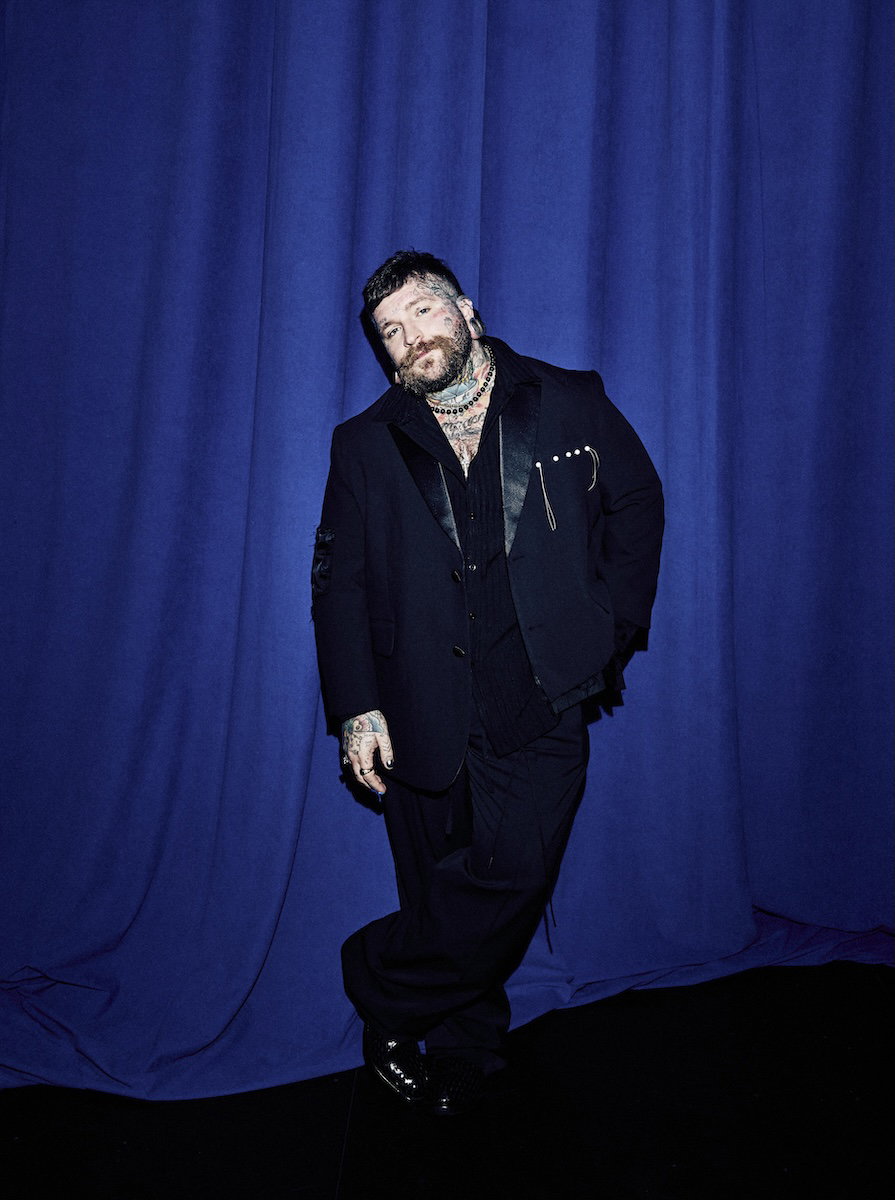
Teddy Swims was raised in Conyers. His current tour—The UGLY Tour—is inspired by Atlanta. The show stops at State Farm Arena on October 20.
Courtesy of Warner Records.
Despite living his dream, headlining arenas and performing around the world, Conyers-raised artist Teddy Swims—born Jaten Collin Dimsdale—still struggled to get over his feeling of homesickness while he was on the road for a large portion of the year.
While preparing for his first U.S. arena tour, The UGLY Tour, which stops at State Farm Arena on October 20, he had the idea to bring Atlanta with him everywhere he goes.
“In this next era of my life with my kid and everything that’s been going on in my life, I felt like going back to my roots,” says Swims. “As I want to portray where I’m from and what has inspired me throughout my life, and the music I grew up listening to, and why I am who I am, many people won’t get the chance to see Atlanta in the way that I see it.”.
Through the stage design of his tour, Swims will pay homage to his Atlanta and his Georgia roots. Recognizable Atlanta landmarks, including The Masquerade, The Vortex and Peachtree Street are woven into the production, making the stage a physical representation of Teddy’s life, musical influences, and the community that shaped him.
“When I was coming up … the original Masquerade was a place for me to see my favorite bands, and I’ve performed on every stage at The Masquerade. I wanted to get that feeling of how it felt when I was younger playing at that venue,” says Swims.
During preparation and rehearsals for the tour, Swims delved into the rich history of music and culture in Georgia, which gave him an even bigger source of pride for his hometown. He hopes that by sharing the passion and inspiration he got from Atlanta’s culture and people while touring, that he will inspire others to look more deeply into their own cities’ histories and gain a deeper appreciation for what makes their homes unique.
Swims will perform across a variety of different genres, including dance, country, R&B, soul and pop. The setlist is reflective of the diverse music scene in Atlanta and how different sounds have influenced and shaped Swims as an artist.
Atlanta has also had a profound impact on Swims, not only as an musician, but as a person.
“There’s this desperation and vulnerability and honesty that has always existed in the music,” he says. “Even more so, there is this hospitality that you can only find in this place. Atlanta and Georgia have always been such a melting pot of different cultures, and it’s allowed me to see and understand all walks of life. This reflects in the music and all of our shows. We see every age, and people from all walks of life, every shape and size and color of people. It speaks to the culture that I’ve been so lucky to have been raised [in].”
After reaching No. 1 on the U.S. Billboard Hot 100 in 2024 with Lose Control, Swims achieved mainstream success and became a big name in the music industry. He’s since been nominated for Grammy awards, collaborated with David Guetta, Thomas Rhett and Giveon, and performed at Coachella and Stagecoach. Nevertheless, Swims says his Atlanta upbringing has helped him stay grounded throughout everything.
“I’ve always had the same folks here. The band I’m playing with, we’ve been playing together our whole lives,” he says. “The same kids who were playing in the garage together, the same kids playing The Masquerade twenty years ago, I’m still jamming with those same cats.
“No matter how much things change for us, we are always checking in on each other and always brought down to earth by one another. Your friends will never let your head get too big, or let reality get away from you. I’ve always had this sense of home and exclusivity with these boys … we are always going to remain together as long as we stay on this path. They will always keep you humble. I couldn’t, and wouldn’t, do it any other way.”
The Richard Meier–designed Stent Family Wing at the High
Photograph by Gabriella Valladares
Before the High Museum of Art was shadowed by a forest of office towers and apartment skyrises. Before mentions of the High were ubiquitous selling points for the 140 new Midtown developments that have sprouted like a SimCity creation since the year 2000 alone. Before the museum counted nearly twice as many household memberships as there are people in the city of Decatur, and before its collection welcomed names such as O’Keeffe and Monet. Before any of that, the High was just a donated house far from downtown’s bustle—albeit a grand home among the storied, bygone mansions of Peachtree Street.
The High Museum of Art opened 100 years ago this month as the city’s first art museum, laying the foundation for an institution with global renown today. For Atlanta, the mid-1920s were indeed a roaring era. The city’s commercial and cultural bedrocks—Delta Air Lines, Atlanta History Center, and Hartsfield-Jackson Atlanta International Airport—have recently turned a century old. The High now joins that centennial club, having played no small role in Atlanta’s transformation, both at the museum’s doorstep and far beyond Midtown’s now-cosmopolitan streets.
“This is an institution that grew apace with the times, with the sense of what was important, and I think we’ve evolved,” says Rand Suffolk, the museum’s director since 2015 and the ninth in its history. “We’re also blessed with killer real estate.”
Atlanta newcomers—or longtime residents—may be surprised to learn the High’s name is no reference to high art, high society, or highfalutin anything. It’s a nod to Harriet “Hattie” High and her husband, Joseph M. High, who in early-20th-century Atlanta owned furniture and daily goods stores called J.M. High Company.
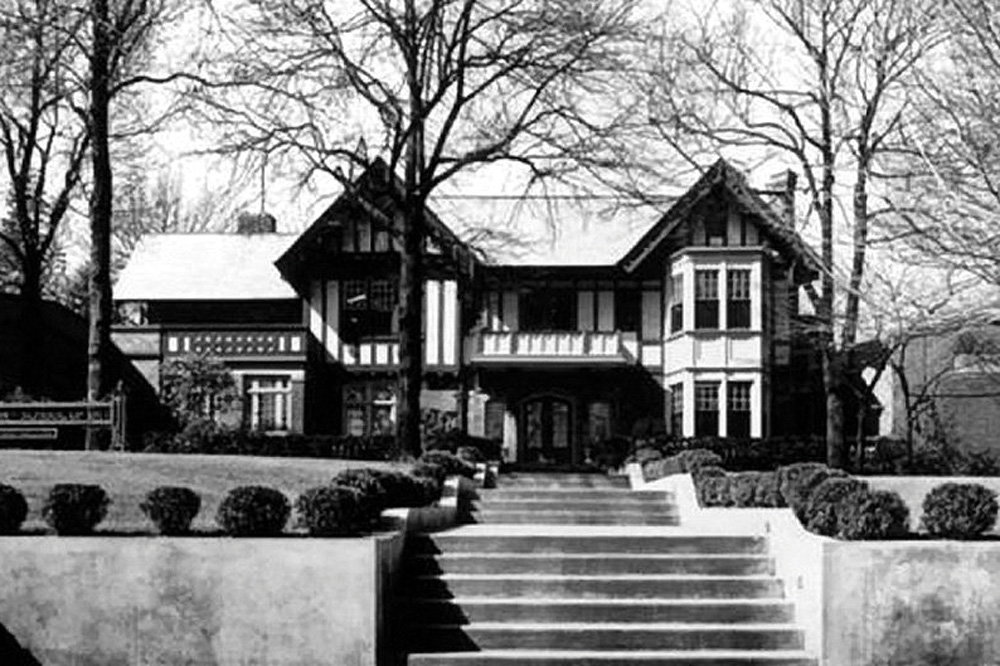
Hattie High wasn’t involved in the Atlanta Art Association, which was founded in 1906, but after her husband died that year, she was inspired by an essay in a Atlanta Chamber of Commerce publication advocating for an Atlanta art museum. In May 1926, she donated a sprawling, 24,000-square-foot Tudor-style residence on Peachtree Street between 15th and 16th streets to serve as that space, where the High’s 12-acre campus stands today.
“The timing was right, and [Hattie High] wanted to do something great in memory of her husband and for her city,” says Julia Forbes, the High’s associate director of institutional research.
In those days, the High was considered to be in the boonies, relatively speaking. Still, some artists made the trek: In 1931, celebrated Black painter Hale Woodruff made the bold move of simply walking in the High’s front door after he’d arrived in town, caught a streetcar, and rode it to “some kind of a museum way out on Peachtree Street.” (Today, several of his murals are on display at the High.)
“There were just a few people living out there in the country,” Forbes says. “I think Midtown grew up around [the High] because, in a lot of senses, the museum came first, and these beautiful neighborhoods . . . were just starting. We’re like a lynchpin.”
The original High on Peachtree
Courtesy of the High Museum
The first dedicated museum building, complete in 1955
Courtesy of the High Museum
Harriet “Hattie” High
Courtesy of the High Museum
The High’s campus grew to include three other estates over time, plus a fourth home converted into an art school just south of the High house. All of those were demolished between 1954 and the early 1960s to make room for new buildings; the first to go up was a museum building that opened along Peachtree Street in 1955.
That was seven years before 106 Atlantans—including much of the city’s arts community leadership—died in the Orly Field plane crash outside Paris following a 27-day European museum tour. Forbes says the tragedy, which has been described as “the day Atlanta wept,” proved a powerful motivator for public fundraising for the High and the Atlanta Arts Association.
Those contributions helped fund development of the landmark Atlanta Memorial Arts Center (now the Woodruff Arts Center), which opened in 1968, complete with Auguste Rodin’s The Shade sculpture, a gift from France. The High, the Alliance Theatre, and the Atlanta Symphony Orchestra were able to operate under one roof, so to speak—forming a true artistic hub.
The High famously leveled up in 1983 when its stand-alone building designed by Richard Meier opened. Now called the Stent Family Wing, the Meier building drew rave reviews, including from TheNew York Times, which called it “a strong and potent work of architecture in itself, yet seems completely to understand and respect the works of art within it.”
In the late 1990s, celebrated Italian architect Renzo Piano was invited to expand the High’s campus. That resulted in three sleek new buildings centered on a piazza and designed under the slogan “A new High for Atlanta.” It debuted in November 2005, tripling the complex to a total of 312,000 square feet, as it stands today.
Suffolk says those landmark additions have stood the test of time as both architectural jewels and dynamite spaces for showcasing art. “Invariably we hear that [international traveling exhibitions] look better at our place,” Suffolk says. “It did scale [the museum] up physically, but it also scaled our ambitions.”
By 2024, Midtown Alliance, a nonprofit organization of leaders in the neighborhood, estimated that 60 new people were moving into the area every week. Suffolk says a goal at the High has been to translate that growth to higher consistent patronage, and it appears to be working: Over the past decade, the number of membership households has ballooned by 80 percent, surpassing 47,000 last year.
An aerial view of the High’s campus in Midtown
Photograph from footage by Alex Gerhardt, courtesy of the High Museum
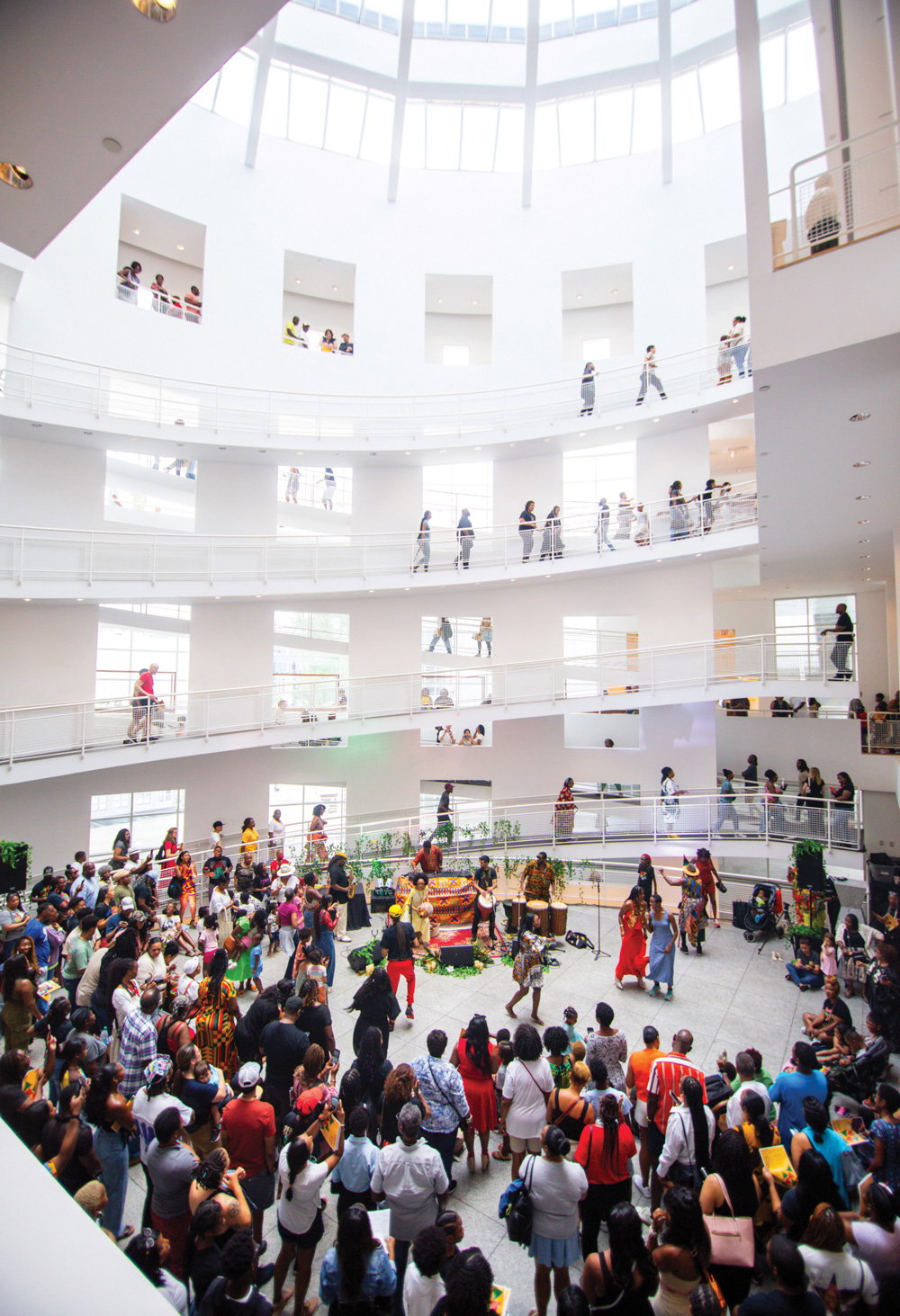
The High’s 1983 construction of the Stent Family Wing was a renowned addition for its four-story skylit atrium in the shape of a quarter circle
Photograph by Alphonso Whitfield
A key to that success, as Suffolk sees it, is a tactical shift during his tenure from more blockbuster exhibitions to ones that dovetail with the interests of Atlanta’s growing, diverse, intown community. Exhibitions this fall include sculptural work from Martin Puryear and photo illustrations from Walter Wick, creator of I Spy. The High has also started to host more than museum visits, with regular events such as High Frequency Fridays (happy hours with a DJ). “My [predecessors’] goal was to build a place physically,” Suffolk says. “What we’ve tried to do is fill the place with extraordinary investments in our collection and by inviting all of Atlanta to come in on a very consistent basis.”
To commemorate the centennial, the High is planning a full season of celebrations immersed in the neighborhood it has helped transform. That includes a block party that will close a section of Peachtree Street (October 18), a day of free admission for all (October 21), a Halloween shindig (October 30), and a Centennial Holiday Market before Thanksgiving (November 20 and 21).
Robin Howell, a High board member for two decades and past chairperson, says Midtown would be an entirely different place if not for the museum. “Midtown would certainly have grown [without the High],” Howell says, “but I don’t think it would have the same identity or energy.”
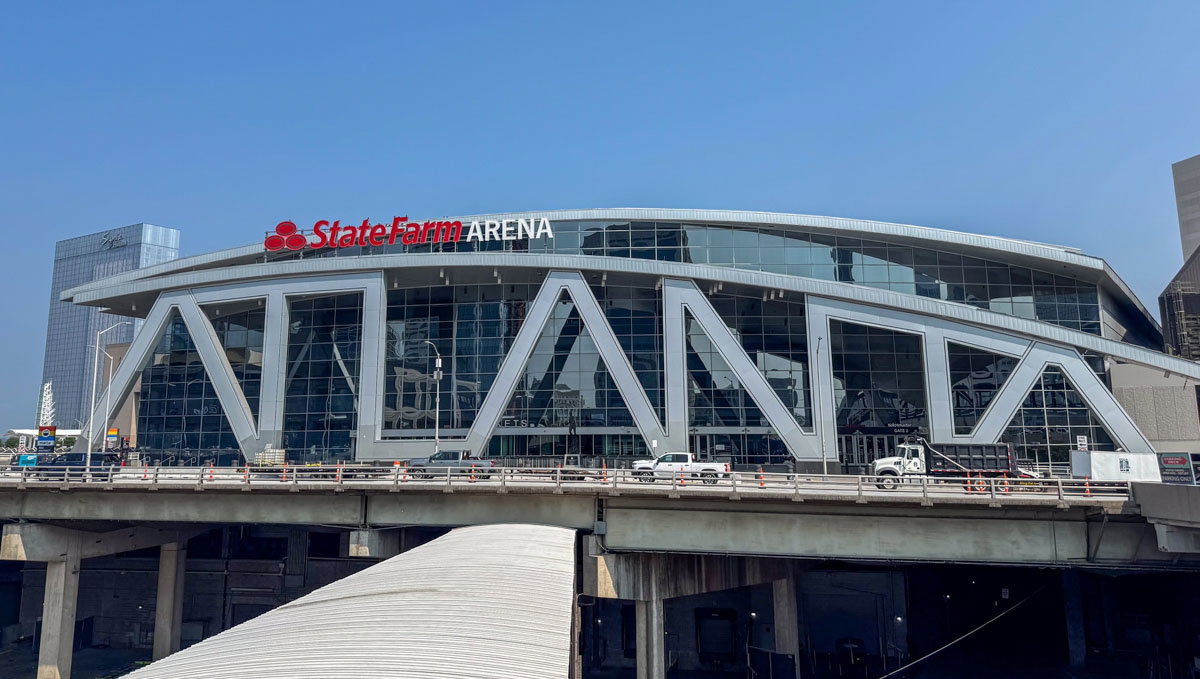
State Farm Arena will be the Atlanta Dream’s new home starting in 2027. The move to the arena, which seats nearly five times as many fans, is a good indication that the Dream is on a growing streak.
Westy72, Getty Images
On Tuesday, October 6, the Atlanta Dream announced that, starting in 2027, the team will play its home games at State Farm Arena, which seats nearly five times as many fans as the team’s current home at Gateway Center Arena.
The move is reflective of the fandom’s growth. According to a press release, over the past five years, under new ownership, the Dream has seen more than 400 percent growth in season ticket members and expanded its reach to ticket buyers from all 50 states. The Dream has sold out every game at Gateway Center Arena over the last three seasons. In that time, the Dream has also sold out State Farm Arena eight times, including multiple record-setting games with more than 17,000 fans in the building.
“This is an exciting next chapter for the Atlanta Dream, and a direct reflection of the exciting style of play that is Dream basketball,” Morgan Shaw Parker, president and COO of the Atlanta Dream, stated in a press release. “… State Farm Arena gives us the opportunity to welcome thousands of additional fans while creating an even bigger stage for women’s basketball in Atlanta. We look forward to bringing the energy, traditions and spirit of Gateway with us to the heart of our city.”
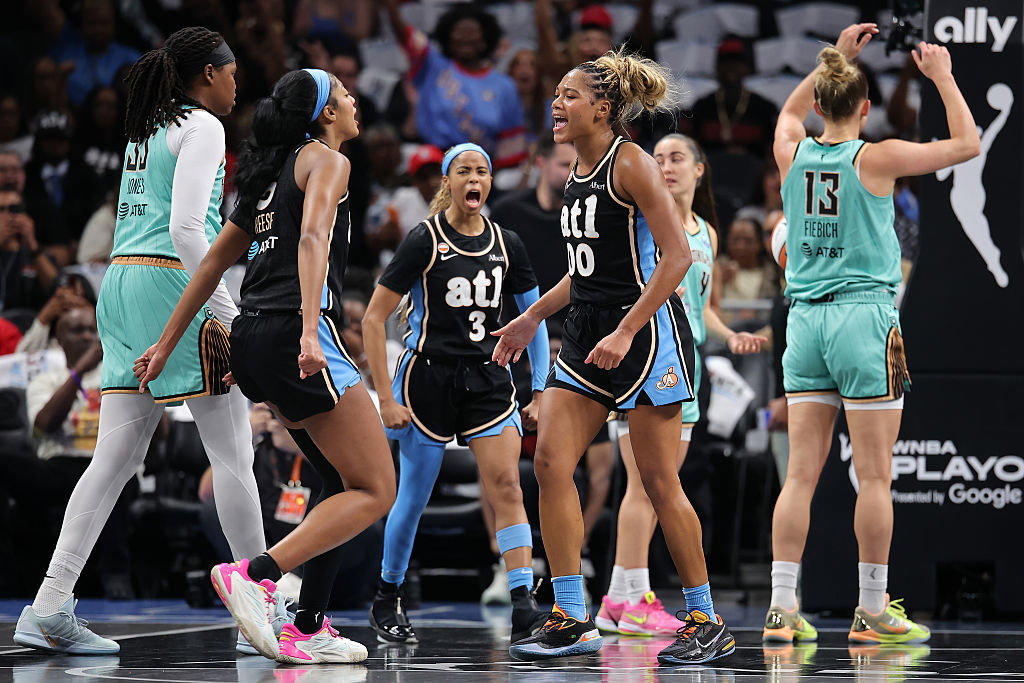
Naz Hillmon #00 and Angel Reese #5 of the Atlanta Dream celebrate during the first half of Game 2 of the semifinals of the WNBA playoffs against the New York Liberty at State Farm Arena on October 07, 2026 in Atlanta, Georgia.
Photo by Jonathan Bachman/Getty Images.
In addition to providing significantly more seating, State Farm Arena will allow the Dream to offer a broader range of ticket options, price points and premium experiences.
Andrew Saltzman, president of business enterprise and chief commercial officer of the Atlanta Hawks and State Farm Arena, says the multi-year agreement (the length of which has not been disclosed) is a win-win for both the Dream franchise, and State Farm Arena.
“The team’s brand and fan base have grown tremendously throughout the city as the Dream has become one of the WNBA’s elite franchises both on and off the court,” Saltzman stated in the team’s press release. “The WNBA is experiencing a meteoric rise with rapid growth in attendance and viewership, and this is a great opportunity … to bring that excitement to our world-class venue.”
To secure first access for 2027 season tickets, fans can put down a deposit for a Dream Elite Ticket Membership. Fans have the option of a $27 deposit for a lower bowl ticket, which provides the best value seats, or they can put a $100 deposit down for a Dream Elite Premium Membership to secure a seat in one of the first three rows, which gives fans premium hospitality, club access and elevated food and beverage experiences. Visit atlantadream.com for tickets and more information.
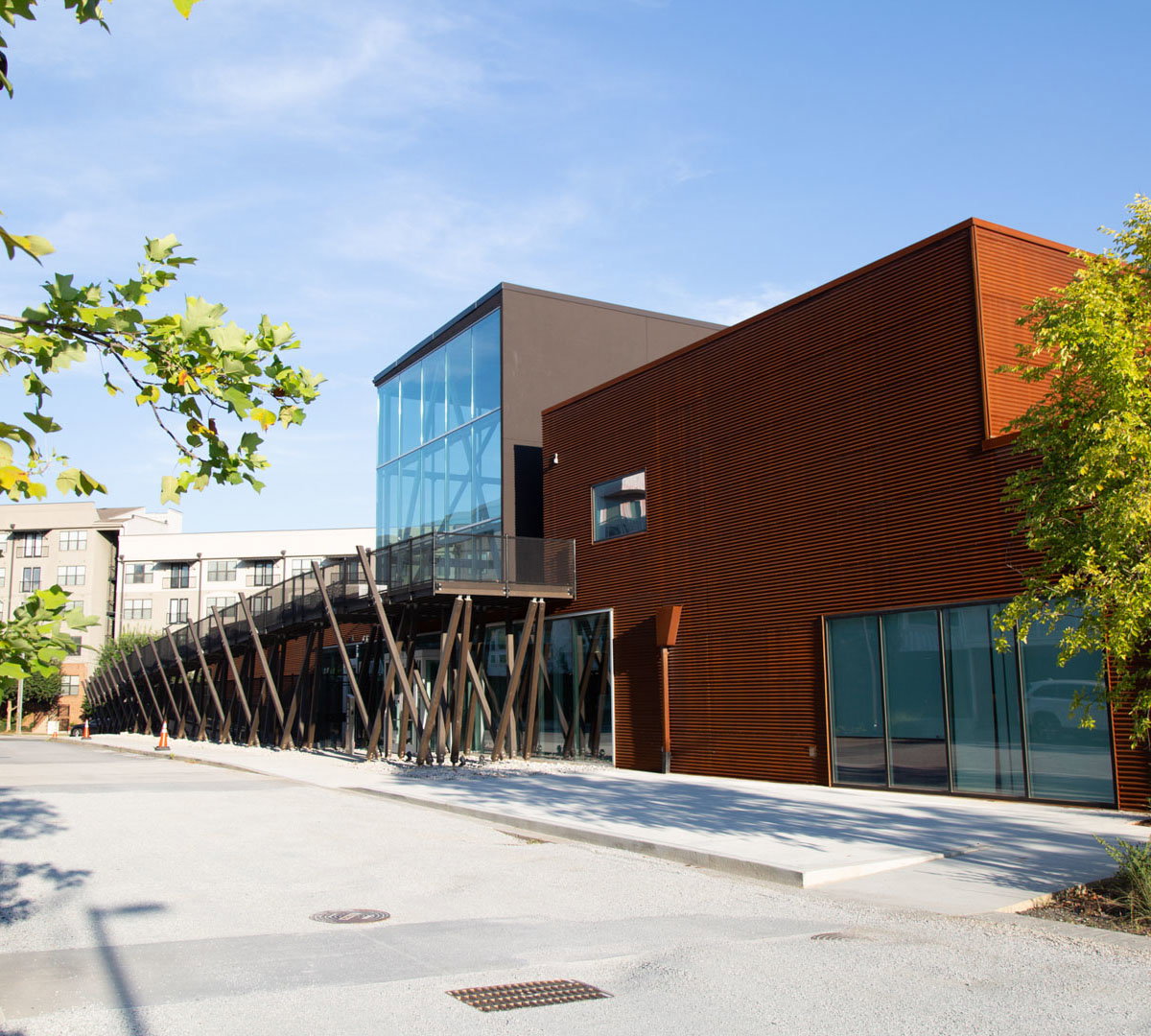
The new MOCA GA opened privately for a VIP reception Monday September 14. Atlanta Mayor Andre Dickens cut the ribbon on the new $16.4 million museum located on the campus of The Goat Farm Arts Center in West Midtown.
Photo by Martha Williams
UPDATE: As of today, October 7, MOCA GA’s new permanent home in Goat Farm Arts Center is open to the public. While the museum opened briefly for a private VIP reception on September 14, as reported below, the general public was asked to wait due to a hold-up with the city. That wait is now over. The general public can visit this week October 7-10 (Wednesday from noon to 5 p.m., Thursday and Friday from noon to 8 p.m. and Saturday from noon to 5 p.m.). The museum will be closed October 13-17. Starting on October 20, the museum will be open for its regular museum hours from noon to 5 p.m. On October 23, from 6 p.m. to 8 p.m., MOCA GA will host the opening reception for its 2025-2026 Working Artist Project Fellow Wilay Méndez Páez’s solo exhibition, La aleatoriedad de los símbolos/The Randomness of the Symbols. More information can be found online at mocaga.org.
—
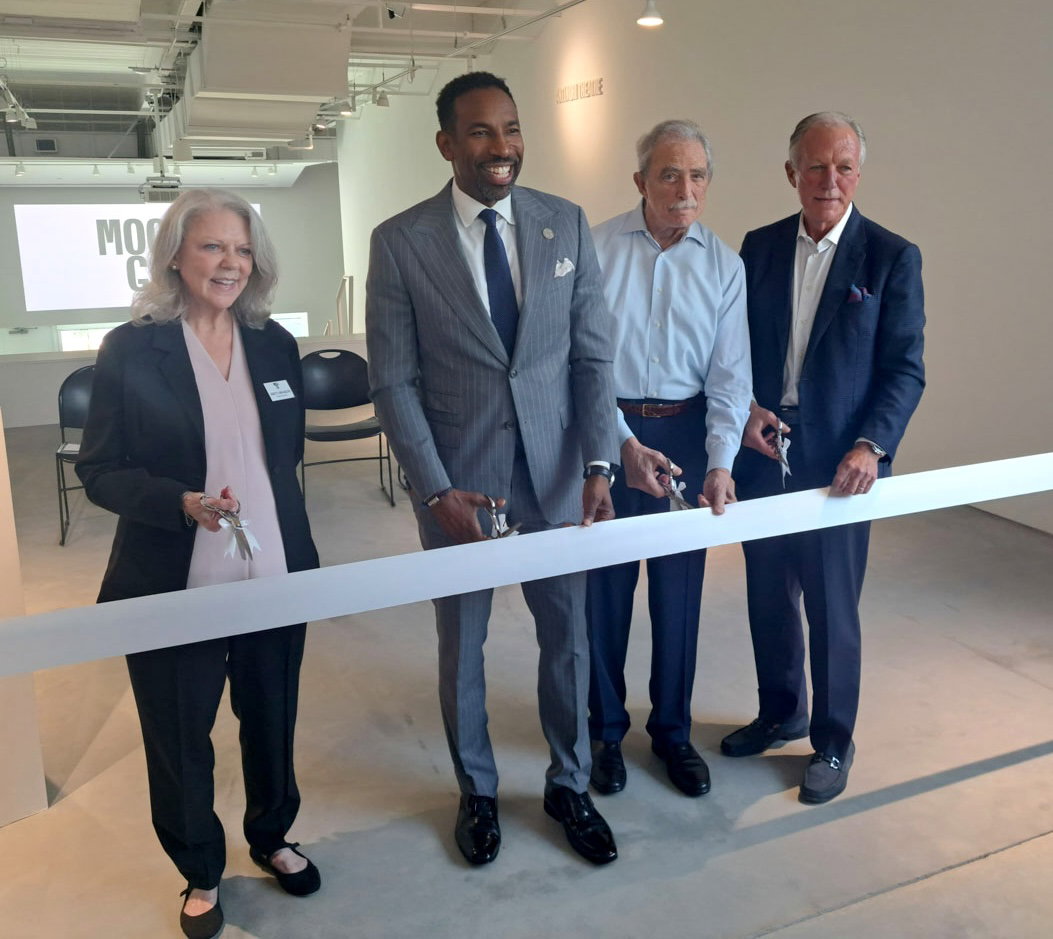
Mayor Andre Dickens helped cut the ribbon on the new home of the Museum of Contemporary Art of Georgia (MOCA GA) at a private ceremony September 14, marking a milestone for the museum’s long-awaited West Midtown building.
Dickens joined MOCA GA founder and CEO Annette Cone-Skelton, board chair Philip Babb and capital campaign donor Ron Antinori for the 4 p.m. ceremony, which drew roughly 200 people, including artists, donors, the building’s architects, museum supporters and others from Atlanta’s arts community. After the ribbon was cut, guests streamed from the lobby into the museum’s galleries for a first official look at the new space.
Mayor Andre Dickens helped MOCA GA CEO and founder Annette Cone-Skelton cut the ribbon at the VIP opening of the new museum September 14, 2026.
Andrew Alexander
The celebration marked the culmination of more than 26 years of work by Cone-Skelton and the museum’s supporters to create a permanent home for an institution dedicated to Georgia artists.
“This building has been a long time coming,” Cone-Skelton told the crowd. “It’s taken over 26 years to raise the funds, buy the land, create the building, to move in, and here we are.”
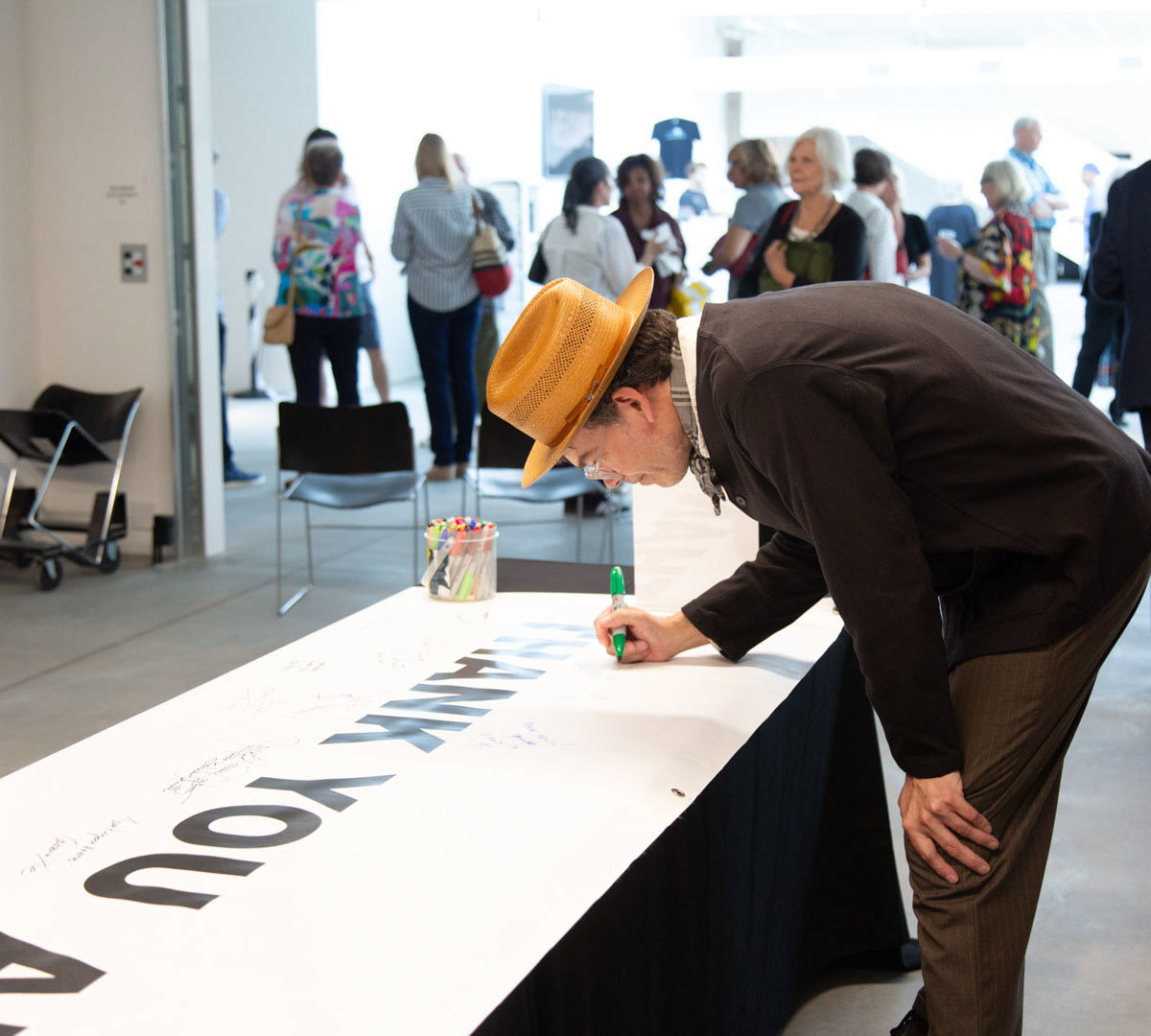
A visitor signs a banner at the VIP reception for the private opening of MOCA GA on September 14, 2026.
Photo by Martha Williams
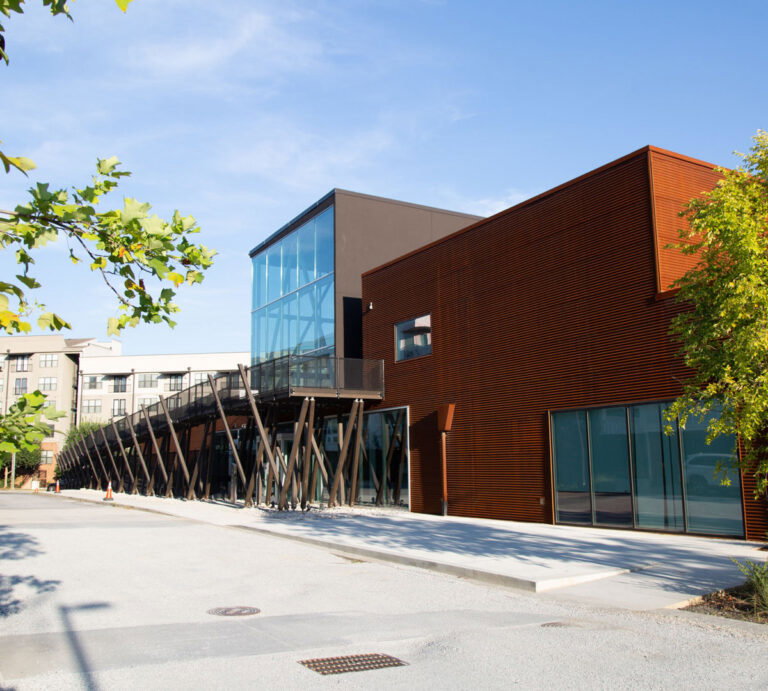
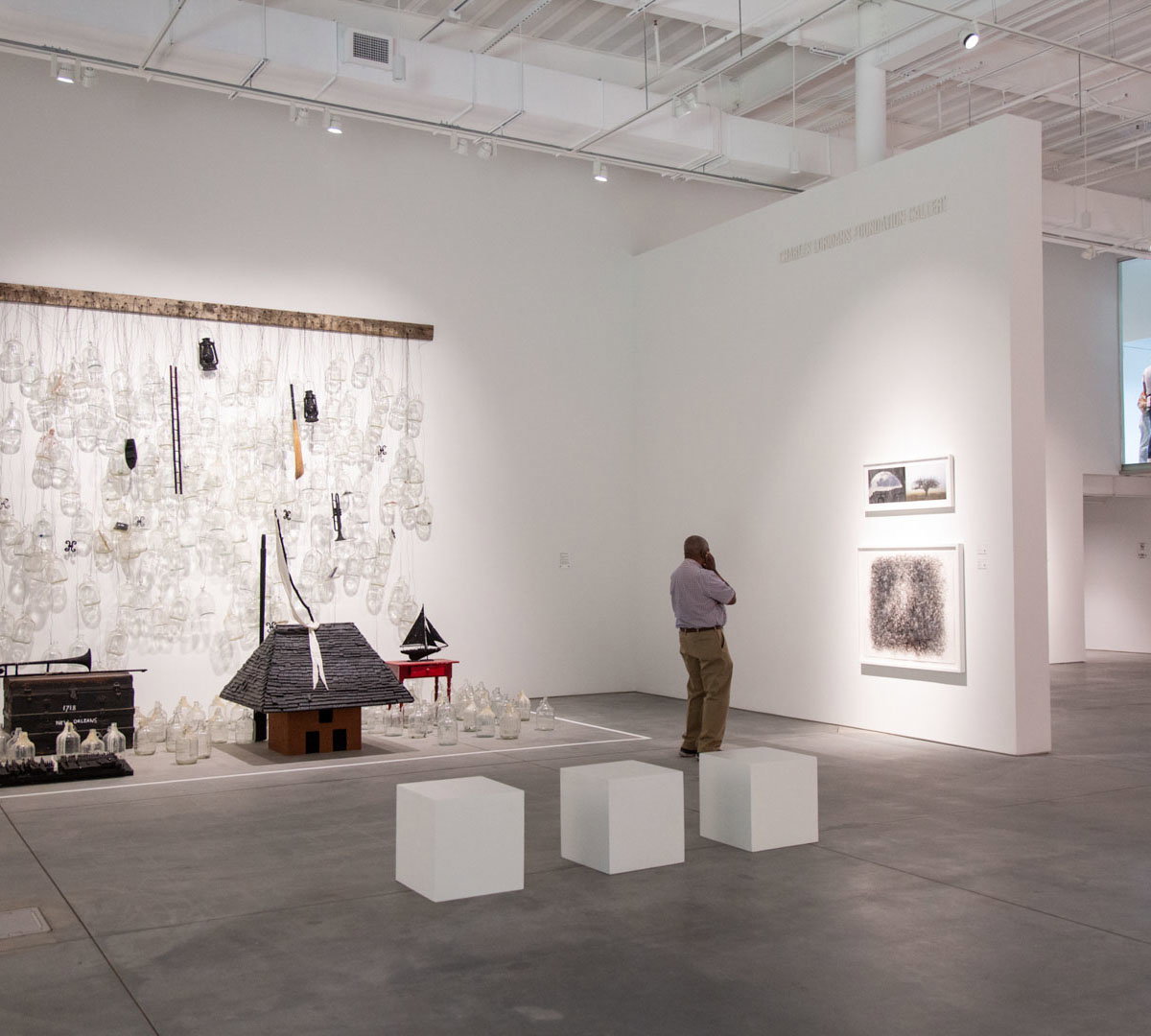
The 26,000-square-foot building, designed by Mack Scogin Merrill Elam Architects, represents a major new chapter for MOCA GA. The $16.4 million project gives the museum five galleries and a permanent home for a collection that has grown from roughly 250 works when the museum was founded in 2000 to more than 1,600 today.
Dickens, who announced a $2 million City of Atlanta contribution to MOCA GA’s capital campaign in 2024, said the investment was about more than a new building. It was about keeping artists in Atlanta and preserving their work for future generations.
“Artists really do something for a city that no one else can do: they record us,” Dickens said. “Long after a building changes or a neighborhood changes, or a generation passes, somebody can look back at the work created here and they will understand something about Atlanta at that very moment in time.”
That idea is at the heart of MOCA GA’s mission. The museum was founded by Cone-Skelton and David Golden in 2000 in part to create an institution dedicated to preserving and exhibiting the work of Georgia artists. Today, its collection includes more than 1,600 works, along with an archive documenting generations of Georgia artists and arts organizations.
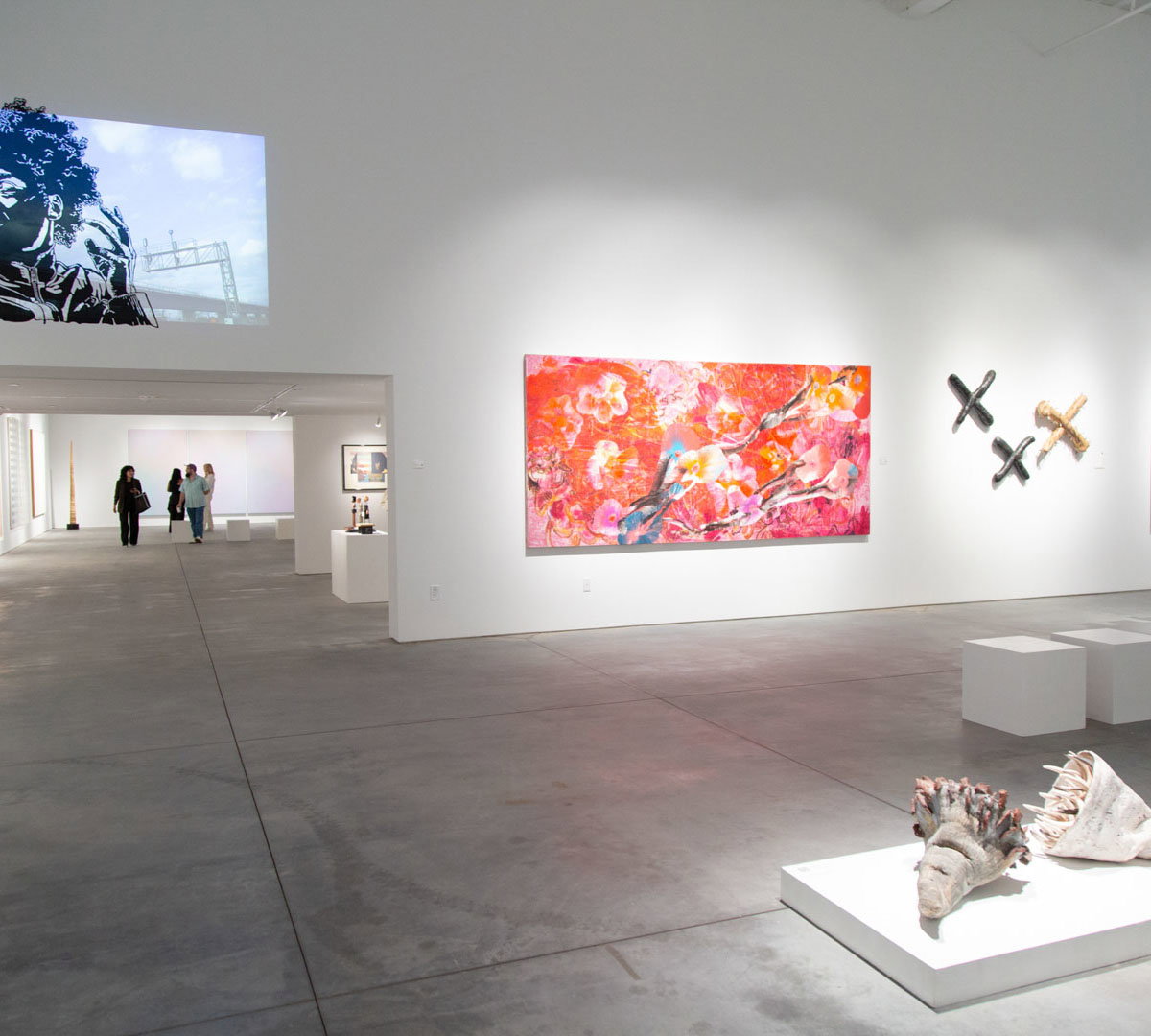
A visitor peruses one of MOCA GA’s five new galleries at the private opening of MOCA GA on September 14, 2026.
Photo by Martha Williams
During the ceremony, Cone-Skelton presented Dickens with a lithograph titled Saguaro Spirits by Larry Walker, the Atlanta artist and longtime Georgia State University professor.
Walker was born in Franklin, Georgia, in 1935 and moved with his mother and siblings to Harlem as a child. He returned to Atlanta in 1983 to become a professor and chair of the art program at Georgia State University, where he remained until his retirement in 2000. He continued making and exhibiting art for decades and was one of the inaugural recipients of MOCA GA’s Working Artist Project award. He passed away in December of 2023.
The particular print presented to Dickens was selected from Walker’s estate by his daughter, the renowned contemporary artist Kara Walker.
Annette Cone-Skelton (left) and Atlanta Mayor Andre Dickens (right) pose for a picture with Larry Walker’s “Saguaro Spirits.”One of the five new gallery spaces at the new MOCA GA, which opened for a private ribbon-cutting reception on September 14.
Photo by Martha Williams
The gift offered a fitting connection between the museum’s mission and Dickens’ remarks about artists preserving the history of a city. Walker spent decades documenting and contributing to Atlanta’s arts community, while MOCA GA has spent more than two decades building an institution devoted to preserving the work of Georgia artists.
After Dickens’ remarks, Cone-Skelton thanked him and the city for supporting MOCA GA and Atlanta’s arts community. “What you said is exactly who we are, what we are, and what we hope to be,” she said.
The ribbon-cutting officially opened the building, but the public will have to wait a little longer. MOCA GA is expected to open to the public later this month, pending final permits.
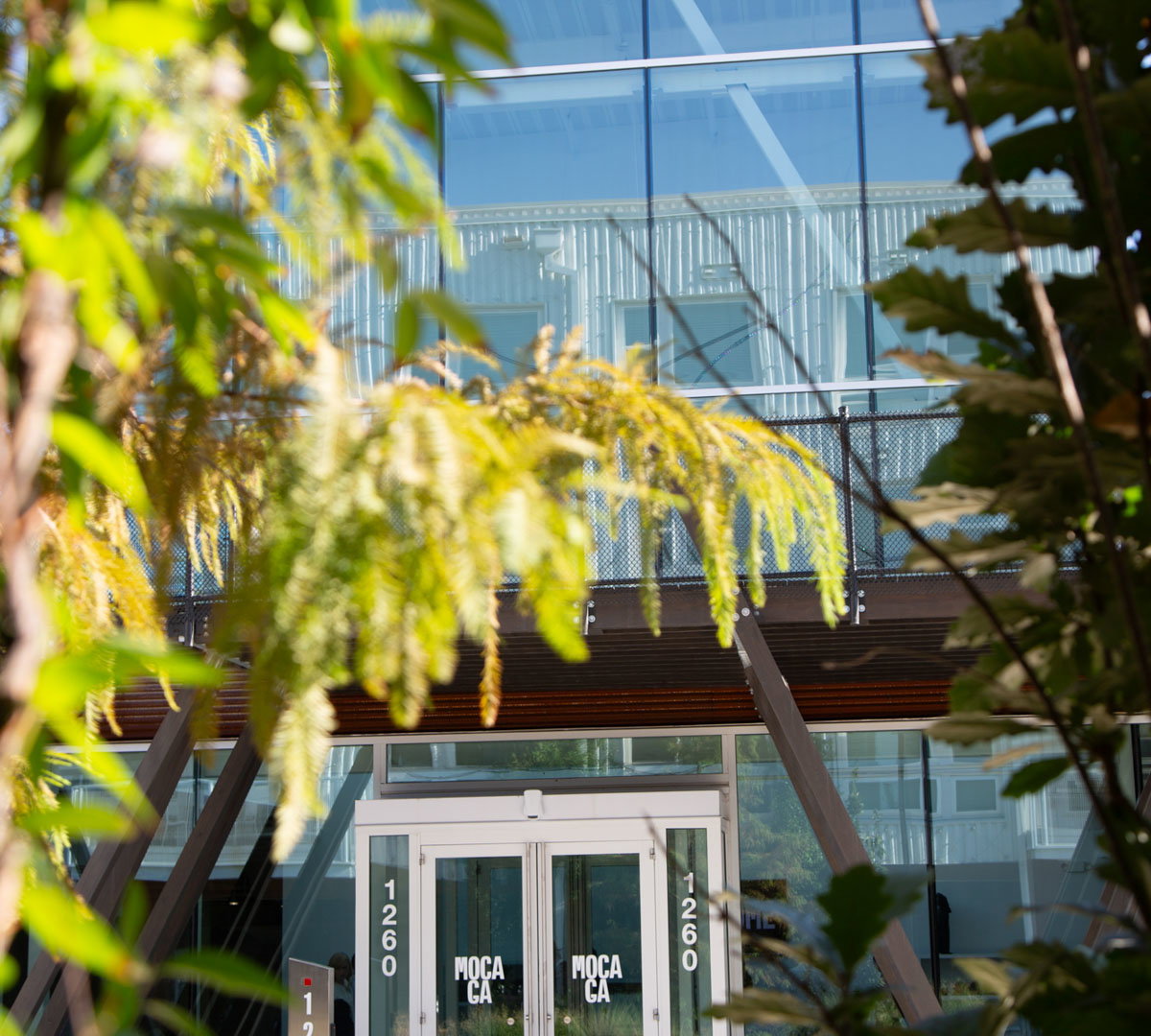
The front entrance of the new $16.4 million MOCA GA. The City of Atlanta gave $2 million toward the project. MOCA GA’s mission is simply to help Georgia artists.
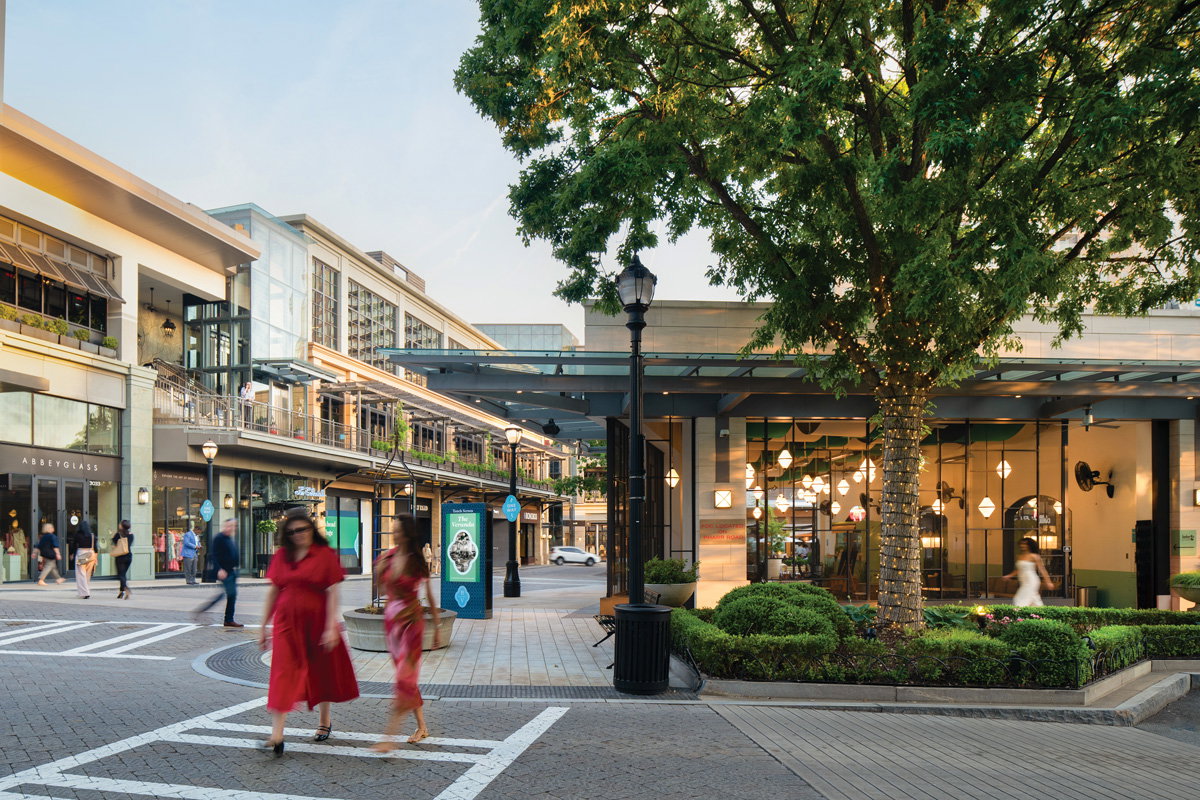
After taking over the district in 2019, Jamestown added communal areas like the Veranda atrium to support shopping and dining.
Courtesy of Jamestown
In June, women and girls decked out in flirty floral skirts and cream crochet dresses lined up en masse to welcome New York City–based LoveShackFancy to Buckhead Village District. Some had been camped out since 6:30 that morning to peruse the boutique’s vintage-inspired day dresses, silk tops, and soft knits in pastel colors.
It was one of many recent big retail openings at Buckhead Village District: Since 2025, the nine-acre mixed-use development bordered by Peachtree and Pharr roads has welcomed 20 stores. Some of the splashiest newcomers include Jeffrey, Eichholtz, Hill House Home, Me + Em, Tom Ford Beauty, and Roller Rabbit. Next year, luxury fitness and health club Equinox will join their ranks.
Jones Road, the privately owned makeup brand founded by Bobbi Brown in 2020, arrived at Buckhead Village District this summer. Juliet Baker, the brand’s vice president of retail, says e-commerce data showed that Atlanta was a natural fit for its store. “It’s a North Star for so many businesses because it’s your source of truth to be able to say where my customer already is,” she says. The data was correct: On Jones Road’s opening day, it too saw lines wrapped around the block.
“Atlantans are hungry for a premium experience,” says Adam Schwegman, director and head of retail leasing at Jamestown, which has owned and managed Buckhead Village District since 2019.
The district’s momentum has been years in the making. When Jamestown took the reins from San Diego–based developer OliverMcMillan, the property—then known as The Shops Buckhead Atlanta—was in an identity crisis, Schwegman says. It had been billed as the “Rodeo Drive of Atlanta,” but that ultraluxury vision didn’t resonate with locals, and the district suffered from low foot traffic. Some brands, including Tom Ford and L’Occitane, left to go back to the malls, and others, such as swimwear brand Vilebrequin, departed Atlanta altogether.
Schwegman says there was local support for a rebrand focused on more accessibility and community, not just luxury names. “We solicited quite a bit of community feedback and found out people wanted a more dynamic neighborhood,” he says. “They did not want to shop somewhere sterile, like a museum. They wanted more fun.”
Schwegman says that for the first time since 2006, there’s now a waitlist for leases. Part of Buckhead Village District’s appeal, he says, is that it’s a collection of city blocks where Jamestown doesn’t own every parcel: “It has the authenticity of a real street environment, and Atlanta’s never really had that.”
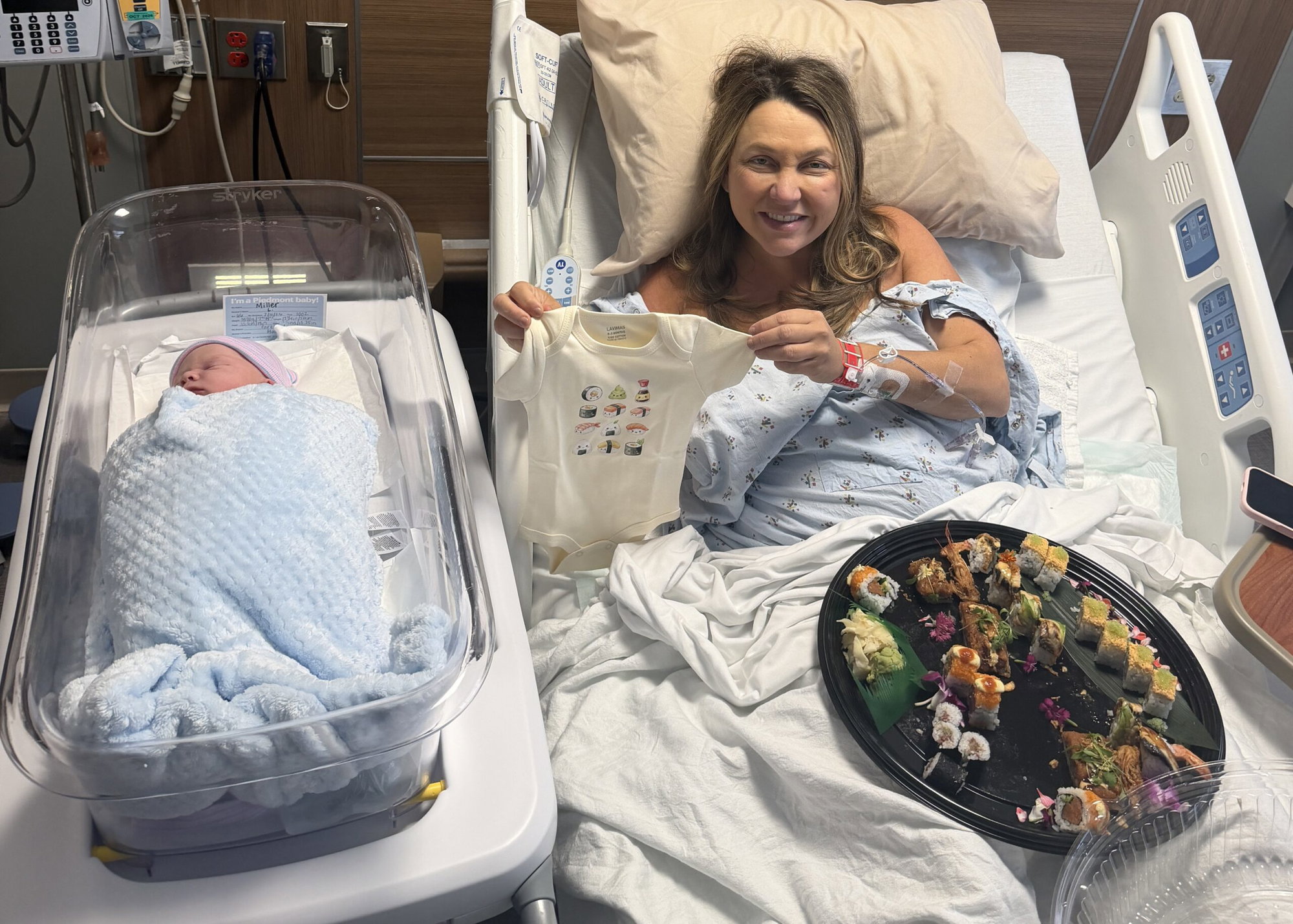
A new mom receives a platter of sushi from Nakato Japanese Restaurant, which has launched a new free sushi delivery service to area hospitals.
For many pregnant women, counting down 40 long weeks is not just about waiting for the baby. They’re also waiting for the moment when the many forbidden fruits in the garden of Eden, such as alcohol, soft cheese, and raw fish, are safe to enjoy again.
Once the little bundle of joy is born, the gourmand world reopens, with treats like sushi given the green light. So why not eat some right at the hospital?
This was the idea behind a new service launched by Nakato Japanese Restaurant: the “New Mama’s Sushi Delivery Experience.” The Japanese restaurant, which has been an institution in Atlanta for more than half a century, will deliver sushi to any hospital within a 10-mile radius of their location on Cheshire Bridge in Atlanta. If the order totals more than $125, Nakato will deliver free-of-charge. Orders can be placed online directly through the New Mama’s page on the restaurant’s website using the promo code SushiForMom.
“Over the years, we’ve received so many requests from guests who have been dreaming about their favorite sushi rolls, sashimi and nigiri for nine very long months,” says owner Sachi Nakato Takahara. “As soon as they deliver … their Nakato sushi order can’t be delivered fast enough.”
Nakato was opened in 1972 by Takahara’s grandmother, Tetsuko Nakato, before it passed to Takahara’s mother, Hiroe Nakato. Takahara, now the owner and manager, is proud to represent the third generation of women at the restaurant’s helm. As family is a cornerstone of Nakato’s business, Takahara says they are happy to serve new moms.
The fish, she notes, is flown in fresh daily from the waters of Japan before it is prepared by Sushi Chef Yoshi Kinjo. The menu includes a wide range of standard sushi, sashimi and nigiri, as well as specialty rolls and assorted platters. You can find the menu here.
Ping Ping at the Chengdu Research Base of Giant Panda Breeding.
Courtesy of Chengdu Research Base of Giant Panda Breeding
The panda-monium was reawoken Thursday when Chinese President Xi Jinping was at the White House for talks with President Trump. In his opening remarks, Xi said two pandas would soon arrive in Atlanta, within days, as an envoy of friendship between the Chinese and American people.
While the public was made aware back in April that new pandas—which are rare at zoos in the U.S.—would come from China, the exact timing of their arrival was unknown. Jinping’s comments Thursday threw the panda press into a frenzy. When would the lovable black-and-white bears arrive? Panda lovers everywhere pleaded to know.
Well, they have arrived.
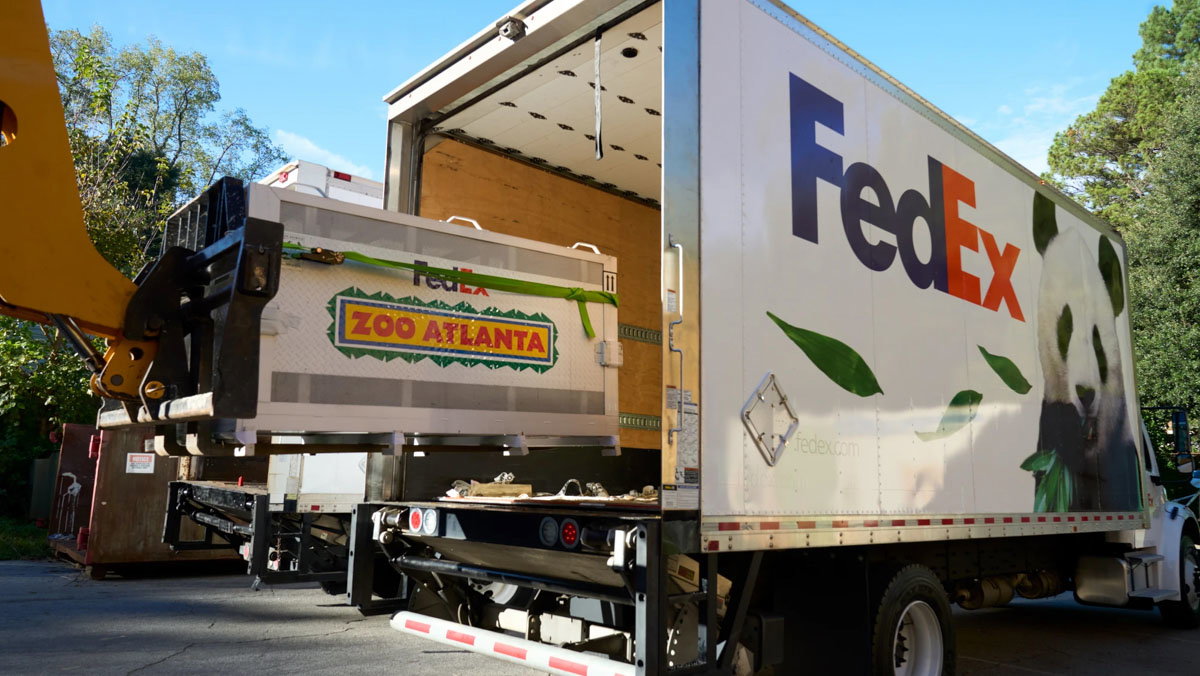
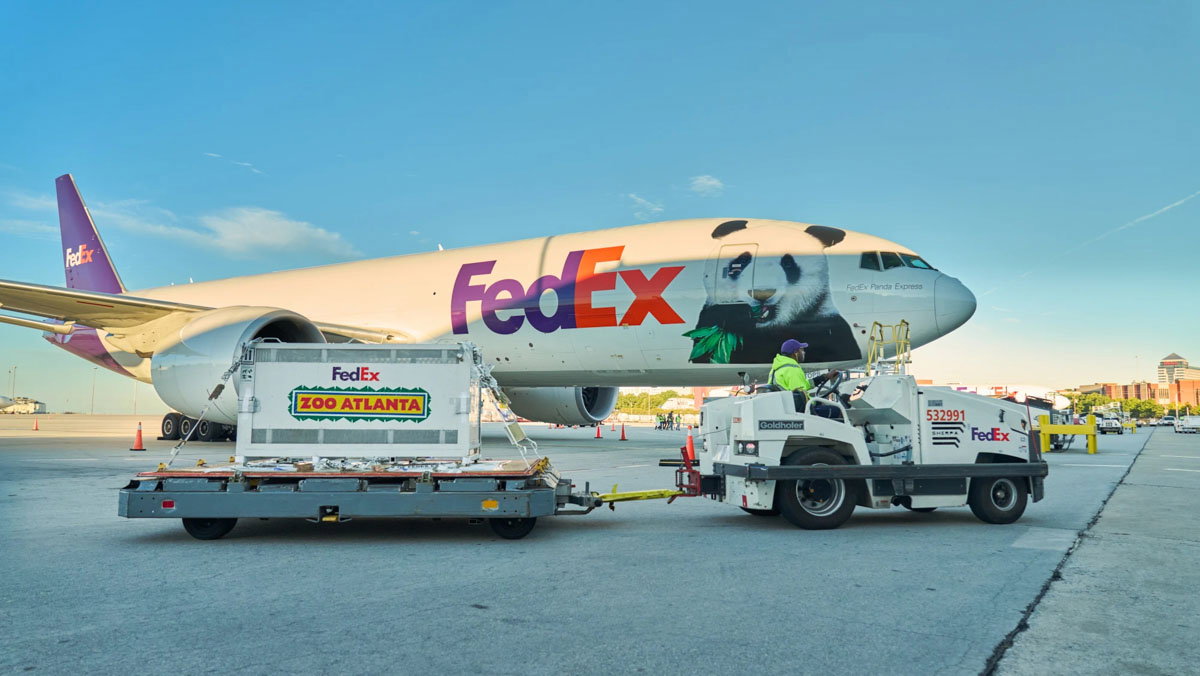
They arrived via a dedicated FedEx plane dubbed the Panda Express yesterday, Sunday September 27. The Boeing 777 aircraft, which was donated for the transport, carried two giant pandas, Ping Ping and Fu Shuang. Ping Ping’s name, says the zoo’s press release, represents a blessing for a smooth and healthy life. Fu Shuang’s name (pronounced Foo Shwong) comes from “Fu Lu,” a reference to her and her mother meaning “happiness”. The pandas were born in China at the Chengdu Research Base of Giant Panda Breeding on March 17, 2020, and October 18, 2020, respectively.
Ping Ping and Fu Shuang are transported in a Zoo Atlanta crate after flying from China on the plane nicknamed the Panda Express.
Courtesy of FedEx
The exchange was coordinated by a new International Cooperative Research Agreement on Giant Panda Conservation initiated between Zoo Atlanta and the China Wildlife Conservation Association.
It’s not the first time the lovable black-and-white bears have been used in diplomacy. For 25 years, Zoo Atlanta was home to Lun Lun and Yang Yang who also gave birth to twin offspring Ya Lun and Xi Lun. The bear family was beloved by Atlantans for years—Atlantans who were heartbroken when the pandas were sent back to China in October 2024 as the long-standing loan agreement with China concluded.
Right before the bears left, fans from far-and-wide came to say goodbye. Atlanta Journal-Constitution reporter Rodney Ho noted one couple drove three hours from Columbia, S.C., because they’d gotten hooked on the panda cams during the pandemic. A woman who had donated to the original campaign to bring the pandas also came to say goodbye. Sam Rivera, the zoo’s vice president of animal health, flew to China with the pandas to see them off.
Ping Ping at the Chengdu Research Base of Giant Panda Breeding.
Courtesy of Chengdu Research Base of Giant Panda Breeding
“It was sad and very emotional,” he told me in 2025, but noted he knew they were going to a good facility.
After the pandas were gone, their enclosures and dedicated retail stands at Zoo Atlanta sat quiet and empty, awaiting the day they could once again be buzzing with visitors to see pandas munch on bamboo.
Fun Fact. Did you know Zoo Atlanta even had a team of “Bamboo Hunters” that traveled around Atlanta to gather bamboo for the bears? A hotline allowed callers to report bamboo they wanted to donate, and Georgia Power would call as they had patches to cut down. When the Zoo Atlanta had four pandas, the hunters harvested roughly 500 pounds a day, Rytis Daujotas, Zoo Atlanta’s kitchen manager once told me. Unconfirmed, but surely the hunters will be back in action soon.
So what happens next now that Ping Ping and Fu Shuang are here? The bears will be housed in a biosecure area of Zoo Atlanta’s new giant panda complex for a routine quarantine period of roughly a month. Zoo Atlanta will announce more as the plan unfolds. Stay abreast of all things panda on the Panda Page on zooatlanta.org.
The FedEx plane that transported Atlanta’s two new giant pandas was donated for the transport and featured pandas on the exterior.
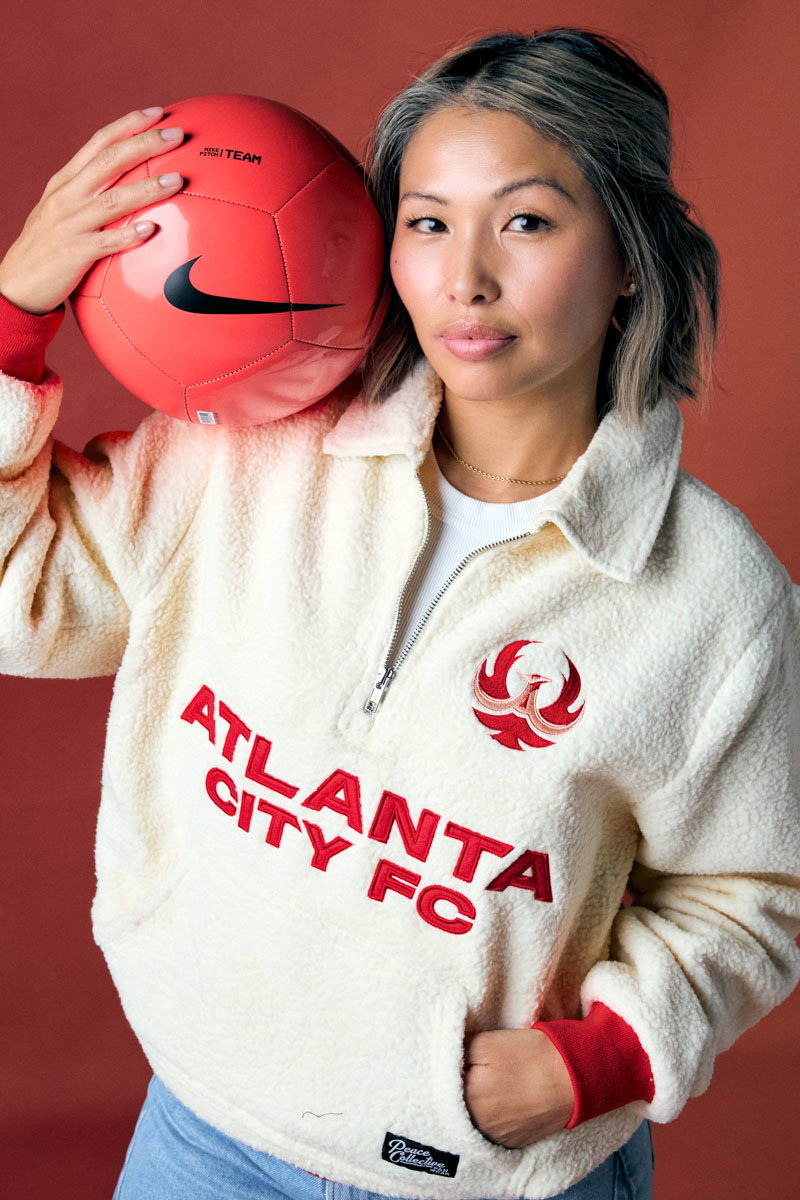
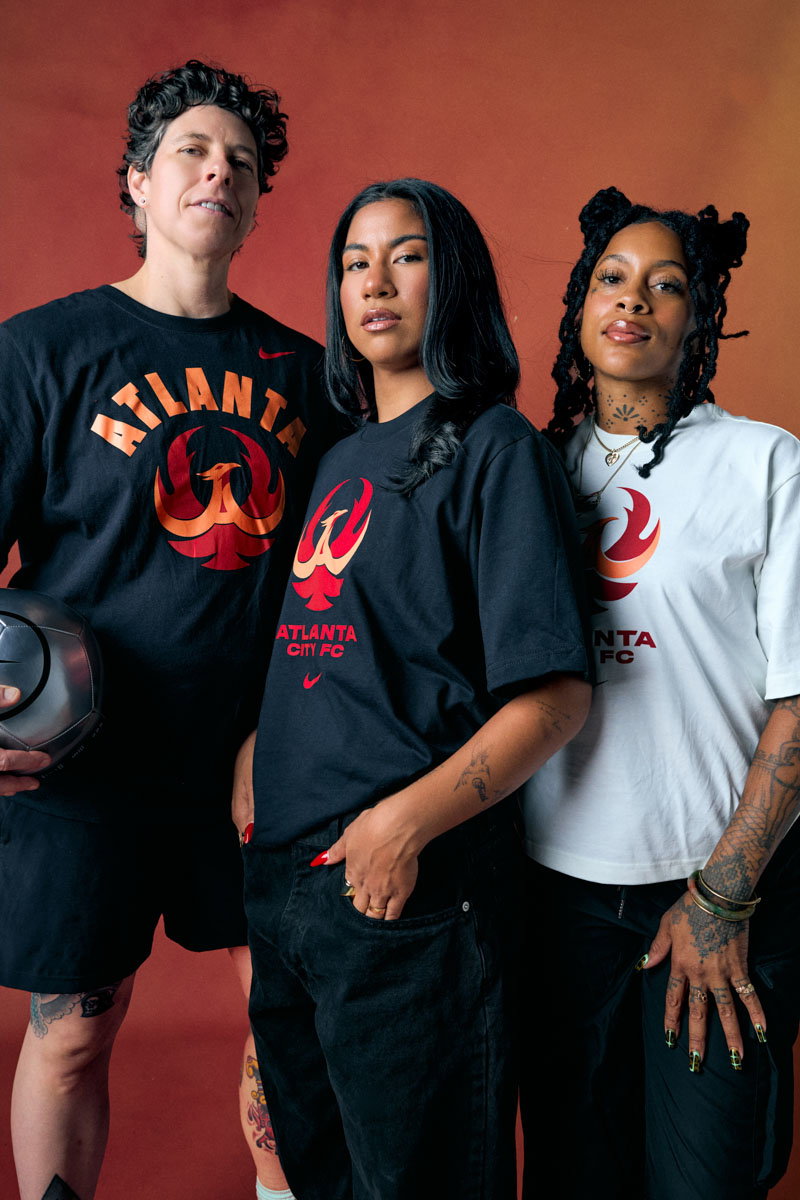
A sweatshirt features the phoenix from the new crest for the Atlanta City Football Club. The team’s name and crest was revealed publicly on September 28, 2026.
Photo by Erin Olivia Dickman, courtesy of NWSL
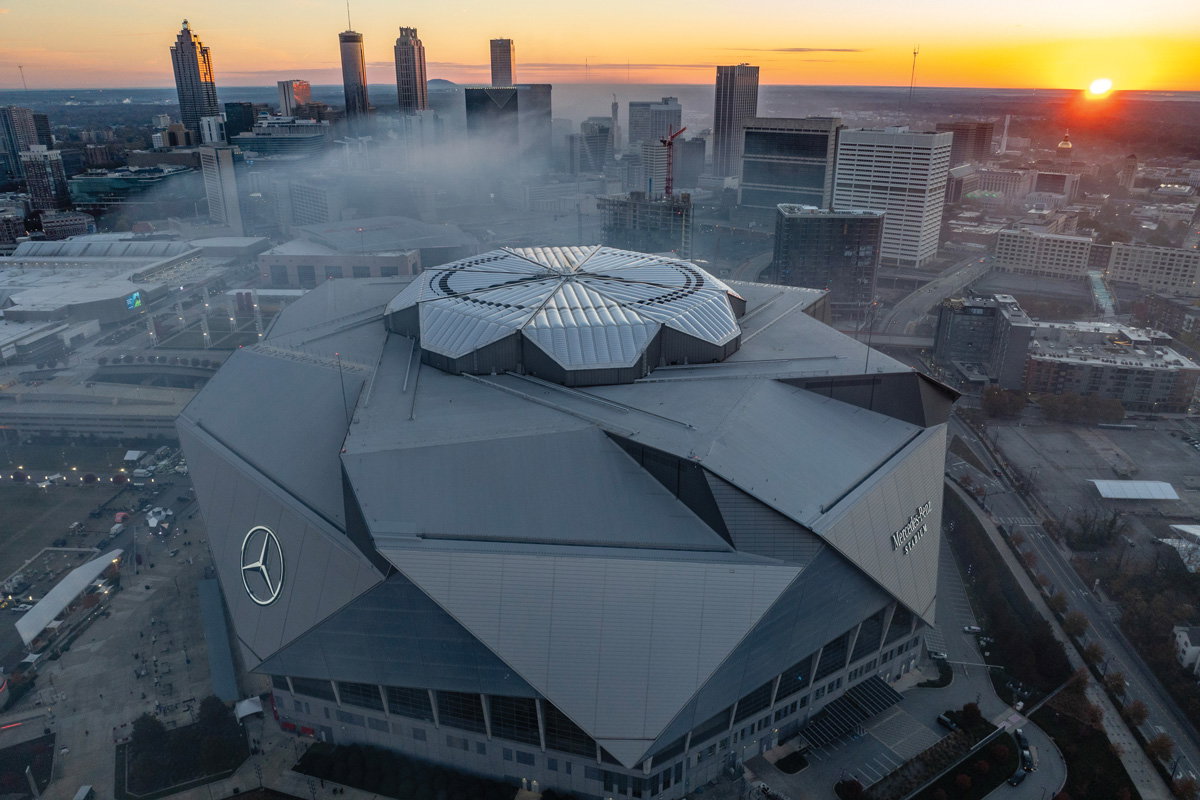
On September 28, Arthur M. Blank Sports and Entertainment (AMBSE) publicly announced that Atlanta City Football Club will be the official name for Georgia’s National Women’s Soccer League (NWSL) franchise. The new team will debut in March 2028 and play its games at Mercedes-Benz Stadium as the NWSL’s 17th team.
The new Atlanta City FC crest features a phoenix rising.
Courtesy of NWSL
Along with the name, the club also rolled out its crest and colors. The border of the crest is an Atlanta red (although lighter than the reds of Atlanta United FC or the Falcons) around a gradient peach phoenix with its chest in the shape of an A. The white backdrop is dogwood-shaped with a chevron texture that nods to Atlanta United’s familiar pattern. Detailing around the crest includes colors of black char and platinum metallic, meant to represent the city’s cultural luster and resistance to tarnish. The team’s kits, and how the colors will display on the jerseys, have yet to be released.
“Our hope was to have a literal connection of wearing the city on your chest,” says AMBSE Creative Director Tucker James Brooks. “I think some of those details like the hidden ‘A’ are things we hope people latch onto and are proud of.”
AMBSE spent several months surveying both fans and key figures in the city—such as Mayor Andre Dickens, hip-hop photographer Cam Kirk, and CEO of Butter.ATL Brandon Butler, among others—on what they wanted to see behind the team name and crest. Symbols such as the phoenix, dogwood, and fire were common responses that eventually worked their way into the design.
The team name breaks from the standard of featuring a mascot as do many other NWSL franchises, such as the Chicago Stars, Washington Spirit, and North Carolina Courage. “We wanted to have a more soccer-forward name,” says Deandra Duggans, vice president and chief business officer of Atlanta City FC. She added that the naming decision allowed the club flexibility to use more Atlanta imagery in its crest. (Alternative names, such as Dogwood City and Atlanta Phoenix or Flames, were also under consideration.)
With the announcement, Atlanta City launches two merchandise lines: Nike for typical fan gear, and Peace Collective as a premium option that includes windbreakers, jackets, and sweaters. The team’s official nickname—ATL CTY—is featured on several items. “With a team coming onto the market, we wanted to feel fresh and modern,” says Kiana Miree, AMBSE vice president of retail and merchandising. “You’ll see bold colors, bold placement, and bold symbols like the phoenix to meet the moment.”
Apparel featuring the new Atlanta City FC brand.
Photo by Erin Olivia Dickman, courtesy of NWSL
Although under the same umbrella, AMBSE leadership says that Atlanta City FC will operate largely independent of Atlanta United in respect to business management. “We’ve done one million and one things with the look of Atlanta United, so we asked ourselves: How can we be different? How can we make this woman forward?” says Kacey Covino, AMBSE director of business operations. “I feel we landed with the look of something new and distinct.”
Now that the secret is out, the club will host fans for a free launch party on October 4 from 12 to 4 p.m. at the Southern Exchange Ballrooms, and also appear at other local events, such as on a float in Midtown for the Pride Parade October 11.
Although Atlantans will need to wait two years for the team’s debut, President of Soccer for Atlanta City and Atlanta United, Mauricio Culebro, says that Atlanta City has received approximately 5,000 Founding Member deposits so far.
“This [announcement] is a great moment for us and Atlanta,” he says. “We’re very excited to start the process.”
A tee-shirt promoting the National Women’s Soccer League. Atlanta announced the name of its new team coming in 2028—Atlanta City FC.
Photo by Erin Olivia Dickman, courtesy of NWSL
An aerial shot of Mercedes Benz Stadium in downtown Atlanta. The stadium will host Atlanta’s new women’s soccer team—the Atlanta City Football Club—starting in 2028.