
Home 2026

Archives

Review: The Art of Banksy returns to Atlanta, still without his permission

0
All photos from a prior showing of The Art of Banksy: Without Limits.

Photos courtesy of The Art of Banksy, GTP Exhibitions Ltd.

There is a moment near the beginning of The Art of Banksy: Without Limits when you realize you’re in the presence of a whole lot of Banksy.

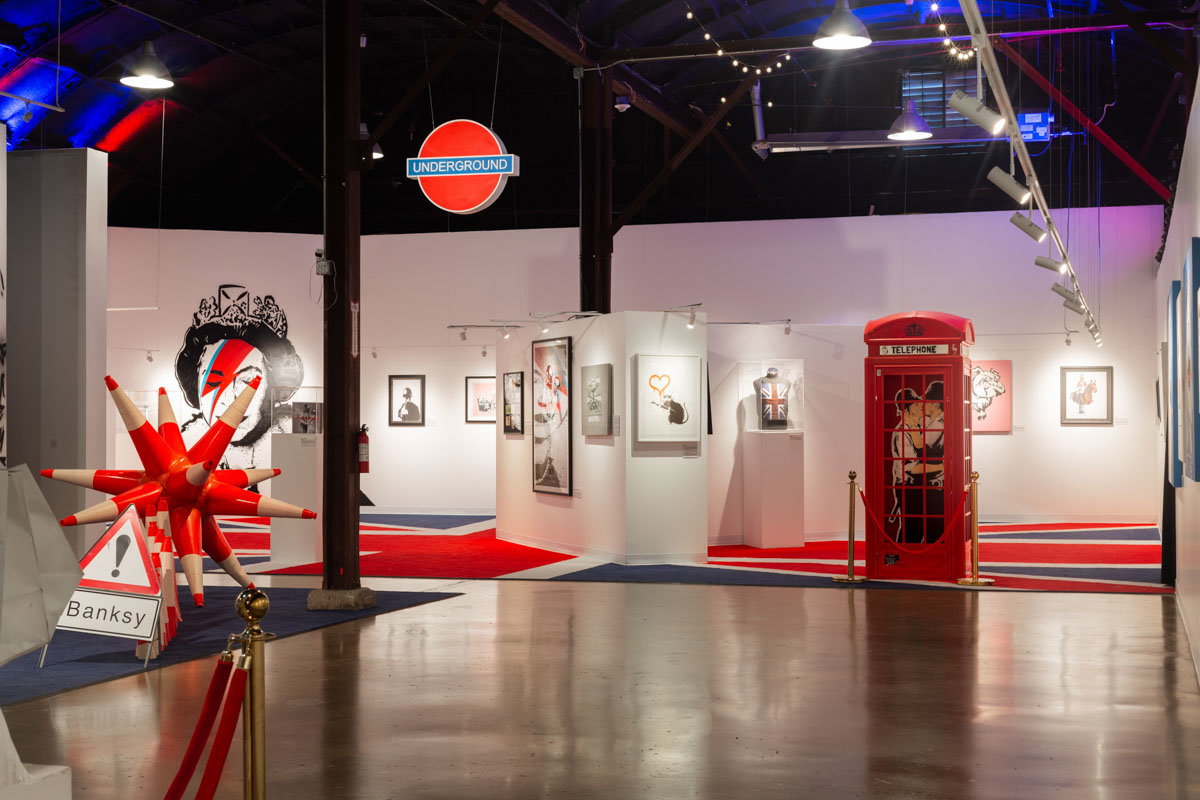
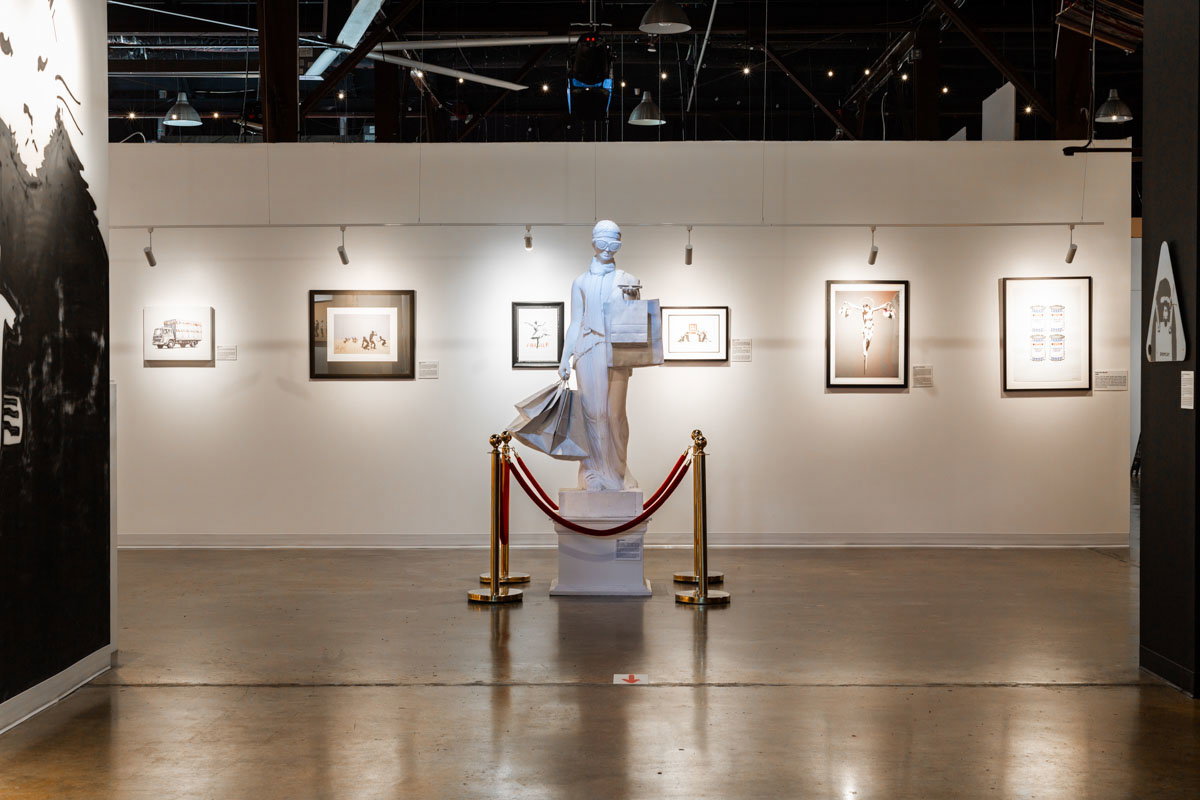
Opening at Pullman Yards, the traveling exhibition contains more than 200 pieces, including what organizers describe as 60 verified Banksy originals. There are prints and photographs, sculptures and murals, a room devoted to his Dismaland project, video mapping, an infinity room, and a hologram. Some of the murals are reproductions crafted using Banksy’s stencil technique specifically for the display.

There is, however, one important thing the exhibition cannot provide: Banksy’s permission.

Banksy himself has long disavowed this style of commercial show. His official website warns the public about a “spate” of unauthorized exhibitions, making clear they are organized entirely without his consent, knowledge, or involvement.

That makes this return—following the exhibition’s 2021 run at Underground Atlanta—an unusually complicated proposition. You can walk into The Art of Banksy wanting to see Banksy and still spend much of your visit wondering what, exactly, you are looking at.
I attended prior to the September 25 public opening, expecting to have reservations but arriving with an open mind. Years ago, I saw the documentary Exit Through the Gift Shop and liked the Banksy it presented: anonymous, funny, elusive, skeptical of the art world, committed to his vision, and apparently more interested in getting an image onto a wall than becoming a celebrity brand.

So I was willing to give Without Limits a chance. The exhibition begins with a timeline before sending visitors through a maze of rooms and installations inside the warehouse. The space fills quickly with work and visitors. On opening night, there were plenty of phones in the air, but there was also something encouraging: people were actively talking about the art. They stopped in front of pieces, pointed out details, and seemed genuinely engaged.

If anything, the audience itself is one of the exhibition’s strongest arguments for existing. Banksy may be one of the most recognizable artists in the world, but seeing his work in person is not a routine opportunity in Atlanta. For a young person who knows the rats, balloons, and protest imagery primarily from screens, this may be the only way to spend an hour surrounded by a large body of his work.

The problem is not that people want to see Banksy. The problem is what happens to Banksy when seeing his work becomes a packaged experience.

First, the exhibition advertises its 60 verified originals prominently. But as a visitor, I found it surprisingly difficult to tell which among the hundreds of pieces were those originals. The labels do not consistently clarify the distinction. I recognized Di-Faced Tenner, the signed and numbered print released by Pictures on Walls, as a real Banksy work. I also saw a signed and numbered CND Soldiers print (32/350), with a label explaining the 2005 release format. But nowhere in the immediate space is there plain-spoken signage explicitly signaling: This object is an original; that one is a re-creation.
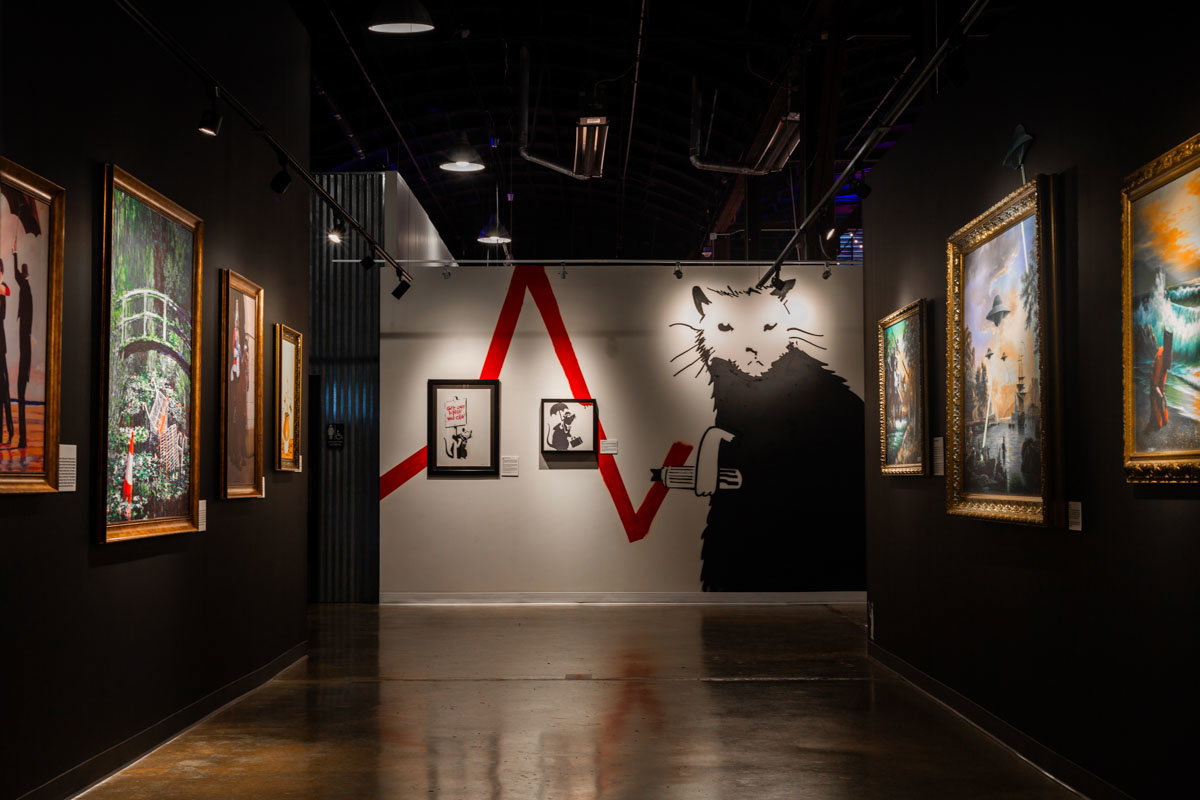
In theory, that distinction matters less with Banksy than with traditional painters. Stencil art relies on repetition; reproduction is baked into the medium. Re-created mural walls built by local artists can be convincing and compelling without claiming to be newly discovered original street art. Watching artists cut stencils, layer spray paint, and deliberately retain drips to mirror street conditions is an enjoyable illusion. But once an exhibition uses the number of originals as a central marketing hook, it owes the visitor clarity on where those originals actually sit. Without clear labeling, “60 verified originals” functions less as useful information and more as atmospheric branding.

The wall text introduces another hurdle. At the entrance, a timeline opens with an extraordinarily bland summary: “Banksy has been active on the graffiti scene since the early 1990s.” It continues in this vague tone, tracing his career without conveying much sense of the artist or the weight of the work.

Much of the accompanying text relies heavily on over-explanation. Christ with Shopping Bags is labeled as a critique of consumerism’s impact on sacred life. A panel next to Lenin on Rollerblades notes that Banksy “mocks historical figures” to question authority through absurdity. By constantly asserting what the work means, the exhibition leaves little room for visitors to interpret it for themselves.

This is especially jarring for art that relies on context. A Banksy image discovered unexpectedly on a city wall derives its force from scale, location, impermanence, and raw accessibility. Inside a warehouse, everything has been curated, illuminated, and explained. The street has been replaced by a lesson plan.

Seeing so much of his work grouped together had an unexpected side effect: some of it felt flatter than remembered. Images that once carried a jolt of subversion begin to look like generic symbols of “Banksy-ness.”

The protester throwing a bouquet of flowers remains a clever image, as does the Pulp Fiction parody featuring bananas instead of guns. Girl With Balloon leans close to sentimentality. In the Ukraine section, imagery that carried immense weight when painted directly onto war-damaged buildings loses its immediate charge when framed as just another stop in a gallery sequence.
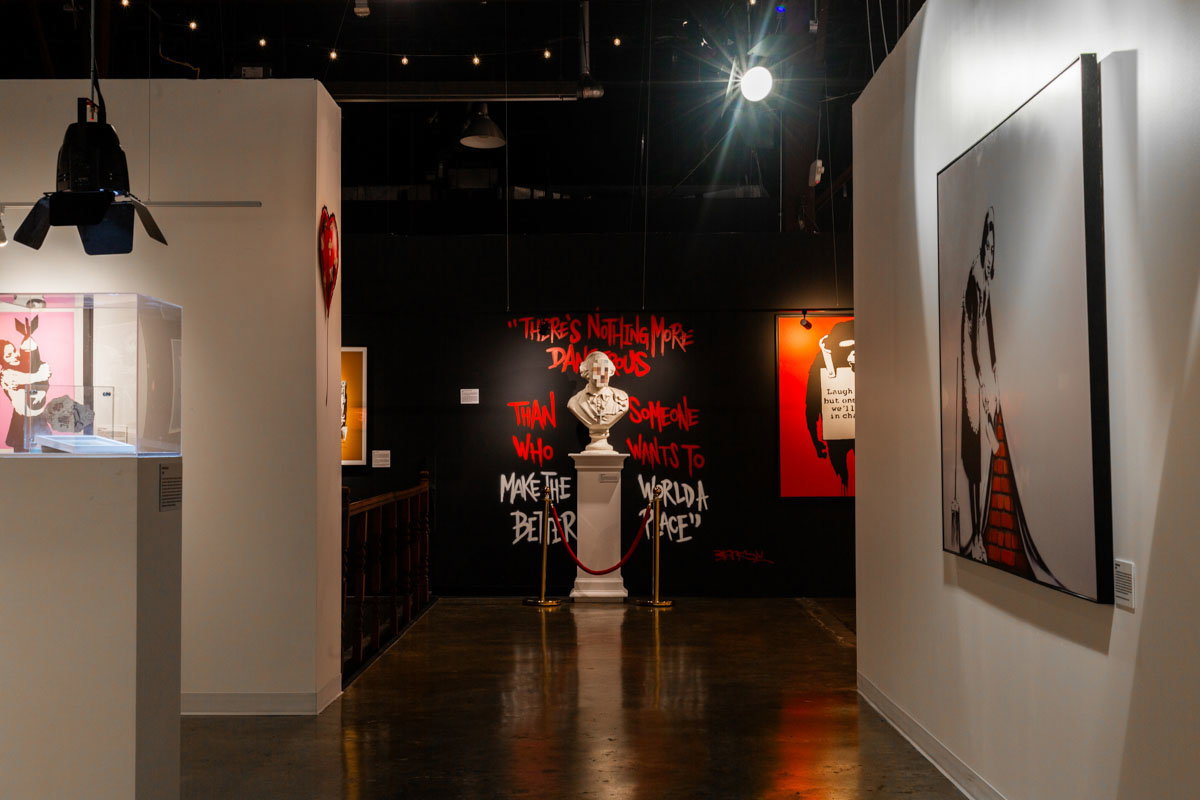
Contextual shifts don’t render the imagery meaningless, but they highlight its limitations. A figure bathing on a ruined wall in a war zone is striking because of where it exists. Transported to a commercial exhibit surrounded by photo ops, it runs the risk of feeling prepackaged.

Where the exhibition succeeds is in the smaller details. Banksy’s signature rats remain quick, witty, and full of personality. Reconfigured traffic cones retain their street-level magic—the work of a trickster taking the mundane and making it strange.

Similarly, a quoted line painted on one wall—”Nobody ever listened to me until they didn’t know who I was”—feels funny, sharp, self-aware, and historically resonant.

Yet the commercial machinery is always visible. There is a “hologram” of Banksy (closer to a projection on a transparent screen than a true 3D visual), a mirror room (far less arresting than Kusama’s Infinity Rooms at the High Museum), a mini Dismaland gallery, photo booths, and, inevitably, a gift shop. Premium ticket holders ($54.45) can spray-paint a stencil onto a T-shirt, with $2 allocated toward refugee aid, while standard admission starts at $27.23.

The scale of the setup is what feels most surreal. Exit Through the Gift Shop served as a warning against street art becoming a mass-market commodity. Walking through Without Limits, the distance between that film’s ethos and this event is hard to ignore.
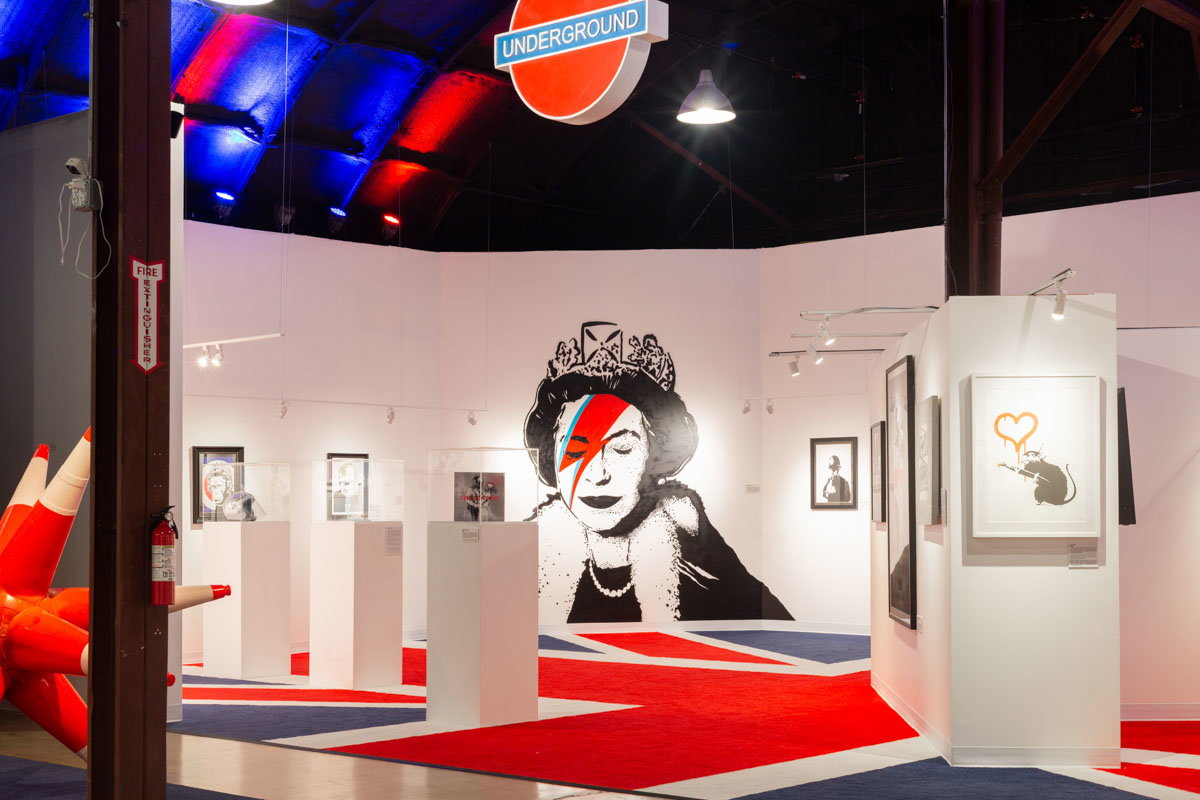
There is value in providing access to a broad collection of Banksy’s visual culture in Atlanta. Audience reactions are generally warm, even if critics remain skeptical. The current iteration is noticeably larger than the 2021 edition—expanding beyond 155 works to more than 200 while adding multi-media rooms. The enthusiasm of the crowd gives the event its energy. Watching visitors step up to an image they’ve only ever seen digitally and discuss it in real time carries genuine worth.

Yet access is not the same as authenticity, and looking at an artist’s work is not the same as consuming a branded experience of him. The Art of Banksy: Without Limits offers plenty of the latter.

That outcome may be inevitable. Banksy’s images long ago escaped the street to become global iconography. They are printed, worn, sold, and shared endlessly online. The show doesn’t invent that commercial cycle; it simply embraces it.

The core paradox remains unchanged: the artist did not authorize or approve the show. After spending an hour inside, the primary question isn’t whether a specific print is certified, but a broader one: What happens to an artist whose work was meant to disrupt the commercial world when someone builds a commercial world around it?

The Art of Banksy: Without Limits. September 28 through January 10. Pullman Yards. 225 Rogers Street Northeast, Atlanta. Tickets start at $27.23 and can be purchased at artofbanksyus.com/atlanta/.

Debuting in Atlanta, The Other Art Fair re-frames the art show experience

0
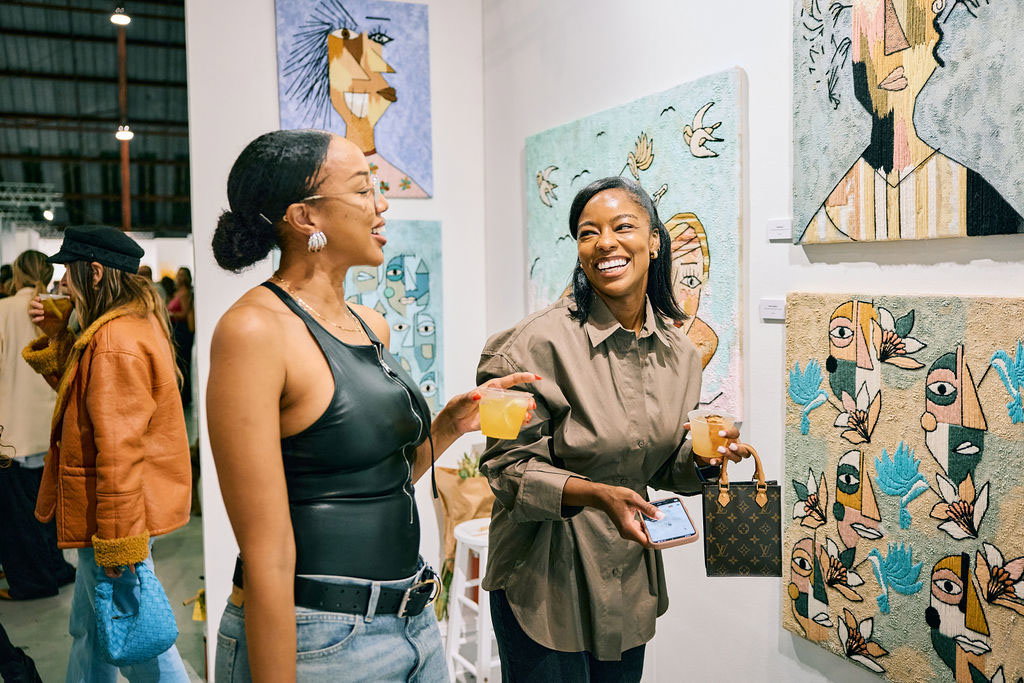
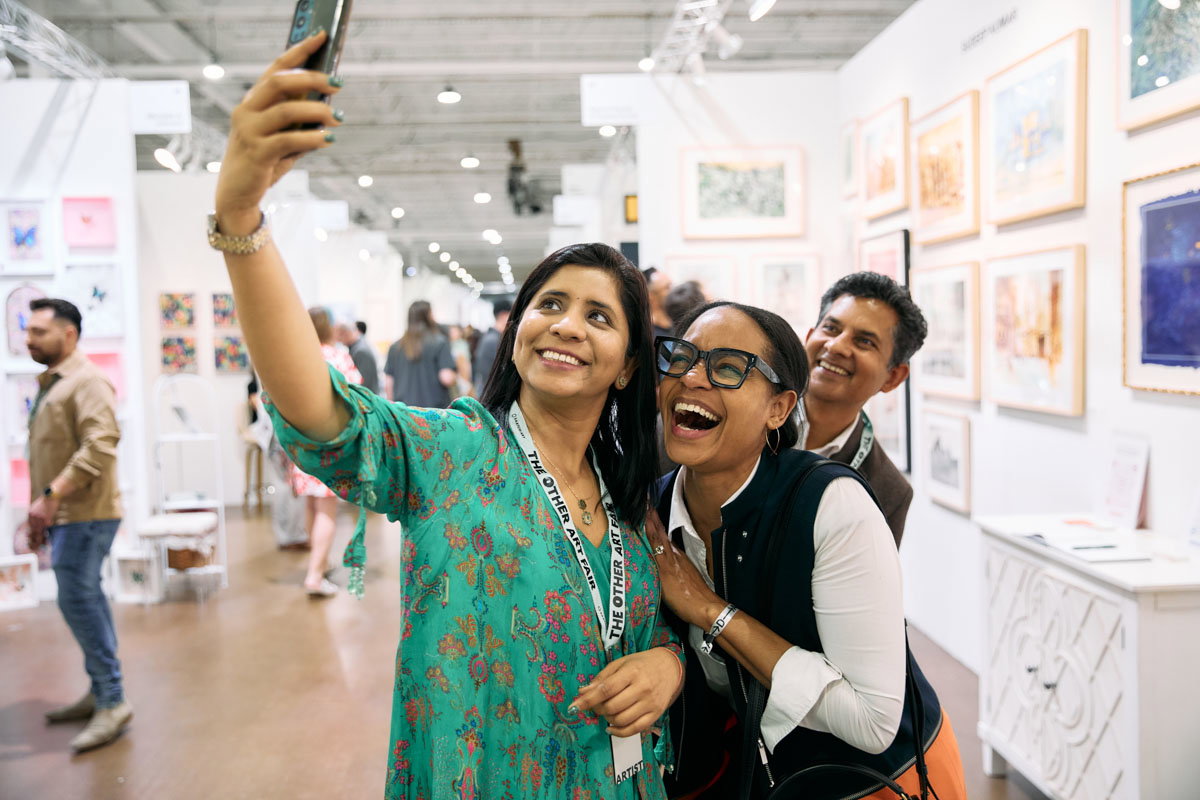
An attendee at a previous The Other Art Fair poses for a selfie with artist Guarii S Kumaar.

Courtesy of The Other Art Fair.

The Other Art Fair marks its Atlanta debut October 1-4, bringing 100 artists together to Grant Park’s Enspire Mercantile for what’s billed to be “an art fair like no other.”

Presented by online art gallery Saatchi Art, The Other Art Fair is dedicated to supporting independent artists and making art more accessible.

“A lot of people feel intimidated walking into a gallery,” says Nicole Garton, The Other Art Fair’s global fair director. So, the fair leans into a convivial feel centered on discovery and in-person connection. Atlanta attendees can peruse and purchase original artwork while meeting the artists onsite.   

The Other Art Fair’s launch in Atlanta marks the fair’s first foray in the Southeast, following fairs in major cities across the globe including London and Los Angeles. 

“On the world stage, Atlanta holds its own,” Garton says, noting both the city’s rich history and contemporary appeal. “But also, [Atlanta] seems poised to continually reinvent itself … Emerging artists are such a great community to highlight within that milieu because it’s all about breaking new ground and trying new things and experimenting.”

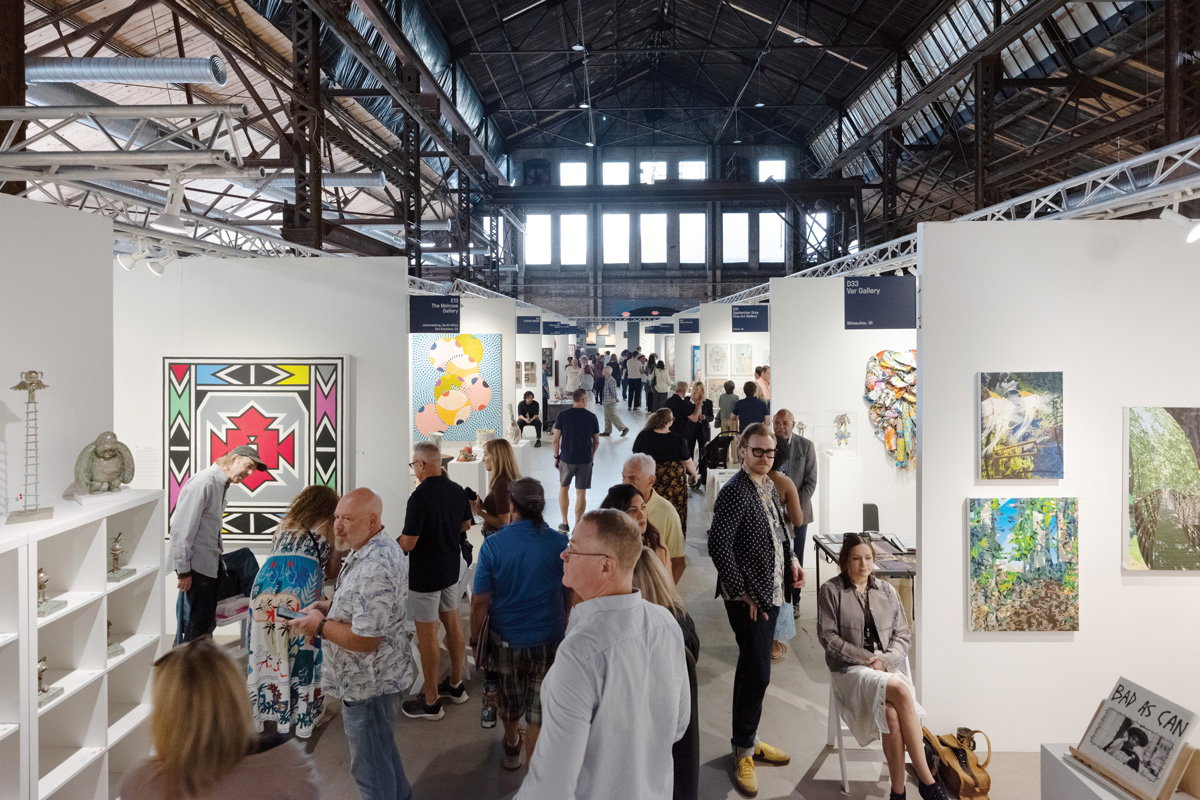
Attendees peruse art at a previous The Other Art Fair.

Courtesy of The Other Art Fair.

The Other Art Fair aims to showcase such talent, but organizers also offer the artists mentorship and professional support. It’s part of the reason Atlanta artist Audrey Beharie-McGee says the fair feels different than other shows.

“I think as an artist you suffer from [thinking], you know, ‘are you good enough? … is this going to be strong enough?’” she says. “But the way we’re supported is so amazing.”

A singer-songwriter, Beharie-McGee is not a traditionally trained artist. Rather, she discovered her craft later in life after Hashimoto’s Disease affected her singing voice.

“[Art] was cathartic insofar as it was giving me life again, because I really thought I’d died when I couldn’t sing anymore,” Beharie-McGee explains. She refers to her exploration of fine art and photography as “soulism.”

“Because it really is,” she says, “my soul being rejuvenated again.”

Throughout the fair, attendees can hear such stories and learn about each artist’s creative process. Other highlights beyond the traditional booths include a DJ, food trucks, immersive exhibits and an area where works are specifically curated by price point. The special installations include an interactive mural where attendees can color, a live poet who will craft impromptu works on a typewriter,  and the Karmacy, where participants can choose a bottled dose of “higher vibrations,” such as peace or encouragement. The good vibes are then passed on as each participant replaces the message inside with a note of their own.

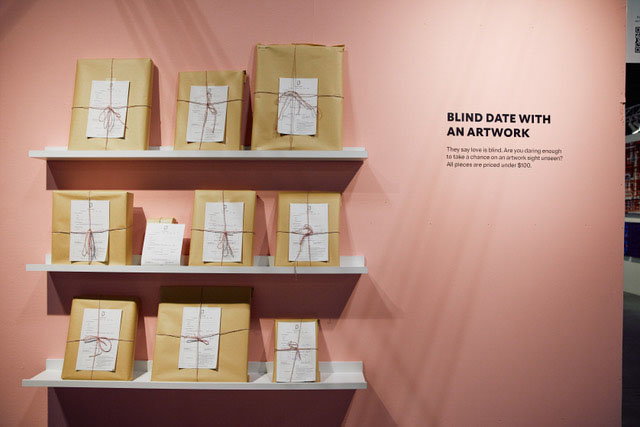
Artworks concealed from view for Blind Date with an Artwork

Courtesy of The Other Art Fair.

For the adventurous, Blind Date with an Artwork is a particularly popular attraction that offers the chance to buy artwork sight unseen. In that special exhibit all artworks are wrapped and concealed from view; buyers only get a few clues about the contents before they purchase. Garton says the experience is a fun departure from the concept that one should only buy what they love.

“I think the joy of discovery and surprise is also a factor that some people enjoy,” Garton says.

“Once you’ve seen a lot of art you think ‘Okay. I’ve kind of seen it all,’” she adds of her own experience. “But that’s never the case. My eyes are continually opened to people innovating in new ways.’”

The Other Art Fair. October 1-4. Enspire Mercantile in Grant Park, 259 Milton Avenue SE, Atlanta. Thursday’s opening night tickets are $55. Friday-Sunday tickets are $20. Tickets can be purchased at theotherartfair.com/atlanta/tickets/.


The Atlanta Art Fair is putting the city on the global art map

0
Atlanta Art Fair at Pullman Yards
Atlanta Art Fair has made its home at Pullman Yards

Courtesy of AMP

If last year’s event is any indication, the 2026 Atlanta Art Fair will be a weekend to remember. Held from October 1 to 4 at Pullman Yards in Kirkwood, the fair hosts contemporary art galleries from across metro Atlanta, the Southeast, and beyond. Inside their booths, these galleries sell works from hundreds of artists around the globe. This is no craft fair: Past events have offered pieces from blue-chip stars such as photographer Nan Goldin and painter Jasper Johns, as well as local heavyweights, including painter Fahamu Pecou and sculptor Curtis Patterson.

“We saw that Atlanta didn’t really have a central gathering space for contemporary art and for art galleries,” says Kelly Freeman, director of Atlanta Art Fair, which is run by Art Market Productions (AMP), a creative-events firm that hosts fairs in other cities, from Seattle to New York. “That was one thing we thought we could bring to the equation.”

AMP launched Atlanta Art Fair in 2024. More than 12,000 people packed Pullman Yards for the inaugural event, which grew the following year to 13,500 visitors. “It feels like we’re in this really special groove coming into year three,” Freeman says.

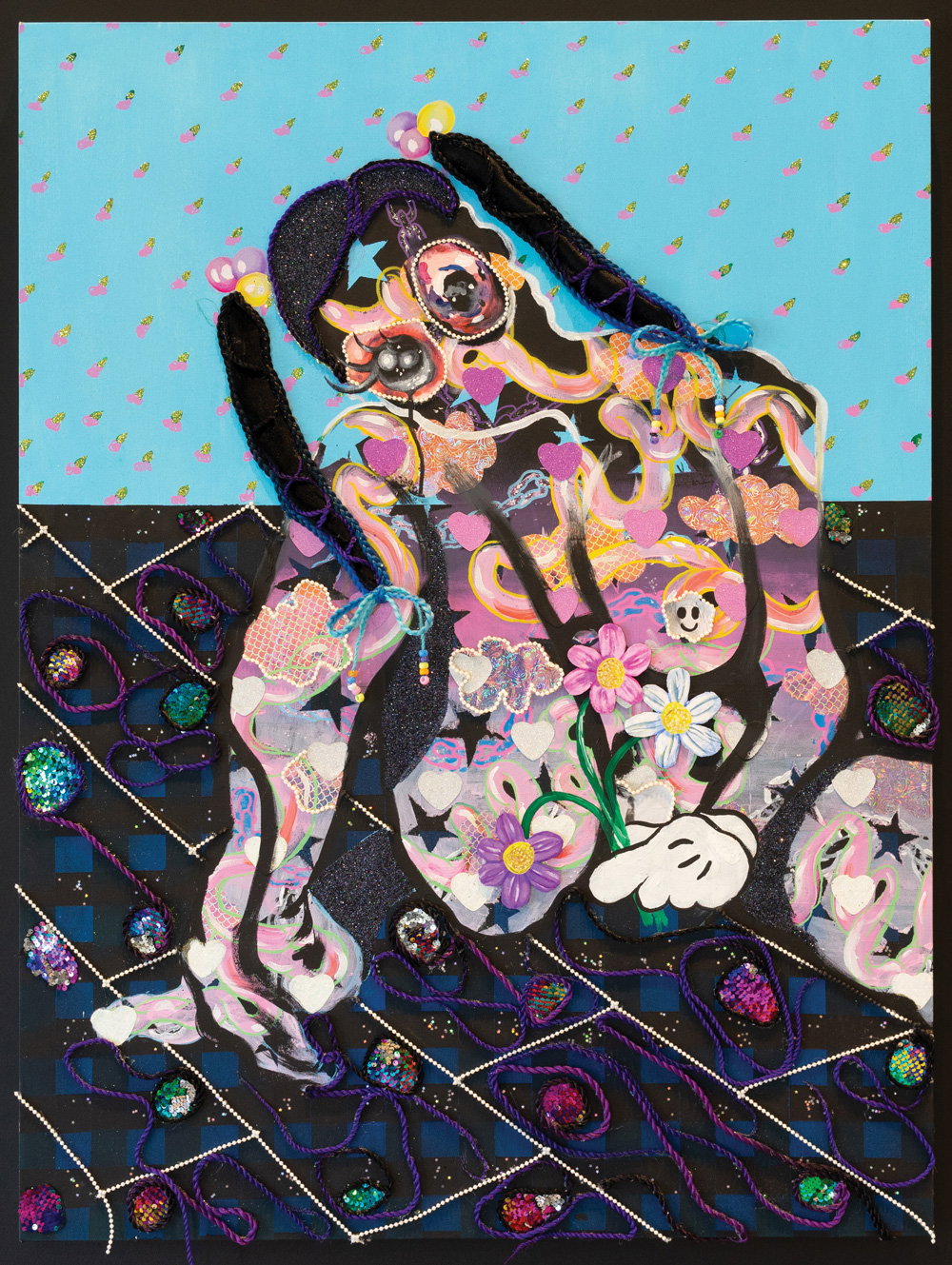
Victoria Dugger's mixed medium artwork, Out of the Woodwork
Georgia-based mixed-media artist Victoria Dugger will display her works, including Out of the Woodwork, in this year’s special regional exhibition

Courtesy of Victoria Dugger and Sargent’s Daughters

For the arts community, Atlanta Art Fair—the city’s first such fair at this scale—offers not only an opportunity for artists and galleries to sell their works, but also a place for the entire art scene to commune. “An art fair does what many marketplaces do: It brings everybody together, allows them to jostle up against one another,” says Sarah Higgins, executive and artistic director of the local arts publications Art Papers, who has helped to curate the fair’s programming since its first year. “It becomes a town center for the arts in Atlanta.”

Mixed media artist, Victoria Dugger
Victoria Dugger

Courtesy of Victoria Dugger

This year’s iteration leans into Atlanta’s global connections while celebrating the city’s American South roots. A “Global South in the South” section will showcase several African galleries, and East Point–based Tila Studios is showing work that emerged out of an artist residency in Portugal. On the local end, Higgins is curating a special exhibition exploring cultural critique through absurdism, featuring three Georgia-based artists. Among them is Victoria Dugger, a mixed-media artist out of Athens whose work explores themes such as disability and Black womanhood. Dugger often travels to New York, where she’s represented by a gallery, but she says opportunities like Atlanta Art Fair help build a foundation for Southern artists to bloom where they already are.

“To have an art fair that wants to nurture the art community here and uplift artists in the South,” Dugger says, “that’s extremely exciting.” 

This article appears in our September 2026 issue.

Editor’s Journal: The day I dropped my daughter at kindergarten—and found my community

0

School building exterior with kids and teachers

I’ve lived in Brookhaven since 2004, but I wasn’t really part of the community until my daughter, Greer, joined Ashford Park Elementary School in 2015. Ashford Park is a one-story, circa-1960s DeKalb County public school tucked into a leafy residential area. To accommodate its 700-plus students, it’s surrounded by trailers (which the staff wryly refers to as “cottages.”) It looks like a lot of other public schools. And maybe it is like a lot of other public schools. But to me, it’s much more.

I was not okay when I dropped Greer off for her first day of kindergarten. Not okay at all. I thought we were supposed to use the carpool line; I somehow missed the memo that kindergarten parents all walk their children into the classroom on day one. So, I pulled my car up, a mask of stoicism on my face, and bid my daughter farewell, trying not to cry as she got out of the back seat. Then I pulled around the corner and saw all the good kindergarten parents holding their kids’ hands, walking them in. It took everything in me not to park and run in behind them and start calling for my daughter, whom I pictured wandering the halls, utterly lost.

She rode the bus home that afternoon, and I waited at the stop, my chest whirring. I’ll never forget that big yellow bus showing up, the door creaking open, and my pint-sized daughter descending its stairs. On her face was a toothy smile. She’d had, she told me, the best day.

God bless that school.

I decided to jump in at Ashford Park Elementary. All the way in. I joined the school council and successfully pushed for the construction of a new school crossing. I organized cleanup days and chaperoned field trips to the zoo. I got to know the staff: Nurse Wedderburn, with her cornflower-blue eyes and calm demeanor; Mrs. K, who kept the library crisp and organized.

Over time, the houses I’d driven past for years turned into something else: The gray one with the large front porch became Hutson’s home, and the two-story stucco one was where Collins and Avery lived. Moms’ Nights Out led to book clubs and Bible studies and birthday trips and real friendships. One day at the grocery store, I realized I knew almost everyone I passed in the aisles.

When Covid hit, our school community mobilized as a tribe. We organized food drives for kids who depended on school lunches. We formed “pods” of families who rotated the responsibilities of chaperoning virtual school. At night, we’d sit on lawn chairs in someone’s driveway, crack open beers, and laugh at the absurdity of watching our kids do burpees in our living rooms during virtual PE.

Both my kids are teenagers now, and our Ashford Park days are over. But last week, I had dinner with a group of the moms I met during that time. We’re all still neighbors, still friends, still a community. It just took the school to bring us together.

I hope you enjoy this special Neighborhoods issue. In it, we really tried to focus on some of the fast-growing Atlanta areas where people do more than live—they bond. From Chamblee’s artsy enclave to the diverse suburbs of Johns Creek, these are places where people truly lay down roots. As I learned myself, an address doesn’t make you part of a community. Relationships do.

This article appears in our September 2026 issue.

An electric—very electric—Shaky Knees

0
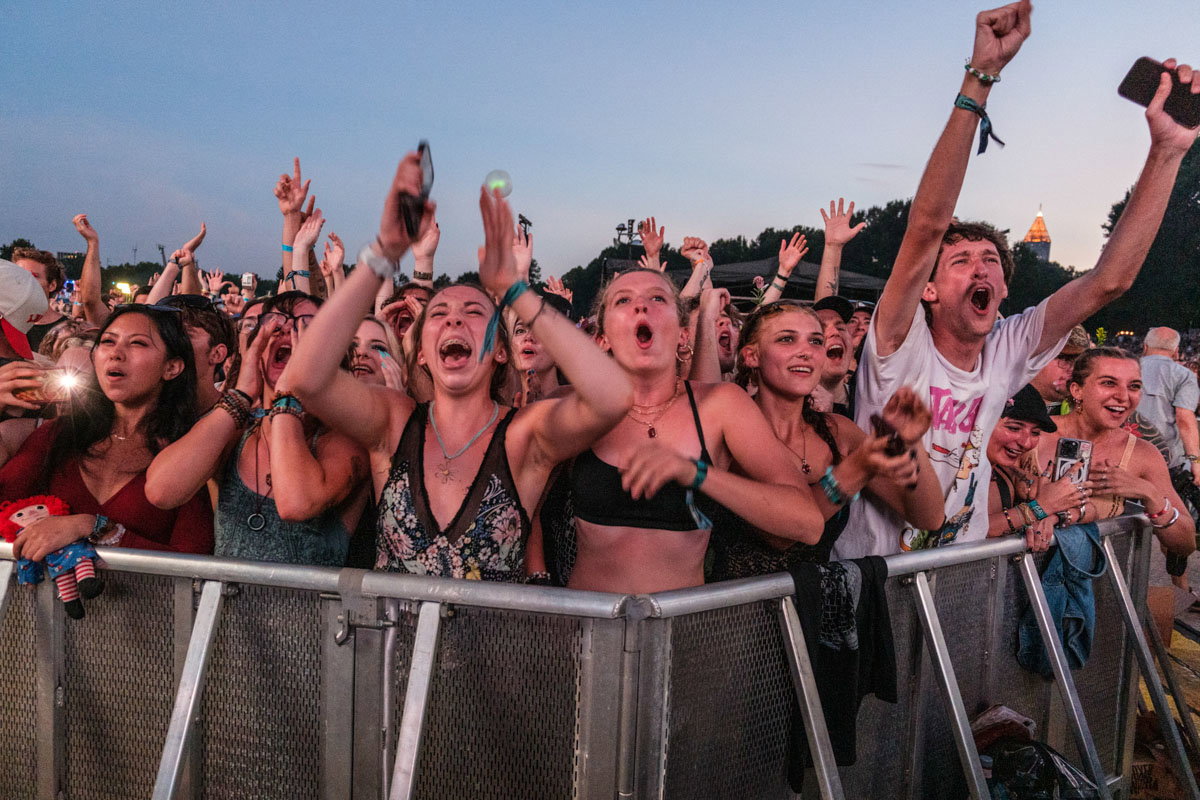
The Shaky Knees crowd on Sunday night in Piedmont Park.

Perry Julien

By now, Shaky Knees devotees know to plan for any weather. Over the last 13 years, the three-day music festival has gone on under skies balmy, stormy, and everything in between. In fact, one might argue you haven’t really done Shaky Knees properly until you’ve huddled under a rapidly failing plastic poncho with a friend or stranger, both of you determined to see a favorite band perform, even as your socks fill with water.

This year, on Saturday night, Mother Nature put to the test both the enthusiasm of fans and the emergency preparedness of festival organizers with an absolute bonanza of a thunderstorm, which dumped buckets of rain across metro Atlanta, in addition to lightning, wind speeds reaching more than 60 mph and, in some places, even hail. The storm forced festival organizers to temporarily evacuate the park, escorting thousands to the exits while waiting for the bad weather to pass.

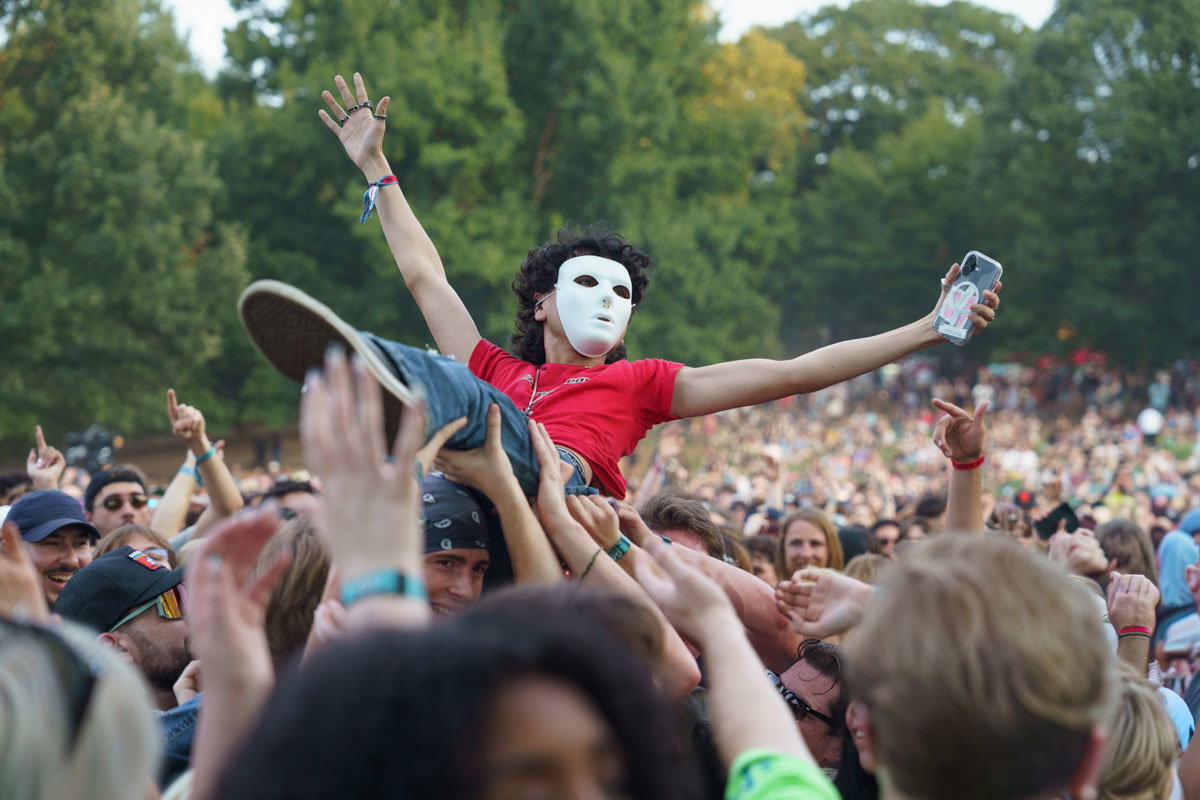
A concertgoer crowdsurfs at the 2026 Shaky Knees music festival in Piedmont Park.

Perry Julien

Luckily, no one was hurt, and by 9:20, the gates had reopened, in time for headliner Twenty One Pilots to close out the night. By the time everyone returned on Sunday, spirits were high again, and the only vestiges of the previous evening’s mayhem were some slick tracks of mud and overheard tales from attendees boasting of the crazy hijinks they’d gotten up to during the festival interlude.

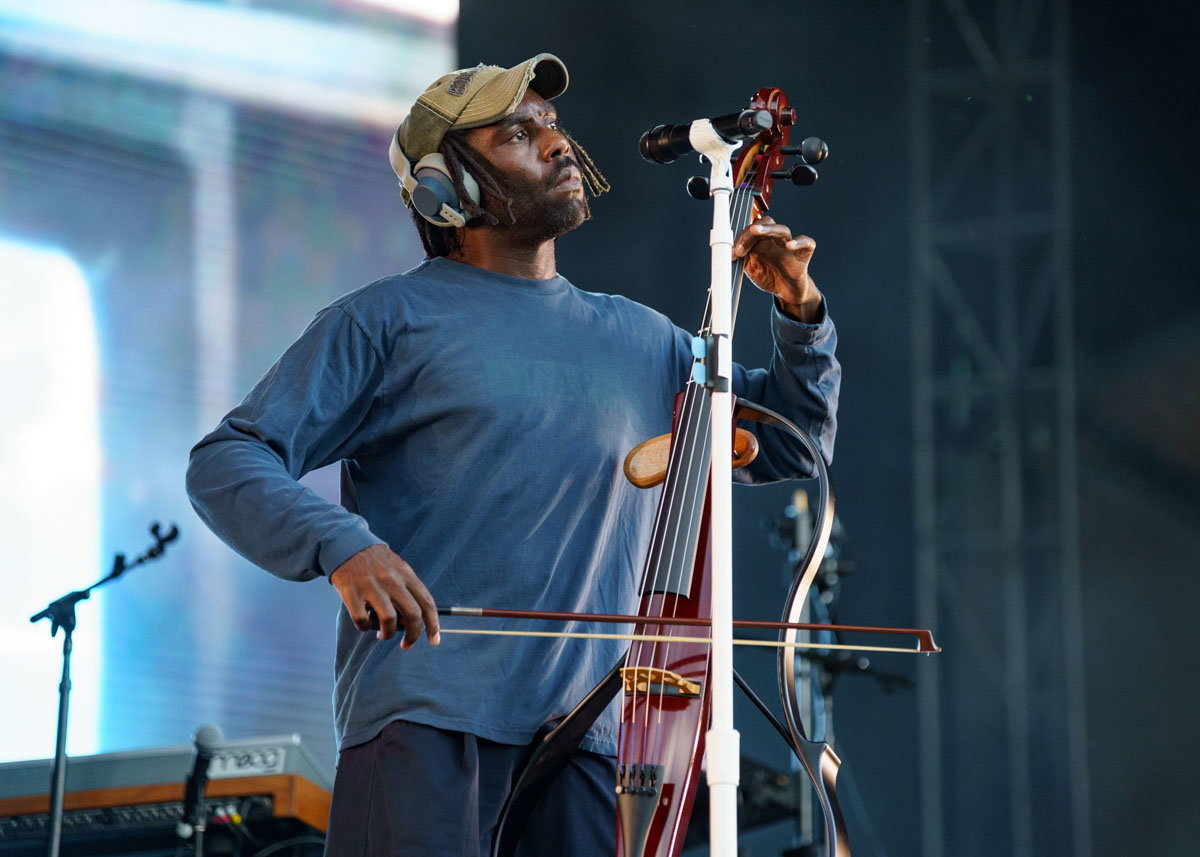
As usual, Atlanta’s team was there to take photos, observe the crowds—and, of course, enjoy three nights of great music. Here’s some of what we saw at the 13th annual Shaky Knees. 

Friday

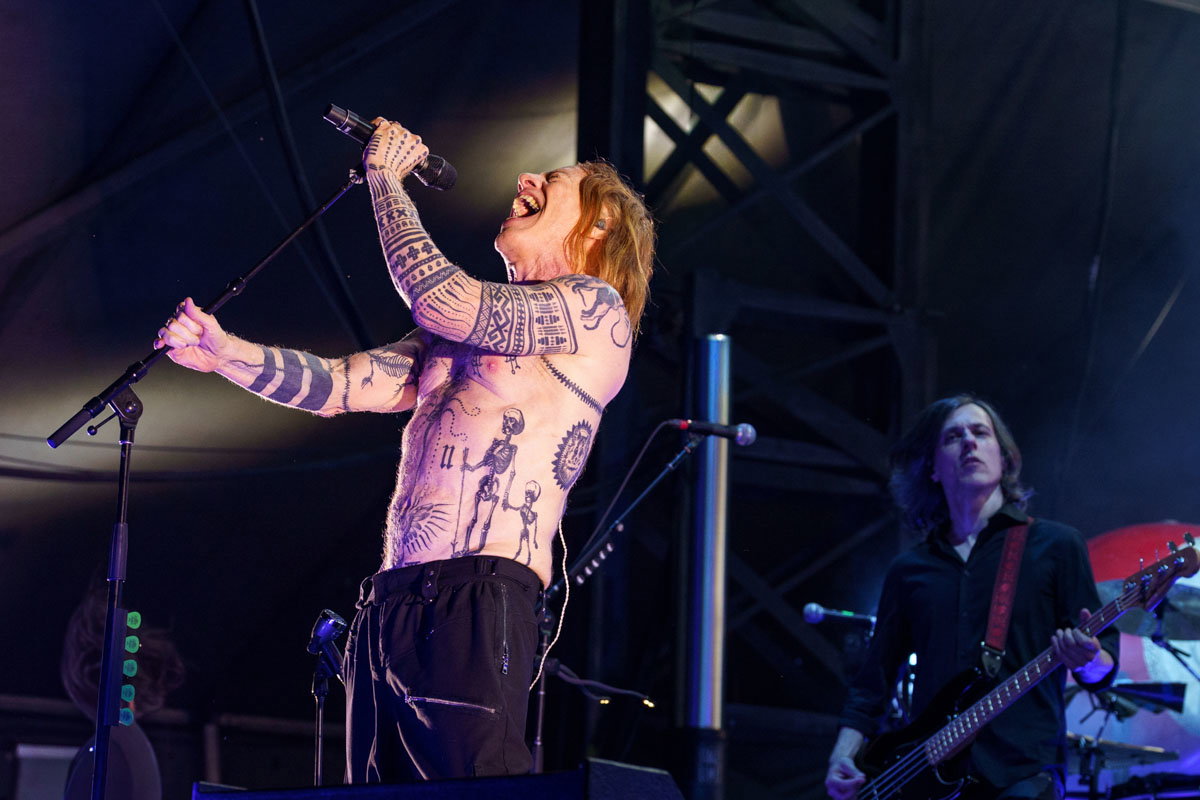
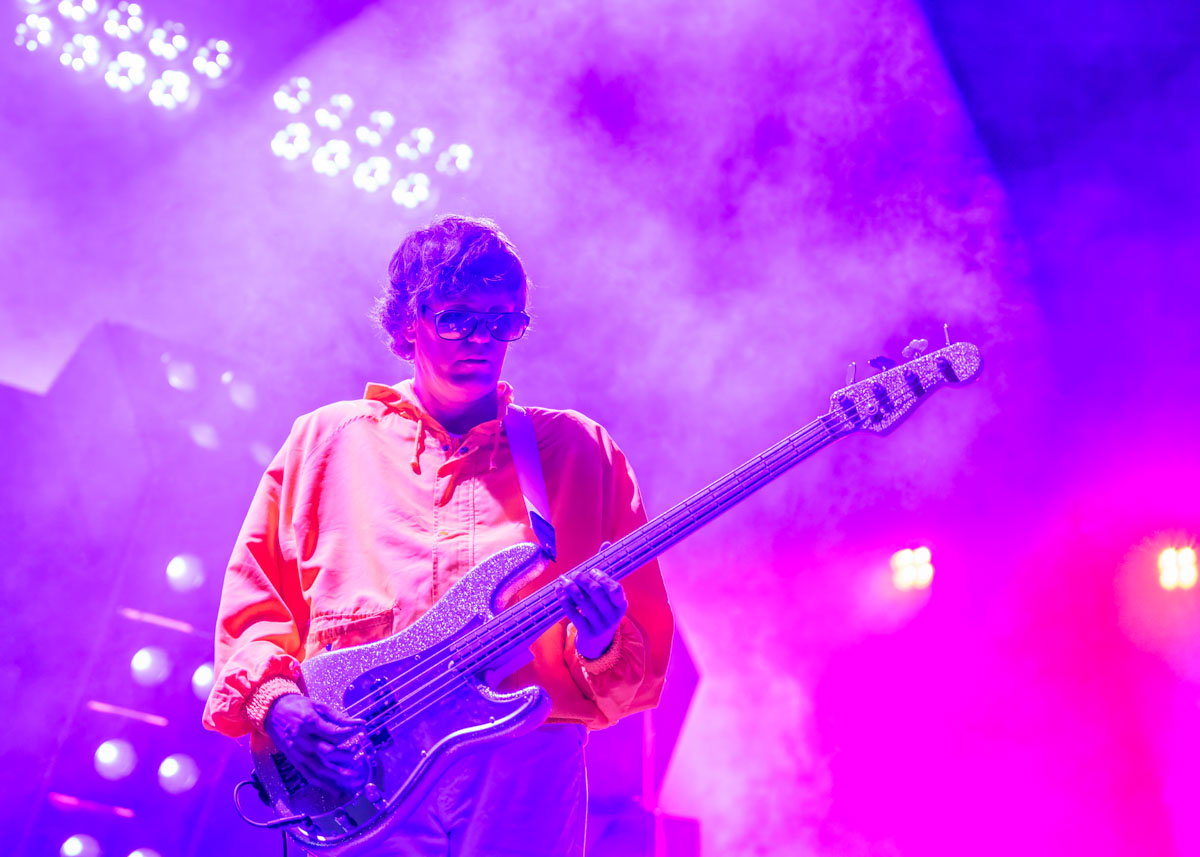
The sun was shining but the weather was scorching when Shaky Knees opened on Friday afternoon. A sizable crowd—if heavy on the indie dads—amassed for Gen-Z rockers Geese, which lit up the Piedmont Stage with popular tracks “2122” and “Crusades.” Over on Ponce De Leon Stage, curious attendees flocked to see Danny Elfman, unsure what to expect from the film composer known for his many Tim Burton collaborations. To the surprise of at least one attendee—but likely many more—Elfman, who is 73, appeared shirtless, bearing a mural of tattoos and a six-pack, to deliver a glam-metal performance featuring screaming electric guitars, a string ensemble, and a chorus of discordant vocalists. It was a solid rock show in its own right, by Elfman made time for some cinematic flair, including an orchestral performance of the Simpsons theme song (perhaps to go with his flame orange-dyed hair) and “This is Halloween” from his Burton collaboration, A Nightmare Before Christmas.

Danny Elfman, 73, not looking his age as he delivered a glam-metal performance on Friday at Shaky Knees.

Perry Julien


At the end of the night, The Strokes gathered most of the day’s attendees together at the Peachtree Stage for a rip-roaring closing act. The consummate indie rock band of the early 2000s, the Strokes, led by a still-crystal clear Julian Casablancas, whipped the crowd into an ebullient frenzy with a string of classics, including “Reptilia,” “Last Nite” and “Selfless.” Casablancas took some unexpected, but charming, liberties with the vocals on “The Adults Are Talking,” and the band skipped an encore due to sound issues, a problem that cropped up during several sets this weekend. Nevertheless, the crowds left tired, sweaty, and happy, ready to return to Piedmont Park the next day.


The Strokes closed out the first night of Shaky Knees festival on Friday.

Perry Julien

Saturday

Weather was the headline for Day Two of Shaky Knees. The day started in sweltering temperatures, reaching the mid 90s in the afternoon with a heat index of 100 degrees. Fans mostly kept to the shade and sat on the hillside of Piedmont Park’s Meadow to take in early performers like the Australian indie rock band Rum Jungle and 2000s favorite Minus the Bear for the end of their 20th anniversary tour. In the evening, stages began to swell for Congress the Band and Peach Pit, whose frontman Neil Smith told the crowd to soak in a moment of shade as clouds began to form.

Blood Orange on stage Saturday.

Perry Julien

Just before 7 p.m., those clouds would mean evacuation en masse. The next sets of Taking Back Sunday and Blood Orange were interrupted a few songs in, with lightning in the area and directions for fans to step away from metal structures. Lightning gave way to downpour, and Shaky Knees announced a weather evacuation. Fans took shelter anywhere and everywhere, first under park trees and then under porches at homes neighboring the park and businesses like Willy’s and Shake Shack on Piedmont Avenue and Larakin on 12th Avenue. As streets flash-flooded in Midtown, a festival-goer shouted, “Shaky Knees? More like Soaky Knees!”

Communication was limited until shortly before 9 p.m. when Shaky Knees announced the show would go on, no matter how wet and tired. Doors reopened at 9:20 p.m. for Twenty One Pilots to perform until curfew at 11 p.m. (Fans took to social media after the announcement to voice their displeasure of the short notice and a lack of refund for the day.) Twenty One Pilots lead singer Tyler Joseph thanked fans for coming back out after the rain, and the band made the most of it with a punchy set list of hits such as “Stressed Out” and “Trees,” complete with live flames onstage.

Josh Dun, drummer for Twenty One Pilots. The band closed out Saturday night at Shaky Knees following thunderstorm delays and an emergency weather evacuation.

Perry Julien

Sunday

Shaky Knees wrapped up the weekend with a banger lineup of Millennial nostalgia and a few sound issues that detracted, but never derailed, from the show. A hiccup at the beginning of the OK GO set turned into a charming moment of improv, when frontman Damian Kulash switched to an acoustic set for two songs while tech crews fixed a sound glitch, singing “Last Leaf” for the rapt crowd that was close enough to hear him. Over on the Peachtree Stage, Santigold, in a billowy white outfit alongside a similarly stylish, white-clad band and dancers, didn’t blink an eye when staff cut the sound to warn attendees to stop rushing the barricades: she’d brought up audience members to dance onstage for “Creator” and the euphoric vibes of everyone involved were enough to carry everyone until the sound came back on.

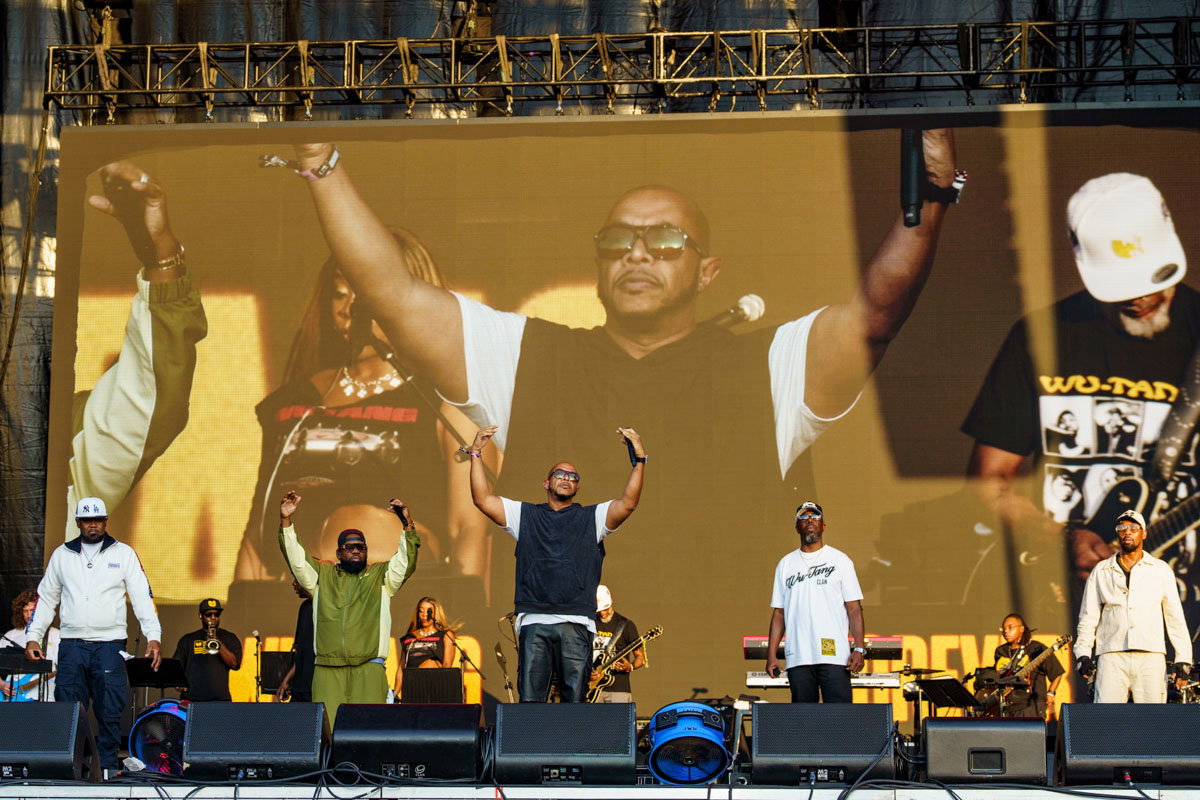
Crowds swelled for stellar back-to-back performances by Modest Mouse and Wu-Tang Clan, and grew to truly epic proportions by the time LCD Soundsystem took the Peachtree Stage around 8 pm. An absolute sea of people offered up vocal accompaniment—with surprising skill—for the Brooklyn rockers’ hits such as “Home” and “Dance Yourself Clean.” Live music rapture had reached its pinnacle with the closing number, “All My Friends,” but was cut devastatingly short when the band’s enthusiastic performance blew out the speakers, cutting off the music at the apex of the song. Crowd and band finished together, undaunted by the technical mishap.

Wu-Tang Clan performed Sunday at the 2026 Shaky Knees music festival in Piedmont Park.

Perry Julien

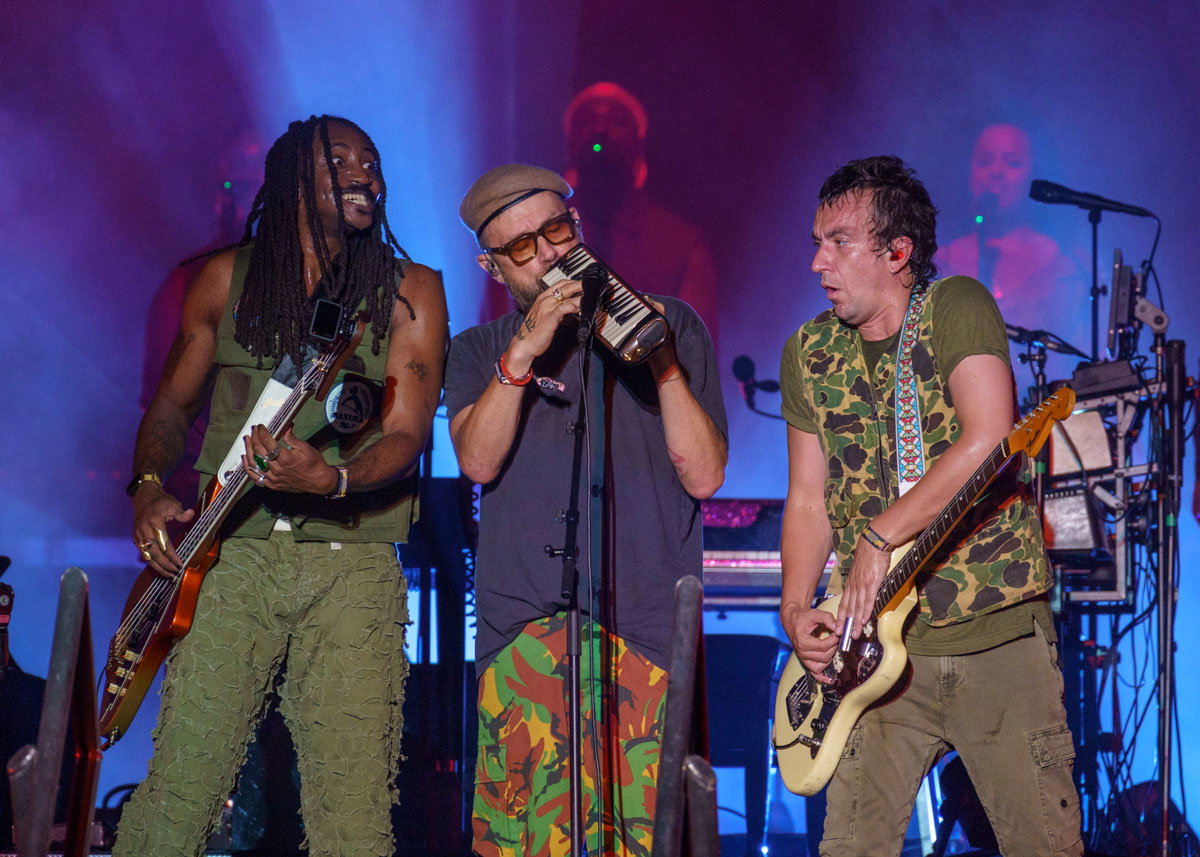
On energy alone, LCD Soundsystem’s high-octane performance could have been a festival-closing headliner, but Gorillaz followed with a multimedia, guest-star-studded show worthy of its top billing. Damon Albarn, the human engine of the four-member digital avatar band, wove together the virtual and the live with projections of his animated musicians appearing behind the in-person band, their signature toothy smirks a familiar sight from their early-aughts heyday.

A string of surprise Atlanta guests joined Albarn onstage, including Earthgang, Bootie Brown, and Kara Jackson. Albarn implored attendees to vote in the midterms—“What happens in America affects everyone,” he noted—before jumping back into the all-senses-engaged performances. He rounded out the night with Gorillaz’s biggest hits, including “Clint Eastwood” and “Feel Good, Inc.” As Shaky Knees drew to a close, the lights from the stage and the roar from the crowd reached into the night sky— lightning and thunder of another kind entirely.

Gorillaz put on one of the most engaging performances of the festival, closing out Sunday night.

Perry Julien

By the Numbers: A century of Atlanta Braves history

0

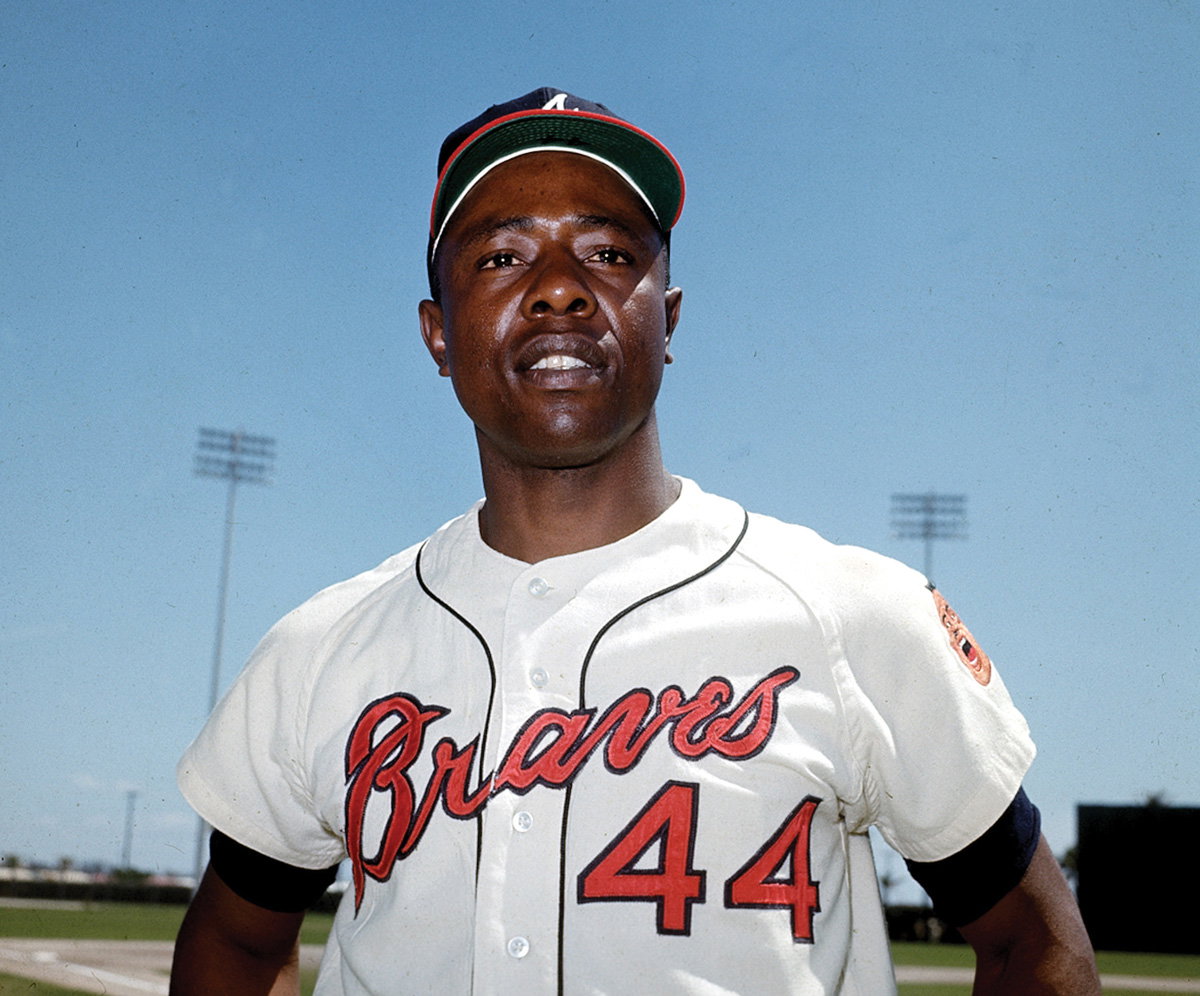
Hank AaronOur beloved Braves are the oldest continuously playing team in American sports and have called Atlanta home since 1966. They became known as “America’s Team” in the 1970s after Ted Turner began broadcasting their games nationwide on TBS. The team has marked the 2020s with four division titles and a World Series win in 2021. As the end of the regular season approaches, here are some numbers offering a glimpse into the storied franchise:

755
Career home runs hit by Hank Aaron, 733 of them in a Braves uniform—the most in franchise history.

illustration of a baseball holding a beer130,000
gallons of beer served at Truist Park each season, alongside nearly 1 million hot dogs and 76,000 pounds of brisket.

9
Major redesigns of the Braves’ primary on-field uniform, which has shifted from its “Boston”-emblazoned original (the team started there in 1912), to today’s button-down jersey with a red tomahawk across the chest.

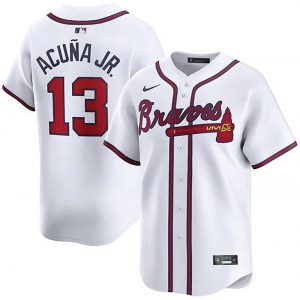
the front and back of the Braves #13 jersey12
Number of retired jersey numbers hanging at Truist Park.
They honor 11 Braves legends, plus Jackie Robinson, whose number 42 was retired across all of Major League Baseball.

13
The number on the Braves’ best-selling jersey this season, worn by Ronald Acuña Jr.

illustration of two tickets with a baseball on them$10 – $15,559
The range of admission prices, spanning from flash-sale tickets to the club’s priciest full season membership, with seats directly behind the Braves’ dugout.

This article appears in our September 2026 issue.

Sixth graders wear scrubs at this new Atlanta charter academy that trains students for healthcare careers

0
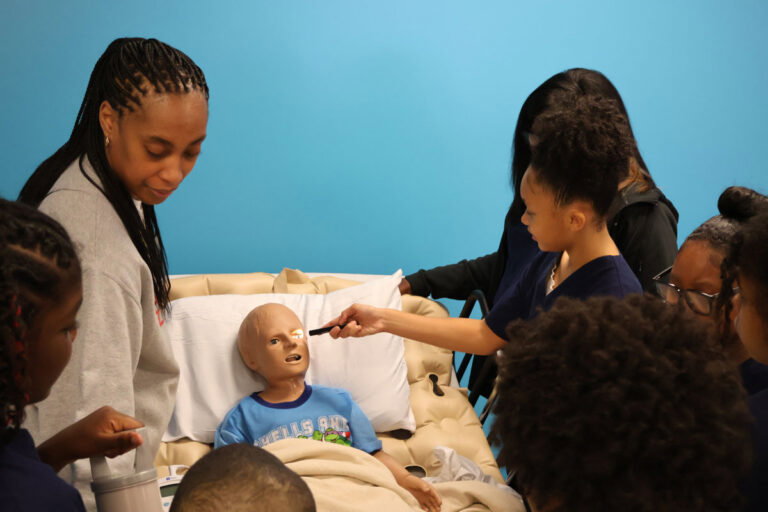
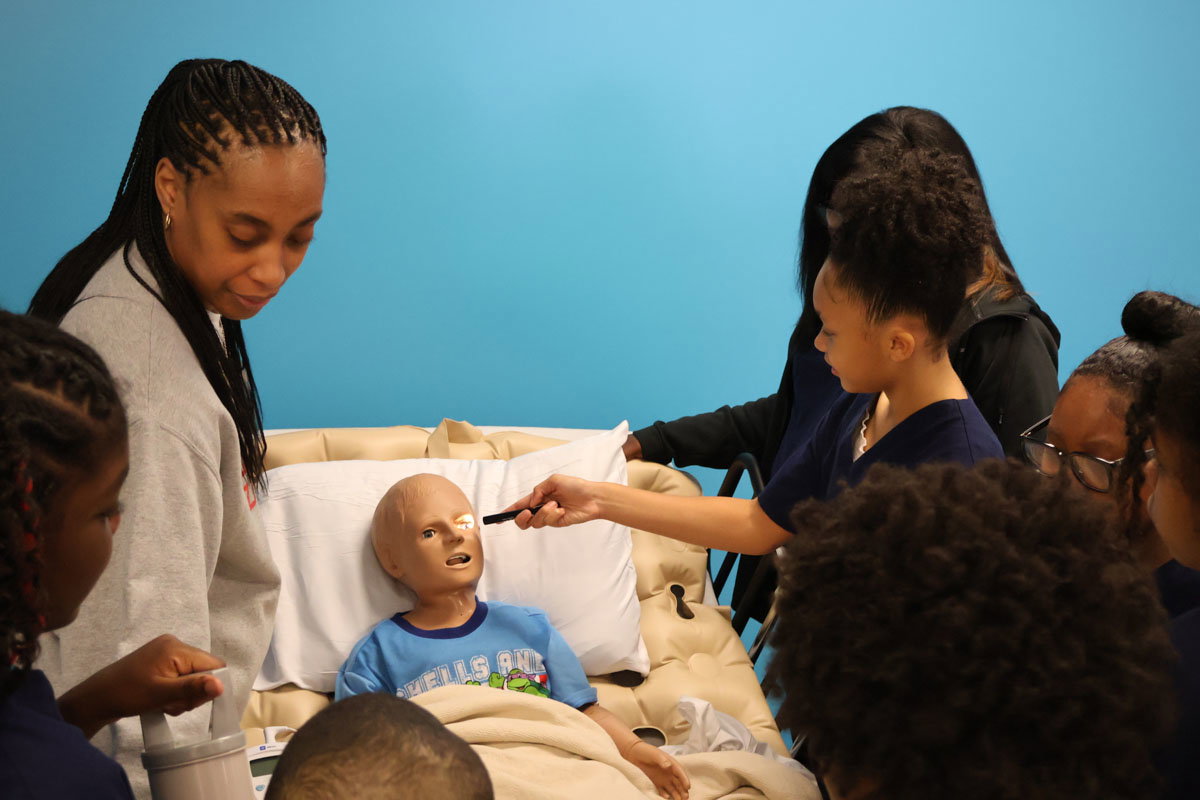
Sixth grade students at the Academy for Innovation in Medicine practice skills on a mannequin. The academy is a new charter school in Lindbergh that trains young people for careers in healthcare.

Courtesy of the Academy for Innovation in Medicine

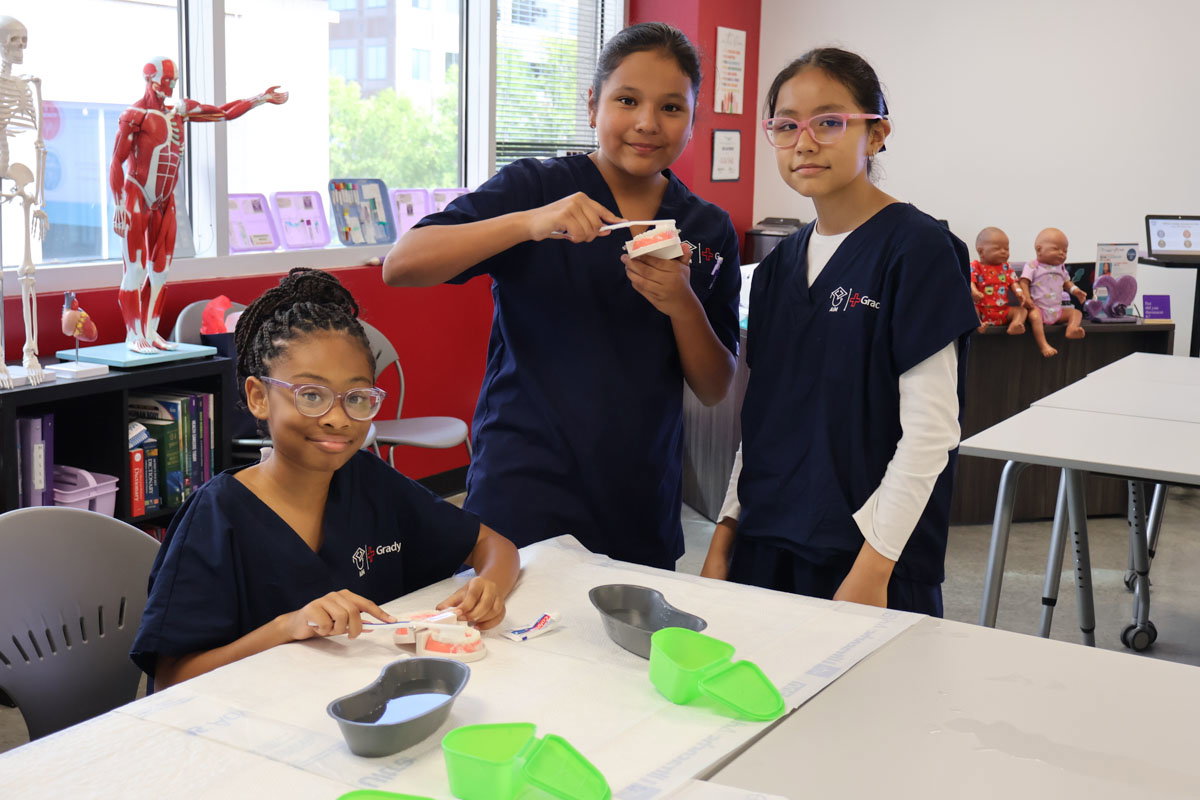
Every Wednesday, sixth-grader Tafari Bradford and his classmates sport a different sort of uniform for school: navy blue medical scrubs embroidered with a Grady Health System logo.

When they arrive at their school—a new Atlanta charter school called the Academy for Innovation in Medicine (AIM), which opened in July and has partnered with Grady—they join Grady staff members visiting to conduct the school’s clinical immersion program. One day, a session might include a deep dive into the Cyclospora parasite outbreak; another, might take students to tour an EMS vehicle.  

“Ever since I’ve been here, there’s things that I’ve been able to build on,” Bradford says of his new school. “I’ve had more access to resources. This is a place where they let you shine.”

As an adolescent, Bradford admits he didn’t even know what medical scrubs were before coming to AIM. Now he’s dressing the part for a potential career. The new school is on a mission to prepare students for healthcare jobs at a time when the industry is experiencing a critical workforce shortage.

“We are missing the boat [if we wait] until high school,” says Dr. Kristy Beam, lead founder of AIM, which she notes is trying to reach students earlier and touts a curriculum focused on science, technology, engineering, mathematics, and medicine (STEMM).

Students wearing scrubs at the Academy for Innovation in Medicine, which opened in July and is still enrolling new students.

Courtesy of the Academy for Innovation in Medicine

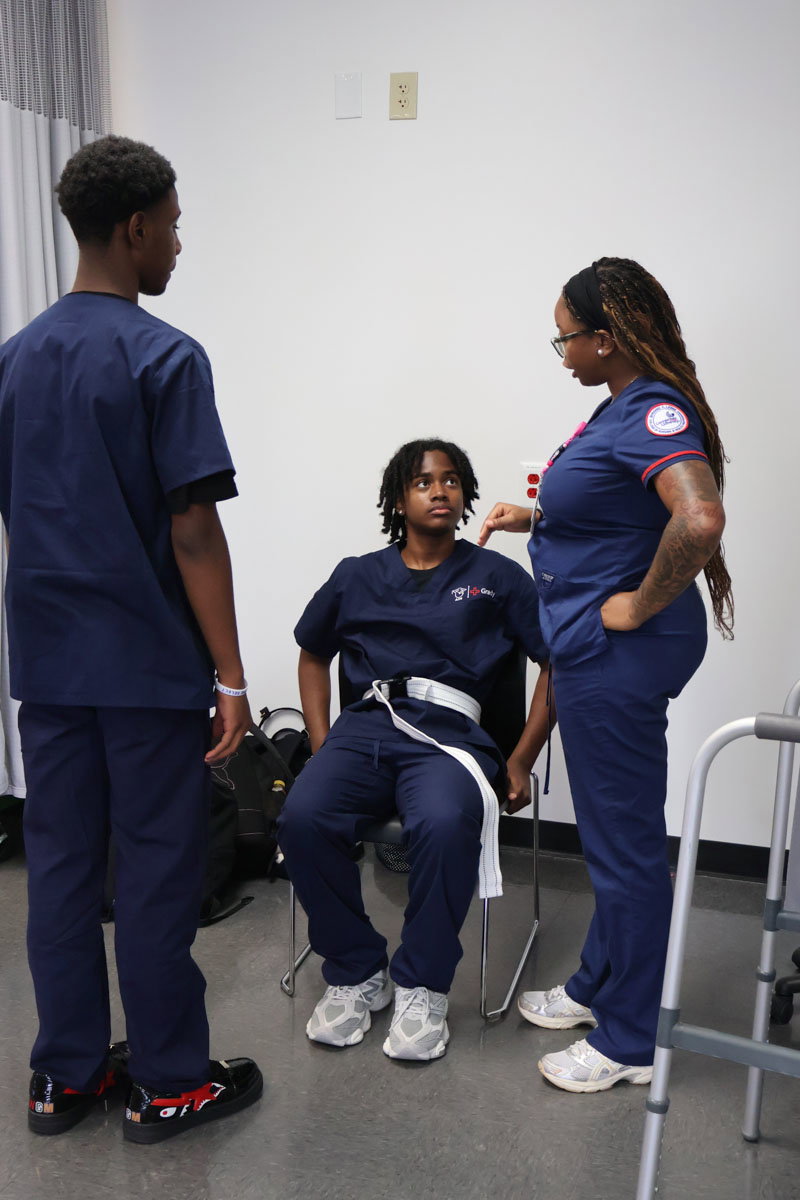
In its inaugural year, the school is starting with sixth and ninth graders. It will likely expand to include grades 6-12. The coursework is aligned with the Georgia Standards of Excellence, but with a health and science twist. For example, a social studies lesson on genealogy connects an individual’s lineage to their personal health outcomes. Students gain hands-on experience in simulation labs, and paid healthcare internships.  

“You’re seeing mannequins … You’re seeing [students] role play,” explains Lauren Wright, the director of health education and career pathways at Grady.  “You’re seeing them actually use the things that we are teaching them.”

AIM’s partnership with Grady was a “no-brainer,” Wright says, given the workforce shortage and Grady’s role as a teaching hospital. Staff visit AIM weekly. Some hospital employees have even enrolled their own children.

“Grady is not just a logo on a sheet of paper,” Wright explains. “We are embedded into the curriculum.”

The collaboration also influences the school’s career pathways. Emergency medicine, radiology, pharmacy, and nursing were all chosen based on critical need. Federal data predicts Georgia will have one of the nation’s worst nursing shortages by 2038.

Ninth graders at the Academy for Innovation in Medicine participate in a class to help them prepare for careers in healthcare.

Courtesy of the Academy for Innovation in Medicine

AIM students earn their high school diploma, but can also pursue an associate’s degree and other certifications. The program exposes students to a wide range of careers with average salaries starting at roughly $50,000.  

“We have a lot of very high performing, very bright students who come in saying, ‘You know, I want to go to Harvard Medical School.’ Great. We’re going to get them on the track and do everything we can to get them there,” Beam says. “However, we have a number of students as well that are struggling. The idea of leaving high school work-ready … and being able to make a living wage is huge.”

With that in mind, equitable access to the school is key. The program is tuition-free and located on Piedmont Road, a block from the Lindbergh MARTA station. Enrollment is ongoing and open to students in the city of Atlanta, along with Clayton, Cobb, Dekalb, and Fulton counties (Henry and Gwinnett may be added next year).

Supported by groups like education nonprofit RedefinED Atlanta, and Bloomberg Philanthropies, the school is also part of a cohort of more than a dozen healthcare-focused schools across the country, which Beam says routinely meet to share ideas.

“The challenge of starting from scratch is incredible,” Beam says of AIM’s launch. “But it’s been just so wonderful and rewarding to see the children in the building, to see it coming to life.”

6 Atlanta Neighborhoods Where Community is Key: Johns Creek

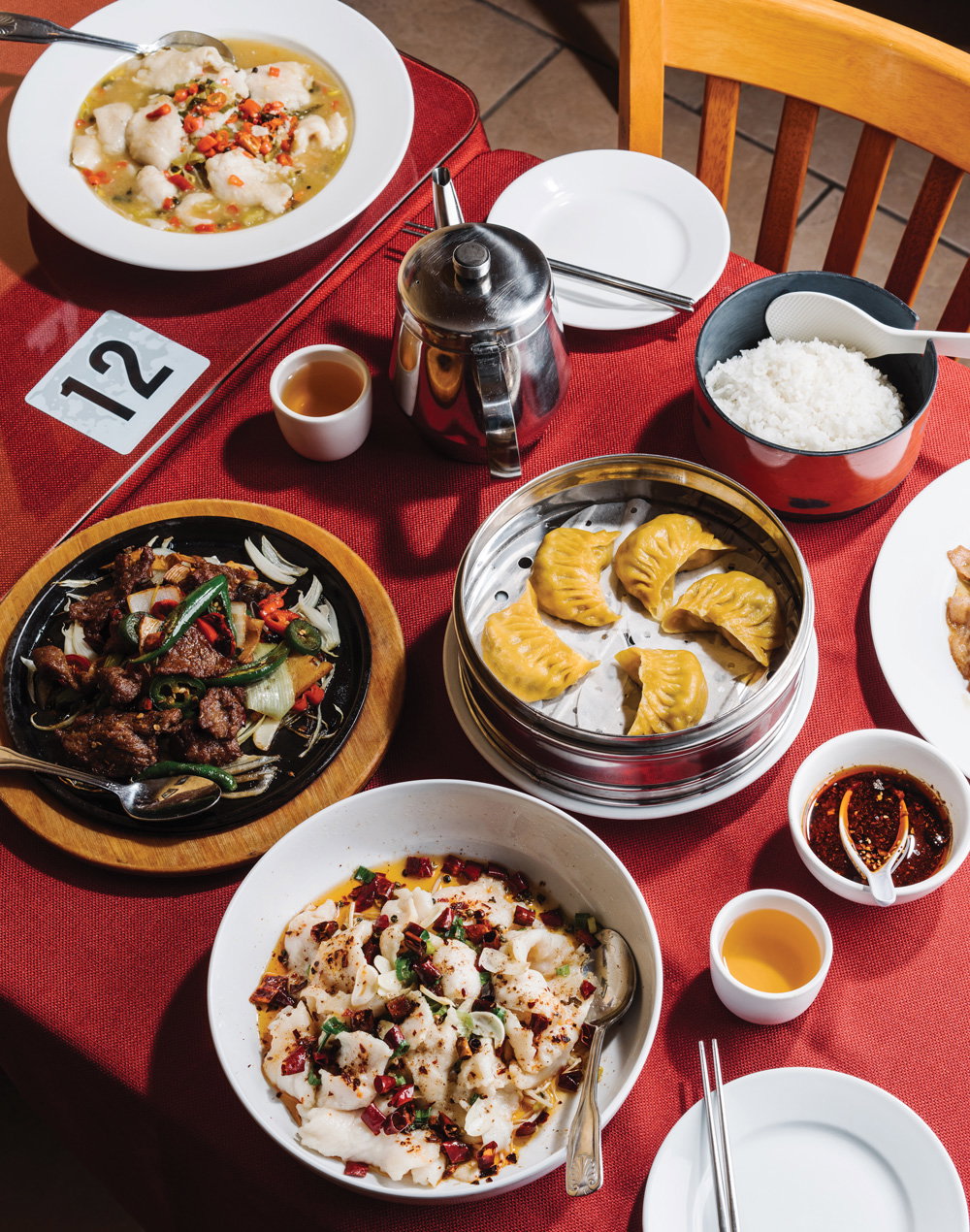
dishes from local chinese cuisine restaurant, Materpiece, arranged on a red table
Masterpiece

Photograph by Andrew Thomas Lee

Johns Creek has achieved a lot in the 20 years since it was incorporated as its own city. Travel + Leisure named it America’s best suburb in 2024, and for the past two years, U.S. News & World Report has declared the city one of the best places to live in the country, citing, among other perks, low crime rates and high-performing schools. 

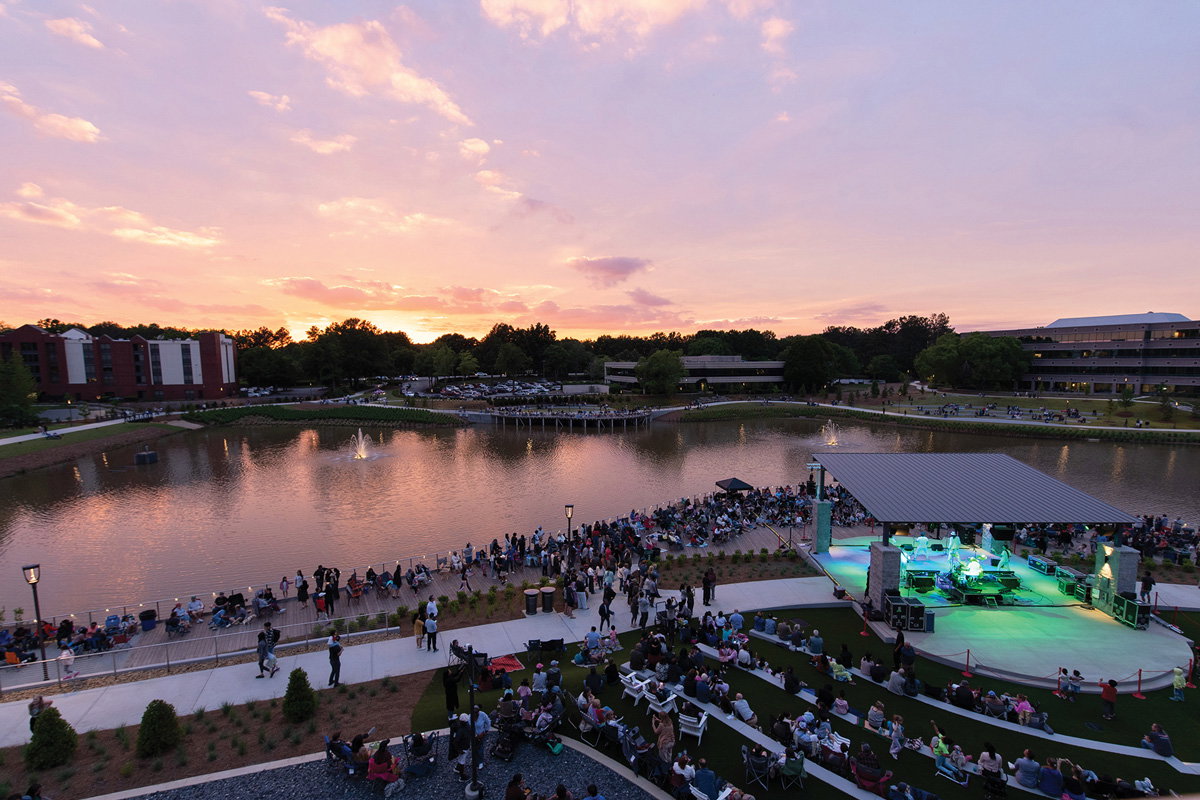
A swath of North Fulton about 30 miles north of Atlanta, Johns Creek boasts nine city parks, its own symphony orchestra, a hospital, and plenty of restaurants and shops. The community is culturally diverse, with half its residents identifying as non-White. There’s also diversity of cuisine: Two Michelin-recommended spots, Hen Mother Cookhouse (Southern comfort fare) and Masterpiece (Chinese cuisine), call Johns Creek home, alongside several Mediterranean grills, Korean fried-chicken joints, and Indian restaurants. Japanophiles flock to Johns Creek for the metro area’s only Kinokuniya bookstore and the popular Japanese dollar store, Daiso.

Even the dog park has earned national accolades: Newtown Dream Dog Park, which has artificial turf and a doggy splash pad, was named a USA Today reader’s choice favorite in 2024. 

Boardwalk at Town Center

Photograph by the City of Johns Creek

Why it’s hopping:
Johns Creek had long lacked a centralized “third space” for dining, relaxing, and celebrating, along the lines of Avalon in Alpharetta or Halcyon in South Forsyth. That’s changing: In October, the first stage of Medley, a 42-acre mixed-use development from Avalon developer Mark Toro, will open at the heart of a wider Johns Creek Town Center area that will serve as the city’s downtown. In addition to apartments, townhomes, and a hotel, Medley will be home to shops and restaurants; a coveted Trader Joe’s has already opened in the complex.

Over the summer, the Boardwalk at Town Center, a new park and amphitheater outside city hall, launched with a massive Fourth of July celebration that might be Johns Creek Mayor John Bradberry’s proudest achievement to date. “You [could] just feel the community spirit and the sense of belonging,” he says of the event. “And that’s not an easy thing to do when a city like Johns Creek was born out of thin air.”

headshot photograph of Sree Shama
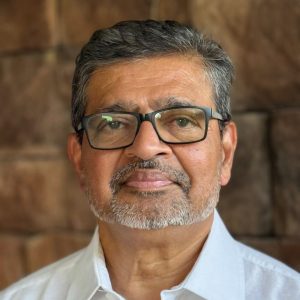
Sree Shama

Courtesy of Sree Shama

Who calls it home:
David Ahmadi, general manager at Six Bridges Brewing in Town Center, says new developments have breathed more energy into Johns Creek than the city had when he moved here in 2003. Previously, residents stuck with their subdivisions and mingled only at school events. “Now, there’s just more opportunity for people [of different backgrounds] to get together,” he says. “And the more cross-pollination you have, the stronger we get.” 

“Our community is an awesome community,” says Sree Shama, who has lived in the area since 2001. Like Ahmadi, he cites the city’s diversity as a major strength, noting that whenever he goes to the grocery store, “I get to see people of all different countries or origins, and we all seem to be having fun.” 

How the community gathers:
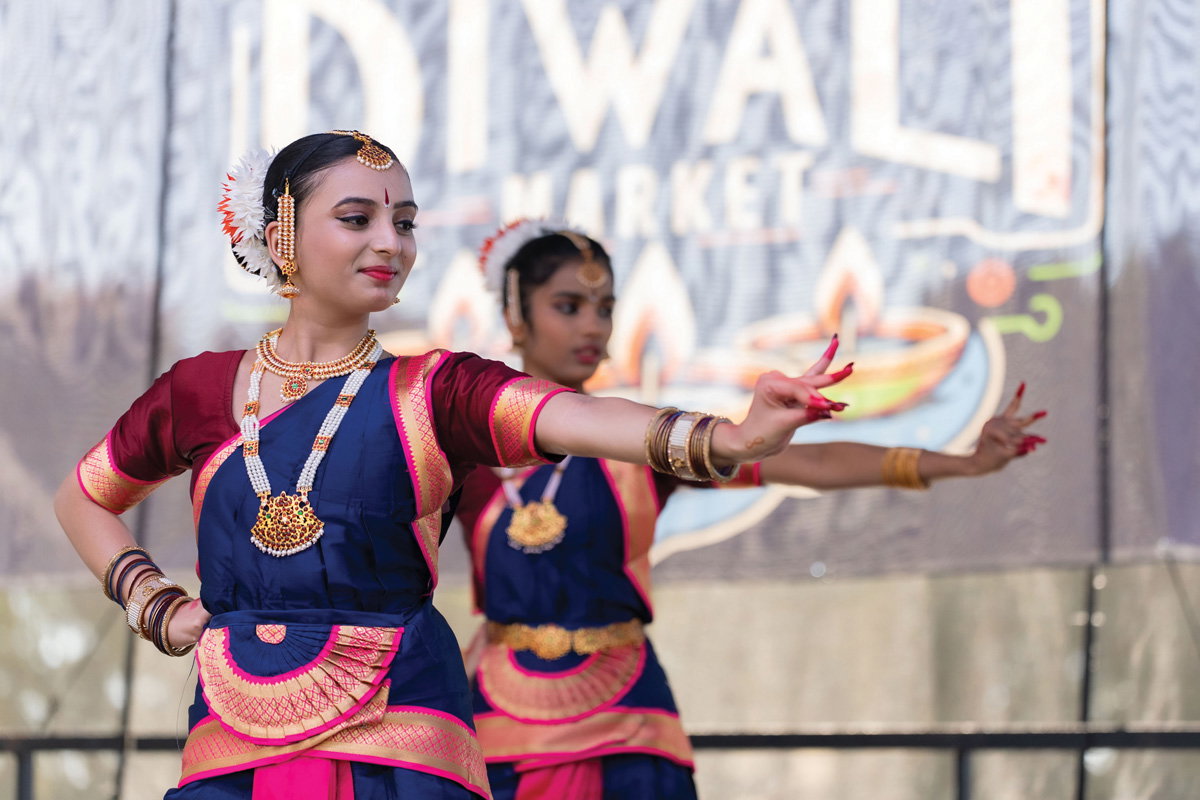
The city’s celebrations reflect the wide range of people who call it home. In 2022, Johns Creek became the first city in Georgia to sponsor a Diwali festival; the Hindu festival of lights has become so popular, the city has had to scale it back to prevent congestion nightmares. 

This year’s Diwali Celebration takes place in November. Plans are still taking shape, but last year’s festival featured the Diwali Market with dozens of crafts vendors, as well as food trucks and performances from local Indian dance schools. Shama, who is on the Diwali Market’s planning committee, says he’s grateful that city leaders embrace diversity as one of Johns Creek’s biggest strengths. Other popular festivals include Daffodil Days in the spring, which draws families with carnival rides and games, as well as the annual Lunar New Year celebration in February and the International Festival in May.


Diwali celebration in Johns Creeks
Diwali Celebration

Photograph by the City of Johns Creek

Diwali Celebration

Date: Saturday, November 7
Cost: Free
Location: The Boardwalk at Town Center
Good to know: Make time to explore the new one-mile elevated trail that winds through trees and wetlands near the Boardwalk.


Atlanta Real Estate at a Glance

  • Average single-family home price in Buckhead: $1.8 million.
  • Current list price of former Atlanta Falcons quarterback Kirk Cousins’s Johns Creek estate: $2.99 million.
  • In Atlanta’s luxury market, suburban demand outpaces urban demand 2:1.
  • One of the most expensive homes sold in the metro area this year was in Sandy Springs: a $9.75 million stunner with a pickleball court, a sports field, and a putting green.
  • Also in Sandy Springs, actor Josh Brolin’s house is on the market. The price was recently reduced 5 percent, to $4.75 million.

This article appears in our September 2026 issue.

6 Atlanta Neighborhoods Where Community is Key: Hapeville

0
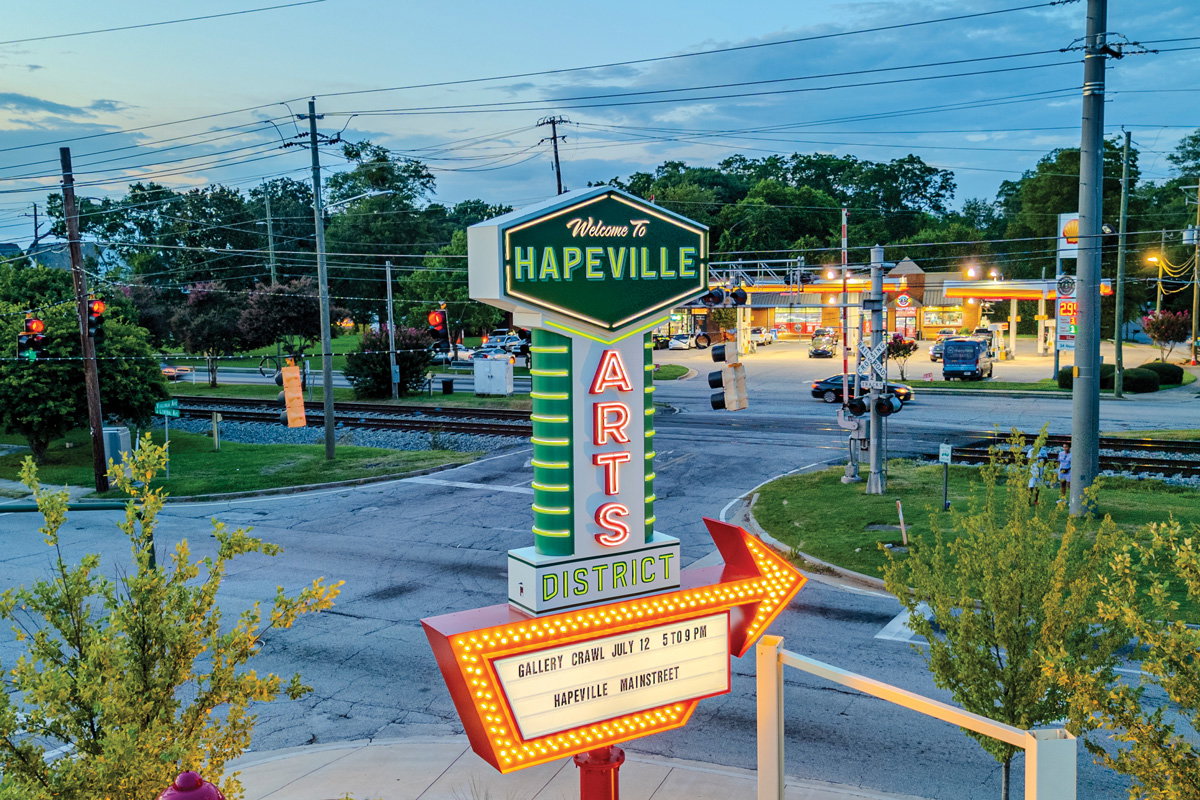
Hapeville Arts District

Courtesy of City of Hapeville

Seven miles south of downtown, and bordering Hartsfield-Jackson Atlanta International Airport, lies Hapeville. Part of the Tri-Cities area, Hapeville is home to Delta Air Lines’ headquarters and flight museum and to Porsche Cars North America, whose driver-development track adds the occasional rev to the city’s soundtrack. It is also famously the birthplace of the Chick-fil-A sandwich, first served at Hapeville’s Dwarf House in 1946.

Hapeville was incorporated as a city in 1891, a time when railways defined the region. Along North Central and South Central avenues, railroad tracks run down the center of the historic commercial district; the tracks follow the Hightower (Etowah) Trail used by the Muscogee (Creek) Nation.

A must-see stop along the tracks is the Hapeville Depot Museum. The quaint warehouse, which dates to 1890, is filled with historic exhibits and artifacts, including old uniforms and hard hats and even recorded oral-history interviews with workers at the former Ford Motor Assembly Plant. You’ll also find an Atlanta Speedway pennant commemorating Coca-Cola heir Asa Candler Jr.’s failed racetrack nearby.

Why it’s hopping:
Hapeville residents embrace its thriving arts scene and eclectic dining options. Tight-knit neighbors gather to chat about civic matters and art installations as much as the weather, a lost hound, or an ornery rooster.

The established residential area is still home to a handful of fourth-generation Hapevillians who remember when the I-75 and I-85 interstates were new. It consists of early-1900s bungalows, historic cottages, and midcentury brick ranch homes. More modern construction includes Craftsman-inspired dwellings. The downtown area, listed on the National Register of Historic Places, is characterized by classic commercial brick structures, including the block that’s home to 100-year-old pharmacy Chapman Drug Company. 

Several independently owned retail stores dot the charming main drag. Impossible Moon Book Shop sits next to Beer Girl Growlers & Bottleshop, which hosts events such as mahjong happy hours, backgammon nights, and five-mile full-moon bike rides through town. Across the tracks, 2000 A.D. Inc. is a charming gift and floral shop located inside Hapeville’s oldest home, a High Queen Anne Victorian built in the late 1800s. The surrounding gardens, with string lights, a koi pond, and decorative planters, are detour-worthy and open to the public.

Dewey and Douglas McGeoch

Courtesy of Dewey and Douglas McGeoch

Who calls it home:
Best known for their comedy drag duo, Olive and Agatha, Dewey and Douglas McGeoch have lived in Hapeville for eight years. After winning an arts grant from the city, the couple spent this summer as artists in residence at one of Hapeville’s two studio-art spaces made from converted shipping containers. 

Their finished project, a hand-built theater (made of cardboard and inspired by children’s playhouses), will debut at this month’s Gallery Crawl, a free drink-and-stroll exploration of downtown’s Arts Alley. Both artists are Florida natives and former New Yorkers. “Because we moved here directly from Manhattan, our favorite aspect of living in Hapeville is that we know our neighbors,” Dewey says. “In Manhattan, you live atop one another but rarely even know who lives on the other side of the wall.”

How the community gathers:
Hapeville boasts a diverse population and spirit of inclusivity that extends to immigrants. According to Adrienne Senter, planning and economic development director for the City of Hapeville, the city has long been home to one of the region’s largest Latino communities. “The Latino community contributes significantly to Hapeville’s local economy through small businesses, restaurants, cultural events, entrepreneurship, and civic involvement,” Senter says. 

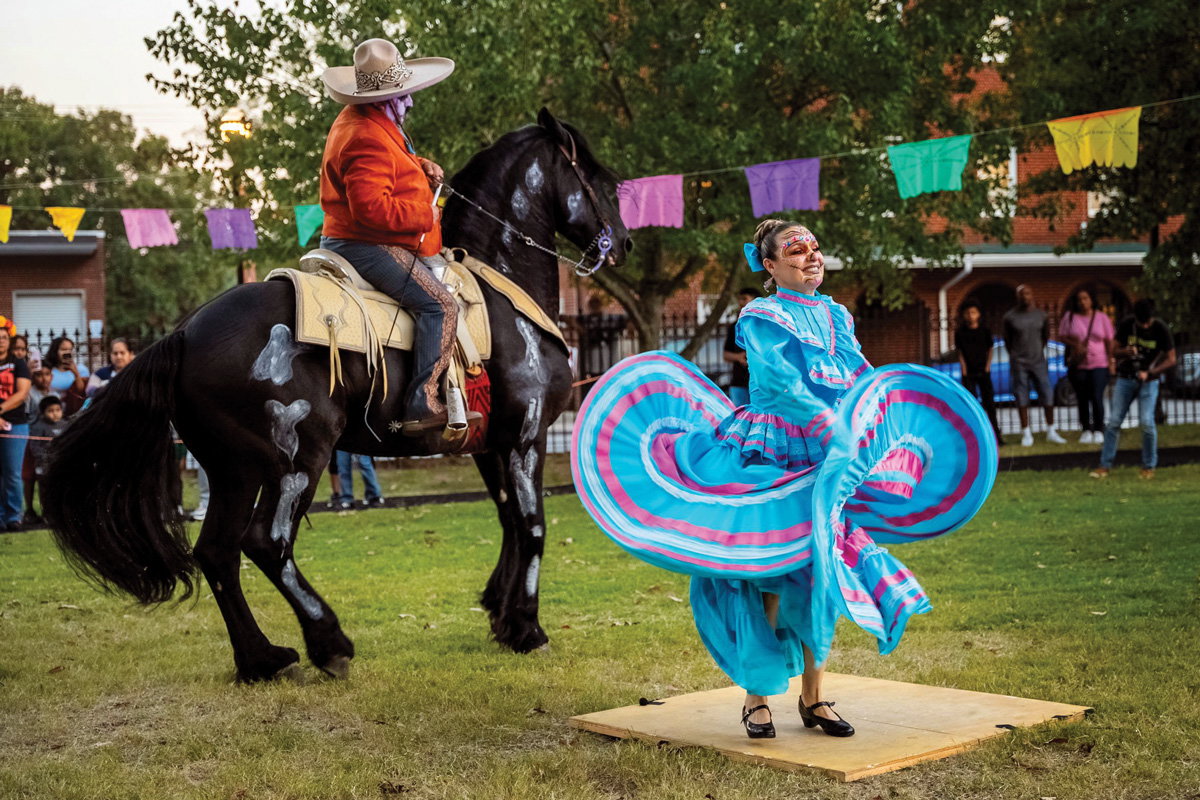
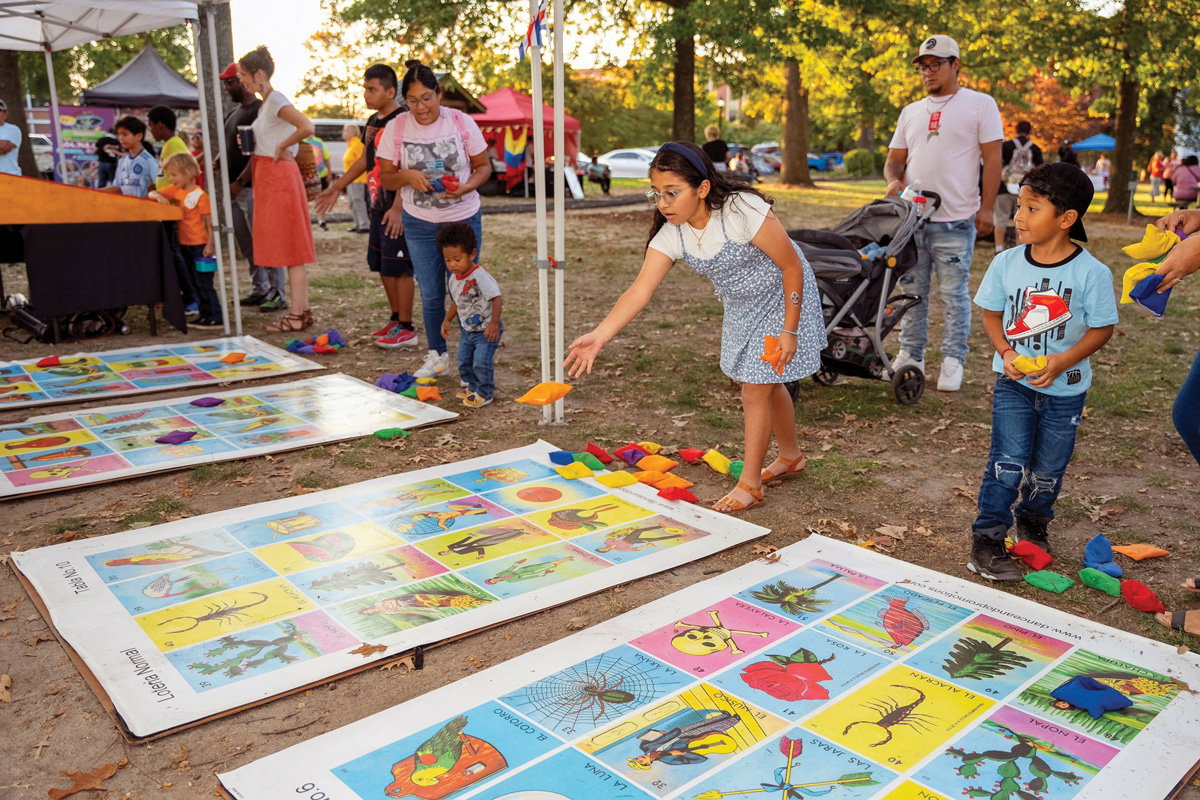
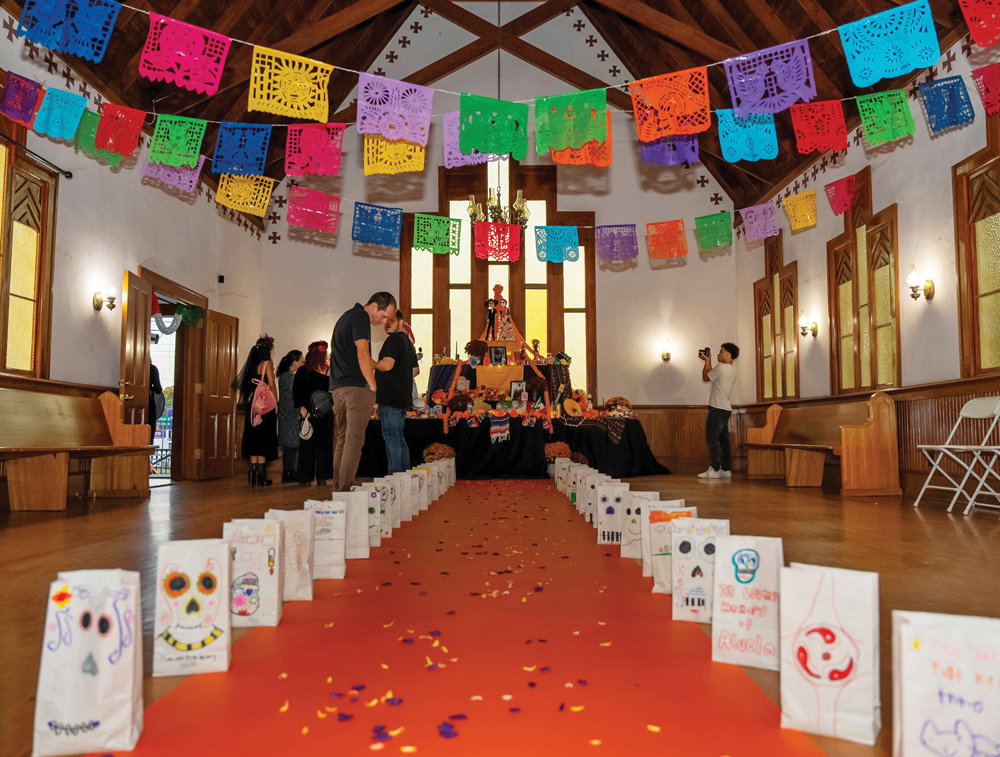
Among Hapeville’s signature fall events is October’s Día de Muertos (Day of the Dead) Celebration, which includes traditional Mexican foods, such as pan de muerto, tamales and mole; folk-dance performances; costumed “skeletons” on horseback; and a community altar (ofrenda) at the 1895 Christ Church and Carriage House.


Día de Muertos Celebration with dancers and horse riding
Día de Muertos Celebration

Photograph by Grace First Photography

kids play knapsack on a giant loteria board at the Día de Muertos Celebrationthe inside of a church is decorated for Día de Muertos Celebration

Día de Muertos Celebration

Date: Saturday, October 24
Cost: Free
Location: Jess Lucas Park
Good to know: Free Friday evening workshops at the local rec center lead up to the festival: Learn about traditional Mexican crafts and create beautiful offerings for your ofrenda. Registration is required; sign up on the City of Hapeville website.


Neighborhoods Lost

As Atlanta grew through the 20th century, entire neighborhoods were sacrificed for major public works projects and redevelopment. Near Hapeville, the ever-expanding Hartsfield-Jackson Atlanta International Airport has consumed acres of land where communities once stood. Multiple College Park subdivisions were cleared in the 1970s to make room for a major runway expansion. When it came time to build a fifth runway in 2001, the airport had to find a way to avoid disrupting Hart and Flat Rock cemeteries, both more than 150 years old. 

Many neighborhoods were lost to Atlanta’s mid-century growth. Lightning, situated where the Georgia World Congress Center and Mercedes-Benz Stadium now stand, was a historically Black community west of downtown. Buttermilk Bottom, northeast of downtown, is now home to Central Park and the former Civic Center site.

These communities live on through the descendants of their former residents and a small collection of vintage photos, many of which are available to view via the Atlanta History Center’s digital collections. —Athina Vilamitjana

This article appears in our September 2026 issue.

Follow Us

69,386FansLike
144,836FollowersFollow
493,480FollowersFollow

NEWSLETTERS