


Photograph by Growl Bros.
The art of butchery has quietly been relegated to the fluorescent-lit backrooms of supermarkets for decades, hidden behind double-swinging doors and disguised under sterile shrink-wrap. The connection between pasture and plate has been effectively severed, replaced by the convenience of grabbing a package of meat and moving on. But a funny thing happened on the way to total industrialization: We started missing the community connection.
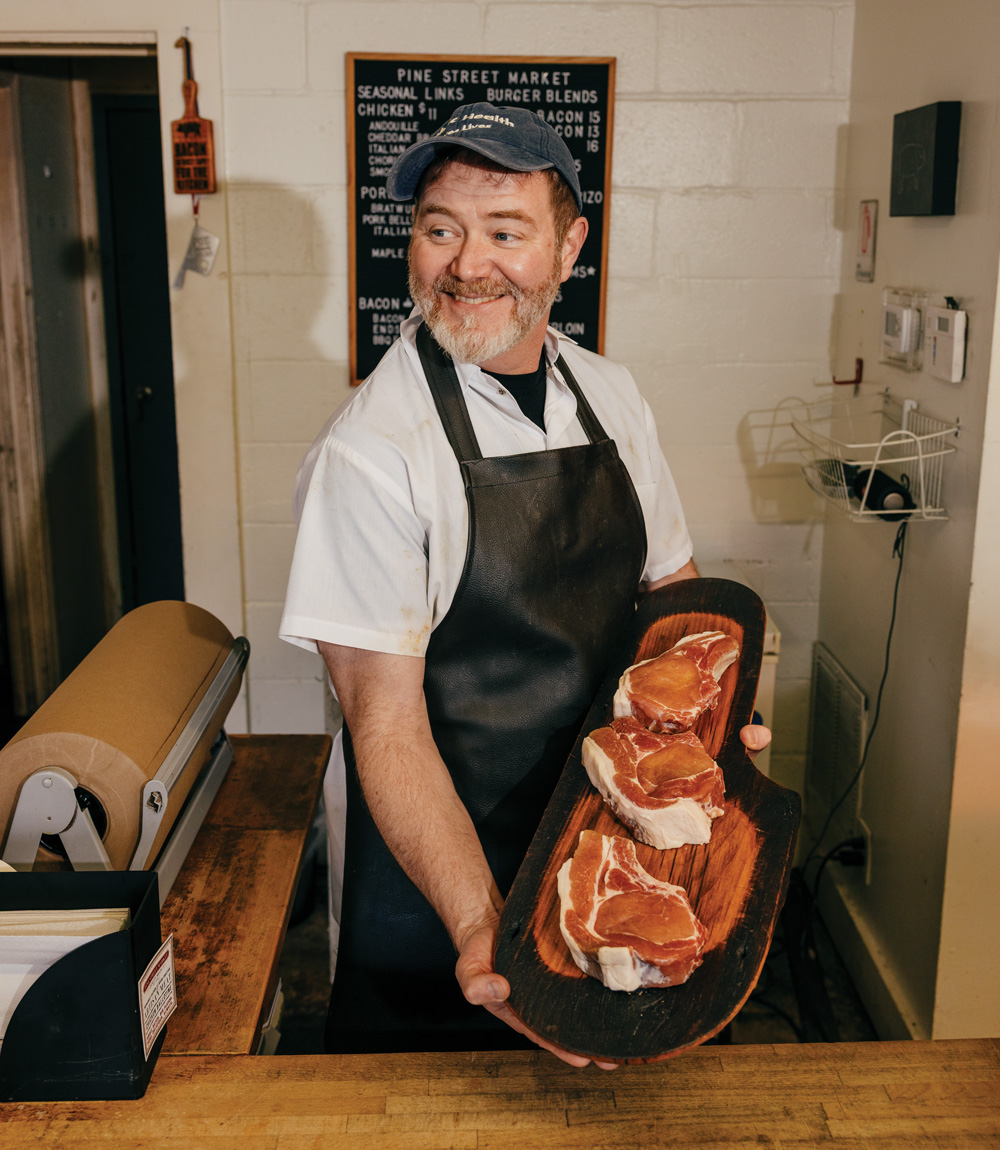
Today, the neighborhood butcher shop is experiencing a revival, as evidenced by the opening of at least four shops in the metro area in the past five years. Owner/butcher Rusty Bowers of Pine Street Market in Avondale Estates helped pioneer this butchery resurgence when he opened in 2008. “These many years have shown me that a local butcher counter is a place where the community can come together to discuss something as simple as a weeknight recipe or to celebrate the win of a life-changing event,” he says. “Weekly interactions grow into friendships and truly build a community.”
This isn’t just a nostalgic throwback to the 1950s; it’s a transparent response to a food system that has grown too opaque for many contemporary and curious consumers. A new guard of butchers treats carcasses with reverence, moving away from preportioned commodity meat toward whole-animal butchery. In these spaces, nose to tail is a commitment to zero waste and culinary creativity rather than a mere buzz phrase.
Photograph by Growl Bros.
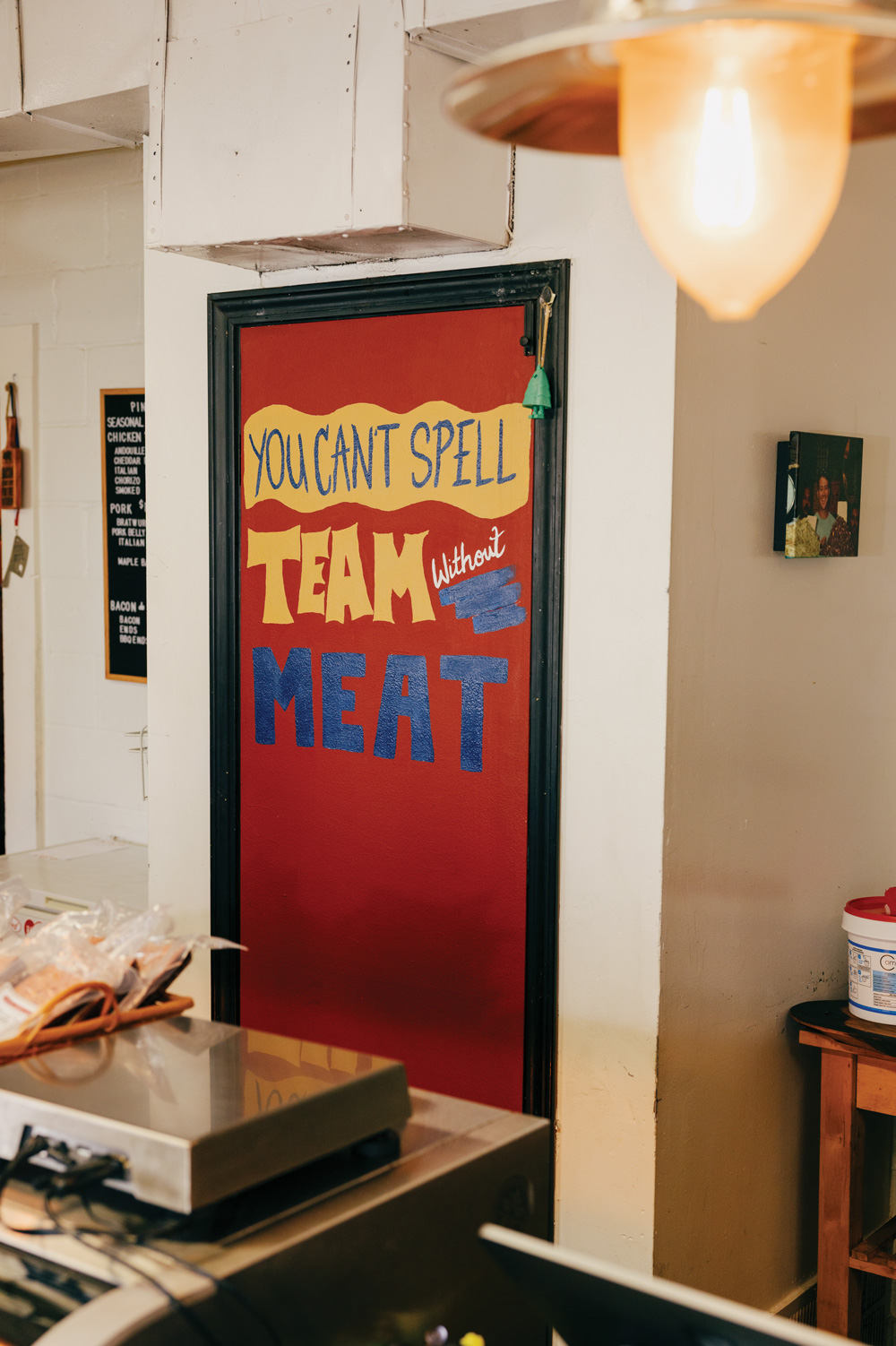
Photograph by Growl Bros.
This means the shift toward local butchers is as much about ethics as it is about flavor: According to the 2025 “Power of Meat” report (an annual study conducted by the Meat Institute and FMI, aka The Food Industry Association), 83 percent of shoppers now actively look for transparent information regarding how their meat contributes to the health of people, animals, and the planet.
Bowers, a chef by trade and a Culinary Institute of America alum, specializes in whole-animal butchery with a focus on bacon and sausage. Hanging in Pine Street’s curing cave are classics: coppa, spec, guanciale, bresaola, and his new favorite: summer sausage with a pecan and orange zest blend.
Bowers has an approach that prioritizes more than meat-cutting, with an emphasis on retaining essential flavors. “I approach our products with the idea that you’re tasting the meat and the quality before you taste the spices,” Bowers says.
By applying a chef’s palate to whole-animal butchery, he celebrates the farmer as much as the cut. This philosophy manifests in bratwursts seasoned minimally with nutmeg and garlic, allowing the heritage-bred pork from longtime northwest Georgia partner Riverview Farms to speak for itself. He celebrates local collaborations, bundling Doux South’s creole mustard with grilling sausages or including a select beer from Little Cottage Brewery as an ingredient in a summer sausage. Since 2010, his butchery and charcuterie classes—often held at local breweries—have remained sellout events, attracting a new generation of professional sous chefs and backyard hobbyists who are hungry for artisanal skills.
At the Spotted Trotter, which opened in Reynoldstown in 2009, owner/butcher Kevin Ouzts trademarked the phrase New American Charcuterie in describing his salumi program. Using humanely sourced, pasture-raised product, he prioritizes incorporating unique American ingredients (sorghum syrup, mayhaw berries) into Italian, Spanish, and French styles of encased meats, pâtés, and potted meats. One could make the most outstanding charcuterie board from his selection of cured meats, cheeses, spreads, crackers, and tinned fish. Ouzts is excited to see an uptick in neighborhood butcher shops and trends like Argentinean-style cuts (entraña and asado de tira) and beef salami. “When you go to your local butcher shop, you not only get a great product, but the transparency of it. That’s important,” he says.
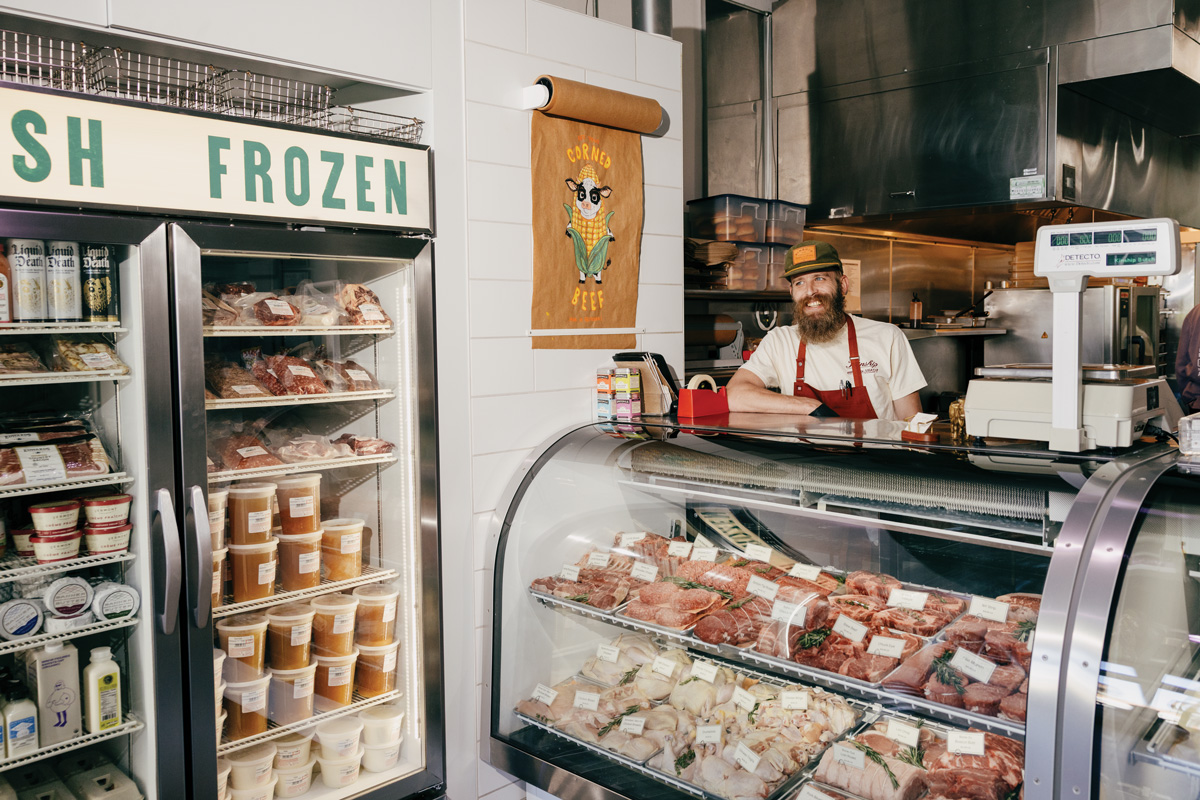
Photograph by Growl Bros.

Photograph by Growl Bros.
Over in Virginia-Highland, butcher/chef Myles Moody opened Kinship Butcher & Sundry in 2021. “The art of local butcher shops was lost and is being found again,” he says. He and co-owner Rachael Pack, who believe in supporting Georgia farms, sell Comfort Farms pork, cuts of 5N Pastures lamb, and Châtel Farms beef bacon. They also offer a curated selection of wines, farm vegetables, pickles, and cheeses, plus a sandwich menu and a coffee program, Academy Coffee, run by Myles’s brother, Connan Moody.

Photograph by Growl Bros.
Mark Frazie, a third-generation butcher who opened his Riverside shop, Frazie’s Meat & Market, in 2023, says his goal “was to bring back the small neighborhood butcher shop with variety and personalized service, where you could build a whole meal.” His products, such as Patagonian Verlasso salmon, come from sustainable farms and fisheries. Wines, pasta, vegetables, and ready-made meals fill the shelves and coolers. At the sandwich counter, order the ATL Chop with chopped Wagyu, onions, and peppers. Customers certainly come for rib-eye and filets, but Frazie is also seeing a trend toward offcuts like Denver steak and picanha (sirloin cap), a Brazilian steakhouse favorite.
The cases at Evergreen Butcher & Baker, a Kirkwood mainstay since 2019, are filled with butcher/chef Sean Schacke’s cuts from his whole-animal butchery program, sourced from grass-fed and antibiotic-free animals from small Georgia farms. Look to the right, and sourdough—including rye and sandwich loaves, made from organic and locally sourced flour—fills baskets, shelves, and cases, along with cookies, flaky and rich French kouign-amann, sugar buns, and croissants both chocolatey and savory. Choose a ranch steak or bavette (aka flap steak) and a crusty loaf made with humble einkorn (an ancient grain) and spelt. Leave time to peruse the cultured butters, specialty salts, tinned seafoods, and array of cheeses.
Chef Nick Leahy opened Vice Kitchen in Johns Creek with partners Daniel Barbalho and Jian Geng in 2024. Their focus on quality, sustainability, and consistency is easier to accomplish because they source from their own herd of cattle in Ellijay (their Wagyu cows hail from Iowa). Beyond the grass-fed beef and American Wagyu cuts in the meat cooler, the shop holds chilled cases filled with ready-made meals, sausages, bacon, and seafood. Grab a bottle of Southern Rhone Gigondas from the small but mighty selection of wines, seasonings, condiments, and spreads—many of them local—to amplify your meal.
This article appears in our May 2026 issue.