

Photograph by Ben Rollins
As I waited for the multicourse dining experience that is Georgia Boy, staged inside chef Joey Ward’s Poncey-Highland restaurant, Southern Belle, I contemplated my drink options. I thought about passing on the wine pairing—I’d been cutting back on drinking lately—but felt I’d be missing out on part of the dinner. As I debated, I heard the sommelier mention a nonalcoholic option. I was intrigued.
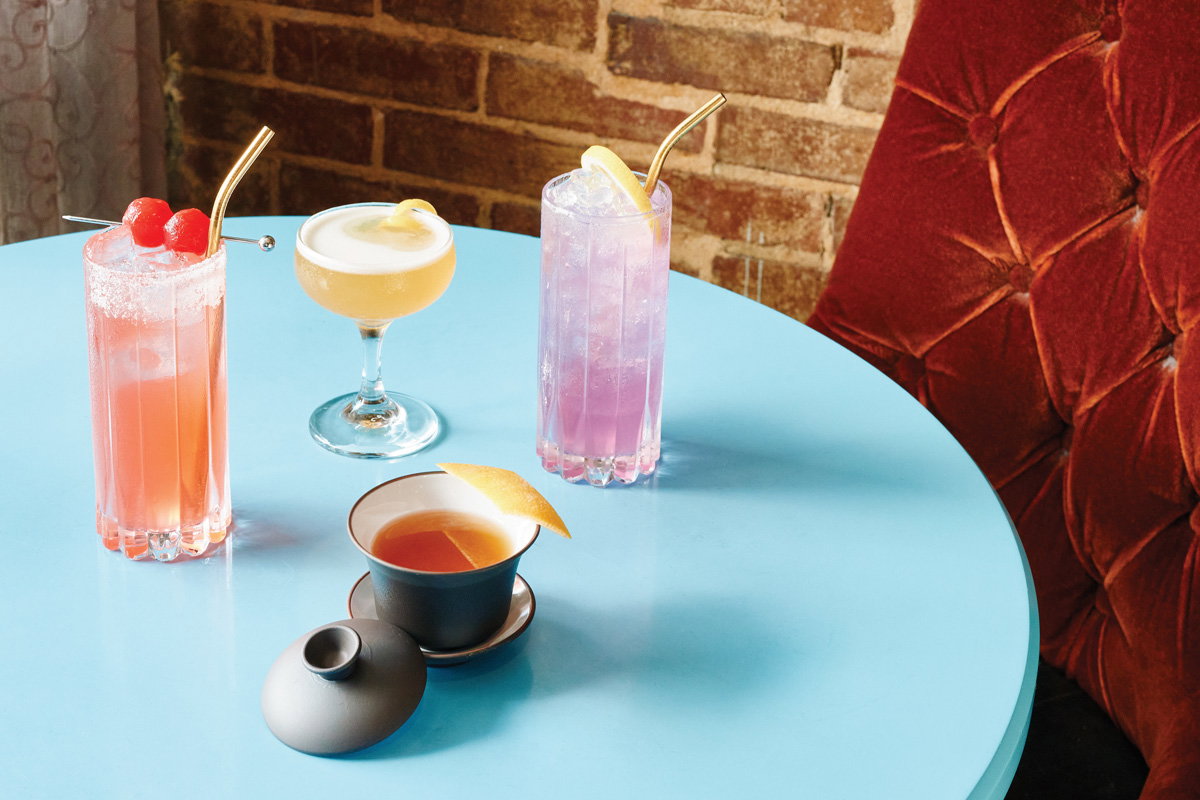
The tasting menu here is a tight-lipped secret (menus are not released in advance), so when my nonalcoholic (N/A) pairing arrived with our beef-and-broccoli main course, the whole table went quiet in anticipation. The server lifted the lid of my clay teacup and told the story: In Prohibition-era Chinatown teahouses, bourbon was poured into teapots to look like innocent tea. Mine held a zero-proof cocktail inspired by the tale, an oolong tea concoction balancing grapefruit brightness, ginger warmth, and notes of alcohol-free dark rum, all of which offered a pleasant contrast against the richness of the beef.
Mocktail menus are nothing new, but a growing number of Atlanta restaurants—some traditional fine dining, others more experimental—are taking them a step further, building dedicated nonalcoholic pairings for their tasting menus with the same research and revision typically reserved for wine. The market is a driving factor: A 2025 Gallup poll found 54 percent of American adults say they drink alcohol, the lowest number Gallup has recorded since it began tracking the question in 1939. Consumer-market research group NielsenIQ reports that sales of nonalcoholic spirits grew 70 percent from 2024 to 2025.
Photograph by Ben Rollins
At West End omakase spot Bovino After Dark, bartender Angela Medlin remembers what the average bartender offered as a N/A option even a decade ago: “I can’t tell you the amount of times I’ve gone somewhere, ordered a mocktail, paid $15 to $17, and it’s a Shirley Temple.”
Today she makes her own nonalcoholic spirits from scratch, including a 48-hour infused “gin” (made from juniper-infused water) as the base for Bovino’s N/A program. She recalls a pregnant guest ordering the mocktail pairing with dinner while her husband planned to stick with wine—until he saw Medlin deliver the first N/A drink. “He was like . . . ‘The drink looks so interesting,’” Medlin recalls. “So he got them too.” She guesses roughly half of Bovino’s guests order at least one of her mocktails.
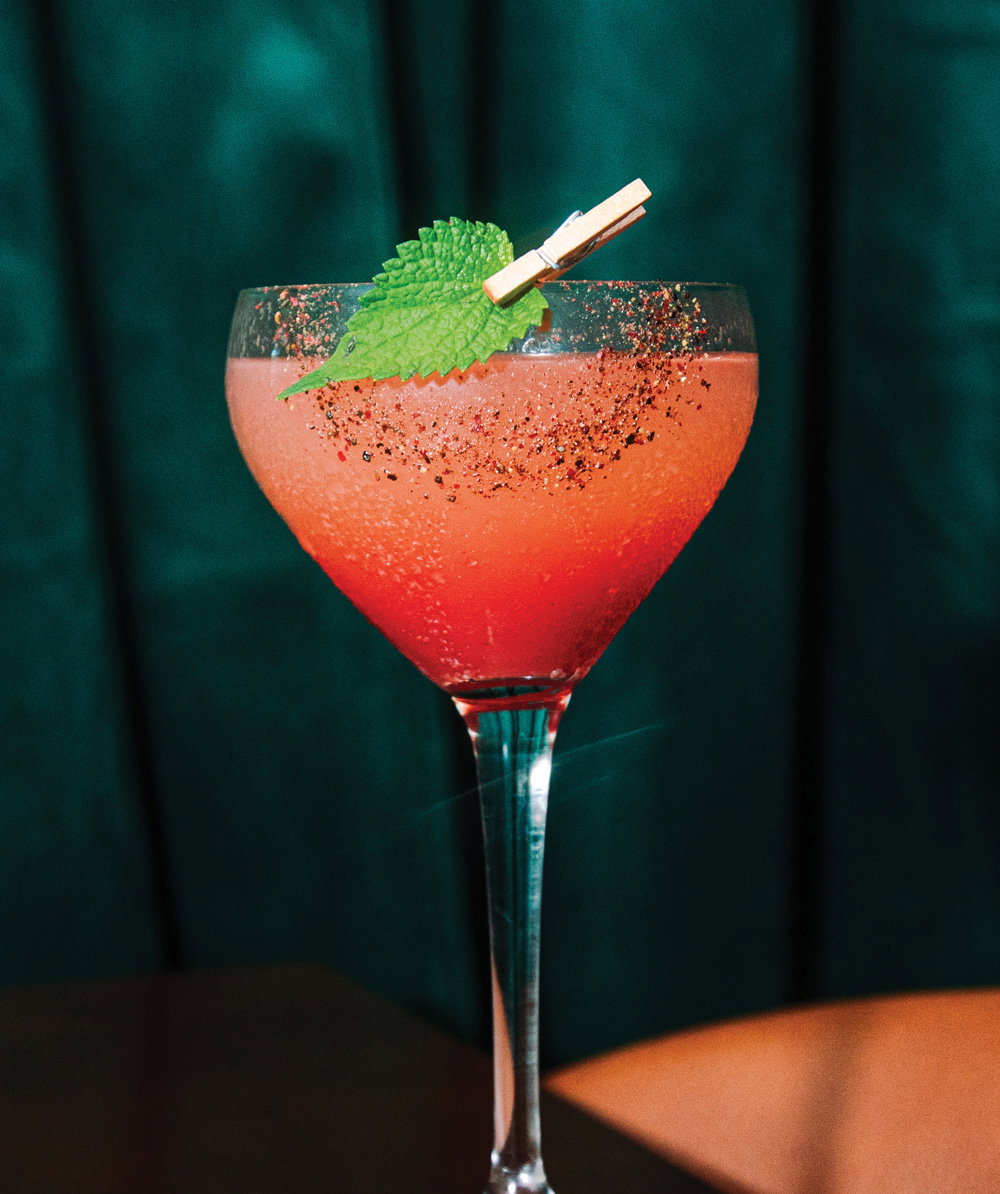
At Atlas, the Michelin-starred fine-dining room inside Buckhead’s St. Regis Atlanta, mixologist Alanna Turkovic built the zero-proof program from the ground up, using the same logic she applies to wine pairings. “It started by wanting to match the caliber of the restaurant,” she says. When a recent menu featured lamb prepared three ways alongside pesto and fried artichoke, Turkovic went herbal with her nonalcoholic pairing, combining carbonated oolong tea, hibiscus, and dill, garnished with dill foam and black pepper. “Almost every time I do an N/A pairing, a guest comes up and tells me how meaningful it was for them,” she says.
The same surprise-and-delight effect happens at Georgia Boy. General manager Michelle Nguyen says guests who come in planning to drink alcohol will sometimes taste a friend’s N/A pairing out of curiosity, then order it themselves. “We get people who say, ‘I drink alcohol, [but] that tastes amazing,’” she says. It’s part of why she pushes back on the idea that spirit-free drinks should be cheap: “It’s not just juice anymore.” Some of her nonalcoholic ingredients (such as zero-proof Amethyst spirits or house-made corn milk) cost as much to source as the liquor they replace—and take longer to perfect. She says roughly 30 to 40 percent of the restaurant’s tasting-menu guests now order N/A cocktails.
At Lazy Betty, Midtown’s Michelin-starred tasting-menu restaurant, bar manager Steven Huddleston treats the N/A program as an extension of the food. He’s especially proud of Drift, the nonalcoholic pairing for a recent sturgeon course: white grape and verjus for acidity, white tea, kombu, and white soy for minerality and umami. “It complements the richness of the beurre blanc . . . while keeping the palate lifted,” he says.
Huddleston sees a broad range of guests order the alcohol-free pairing—some avoiding alcohol entirely, others just moderating—but what they have in common, he says, is that they “still want the full dining experience.” On any given night, the 70-seat restaurant sells at least two eight-course N/A pairings; during Dry January, that number can jump to seven.
Photograph by Ben Rollins
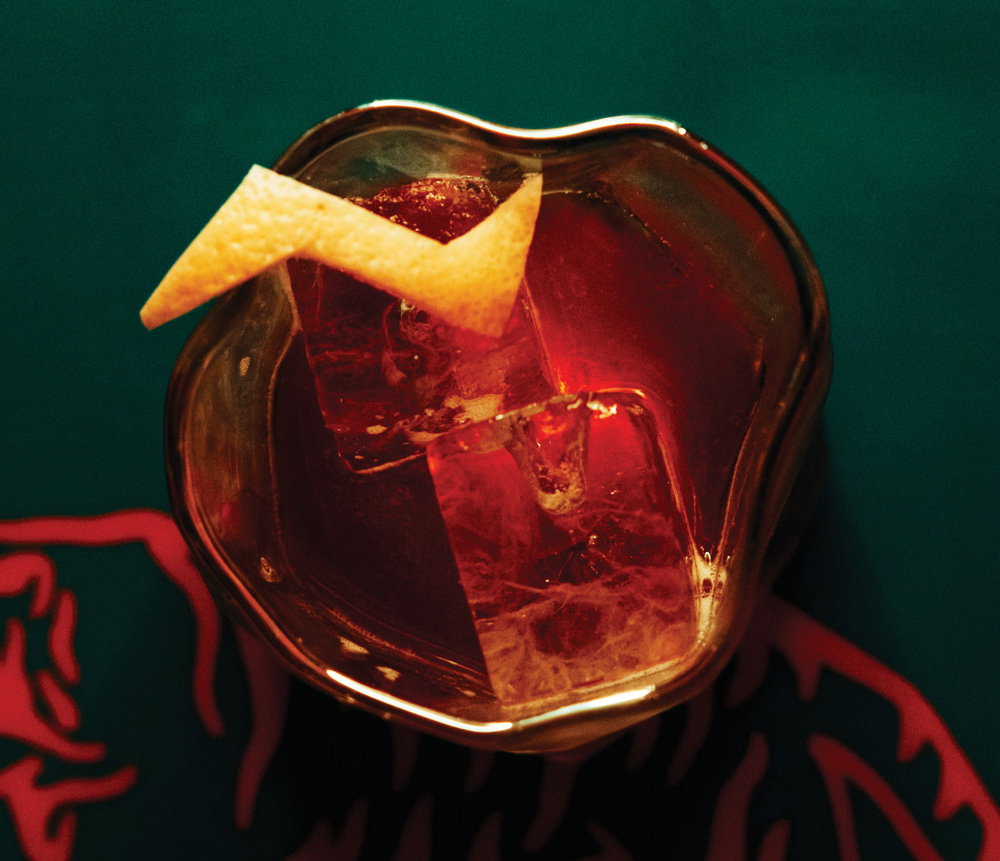
Tiger Sun, the film-themed omakase bus outside Reynoldstown taco bar Muchacho, has the tightest logistical challenge—18 seats, 90-minute service, and a thematic menu—but bartender Heather Rule still chooses to craft nonalcoholic versions of every cocktail served during the four-course pairing. Her recent Back to the Future menu paired a meatloaf kofta dish with the Clocktower Sour—rye whiskey, strawberry-balsamic shrub, and lemon juice—made alcohol-free with sparkling water subbing in for the rye. “We don’t miss a beat when dropping off cocktails, whether they are the original or the N/A versions,” she says.
Atlas’s Turkovic doesn’t see the N/A trend slowing down. “Almost half of the upcoming generation doesn’t drink, but they love the idea and the experience behind it,” she says. “I believe N/A mixology is going to be heavily implemented in the bar culture moving forward. It brings too much versatility to the table to be ignored.”
This article appears in our October 2026 issue.