
Home 2026

Archives

Atlanta History Center opens new exhibition on Cherokee and Muscogee Trails of Tears

0
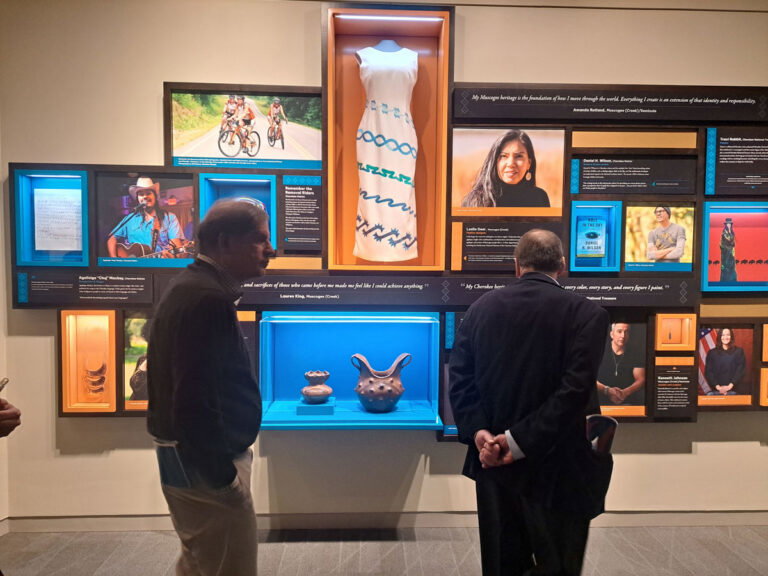
Visitors explore “Exile from Georgia: The Cherokee and Muscogee Trails of Tears,” a new exhibition at the Atlanta History Center.

Photo by Andrew Alexander.

The Atlanta History Center opens a major new exhibition Thursday, November 19, examining the forced removal of the Cherokee and Muscogee (Creek) peoples from their ancestral homelands in Georgia and the continuing strength of their nations and cultures.

Exile from Georgia: The Cherokee and Muscogee Trails of Tears is the first major exhibition in Georgia to bring the two removal histories together, according to the History Center. Developed in collaboration with leaders, artists, historians, and advisors from the Cherokee and Muscogee Nations, the exhibition uses Native voices and perspectives to explore a consequential chapter of Georgia and American history.

Although the two peoples were removed at different times and under different circumstances, both experienced broken treaties, the loss of their homelands, and forced journeys west to Indian Territory, in what is now Oklahoma. The exhibition examines those distinct experiences while exploring the human consequences of removal: the loss of homes, communities, and connections to place.

For F. Sheffield Hale, president and CEO of the Atlanta History Center, bringing the stories together addresses a gap in how Georgia’s history has been presented.

“It’s really been a hole in Atlanta, in this area, to have an exhibition of this caliber addressing both the Muscogee and the Cherokee Trails of Tears,” Hale said. “They cover all of Georgia.”

Hale said the History Center worked with tribal advisors from both nations to shape the exhibition and ensure the stories were presented from Native perspectives. The project included filming Cherokee Principal Chief Chuck Hoskin Jr., Muscogee leaders and other participants in Oklahoma, as well as involving a Muscogee Creek artist in overseeing an animation experience.

A detailed timeline in “Exile from Georgia: The Cherokee and Muscogee Trails of Tears,” a new exhibition at the Atlanta History Center.

Photo by Andrew Alexander.

“We were trying to make it as faithful to how they interpreted what their experience was, and not from our point of view,” Hale said.

That collaboration was important to Chief Hoskin, who said institutions have too often told the Cherokee story without involving Cherokee people.

“I think it’s indispensable to make sure that if we’re telling anyone’s story that we involve them,” said Hoskin. He praised the History Center for approaching Cherokee and Muscogee people “with an open mind and open arms to come join with them to tell our story.”

The exhibition uses original artwork by Native artists, multimedia installations, contemporary interviews, and oral histories. A series of immersive short films is designed to place visitors within the emotional experience of exile from ancestral homelands.

The exhibition also looks at the complex Native communities that existed prior to removal. Hoskin noted that Cherokee people governed themselves and responded to pressure through diplomacy, legal challenges, and the development of the Cherokee syllabary, which allowed them to write and circulate their own accounts.

Tracie Revis, a citizen of the Muscogee (Creek) Nation and director of advocacy for the Ocmulgee National Park and Preserve Initiative, said visitors should understand the scale and sophistication of the Native communities that once occupied the region.

“So many people don’t understand how big we’ve been, and how organized and sophisticated we really were,” Revis said. She also pointed to the trade routes and pathways that connected communities across the region.

For Revis, the location of the exhibition carries particular meaning. “I would hope people realize that this is land they actually stand on. This was Muscogee Creek,” she said.

Visitors watch animations in “Exile from Georgia: The Cherokee and Muscogee Trails of Tears.”

Photo by Andrew Alexander.

Kimberly Teehee, director of government relations for the Cherokee Nation, said Georgia was central to the history of Cherokee removal. The state was the Cherokee homeland and a focal point of conflict over the nation’s land and sovereignty, particularly after gold was discovered.

“Georgia became part of the hub of removal,” Teehee said. She added that acknowledging the history is part of recovery and healing.

The gallery emphasizes that removal did not end the histories of either nation. The exhibition’s final gallery, titled “We Are Still Here,” brings the story into the present. Through contemporary portraits and personal stories, visitors encounter Cherokee and Muscogee artists, educators, veterans, scientists, musicians, and community leaders. 

Teehee hopes visitors leave with an appreciation for “a nation that’s still thriving.” The Cherokee people, she said, are “living, strong people who persevered,” with rich cultures and languages that continue despite efforts to eliminate them.

Hoskin likewise hopes visitors understand that the Trail of Tears, while a profound tragedy, was not the final chapter of Cherokee history. He said the exhibition reflects both the pain inflicted by removal and the resilience of the people who survived it.

“It’s not just part of history. We moved on. That was a dark chapter, but it wasn’t the last chapter,” he said.

The exhibition is part of the Atlanta History Center’s broader commitment to expanding its interpretation of Native American history in Georgia. That effort also extends online through Homelands, a new digital resource from the History Center exploring the history and culture of the Southeast’s first inhabitants, with an emphasis on the Cherokee and Muscogee peoples. The website features a historical timeline, educational resources, digital exhibits, maps, and recommended reading. Explore Homelands at atlantahistorycenter.com/homelands.

The exhibition was developed during the History Center’s centennial year, marking 100 years since the institution was founded in 1926.

Standing before the words that changed America, a dream written by hand

0
Visitors admire the handwritten draft of Martin Luther King Jr.’s “I Have a Dream” speech at the National Center for Civil and Human Rights.

Hampton Media Group.

There was nothing that could prepare me to stand before several pages of beautifully handwritten cursive that helped to change the course of history. The delicate penmanship, crossed-out sentences and carefully revised passages reminded me that before I Have a Dream became one of the most celebrated speeches in history, it was simply a man speaking aloud his ideas and putting his hopes for humanity onto paper.

On November 16, I had the extraordinary privilege of viewing Dr. Martin Luther King Jr.’s handwritten drafts of his 1963 I Have a Dream speech at Atlanta’s National Center for Civil and Human Rights.

I studied the pages closely, fascinated by the evolution of his thoughts. The earlier pages were heavily marked with revisions, while subsequent versions contained fewer corrections. Even the typed copy showed signs of refinement. It was almost supernatural witnessing the imperfections behind such powerful words. It made the speech feel human, intimate and somehow even more extraordinary.

Visitors admire the handwritten draft of Martin Luther King Jr.’s “I Have a Dream” speech at the National Center for Civil and Human Rights.

Hampton Media Group.

During the press presentation, we were reminded of the pivotal moment when gospel singer Mahalia Jackson encouraged Dr. King to abandon his prepared remarks and tell the crowd about his dream. To think that some of the most memorable words ever spoken were born from a moment of spontaneity made the manuscript all the more remarkable.

As a Black woman originally from Illinois, I’ve always understood Dr. King and Mrs. Coretta Scott King’s significance, but Atlanta gave their legacy a different kind of intimacy.

In 2011, my parents and I visited Atlanta and explored the historic landmarks along Auburn Avenue, including Dr. King’s childhood home, Ebenezer Baptist Church, and the museum dedicated to his life and work. I remember feeling overwhelmed by the richness of the city’s Black history. There was something about walking the same streets as people whose courage had helped shape my own opportunities that made Atlanta feel like a place I belonged. I knew then that I wanted to live here.

The seven-page handwritten draft of Dr. King’s “I Have A Dream” speech was preserved for decades by Edward T. Clayton, a trusted adviser to Dr. King. It was later rediscovered by his widow, civil rights pioneer Xernona Clayton. The manuscript is now being displayed at the National Center for Civil and Human Rights in Atlanta. The draft will be on view through November 22.

Hampton Media Group.

A decade later, in 2021, I found myself walking Auburn Avenue again, this time alongside Dr. King’s son and his wife after meeting them at Haugabrook’s gallery. As we walked, they shared stories about the neighborhood, pointing out the home of the WERD radio station, Madame C.J. Walker’s salon and other places connected to his father’s life. It was surreal to hear such personal recollections in the very place where so much history unfolded. Never could I have imagined that years later, I would stand before the handwritten words that helped define his father’s legacy.

Preserved for decades by Dr. King’s trusted adviser Edward T. Clayton and later rediscovered by his widow, civil rights pioneer Xernona Clayton, the manuscript is on display November 16–22 before traveling to other cities and ultimately to Christie’s in New York for auction in January 2027, where it is expected to fetch more than $10 million.

A visitor admires the handwritten draft of Martin Luther King Jr.’s “I Have a Dream” speech at the National Center for Civil and Human Rights.

Hampton Media Group.

Before leaving, I returned to read the final words: “Free at last, free at last, Thank God Almighty we are free at last.” It was still hard to believe that the very life-changing speech I read about in history books was right before my eyes.

I thought about my parents, that former visit to Atlanta, and the countless people whose sacrifices made my life possible. I thought about how far we’ve come and how much further we have to go.

The manuscript may be worth millions, but standing before it reminded me that its greatest value isn’t monetary. It’s the freedom it imagined, the lives it continues to inspire and the responsibility we carry to keep that dream alive.

Visitors at the National Center for Civil and Human Rights.

Hampton Media Group.

From the team behind Mujo comes Koshu Club, a Japanese steakhouse where elegance never shouts

0
Pristine place settings raise the bar at Koshu Club.

Photograph by Andrew Thomas Lee

The concept of quiet luxury—things that are exceptionally fine but not ostentatious—has been a part of Japanese culture for centuries. The term for it is iki, and the local embodiment may well be Koshu Club, the new Japanese steakhouse in Buckhead.

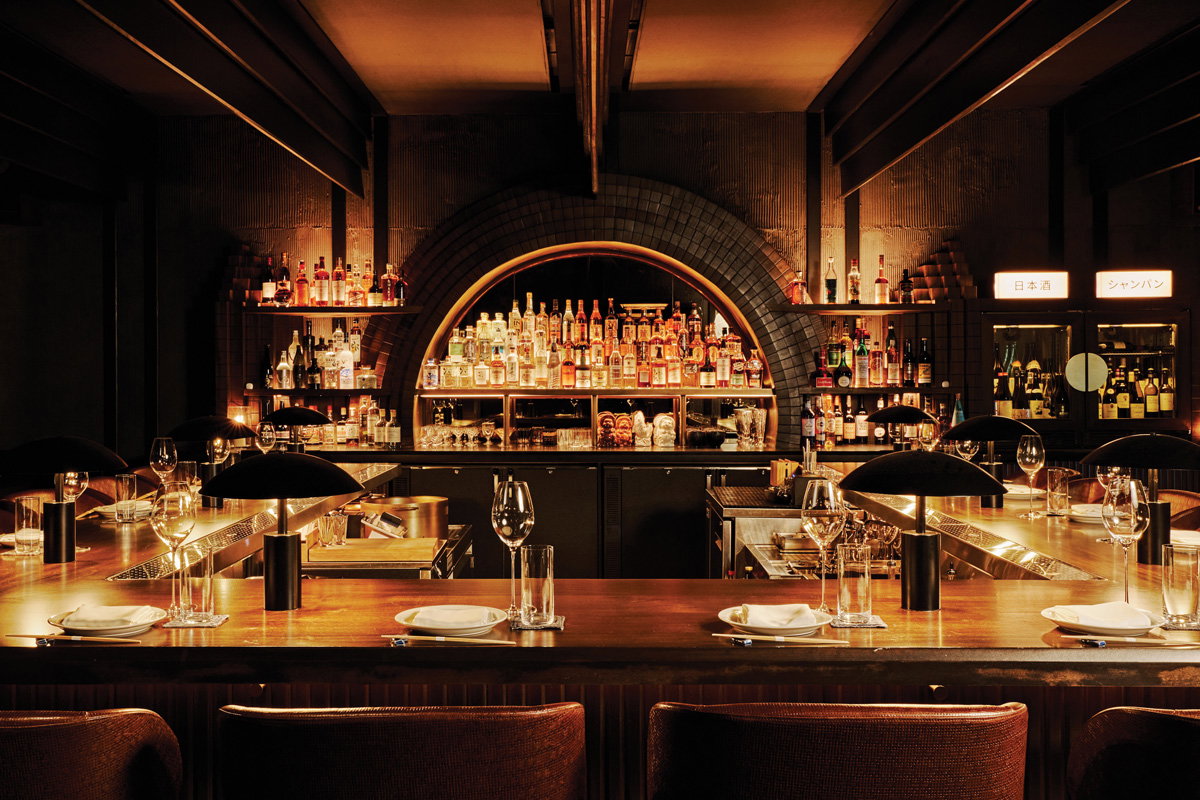
Guests arrive through a discreet entrance on West Paces Ferry and are ushered into a dimly lit dining room. The cozy space accommodates 50 guests between the plush banquettes and stylish bar. Scraped concrete walls lean into the perfectly imperfect wabi-sabi design ethos. The Japanese supper club mood—marked by intimate environments and an unhurried dining experience—is set by an eclectic playlist that, during one course, might include big band music, Billy Idol, and Wu-Tang Clan. I was pleasantly surprised to find that, while the vibes were high, the din was quiet enough to have a conversation at a normal decibel.

The specialty cocktail list offers an intriguing start to the evening, as you’ll see classics with a twist, such as the Night Ripper ($23), a tiki-inspired riff on a margarita with the addition of lemongrass shochu, coconut, and herbal liqueur. The Tiger by the Tail ($19) features rye, lime, allspice, and mildly tongue-tingling sansho peppercorn served over an embossed ice cube. Housemade cordials and ingredients such as pickled myoga ginger and salted honey keep things interesting. On any given night, guests can leverage the expertise of two affable sommeliers, one dedicated to wine and one to sake, who help diners navigate the nearly 800-bottle program.

While Koshu Club’s Michelin-starred sister restaurant, the omakase-only Mujo, shares an executive chef in J. Trent Harris, the concepts smartly diverge. Here the focus is on Wagyu steak and steakhouse-style accompaniments. Between two visits—one solo at the bar and one with a guest—I was able to order a significant portion of the tightly curated menu’s 20 or so dishes (though additional permutations can be created with add-ons, from osetra caviar to uni). At every turn, servers and bartenders were friendly, attentive, and eager to explain the nuances of the largely Japanese ingredients.

A favorite was the Edo Caesar ($22), one of the few dishes that truly was large enough to share. Our server called it a “destination Caesar salad,” an apt description, since I’d gladly return for the crisp romaine dressed with Japanese pantry staples including dashi, fried baby anchovies, and nori, plus cured egg yolk and Parmesan. It hit all the right salty, savory, and umami notes. The menu’s raw offering, the Kaisen Moriawase ($65) platter of sashimi, is a stunner with four types of seasonal seafood sourced from Tokyo’s Toyosu Market. The box of chipped ice came topped with melt-in-your-mouth Japanese sea bream, scallop, bluefin tuna, and soy-marinated yellowtail.

Not everything was flawless. Though the concept of the Wagyu Menchi Katsu Sando ($23), a small sandwich with a fried beef cutlet, was fun and (as multiple team members told me when I ordered it) nostalgic for kids growing up in Japan, the execution was less than perfect. I loved the pillowy toasted milk bread and layered flavors of Japanese pickles, mayo, Dijon, and tangy-sweet tonkatsu sauce. Sadly, the fried cutlet of house-ground A5 Japanese and American Wagyu was dotted with several pieces of tough gristle I picked around.

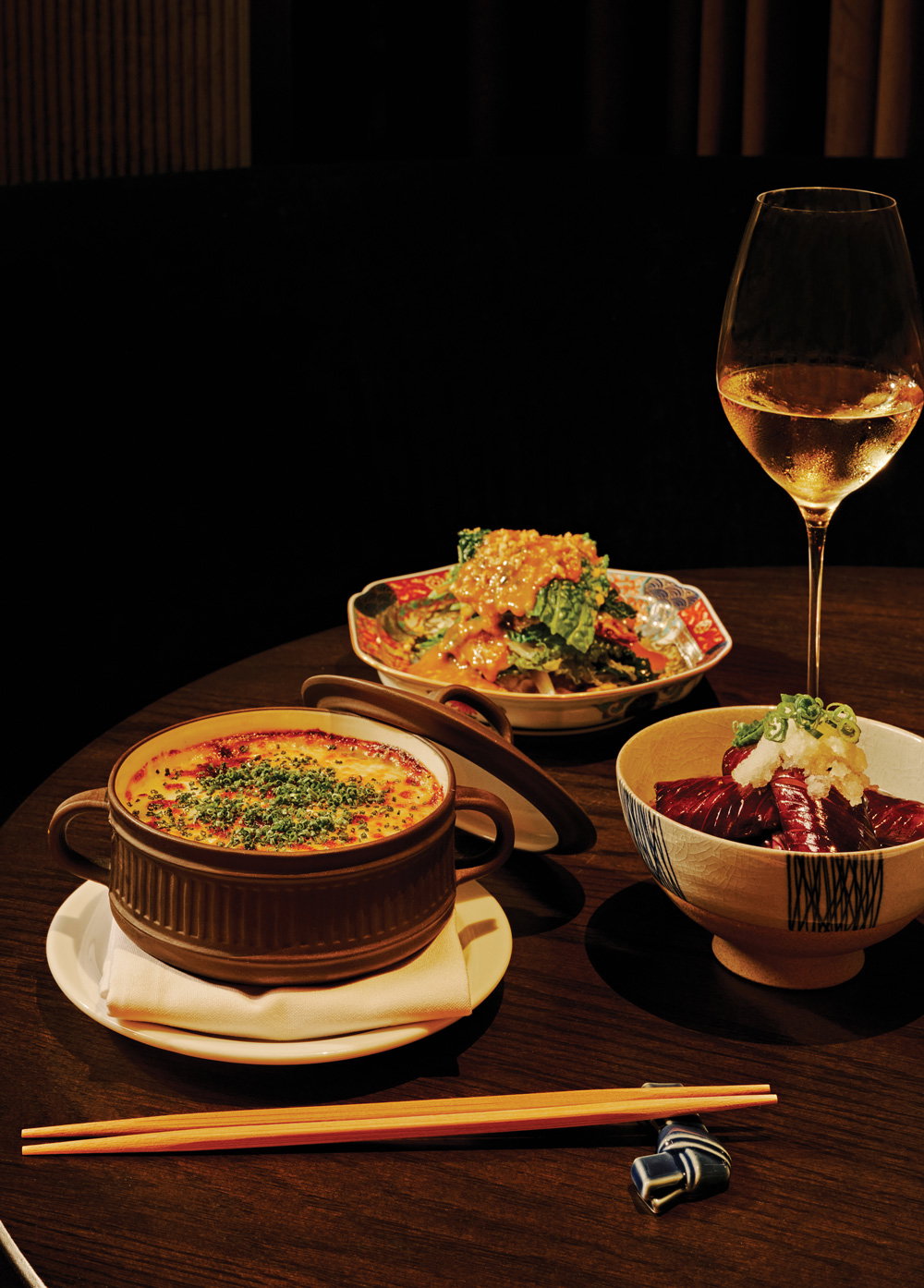
Left to right: Mushroom Rice Doria, Yamitsuki Cabbage, and Nasu Agebitashi (featuring eggplant).
A trio of delights (left to right) include Mushroom Rice Doria, Yamitsuki Cabbage, and Nasu Agebitashi (featuring eggplant).

Photograph by Andrew Thomas Lee

The menu quickly regained its standout status in the entrees. One of only two seafood mains, Gindara Misozuke ($45) is a filet of buttery Pacific sablefish marinated in two kinds of miso and grilled to a lacquered shine thanks to the marinade’s residual sugars. The fish comes cloaked in an herbaceous sauce verte with shiso, dashi, and garlic. A dollop of grated daikon radish with chili adds extra brightness.

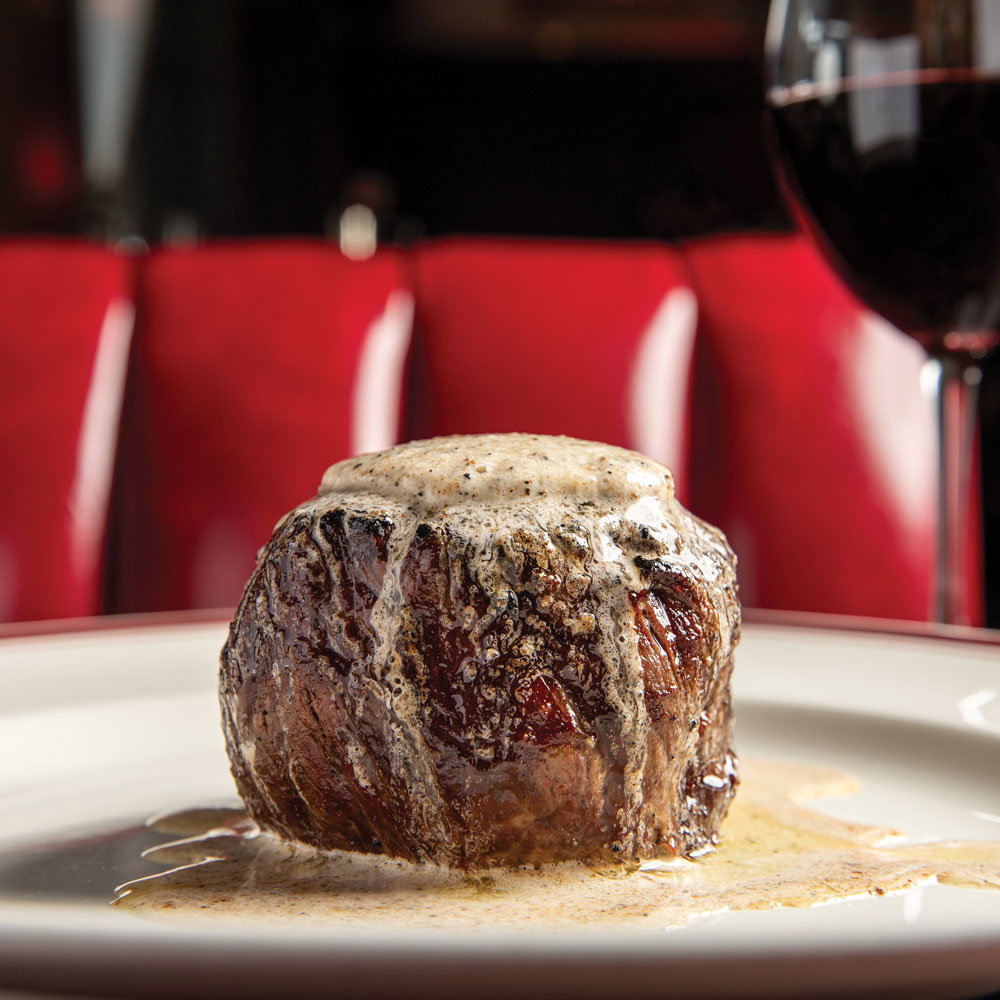
Not surprisingly, the menu’s largest section is dedicated to steak, with three American Wagyu cuts and three A5 Japanese Wagyu offerings, the latter of which are available in portions ranging from four to eight ounces (from $91). My six-ounce American Wagyu filet ($85) arrived perfectly medium-rare, cooked over clean-burning white binchotan charcoal. With its caramelized crust and juicy interior, it was so tender that a knife proved superfluous.

Sides are petite. Mushroom Rice Doria ($16) arrived in a large ramekin, packing a serious flavor punch thanks to shimeji and maitake mushrooms mixed with Koshihikari rice and bechamel and covered with a delightful Parmesan crust. For dessert, the Basque cheesecake ($13)—made with the addition of caramelized satsumaimo sweet potato and topped with juicy cherries—was a sweet send-off.

The check climbs quickly. Case in point: My solo bar visit with one cocktail, an appetizer, and a side dish was nearly $80 with a tip. Still, Koshu Club delivers luxury at every turn, from genuinely welcoming hospitality to dishes made with exemplary, often creative ingredients. It all comes together to create a memorable night out, a luxury in and of itself.

This article appears in our November 2026 issue.

A sweet note: Aria in Buckhead has an impressive new pastry chef

0
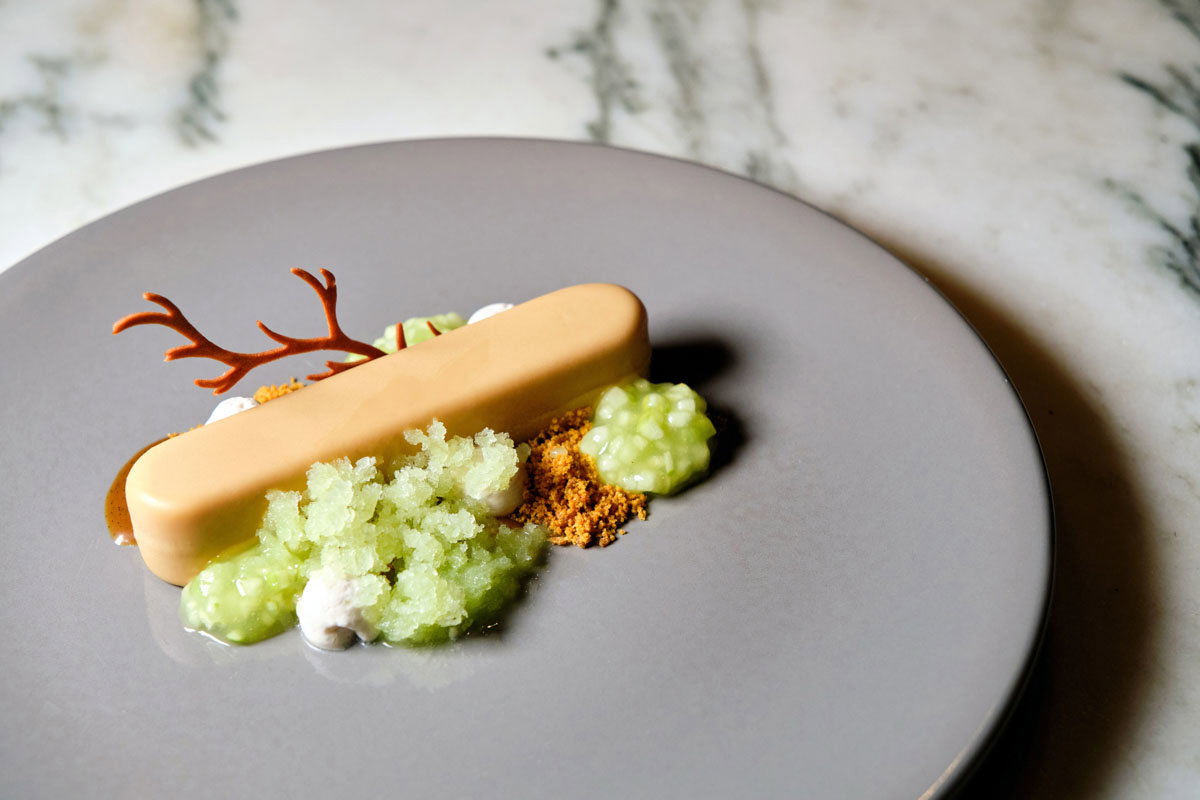
Smoked vanilla mousse with green apple, turmeric, brown butter crumble and caramel. Dish by Aria’s new Executive Pastry Chef Elissa Hayward. 

Photo by Brandon Amato.

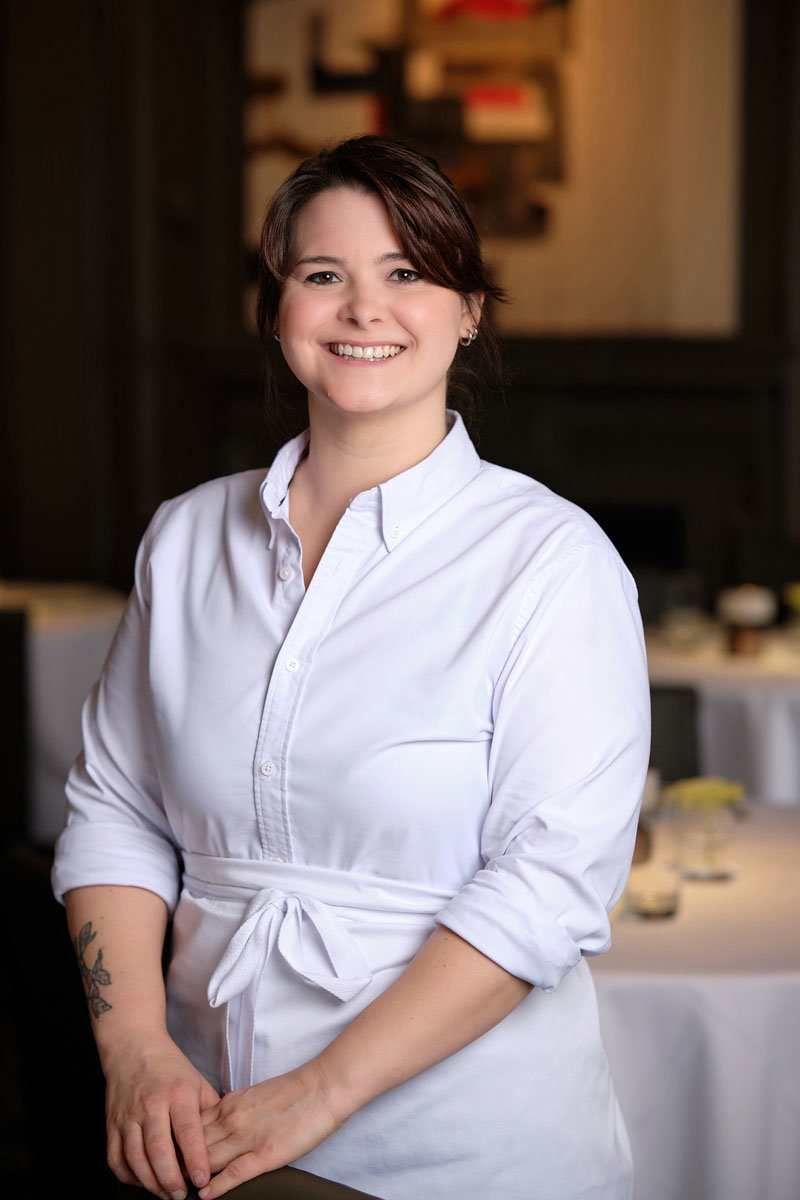
Elissa Hayward, the newly appointed executive pastry chef at Aria, is already making her mark on the dessert menu at the Buckhead institution. She and Executive Chef Austin Goetzman previously worked together at Lazy Betty, so joining forces again felt like a natural fit.

“I love the idea of taking really classic technique and doing it our way—meshing modern food with old technique,” she says.

Hayward’s path to desserts led her through the savory side of the kitchen. The Kennesaw native earned degrees in both the culinary arts and baking and pastry, working at Thomas Keller’s Bouchon Bistro in Napa and as the executive sous chef at MacArthur Place Hotel in Sonoma. Throughout her career, she’s made cakes and taught pastry classes on the side, keeping her love of sweets alive. She moved back to Atlanta, working on the pastry station at Michelin-starred Lazy Betty and then as executive pastry chef at the Deer and the Dove, Fawn, and B-Side, James Beard Award-winning chef Terry Koval’s family of restaurants.

Aria’s new Executive Pastry Chef, Elissa Hayward.

Photo by Brandon Amato.

Since beginning her new post in August, she’s been rolling out one new menu item at a time with the goal of streamlining Aria’s dessert offerings. Once the menu is 100 percent hers, it will feature four items, plus a trio of housemade sorbets, and a few other surprises. She leans in to classic French techniques, but plays with flavor combinations. Just like Goetzman’s philosophy with the restaurant’s savory dishes, Hayward prefers a seasonal approach to dessert.

“I like the idea of changing it up as much as possible,” she says. “I love for things to be constantly changing. I don’t like stagnancy at all.” 

One such dessert that’s tailor-made for Autumn features an entremet—a multi-layer French dessert made of smoked vanilla mousse, accented with  green apple, turmeric, brown butter, and caramel.

Executive Pastry Chef Elissa Hayward’s whimsical desserts fit nicely in Aria’s whimsical dining room, pictured here.

Photo by Brandon Amato.

Hayward’s love of savory dishes is evident in another new offering. Her version of a cheese course has a creamy gorgonzola pannacotto, paired with a spiced poached pear, pear sorbet and candied walnuts. “It’s great for those who don’t always go for a sweet treat at the end of a meal,” she says.

Aria has seen big changes in the last couple of years. Founding owner and chef Gerry Klaskala, who opened the restaurant in 2000, sold it to longtime General Manager Andrés Loaiza in 2025. Then, Chef Joseph Harrison was at the helm of the kitchen for less than a year. Goetzman, who worked under Klaskala early in his career, signed on to lead the kitchen in June.

Hayward knew that her style of highly technical, yet whimsical desserts would fit right in with Goetzman’s vision and Aria’s long legacy of non-pretentious fine dining.

“I just love how Aria is so classy,” she says. “It’s not stuffy. It’s really nice food, done really, really well.”

Buckhead Village District’s explosion of new shops shows Atlanta is retail ready

0
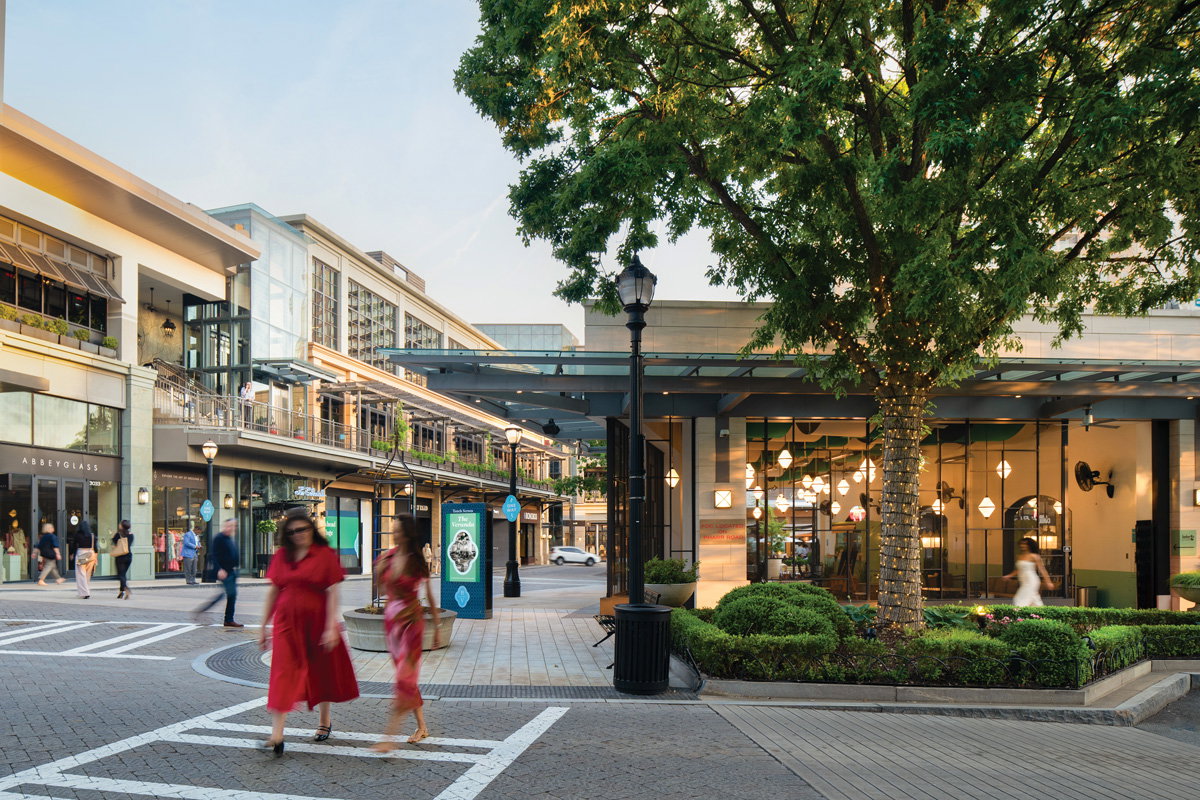
communal areas like the Veranda atrium to support shopping and dining
After taking over the district in 2019, Jamestown added communal areas like the Veranda atrium to support shopping and dining.

Courtesy of Jamestown

In June, women and girls decked out in flirty floral skirts and cream crochet dresses lined up en masse to welcome New York City–based LoveShackFancy to Buckhead Village District. Some had been camped out since 6:30 that morning to peruse the boutique’s vintage-inspired day dresses, silk tops, and soft knits in pastel colors.

It was one of many recent big retail openings at Buckhead Village District: Since 2025, the nine-acre mixed-use development bordered by Peachtree and Pharr roads has welcomed 20 stores. Some of the splashiest newcomers include Jeffrey, Eichholtz, Hill House Home, Me + Em, Tom Ford Beauty, and Roller Rabbit. Next year, luxury fitness and health club Equinox will join their ranks.

Jones Road, the privately owned makeup brand founded by Bobbi Brown in 2020, arrived at Buckhead Village District this summer. Juliet Baker, the brand’s vice president of retail, says e-commerce data showed that Atlanta was a natural fit for its store. “It’s a North Star for so many businesses because it’s your source of truth to be able to say where my customer already is,” she says. The data was correct: On Jones Road’s opening day, it too saw lines wrapped around the block.

“Atlantans are hungry for a premium experience,” says Adam Schwegman, director and head of retail leasing at Jamestown, which has owned and managed Buckhead Village District since 2019.

The district’s momentum has been years in the making. When Jamestown took the reins from San Diego–based developer OliverMcMillan, the property—then known as The Shops Buckhead Atlanta—was in an identity crisis, Schwegman says. It had been billed as the “Rodeo Drive of Atlanta,” but that ultraluxury vision didn’t resonate with locals, and the district suffered from low foot traffic. Some brands, including Tom Ford and L’Occitane, left to go back to the malls, and others, such as swimwear brand Vilebrequin, departed Atlanta altogether.

Schwegman says there was local support for a rebrand focused on more accessibility and community, not just luxury names. “We solicited quite a bit of community feedback and found out people wanted a more dynamic neighborhood,” he says. “They did not want to shop somewhere sterile, like a museum. They wanted more fun.”

Jamestown invested in programming, including springtime’s annual Bodacious Blooms Flower Festival, and gathering spaces like the Veranda, a two-story atrium. It also added more dining (Yeppa & Co., Carmel, Brush Sushi, Boba Craze, and Y Bar e Ristorante have all opened since 2023) to make Buckhead Village a destination beyond shopping.

Schwegman says that for the first time since 2006, there’s now a waitlist for leases. Part of Buckhead Village District’s appeal, he says, is that it’s a collection of city blocks where Jamestown doesn’t own every parcel: “It has the authenticity of a real street environment, and Atlanta’s never really had that.”

This article appears in our October 2026 issue.

10 of Atlanta’s Best Steakhouses: Luella

0

The warmly-list, green interior of Luella

Luella has, as the kids call it, a vibe. Situated in the manor-style building on Roswell Road that previously housed the Ivy—where 20-somethings sipped cocktails and danced to Whitney Houston remixes—the Buckhead steakhouse carries that buzzy energy forward. (The Ivy’s former owners, brothers Jamey and Benjie Shirah, now run Luella.) The circular, Mad Men–esque bar has been packed every evening since the restaurant’s late-2025 opening, welcoming a well-heeled crowd that skews about 20 years older than the Ivy’s devotees. In the adjacent open dining room, Justin Timberlake’s “Cry Me a River” thumps in the dimly lit space.

Executive chef Stuart Rogers takes a “something for everyone” approach: Pastas! Sushi! Steaks! This much variety can often lead to diluted quality, but so far, Luella has managed to avoid that pitfall. The burrata spreads like butter on toasted bread drizzled with pesto and truffle honey. The fan-favorite Caesar salad lives up to its hype, complete with edible cured lemons that add zesty sweetness and a dusting of parmesan “snow.” Luella’s akaushi wagyu New York strip is a steakhouse rarity, but the showstopper is the tender, eight-ounce rib eye spinalis al limon, brushed with a mouth-tingling lemon-chili sauce. Still feeling the vibe after dinner? Landmark dance club Johnny’s Hideaway is down the street.

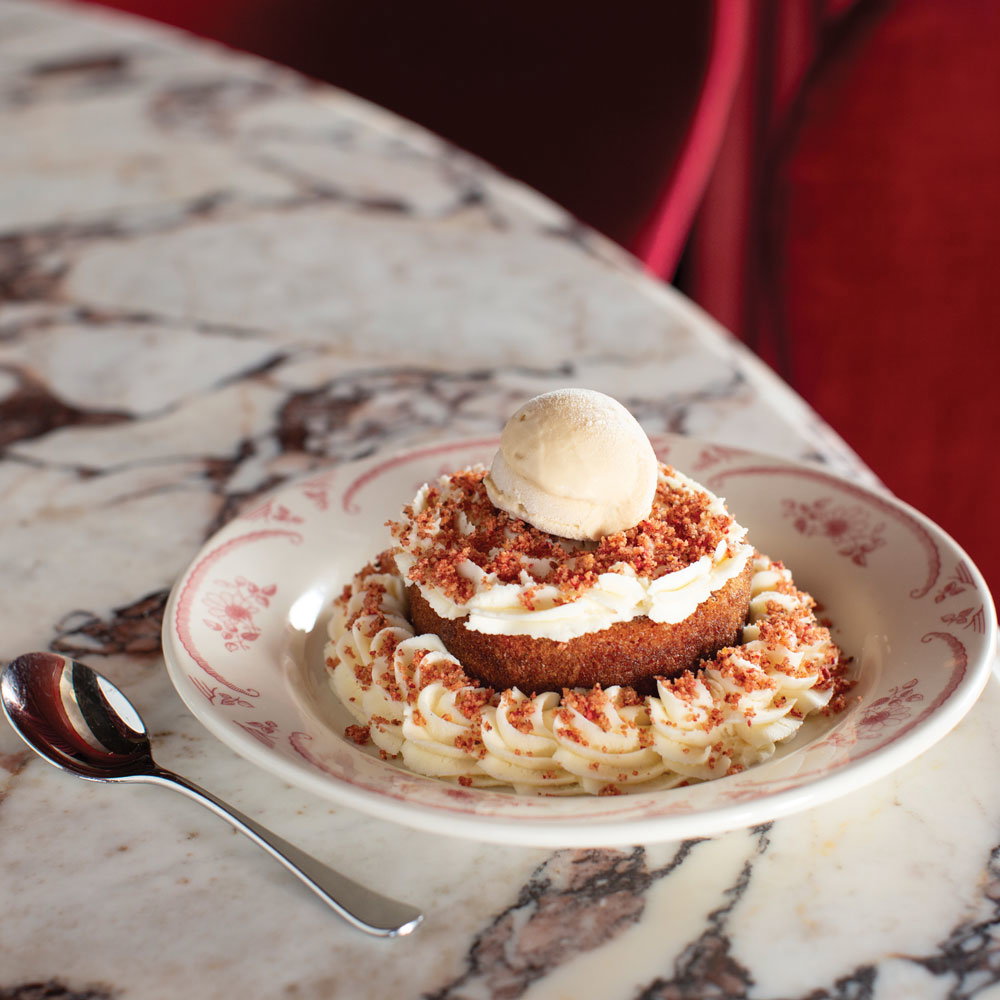
A garnished steak A dessert topped in frosting

Back to Atlanta’s 10 Best Steakhouses.

This article appears in our October 2026 issue.

10 of Atlanta’s Best Steakhouses: Bones

0

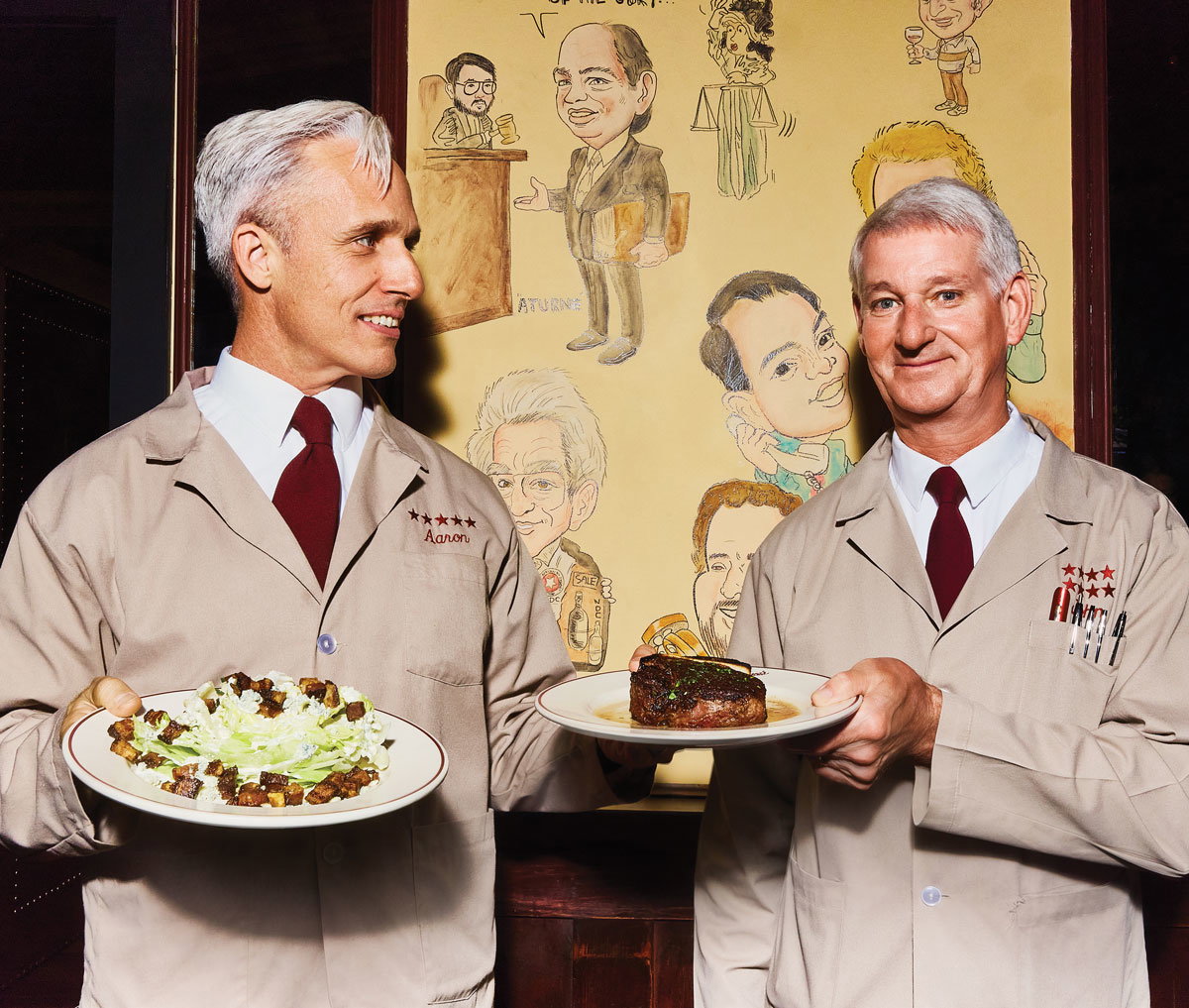
A server, Aaron, and John Wenger smile and hold plates of food

To fully appreciate Atlanta steakhouses, you must visit Bones. For nearly 50 years, its burgundy awning on Piedmont Road has signaled the way to an oasis of civilized indulgence. The restaurant serves Atlanta families, business diners, celebrities, and fussy journalists, including former Atlanta magazine food editor and restaurant critic Bill Addison, who made it his last restaurant meal before moving out of state for his next gig.

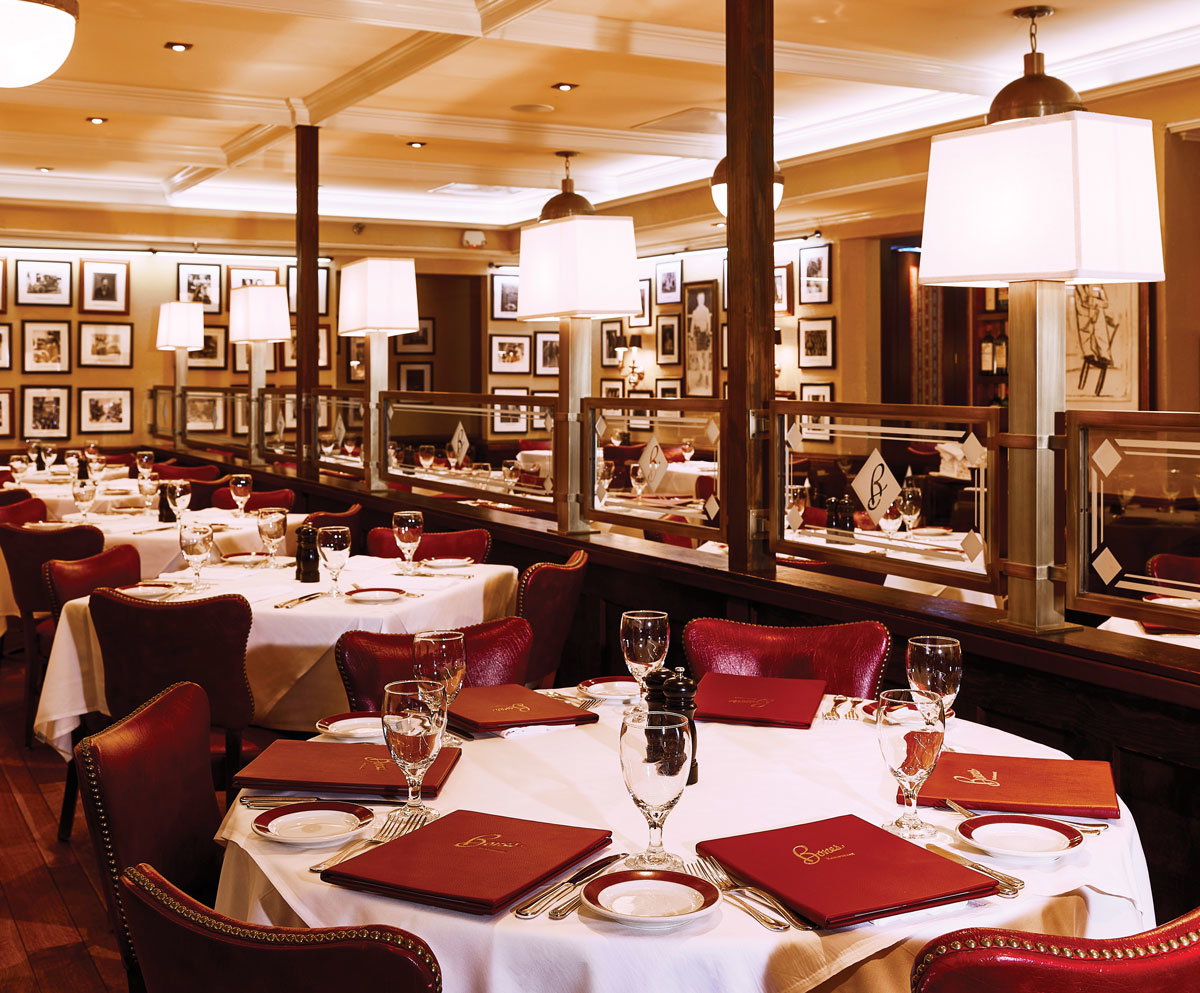
Upon entering, the faintest whisper of gin and vermouth hangs in the air as you straighten your button-down collar or adjust dipping décolletage (dress code, check). On the way to the host stand, you’ll pass a lounge area and a clubby bar on a raised platform (a stoic and decorative pair of hunting hounds stand guard). Nearby walls are lined with caricatures of regulars and a few notable Atlantans, such as Hank Aaron.

Uniformed servers are attentive to the nth degree; a stray morsel from the complimentary boule loaf doesn’t stand a chance against their vigilant crumb scrapers. Each of the stars on your attendant’s jacket indicates five years of service. The reigning server is John Wenger, with eight stars and 41 years to his credit.

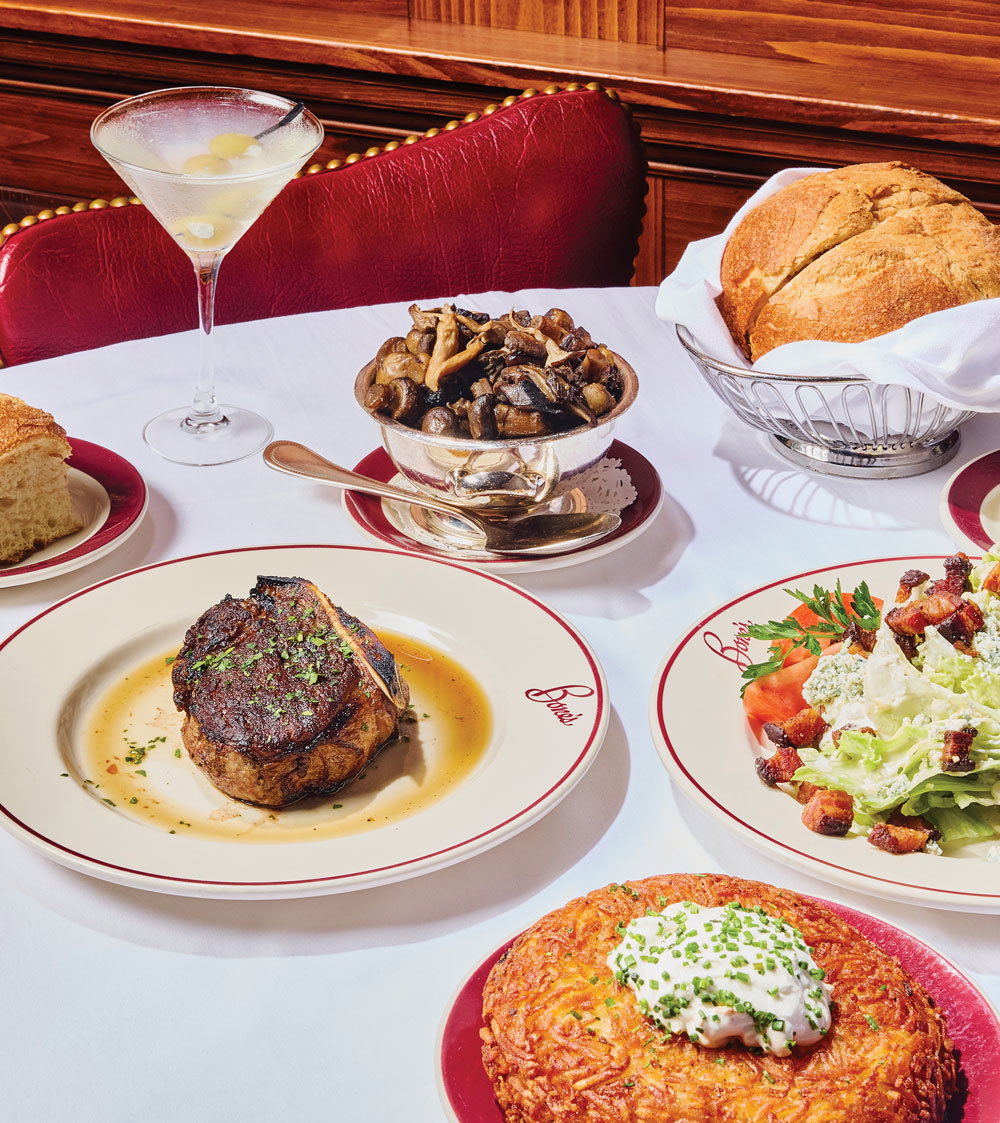
Plates, bowls, and cocktails on a dining table The interior of Bones Buckhead

Tried-and-true starters and sides include the signature Bones salad (Bibb lettuce, Stilton crumbles, green apple slices, toasted pistachios, and house vinaigrette), lobster bisque, hash browns with sour cream, sauteed spinach, and truffle-butter mashed potatoes. The deft preparation of some half-dozen steak selections—from bone-in filets and porterhouses to Japanese Wagyu A5 New York strips—remains constant and worthy of respect.

Back to Atlanta’s 10 Best Steakhouses.

This article appears in our October 2026 issue.

10 of Atlanta’s Best Steakhouses: KR SteakBar

0

Strips of signature steak covered in cilantro

In Atlanta’s steakhouse landscape, KR SteakBar sits firmly in modern times. With its sleek, illuminated wall panels, bottle-shaped pendant lights, and stylish crowd, it could easily pass for a new restaurant, though it first welcomed diners in 2013. A walkway of lush green plants greets you at the entrance, nodding to the robust tree canopy of the surrounding Peachtree Hills neighborhood. Diners are treated to the flicker and flare of flames from the woodburning grill in the open kitchen at the back of the restaurant as they wait for their meals.

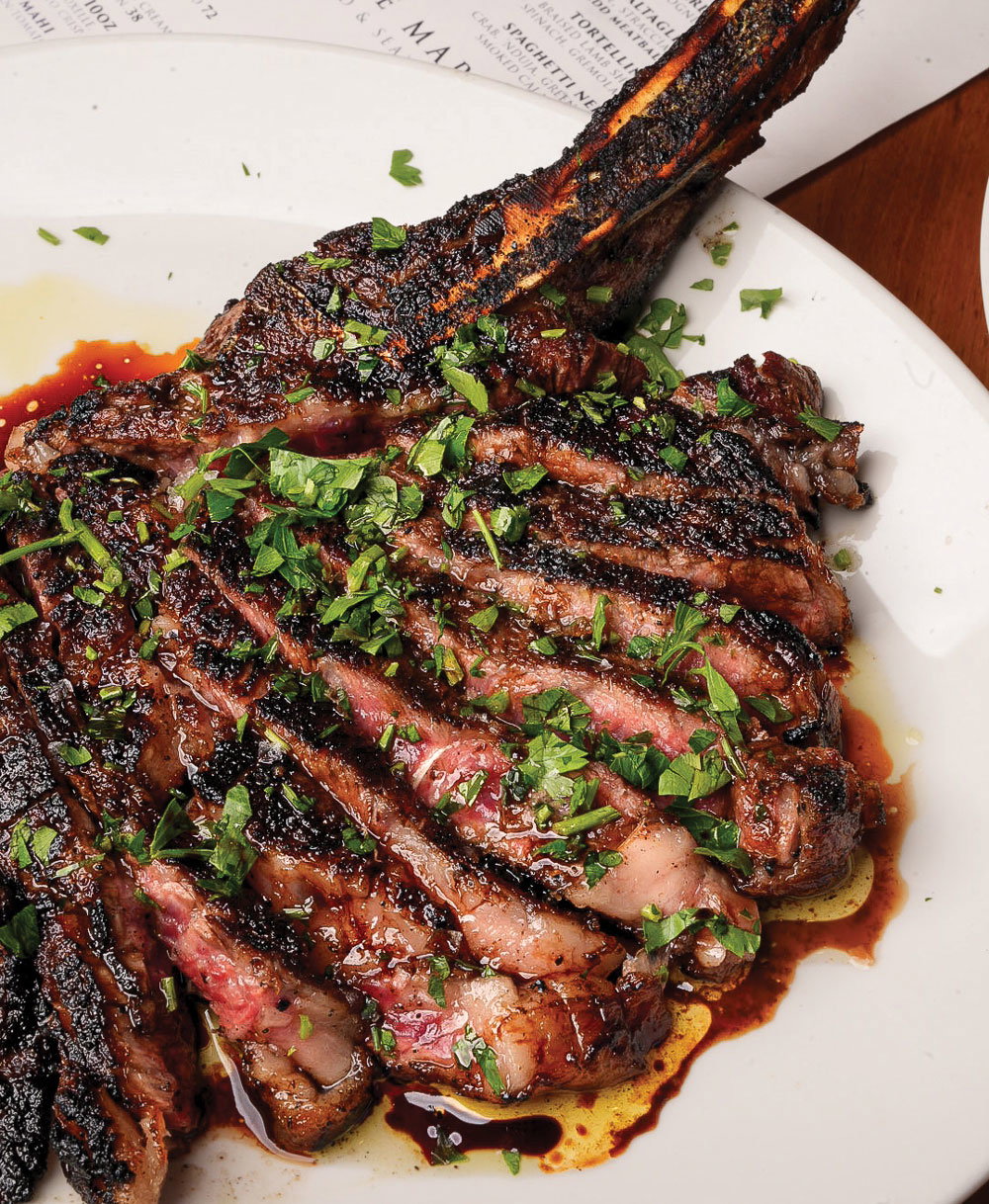
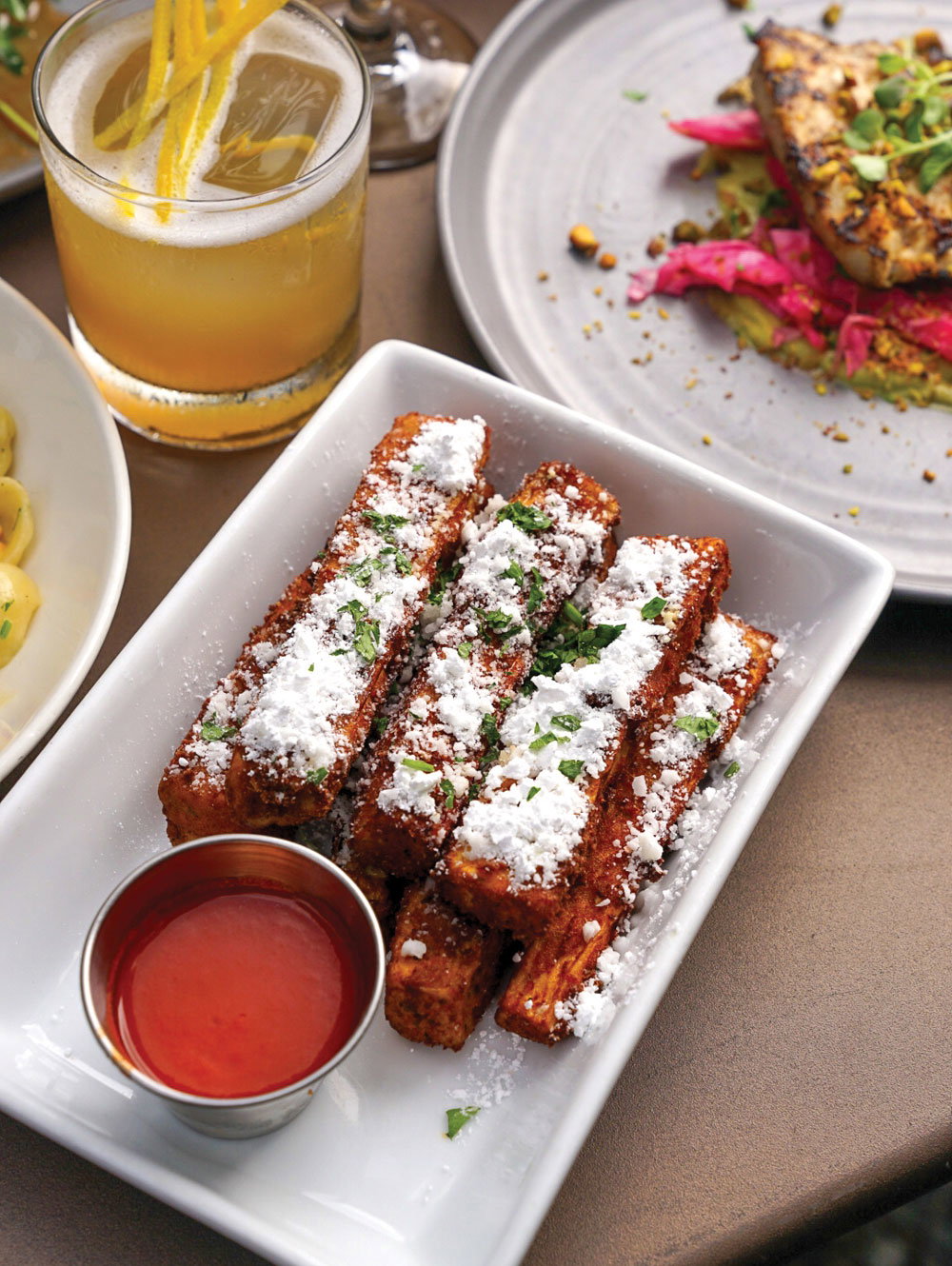
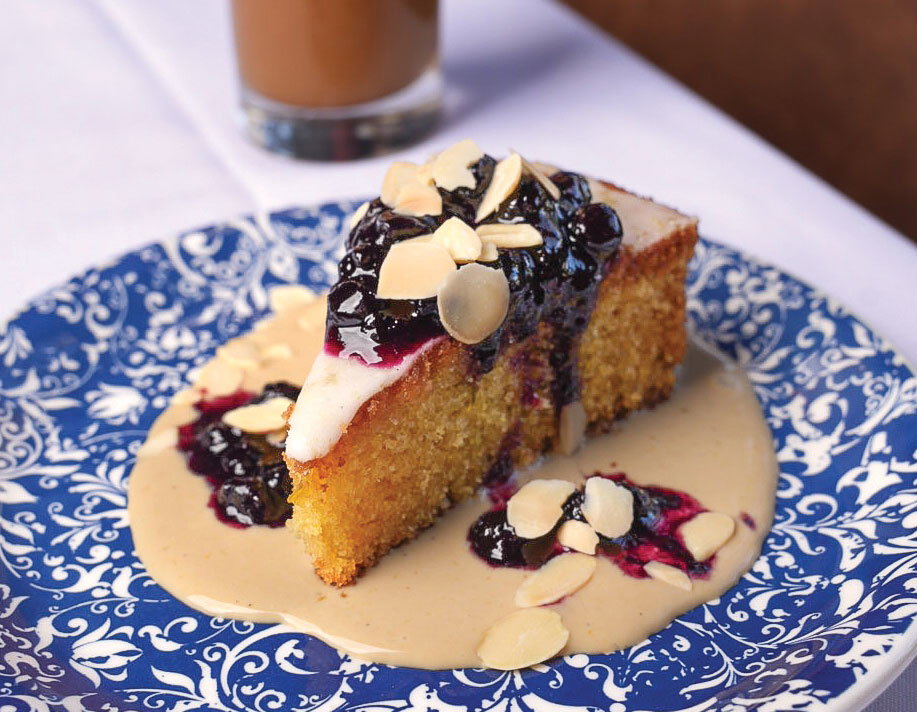
Pastas are made in-house and are a must-try. The pappardelle with pork and beef Bolognese is a flawless execution of a traditional Italian staple—rich, toothsome, and packed with flavor. The signature steak cut is the spinalis, the most marbled part of the rib eye, which is served with a whole roasted garlic clove and half a charred lemon. The steak is lightly salted and glazed with aged balsamic, which adds unexpected sweetness to the flavor profile. Fingerling potatoes are parboiled and then fried and come with a fantastic parmesan aioli that had me pulling an employee aside to ask what was in it (the not-so-secret ingredient is parmesan, but the trick is to grate it so finely, it folds seamlessly into the aioli). Yaya’s eggplant fries are crisp, dusted with powdered sugar, and served with a vinegary house-made hot sauce, creating a harmony of spicy, sour, salty, and sweet. The wine pours are generous, and the service is warm and attentive. The lemon curd pudding cake was a modern take on a traditional ricotta cake and a bright and balanced end to the meal.

Eggplant fries covered in powdered sugar with a side of hot sauce Lemon curd pudding cake covered with jelly sauce

Back to Atlanta’s 10 Best Steakhouses.

This article appears in our October 2026 issue.

10 of Atlanta’s Best Steakhouses: Hal’s “The Steakhouse”

0

Hal's warmly lit brick and wood interior

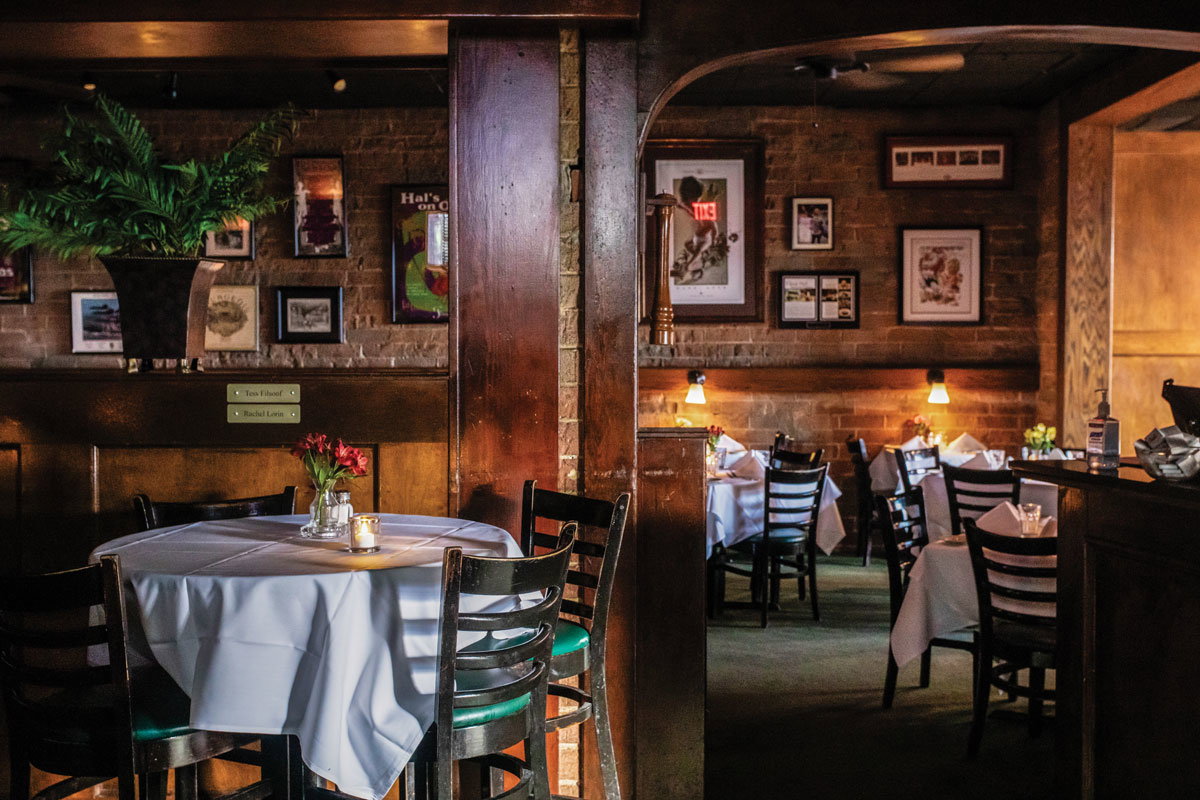
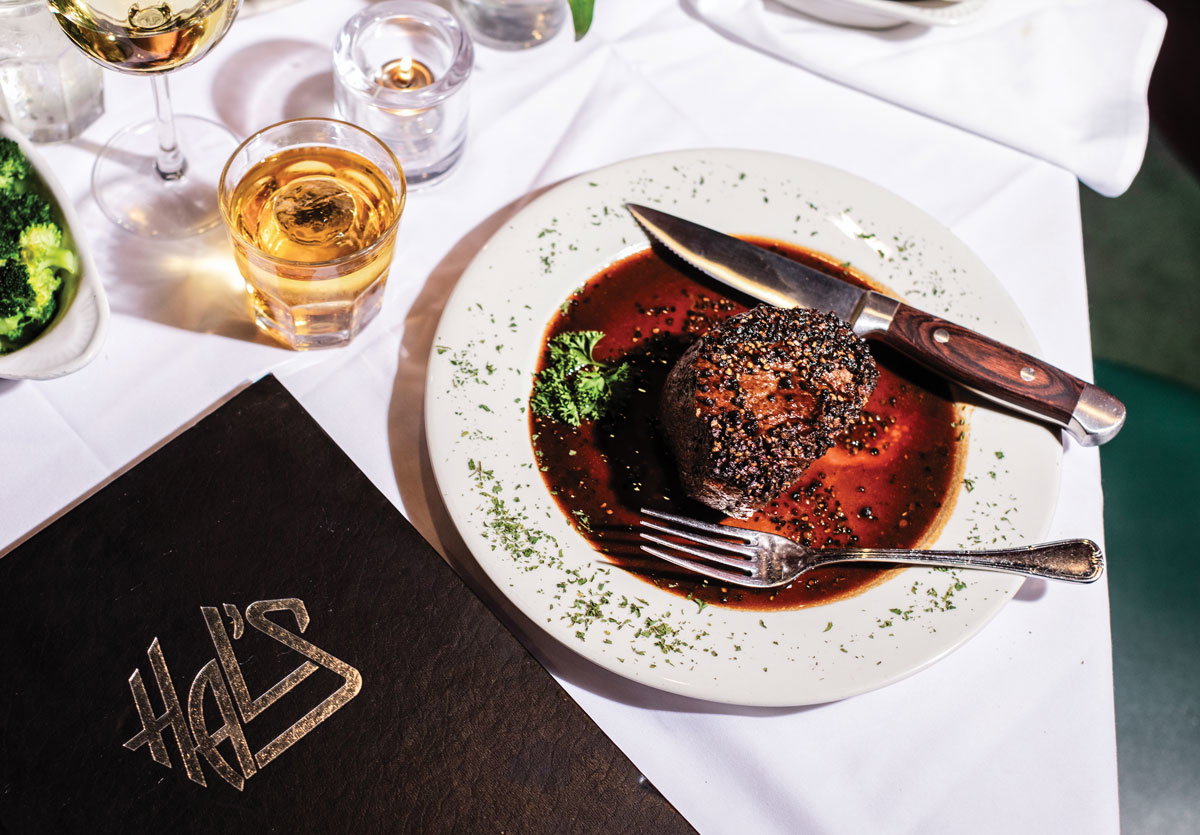
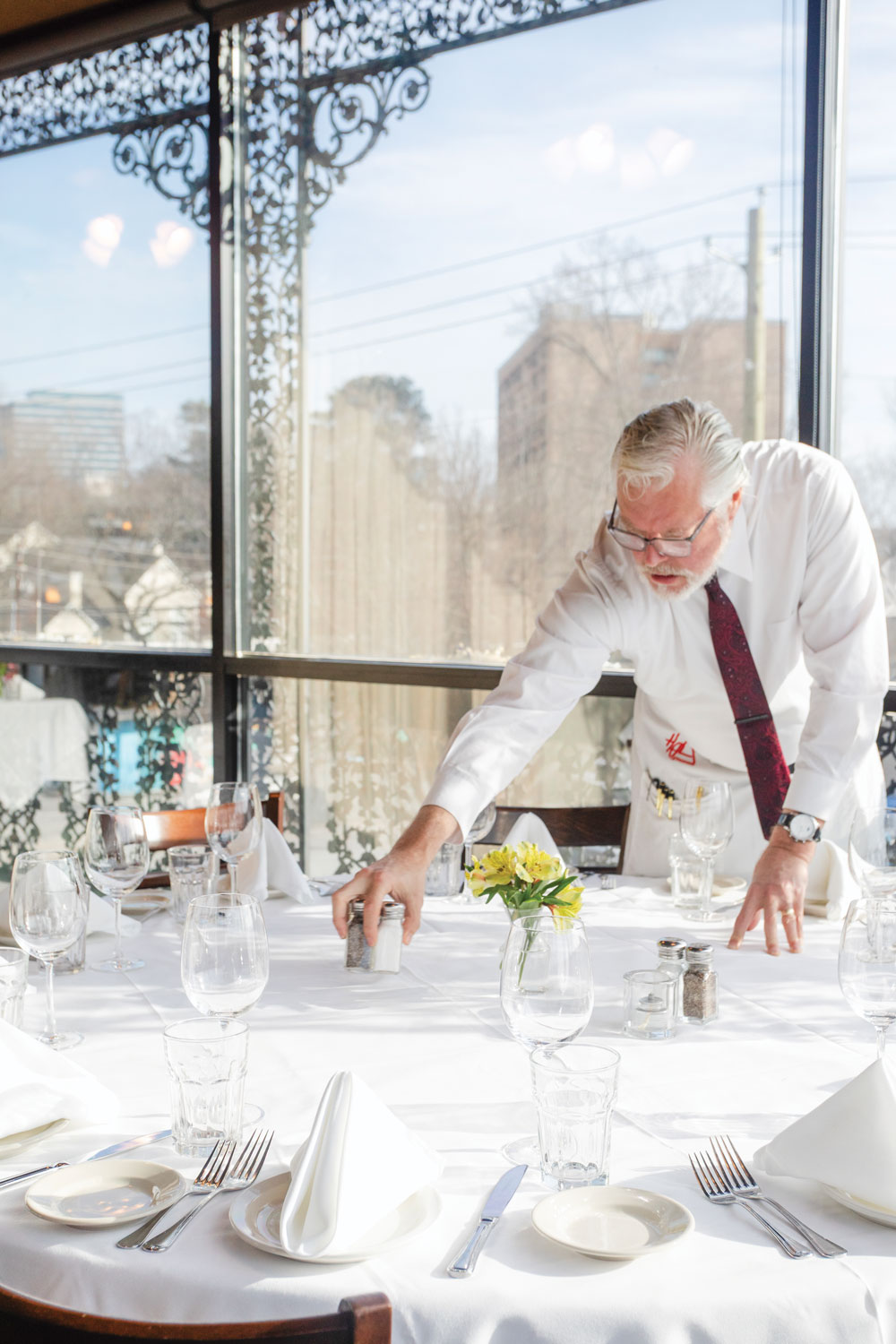
When we walked into Hal’s, I thought, Wowza, what a throwback. The walls are lined floor-to-ceiling with dark-wood paneling, and the atmosphere is loud and lively, with a piano player tapping out Phil Collins and Eric Clapton ballads. Meanwhile, the crowd squeezes into tightly packed tables to celebrate birthdays and anniversaries. Hal’s has occupied a stretch of Old Ivy Road for almost 40 years, and its waiters still bustle around in white button-down shirts, ties, and half aprons, efficiently serving classics to a broad spectrum of steak lovers, from a glammed-up girls-night group to a family celebration. We ordered the Hal’s rib eye, and its crispy, buttery exterior was packed with flavor; the meat was so tender, my knife glided through. My eight-year-old dining companion exclaimed it was the best steak he has ever had. The brussels sprouts are peppered with bits of bacon, and the potatoes are cubed, perfectly fried morsels. Warning: Hal’s cigar-friendly bar means you get your steak with a side of cigar smoke on some nights. But if you spend enough time with the regulars saddled up to said bar, you might earn honorary wise-guy status. And if you can’t get enough of all things weird and wonderful about Hal’s, be on the lookout for a new location opening in a historic funeral home in Midtown in Spring 2027.

A steak sits in juice next to a Hal's menu A waiter organizes a table with white tablecloth

Back to Atlanta’s 10 Best Steakhouses.

This article appears in our October 2026 issue.

10 of Atlanta’s Best Steakhouses: Chops Lobster Bar

0

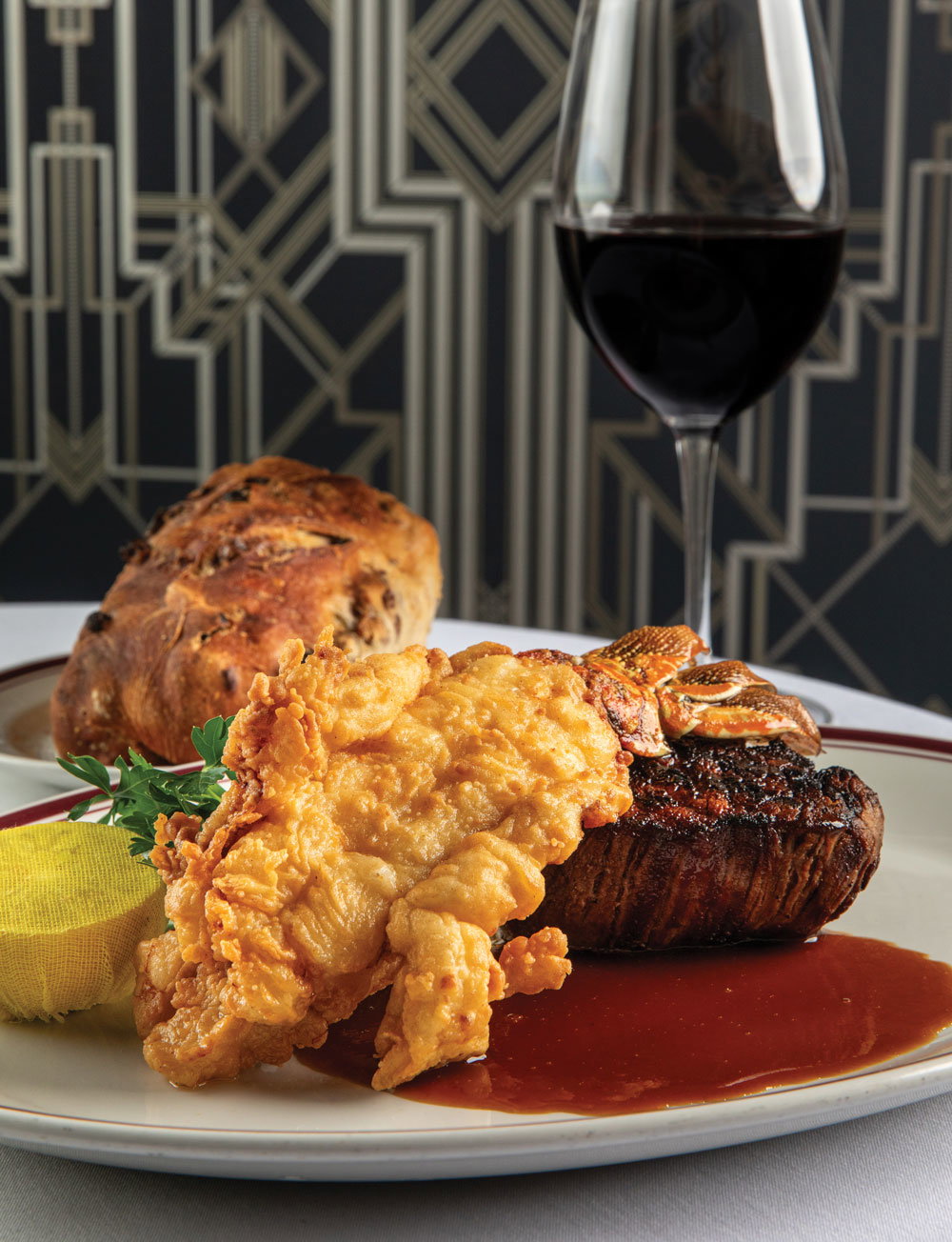
A fried lobster tail on top of a steak with a glass of wine in the background

Atlanta, thankfully, is no longer run by the good ol’ boys club, but Chops Lobster Bar’s rich mahogany interior makes anyone feel like an insider. Buckhead Life Restaurant Group founder I. Pano Karatassos launched Chops in 1989 on West Paces Ferry Road, intent on bringing Atlanta a world-class steak-and-seafood experience. More than 30 years later, a meal here is as timeless as an heirloom watch and as fresh as the Nova Scotia lobsters that are flown in daily.

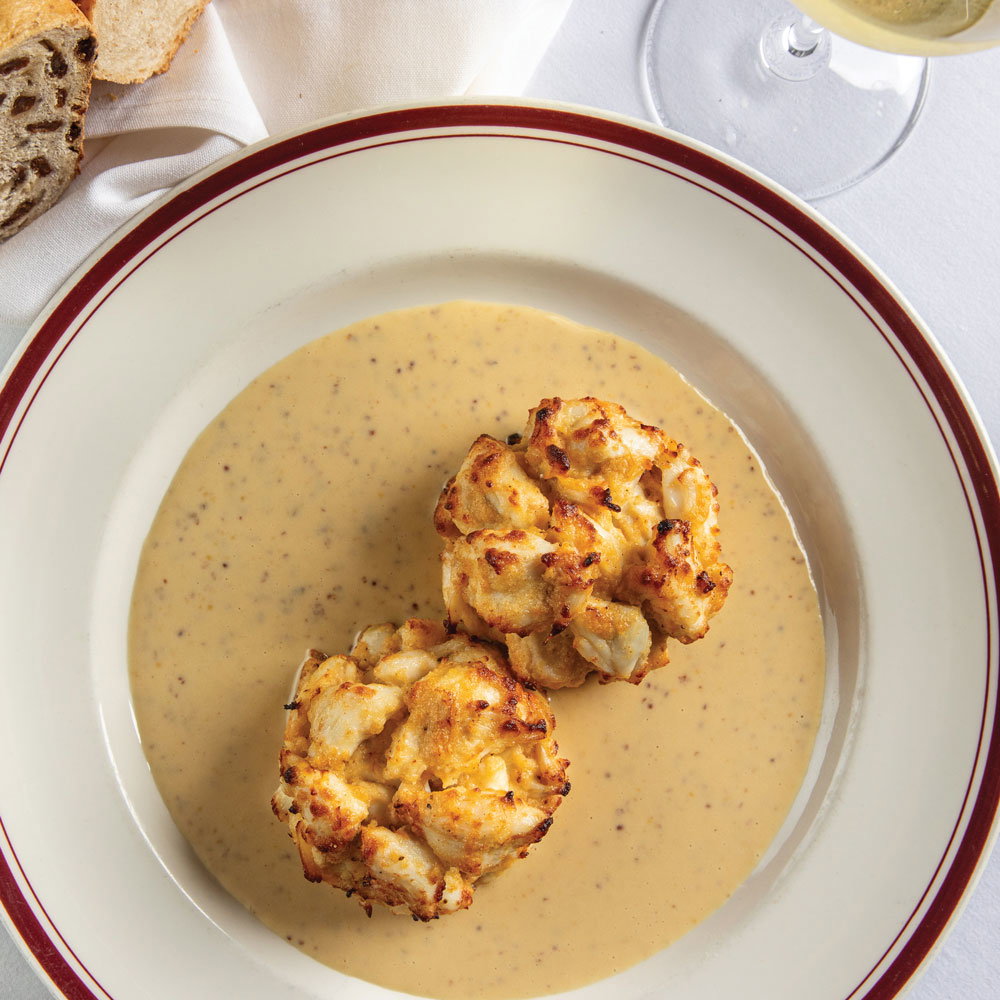
Start your meal on the “surf” side with a Chops classic, the South African lobster tail; it comes ever-so-lightly breaded and served with lemon and a tangy honey-mustard dipping sauce. The Maryland crab cake, generously assembled with fresh-cracked lump crab, could easily be served shoreside. When it’s “turf” time, opt for a Chops mainstay, the filet mignon pepper steak, the rarer the better. It’s crusted with fragrant peppercorns and draped in a velvety au poivre sauce you’ll want to lick from the plate. Specialty cuts abound, too, and you can rarely go wrong: Chops’s steaks are fired in a custom-built, 1,700-degree oven that caramelizes the outside while leaving the interior meat mouthwateringly tender. For dessert, honor the memory of the now-shuttered Buckhead Diner, another Karatassos creation, with its James Beard–winning white-chocolate banana cream pie. A single bite confers entry among its devotees—an insider club we never want to leave. The restaurant expands on its cachet with two Atlanta area locations — one at Centennial Yards Downtown, scheduled to open in summer 2027, and another in Johns Creek set to open in 2028.

Two Maryland crab cakes in a bowl of sauce A juicy steak on a plate with a glass of wine in the background

Back to Atlanta’s 10 Best Steakhouses.

This article appears in our October 2026 issue.

Follow Us

69,386FansLike
144,836FollowersFollow
493,480FollowersFollow

NEWSLETTERS