Monday night, mid-October, serial contender Buffalo in the house. Road-tripping Bills fans rolled in by the busload to fill swaths of seats inside sold-out Mercedes-Benz Stadium, complicating Atlanta’s home-field advantage. Yet the 2025 season was still young enough that even habitually defeatist Falcons fans showed up in droves and sounded, after seven straight losing seasons, strangely optimistic. In a unified display of ATL-ism, it seemed like every one of them—except, I think, me—spit out Jeezy’s halftime-show rhymes with full-throated, phone-wagging gusto.
Our optimism centered on one dude: Bijan Robinson. The Falcons’ top draft pick two years earlier, he’d already become, in a league loaded with eye-popping athleticism, a thing to see. It wasn’t just his impressive stats, which placed him among the NFL’s top running backs. When you watched Robinson, you expected to see something . . . else. Something more. Something you couldn’t believe you just saw.
Robinson running the ball at Mercedes-Benz Stadium in 2025
Photograph by Todd Kirkland/Getty Images
This night’s nobody-but-Bijan moment unfolded on the Falcons’ own 19-yard line. Struggling quarterback Michael Penix Jr. did the wisest thing a struggling quarterback could do and handed Robinson the ball. It was an unfussy play that looked as basic as Psst, kid, run this across the street and don’t get caught.
That’s what Robinson did. He slipped through a narrow gap on the line’s right side that his blockers widened into a virtual throughway. He then sprinted upfield and toward the sideline, leaving everybody—blockers, tacklers, officials—behind. At midfield, however, a determined Bills defensive back appeared to have a bead on him, charging at Robinson full speed before leaving his feet to wrap both arms around the running back’s torso.
That’s when Robinson did the something I couldn’t quite believe I saw. With the defender draping him, Robinson just . . . kept running, his feet inches from stepping out of bounds. Ball tucked in his right arm, he then brushed the would-be tackler aside with the slightest wave of his left wrist—not a stiff-arm, not a shoulder shake, but a move you’ve probably used yourself to shoo an old dog from the dinner table. The Bills defender slid down Robinson’s thighs, then his knees, then his cleats. Robinson barely broke stride. The defender finally fell away, discarded, likely questioning his self-worth.
From my angle, peering down the same sideline, it looked as if the defender’s arms had gone right through the 5-foot-11, 215-pound Robinson, as if they were grabbing at air or a ghost or a daydream. Former columnist for The Athletic and TheAtlanta Journal-Constitution Jeff Schultz mused to me later, “It’s almost like there’s two Bijans: There’s the one with the ball, and there’s a hologram. And the defender is tackling the hologram.”
Robinson finished his 81-yard bolt alone in the end zone, where he raised one finger roofward and flipped the ball into the stands. He’d gain another 157 yards that game, keying the Falcons’ upset victory and further stoking the hometown fans’ hopes. But the touchdown also gave us something to remember, to post, to hold on to when the good times went south, as they’ve done too often for the Falcons. Case in point: Following the big win, Atlanta lost seven of its next eight games, ensuring yet another losing season.
But this night was about hope and miracles, and the shoulders they rested on. In the locker room afterward, receiver Drake London, the Falcons’ other elite playmaker, tried to explain what he’d witnessed. “There are some people who are just born to be a certain athlete,” he said. “Like you have certain people who are born to be basketball players, such as LeBron [James]. You have people who are born to be football players, like they have the perfect body shape for it.”
London then applied his curator’s eye to what makes Robinson special. He may not know exactly what that is, but he knows it when he sees it. Game recognizes game.
“[Bijan] goes out there,” London pronounced, “and it’s like art.”
• • •
Jacket: Loewe at Saks Fifth Avenue Atlanta; pants: Reiss; necklace: Brown & Co.
Photograph by Alex Martinez, styling by Fatiyha Johnson, grooming by Danielle Mitchell
Atlanta has seen its share of great athletes. But only a handful have possessed an athleticism so elite, with a style so singular, that they could be counted on to do what seems impossible, night after night. These players have eclipsed the game and entered the realm of something, as London put it, like art.
Three come right to mind: Dominique Wilkins, Michael Vick, and Julio Jones. As a Hawk, Wilkins specialized in whirling, almost criminally vicious dunks that earned him a nickname that speaks for itself: the Human Highlight Film. Vick’s breakneck, ad-libbed elusiveness was so unlike anything a quarterback had ever flashed that he became, before his well-documented troubles began, football’s reigning cheat code. Julio Jones’s acrobatics, combined with his brute physicality and world-class sprinter’s speed, made the receiver a likely first-ballot Hall of Famer.
Now there’s Robinson, only 24 years old and already dropping jaws. Will he be the newest face chiseled into Atlanta’s swaggy Mount Rushmore?
Posing with NFL Commissioner Roger Goodell at the 2023 NFL Draft
Photograph by David Eulitt/Getty Images
“It’s crazy you say that,” Robinson says when I roll out my conceit about this select group. We’re sitting inside an airy conference room at the Falcons compound in Flowery Branch, where summer minicamp recently ended. “I talked to Dominique at a [Hawks] game, and he said the exact same thing. He said, ‘You bring the swag like the city is used to. You’re a part of that now.’ He was like, ‘Just embrace it and do right by it, and they will do everything for you. Just keep being yourself.’”
I call Human Highlight to elaborate.
“I love watching this guy play,” Wilkins says. “I mean, if there’s a guy who can carry that torch, he’s the guy. I’m hoping he continues on this road and becomes that next iconic player in this city.”
Robinson goes about his business off the field about as artfully as he does on it. Placed back-to-back, his endorsement deals—including his own condiment, Bijan Mustardson—might stretch the length of a football field. He supports a string of charities. Young clubbers went wild when he guest deejayed at District, Atlanta’s electronic dance-music hot spot.
Arthur Blank, who signed checks for Vick and Jones, tells me of Robinson, “As an owner, you’re always proud when you have a player with that kind of talent, but you’re even prouder when they represent your organization the way Bijan does.”
Greeting Jaylan Ford of the New Orleans Saints after a January game
Photograph by Kevin C. Cox/Getty Images
Robinson presents as humble, upbeat, engaged. He’s quick to give the glory. He says the right things without sounding overprogrammed. “He’s got this ridiculous charisma and knows about being a star when he’s out in public,” says Atlanta sports radio host Steak Shapiro. “He’s built to be a star.”
Still, there’s one box Robinson hasn’t checked. Doing so is as much in the Falcons’ hands as it is in Robinson’s. But if it goes unmarked for too long, it could become an asterisk attached to an otherwise transcendent career.
“All that’s missing,” Shapiro says, “is playoff games and playoff moments.”
• • •
Robinson wasn’t born with a football in his hands. It just seems like it. He toted one to his first haircut; snuck one into church, where his grandparents admonished him; cradled one while sprinting down grocery-store aisles, heading straight at people’s carts until, last second, he spun around them.
“I still do it to this day,” he says, laughing at how he feints and stutter-steps to avoid invisible defenders when he walks past blind corners inside his house.
Robinson with with his grandfather Cleo
Courtesy of Terri Robinson
His earliest influence was his maternal grandfather, Cleo Robinson, a former college football player and longtime Pac-10 Conference field official. (His great-uncle, Paul Robinson, played professionally for six seasons.) Robinson’s mother became pregnant with him while attending junior college, and she and Bijan eventually moved into her parents’ house in Tucson, Arizona. Robinson says of Cleo, “He became my dad.”
When Cleo brought home programs from games he officiated, young Bijan cut out players’ photos and attached their faces to his collection of mini plastic football helmets. He’d arrange them in formations and play out imaginary games in his head.
“I just visualized everything on the field,” he says. “So when I started playing tackle football when I was seven, I was already seeing things on the field. I could see the levels open up.”
Seated beside his grandfather while he watched film of Pac-10 teams, Bijan became captivated by Reggie Bush, University of Southern California’s Heisman Trophy–winning running back. He watched Bush’s film obsessively, often falling asleep to it after his mother put it on when he went to bed.
“I was doing those same moves to all these other kids, even going to the park and doing all this stuff,” he says. “And all these kids are like, ‘Whoa!’ Like they haven’t really seen that before.”
Robinson as a young player
Courtesy of Terri Robinson
Off the field, Robinson imitated his grandfather. “Every room he walks in lights up because he makes everybody smile,” Robinson says. “He used to do cool things for my grandma. He’d tell me, ‘Watch this,’ and he’d open the door for her. Little things like that. He taught me to be respectful to everybody.”
By middle school, Robinson had mapped his future’s throughline. His grandmother Geraldine gave him sticky notes to write down his life goals and put by his bedroom door. First thing Robinson wrote, in bold letters: NFL. He also wrote Best player in college, First round draft pick, and Give God all the glory. His grandmother revisited the list after his sophomore year of high school, when Robinson was rated the nation’s top back in his class. Staring at it, she told him, “This thing could actually be something.”
• • •
Starting in the fall of 2020, Robinson played three seasons at the University of Texas. Coaches promised to feature him as a dual-threat running back, both to exploit his pass-catching ability and to cut down on the volume of punishing rushes. It took him a minute to adjust to college ball’s speed during his freshman season. But by early December 2020, in the biting cold at Kansas State University, he had his Matrix moment, the quiet, hyperaware flow state that elite athletes often talk about reaching. The game suddenly transfigured into something like three-dimensional chess, with Robinson seeing three and four moves ahead.
Robinson at the University of Texas
Photograph by Tim Warner/Getty Images
He was unstoppable. He ran the ball only nine times but averaged an almost-unheard-of nearly 20 yards a carry. He also caught three passes for 51 more yards. “I saw everything slow down,” he remembers. “I saw where I had to cut, the angles, everything. It was one of those moments where you know life started to change.”
Life changed big-time the next summer, the first year that college athletes could be paid through NIL deals. After signing with chicken franchise Raising Cane’s, he inked deals with a queue of others. The highest profile: Lamborghini.
“Now there’s a trend of all these colleges having the Lamborghinis, all these crazy cars,” says Robinson, not quite smirking. “I think I started that.”
Yet while Georgia Bulldogs quarterback Carson Beck took a ton of grief when he tooled around Athens in his NIL Lamborghini, Robinson’s outgoing personality and easy embrace of business—he has spoken twice about NIL and branding at Austin’s SXSW festival—shielded him from most criticism. During his last two years at Texas, Robinson reportedly collected $1.6 to $2 million.
Signing an autograph at Falcons training camp
Photograph by Shanna Lockwood/Atlanta Falcons
“He created a brand the minute he came in here: How he acts, how he treats people, how he moves,” then Texas Longhorns running backs coach Tashard Choice said of Robinson at the time. “People want to attach themselves because of who he is.”
Robinson approached the blizzard of deals the same way he navigated swarming defenses. “I was like, God, just let it all slow down,” he says. “I didn’t expect NIL to come in my college career. It was all happening so fast. The email, social media, just everything was growing so fast. I’m having conversations with financial advisers.”
It finally slowed—his Matrix moment arrived on the business side—when he realized his most effective strategy was being himself.
“I just used my personality,” he says. “I enjoyed it.”
• • •
Robinson’s first two seasons with the Falcons were good—for most backs.He gained a lot of yards, but there were few big, breakaway runs. The longest was 38 yards.
He stuck to the process he’d followed as a kid. Before the 2025 season, he devoutly studied film of other elite backs, including Hall of Famers Barry Sanders and LaDainian Tomlinson. He also broke down tape of athletes in other sports, anatomizing the footwork of basketball players like all-star guard Kyrie Irving. He spent a month that summer in Los Angeles training with the San Francisco 49ers’ Christian McCaffrey, the prototype dual-threat running back renowned for his fierce, high-tech workouts.
The two swapped trade secrets, fueled their competitiveness, and concentrated on recovery. They climbed into a space-capsule–like chamber called Stratosphere ATC and simulated training at 18,000 feet.
It paid off. Last season, Robinson led the NFL in combined rushing and receiving yards—edging out second-place McCaffrey.
Big plays became expected. He topped his 81-yard touchdown run against Buffalo with a 93-yarder against the Los Angeles Rams. He sliced and slashed and dipped and sluiced across the turf like a slalom skier; one TV analyst said watching Robinson’s seemingly effortless deceits was “like watching liquid run.” His physics-defying jump cuts became mythic, leaving three, four, five defenders waving at him like parents bidding their kids goodbye at preschool as he juked past them untouched.
“He’s doing things in the NFL you don’t normally see,” says Jake Matthews, the Falcons’ 13-year offensive lineman, who has seen plenty. “It’s uncommon [to outperform so many defenders]. Guys in this league are really good.”
Yet Robinson says his motivation remains as profoundly elemental as the first time he brought a football to the park in Tucson. “I hate getting tackled,” he says. “So I’m trying to embarrass defenders any way I can. [I’m] trying to score literally every play.”
Robinson’s feats have gone viral, especially those filmed by the Falcons’ Roof Cam, an overhead shot that makes his pinballing runs look like a video game. His grandmother has sent him clips posted on Instagram.
Now, other backs study him.
Polo: Sandro; pants: The Frankie Shop; loafers: Prada at Saks Fifth Avenue Atlanta; watch and bracelet: Brown & Co.
Photograph by Alex Martinez, styling by Fatiyha Johnson, grooming by Danielle Mitchell
“There’s nobody that’s able to cut like Bijan,” the Philadelphia Eagles’ Saquan Barkley, then the league’s highest-paid back, conceded last year. (Robinson’s new $66.75 million contract tops Barkley’s.) “His vision, his agility, and he can catch the ball, too—it’s fixing to get scary for a lot of people as he continues to figure it out.”
The question we’re left with now: Can the Falcons figure it out? Can they become the team a player like Robinson deserves? Can they provide playoff moments? While 2025 was a breakout year for him, the next five or six seasons could be legacy defining.
“For a franchise trying to take the next step, having a player who can tilt the field like [Bijan] matters—not just for production, but for confidence, identity, and the standard you’re trying to establish,” says Matt Ryan, the former record-setting Falcons quarterback who’s now the team’s president of football. “He’s the kind of foundational player you can grow around . . . As he continues to mature as a leader, he will only make the players around him better.”
To that end, Robinson spent this summer dissecting film of Seattle Seahawks wide receiver Cooper Kupp, a former Super Bowl MVP who’s envied for his surgically precise routes and tactical smarts. I ask Robinson if that means he’ll have new tricks up his sleeve this season.
He cracks his billion-watt smile. Then he deals me an open-ended answer that leaves whatever moves he might be plotting up to our imaginations.
“We’ll see . . .”
Bijan Robinson behind the scenes
1 of 11
The shoot took place at the Falcons Training Facility
Photograph by Zaquis Ross
Photographer Alex Martinez snapped Bijan Robinson in four looks, including his official appearance jersey
Photograph by Zaquis Ross
Groomer Danielle Mitchell applies touch-ups
Photograph by Zaquis Ross
Bijan Robinson chose from an assortment of Brown and Co. jewelry
Photograph by Zaquis Ross
Bijan Robinson holds a Sandro polo
Photograph by Zaquis Ross
Bijan Robinson requested the playlist, including this dance-pop electronic track
Photograph by Zaquis Ross
Bijan Robinson poses for the camera in a jacket by Loewe
Photograph by Alex Martinez
Raw footage from the shoot
Photograph by Zaquis Ross
Bijan Robinson kept the mood upbeat throughout the shoot
Photograph by Zaquis Ross
Bijan Robinson in an Onward Reserve jacket
Photograph by Alex Martinez
Bijan Robinson with the Atlanta magazine team and partners during the cover shoot at the Falcons Training Facility
The First African Baptist Church on Cumberland Island entered the public consciousness when John F. Kennedy Jr. and Carolyn Bessette were married there in the fall of 1996.
Photograph by Denis Reggie
“How many dwellings were constructed is not known, however a log building that served as both church and school was constructed in 1893 on two adjoining lots designated as church lots in a plat of the area. The present First African Baptist Church stands on the same property. Little is known of these first residences, all of which have disappeared.”
—National Register of Historic Places Inventory, 1978
THE WOODEN STEPS HAVE BEEN REPLACED, but the windows remain painted over, and the small cross made of sticks and twine still rests discreetly on the altar, a little off plumb. In this tiny chapel on the north end of Georgia’s largest barrier island, there’s no running water or electricity; just 10 simple pews and a delicate arch cut into the white weatherboard siding. The doors creak when they open.
Thirty years ago, only a handful of people knew the First African Baptist Church on Cumberland Island existed. Those who did probably either lived or worked on the island (whose year-round population is still fewer than 40 people). Then came the fall 1996 photo—her gloved hand outstretched, him kissing it, both newlyweds beaming in the candlelit doorway—and the tabloid feeding frenzy the couple never fully escaped. The entire world focused its gaze on First African Baptist and Cumberland Island because both places were now connected to them: John F. Kennedy Jr. and Carolyn Bessette-Kennedy, the brightest and most reluctant stars in the ’90s parasocial firmament.
Originally constructed in 1893, the First African Baptist Church was rebuilt in 1937 in a Gullah Geechee village. It has no air conditioning or electricity and only 10 pews.
Photograph by Andrew Cebulka
That reluctance informs much of Love Story, Ryan Murphy’s 2026 multipart TV drama, which reimagines the couple’s relationship before they died in a tragic 1999 plane crash off Martha’s Vineyard, along with Carolyn’s sister Lauren Bessette. It is the most-watched limited series in FX history, with more than 65 million global streaming hours. Predictably, the show has reanimated the media’s obsession with the Kennedys, spawning gauzy listicles on everything from John’s headbands to Carolyn’s favorite shade of lipstick. Some critics have praised the show for its nuance and sensitivity. Others have panned it as a “forgettable elegy for Gen X.” The surviving Kennedys, who weren’t consulted for the show, aren’t happy about any of it—Jack Schlossberg, John’s nephew, called it a “grotesque display.”
So, as I stand under the chapel’s red tin roof on a rainy morning, I’m thinking about what we remember, what we forget, and what endures either way. I am also thinking about the meaning, the fascination, and the nostalgia this church holds for thousands of people who have never been here—not because of the hands that built it, but because of a single flashbulb moment. How it lit a screen onto which the world projected its fantasies and fairy tales.
Up ahead, several members of a tour group mull over the show’s plot points, some of which are accurate, many of which are not. (The wedding episode wasn’t filmed here, but in a replica chapel the crew built in upstate New York.) Did the couple wake up on the beach the day of the wedding? (No. They stayed in separate private houses before moving to the island’s only hotel, Greyfield Inn.) Was John late to the ceremony? (Yes, he forgot his father’s cuff links.) What about Carolyn’s difficulty with her famous slip dress? (The designer, Narciso Rodriguez, slid it over her head using a silk scarf to avoid disrupting her makeup. To borrow a phrase from local tour guide Jona Kennison, “Y’all, to try to put on a slip dress is like trying to put on a wet bathing suit.”)
This is what we do to celebrities—what we’ve always done, and what we can’t help but do—we make them into paper dolls we can cut out and carry with us. And it is what we have always done to the Kennedys, from the most superficial details of their lives to the most unspeakable losses, whether they participated in their own celebrity or not.
Which brings us to what we remember: The wedding. The photo. The cover of People magazine. An event that required a level of discretion unprecedented for the time. John’s assistant, RoseMarie Terenzio, printed the programs after hours at the offices of George magazine; the food and wine were shipped to the island under secret names. The 40 guests didn’t know where they were going until they arrived at the dock in nearby St. Mary’s and were ferried nearly two miles across an intracoastal waterway.
The person most responsible for the wedding’s success was John’s friend, the artist and jewelry designer Gogo Ferguson. Ferguson is the great-great-granddaughter of industrialist Thomas Carnegie (the younger brother of Andrew Carnegie) and his wife, Lucy, who once owned 90 percent of the island. As Gogo explained to one of John’s biographers in 2021, “The only gift we could actually give them is their privacy.”
“She kept it quiet, and she didn’t even tell me,” Gogo’s brother, Jamie Ferguson, told me recently. “But as soon as word got out, there were helicopters. It was crazy.”
Jamie smiled patiently when I asked him about the occasion. He wasn’t on the island for the wedding, but even if he had been, the family has generally agreed not to talk about it. “I seek out ignorance,” he said about that particular topic. “And if I don’t seek it, it’s there kind of naturally.”
Indeed. For a place that has been occupied for at least 4,000 years—first by the Timucua and other Indigenous peoples, then by the Spanish, the French, the British, and the Gullah Geechee—one wedding is the blink of an eye.
• • •
If you are looking for privacy, Cumberland Island remains one of the only places where you can find it. Despite being larger than Manhattan, it has never been commercially developed. There are no golf courses, condos, shops, or restaurants. There are no bridges to the mainland and no paved roads. The only way to get here is via boat or private plane. When Congress designated the island a national seashore in 1972, the National Park Service capped the number of visitors at 300 a day; it typically receives less than 60,000 a year. (To put that in perspective, Amelia Island, just south of Cumberland, gets more than 1 million visitors, and Jekyll Island, to the north, welcomes more than three times that.)
Overnight visitors have two types of lodging options: campground sites, which require permits and reservations, or the aforementioned Greyfield Inn, which accommodates 32 guests at a time. With its moody private library and candlelit multicourse dinners, Greyfield is as beautifully appointed as you could ask for—maybe even more so, as there are no TVs or Wi-Fi. According to Ava Ferguson, Jamie’s daughter and the inn’s current manager, there never will be. “It’s just so different from the rest of the world,” she tells me, “and I think people can feel that as soon as they step off the boat.”
You are more likely to encounter wild horses or armadillos on the forest paths of Cumberland than you are other people. Traveling here is like cutting a cord; whatever happens in the rest of the world stays there. “The island teaches you the value of patience,” Sam Candler, a Cumberland landowner and the great-great-grandson of Coca-Cola founder Asa Candler, told The New Yorker’s John McPhee in 1971. “The sea oats come back. Dunes that are washed down will return. You’ve got to have some places that are hard to get to.”
The library contains century-old books
Photograph by Peter Frank Edwards
Rooms have antique furnishings but no televisions
Photograph by Peter Frank Edwards
Greyfield’s guests enjoy meals incorporating produce from the inn’s garden
Courtesy of Greyfield Inn
All of that is by design, because the modern history of Cumberland Island is also the history of extraordinary privilege. During the 1880s, it became a favored retreat for the titans of the Gilded Age, most notably the Carnegies, who built lavish mansions among the live oaks. The largest, Dungeness, rambled over 36,000 square feet before it burned down in 1959, leaving behind an eerie skeleton of ruins.
Two Carnegie mansions are still very much intact and open to the public. They rise, Brigadoon-like, from the green shade. When Thomas Carnegie died at the age of 43 in 1886, his widow, Lucy Carnegie, consolidated her husband’s landholdings and bought up almost everything else, effectively turning the island into her own private empire. She built a staggering estate for each of her children, in hopes they would stay close. The first, Plum Orchard (22,000 square feet), was built for her son George in 1898. The second, Greyfield (15,000 square feet and now the Greyfield Inn), was built for her daughter Margaret in 1900.
The Kennedys could have been married in either of these places (or at High Point, the 1,000-acre Candler compound on the island’s northern tip). All would have been easier than putting, say, Ted Kennedy and Christiane Amanpour in pickup trucks with Chippendale chairs in the back and shuttling them to a church almost 20 miles north of Greyfield. The bumpy journey took them along sand-lane roads, over several rickety bridges, across swamps and salt marshes, through a tunnel of live oaks and cat palms to a wooden chapel at the center of a vanished community.
So, why this church?
That’s the story the tabloids didn’t tell. That’s the part we forget.
• • •
It’s still raining when I wrap a green poncho around my shoulders and step outside, into a muddy clearing surrounded by a few garden plots and former animal pens. These are the last remnants of the village once known as the Settlement, which was established by formerly enslaved Gullah Geechee people after the Civil War. Built in 1937, this building is not the original First African Baptist Church—that was a rough-hewn log cabin erected on the same site in 1893, which eventually crumbled.
The church’s roots can be traced to the late 18th century, to Catherine “Caty” Greene-Miller, the widow of Revolutionary War general Nathanael Greene, and her second husband, Phineas Miller, who transformed Cumberland from a strategic military outpost into a sprawling Sea Island cotton plantation. Other plantations followed, all worked by enslaved people. By 1861, Cumberland’s population had swelled to more than 500 residents, at least 400 of whom were Black. They spoke their own language, later known as Gullah or Geechee, and retained their African ancestors’ spiritual practices as best they could, gathering in small cabins known as “praise houses” and cloaking their rituals in Christian symbols. Many either fled Cumberland or were displaced when Union forces occupied nearby Fernandina, Florida, in 1862.
What little we know of their lives, we know because of figures like Primus Mitchell, who was born into slavery on Cumberland’s Rayfield Plantation sometime around 1825. He was nine years old when he, his sister Judah, and 51 other enslaved Gullah Geechee people were sold to the island’s wealthiest planter, Robert Stafford. According to historian Mary Bullard, Judah was likely the mother of at least two of Stafford’s children.
Primus appears to have been highly devout and worshipped at a community church two miles north of Stafford’s plantation. At least once during the Civil War, he had the opportunity to leave Cumberland and didn’t, even as Confederate raiders roamed the island, and the rest of his family had to flee. “I think Mitchell considered the old church his responsibility and tried to protect it,” Bullard writes in Cumberland Island: A History.
The ruins of Dungeness, which burned under suspicious circumstances in 1959
Photograph by Getty Images
Between 1862 and 1864, Mitchell did leave—or was forced to. He served on two Confederate warships before Emancipation. After, he fought for the Union aboard at least two other ships. But Mitchell returned to Cumberland in 1874. Letters and archival documents refer to him as an exhorter, or lay preacher, who blended Baptist Christian doctrine with his own charms and divinations. “This journey from and back to the island tells me that he was a man that took the Exodus to freedom that he was aware of from the Bible,” Marquetta Goodwine—who, in 2002, was elected Queen Quet, chieftess of the Gullah Geechee Nation—explained to me recently. “However, he may have found that going out into the rest of the area was not the ‘Promised Land’ that he expected.”
By then, only a handful of Mitchell’s fellow freedmen were left on Cumberland, and many were tenant farmers in a community they called Brick Hill. They didn’t stay there long. Within a few years, their White landlord, Silas Fordham, kicked them all out, hoping to sell his holdings to the new generation of wealthy White industrialists.
They moved farther north and paid $16 each for lots 50 feet long and 100 feet wide. On this five-acre tract, they raised hogs and chickens and grew corn, melon, and okra. Some worked for what was then the High Point Hotel. Thus, the Settlement was born.
But it had no church, which Primus desperately wanted. “As his cultural world crumbled around him,” Bullard writes, “Primus struggled even harder to uphold his religious values.”
So imagine what it must have meant to him in 1893, when he and his sons-in-law scraped together the money to buy two lots for a new chapel, which they built from scavenged logs and timber. To know, after a lifetime of displacement, that he and his neighbors could worship as they wished on land no one could take from them.
Wild horses roam free on the island
Photograph by Getty Images
Primus died in 1917. By the 1930s, the original First African Baptist was crumbling. Its pastor, Reverend L.S. Morrison, was a Jamaican immigrant who married a Gullah Geechee woman from Florida. Morrison and his congregation designed and built the current First African Baptist with wood repurposed from a house razed in nearby High Point.
Which is how we arrive at the answer to the question: Why this church?
Because of April 4, 1968. The day Martin Luther King Jr. was assassinated in Memphis. Then-presidential candidate Robert F. Kennedy delivered one of his most famous and passionate speeches to a mostly African American crowd in Indianapolis, urging all his fellow citizens to turn back the cresting wave of hatred that threatened to engulf them. Three months later, he, too, would be dead—shot in the kitchen of the Ambassador Hotel in Los Angeles. According to a story his nephew John F. Kennedy Jr. was told years after, the people of Cumberland Island gathered at First African Baptist to remember him.
That’s why this church meant something to John.
Is that story about the church gathering true? We don’t know. The recorded history of the Settlement began to fade in the mid-20th centuryas its residents either died or moved to the mainland. Some people’s lives are exhaustively chronicled; others dissolve from the ledgers.
So, if you arrived from the mainland, as I did, knowing very little about this place or this church beyond the two famous people once captured in its doorway, remember all the people who passed through that doorway before them, and the ones who came after. After nearly a century of quiet obscurity, punctuated by one moment of dizzying fame, this old church remains.
Built in 1900, the Greyfield Inn is where John F. Kennedy Jr. and Carolyn Bessette-Kennedy spent their first night as a married couple
Getting there Fly to either Brunswick, Georgia, or Jacksonville, Florida, then take one of two ferries to Cumberland Island. The first runs from the visitor center in downtown St. Mary’s, Georgia, and the second, which is reserved for guests of Greyfield Inn, departs from the dock in Fernandina Beach, Florida. Both require reservations in advance.
Where to Stay Greyfield Inn. Room rates include overnight parking in Fernandina Beach, private ferry to and from Cumberland Island, all meals, pantry snacks, guided tours, and the use of bicycles and kayaks (dinner wine pairings and use of the inn’s honor bar are additional). Rates begin at $995 per night; a two-night minimum stay is required.
Worth Noting Cell reception is very limited on the island, and there is no Wi-Fi at the inn, but landlines and office internet are available for emergencies.
Don’t Miss While it is possible to see First African Baptist Church via bicycle, the ride is very long (almost 20 miles from the inn, one way) and winds through rough terrain. The best way to visit it is on Greyfield’s North End Natural & Cultural History Tour (four hours, lunch included, reserved for Greyfield guests) or the Land & Legacies Tour ($65, five to six hours, open to the general public).
Bobby Rearden, Charlie Shaffer, Charlie Battle, Linda Stephenson, Tim Christian, Horace Sibley, Ginger Watkins, Andrew Young, and Billy Payne walk the “first lap” of the 1996 Olympics
Illustration by Brad Copeland
Billy Payne and his wife, Martha, watched the 2026 Winter Olympics last February with a perspective few others share. “We were sitting there saying, ‘Do you remember doing this?’” Payne says, “and ‘Can you imagine how nervous these people are?’”
It’s been 30 years since Payne presided over the 1996 Atlanta Olympic Games. “Coming out of the blue, a relatively unknown city of the American South, the way we introduced our wonderful city to the world and the way people did it passionately is really the grandest and greatest memory that I continue to have,” Payne says.
He hatched his idea for Atlanta’s Olympic bid in 1987, enlisting Mayor Andrew Young and a core group of friends and fundraisers who became known as the Atlanta Nine to travel the world winning over members of the International Olympic Committee (IOC).
One of those nine was Horace Sibley. “The Atlanta press called us the ‘Crazy Atlanta Nine’ because victory was thought to be so improbable,” he says.
At the 1996 Olympics Closing Ceremony: Charlie Shaffer, Linda Stephenson, Tim Christian, Ginger Watkins, Billy Payne, Horace Sibley, Andrew Young, Charlie Battle, Bobby Rearden, Cindy Fowler, and Peter Candler
Courtesy of the Kenan Research Center at the Atlanta History Center
A party celebrating the 35th anniversary of Atlanta winning the vote to host the Games: (front row) Bill Fowler, Cindy Fowler, Andrew Young, Billy Payne, Martha Payne, Shannon Candler, Peter Candler; (second row) Kay Lee, Charlie Battle, Susan Watson, Linda Stephenson, Lola Battle; (third row) Jane Steward, Nancy Thomas, Harry Shuman, Sandy Jernigan, George Hirthler, Ralph Jernigan; (fourth row) Ross Henderson, Mason Stephenson, Mike Plant, Mary Plant; (fifth row) Jeff Cravens, Cathy Cravens, Victor Rodriguez
Photograph by Dave Dawson
Athens, Greece, was the front-runner to host the Centennial Olympic Games, with Belgrade, Yugoslavia; Birmingham, England; Melbourne, Australia; and Toronto, Canada, also bidding. It ultimately came down to Atlanta and Athens, and Georgia’s capital city emerged victorious.
Young says that while Atlanta always aimed to be world class—even building the world’s biggest airport terminal in 1980—it took the Olympics to solidify its place on the global stage. “I think Atlanta hosting the Games made us truly an international city,” he says.
Susan Watson, who worked in hospitality for the bid, has been instrumental in organizing Olympic anniversary events, plus smaller reunions for the bid team, including one last September at her home to commemorate 35 years since the historic vote. “When we see each other, it’s like old home week,” says former Atlanta mayor Shirley Franklin, who worked as a policy advisor for the bid. “We have so many fond memories.”
The tight-knit group has lost three of the Nine: Bobby Rearden in 2015, Charlie Shaffer in 2021, and Tim Christian in 2024. But their contributions to pulling off an upset of Olympian proportions will never be forgotten. “If you’re fortunate to have wonderful family and friends who also happen to be immensely talented, then you can make any dream come true,” Payne says. “And that kind of sums up the Atlanta Games.”
Billy Payne lights the Olympic torch from the original Athens flame presented by the Greek High Priestess Maria Pambouki
Photograph by J.D. Cuban
Payne in a recent photo
Photograph courtesy of Billy Payne
Billy Payne
Then: Bid committee founder, Atlanta Committee for the Olympic Games president and CEO Now: Real estate executive and philanthropist
It’s part of Olympic lore: After completing a 1987 fundraising effort for St. Luke’s Presbyterian Church in Dunwoody, Payne, a real estate attorney, was looking for another challenge. “It was a crazy idea that I had on a Sunday afternoon that for some unknown reason resulted ultimately in the Centennial Olympic Games,” says Payne, now 78.
Actually, the reasons are multifold. Payne, a former All-American football player for the University of Georgia, knew how to put together a winning team. He also had the tenacity to become the first bid chief to lead an organizing committee, the Atlanta Committee for the Olympic Games.
He says he shares the credit with not only his team, but also the locals who got behind their efforts. “I’m grateful that throughout the bidding process and the Games themselves, Atlantans and Georgians made significant sacrifices to make it all happen,” he says.
After the Olympics, Payne, who calls himself a “4:00-in-the-morning-in-the-office guy, and I’m having a hard time breaking that habit even now,” hit the snooze button. “I’m not sure how many consecutive days I slept or didn’t get out of bed, but it was a bunch,” says Payne, who lives with his wife Martha in North Buckhead. “I think the first conscious thought I had was that it’s time for me to pay some attention to being a good husband and father and grandfather because I had abandoned that for about 10 years.” He is now also a great-grandfather.
In 2006, he returned to the public eye, this time with Georgia’s other famous sporting event, The Masters golf tournament. Payne was chairman of Augusta National Golf Club for 11 years, with Condoleezza Rice and Darla Moore becoming the first female members during his tenure.
Payne also partnered with his son in a real estate company and says he and Martha “are significant participants in the nonprofit community.”
Recently, he was asked to advise the Los Angeles committee that successfully bid for the 2028 Olympic Games. “Mostly, I was telling them, ‘Just chill out,’” Payne says with a laugh. “Be careful, it’ll kill you—just the worry and the anticipation.”
PeterCandler
Then: Atlanta Nine member Now: Retired
Candler remembers when his fishing buddy Billy Payne brought him on board to help bid for the Olympics. “We probably had no business doing what we were doing, but we did it anyway,” says Candler, who lobbied IOC members around the world on Atlanta’s behalf.
Once Atlanta won the Games, Candler returned to his job as an insurance executive. He was an excellent golfer, playing frequently at East Lake Golf Club and Peachtree Golf Club. He was also active with the American Cancer Society and his church.
Now 85, Candler lives in Peachtree Hills with his wife. “The Olympics made my life more exciting than almost anything else I could have done,” he says. “It was one of the greatest adventures Billy or I decided to do.”
Mayor Andrew Young with Vice President Al Gore at the opening of the Olympic Stadium in 1996
Courtesy of the Kenan Research Center at the Atlanta History Center
Andrew Young in May 2026
Photograph by Lynsey Weatherspoon
AndrewYoung
Then: Bid Committee chairman, Atlanta Committee for the Olympic Games co-chairman Now:Andrew J. Young Foundation founder and chairman
Now 94 years old, Young had his first brush with the Olympics when he was four. “My daddy took me to see the Olympics in a segregated theater in New Orleans,” he recalls of the newsreel footage. “He took me because he liked the way [Black Olympic champion] Jesse Owens handled himself.” Adolf Hitler refused to shake the hands of Black champions, but Young says that Owens let his skills do the talking. “The mantra I was raised on was Don’t get mad, get smart,” he says.
That mantra has served him well. Although Young calls himself an “Olympic wannabe” whose hopes of making the 1952 Olympic team as a sprinter never came to fruition, he gave all he had for civil rights and became a U.S. congressman, an ambassador to the United Nations, and the mayor of Atlanta.
When Payne approached Young in 1987 about trying to make Atlanta the host city for the Centennial Olympic Games, Young didn’t hesitate. “It seemed like everything in my life was leading up to that moment,” he says.
Young’s influence was key to Atlanta’s success. When he saw the list of 85 IOC members, he noted how many had consulates in Atlanta and how many were from African countries he had visited. “I figured we could get 55,” he says. They got 51—but it was enough. When IOC President Juan Antonio Samaranch announced that the Games were awarded to. . .“The city of Atlanta!” Young says, “I didn’t know whether to scream or cry.”
The Games required Young to stretch himself in many ways, but perhaps none so meaningful as delivering the inspirational speech to reopen Centennial Olympic Park after the 1996 bombing. “So we say to those who suffered here, we assure you that your suffering was not in vain,” he said on July 31, 1996. “We’re sure that the 21st century will remember the joy, the wonderful celebration, the vitality of the people of the earth gathered in this park, and that we will define the future. Not with bitterness, not alienation, but with joy, happiness.”
Since the Games, he has focused on humanitarian work, first at the behest of Jimmy Carter, Bill Clinton, and Nelson Mandela, and now through the Andrew J. Young Foundation. “When I turned 75, I realized I need to think about how to get into heaven,” Young says. “And so the first thing we decided was to feed the hungry.” A farm near his home in Southwest Atlanta, where he lives with his wife, grows vegetables and raises fish for the food insecure through Forever Young Aquaponics.
“I figure the Lord and this city have been so good to me that, as long as I’m able, I just keep on doing what I’ve been doing,” Young says. “And even when I don’t know what I’m doing, it seems to work out.”
Billy Payne, Charlie Battle, and a Hellenic Olympic Committee representative transfer the Olympic flame in Athens, Greece, in 1996
Courtesy of Charline Battle
Charlie Battle in 2024
Courtesy of Charline Battle
CharlieBattle
Then: Atlanta Nine member Now: Retired
How many folks can say they have a “great Bulgarian swimsuit story?” Battle certainly does. It goes like this: During the course of his 70-country Olympic bid campaign, Battle, now 83, had to borrow a (very) ill-fitting suit to swim at IOC member Ivan Slavkov’s lakefront home near Sofia. “I didn’t feel real great in that swimsuit or look real great,” Battle says. When he later told the story to The New York Times, the reporter wrote that he was “cavorting in . . . racing togs normally worn by men of half his age and twice his athletic ability.”
Battle was much more comfortable taking Slavkov to a Georgia-Florida football game in 1989, even though a Bulgarian associate demanded, “Explain to me this ‘Dawgs!’”
“The one thing Billy [Payne] knew from the start was this wasn’t about stadiums and airports. It was about people,” says Battle, a lawyer who served as the Atlanta bid committee’s director of international relations. “It was about winning friends and creating relationships and showing IOC members that you’re the kind of people they can trust.”
Battle says many of the experiences he had working on the Olympics were unique: For example, he’s convinced he’s the only person who has flown from Tirana, Albania, to Ulaanbaatar, Mongolia, via Vienna and Moscow. He also had the singular task of devising a ceremony to give Muhammad Ali a gold medal to replace the one he lost from 1960.
Post-Olympics, Battle led Central Atlanta Progress and started Respite Care Atlanta with late Atlanta Nine member Charlie Shaffer and Shaffer’s wife, Harriet. He also continued practicing with a law firm. Olympic bid committees sought him out, and he consulted with Beijing (2008), Vancouver (2010), New York (2012), Sochi (2014), Chicago (2016), PyeongChang (2018), and Istanbul (2020).
“You’ve got to understand that every culture is different,” says Battle, who lives with his wife in Buckhead. “So, they’re not going to do it like Atlanta. I used to laugh—with Beijing, I talked about the importance of volunteers for the bid and I was thinking, That’s a foreign concept in China.”
Battle says he was “lucky to be a lawyer, but I never was really meant to be a lawyer. So I was happy that the Olympics came along.”
Linda Stephenson, Billy Payne, and Ginger Watkins look at Olympic volunteer applications in 1995
Photograph by Associated Press
Stephenson in 2026
Courtesy of Linda Stephenson
LindaStephenson
Then: Atlanta Nine member Now: Retired
After Stephenson helped secure Atlanta as the host city for the 1996 Olympic Games, she immediately moved into a new role: overseeing 50,000 volunteers, the Cultural Olympiad, and Olympic youth and education programs. “I still hear occasionally from people who participated in one of those programs,” says Stephenson, now 80. “They will say, ‘It changed my life.’”
Post-Games, Stephenson helped close the Atlanta Olympics office, transferring the Games memorabilia to the Atlanta History Center, where it’s still on view. She served on the History Center’s Board of Trustees, helped plan its one-year Olympic anniversary program called Let the Memories Begin, and took part in creating its initial Olympic-experience exhibit, which opened in 2006. (A new exhibit replaced it in 2020.)
For 20 years, Stephenson was also vice chairman for hospitality at the Tour Championship at East Lake Golf Club, an experience she says mirrored her time with the Olympics. “There were a lot of the same people that joined us to take on volunteer roles at the Tour Championship who had been part of the Games,” she says.
Today, she lives in Brookhaven with her husband and enjoys traveling, meeting with her book club, volunteering, and playing bridge.
“It was very special for me to get to stand with and shake the hand of Hank Aaron,” says Ginger Watkins, who joined Aaron at the introduction of the 1996 Olympic Games Stamp
Courtesy of the Kenan Research Center at the Atlanta History Center
Watkins in 2025
Courtesy of Ginger Watkins
GingerWatkins
Then: Atlanta Nine member Now: Gasparilla Island Bridge Authority Board member
Early in the bid effort, Watkins’s work would not strike anyone as exciting: She was tasked with researching and editing stacks of materials about potential Olympic venues. Having been recruited by Peter Candler, “I didn’t even meet Billy [Payne] for three months,” she says. “But he sent me stuff by fax, and I would edit and send it back to him.”
Watkins, now 79, eventually oversaw a staggering number of Olympic items: ceremonies, creative services, the look of the Games, special events, guest services, and the torch relay. She also kept a hand in editing, overseeing every manual for the 26 sports. “That’s what I always thought was my gift,” she says, “that I could take a bunch of facts and make them interesting so that the reader got what was important.”
Watkins and her team always felt the weight of their myriad responsibilities. “We used to laugh, Are we there yet? Like kids in the backseat of the car,” she says. “Well, on Opening Ceremonies night, we were there.”
After the Olympics, Watkins stayed on to edit the three-volume Official Report of the Centennial Olympic Games. She then founded Wings Publishers, editing and formatting about 40 books on topics ranging from trucking to dog training and family history. She finished editing her last book about two years ago.
In 2006, Watkins moved to Boca Grande, Florida, to be closer to family. She remains active, serving on the Gasparilla Island Bridge Authority Board. “I like having a mission that is very well-stated,” Watkins says of her Bridge Authority role. She felt the same way about the Olympics: “We were putting in untold hours every day,” she says. “But then you would have such an uplifting moment that it would make it all worth it.”
Bill Fowler, Cindy Fowler, Mallory Fowler, and Julie Rackley (nee Fowler) at the 1990 Atlanta parade celebrating the winning Olympic bid
Courtesy of Cindy Fowler
Cindy Fowler in 2025
Courtesy of Cindy Fowler
Cindy Fowler
Then: Atlanta Nine member Now: Retired
When Fowler joined the Atlanta Nine, she was the longtime owner of a destination management company, Presenting Atlanta, and her expertise made her essential to the Olympic bid campaign. “I sure understood how to highlight the South,” says Fowler, 83.
She invited her favorite gospel chorus to perform for IOC members, introduced them to Melly Meadows, a Scarlett O’Hara look-alike (“but Melly was much sweeter,” she says), and found a caterer who could craft the Olympic logo and Atlanta skyline out of fruit, vegetables, and bread.
Fowler returned to Presenting Atlanta after the bid effort, and in 2007, she joined forces with Billy Payne again when he became chairman of Augusta National Golf Club, organizing the annual Masters party for the international press and the Sunday dinner for the champion.
Fowler also did philanthropic work for City of Refuge and the Shepherd Center and traveled extensively. Today, she and her husband of 60 years live in Peachtree Hills and also have a home on Sea Island. “I think it’s time for me to enjoy a slower life,” she says.
At a 1995 MARTA Olympic event: Sears Collins, Doug Bowles, Shirley Franklin, Rod Knowles, Dick Yarbrough, Dave Maggard, Billy Payne, A.D. Frazier, Ginger Watkins, Bill Moss, Doris Stallworth, Sherman Day
Courtesy of the Kenan Research Center at the Atlanta History Center
Shirley Franklin in 2025
Courtesy of Sipa USA via AP
ShirleyFranklin
Then: Senior policy adviser for community and local government relations Now: Community mentor
Long before she became Atlanta’s first female mayor, Franklin, 81, learned consensus building and strategic planning strategies by working under former Atlanta mayors Andrew Young and Maynard Jackson. She honed those skills during the run-up to the Games: In addition to managing community and local government relations, she was part of the small committee planning the Opening and Closing Ceremonies.
“There was a time when some of us were talking about, ‘Oh, we’ll be glad when it’s over,’” she says, “and then I realized, We’re rushing our lives. We really need to savor this time. So I slowed down and enjoyed even the challenges.”
In 1999, Franklin began considering a race of her own—for mayor. She served two terms starting in 2002, and she says that her time in office was influenced by the Games. “We modeled some of what we did in terms of community engagement and consensus around the Olympics,” says Franklin, who is proud of launching the Clean Water Atlanta initiative. She has had a handful of conversations with Los Angeles Mayor Karen Bass and others associated with the upcoming Los Angeles 2028 Olympics.
Since Franklin retired, she has volunteered with young people as part of a school leadership program at Benjamin E. Mays High School. Westside Reservoir Park and Central Avenue have been renamed in her honor. A wing of the National Center for Civil and Human Rights also bears her name, and she received a Profile in Courage Award from the John F. Kennedy Library Foundation.
Still, she says plenty of things haven’t changed for her since 1996. “I live in the same house [in Southwest Atlanta],” Franklin says. “I get up every morning thinking about decluttering my life. I still have my [Olympics] uniform, my hat—don’t we all.”
Charlie Shaffer, Tim Christian, Ginger Watkins, Billy Payne, Cindy Fowler, Charlie Battle, Horace Sibley, and Peter Candler in 1987
Courtesy of the Kenan Research Center at the Atlanta History Center
Horace Sibley in 2026
Courtesy of Horace Sibley
HoraceSibley
Then: Atlanta Nine member Now: Retired
Sibley was a high-powered attorney with King & Spalding when he was tapped to help Atlanta with its Olympic bid. He says that effort “demonstrated the importance of positive thinking, creativity, personal relationships, and ‘Southern hospitality’ in pursuing an important goal.”
He returned to his law firm after the campaign and retired in 2002. Mayor Shirley Franklin promptly asked Sibley to head an Atlanta homelessness task force; a three-month commitment extended to seven years. With Sibley as chair, the regional commission provided more than 2,000 housing units, established the Gateway Center with its host of services, and reunified 10,000 homeless people with family members.
Today, Sibley lives with his wife on the South Carolina coast near Georgetown. “In our 87th year, our most pressing decision each day is which porch to sit on,” he says. “Do we want to look through the magnificent limbs of the beautiful South Carolina live oak trees, which reach in all directions to the sky, or do we want to look over the marsh and watch the eagles soar while the ducks, white pelicans, and blue heron swim by? Tough choices.”
Olympic bid volunteer Dory Watkins, George Hirthler, and Brad Copeland at the 1990 downtown Atlanta parade celebrating the city’s winning Olympic bid
Courtesy of George Hirthler
Hirthler in 2026
Courtesy of George Hirthler
GeorgeHirthler
Then: Lead Olympic bid writer Now: Writer and documentarian
The peace movement has attracted Hirthler since his days as an antiwar protester in the ’60s. He thought he’d left that life behind upon entering the advertising business in Atlanta in 1973. Then designer Brad Copeland recruited Hirthler to become the lead writer for Atlanta’s Olympic bid, and Hirthler made his first visit to the Olympic World Library in Switzerland. “I looked at the mustachioed face of [modern Olympic Games founder] Pierre de Coubertin,” Hirthler says, “and I felt like peace had come calling again. I didn’t have to march against something; I had to march for something.”
Hirthler, 78, who lives with his wife in Druid Hills, has since worked on 10 more Olympic bids, including the winning bids of Beijing 2008—for which he wrote the slogan “One World, One Dream”—Vancouver 2010, and Los Angeles 2028.
He has become an expert on the life of Coubertin, using it as the basis of his novel, The Idealist. He also penned an award-winning biography on Coubertin, Genius of Sport, which inspired a current exhibit at the U.S. Olympic & Paralympic Museum in Colorado Springs. Hirthler’s efforts led to the erection of the Coubertin statue in Centennial Olympic Park in 1996.
Hirthler returned to his Atlanta Olympics roots with the 2025 Emmy–winning documentary, The Games in Black & White, which explores the friendship between Billy Payne and Andrew Young. He is now working on a documentary about trailblazing U.S. IOC member Anita DeFrantz.
The Olympic movement, Hirthler says, “is just such a powerful force of unity in a world that is fraught with division and conflict.”
Brad Copeland at his Midtown office, which served as the Look of the Games design headquarters
Courtesy of Brad Copeland
Brad Copeland
Then: Olympic designer Now: Painter
Atlanta’s iconic Olympic bid logo, a circle of 5 A’s, was Copeland’s “15 minutes of fame and glory,” he says. To his chagrin, a new logo eventually replaced the A’s to connect the city to the Olympic Centennial. However, Copeland made his mark again with the 1996 Quilt of Leaves design theme, a pervasive piece of branding that blended Atlanta’s reputation as a “city in a forest” with Southern quilting traditions. The IOC took note, hiring him to become the Look of the Games adviser for every Olympics from Nagano in 1998 through PyeongChang in 2018.
“The Games didn’t just influence my career. They changed my life,” says Copeland, 74, who lives in South Buckhead with his labrador-hound mix, Elvis. “[Before 1996], I had never been out of the country.” He has since traveled 3 million miles and visited 31 countries.
Copeland’s post–Atlanta Olympic career also included forming a design and communications firm with George Hirthler and paying tribute to U.S. military heroes by creating the brand identity for the Medal of Honor Valor Trail. Now retired, he spends much of his time painting—but the Olympics still aren’t far from his mind. “I may paint,” he says, “some of the great faces of the Atlanta Games.”
Izzy
Then: Olympic Mascot Now: Very much retired
He was called a blue blob and a dancing slug, and those were some of the nicer names. Whenever the bug-eyed Atlanta Olympics mascot called Whatizit—later shortened to Izzy—appeared, the world turned up its nose. Billy Payne had chosen Izzy because it could be computer animated, but it’s now virtually dormant. “I’ve not even thought about Izzy,” says Ginger Watkins, whose department oversaw the character, “except that I have a costume, and periodically one of my grandchildren will put it on and dance around in it.”
Bob Brennan with an Argentinian diplomat in 1992
Courtesy of the Kenan Research Center at the Atlanta History Center
Brennan at his college graduation at age 85
Photograph courtesy of Bob Brennan
BobBrennan
Then: Press chief Now: Retired
Nearing retirement in 1989, Brennan joined the Atlanta bid committee as a loaned MARTA public relations executive and then stayed on for the Games as its spokesperson. “It was the final act of my career,” the 97-year-old says. After the Olympic bombing, Brennan was awakened at 1:30 a.m. and went to the office, where Billy Payne assured him the Games would go on. “I wanted to make sure I had all the information available and transmitted that as efficiently and quickly as I could,” he says.
After his Olympic role, Brennan served as president of the Atlanta Track Club Board of Directors from 1983 to 1985. He was also the finish-line announcer for the Peachtree Road Race for 25 years, through 2006. And he volunteered with the Atlanta Botanical Garden, earning the Volunteer of the Year award in 2000.
He also went back to school. Brennan—who lives in Midtown with former Atlanta Track Club executive director Julia Emmons—had left college early to begin working in broadcasting, but at 85, he earned his bachelor’s degree in English from Georgia State University. “Unlike most of my classmates,” Brennan says, “my commencement was an ending, not a beginning with a bright future and dreams of a new and vibrant life. I have had dreams enough.”
Atlanta Committee for the Olympic Games member Nancy Thomas and Susan Watson in Tokyo the night Atlanta was announced as the next Olympic city
Courtesy of Susan Watson
Watson in 2024
Courtesy of Susan Watson
SusanWatson
Then: Olympic events and hospitality Now: Philanthropist
A former figure skater who dreamed of making it to the 1984 Olympics, Watson instead glided onto the Atlanta bid team and became indispensable. She would often work 18-hour days, helping with VIP experiences for IOC members, public events, and merchandising. “I am very naturally organized, sort of a grace-under-pressure strength,” 60-year-old Watson says. “But the reality is, I was 22 years old, and everyone else was in their 40s, and they had families to go home to and I didn’t.”
After the IOC awarded the Games to Atlanta, Watson had to rush to plan the victory party—the winning city’s responsibility—with the hotel staff in Tokyo. “Billy wouldn’t let me do it before the vote,” she says, “because he didn’t want to jinx the whole thing.”
Watson went on to partner with the IOC—which she calls “the dream job for my background.” She also consulted on Beijing’s winning 2008 bid, forming a team that included former Atlanta colleague Charlie Battle.
Watson now lives with her husband in Buckhead and is a partner in Legacy Ventures, a real estate company. In 2017, she cofounded the nonprofit Daughters Against Alzheimer’s, which has raised more than $9 million for research through an annual lip-sync competition called Battle for the Brain. She says her work with the 1996 Olympics taught her to aim high. “You’ve got to think big and get outside your comfort zone and go for it, and that’s what we did with Battle for the Brain,” she says. “You really do feel like you’re making a difference.”
Centennial Olympic Park replaced abandoned warehouses with 22 acres of greenspace
Courtesy of AECOM
Calvin Lockwood remembers the downtown Atlanta of 1993 as a vastly different place. That’s when he bought a former dry goods and furniture store constructed in 1910 in Castleberry Hill, next to what is No Mas! Cantina today, to build his photography studio, art gallery, and trendy loft. Almost nobody lived in the historic neighborhood at the time, and Lockwood forked over $135,000 for his new home. That bought more than 20,000 square feet.
The downtown of three decades ago was dotted with bulldozers, construction cranes, and other traits of a development frenzy for the Olympic Games. As in 1996, sections of the city’s oldest blocks today are busy preparing to welcome the World Cup with record-breaking injections of public and private investment. It all rings familiar to Lockwood, who volunteered at Atlanta’s Games in 1996. “We would come home and drive through what was a rundown warehouse district that they bulldozed to build [Centennial Olympic Park],” Lockwood recalls. “That was quite an amazing transformation.”
As with the Olympics, the local legacy of the World Cup will be shaped by what the city and some of its largest development firms are constructing right now—additions to downtown’s landscape, much of it previously vacant, that will remain long after this summer.
What’s arguably the Olympics’ most lasting infrastructural legacy, Centennial Olympic Park, had been a “multiblock eyesore” in the middle of downtown until Billy Payne, chief executive officer of the Atlanta Committee for the Olympic Games, had an idea. Now, that $75 million greenspace investment, funded entirely by private donations, will host the epicenter of World Cup fan hoopla this summer. Relics of the Games (see Summerhill’s Olympic Cauldron) and more functional additions, such as the Centennial Place mixed-income apartments, still echo the global impact the event had on the city. Likewise, the World Cup–era big kahunas are Centennial Yards (formerly downtown’s barren Gulch) and the 16-acre restoration and revitalization flurry that is Atlanta Ventures’ South Downtown, where an array of restaurants, offices, and retail is bound for formerly moribund blocks. Both are titanic undertakings.
Investments in the blocks bordering the park have brought new hotels and attractions such as the SkyView ferris wheel
Photograph by Getty Images
In other ways, the Olympics and the 2026 FIFA World Cup—two seismic events, coincidentally 30 years apart—will have differing impacts on the city’s built environment. The scattered Olympics saw a purpose-built stadium rise, public housing (such as Techwood Homes, which had 1,100 residents) cleared for athlete villages, and sporting venues sprout from Jonesboro (beach volleyball facilities) to Stone Mountain (tennis arena) and Conyers (equestrian park and mountain biking venue). In recent years, hundreds of millions of dollars’ worth of development has been more centralized around downtown—a lot of it with a hard deadline of June, when World Cup matches begin.
Atlanta Downtown Inc. (formerly Central Atlanta Progress and other agencies) counts three new hotels—with nearly 600 rooms and 18,000 square feet of retail space total—spurred in part by the World Cup’s economic promise. The Mitchell apartment tower brought more than 300 luxury units and retail overlooking Mercedes-Benz Stadium at Centennial Yards, and the National Center for Civil and Human Rights recently tacked on 24,000 square feet of exhibition and events space. Another key addition, according to the downtown agency, is CNN Center’s rebirth as The Center, with some 200,000 square feet of renovated retail—and the city’s largest bar.
Less splashy downtown additions include 500 completed rapid-housing units designed to help Atlanta’s homeless get off the street and stabilized. Amanda Rhein, the city’s chief housing officer, says roughly 58 developments with affordable housing components on publicly owned land are in progress now—double the number of a few years ago.
“We can really build on all the work that was done in preparation for the 1996 Olympics to build a significant amount of residential units downtown, including conversions of office buildings,” Rhein says. “People might be hesitant to move downtown because they see it doesn’t have the amenities they want in a neighborhood, but it’s hard to get the amenities without having that residential population and those demand drivers.”
A.J. Robinson, Atlanta Downtown Inc.’s longtime president who is stepping down in 2026, had a bird’s-eye view of Olympics preparations downtown in the 1990s, and he says the pre–World Cup vibe and buzz is comparable. “These kinds of things are a way for people in the metro area and Georgia to kind of rediscover downtown,” Robinson says. “It’s going to be interesting to see.”
Another contingent, of course, will be international visitors (more than 500,000 are expected to visit Atlanta for the event), many of them, by all indications, with deep pockets.
“Every week that goes by, people are asking, Hey, so-and-so’s going to need a place for a month during the World Cup. Can you help them?” says Lucas Carter,a Coldwell Banker luxury real-estate agent who is considered a downtown expert. “Do I think it’s going to change our life entirely? Absolutely not. But the nice thing is, the more things that happen like this, and the more that developers put multibillions of dollars into our little world down here, things can’t help but change, boosting property value and perception of the neighborhood.”
Daniel Driffin takes off his blue tweed blazer and lays it on a table so he can ease into a conversation that keeps him in motion. The nearby buffet table is crowded with plentiful trays of fried chicken, mac and cheese, collard greens, candied yams, and pound cake. There’s a festive feel to this gathering at the Hope Center in Macon, a clinic for people living with HIV. A kind of instant camaraderie. This is a safe space for asking questions, learning, and keeping it real.
In this era of the HIV epidemic, talking saves lives. It pierces stigma and turns ordinary conversation into something lifesaving. Driffin, an Atlanta-based HIV activist and project manager with the international nonprofit the HIV Vaccine Trials Network, talks a lot. Armed with a PhD in public heath, he speaks on expert advisory panels and directly to people with HIV—both online and in person. In 2025, ongoing dialogue became more critical than ever. President Donald Trump committed to ending the HIV epidemic in his first term with a surge of new money for prevention, but in his second term, he disrupted the public health framework needed to wage that fight.
So here is Daniel Driffin, 39, with his own strategies. He believes he can build a new public health paradigm from the bottom up, based on the needs and fears and ideas of people like those in this room. The nonprofit start-up he cofounded, the Public Health Innovation Lab (PHIL), doesn’t rely on government funding but instead raises money for an independent model of HIV prevention, built for and by people who are HIV-positive and their advocates.
At the event, all eyes are on him: Dynamic and young, he’s wearing a black button-down shirt, black jeans, and Air Jordan 1 Nikes. His hair is styled in a high-top fade, and glasses frame his baby face. “We’re just going to vibe off each other,” he says to the attendees, starting off with ground rules of respect and, as he frequently does, a personal statement. “So, I’ve been living with HIV since 2008 . . .” He mentions that during Covid he missed some doses of his pills and switched to bimonthly injectable therapy. “No more pills. Four years ago. I’ve been doing the injection since,” he says, easing into a conversation about treatment options.
Antiretroviral drugs suppress the HIV virus so that it is no longer detectable in the blood and can’t be transmitted. Powerful new medicines also protect against HIV infection, with few side effects. Last year, the U.S. Food and Drug Administration approved a drug called Yeztugo (lenacapavir) for pre-exposure prophylaxis (PrEP); clinical trials showed twice-yearly injections are 99.9 percent effective in preventing someone from contracting HIV, making it the next best thing to a vaccine.
“So, we can stop it—on both sides of the conversation—but we’re not doing that yet,” says Driffin.
The people in the audience are on board; that’s why they’re at this clinic. They want updates from Driffin. But he also wants to learn from them. He asks what they’re hearing on Instagram and TikTok and at the barbershop. Hands go up: A friend got bad advice online. A friend’s doctor is unfamiliar with PrEP and doesn’t prescribe it. Friends don’t know about the risk of HIV from condomless sex or think it’s a problem only for gay men. (About 20 percent of new HIV diagnoses are among women.)
“Who are the trusted messengers to talk about HIV?” Driffin prompts.
“Ourselves,” someone says tentatively.
“You are? Why you? Tell me more about that.”
“Because we live it,” a woman says.
• • •
In Daniel Driffin’s new imagining of HIV prevention, more people would know the facts and follow advice—to take PrEP, get tested, find a trusted health provider, and stick with treatment. Here is why that matters: HIV is still spreading, despite all the medical advances, and it disproportionately affects the Black community. In 2023, the latest data available, Atlanta had the seventh-highest rate of new HIV diagnoses among 35 major U.S. cities—and the other six were in the South, according to AIDSVu, an online data-mapping tool coordinated by Emory University’s Rollins School of Public Health.
That year, 2,359 Georgians learned that they are HIV-positive. One in five were not diagnosed until the late stage of HIV/AIDS, when the virus attacks the immune system and allows life-threatening infections to take hold. Georgia has a higher rate of new diagnoses than any other state, second only to Washington, D.C.
That was before an interruption in federal support. In early 2025, Trump froze grant funds with a stated goal of rooting out “waste, fraud, and abuse”—the mission of the Department of Government Efficiency. The money was released but funding delays persisted. Subsequent layoffs at the Centers for Disease Control and Prevention (CDC) eliminated most staff in 5 of 10 branches in the Division of HIV Prevention, including the entire communications team, which coordinated awareness campaigns such as Let’s Stop HIV Together. Most of those positions were ultimately reinstated, but the communications cuts remained.
In 2023, HIV was an underlying cause in the deaths of 4,496 Americans. In that year, of the 858 Georgians who died of HIV/AIDS, 578 were Black, state public health data shows. That reflects systemic barriers to care such as poverty, housing instability, limited access to healthcare, and stigma, says Georgia Department of PublicHealth spokesperson Nancy Nydam Shirek, who told Atlanta by email that the state is ramping up its community-based outreach to reach people at the highest risk.
Daniel Driffin’s nonprofit doesn’t rely on government funding.
Photograph by Kendrick Brinson
The state’s HIV prevention and treatment services are funded through federal grants. If there are fewer federal resources to bring people into treatment or promote preventive medicines, “we’re going to see more people getting sick and dying from HIV,” says Dr. Colleen Kelley, an HIV expert and professor of medicine at Emory University School of Medicine.
Ironically, cuts could end up costing a lot of money. A 3 percent annual decline in the use of PrEP medications would lead to 8,618 additional infections over a decade, with an estimated $3.6 billion lifetime cost to treat those infections, according to a 2025 study authored by Emory University professor Patrick S. Sullivan in JAMA Network Open, a publication of the American Medical Association.
In January 2026, on the brink of a government shutdown, Congress reached a bipartisan compromise. Although the Trump administration and the House proposed budgets that ended the CDC’s core HIV prevention programs, the fiscal year 2026 budget provides full funding. Yet uncertainty about the future of federal support lingers. (In February, the Trump administration rescinded $600 million in CDC HIV prevention funds to four Democrat-led states.)
Driffin and Leisha McKinley-Beach, a longtime advocate for HIV prevention with a master’s in public health, want to wage a fight against the HIV epidemic that bypasses politics and finds new ways to reach people at risk. “Let’s reimagine how we do prevention work,” says McKinley-Beach. “Let’s reimagine how we do care and treatment work.”
In December 2025, they launched PHIL, which raises money ($50,000 at press time) from philanthropies, corporations, churches, and individual donors to create a system of microgrants for HIV prevention—from the community, for the community. They have no illusions of supplanting government support for HIV prevention (the CDC provided $42 million in grants for HIV prevention and care in Georgia in fiscal year 2024). Instead, they aim to help people at risk who have remained out of reach of traditional public health efforts. A work group of HIV advocates is drafting guidelines for nonprofits that want to apply for PHIL grants. “This has never been done before,” McKinley-Beach says. “We are on unchartered waters.”
• • •
As with so many eureka moments, the idea for PHIL was spurred by a wake-up call. On the morning of May 19, 2025, Driffin answered his phone to hear the distressed voice of Kevin English Taylor, a manager in the Fulton County Board of Health’s program for HIV prevention and sexual health. English Taylor and 16 others had just lost their jobs; the federal funds that paid for the prevention services had not arrived. The layoffs encompassed almost the entire staff that conducted outreach and education to prevent new HIV infections.
English Taylor, who died suddenly weeks later, likely reached out to Driffin because he’s known as a connector in Atlanta’s HIV community. When he’s having a drink at a bar with friends, someone might recognize him and come over to ask for advice. Each day, messages pop up on his Facebook from someone who has trouble paying for meds or lost their housing or is feeling alone. “People find me because I’ve been talking about HIV out loud for the last 15 years in Atlanta,” Driffin says.
Driffin got off the phone with English Taylor and posted news of the firings on Facebook, garnering a flood of emojis and comments, then sent off emails. State officials responded that they knew nothing about the layoffs; the county health departments are under their control, but Fulton had not consulted them.
Even with a swift reversal—the state made some changes in the Fulton leadership, federal funds arrived belatedly, positions were reposted, and the grant process slowly resumed—HIV prevention activities were disrupted for months. (“The Fulton County Health Department thought HIV funding would be cut and, through a reduction in force, eliminated approximately 20 positions in May 2025,” Nydam Shirek, the state public health spokesperson, told Atlanta by email in December. “Those positions have since been posted and filled. The team has been working with the community for about a month and a half, re-engaging, providing education, and testing.”)
Driffin didn’t wait for all that. He was determined to “make a way out of no way.” Within two weeks of the firings, Driffin convened a meeting of nonprofit leaders in HIV prevention. He also set up community listening sessions. That became the framework for PHIL.
“It’s the folks who fall through the cracks that we are building [this] to catch,” Driffin says. “It’s young gay men. It’s trans women who can’t share that they are living with HIV to family members. We may not hear about it in the newspaper every day, but dark days are still occurring.”
• • •
Driffin speaking to a group at an HIV prevention listening session hosted by PHIL in Augusta
Photograph by Kendrick Brinson
In 1986, the year Driffin was born in Rochester, New York, the country was struggling to come to terms with the new disease known as acquired immunodeficiency syndrome. With infections spreading—about 84,000 new cases reported that year—AIDS provoked fear, stigma, and misinformation.
But the paradigm of HIV/AIDS research, treatment, and prevention was also emerging. By the time Driffin was a teen and beginning to recognize truths about himself—that he was gay, that he thrived on helping people, that he wanted to work in a medical field—the HIV epidemic had shifted. With antiretroviral treatment, people with HIV could live long lives. Blood tests allowed for regular monitoring, as Driffin learned in high-school health classes. He took his first HIV test on his 17th birthday and made it an annual event.
Driffin was 22 when, in 2008, he graduated as a biology major from Morris College in Sumter, South Carolina, 40 miles from his grandparents’ home in the small Colonial-era town of Kingstree. The college, run by the Baptist Educational and Missionary Convention of South Carolina, was grounded in biblical teachings. It didn’t welcome talk about sex or sexual health.
Within those strictures, Driffin immersed himself in campus life, joining choral groups and, as a science nerd, leading an academic quiz-bowl team. As Driffin later posted on HBCU Connect, a networking site for students and alums, his “claim to fame” has been “being myself through all odds.”
On June 19, about a month after graduation, he went to a clinic for his annual HIV test, just before driving to Rochester for a job interview. He was stunned when it came back positive. His first thought: He had to be careful about sharing his new status. His grandfather was recovering from a debilitating stroke, so it didn’t feel like the right time to tell his family. He kept putting it off and instead leaned into his “chosen family” of close friends. (Seven years went by before he finally had a conversation with his mother. “Ultimately, she said she wished I felt comfortable to tell her in that moment back in 2008 because she wouldn’t want anyone to go through that by themselves,” he says.)
His second thought upon learning his HIV status: His dream of going to medical school was over.
In 2008, 51 percent of new HIV diagnoses nationally were among young Black men and women. Driffin felt alone but he was far from it. “Looking back now, I can see how internalized stigma or shame played into my decision of not going to medical school because I definitely thought transmission could occur,” he says. “But that’s how I learned about public health. And I think many individuals learn about public health as a result of a life-altering event.”
• • •
Driffin’s path into HIV activism was paved by survivors of an earlier era. In 1992, an Atlanta-based discussion group for Black gay and bisexual men called Second Sunday started meeting in private homes. It was a much-needed space for frank conversations about having safe sex and navigating relationships. When it outgrew living rooms, it moved to a church and later filled a meeting room at City Hall East (the old Sears building that is now Ponce City Market).
By the time Driffin moved to Atlanta in 2010, Second Sunday had waned, but some of its leaders became his mentors. “It’s on the folklore level in terms of the popularity, the impact, and the kind of work we did to affirm Black gay men,” recalls Craig Washington, 66, who served as the group’s cochair and managed a program for Black gay men at AID Atlanta called the Evolution Project.
That’s where Driffin met Washington—and where Driffin began organizing workshops and social events. “Evolution was kind of like a training ground to have young Black gay men work together on teams,” says Washington, now an Atlanta social worker and therapist. Driffin learned not just how to find his own voice, but also how to bring forth voices in the community.
He became a founding leader in the Young Black Gay Men’s Leadership Initiative. The project, supported by the National Black Gay Men’s Advocacy Coalition, mobilized summits to end stigma, discrimination, and the HIV epidemic. But Driffin also cared about the personal side of the epidemic: people coping with their HIV status. He joined with Larry Scott-Walker and Dwain Bridges, friends from the Evolution Project, to cofound THRIVE SS (Transforming HIV Resentment into Victories Everlasting Support Services).
It began as a Facebook group, then expanded into an in-person support network. Through THRIVE SS, people who are Black, gay, and HIV-positive shared their stories and shed their stigma, dished about pop culture, and received help in finding services ranging from housing to HIV testing. After navigating that nonprofit start-up and a day job as a project manager with a University of Connecticut research team, Driffin got his master’s degree in public health from Morehouse College. He went on to get a PhD in public health from Georgia State University in 2023. (THRIVE SS shut down in 2025.)
For Daniel, THRIVE SS spurred a new way of thinking about being HIV-positive. It wasn’t a death sentence; it was an awakening to a new focus on health. “Inside of the group, we called those days our ‘seroversary’ . . . the day that we found out that we were living with HIV,” or seropositive, he says. “So, oftentimes, you know, those days were really heavy, really gloomy for individuals, but inside of the group and outside of the group, we started to celebrate those days.”
• • •
John T. Brooks, former chief medical officerof the CDC Division of HIV Prevention, retired in September 2024 with the peaceful thought that he and his colleagues had put the country on a path toward controlling HIV—defined as an average national rate of newly diagnosed infections below 1 in 100,000.
“It was a very simple plan,” he says. “Diagnose all infections, treat everybody who’s diagnosed, give PrEP to people who are at risk, and then maintain surveillance to keep looking for clusters of new infection and move in quickly to extinguish those before they begin to spread.”
That plan hit political reality in 2025. From day one, Trump entered office with rapid-fire executive orders to shrink the federal government. On April 1, reduction in force notices went out to 2,400 CDC employees, including about half the staff of the Division of HIV Prevention.
Then came a roller-coaster ride. Some fired employees were rehired. Others were placed on administrative leave while a lawsuit proceeded, which means they were paid but not allowed to work. Many contracts and some grants were frozen for review. Together TakeMeHome, a CDC-funded program for at-home HIV testing, was halted but then restarted—as was the Medical Monitoring Project, which guided HIV prevention by collecting information about sexual behaviors, barriers to care, quality of care, and levels of viral suppression. (Due to Trump executive orders, transgender people are still excluded from the CDC’s HIV data reporting and recommendations.)
Small nonprofits struggled to keep going throughout the turmoil. Delays in federal funding last year derailed the usual grantmaking for nonprofits conducting HIV prevention in Fulton County. The annual application process restarted in August, three months late, and then was halted and relaunched in October. Awards finally went out in November for money that lasts until May.
The consequences of this upheaval will be felt by those most vulnerable, says Jonathan Colasanti, an infectious disease physician at Grady Memorial Hospital. He treats patients who have the same type of devastating brain, lung, and bloodstream infections people had back when there were no treatments for AIDS. There’s an inherent tragedy in each case. “Every single one of these individuals that I meet that has an opportunistic infection, it’s preventable,” he says. “These are folks often in the prime of their lives. We’re losing people in their 20s, 30s, 40s. We’re losing people who should not be dying.”
Diamond (his chosen alias, for privacy reasons) was nearly one of these cases. In 2016, he ended up at Grady with late-stage HIV, or AIDS. He had been losing weight, had severe acne, and couldn’t stop coughing. Diamond was a member of the THRIVE SS Facebook site and posted a photo of himself in a face mask to the group. “It was a really sad moment,” he recalls.
Driffin responded online, then visited Diamond to help him apply for health insurance. Most important, he talked to Diamond about why it is so essential to take HIV pills every day, at the same time of day—something Diamond had often let lapse. Today, Diamond has an undetectable viral load. He cleaned up his life; he’s sober and drug-free and works two jobs. “I feel amazing,” he says. “At 34, I am the healthiest I’ve ever been.”
Diamond credits Driffin with helping to get him back on track. “Daniel overall has just shaped my mind about healthcare,” he says.
• • •
Driffin at the White House on World AIDS Day 2024
Photograph by Annabelle Gordon/ Getty Images
In 2016, Driffin became the first openly HIV-positive person to speak at the Democratic National Convention in 16 years. On World AIDS Day in 2024, he gave opening remarks on the South Lawn of the White House, where the AIDS Memorial Quilt displayed the names of more than 94,000 Americans who have died of AIDS.
The Trump administration was silent on World AIDS Day in 2025, breaking a 37-year span of annual federal commemorations. On that day, Driffin appeared on a webinar, talking about public health achievements, gaps, and needs. Among his worries: Too many people think the HIV/AIDS fight is behind us. “I can’t tell you the number of people who say to me, ‘Oh, I thought we solved that.’”
That gives Driffin a sense of urgency as he creates PHIL. He often thinks of the 135 people he counseled when they tested positive in a clinical trial back when he was a researcher at the University of Connecticut. One by one, he connected them to medical care, answered their questions, and encouraged them in their new life of being HIV-positive. That’s where the battle is forged and, hopefully, won—in the community, not in the Capitol.
“We’ve always been fighting,” he says. “That is the public health mantra. We fight for not only us to win, but others. And I think we have the greatest return on buck when it comes to winning for all.”
Tom Junod recalls taking his elderly father out on the town in Long Island, two distinguished men of the world, attempting to bond after a lifetime of existential friction.
“I remember we were drinking grasshoppers, which were ‘in’ at the time, when this 81-year-old woman just walked up and gave him her number,” Junod says. “I asked him, ‘Is this what it was like in your prime? Women handing you phone numbers?’ I was wonderstruck. He said, ‘Tommy, Tommy, Tommy, I couldn’t walk down Fifth Avenue without a woman propositioning me.’”
And Big Lou Junod, as he was known, was always stalking down that fashionable thoroughfare, a hound among pigeons. So his son pressed on:
“How many of them did you sleep with?”
“I’m a gentleman. I won’t say . . . Not all of them.”
“Give me a percentage.”
“25 percent.”
The math was painful. For 59 of those years, this unrepentant swordsman was married to Tom’s mother, Frances. His animal magnetism was, in his son’s word, “terrifying.” Big Lou’s conquests included not just one, but two of the Gabor sisters.
“Then I just had to ask,” Tom Junod continues with the story, “‘Did you fall in love with any of them?’ My father pointed his finger and said, ‘One.’ And I knew I was [screwed]. The old man still had one more trick up his sleeve, and the repercussions of that moment would consume and alter the rest of my life.”
Junod has been snooping through his father’s life ever since discovering, with a kind of awe, his father’s stash of porn when he was 16. He thought he knew everything, in louche detail. But . . . love? This was late-breaking new information.
“I knew I had to know more,” he says.
Junod, 67, who lives in Marietta, always has to know more. He’s the most celebrated magazine writer of his generation. Doubleday has just published his memoir, 10 years in the making, with the title In the Days of My Youth I Was Told What It Means to Be a Man, from the first line of the first song of the first Led Zeppelin album. (The official launch is an event presented by A Cappella Books at The Carter Center on March 10 at 7 p.m.)
The cover photo is how Junod remembers his problematic patriarch; it’s a shadowy shot of Lou Junod embracing a woman who is smiling gaily, as if she’s just heard a risqué joke. Who is the woman? Who knows? There were always too many of them fluttering around to count. But it is not Frances Junod.
• • •
No quick beach read,this memoir is a sprawling, dense book, richer than a terrine of foie gras, which, as with the goose, entailed much suffering. Junod, a two-time National Magazine Award winner currently a senior writer at ESPN, applied his reporting skills to his priapic father’s life and produced a stylized and searing meditation on masculinity, sexuality, and consanguinity that is Proustian in its scope.
Big Lou cast an oversized shadow over the Junod household
Courtesy of the personal collection of Tom Junod
Big Lou Junod was an avatar of what pop psychologists would call toxic masculinity. “F—–g around was integral to who he was,” his son says. “But it was more than just lust. His lust was power.” Hence the old Great Man problem: How does a gentle son escape the shadow of such a towering figure and establish an identity of his own? He rebels with a faithfulness that rivals his father’s infidelities (Junod is still married to his college sweetheart). And he becomes a writer so that he’ll always have the last word. In fact, Junod writes with the insinuating persuasiveness of a great seducer because he was raised by one.
“It’s that he was sexual, in a way uncommon in 1956,” Junod notes in the opening to his book. “He was a tough guy, a rough customer, a man’s man . . . but he flaunted himself. He left no doubt about his intentions, and so had a talent for connecting with people across any room he entered, male and female alike, men, because they saw him as an ideal or a rival; women, because they saw him seeing them.”
Lou at one of his favorite spots, the beach
Courtesy of the personal collection of Tom Junod
Junod once wrote about a similar progeny, Frank Sinatra Jr., another beta male given to pedantry, and observed, “No matter what he knows, all anybody really wants to talk about is the Old Man. Can you blame him if he builds a bunker of facts, an enormous fallout shelter of facts, and climbs into it? At least the facts are his. At least they are not his father’s.”
With In the Days of My Youth, Junod has constructed a fortress of impregnable facts. “I wanted to have my father dead to rights,” he says. A perfectionist, Junod initially wrote 230,000 words—then chucked the manuscript and started over.
The book opens with a short declaration: “Everybody knew.” Big Lou never bothered to hide his cherchez-la-femme indiscretions. Junod interviewed scores of people across the country, including old “wing men” and his father’s many-splendored mistresses, aging beauties bemused by his unflinching curiosity. He combed through public archives and libraries; spat saliva into vials for genealogical search engines; dove deep into a lifetime’s worth of journals; and pored over yellowing letters, photos, and home movies, unearthing shocking, salacious family secrets—murder, illegitimacy, sexual abuse—going back several generations. (Lou Junod, it turns out, may have come by his proclivities honestly; he is not the only character in the clan who couldn’t keep it in his pants.)
Lou and Frances Junod’s wedding photo
Courtesy of the personal collection of Tom Junod
“The way Tom writes is that he builds,” says David Granger, who edited Junod’s magazine pieces for 24 years at both GQ and Esquire. “He starts with a simple, straightforward fact. Then he patiently builds on that. And builds. Then there is this revelatory explosion of fireworks that takes you by surprise.”
Several big reveals take place near the end of the book, and to say much about any of them risks spoiling a complex plot. He ultimately learns much more than he ever bargained for, about his own identity—just how much of a “Junod” he really is, in genetic fact and in spirit—as well as his father’s mysterious interior life, and he is transfigured by it. Other people, too, have had their lives upended, in real life, by this book. “I literally reengineered my family,” he says. “It was one entity in 2015. It’s another entity now. I wanted to put one family tree in the beginning of the book and another at the end. It’s been taken apart and put back together again.”
This highly anticipated memoir, Junod’s first book, gratifies with a tear-jerking conclusion.
Lou and a friend at the Harwyn Club in New York
Courtesy of the personal collection of Tom Junod
“The story changed several times over the years as Tom discovered more and more secrets about his father and his family,” says Bill Thomas, publisher and editor in chief of Doubleday (he also edited Junod’s book). “We began with a conversation in a Manhattan bar when Tom knew the basics—his father was a world-class philanderer and an overwhelming personality in Tom’s life, along with a few details about some of his father’s lovers. The more he explored and learned the angle of the approach, the structure necessarily changed.”
Junod handed in his first draft in August of 2024. Thomas methodically pruned 37,000 words from it.
“Tom Junod started out to write a book about manhood,” Thomas says. “At several moments during his reporting on his family’s history, Tom uncovered things that were profoundly disturbing and unsettling. He ended up writing a book about a much deeper and universal subject: how the love of family can save a human being.”
• • •
On its shiny, sunstruck surface, Junod’s childhood looked idyllic.
He grew up in a turquoise split-level in Wantagh, Long Island. His daddy traveled, selling ladies’ handbags, while his pretty mother tended to him and his older brother and sister. The adults were gregarious people who enjoyed socializing over martinis at house parties and in the tony cafe society of Manhattan, where they always got the best table because they were that good-looking. Often Big Lou leapt up to sing; he was a “crooner” in the vein of Perry Como, a gifted saloon singer. Junod’s parents regularly took the kids to the beach. The older man cultivated a sepia tan in his tight, black bikini briefs that showcased every blessed bulge of his physique.
A Mad Men enthusiast, Junod says, “Sally Draper was Don’s daughter and one of the stars of the show. Bobby Draper was younger and sort of off to the side. We mostly saw him watching TV. My first pitch for my book was: Bobby Draper’s memoir.”
The boy grew accustomed to his father turning heads, both men’s and women’s, wherever he went. “He wanted to be a celebrity, and he carried himself like a celebrity, so people were always wondering who he was,” Junod says. “He would come home from the Copacabana or some other club, his skin as dark as soy sauce, and talk about how stars like Ava Gardner and Elizabeth Taylor ‘couldn’t keep their eyes off . . . your father.’ And I wondered the same thing: Who in the hell are you?”
The senior Junod’s standards for physical appearance—for himself and others—were exacting, intimidating, and never-ending. He made a cult of personal vanity, which he projected onto his son.
Lou in his Army uniform
Courtesy of the personal collection of Tom Junod
Beneath the gloss of this prosperous glamor, though, Junod, who is as attuned to others’ emotional tremors as a seismograph, sensed tensions. While Big Lou could not have been a more robust alpha dog, the littlest of the Junods was a frail, sickly child who wept often, a real “mama’s boy” who his father thought required toughening up. Hard-ass fathers with soft sons have always generated misery. Even when Junod was a kid, the older man began drilling him with sartorial commandments that still ring loudly in Junod’s ears—most notably, “A turtleneck is the most flattering thing a man can wear.” It became a mantra around the house, and it stuck. To this day, Junod wears one.
“He was trying to turn me into another version of himself,” Junod says. “My father was such an overwhelming force, so omnipresent even when he was absent. I thought he was omnipotent.”
Junod, who bears a passing resemblance to actor Billy Crudup, has enviably chiseled features. His once dark hair is slate now, but still thick and curly with a Superman forelock. Slender and willowy, he stands an even six feet. Sources look into his brown eyes, flecked with green and warm with empathy, and magically open up. Nicole Kidman once flounced into bed with him, prompting tabloid rumors in the British press, and he talked his way into witnessing an abortion, for one of his stories that won the National Magazine Award.
Tom as an infant with his father
Courtesy of the personal collection of Tom Junod
Call it what you want—game, mojo, rizz—he has an easy way with women. (If you’re female, expect him to get the car door for you: “I learned that from the old man,” he says with a wink.) A natural smoothie, he easily could have become a swaggering “chip off the old block.” Did he? Surely not, but that question haunts Junod throughout the book.
• • •
Like many professional salesmen, his father turned his charm on and off like a spigot. He could be blunt, callous, and unfeeling toward the more vulnerable people around him.
“He was cruel to my mother, telling her to shut up,” Junod says. “I was very much my mother’s ally and confidant. I knew in ’61 when I was three years old that there was something very wrong with my parents’ marriage. For the book, when I interviewed a woman who was having an affair with my dad that summer, she wondered why I was so hell-bent on finding answers. She said I must have been very intuitive because I was just a baby at the time. But I knew.”
Junod noticed that Big Lou got openly, brazenly handsy with other men’s wives, who frankly did not seem to mind. There was plenty of genial grab-ass at those cocktail parties. It proved confusing for a wide-eyed boy loyal to his mother, who endured these indignities with the pained reticence of so many women of her generation. Junod turned inward and started keeping a journal. “I responded to my father by staging my own silent resistance,” he says, “and that was the beginning of my writing.”
An essay he wrote in high school was so precocious that teachers wrongly accused him of plagiarism.
When Junod left for college at the University at Albany (SUNY), his father told him he had some important advice. Was he about to be nurtured, finally? Junod perked up. What Big Lou said, though, was this: “Do yourself a favor and date a Jewish girl. They’re all . . . nymphos.” Single-minded as ever.
At college, Junod reinvented himself as a meditating mystic, handy with a bong. He majored in English. And he changed his name. Like Stephen Colbert, he Frenchified it. His father was Big Lou Ju-nod. The aspiring scribbler, in a burst of “pretentious” rebellion, became Tom Ju-know. One day during his freshman year, he spied a young woman reading John Updike. Her name was Janet Folk. He writes in his memoir, “She is the most American girl I’ve ever seen, beautifully plain and plainly beautiful, hippieish in affect but preppy in style . . . so white bread she’s almost exotic.”
They stayed together through college, and Junod followed his old man into handbags. Out on the road, he once got mugged, held for about an hour at gunpoint in his motel room, a harrowing chapter in the book. He quit that job, and he and Janet followed his brother to Atlanta in 1981. She worked at the Institute of Industrial Engineers, and Junod wrote dry copy for trade magazines.
“There was an IBM Selectric in my brother’s basement, so I wrote about the robbery,” Junod says. “I never sold that piece, but it let me know what I wanted to do.”
His friend, editor and novelist Charles McNair, calls Junod as a writer “sui generis,” but Granger demurs, saying, “Tom did not emerge from the womb a full formed writer. He has written thousands of words in his journals. He practices and works out like a great athlete. He made himself a great writer. In fact, he has practiced so much that you can’t know or see the work he has already put in, as with any great athlete.”
Junod kept scribbling at night and sending off stories on spec while he toiled away writing medical press releases at Emory University. He was 29 and had concluded his dream of being a writer was dead. One night in the summer of 1987, he spotted Lee Walburn, then editor in chief of Atlanta magazine, at Manuel’s Tavern. Junod chased Walburn into the parking lot and begged for an assignment.
“He told me to come by the office, and when I did, he asked me if I thought I was the right writer for a story about the pressures mounting on children to achieve—to establish some kind of precocity,” Junod wrote years later. “As one who was laggard instead of precious, and whose sole accomplishment since graduating college was the blessing of my marriage, I told him that he had found his man.”
When Junod stopped by the office to turn in the story, Walburn told him to sit down and asked Junod how old he was. “Don’t you think it’s about time you worked as a staff writer for a magazine?”
From a pay phone on Roswell Road, Junod called his wife with the news that he’d gotten the job of his dreams. But by the time he got home, he wasn’t sure anymore whether it was a job offer or whether Walburn was simply asking Junod if he thought he was ready for a full-time writing job.
He called Walburn. “Did you really just offer me a job or were you just messing with me?”
Under Walburn’s wing, Junod blossomed as a writer. His brother’s kids attended the Cobb County school system, and he proposed a story about high school. Coauthored with Melissa Harris, another staff writer, the story was a finalist for a National Magazine Award. “That was a harbinger of Tom’s approach,” says Chris Wohlwend, who worked with Junod at Atlanta. “His ideas and executions always zeroed in on the profound effects of common experiences that were seemingly simple. Such stories led to larger opportunities in magazines with much larger circulations.”
Junod caught the eye of David Granger, an editor at GQ, and began writing for that magazine. In 1997, he became the subject of a bidding war; he could choose a split contract between GQ and The New Yorker for $300,000, or less money offered by Esquire, where Granger had migrated. He stayed loyal to Granger and went with Esquire. “It was the right thing to do,” he says. At this stylish redoubt of the Y chromosome where masculinity is dissected like a specimen on a slide, Junod found himself in a role he had been preparing for his entire life. (He had the requisite turtlenecks.)
“I was going through a sort of coy, cocky ‘look at me’ phase during that time,” Junod says, and he wrote a story he lived to regret: Junod essentially outed Kevin Spacey, and Hollywood responded with a chilly boycott. The #MeToo movement has since tarnished Spacey, but Junod concedes his actions were “in bad faith.” He went through a slump, worried he’d lost his voice.
Then he got the assignment that redeemed him: his heartfelt cover story of children’s entertainer Fred Rogers, headlined “Can You Say . . . Hero?” It was adapted into a fictionalized biopic, A Beautiful Day in the Neighborhood, in 2019. Here was another kind of man entirely, attuned to children, respectful of women, endearingly asexual. The last person who would play grab-ass at a cocktail party. The story changed Junod, and the men remained close friends until Rogers’s death in 2003. “Fred saw something in me, some potential to be kind that opened me up,” he says. “It made me a kinder, more beneficent writer. Fred’s influence is all over my book, the love in it. The first draft I wrote lacked that love.”
Junod had fallen into a career slump when he wrote a cover story about Fred Rogers. They developed a close friendship that lasted until Rogers’s death in 2003.
Courtesy of the personal collection of Tom Junod
The most influential story of Junod’s magazine career, though, has been “The Falling Man,” which became an urtext of 9/11. Junod did what he does best—latched on to an image that became a metaphor for lyrical extrapolation, in this case the haunting photograph of a man jumping from the World Trade Center. Junod chronicles his journalistic quest to identify him while confronting the photograph’s taboo nature and its symbolism of personal agency in a mass tragedy, concluding the man represented “you and me.”
“I’m not sure I understood what he was going for, at first,” says Granger. “And I’m not sure he knew what he was going for, either, at first. But it’s about grace. You can’t leap into the arms of God—you have to fall.”
• • •
Junod has an aura of hipster intensity. He likes to sweat while eating Sichuan food, and he loves pit bulls. (The current occupant of his couch is a lantern-jawed dog named Jacques.) His personal computer holds hundreds of thousands of tunes he listens to for inspiration, from T. Rex to Leonard Cohen. A hardcore audiophile, he has compiled a Spotify list of 32 songs to accompany his book. “Each song constitutes a mini memoir,” he says.
He flashes back to a moment when he was six years old. His father put him on the phone with a woman in Florida and demanded he sing “Fly Me to the Moon.” The boy, as always, obeyed in his tinny voice but, with his uncanny intuition, sensed this woman was more than just a disembodied voice over the phone.
“Her voice sounded kind,” he recalls. “She said she hoped she would meet me someday. I believe now that she was the ‘one’ my father spoke of that night. She was probably the love of my father’s life. I learned that she and my dad had planned to run away together once I got into college, but she died, under mysterious circumstances, falling down a flight of stairs. I learned she had some kids, and I vowed, at first, that I would not track them down and wreck their lives. I can still hear her voice in my head after all these decades. It took me 30 years to be able to sing again. I felt such shame at the time. Not because
I didn’t want to be my father, but because I couldn’t be.”
When Junod’s mother faced cardiac surgery in November 1999, she offered her final assessment: “He’s a mean, nasty little man. And he’s no one to idolize.”
“Well, Mom,” Junod replied, “I’m not idolizing him anymore.”
“She’s dead. She’s here at Piedmont Park. Please help,” a distraught Emma Clark said to the 911 dispatcher at 1:11 a.m. on June 28, 2021.
Clark had just stumbled upon the body of her girlfriend of six years, Katie Janness, and the body of their dog, a three-year-old pit bull mix named Bowie. Katie had been stabbed more than 50 times, and the word “FAT” was carved into her chest.
A short while earlier, Katie—a 40-year-old bartender and musician—had leashed up Bowie and walked him from their Myrtle Street apartment through the tree-lined streets to Henry’s Midtown Tavern, where Clark worked. She was surprising Clark, according to her friend Chip Powell. It was a route she’d taken dozens of times, often with friends. “She just happened to be alone that night,” said Powell, who was also Katie’s boss at Whole World Improv Theatre. The next day Katie was planning to travel to Michigan to visit her mom and sister, whom she hadn’t seen since 2019.
After greeting Clark at the restaurant, Katie left and walked through the rainbow crosswalk at 12:09 a.m., probably on her way back to the apartment they shared together. She and Bowie never made it home.
When Clark came home after work and found Katie and Bowie gone, she texted and called Katie. After she got no response, she used Find My to ping Katie’s iPhone and traveled to the Charles Allen Gate entrance of Piedmont Park, where she discovered the bodies of Katie and Bowie.
• • •
Nearly five years later, Katie’s killer remains free and the murder unsolved. More than a hundred people are murdered in Atlanta each year, but no recent death has haunted the city like Katie’s. In Midtown, mention of her name provokes sadness, frustration, and fear. Clark fled the city because of death threats and harassment by people who claimed that she committed the murder. Soon after Katie’s death, the Atlanta Police Department contacted the FBI for help, but even with the bureau’s assistance, the APD has no suspects or leads it’s sharing with the public. The APD declined to comment for this article, saying only that the “investigation remains active and ongoing.”
Media coverage of the case since Katie’s murder has been relatively scant. There was a burst of interest locally, but few follow-up stories and little national media attention. This is perhaps surprising, given that deaths of cisgender White women like Katie tend to garner the most media attention. But in other ways, Katie is not the ideal victim: She was queer and held a working-class job. And Katie’s relatives have been mostly silent about the case, aside from one letter released by Katie’s mother, which hasn’t kept the case in the news.
Powell hasn’t spoken publicly about the case in years. He stopped speaking to media after receiving harassment and death threats on Facebook. People told him they wished “he would die in the same manner as Katie,” he said. “There wasn’t a lot of sympathy from the general public, as we saw that there was still hatred towards gay people.”
The APD has released very little information about the case. Atlanta is one of the most surveilled cities in the nation, but there’s no video footage of the murder because the park’s cameras weren’t working. The cameras were also not working 14 years earlier, when Patrick Boland, a gay Black man, was stabbed to death in the park. In 2022, the year after Katie was murdered, the city installed 30 more cameras in the park.
Into the vacuum true-crime enthusiasts and amateur sleuths have slithered, examining the sparse information released by police: Clark’s 911 call, Katie’s autopsy report, video footage of Katie walking Bowie through the rainbow crosswalk, and images of joggers nearby. Speculations and theories on podcasts and TikToks abound.
E.J. Cook, who worked with Katie at Steamhouse Lounge, is investigating the police’s investigation, interviewing businesses around the crime scene to discover whether the APD and the FBI ever asked them to share their camera footage (some were asked, others weren’t). Cook even considered posing as a homeless person for a few weeks to get intel. “That’s how upset I was,” he said.
The six Atlanta friends and coworkers of Katie who spoke to Atlanta magazine all want her story told. Some were especially eager to share memories. In contrast, several people claiming to be her friends in a Facebook group in Berkley, Michigan, where she grew up, replied with reticence and even hostility.
Some insisted Katie was a private person, and said they wanted to focus only on solving her murder. “Katie’s longtime friends know she would not want her life story on display,” said one person. However, another person posted, “Maybe this will bring light to what happened to her.”
None of the Atlanta friends who were interviewed feel this way. Her friend and Whole World Improv coworker Paige Crawford said, “I don’t think she would want to be remembered as someone who was murdered, but I think she would hope that something good came out of it . . . like the park being safer or the cameras actually working.”
• • •
Katie Janness arrived in Atlanta around 2006, when she was in her mid-20s. She grew up in Michigan, where she was born on September 4, 1980. She lived in Berkley, a northwest suburb of Detroit. One of her parents’ friends described the area as “a small fun-loving community. All the kids ran around all the time, everybody knew everybody. Not quite the Mayberry, but pretty close.”
Her parents, Marc and Bobbi Janness, were married on December 1, 1979, at the First Presbyterian Church in Royal Oak, Michigan. According to their engagement announcement, Bobbi worked at Dominico’s Restaurant, and Marc owned his own business, Marc’s Suburban Maintenance, and was pursuing a master’s degree at nearby Oakland University.
The Jannesses raised their two daughters in a house “in a very decent neighborhood” that they were fixing up, a friend said. They kept very busy, working and taking care of the kids. “They were quiet, yet fun and funny.”
Katie’s family life was shattered when she was eight years old. Her parents had separated, and her dad was living with his girlfriend in New Haven, Michigan. Marc Janness’s girlfriend was embroiled in a child custody dispute with her ex-husband, and Marc was upset about how the ex-husband was treating her.
On June 9, 1989, around 11 p.m., as the ex-husband was exiting his car after arriving home from work in Warren, Michigan, he was shot five times. He died on his front lawn. A neighbor saw a man standing over the ex-husband who then hopped into a Chevrolet Suburban and sped away. The license plate of the Suburban was registered to Janness’s girlfriend.
Less than an hour later, Marc was arrested in the trailer park where his girlfriend lived, and he was charged with murder and felony firearm possession. He was convicted in 1989 and sentenced to life in state prison.
Between ages 13 and 18, Katie didn’t see her dad and communicated with him infrequently, according to a letter Marc sent to the editor of Out of Bounds prison magazine in 2011. She attended Berkley High School, played soccer, and worked at Blockbuster Video. “She was quiet, creative, funny. She loved her guitar and brought it wherever she went,” said a former Blockbuster coworker.
Marc wrote in Out of Bounds that “once [Katie] turned 18 and was on her own, she began visiting again and resumed more regular communication.” He expressed his regret to Katie in a poem: “Have I wrecked her life—made her pay the toll / In loving me have I scarred her soul / Is the pain too deep down in her bone / I fear she reaps what I have sown.”
• • •
Two of Katie’s passions were photography and music. She was a devoted guitarist and also wrote songs.
Photograph courtesy of Paige Crawford
In 1999, when Katie was 19, she formed the all-female riot grrrl–style band Violet Skin in Detroit. She was the band’s lead vocalist, guitarist, and main songwriter and was dating the band’s bassist. On the band’s website, Katie is described as “a great photographer” and “welder” who “reads lots of Vonnegut [and] plans to start a philosophy zine.” The site says that some of Katie’s lyrics were inspired by her childhood belief “that her real mother was in fact an alien from another planet.”
“Katie was unquestionably the leader of the band, but a very quiet, unassuming leader,” said John Firneno, a former drummer for Violet Skin who joined the band around 2005 and was its only male member.
Until Firneno joined, it was an all-girl band. “They dressed me up in ridiculous clothes. They [messed] with me a lot, and it was a lot of fun,” he said. Violet Skin practiced in the garage of a Detroit policeman in a sketchy area of town. They played in some of the same downtown Detroit garage rock bars where The White Stripes had played a few years earlier.
“Offstage, Katie was very reserved, very quiet,” Firneno said. “But then onstage she was totally the front leader of the group, and she would totally rock out.” But the band broke up around 2006, and the same year, she moved to Atlanta.
• • •
Katie got a job at the Midtown restaurant Vickery’sand soon developed a large social circle of friends from work and integrated into the city’s queer community. By 2008, she had a serious girlfriend, who spoke on the condition of anonymity. Katie was “very, very sweet [and] very, very kind” and had a dry sense of humor, she said. She “was friendly with unhoused people.”
Katie didn’t have a car, so the former girlfriend recalled that they would walk a lot. Katie “definitely had a street sense about her,” she said. When they walked at night near Piedmont and 10th, they’d always cross 10th Street so they wouldn’t have to walk in front of the park.
The girlfriend’s relationship with Katie lasted about four years. “Katie had a pretty nasty drinking problem, and I was not equipped to know how to support her, and we just completely grew apart,” she said. After the breakup, Katie “cut ties with a lot of friends. She kind of hit rock bottom. And a lot of people were like, We can’t help her anymore.”
Before they broke up, Katie got a job working at Steamhouse Lounge, a job she loved. It was there that she befriended E.J. Cook, a fellow waiter. Cook was dabbling with stand-up at The Star Community Bar, and Katie was continuing to pursue music. They bonded. “I was a street kid and so was she,” Cook said. “Her dad was in prison, so I just felt like she had some similarities [with my upbringing] and not having the best of lifestyles growing up.”
E.J. Cook
Photograph by Audra Melton
Cook spent the night at Katie’s house around 20 times over the course of their friendship. (He emphasized that their relationship wasn’t romantic.) Katie was very generous, he said. She lived a simple life. “She’d just come home, drink, play guitar, go to bed, wake up, go work,” Cook said. They’d walk her dog, Tori, and he noticed that Katie didn’t like being approached by strangers. “She’d be like, Hey, just leave me alone, man,” Cook said. He declined to go to bars with her. “I didn’t like seeing her drunk.”
By 2013, Katie was working as a waitress at Campagnolo Restaurant and Bar, down the street from her apartment. Katie was soon promoted to bartender and developed a signature cocktail with vodka, strawberries, basil, and balsamic vinegar. A former coworker said Katie “was an essential member of the queer community in Atlanta. She was a bartender at a very queer restaurant in Midtown, the gayest place in Atlanta, and she knew a lot of people, and a lot of people loved her . . . But she had a bit of darkness within her, as we all do.”
Katie was also a regular at Blake’s on the Park, a gay bar near her apartment. She’d come on Monday nights, bringing her guitar to play music and sip Maker’s Mark. “[Katie] could drink a lot,” bartender Rod Llaneza said. They would chat together about the restaurant industry and Katie’s music. She offered to teach him how to play bass.
A few years later, when she was still working at Campagnolo, she got a job at Whole World Improv Theatre on the weekends.
Katie fit in well at Whole World. Chip Powell said that “Katie worked her ass off to send money home to her mother and her disabled sister.” Katie became friends with Powell. “She would give us recommendations for crazy horror movies like Frankenhooker and Zombeavers,” he said.
She also bonded with Crawford. “We both realized we listened to the My Favorite Murder podcast,” Crawford said. “We would just talk about it every week. That’s how we formed a friendship.” Soon they were hanging out outside of work. “She’s a person who would give you the shirt off her back, if she had one shirt. She kind of felt like this cool older sister.”
Katie told Crawford she was close to her mom and sister, whom she visited a few times a year until the pandemic. She also confided in Crawford about her dad. “I remember her saying in her adulthood, she did go visit him a couple times,” Crawford said. “And I think that whatever feelings she had about her dad kind of resolved.”
Katie started dating Emma Clark, who was 10 years younger than Katie and worked in the restaurant industry as well. Clark was even quieter and more introverted than Katie, Crawford said. She loved Katie and Clark’s dogs. “Bowie was so sweet, he was hyper, and he just loved people,” she said.
Then, in 2018, Katie’s life was upended when the apartment building where she lived with Clark burned down. Their close friends and Campagnolo regulars pitched in to help them. They found a new apartment on Myrtle Street.
Around 2019, Katie got sober. “One of the ways she was sort of coping with her sobriety is she would just take a lot of walks at night,” her ex said.
• • •
By 2021, Katie’s father had died, and her relationship with Clark was going strong.
On June 24, she went to see the bands Japanese Breakfast and Mannequin Pussy with Crawford at The Masquerade. Clark was supposed to go with Katie, but she had to work, so Crawford took her place.
Katie was there to see Mannequin Pussy, but their show was canceled due to tech issues. The band rescheduled for November, so Crawford and Katie bought tickets for the upcoming show.
After the June concert was finished, Crawford and Katie sat outside Katie’s apartment building, and Katie talked about going to Michigan to visit her mom and sister soon. Crawford and Katie said goodbye and hugged. “She wasn’t a hugger, but that night we just decided to give each other a hug,” Crawford said.
• • •
The morning after the murder, Powell was sipping his morning coffee and reading the news on his laptop when he saw the headline. “I think I even said something to my husband, like, Oh my God, someone’s been murdered in the park,” Powell said. Soon he got a call from a friend saying the body had been identified, and it was Katie’s. “I was like, It can’t be right,” he said.
That night he was performing a comedy show at Whole World. “I had to be entertaining and be funny,” he said. Nobody at the theater knew their beloved bar manager had been murdered; Katie’s name had not been released publicly. Near the end of the show, an employee pulled him aside and said Fox 5 was outside and wanted to interview him. He ran outside and made a statement. When the show was over, he shared the news with employees. To cope with his grief, Powell listened to one of Katie’s last songs, in which she sings, “You stand up for me, and I’ll stand up for you.”
Chip Powell
Photograph by Audra Melton
“That was kind of haunting because we were all standing up for her,” Powell said.
Whole World and Campagnolo held memorials for her. Both services were packed. Campagnolo regular Edwin Dill said the memorial was filled with restaurant patrons and local construction workers bearing flowers. “That tells you what kind of impact she had,” he said.
• • •
Around this time, the FBI descended on Campagnolo and Whole World. They swabbed employees and regulars for their DNA. “I spent a lot of time talking to the FBI,” Powell said.
A GoFundMe raised $79,000 for Clark and for Katie’s memorial service. Rumors spread that Clark committed the murder. Clark received death threats, and according to Rod Llaneza, people tried to break into her house, so she moved out of town. Aside from Katie, “[Clark’s] definitely the biggest victim in all of this,” Llaneza said. Clark did not respond to interview requests.
In November 2021, Crawford and a few of Katie’s friends went to the Mannequin Pussy concert Katie was planning to attend. The band dedicated a song to Katie.
A year ago, the FBI stopped communicating with Powell. “I think we can safely say that it’s a cold case,” he said.
True-crime buffs have helped fill the information vacuum. The 500-plus-member Facebook group The Solution to the Katie Janness Case continued its informal investigation. Members of the group post theories about who might have killed her, information from public records requests, pictures of Katie, and gripes about lack of information from the police. Some members of the group didn’t know Katie, but others, like Llaneza and Cook, were friends and coworkers.
• • •
Katie’s murder has become a favorite topic for true-crime buffs, not only because it remains unsolved, but also because it was incredibly brutal: She was stabbed in the face, neck, breasts, and back. Her pants were pulled down. “FAT” was carved into her chest. Her dog was killed. (Bowie’s cause of death is unknown because the APD declined to release the necropsy.)
Powell said, “I don’t think in a million years she would have thought she would have become the fodder of [crime] podcasts, but she is, and they say all kinds of stuff, and most of it’s not true.”
So, what is true about the case? Priya Banerjee, a forensic pathologist and clinical assistant professor of pathology at Brown University, and Sheryl McCollum, founder of the Cold Case Investigative Research Institute, agreed to analyze the information released on the case.
McCollum says people are usually killed for three reasons: money, revenge, or sexual thrills. She thinks Katie could have been killed for sexual reasons given that Katie’s breasts were mutilated and her pants were pulled down. She also thinks this could be an outlier case that is the work of a serial killer.
She does not think the person who killed Katie knew her, because if they had, it would have been much simpler and less risky to kill Katie at her house. Katie and Bowie were murdered at the entrance to Piedmont Park, with a streetlight nearby and condos across the street. “Any of those folks, if they had just looked out that window, would have a perfect view of what happened,” McCollum said. “That’s a big risk to me. People have this idea that [at] that time of night, nobody would be in that park. That’s not true.”
Banerjee, who analyzed Katie’s autopsy, has a different theory. She thinks the killer could have had a personal connection to Katie because the level of disfigurement in Katie’s body indicates a very angry person. And the choice to stab her was an “up close and personal” way to kill because it involved defacing her body. “If you wanted to kill someone, you stab them in the chest, not slash the breast and not carve the word ‘FAT,’” she said.
They think the killer might have approached Bowie, who was probably killed with a straight-edged weapon, then chased Katie and tackled her. “That’s why she’s off the beaten path, but she’s not deep in the woods,” McCollum said.
“I don’t know if it’d be classified as a hate crime, but there’s definitely a very strong emotion behind the killing,” Banerjee said.
McCollum says if this was a hate crime, “the killer didn’t make it obvious.” According to the FBI’s Uniform Crime Reporting data, there were two murders committed due to anti-lesbian bias between 2014 and 2024.
Banerjee also agreed to analyze the autopsy. The carving of “FAT” in Katie’s body is very unusual, she said. In the more than 3,000 autopsies she’s conducted, she’s only seen carvings of words once. That the killer would call Katie fat is baffling, Banerjee says. “She’s not someone I would call having too much body fat,” she says.
McCollum thinks that the carving could have had misogynistic overtones. She said that the killer “didn’t try to hide her body. He wanted them to know whatever this message was.”
Banerjee said that “the main, lethal injuries” to Katie were the slicing of both of her carotid arteries in her neck, which “leads to massive blood loss . . . [It’s] rapidly fatal,” she said. Death usually happens within two minutes or even within seconds.
This was a seasoned killer, McCollum said. “This is something he has done in the past and he’ll do again.” She thinks a man committed the crime. “Women rarely mutilate somebody’s breast,” she said. And they rarely kill in public places.
How did he get out of the park unseen, especially since he was probably covered in blood? McCollum thinks he may not have left the park and instead walked into it to “a clandestine campsite.”
Katie’s friends have theories too. Crawford doesn’t think it was someone who knew Katie. “I can’t fathom anyone knowing Katie and wanting to do that, because Katie didn’t really bother anyone,” she said. “If you were to tell me she got in a fight with someone, I’d be like, That’s not Katie,” she said.
McCollum doesn’t believe the lack of police communication means the case is cold. “There is not a person at the Atlanta Police Department who doesn’t want to solve this thing,” she said.
• • •
According to Anthony Jones, director of safety and security for the Department of Parks and Recreation, Piedmont Park is now safer than it used to be. The park currently has 46 to 48 working cameras, each producing four different streams of video. Defective cameras are removed if they can’t be repaired within 72 hours.
Every day Jones’s team of three checks to see if the cameras are working. The trio checks only specific footage when asked by the APD. “We don’t have the manpower to go and check footage daily,” he said. The footage is saved for 14 days because “it is very expensive” to store, Jones said.
On July 28, 2025, the APD raised the reward for information that leads to finding Katie’s killer, to $25,000 from $20,000. PETA—People for Ethical Treatment of Animals—is providing $10,000 of this amount. PETA said in a statement, “Katie and Bowie deserve justice, and someone out there knows, heard, or saw something. We’re urging anyone with information to come forward before whoever is responsible for this horrific crime hurts or kills someone else.”
Katie’s memory remains vibrant in Midtown. Many employees and patrons at Midtown businesses have memories of her. At Blake’s, multiple customers shared stories of sitting at Katie’s bar, experiencing her humor and good service. In Campagnolo, a picture of Katie hangs behind the bar. Whole World has one too, as well as a painting of Katie from a high-school friend.
Powell regularly visits the memorial bench created in Katie’s honor in the Piedmont Park dog park. “I leave notes to warn people that you’re not safe,” he said. “Because if my sweet, innocent friend and her dog can both be brutally murdered in this park on the outskirts, where it’s well lit, then you’re not safe deep inside that park.”
Recently, Paige Crawford was chatting with another coworker about the coincidence of Katie’s love of true-crime podcasts. Crawford said the two wondered aloud together: “We were, like, isn’t it crazy that the person we would be talking to about this case . . . would be her?”
When Tom Johnson decided to write a memoir, he sent the first draft to his friend Bill Moyers. They had worked together during the 1960s when Johnson was a White House fellow and Moyers was press secretary to President Lyndon B. Johnson. It was Moyers—once Billy Don Moyers of Marshall, Texas—who suggested that Tommy Johnson of Macon, Georgia, become Tom. Sounded more serious. After their stints in government, both went on to exemplary careers in the media: Moyers as a public television eminence and Johnson as publisher of the Los Angeles Times and then president of CNN during its prime.
After reviewing the manuscript, Moyers sent Johnson a blunt suggestion: “You need to get yourself an editor.”
Johnson felt stung.
“I’ve always thought of myself as a decent writer,” he says. “But Bill was right. It’s like I was writing a book about this character named Tom Johnson. I’ve always reported on other people. It’s hard writing about yourself.”
Twenty-six drafts and years of worry later, Johnson’s memoir, Driven: A Life in Public Service and Journalism from LBJ to CNN, has been published. The only blurb on the cover comes from Moyers, who died last summer. “President Johnson invested more confidence in the young man from Georgia and Harvard than he did in anyone else on his White House staff,” it begins.
The young man is 84 now and busily curating a life spent working for and covering the powerful.
“Let me show you something,” Johnson says, bounding off mid-interview into the garage of his home overlooking a wooded ravine and gurgling stream in Buckhead. He’s a big man bursting with energy and purpose who speaks with an authoritative drawl. He pulls back a curtain where a third car used to be parked and unveils a personal archive full of boxes relating to LBJ, Ted Turner, and other notable, complicated leaders he has worked with.
“I have been in the room in so many situations,” he says. “I just hope people don’t think I’m a name-dropper or a narcissist.”
Back in his study, where he pulls out files of correspondence with labels like “Nixon,” “Carter,” “Reagan,” “Bush,” and “Clinton,” he points out a sheet of paper taped to the closet door. It’s a distillation of his book, expressed in a kind of meaning-of-life epigram:
The Story of a Boy From Georgia and his Nearly Fanatical Drive “To Make It” The Good That He Did And the price he paid to do it.
It took Johnson more than half of his life to recognize what that last part meant.
• • •
The story begins with one of those boxesin the garage, one labeled “Jo-Jo’s Books and Bibles.”
That would be his mother, Josephine, a bright woman whom Johnson credits with inspiring in him a quenchless curiosity and drive. He loved his chain-smoking father, Wyatt, but he didn’t regard him as a role model since he had a third-grade education and never held a full-time job during Tommy’s childhood.
“He embarrassed me,” Johnson admits. “I used to have him drop me off a block from school.”
The Johnsons didn’t have much money. Tommy worked from an early age, bagging groceries and pumping gas at a store owned by an uncle. Then he found his calling at the precocious age of 14 when he started covering sports for the local paper, the Macon Telegraph. He still has his first press card.
Johnson impressed everyone at the paper. One day the owner, Peyton Anderson, called him into his office and offered to pay his way to the University of Georgia if he studied journalism and promised to keep working for the Telegraph.
Johnson was a ball of fire in Athens. He joined the student newspaper, the Red & Black, and helped cover the desegregation of the university, walking alongside Charlayne Hunter—one of the first two Black students to enroll—as someone spit at her and protesters chanted “two, four, six, eight, we ain’t going to integrate.” She later worked for him as a CNN bureau chief in South Africa.
On weekends, Johnson raced home from Athens and wrote for the Telegraph. Somehow he found time to become president of his fraternity and get elected to class office. Which is how he met his wife, Edwina Chastain, a former basketball player who had recently broken up with an all-SEC lineman for the Bulldogs, Pat Dye, who went on to become a legendary coach at Auburn.
A shelf at Tom Johnson’s house featuring a photo from the Red & Black of Edwina and Tommy when they first met at an election for student office
Photography by Ben Rollins
Johnson pulls a framed photo from a study shelf. It’s a Red & Black image of a blond Edwina and a flat-topped Tommy at a polling station during class elections. “How many couples can say they have a photo of the moment they met?”
Naturally, he proposed in the student newspaper office—a hint of things to come.
Although Johnson loved reporting, he was more interested in becoming a publisher. Anderson again invested in him, offering to pay his tuition at Harvard if he could get accepted to its Master of Business Administration program. He did, and the couple, then married, headed to Boston. As he was finishing his master’s degree, Edwina heard about a new White House fellowship program and urged him to apply. He beat out the future Elizabeth Dole for one of the last slots.
Johnson had every intention of returning to Macon to launch his journalism career and repay Anderson’s generosity, but he never quite made it back.
He’ll be there eventually. After his father died many years ago, Johnson took ownership of the modest house where he grew up, for purely sentimental reasons. When he dies, he has requested that part of his ashes be scattered in the back yard where his boyhood dog, Sparky, is buried.
• • •
On Johnson’s first day at the White House,Moyers said he wanted to introduce him to some people and surprised him by walking him straight into the Oval Office to meet the president. LBJ took a shine to the young man.
“I think he saw something of himself in Tom, as he had with Bill,” says Larry Temple, who later served as White House counsel and now heads the LBJ Foundation, succeeding . . . Tom Johnson. “They were like surrogate sons to him.”
One of Johnson’s assignments was to take notes at a lunch meeting LBJ held every Tuesday with a small group of his closest advisers. Years before Johnson started writing his memoir, he petitioned the National Archives to declassify some of his notes, which contained top secret information. “It’s a slow and thorough process,” he says. “It took 20 years, and there’s still parts redacted.”
The most sensitive notes came from two sessions about nuclear weapons, initiatives given code names worthy of a ’60s spy novel: Furtherance and Fracture Jaw. Furtherance was a recommendation to change the U.S. nuclear release protocol, which, shockingly, had called for attacking China and the Soviet Union simultaneously in the event of a nuclear strike by either that killed the president. Fracture Jaw involved planning for tactical nuclear weapons to be used against the North Vietnamese to relieve the siege of Khe Sanh during the 1968 Tet Offensive.
Johnson took minutes at both meetings, astonished by what he was hearing. “I’m still not sure they should have let me release any details about our nuclear policy,” he says.
The subject that dominated many of the lunches was LBJ’s albatross, Vietnam. Before he worked at the White House, Johnson was an ROTC officer at UGA preparing for active duty in the Army. But he was injured during a parachute-training accident at Fort Benning and required surgery for a hernia. “Best piece of bad luck I ever had,” he says. “I still have the scar.”
President Lyndon Johnson between White House usher Tom Johnson, left, and deputy press secretary Tom Johnson
Courtesy of AP Photo/ Charles Tasnadi
As he sat in West Wing meetings listening to LBJ, Robert McNamara, and Dean Rusk discuss body counts and political dominos, Johnson never really questioned the wisdom of the war. Some of his former classmates were serving in Vietnam and writing him letters saying that things weren’t going well, and Johnson even shared some of them with the president. But he was so loyal to LBJ that he supported his Vietnam policy the whole time.
“It was a catastrophic mistake,” he now says. “I sat around a table no bigger than this”—he gestures toward his kitchen table—“and was so focused on taking accurate notes that I didn’t really hear what they were saying.” He admits to feelings of guilt.
Soon after LBJ decided not to run for reelection, Martin Luther King Jr. was assassinated, and dozens of cities ignited in violence. Johnson was one of the few people in the helicopter with the president as he flew over Washington to witness the angry fires and boiling smoke. “It was almost completely silent except for the sound of the chopper blades,” he remembers. “He was just watching, absorbing the impact.”
After LBJ left Washington, Johnson followed him to Texas and worked as his aide for several years. He could see the former president’s health decline—he gobbled nitroglycerin pills for his heart disease—and figured his time was short.
Once, when LBJ was hospitalized and Johnson was at his side, the president realized his aide had missed an important family event, and sent a handwritten letter to his wife. “Edwina dear,” it begins. “I’m a mean old man, who else would take your man away on your birthday? I’m sorry.”
“Lyndon Johnson was a complicated man who could be loving and generous and mean and crude,” Johnson says. “I still feel a loyalty to him.”
• • •
Johnson left LBJ’s family company in the mid-1970s and returned to journalism, taking a job offer from Otis Chandler, head of Times Mirror, a newspaper company that published one of the best and most profitable papers in the nation, the Los Angeles Times. After a stint running the Dallas Times Herald, Johnson moved to L.A., where Chandler anointed him his successor as publisher—the first person outside the family to run the Chandler empire.
Johnson at the Los Angeles Times
Courtesy of UCLA Library Special Collections
During the 1980s, Johnson was one of the most important people in Southern California, a media prince in a town renowned for media. But it all came apart at the end of the decade after Chandler retired and other family members took control of the company. In 1989, they ousted Johnson. Suddenly, nearing 50, he needed a job.
Johnson had many prospects. One he was very interested in was to head Cox Enterprises, the company that publishes the Atlanta Journal-Constitution, but that courtship didn’t quite work out. It was just as well. His dream job materialized in 1990 when Ted Turner asked whether he might like to run CNN.
The job offer came in memorable fashion. Turner and his then wife, Jane Fonda, joined the Johnsons for dinner in L.A., but Tom was suffering from a sudden stomach bug and had to excuse himself repeatedly to go to the restroom and throw up. The four of them left in the same car, and Johnson asked the driver to pull the car over so he could get out and barf again. While Johnson was sitting on the side of the Pacific Coast Highway recovering, Turner rolled down a window and said, “If you still want the job, you’ve got it!”
One of Johnson’s friends, Don Rountree, a veteran public relations man who had roomed with him in college, picked the Johnsons up at the Atlanta airport when they arrived to start their new life. To Rountree’s surprise, Johnson asked to be taken directly to CNN Center. “It was after dark, but Tom didn’t want to wait until the next day. He was ready to go,” Rountree says. “The guard didn’t know who he was.”
There was a lot going on. Iraqi forces had just invaded Kuwait, and Johnson had to learn cable TV on the fly as CNN responded to one of the biggest news events of its young existence. Six months later, when the U.S. launched Operation Desert Storm against Saddam Hussein, CNN had perhaps its finest hour when it managed to keep Bernard Shaw and other correspondents in Baghdad to report live on the bombardment. President George H.W. Bush and Joint Chiefs of Staff Chairman Colin Powell both phoned Johnson, and Powell told him to “get your asses out of Baghdad.”
After consulting Turner, Johnson ultimately declined. He says, “Ted said to me in the loudest voice, ‘Our decision is that those who wish to stay should stay. Those who want to leave can leave. And you will not overturn me, pal.’”
Eason Jordan, then CNN’s international editor and now an executive with The Rockefeller Foundation, notes that it was a different time for the media. “This was well before Fox News and MSNBC,” he says. “There was no social media and no internet to speak of. We were working all the angles, talking to the Iraqi government, setting up the technology, trying to get the right people in the right places so we could get coverage out of Baghdad.”
Johnson regards CNN as the best and most exciting job of his life. The good times lasted about a decade. In 1996, Turner sold the network to Time Warner in a move designed to give the operation greater resources and impact. Johnson had reported directly to Turner and hated for that to end, but he remained optimistic. Not so with the next deal, in 2000, when Time Warner merged with AOL in a combination that proved disastrous for all.
“I knew things had changed when they called me into the office and asked me why we weren’t broadcasting live from the scene where a man was threatening to jump from a crane,” he says. “I told them that was tabloid journalism, and I didn’t want to do it.”
Ted Turner, left, with Johnson, then CNN president
Courtesy of AP Photo/Ric Feld
CNN could have taken different paths during Johnson’s tenure. Years before Fox News was born in 1996, Turner had the idea of starting a conservative news channel. “I explored it, but I thought it would be difficult for me to oversee that,” Johnson says. “CNN was an independent channel, and this would be designed to appeal to conservative voters. I even called Rush Limbaugh. Ted had been warned that Rupert Murdoch would start a conservative channel. Rupert and his allies certainly saw that as a niche.”
Johnson remembers another intriguing what-if that he and Turner considered at the time. Rummaging through the file boxes in his garage, he fishes out a memo he wrote to Turner in 1998 discussing the possibility of Turner running for president. “He actually considered it,” Johnson says.
By 2001, Johnson was no longer enjoying CNN. He became depressed, and his wife noticed that he didn’t seem happy leaving for work anymore, which was not like him. One day that summer, dining alone at a family restaurant in Macon, he saw a blank paper place mat with crayons intended for children. He put them to an adult purpose, listing the pros and cons of retiring from CNN in block letters of green.
“I’ve still got it,” Johnson says, unfolding the place mat on his study desk.
The last argument for retiring— “Meaningful Life?”—seemed prophetic.
• • •
Johnson’s despair over what was happening at CNN was not the first time he had shown signs of depression. He had been addicted to work since his teens and admits that he was a distant husband and father who sometimes lashed out at his wife and their children, Wyatt and Christa. His mental health issues became apparent in the late ’80s when his perch atop the Los Angeles Times was kicked out from under him.
“He’s always been so serious,” Edwina Johnson says.
She tells a story about how she used to like to wake up, open the blinds to let in sunshine, and turn on music. Her husband did not appreciate this display of morning cheer. One day, she says, he looked at her and said, “Edwina, life’s not one big smile and one long song.”
Another time, trying to figure out what was wrong with him, she saw a Today Show segment about male menopause and decided that must be it. She bought a book on the subject, but when Tom saw the title, he threw it across the room and said, “There’s nothing wrong with me.”
Finally, she insisted he see a psychiatrist at UCLA. The diagnosis: chronic depression. Johnson eventually embraced the doctor’s recommendations, started therapy, and tried different medications until he found an antidepressant that worked for him.
After the Johnsons moved to Atlanta, he befriended Larry Gellerstedt and J.B. Fuqua, respected businessmen who had suffered from depression for decades and talked about it publicly. Soon Johnson went public too.
President Bill Clinton, center, tours CNN’s new Atlanta studios with Turner and Johnson, right
Courtesy of AP Photo/Dennis Cook
In 2004, he moderated a panel of famous friends—novelist William Styron, humorist Art Buchwald, and journalist Mike Wallace—to discuss their depression struggles at Skyland Trail, a treatment center in Atlanta. They billed it as “An Evening with the Blues Brothers.” Johnson has been involved with Skyland Trail ever since. “He’s an amazing fundraiser, incredibly tenacious and persistent,” says J. Rex Fuqua, J.B.’s son, for whom Skyland Trail’s adolescent campus is named. “It’s hard to say no to Tom.”
In his retirement, Johnson has branched out to other causes, each because of a trauma that struck close to home.
He raises money for addiction treatment because substance abuse often intertwines with depression. He saw the problem firsthand when Cope Moyers, the son of his mentor Bill Moyers, went on a crack cocaine bender in Atlanta while he was employed at CNN. Moyers got straightened out and now works with the Hazelden Betty Ford Foundation.
Johnson also raises money to fight Alzheimer’s disease. His daughter has a rare form of the disease, called posterior cortical atrophy, which degrades visual perception, spatial awareness, and motor skills.
Johnson takes these commitments seriously. “He’s focused on what he calls his ‘eighth inning,’” says Edward “Jack” Hardin, a lawyer who worked with Johnson to create the Addiction Alliance of Georgia. “He wants to be as effective in social issues as he was in business, and I admire him for that.”
In addition to fundraising, Johnson volunteers with various organizations and spends hours on the phone speaking with people who need treatment referrals or just someone to talk to. He remembers one man who told him he was considering suicide. Johnson, who had once had suicidal thoughts himself, knew the man had a beloved pet, so he posed a question: “Who’s going to take care of the dog?” Simply thinking about that, the man later told him, made him reconsider.
Of all the things Johnson has done in his eventful life and career, writing a memoir about it all was one of the most difficult. “It was as hard as getting an MBA at Harvard,” he says.
Edwina saw how much her spouse struggled for years to get everything down exactly as he wanted to. She says, “The stress that he’s gone through with this book—he is not writing another one with this wife.”
When the fire alarm went off, Kala Millian Scott was in her apartment unit on the top floor of the Reserve at LaVista Walk, just below the clock tower. She had just hopped in the shower after finishing an Uber Eats delivery shift that she worked after her day job.
Between the screeches of the fire alarm, Scott could hear her two sons, Kaleb, 9, and Kaden, 7, playing in the living room. Staying in the shower wasn’t exactly irresponsible of her at the time—it was the third alarm at the complex that week. False fire alarms at the complex were so common that residents had learned to shrug them off.
When the sounds of her sons roughhousing grew louder, Scott stepped out of the shower and wrapped herself in a towel. “Quit it! We have neighbors,” she shouted into the living room.
“That’s not us,” Kaleb said.
“Momma is losing it,” Kaden said.
Scott then realized the noise was coming from the hallway. It sounded like people running.
She looked at her phone, and she had several missed calls from her neighbor, who watched her sons during the day. Another call came in, and she picked up. “You need to get out,” yelled her neighbor, who had already evacuated onto LaVista Road. She could see the fire above Scott’s apartment.
“I froze, thinking about everything I needed to grab, for probably 30 seconds,” Scott said. “To this day, I ask myself, Why didn’t my fight-or-flight skills kick in right away? Why didn’t I grab anything?”
✚ ✚ ✚
On that cold night of November 10, 2023, an Atlanta apartment complex went up in flames. The Reserve at LaVista Walk was at the corner of LaVista and Cheshire Bridge roads in the Lindridge–Martin Manor neighborhood, a small pocket between Buckhead and Midtown.
It was built in 2007 amid a boom of construction to house Atlanta’s intense population growth. The Reserve labeled itself as luxury apartments on the cheap. Many of the residents were families, students, and young adults trying to find their footing in the city.
The complex was constructed as two podium buildings (also known as a five-over-one) with a stone first floor for businesses and four wood-frame stories of apartments above. The Reserve’s beige facade had a prominent clock tower on the top floor that made it look like a landmark. Its apartments wrapped around a patio with a pool, a fountain, and a gazebo.
There was also a four-level parking deck adjacent to the main building of apartments, with its top floor connected to the apartment complex’s rooftop, which was meant to be off-limits. In a civil lawsuit filed by residents, they alleged that they had reported multiple rooftop parties and instances of fireworks set off there to the leasing office, but no actions were taken to restrict access—and, indeed, the fire started when a resident set off fireworks on the roof for her birthday.
Those birthday fireworks turned into a three-alarm fire that burned through building one’s third and fourth floors and left the first and second uninhabitable. The second building was also unlivable due to smoke and water damage. The fire displaced the Reserve’s more than 300 residents. For a day or two, the blaze was all over the news: Another Atlanta apartment complex had burned to the ground.
More than 300 people lived at the Reserve at LaVista Walk
Photograph by Dominique Baker/ @thedronegoat
The Reserve’s charred facade remained in the public eye for months after the fire because of its inconvenience: The fire rendered the structure unstable, putting it at risk of collapsing into the street. The Atlanta Fire Rescue Department shut down LaVista Road, which runs east toward Druid Hills and Emory University, for 166 days.
Over the past two years, Atlanta magazine has interviewed more than a dozen people who are either connected to the events at the Reserve or involved in the ongoing federal lawsuit residents filed against the complex. The magazine has also obtained depositions, plaintiff complaints, defendant responses, and Atlanta Fire Rescue incident reports to establish a narrative of the fire. In the lawsuit, residents allege the apartment complex neglected resident safety and failed to repair and maintain the Reserve and thus is responsible for the failures that led to the fire’s destruction of the complex. Silverpoint, the ownership behind the Reserve, denies the residents’ allegations but has refused to comment on specifics.
It is evident that the City of Atlanta’s fire prevention processes failed. The already documented underfunding of Atlanta Fire Rescue and the notorious Atlanta water main issues also played out in real time during the response to the Reserve’s fire.
The city’s failings are not unique to the Reserve and have contributed to other apartment fires that have displaced nearly 1,000 Atlantans in the past five years.
✚ ✚ ✚
Sometime before 10:30 p.m., Charnelle Gunn hopped onto the roof of the Reserve with Robert Stokes to celebrate her 35th birthday. As Gunn live-streamed on social media, a small fire started on the roof when they set off fireworks. According to the lawsuit, a resident called a leasing agent, Deyse Mejia, to notify her of the fire. Mejia and another employee, Jennifer Sequeira Tercero, rushed to the roof. Tercero brought a small fire extinguisher from her apartment and attempted to put out the fire, which at that point was a small ring of flames.
The lawsuit alleges that Tercero had never received the required training from the complex on how to use a fire extinguisher. She also was not informed where other extinguishers were at the complex. When her fire extinguisher ran out, she rushed to find another but couldn’t locate any nearby. An inspection following the fire found that there were no fire extinguishers in several storage cabinets on the parking deck or the roof, which is required by local, state, and federal law. The lawsuit alleges that if Tercero had located additional extinguishers, she could have put out the fire. (Tercero could not be reached for comment for this story. Mejia declined to comment.)
At 10:30 p.m., 911 was called. At 10:43 p.m., Mejia sent a video of the fire to a leasing office group chat, showing a ring of flames on the roof. According to the lawsuit and Atlanta Fire Rescue’s report, the fire suppression system did not automatically activate as it should have, so neither the alarm nor any sprinklers were initially triggered.
More than a year before the blaze, according to the lawsuit, the Reserve had failed an inspection of its fire suppression system. There were faulty fire alarm sensors and two broken control valves, which prevented adequate pressure from reaching the building’s sprinklers. Normally, this would result in fines or a shutdown of the building until the proper fixes were made. According to the lawsuit, the property brought in Century Fire Protection to make repairs, but the company halted its work when the Reserve failed to pay an invoice to the contractor. (Century Fire Protection declined to comment for this story.)
Multiple residents told Atlanta magazine that they complained to the leasing office about the halted repairs and exposed sprinkler pipes. In October 2023, one month before the fire, a resident, Shanaya Dessin, wrote in a Google review that the “absence of a working sprinkler system” had “put the entire building at risk of being engulfed in flames within minutes.”
At 10:43 p.m., Atlanta Fire Rescue arrived and noted that the fire alarm was not sounding. Three fire trucks initially responded, with teams of firefighters immediately assigned to the roof via the parking deck. There, they saw that the fire had already entered a fourth-floor apartment unit.
Atlanta Fire Rescue Captain S. Levell Mahone initially called for an offensive strategy against the fire, meaning direct action to extinguish the fire at its source. Firefighters attempted to connect to standpipes (internal water access in the building) on the fourth floor and the parking deck, but at 10:46, they reported that both were dry. They then tried to tap the City of Atlanta water main through the closest hydrants on LaVista Road, but those didn’t have enough pressure to fight the fire.
Mahone called for more responding trucks. One of the first to answer was Truck 15, which was dispatched but broke down from a transmission malfunction en route to the scene. This caused further delays.
By then, the fire had spread throughout the apartment roof’s attic. Mahone was forced to call off the offensive and switch to a defensive approach, one focused on containment.
Residents were unaware of the fire until an alarm, which the lawsuit alleges a leasing agent manually pulled, sounded inside the complex at 10:53 p.m. Many residents ignored it, thinking it was just another false alarm.
✚ ✚ ✚
After freezing up for a second in her bedroom, Scott came to. She threw on a dress and slides and grabbed her purse. She heard banging on her door and a firefighter yelling, “Get out now! Come on, get out!”
Scott and her sons had moved in July 2023 from Gwinnett County to the Reserve for a new start. After experiencing bullying in Gwinnett, her sons started at a public school in Buckhead; Scott had just opened a new salon and spa, Millian Styles, in Lilburn. Scott remembers enjoying the Reserve for those first few months, but problems such as false fire alarms and homeless people in the halls were becoming concerns.
Scott rushed her sons out of the building and joined dozens of other residents looking up from the sidewalk of LaVista Road. Her wet hair dripped conditioner on her shoulders, and she hugged her sons for warmth.
Ethan Manotas
Photograph by Dustin Chambers
Ethan Manotas, 19, lived on the fourth floor too. Manotas had just moved into his apartment that July, after leaving his parents’ house. He had taken off that weekend from work to hang out with his roommate, Ash.
That night, Manotas was on his phone and got up to go to the bathroom when he saw red-and-blue lights coming from his bedroom window. He opened it, poked his head out, and saw hundreds of people outside. A firefighter on the ground spotted Manotas and pointed his flashlight at him.
“Get out now!” the firefighter yelled. “Get you and your animals out!”
Ash put their cats in a cage and gathered up their documents, while Manotas grabbed their jackets and a purse. As they rushed down the stairs, people pushed past them, heading back up to their apartments to grab more of their belongings.
Manotas, wearing a big fur coat, and Ash joined a restless and growing crowd of residents outside. “Everyone was clueless, and when anyone asked questions to the firefighters or police, they said nothing,” Manotas said. “They just told us that we had to move across the street because it wasn’t safe next to the building.”
When Atlanta Fire Rescue moved the crowd to the Publix parking lot across the street, Manotas had a better view. He saw black smoke and sparks of flames coming from the roof, just above the clock tower.
Vincent Leija, 24, was a leasing agent who lived in an apartment unit at the Reserve. When the fire started, he was at a church event in Duluth with his friends, and he received a FaceTime call from his neighbor, who showed him flames spreading on the roof. “I was freaking out,” Leija said. “I was flying down 85 and getting calls from everyone I knew in the building.”
Vincent Leija
Photograph by Dustin Chambers
The Reserve, at the time, was owned by Silverpoint, a New Jersey–based property management company with properties throughout the country. It owned more than a dozen modern mid-rise apartment buildings in Atlanta, including The Alexander at the District in West Midtown, Creekside Apartments in Doraville, and Chatsworth Apartments in Chamblee. In 2021, according to Fulton County property records, Silverpoint purchased the Reserve at LaVista Walk for $90 million and started a company called Avenium to manage the complex.
Silverpoint pitched the location of the Reserve as ideal for investors. In an investor video, Yakov Stein, the founder of Silverpoint, called the complex an “A-plus-plus asset” for a plan to “increase rents and force-appreciate” the property, and said that “from a deferred maintenance perspective, these units can survive another 10, 15 years the way they are.”
Lawyers for the residents allege this was Silverpoint’s wider playbook. At Silverpoint’s Atlanta complexes alone, there have been six lawsuits, including a complaint of negligent security leading to a wrongful death.
Security was a repeated complaint at the Reserve. According to the lawsuit, the property manager at the Reserve—Melvin Coleman—wanted to add seven-day-a-week security, but Silverpoint declined to provide the funds for it.
Fire safety was another issue brought forth by residents. In the summer of 2022, a car had crashed into the Reserve and hit pipes that operated the fire suppression system, causing flooding from control valves and damaging fire alarm wiring. The lawsuit alleges that Avenium never repaired them and instead secured them with a bike lock.
Leija moved from San Antonio to Atlanta in January 2023 to train new Silverpoint leasing agents for the company’s complexes in the area. His home base was the Reserve. “I said, ‘Hell yeah.’ I get a little bit more of a city life with a free spot to stay,” Leija said. “But when I first got there, the property had so many vacancies, maybe 50 percent occupancy, so they made my mission to lease the Reserve up.”
Leija soon discovered practices that he disagreed with: The lawsuit alleges Avenium leasing agents would misrepresent a “renters’ insurance policy” to sell to new signees. Residents often thought the policy covered their personal items, but it covered only damage to Avenium’s property. Leija says he steered tenants away from this insurance.
After living in the building for a few months, Leija dealt with the same issues other residents did, but even more closely as the only live-in agent. False fire alarms were constant, and according to residents, some hallways had holes in the wall where sprinkler repairs had started, but were left unfinished. He always walked the property before he went to bed to make sure property gates were closed, as homeless people often entered the building. Leija said that when he brought up these issues to one of the Reserve’s property managers, nothing was done.
“I would get shut down because moneywise, Avenium had different priorities instead of repairing something that was important,” Leija said. “Money was going to remodels, common area furniture or decorations, just to make things look nice.”
Because he lived at the Reserve, Leija was the one who often dealt with the false fire alarms. The closest fire station on Cheshire Bridge would respond within 15 minutes to turn off the alarm. However, if there were multiple alarms, those waits for Leija turned into an hour or more.
When he arrived at the Reserve on the night of the fire, he spoke with Mejia for a minute and then ran into the building. “I wanted to make sure my neighbors were safe,” Leija said. After knocking on doors on the fourth floor, he also checked on his own apartment. “But I didn’t grab anything because it seemed like the fire department had it under control.”
He says he exited the building and spoke to firefighters on LaVista Road, who told him the sprinklers weren’t going off. His next 30 minutes were a whirlwind. Fire trucks blocked the parking garage, where residents tried to flee with their cars, so Leija went car to car to tell people to leave their cars behind and evacuate the garage. He also went into the leasing office with a police officer to access security footage. “We saw immediately what happened and who started the fire,” Leija said. “Which was crazy because I walked by her after I parked my car.”
Charnelle Gunn and Robert Stokes were arrested on the scene. Both were charged with second-degree arson, and on November 12 this year, Gunn entered a plea deal of 10 years of probation and restitution of $500 per month. In Stokes’s case, the state filed a nolle prosequi motion on January 5 to dismiss all charges. Terrell Dark, an attorney for Stokes, says, “Every aspect of the evidence showed . . . Stokes committed no crime and was merely there. While we understand the state, police, and fire agencies had a job to do, it is disappointing that it took this level of effort for them all to finally see what he has maintained at all times: He committed no crime and was just there.” (Gunn could not be reached for comment.)
Atlanta Fire Rescue first responders were evacuating every person and every animal from the apartments. One of the doors they knocked on was that of Atlanta Police Department Officer Maurice Chandler, who lived at the Reserve and joined firefighters to inform residents that there was a fire in the building. Chandler has been credited with saving many of the lives on the third and fourth floors, but he did not have time to grab his own belongings or his cat, who perished in the fire. (Chandler was honored in March 2024 for his heroic actions by Mayor Andre Dickens.)
After trying unsuccessfully to source water from the building and the closest hydrant, firefighters discovered another nearby hydrant that they could use to pump water into their hoses. Truck 21 was one of the engines that set up an aerial ladder to fight the fire on the roof, but it had to shut down operations due to a missing nozzle tip. This caused water pressure loss, and another truck had to replace it. According to the incident report, consistent water was finally on the flames “after an extended time with no water.”
At this point, the fire had spread throughout the third and fourth floors, but the firefighters now had it under control. Chandler’s cat was the only fatality; 17 residents were treated for smoke inhalation and minor injuries.
In a press conference, Atlanta Fire Rescue Chief Roderick Smith said that Truck 15’s transmission breakdown and the delayed fire suppression system “did not affect” the outcome. “It was a full response,” he said. “We went to three alarms, which ended up with upwards of 80 firefighters on the scene.”
That night, in the cold, Scott was told by building maintenance that her apartment was one of the first lost to the fire. She called her brother in Gwinnett, who picked up her sons, Kaleb and Kaden. With her kids safe, she slept at a friend’s house.
Manotas stayed and watched the fire spread toward his apartment. “Each apartment before ours would light on fire, and then the windows would blow out of the building,” Manotas said. “It looked like the fire was eating away at everything.” Before his parents picked him up to drive back to his family home in Lawrenceville, he saw his fourth-floor bedroom fill with flames and then explode like a bomb.
After helping firefighters, Leija watched the fire from the Publix parking lot. Dozens of residents came to him to ask him what to do, but he had no answers and was told to speak to no one. “All I could do was apologize,” he said.
A friend in Snellville offered his couch, and while Leija waited to be picked up, he pulled out his phone to take a photo of the fire.
“Everything finally hit me because I could see in the photo that my unit was on fire. I just moved here, you know, a fresh life, and after just months, it’s all gone. I just broke down.” —Vincent Leija
✚ ✚ ✚
Following the fire at the Reserve in November 2023, the complex’s more than 300 residents were displaced. Atlanta Fire Rescue Chief Smith called the fire “a complete anomaly” because it started on the roof and in the attic, which hindered Atlanta Fire Rescue’s response. Since 2020, however, there have been three major fires in Atlanta, counting the Reserve, that have started on the roofs of modern apartment buildings.
Across all three, there are recorded breakdowns of communication between the City of Atlanta and its contracted inspectors who are charged with ensuring buildings are up to code. There are also consistent examples at fire scenes of Atlanta Fire Rescue equipment failures and watershed management issues, such as low-pressure or faulty hydrants, that have inhibited firefighters.
Around noon in August 2020, the apartment complex Avana on Main, located across from the Lindbergh MARTA station, caught fire on or near the roof. The fire spread through the attic quickly. Like the Reserve, Avana was built in 2007 as a podium building, with four stories of wood-framed apartments. Investigators still don’t know what started the fire. The building was a total loss, and more than 200 residents lost their homes.
A now-settled lawsuit against the complex by the displaced residents alleged that an employee started the fire while working on HVAC units on the roof, which was accessible only to management. It also alleged the complex failed to update its fire protection systems after inspection turned up faulty fire alarms and expired fire extinguishers. According to court documents, the complex has denied these allegations and settled with many of the Avana on Main residents.
According to the lawsuit, the Reserve at LaVista Walk also failed inspections on its fire suppression system in February 2022 because of broken control valves and low water pressure. Atlanta Fire Rescue declined to comment on any specifics, such as the failed inspection, equipment failures, or the lack of pressure from the City of Atlanta water main. In an email, Atlanta Fire Rescue’s director of communication and media Ali Slocum writes, “While the investigation is complete, the adjudication process is not, so I am unable to answer questions at this time.”
In July 2024, Bell Collier Village, off Howell Mill Road, caught on fire during a rooftop party when a resident lit charcoal in a gas grill, which set fire to the rooftop deck. The apartment complex was built in 2015, also a podium building, with four stories of wood-framed apartments.
Atlanta Fire Rescue set up an aerial ladder to fight the fire. By then, it already spread through the roof.
Photograph courtesy of Alyssa Greene and Elijah Ballew
As the fire spread, Atlanta Fire Rescue experienced several equipment failures that delayed putting out the fire. Firefighters initially assessed that if the first responding fire truck could have accessed water, they “would have [had] the fire out in a short amount of time,” but the hydrant they tapped was broken. Another responding truck came to supply water but was delayed by traffic. A third truck’s nozzle was broken and had to be replaced by another truck. Atlanta Fire Rescue evacuated more than 250 residents, and all apartments were rendered a total loss due to the fire’s spread and subsequent water damage.
When Matt Hinds-Aldrich started with Atlanta Fire Rescue as a senior management analyst in 2014 in its inspection section, he was tasked with modernizing how the department prioritized inspections and captured data about those inspections. During his tenure, he began to see fixable failures in the department’s process for inspections. State and local law dictate that each building should receive a fire inspection annually, but the inspectors Hinds-Aldrich spoke with guessed they got to only 10 percent of buildings every year.
“And it wasn’t like you did a different 10 percent the next year,’ he said. “It was the same 10 percent every year. It’s sort of an open secret for Atlanta and across the nation that budgets and personnel are just never enough to get to every single property.”
With data science graduate students from Georgia Tech, Hinds-Aldrich developed the Firebird network, an open source code that organized Atlanta building addresses and also helped identify high-risk buildings that need inspection. According to Hinds-Aldrich, following the publication of their research, a change in Atlanta Fire Rescue administration meant the Firebird’s inspection process was not fully implemented.
“It was disappointing but not surprising,” said Hinds-Aldrich, who left Atlanta Fire Rescue in 2016 and now works as a senior risk strategy lead at the American Association of Insurance Services. “Unfortunately, that sort of thing speaks to how fire departments do inspections and how spread thin personnel are.” Several data science teams have now used his code from Firebird to make data-driven inspection protocols for other cities, such as Pittsburgh and Baton Rouge, Louisiana.
In 2021, state law expanded fire inspections so that municipalities could contract third-party services to address departments’ shortcomings. For City of Atlanta inspections, once an inspector is licensed, payments are between them and a building’s owners. “Third-party inspections are a great thing so that more inspections happen, but what often happens is that things fall through the cracks,” Hinds-Aldrich said. “Third-party services lack an enforcement mechanism, and the whole process falls apart if they find an issue and don’t get that information to the city in a timely manner, which has always been a problem. A building can just say OK, and not make any fixes.”
Following the Bell Collier Village fire in August, Chief Smith announced a new Multiple Occupancy Task Force intended to address large apartment fires by identifying and reinspecting recreational areas of rooftops. The task force comprises 15 people to increase rooftop deck inspections from the usual schedule of two years to annually. However, this does not address apartment complexes, such as the Reserve or Avana, which don’t have rooftop decks ostensibly open to residents. An Atlanta Fire Rescue spokesperson said that inspections are underway.
Also in August 2024, the City of Atlanta’s City Auditor’s Office released a Fire Fleet Maintenance report taken from 2018 through December 2023 that found that nearly a third of the fire engines and ladders were beyond their life cycle. It found that on any given day, between two and 20 trucks were out of commission due to mechanical issues, and stations were sharing trucks.
The 2026 proposed budget includes a 12 percent increase in funding, to just over $181 million, to address some of these issues and acquire new vehicles and trucks. That still pales in comparison to similarly sized city populations. Memphis’s fire and rescue annual budget is $223 million; Miami spends more than $268 million a year; Kansas City spends $320 million.
✚ ✚ ✚
Residents of the Reserve say that after the fire in their building on Friday, they received no communication from Avenium until Monday, when they were told to come pick up their cars.
Scott returned that weekend to try to get her car from the parking deck. She stood in the parking lot waiting, as smoke still billowed from the interior of the building. The windows of Scott’s fourth-floor apartment were shattered, and behind them, where their bedrooms once had been, was nothing but sky.
She hoped to talk to someone about the renters’ insurance policy she signed with the Reserve. But Scott says she couldn’t find any Avenium managers or leasing agents to answer questions. News crews interviewed residents, some of whom were sleeping in their cars, and the Red Cross set up a station offering clothes in the Publix parking lot.
Manotas also came back on Saturday. “I needed my car to go to work,” he said. “But nope, I heard nothing on when I can get my car, nothing on my apartment, nothing on the rent I had just paid for that whole month.”
Avenium started a GoFundMe for donations to go to the residents. The page’s stated goal was $5 million, but the lawsuit alleges that residents have not received any of those donations. It also alleges management failed to provide adequate security immediately after the fire, and many residents who lived in building two and building one’s first- and second-floor apartments, which weren’t touched by the fire, say their units were looted and trashed.
On Monday, two at a time, Atlanta Fire Rescue firefighters escorted residents to their cars.
Scott was able to get her car, but she also learned that the renters’ insurance policy she signed with the Reserve covered only the property and not her possessions. Her apartment was a total loss. “I was under the impression I had [personal property insurance] from when I first rented the apartment, but apparently not,” Scott said. “I lost everything: birth certificates, IDs, passports, all new furniture, some I financed, so now I’m paying off things that no longer even exist.”
When Manotas got his car and went to the top floor, he peered over the edge to where the roof once was.
“The whole building . . . like, every floor was sunken into one another. My apartment unit was down there, burned, and I could see the outline of where my bed was. It was the craziest thing I have ever seen.” —Ethan Manotas
Leija also came back to the Reserve on Monday. He had spoken to no one since the day of the fire, effectively quitting. His apartment was also a total loss. When he arrived, Leija became upset, as some residents confronted him when he walked into the building with new clothes; they assumed he hadn’t been affected by the fire.
In the parking lot, another resident, Alyssa Greene, approached him. She told him there were plans to sue the building’s owners, and she added him to a resident group chat.
Leija says that, days after the fire, Mejia called and offered him a gift card to get him back on his feet.
“She told me I had to sign this paper first, though, to get the gift card, and it said that
I can’t sue them if I accept it,” Leija said. “I told her that that wasn’t right at all.” (According to the lawsuit, some of the residents were initially told they had to sign a similar liability release from Avenium before they could enter the building and get their belongings.)
On November 20, 10 days after the fire, four residents, including Leija and Greene, filed a class action lawsuit against Avenium, citing its negligence to fix its fire suppression system as a reason to reimburse residents for damages and their belongings.
That lawsuit is still ongoing. It’s in the discovery process, when plaintiffs and defendants exchange information to gather evidence. More than two years after the fire, a federal judge on November 19 motioned to give the residents class action certification to decide the liability for the fire.
Attorney R. Matt Shoemaker of Macon-based law firm Jones Cork, who represents Silverpoint and Avenium in the lawsuit, says, “[My clients] have and continue to deny liability for the fire and that many of the allegations that have been made about them and the property, both in the lawsuit and through the media, are either false or have been mischaracterized.”
Shoemaker declined to comment on specific questions that were emailed to him.
One of the attorneys for the residents, Ken Brosnahan, says that he feels confident the residents will get justice. “The claims we’ve asserted in the complaint we are proving, so if we don’t resolve the case [by settlement], then we’ll try the case,” he said.
The residents’ attorneys have yet to specify an amount for damages, but they are seeking claims for personal property, life disruption, emotional distress, and other general damages.
In an email to Atlanta magazine, another attorney for the residents, Doug Dean, says, “For damages, we think the apartment should give the insurance and land sale process (that some people have said exceeds $100 million) to the approximately 300 residents who lost their homes as a result of a fire that wouldn’t have happened but for the owners’ greed.”
It has been almost two years since the fire at the Reserve. Avenium hired BluSky Restoration Contractors, a construction company, to demolish the building. The residents’ legal team alleges the company did so before they had a chance to inspect the property.
The remains sat as rubble for several months before being cleared. It’s now an empty lot. In March, Silverpoint sold the property to Atlanta-based real-estate firm Varden Capital Properties for $33 million. Since the fire, Silverpoint has sold or divested from all of its properties in Atlanta.
✚ ✚ ✚
According to the American Psychological Association, anxiety, depression, and PTSD are all very common with fire victims, akin to other natural disasters. Most renters’ insurance policies do not include any compensation for emotional distress after a fire.
Leija spent two months couch-surfing with friends and went through a “dark period” of heavy drinking. Before the fire, he had just moved from San Antonio, away from family, away from the place where his mother had died when he was 16, to start a new life in Atlanta. “The fire essentially forced me to start over again,” said Leija. “I thought about that night every single day, like what more could I have done, and yeah, it got dark for me.”
A job at another local apartment complex was what he needed to correct things. He started again as a leasing agent in Decatur at an apartment complex where he could also live. The first time a fire alarm went off in the new complex, Leija sprinted to his apartment to grab his belongings, then went door-to-door to make sure the residents were okay. It ended up being a false alarm. “I was in a complete panic,” he said. “My coworkers took care of me and just had to say, ‘Vincent, it’s okay.’”
He keeps his clothes from the night of the fire as a reminder and still talks regularly with some of the other Reserve residents whom he was friends with during his time there.
“Even now, almost every single day will stutter to a stop, and I’ll think about the fire. I struggle to not cry.” —Vincent Leija
Leija recently got a dog, Luna, whom he considers his therapy dog, and a tattoo on the inside of his arm. It reads, “No one can feel your pain.”
When he moved to the Reserve, at 19, Manotas hoped he could skip college and support himself for the first time. He worked at a Mellow Mushroom and started taking on clients as a nail technician. “It was everything I wanted, living with a great friend and having my own place,” he said. “I had this plan for my life, and then it burned down.”
After the fire, Manotas moved back to his family home. He had independent renters’ insurance, so he was able to claim most of his possessions. In the fire, he lost his grandmother’s dresser, his entire wardrobe, a large collection of crystals, and nail equipment.
“I was able to replace things, but for months I would wake up and immediately think, This isn’t my room, this is not my stuff, this is not me,” he said. “I had to deal with the realization that my life died, but I didn’t, you know. I’m here, but the me I used to know isn’t here anymore.”
Seven months after the fire, he quit his job at Mellow Mushroom. “I just left on the spot on a Saturday because I felt stuck,” he said. “I guess it’s from the fire, but I just have this attitude now that if it’s something I don’t like, then I don’t have to deal with it.”
Today, Manotas still lives at home with his parents; he has worked at Chipotle and as a nail stylist, a DJ, and social media marketer. He is planning to move to New York City in 2026, in hopes of a fresh start. “I still think the fire was the universe telling me to get out of Atlanta and try something new,” Manotas said.
Scott started a GoFundMe page herself and stayed in a hotel close to her sons’ school for two and a half weeks. By the end of December, she had moved into another apartment complex in Buckhead, which had even more intense problems than the Reserve. Rats and cockroaches were common in the hallways, and false fire alarms were also frequent. “My kids would just freak out and cry when it would go off,” she said. “They’d ask me, ‘Mom, are we going through this again?’”
Scott and her family were able to settle at another complex in Buckhead. “It’s so much better, and the boys are starting to do well in school again,” she said. “I know they feed off of me, so I’ve just been trying to stay positive for them . . . But this is such a test of faith. I just tell myself, What I lost in material, I gained in strength. And I lost everything, but I am still here, breathing.”
Scott is one of the many residents involved in the lawsuit who could be eligible for compensation. “I feel like we will win, and maybe I can finally pay back all the debt I’ve been in to recover from this,” she said. “But I don’t see myself feeling any closure.”
Flight Paths by Steve Waldeck, between Concourses A and B, is one of the only dark places in airport, with the sounds of rain and birds chirping in the background.
Photograph by John E. McDonald
An airport is all about suspension: of time, of geography, of air. It strips down routine and identity and subjects people to displacement as they wait, or rush, to get from one place to the next, becoming another passenger in a sea of hundreds, thousands, or—in Atlanta’s case—hundreds of thousands. At one gate, a middle-aged woman stretches like a crane into a lunge on a yoga mat with the sunrise behind her. Across the hall, a mother cries. Her teenage son has an IV in his arm and is in a wheelchair being pushed by a firefighter toward the exit. This is the balance the airport grapples with daily: one side meditative and hopeful, the other dreadful and disorienting.
Hartsfield-Jackson Atlanta International Airport is the city’s place of transition, where travelers bring their joy and pain together for formative experiences. The busiest and most efficient airport in the world is also where most people, Americans or otherwise, interact with Atlanta. In form and function, the airport resembles Atlanta, in all of its oddities, illusions, and aspirations, and travelers see the city for what it is.
The big picture is squeezed under a plastic dome inside the airport. Near where arriving passengers get off the escalator on their way to baggage claim is an encased diorama. The huge lit canopies that cover the airport have been shrunk to a foot and look like lungs that in real life breathe over 286,000 passengers and 63,000 employees in the domestic terminal. The airport miniaturized also helps one notice the mirage that is the “North” and “South” terminals: Both feed into the same massive space.
Among the miniature cars, streetlamps, AC units, and canopies, there is a fortune cookie scroll, improbably adrift inside the sealed plastic dome that surrounds the diorama. You can’t read the fortune, but you can see “Today’s lucky numbers for the lucky one: 39, 37, 4, 48, 41, 47.”
It’s always a lucky day: There are two Georgia Lottery kiosks close by. The one in the North Terminal is 45 steps away; the other, in the South Terminal, is 273. According to the cashier in the north one, who asked not to be named, at least one person a day plays those numbers. These Georgia Lottery kiosks are the best ticket sellers in the entire state, and when Georgia’s Powerball jackpot reaches more than a billion dollars, the cashier sees travelers who fly to Atlanta just to play the lottery in the airport.
The entire domestic terminal is the beating heart of Atlanta and mimics the city’s reputation for being without rhyme or reason. The airport’s MARTA station is conveniently placed in the terminal so Atlantans can come and go from the airport easily, for $2.50. There’s a room for unclaimed luggage in the South Terminal called the “the Atlanta Room,” but that moniker stands for “nothing,” according to its stationed employee. Inside is oversized, checked luggage left or forgotten: strollers, tool kits, golf clubs, rolled canvas paintings, a 40-inch flatscreen TV, and a large bundle of firewood.
There’s a mailbox in the North Terminal tattooed in stickers from around the world. It’s mostly used by employees as a post office to send both letters to family and government forms. Behind the mailbox is the convenience store Piedmont Park TravelMart, which sells zero merchandise related to the park.
At the arrivals screen, people pop up from the Plane Train dressed, maybe, in the merch of where they came from: a sweater from Mallorca, a Savannah Bananas shirt, an Inter Miami jersey, a hat bedazzled with “Paris.” Nobody can know for sure, though, where someone arrived from or where they’ll end up.
On the upper level is a lost and found that regularly has a line. There’s also the Interfaith Chapel, which has 10 chairs and literature from every major world religion. On a Wednesday afternoon, a Catholic woman kneels with a rosary, praying. In the eastern corner, a Muslim woman on a mat wears a hijab and bows toward Mecca. A rabbi in leather wrappings sits in the other corner sifting through a prayer book. Someone in the middle of the floor has parted a couple chairs and sits meditating.
The regular airport chaplain is Blair Walker, a Christian minister. He works 9 to 5 during the week, and 35 volunteer chaplains from various faiths are in and out. They are instructed to serve as spiritual rather than religious guides and to never bring up their own faith unless asked. Over a year, airport chaplains serve 7,000 volunteer hours and make more than 25,000 connections with passengers, or 68 per day. A few of those connections are recurring with airport employees, but many are fleeting, with travelers. Sometimes the chaplains stay in the chapels (the domestic terminal, Concourse E, and Concourse F), but they also venture out on the terminal floor to assist passengers with where to go, or as Rabbi Yossi Lew likes to say, “to see what appointments God has for today.”
A memory from Labor Day last year sticks with Walker. He was on the terminal floor and saw a mother holding a baby in her right arm, a duffel bag in her left, and another baby in a luggage cart basket. He asked her if he could help her with her luggage, and she handed him a baby.
As they walked toward security, the woman told Walker that she had left her abusive husband that day. A local church had bought her a flight, a police officer had driven her to the airport, and in one hour, she would board a flight to Las Vegas to live with her parents. Walker helped her through security, and she left for her gate. “That was it,” he said. “I will never know if she’s safe, and I just have to hope everything’s worked out. That’s the hard thing, you know. Sometimes we don’t know how someone’s story will end.”
• • •
Atlanta’s airport tries its best to look like a city. It’s even fit with a town square, a large open hall where the terminals meet, north of security, called the Atrium. There’s a rarely appreciated clock tower at its center.
When the clock strikes midnight, the Atrium shuts off its lights, but the rest of the airport is bright and restless. Passengers race off the Plane Train to get home as soon as possible. At the baggage claim, a mother argues with airline customer service about their family’s missed connection. She hasn’t told her three children yet that they will sleep there tonight. Police, on mountain bikes, check on sleeping travelers to see if they are in fact traveling and not making the airport their bed for the night. The cleaning staff are just starting their days. A man rides a floor scrubber and whistles while he wipes away the mess.
At 1 a.m., the lights at the baggage claim are still bright, and the only place to get rest in the terminal is the Atrium. Passengers sleep on the benches underneath the clock tower and on the floor. This year’s summer afternoon thunderstorms have caused more delays and cancellations than normal.
Two a.m. is the quietest time at the airport. Passengers are resigned to their fates and go horizontal to sleep. One of the only other places to get a good night’s sleep besides the Atrium is between Plane Train stops underneath Concourse A and B: the Flight Paths exhibit by Steve Waldeck. The 450-foot stretch simulates taking a walk through a dark jungle, with leaves on the ceiling illuminated by green and blue lights. There are sounds of rain showers and birds chirping. During the CrowdStrike outage last year, when 5,000 flights were canceled over three days because of a faulty computer update, passengers scrambled for spots on the jungle floor to find sleep in the 24/7 airport.
At 3 a.m., an insomniac rolls through the Atrium on a skateboard. A Brazilian dance crew called the Cybernetikos have made camp at a beach display in the Atrium called “ATL Skypointe Summer Vibes.” They are traveling back from the World Hip Hop Dance Championship Semifinals in Phoenix, Arizona, and await their connecting flight this morning to Rio de Janeiro. Some of the dancers sleep on sweatshirts as pillows; one teenager has over-the-ear headphones on and slowly moves his feet, dancing to hip-hop on the waxed floor.
At 4 a.m., passengers begin to arrive for the earliest flights. Everyone tries to stay awake now. In the bathroom, a teenager is freestyle rapping next to a businessman in a suit brushing his teeth at the sinks. Near arrivals, the janitorial staff push their carts back to storage, marking the end of their day. They’ve cleaned every concourse—all 6.8 million square feet—and trade war stories: A passenger threw up several times at the Dunkin’ Donuts in Concourse B; a janitor accidentally left a trail of cleaning solution; a mop broke, twice.
At 5 a.m., the airport bar at Grindhouse Killer Burgers is already full. A playlist of smooth and crooning R&B plays over the speakers. At the bar, people are drinking vodka sodas, double-shot screwdrivers, hot coffees with Bailey’s, and mimosas and eating burgers.
By 6 a.m., the airport is stretched awake. Every restaurant and store has opened, and the concourses are so busy that you couldn’t tell the difference between now and 6 p.m.
• • •
Past security, the veins and arteries of the airport are the Plane Trains—11 vessels in total with four cars each, operating on a three-mile loop track, arriving to a stop every two minutes. They are mostly automated, but two controllers are always on duty to clear anyone clogging the doors or to fix the train’s electric engine under the handicap seating.
The warm voice of Ryan Cameron introduces each stop. Cameron is an Atlanta radio mainstay on Majic 107.5. Ten years ago, he was sweating, crammed on the train, and thought, C as in Coca-Cola. He first pitched the idea of Atlanta-themed stops to the mayor Kasim Reed. He recorded for the Plane Train last year. He was told by airport producers to sound like a smile. His voice rings in the ears of the more than 200,000 people who use the plane train every day, including himself.
The Plane Train arrives at each concourse every two minutes, carrying over 200,000 people every day.
Photograph by John E. McDonald
Last week, when he was flying to Washington, D.C., he had a gate change from Concourse T to D. He rushed to the Plane Train and heard his own voice, calm and collective as ever: “B as in Burgers and Beverages, C as in Charlie, D as in David.” He didn’t say anything, but a passenger kept looking at him and smiling as each announcement rang through the train. Cameron gave him a thumbs up to let him know the voice was his. “I heard myself so loudly the whole way,” he said. “It was horrible.”
The concourses—T, A, B, C, D, E, and F—extend out like ribs, with about a fifth of a mile in between each one, and the Plane Train tunnels beneath, connecting them. Most of the walls and some of the ceilings below have displays of art. Along with the jungle of Flights Paths, there are 20 stone sculptures from Zimbabwe in between Concourse A and T. There’s A Walk Through Atlanta History from Concourse B to C. That exhibition has 400 feet of five panels divided by nine time periods—some long, such as Native Lands (11,000 BCE to 1540), others shorter, such as Global Gateway (1973–present), and all sprinkled with words such as forward, pioneering, and growth.
When Evan Bogan has delays, he goes down to the tunnels to get a good mile of steps in and look at the art. Bogan is a pilot going on 25 years for Delta, and the difference the art makes, he says, is striking. Take Concourse D to E, for example. There is one lenticular display, a photo of a boy fixing his tie and then straightening his jacket as he sits on a rock among the stars. The rest of the hallway is blank and looks like corporate dread.
The concourses themselves are a weird whiplash of sensibility and commerce. Steps off the escalator in Concourse E, there’s a chapel and a Martin Luther King Jr. exhibition with sermons that King wrote, the pen he wrote them with, and the robes he wore to deliver them. Beside the exhibit, a technology store sells chargers way above market price, and Subway loudly plays “No Lie” by Sean Paul and Dua Lipa that reminds you not to dwell too much on the past:
It’s gonna be lit tonight
No lie-e-e-e
In all, there are 393 concession outlets: 163 food and beverage locations, 113 retail and convenience outlets, and 83 service stores, among them the dueling shoe shiners, Master Shine in Concourse A and Final Touch Shoes in Concourse B. They vie for the airport’s contract every 10 years. In 2016, they split it. According to Nicole, who usually works at a Boar’s Head kiosk, concession positions rotate, so she could be at Boar’s Head one day and Baja’s Fresh Express the next.
Airport stores squeeze the local concept dry. There are “bookstores” randomly named after something Atlanta, including Midtown Magazines, Buckhead Books, Piedmont Park TravelMart; newspaper convenience stores Atlanta Daily World, CNN International, Atlanta Business Chronicle, ATL Today, Southern Living News; and Southern buzzword restaurants such as the Pecan Bistro, the Pecan, One Flew South.
• • •
On the tarmac, the airport is perhaps not what one would consider the usual dysfunction of Atlanta, in that its operation is one of the most well-oiled machines in the world. There are 197 gates, 157 domestic and 40 international, that take in more than 2,500 arrivals and departures daily. That’s almost two flights a minute. In total, there are 5.2 million seats on those planes, which would fill Mercedes-Benz Stadium 73 times a day. In 2024, Atlanta’s departures and arrivals numbered 796,224, with 108.1 million passengers—again making it the busiest airport in the world.
“I feel like they got lucky and designed the most efficient airport ever,” says Josh Gilmartin, an airside operations manager, which means that he oversees the airfield to prevent any problems. “The two airports, domestic and international, share a gate area, with concourses accessible from both sides, so we can land an aircraft at the farthest runway and park at the farthest gate in under 10 minutes in ideal conditions, from wheels on pavement to the jet bridge going up. You’re not going to get that in Denver, Dallas, and definitely not Chicago. They just weren’t designed like ATL.
“And kudos to the designers for the runways. Because of the landscape and the fact there isn’t a second airport, we can move airplanes. All five run parallel east-west so that planes can take off and land one after another, all in a straight line. As simple as that sounds, no cities like us have this, and we can operate over 250 aircraft in an hour, more than anywhere else in the world, and we don’t even have the gate capacity to do that.”
The organized chaos is managed by 47 people in Air Traffic Control, which sits in the tallest control tower in North America, at 398 feet. According to the Federal Aviation Administration (FAA), Atlanta controllers typically simultaneously handle 5 to 10 aircraft that are landing and taking off. For those directing aircraft on the ground, that number can jump to 15 to 20.
Like any operation, though, things go wrong. In early August, two planes clipped wings in the gate area. In January, a Delta plane aborted a snowy takeoff after one of its engines caught fire. Last September, the wingtip of a Delta plane clipped the tail of an Endeavor flight at a taxiway intersection.
Huge canopies over terminal drop-off and pick-up were completed in 2019, with bright LEDs that make them visible from miles away.
Photograph by John E. McDonald
It’s Gilmartin’s job to anticipate. Every night around midnight and 4 a.m., he and his crew inspect the runways and taxiway to make sure signage is clear and to remove debris. Usually, the junk on the runway is rocks, but Gilmartin has also found boxes of prophylactics and tampons out there. Sometimes a pet will chew through its cage and escape the cargo storage after arriving in Atlanta, and he’ll chase it. In 2022, the airport received a surprise transport of thousands of bees, and local apiarists were called to capture them after the bees fled.
Sometimes, people jump or cut through the fence around the airport. In the middle of the night last July, a man with a history of schizophrenia cut the fence on the south side of the airport and was caught lying down in the grass next to runway. Two years ago, a man stole a Delta vehicle, walked into an aircraft in the southwest hangar, stole another vehicle, and drove straight across the airfield. Gilmartin and police finally cornered him in a tunnel on the south side of the airfield.
• • •
To get a good view of the airfield, the operations crew sets up on Stogner Hill, the only real elevated surface at the airport, in the southeast section of the flight hub, near I-75 and I-285. On a clear day, you can see the downtown skyline. It was originally Radar Hill, for its eponymous instruments that sit on top, but was renamed in 2016. James Stogner, who died in 2015, was an assistant general manager at Hartsfield-Jackson for 42 years. Legend has it that he went up on Radar Hill for breakfast, lunch, and dinner to watch airplanes. Today, there’s a small plaque at the top dedicated to him, with a couple of flower beds.
On Stogner Hill, everywhere you look there is movement. A plane arriving from Columbia, South Carolina, crisscrosses runways and taxiways as a cargo plane leaves for Luxembourg. As it takes off, the grass next to the runway bends with the wind. Not many people associate airports with grass, but the FAA requires every airport to have lots of it. Grass helps stabilize air currents and can soften the damage of a landing gone wrong. It’s also important to maintain the airport lawns: Any weeds or flowers would attract bugs and, in turn, birds. Any animal life could become roadkill or, worse, end up in a turbine.
Gilmartin inspects the grass every day to make sure it’s at the FAA-required height with zero major wildlife. The airport also has two full-time wildlife biologists to advise on such questions as what type of grass to use and what to do in situations like a drought. They are trying to patch a problem now, caused by the flow of the Flint River through the south side of the tarmac. The odd deer or coyote sometimes follows the river through a drain and ends up on runways, halting planes. The airport is building concrete fencing along the river to discourage animals from climbing up to the airfield.
Every morning, Gilmartin checks the weather. The smallest thunderstorm or change in the winds can flip his day on its head, literally. If the wind switches, the airport also turns around, and controllers change the direction of how departures and arrivals use the runways. This year’s snow and ice caused difficulties: There were instances of aborted takeoffs when aircraft were sliding too much. Gilmartin’s team are more prepared for snow and ice next year to help with safe takeoffs.
Everything and everyone on the tarmac has a purpose, from painted lines and bollards directing plane traffic to bag throwers and the wing walkers who direct planes in backing up from the gate. For the staff outside, there are moments of standstill, so they pass the time by flipping cones or playing basketball on the hoop outside the fire station. Then comes an arrival, and everyone is back in motion. Time fluctuates, but the airport is never silent. The drowning hum and roar of jet engines in Atlanta is constant.
“Airports are a gigantic game of Tetris, of making the pieces fit so that things run smoothly,” Gilmartin says. “I like to think of ATL as a big song and dance, and operations, figuratively, go where the wind is blowing.”
When he’s flying with family and not on the job, Bogan, the pilot who takes art walks, likes to be a passenger. He gets to the airport early to reach his concourse, have enough time to get a coffee, and relax. When he’s at his concourse, he walks to the very end, where there are usually floor-to-ceiling windows. They overlook the runways.
A couple weeks ago, with his son, Bogan walked to the north end of Concourse T, a new expansion, to check out the view. “You get a perfect picture of what the airport is all about,” he says. “When all the stress of security and getting there is over, I can just hang out and watch airplanes.”



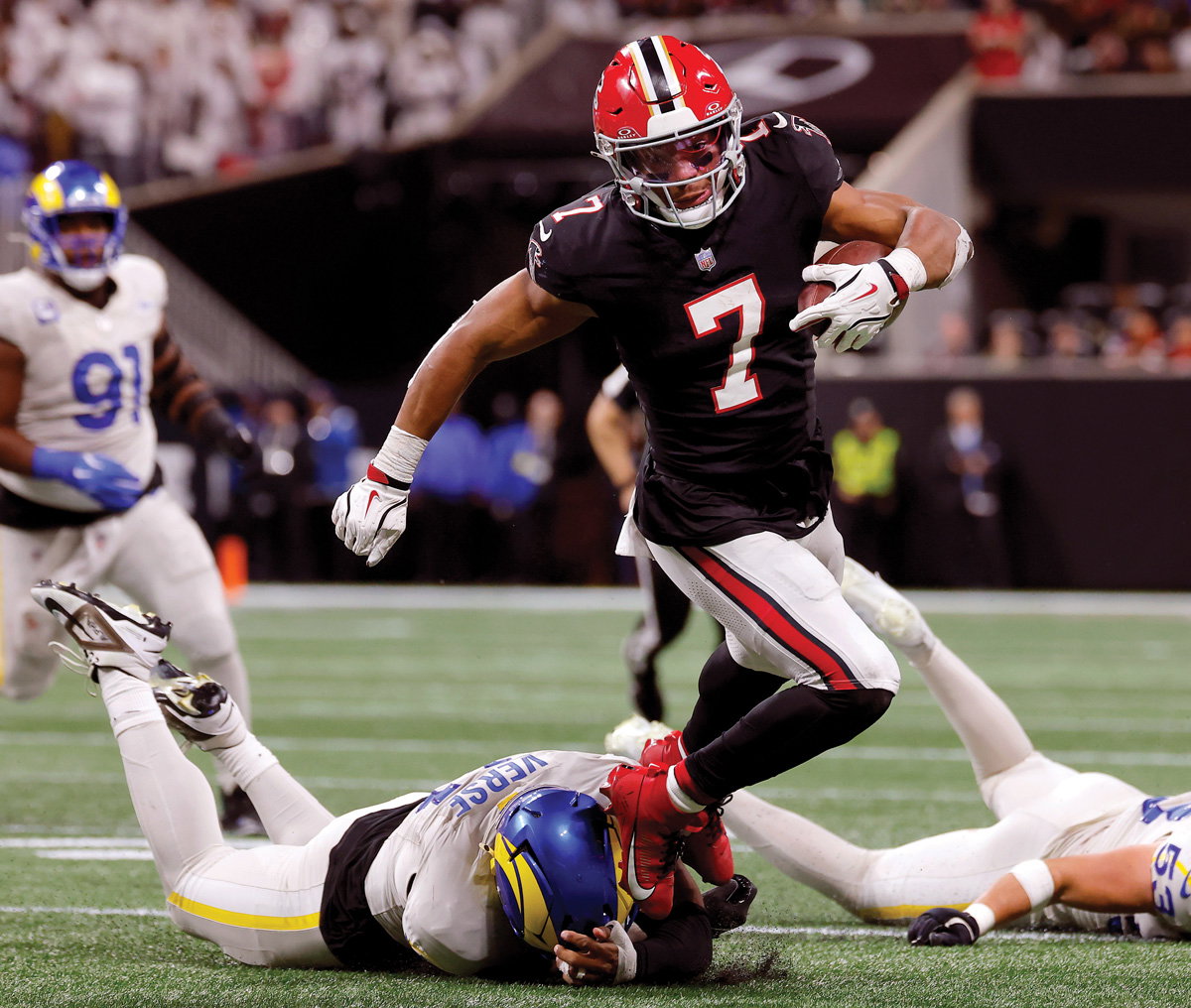

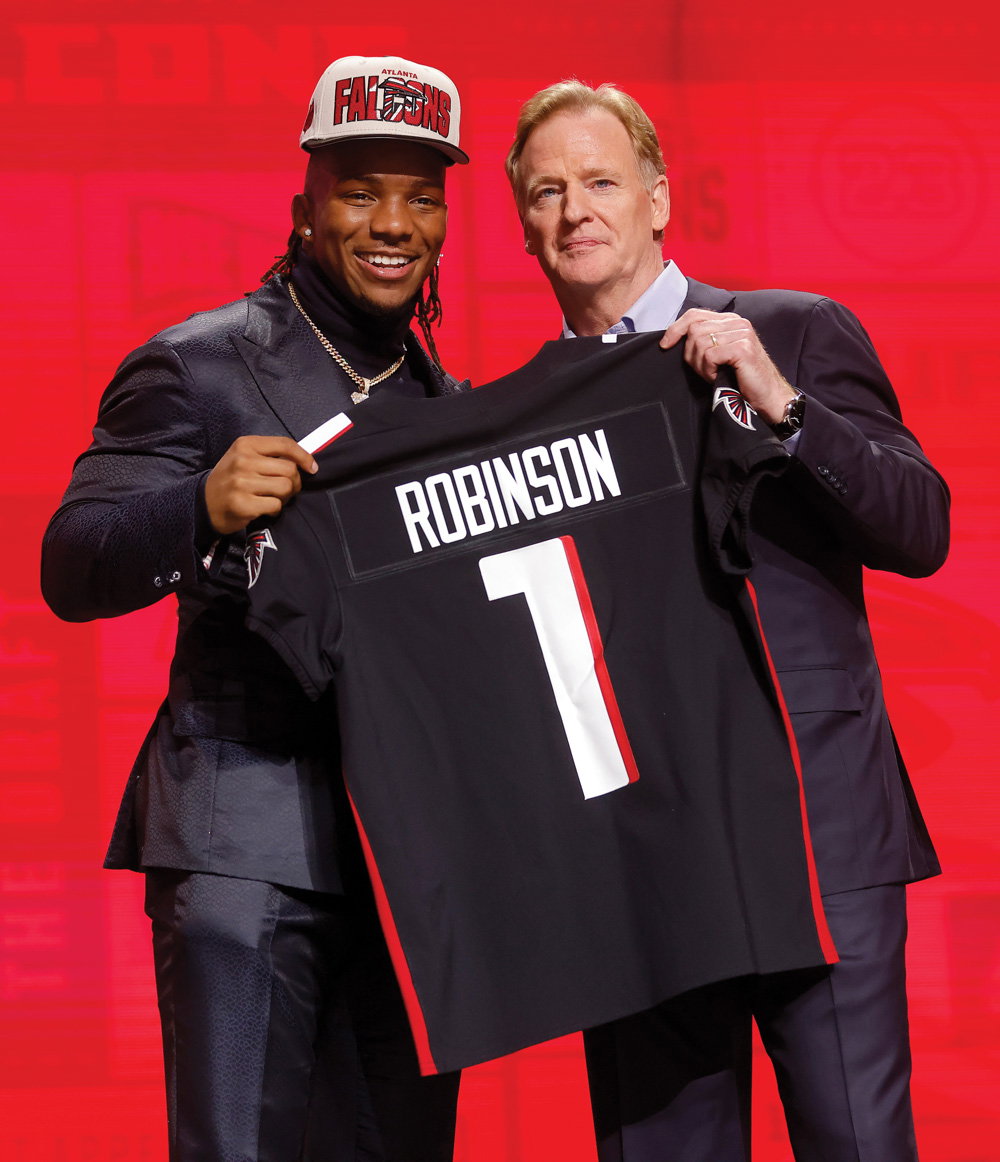
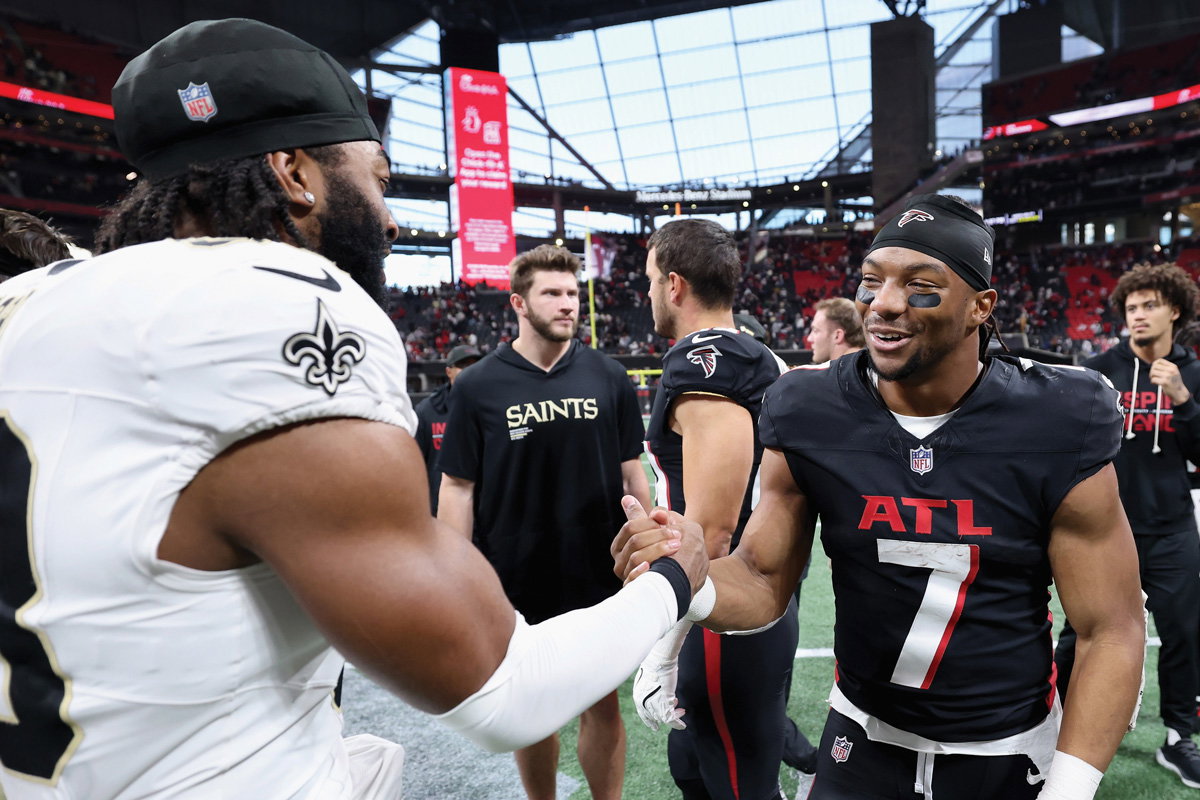
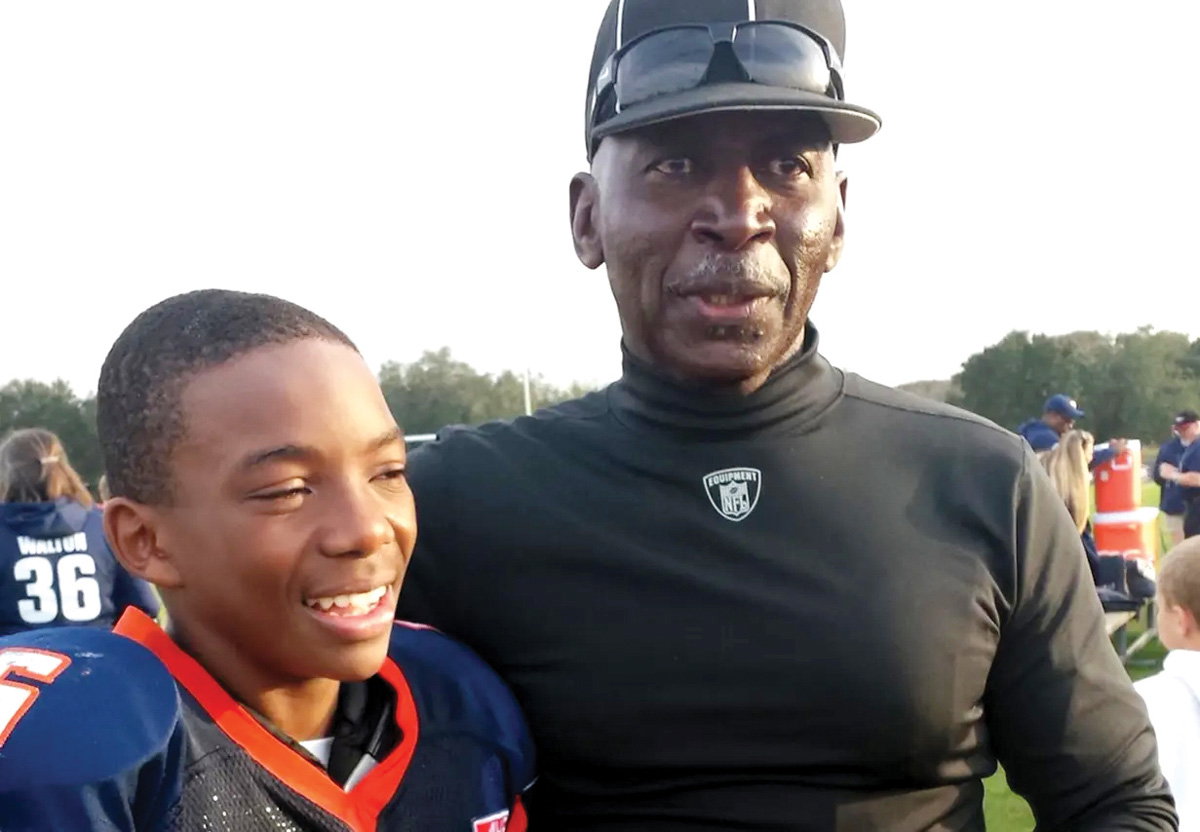


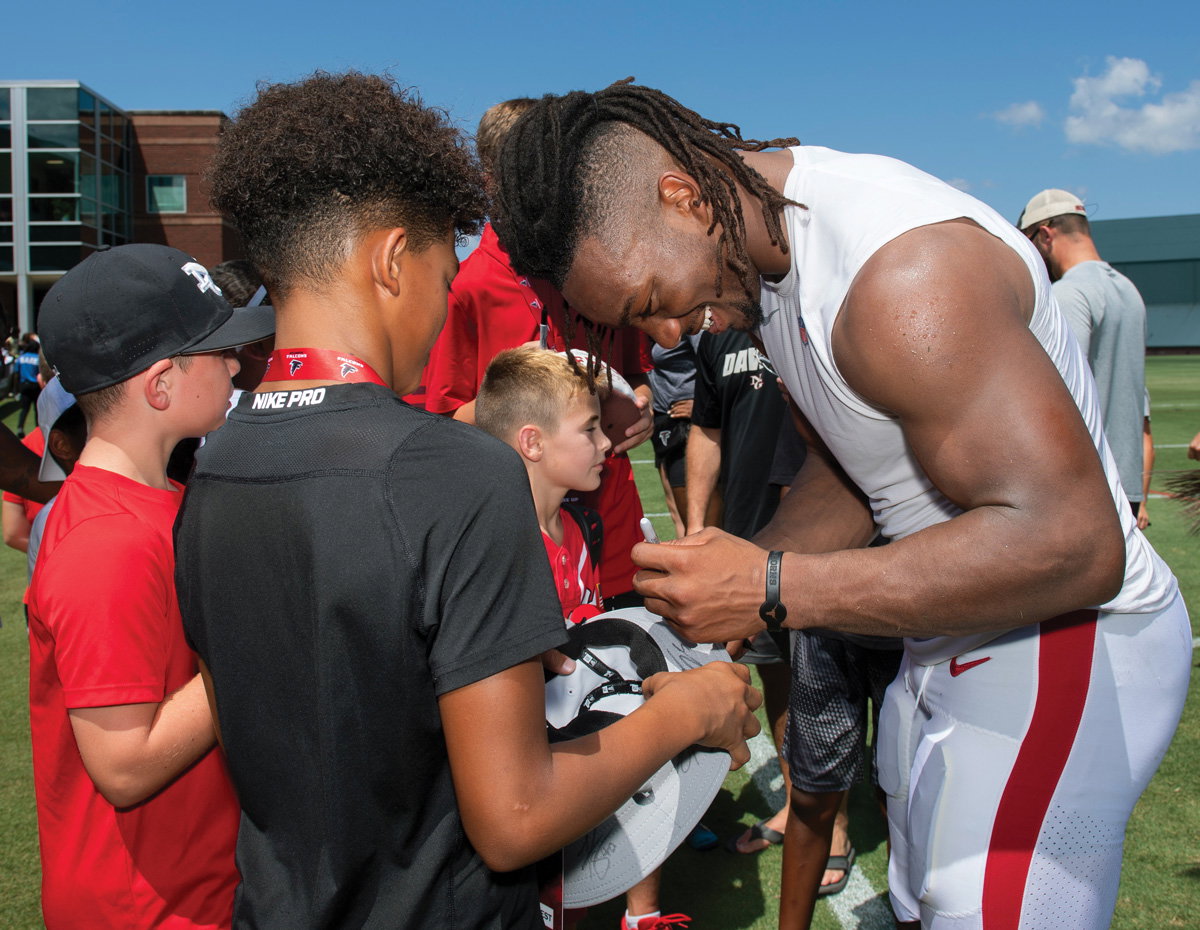
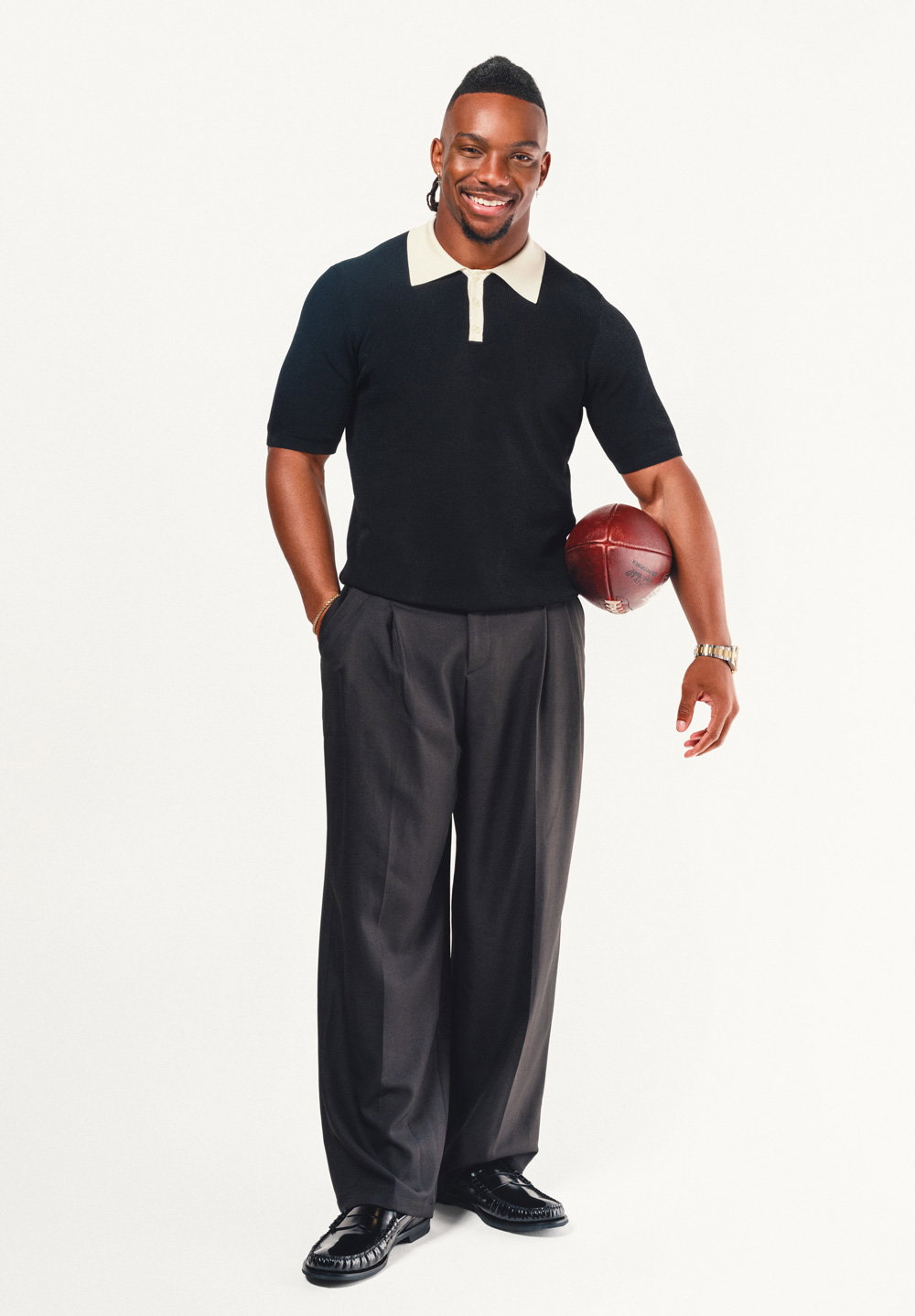
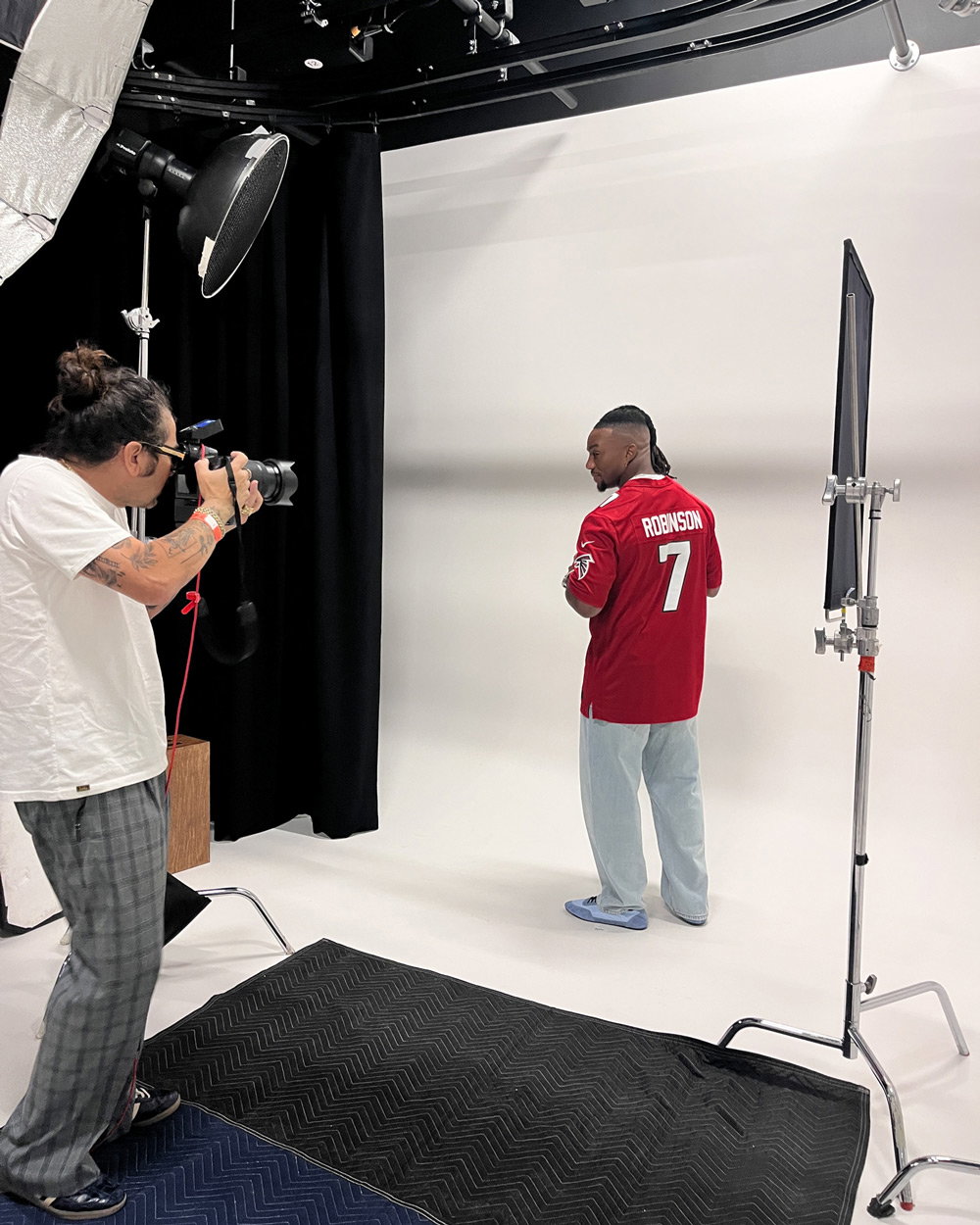
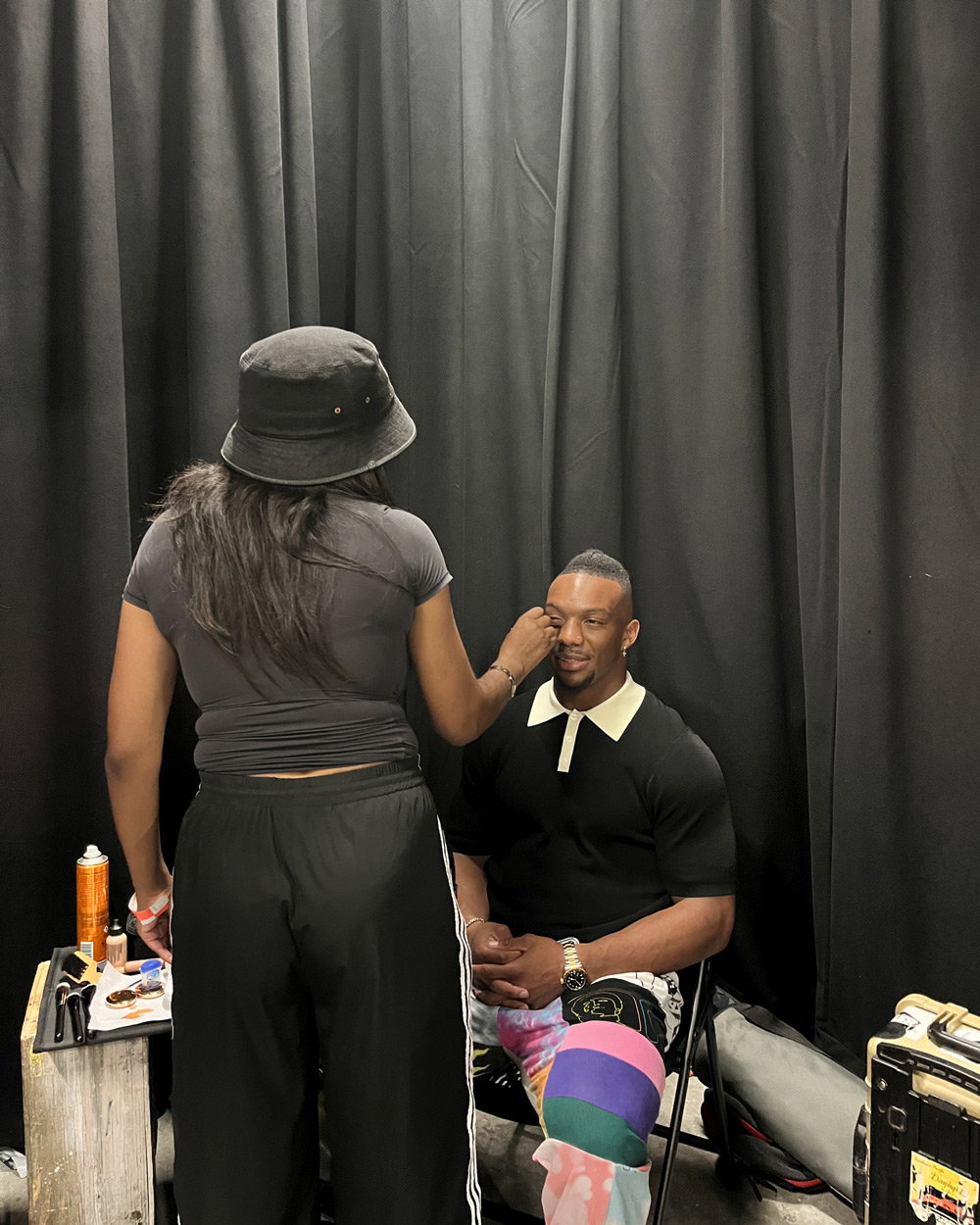
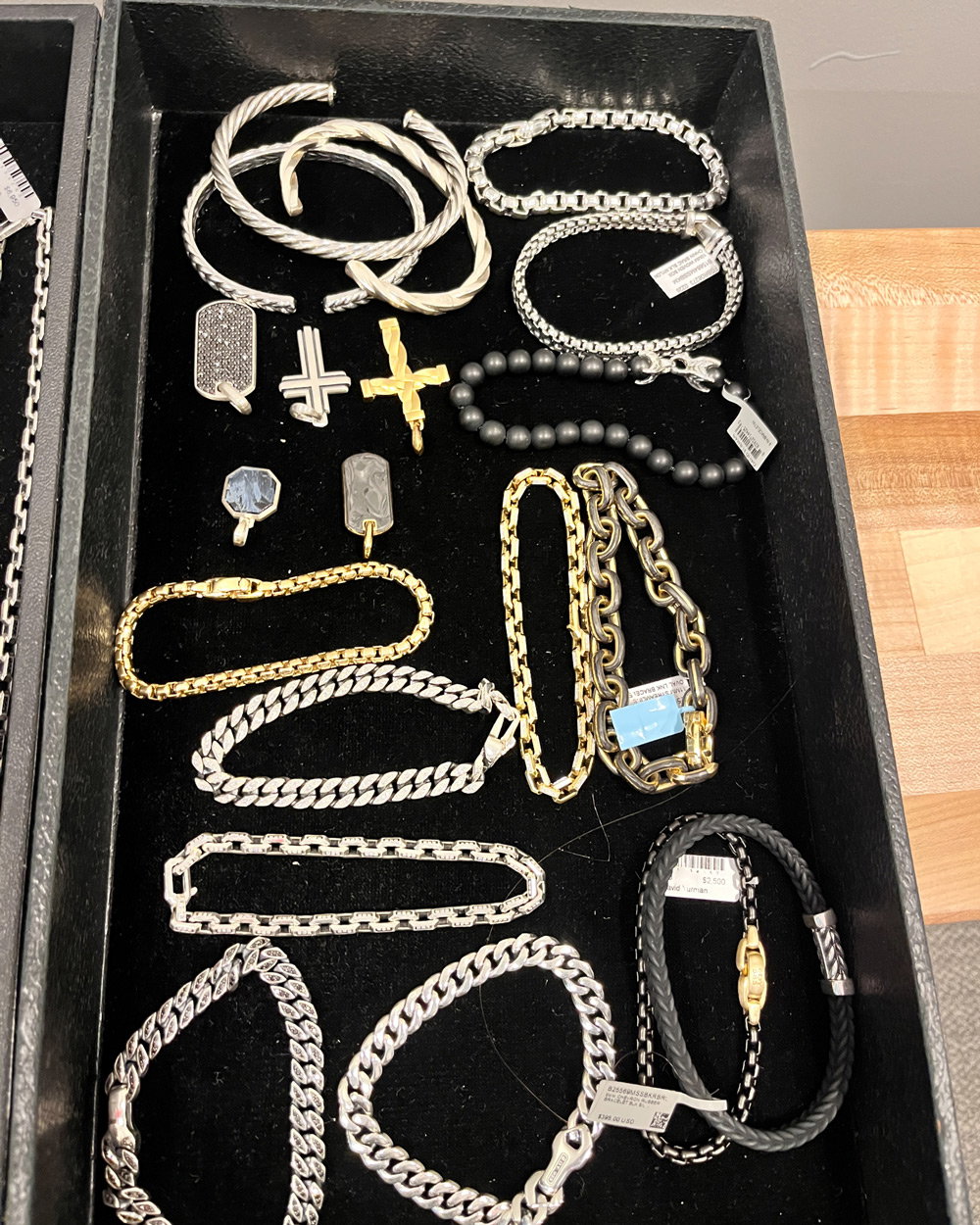
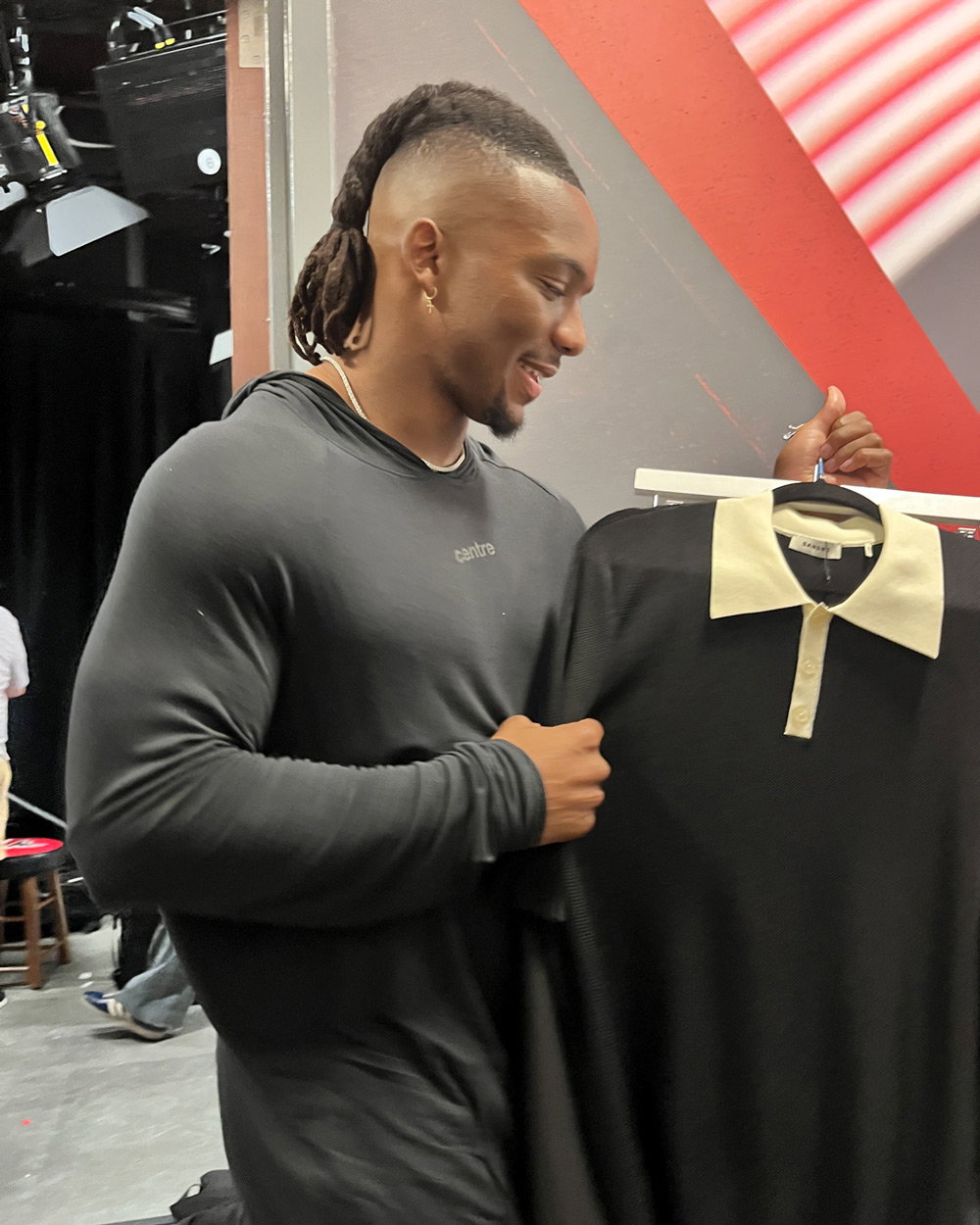
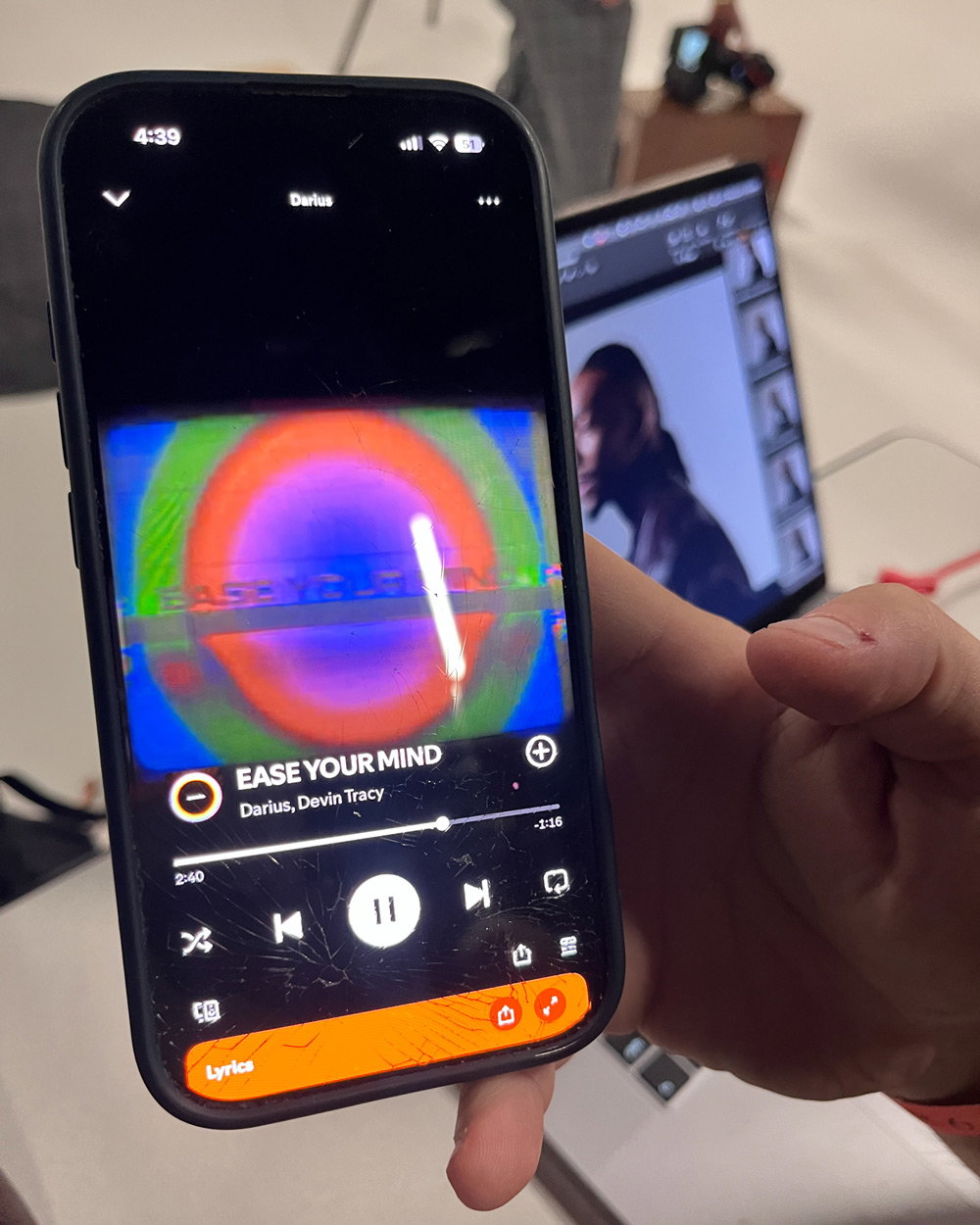

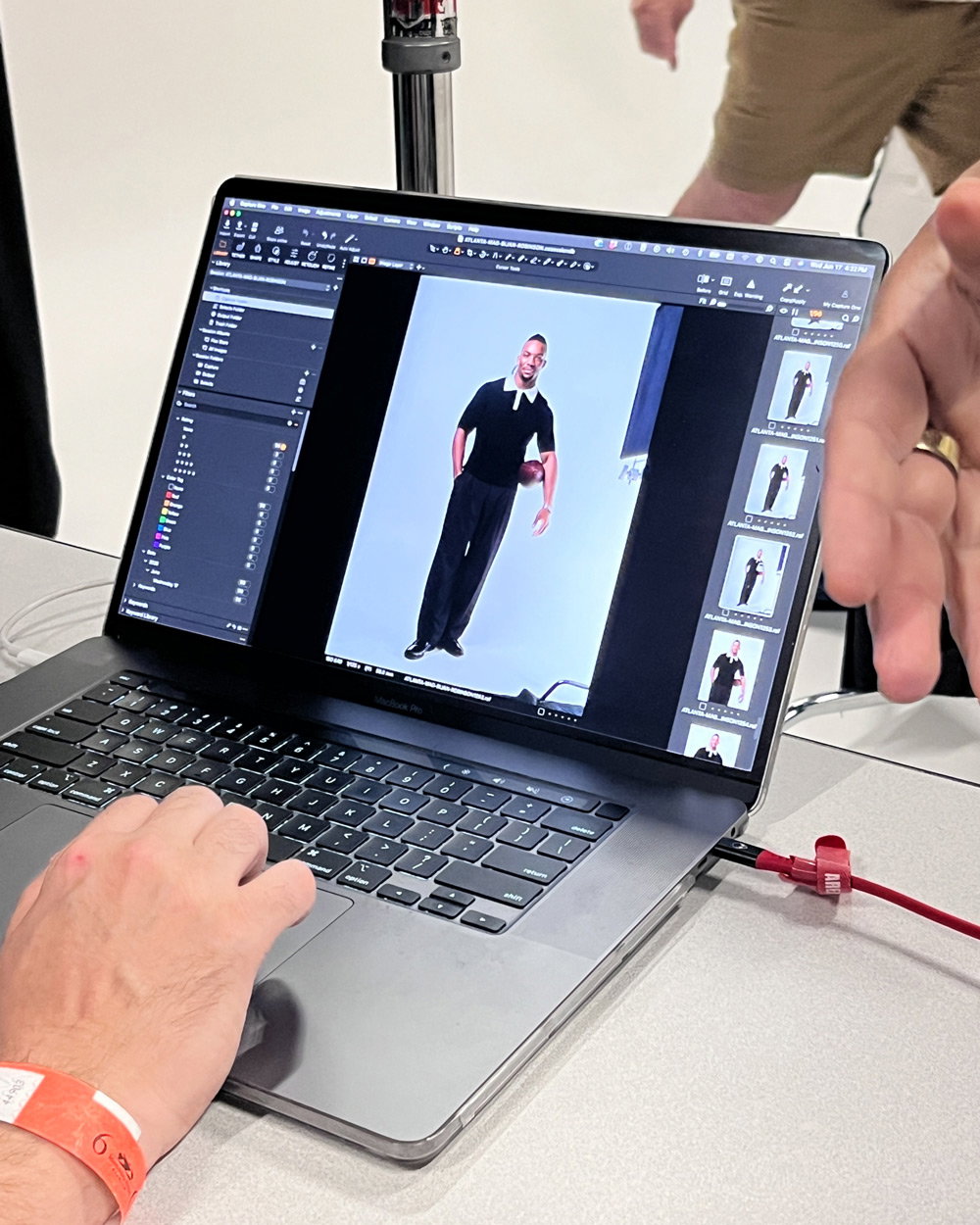
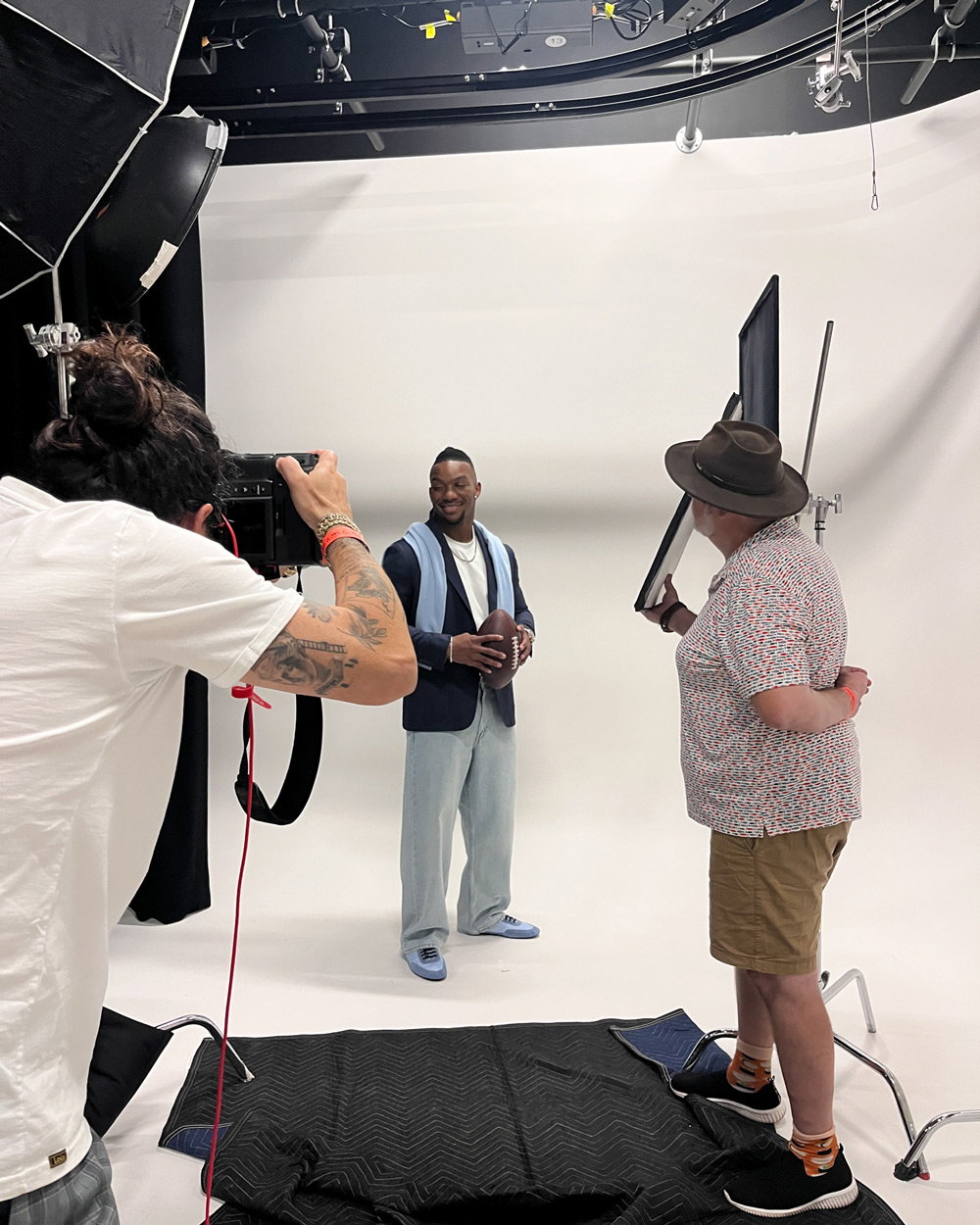
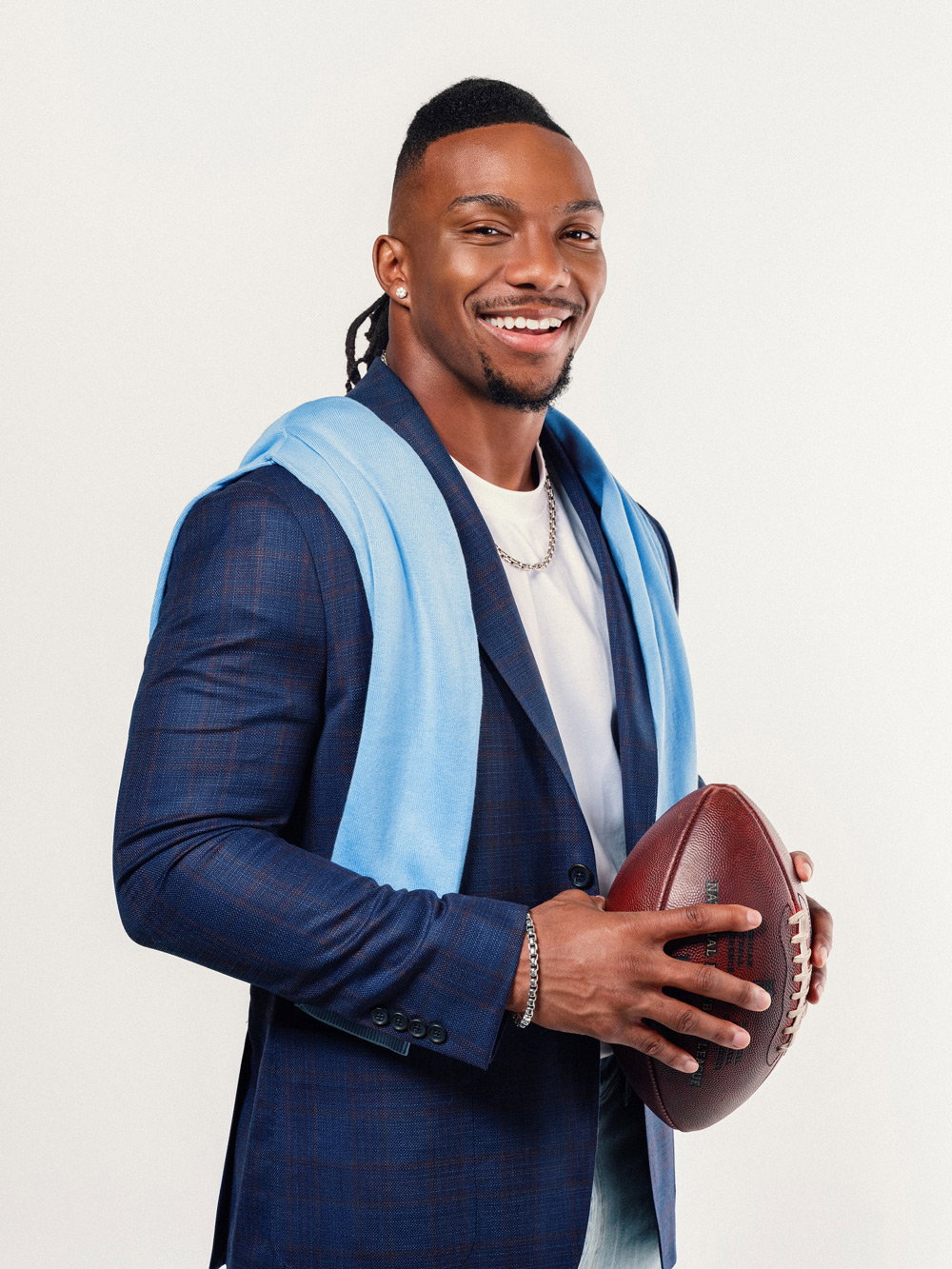

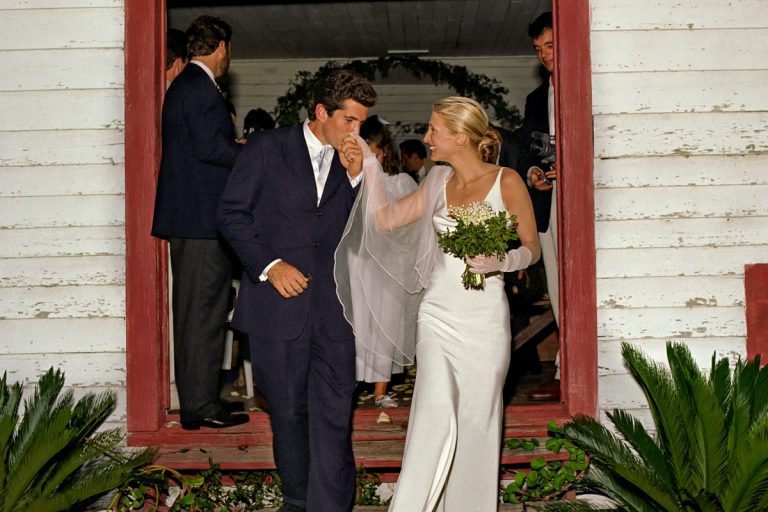
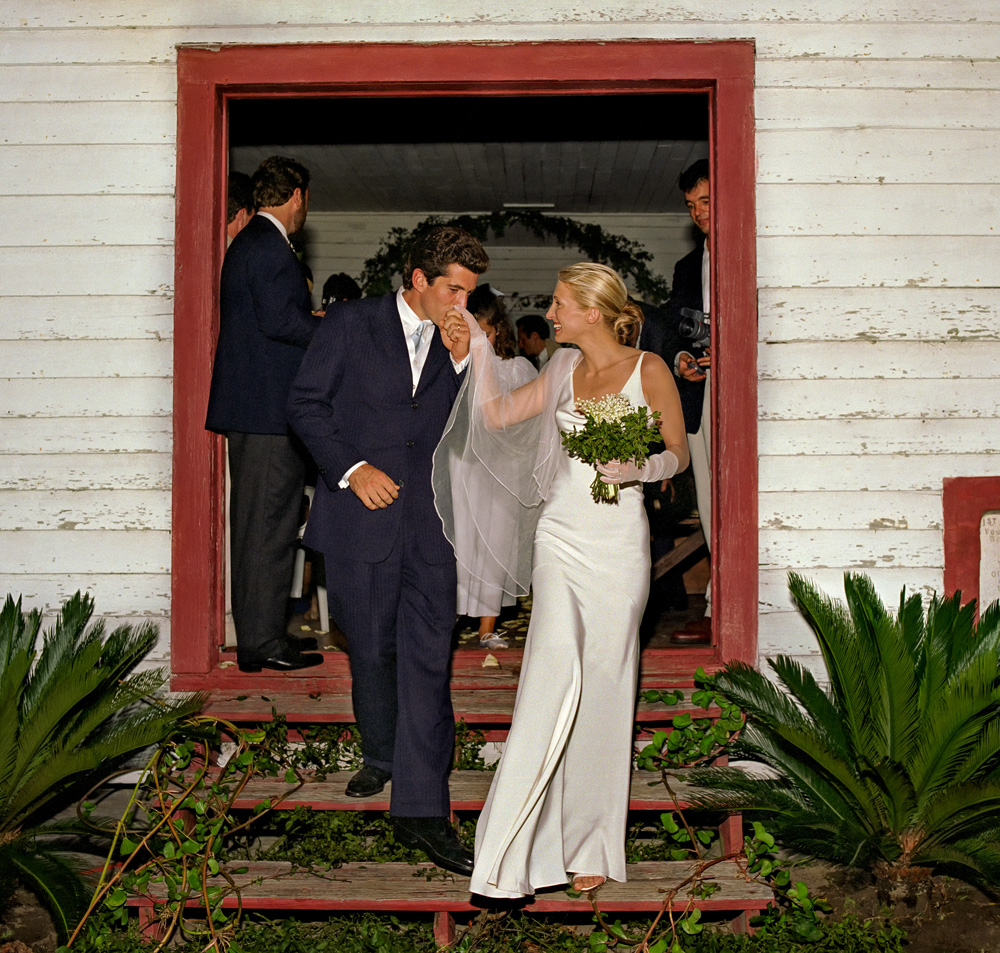
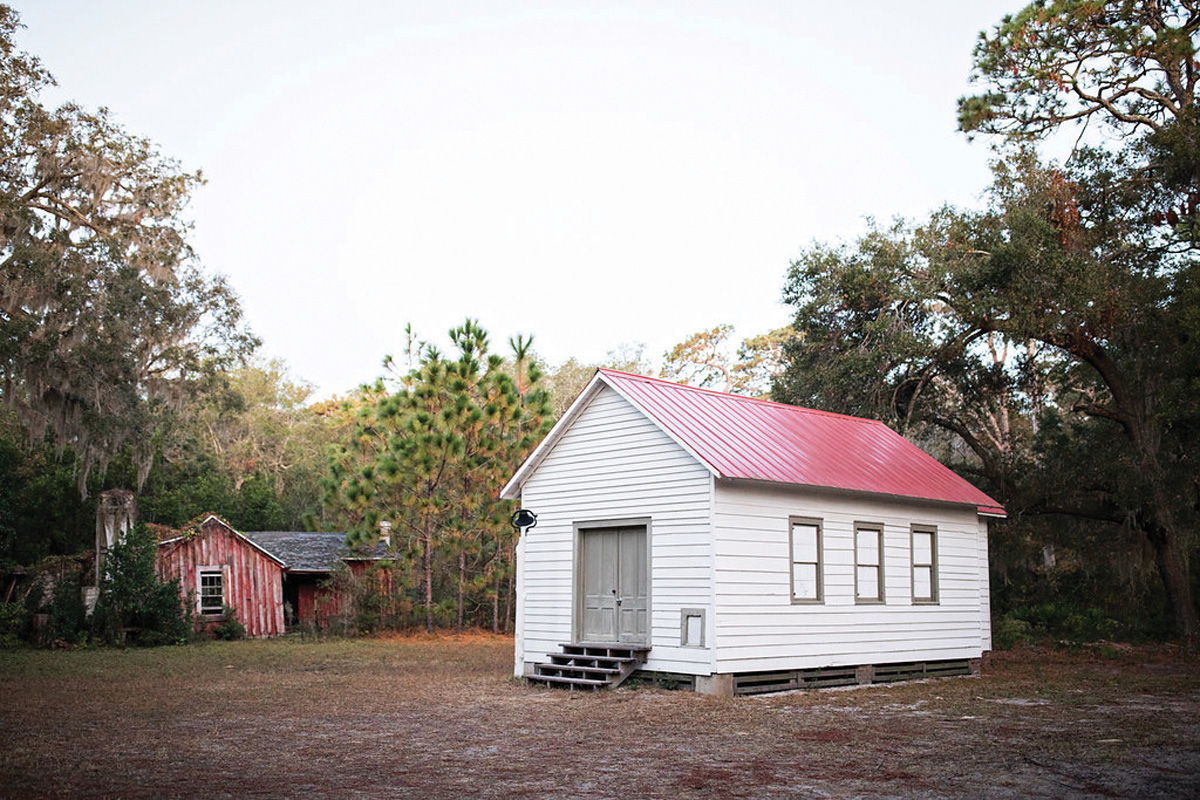


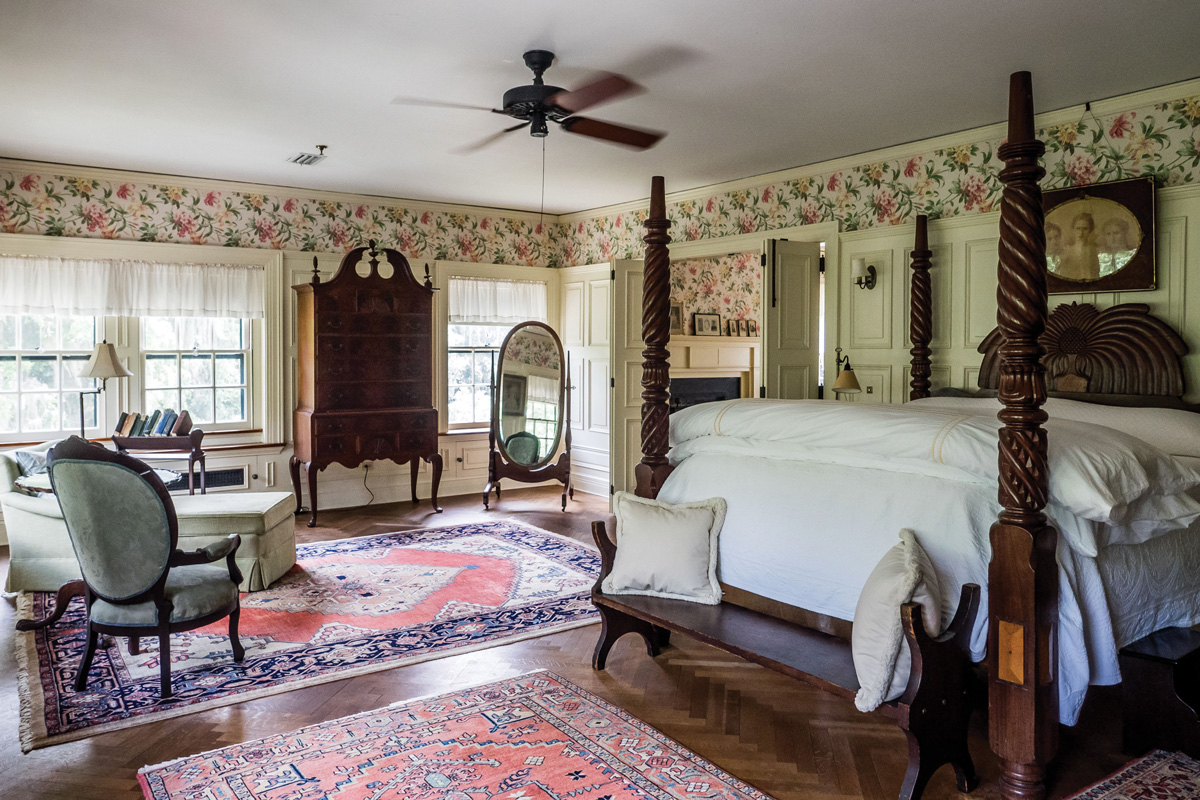


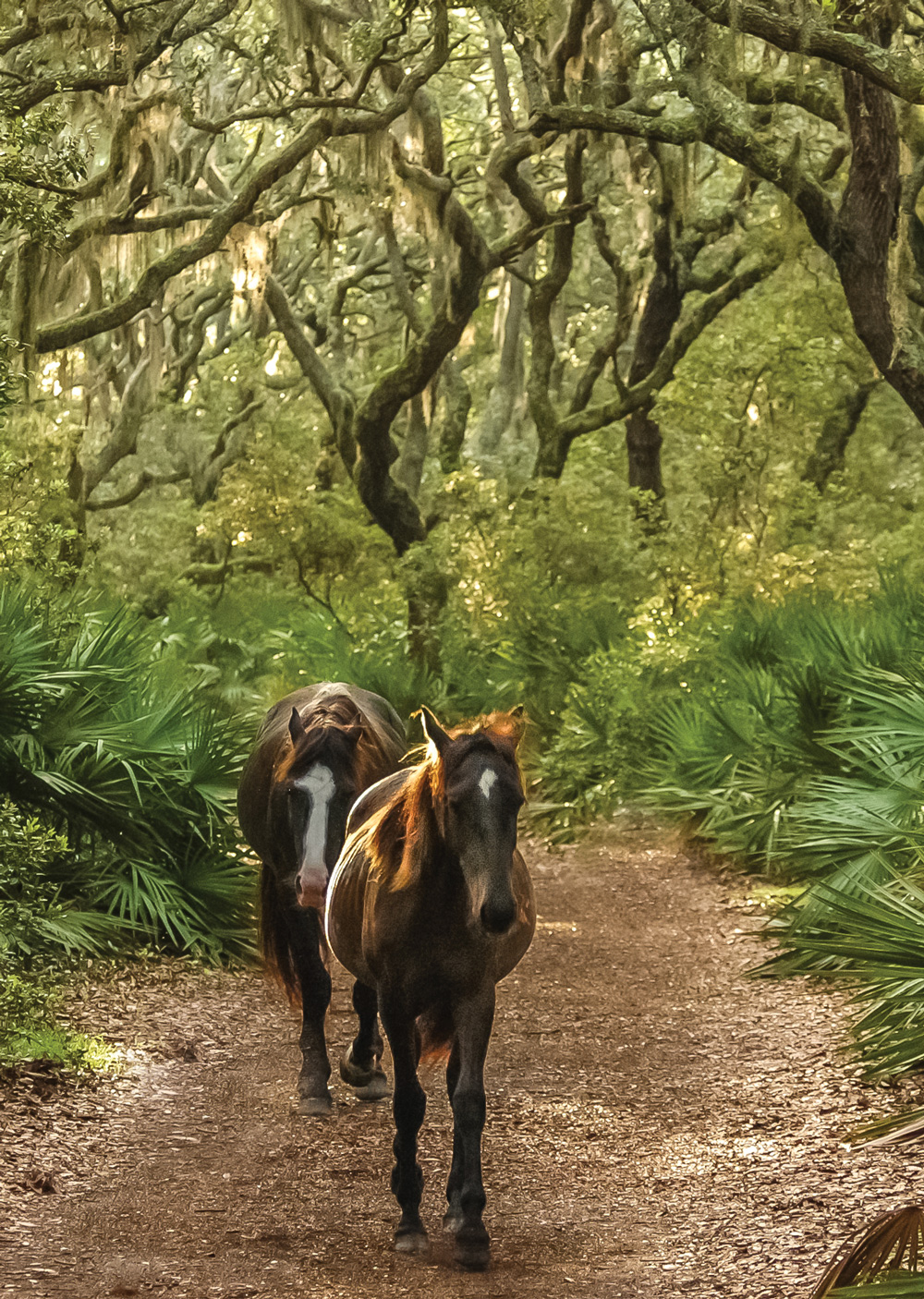
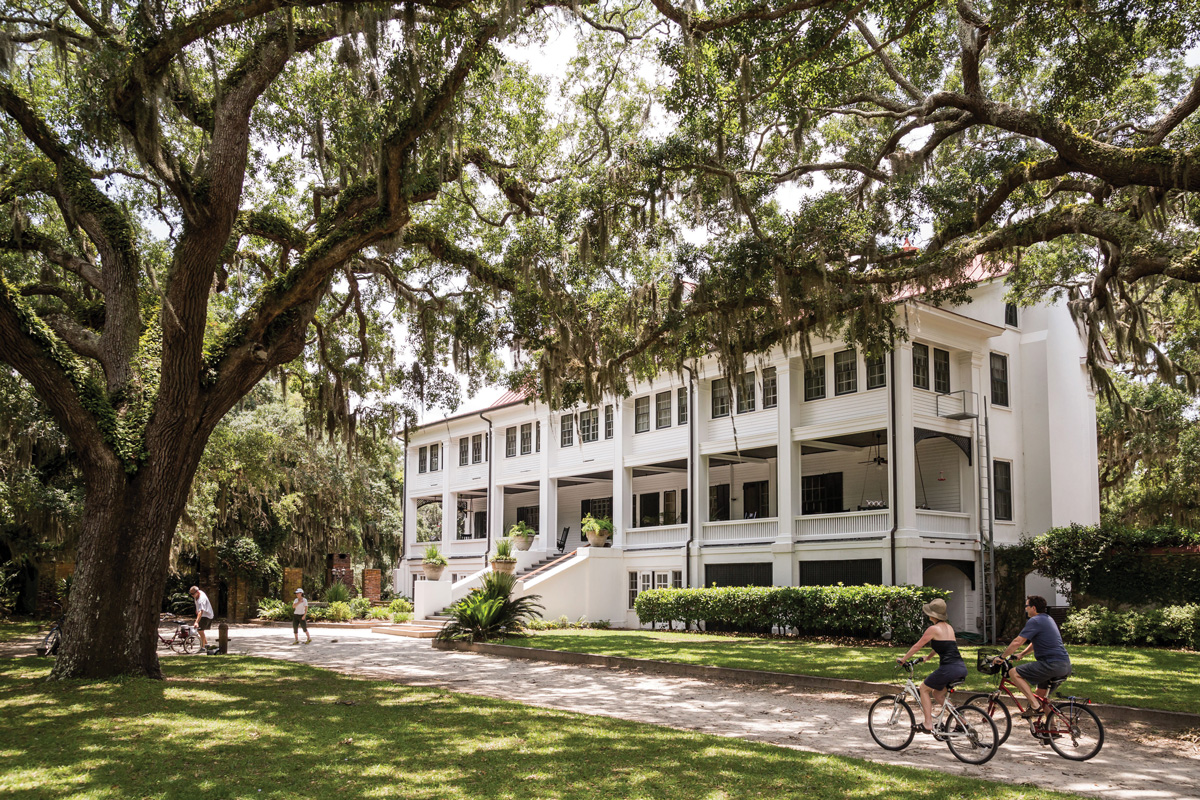



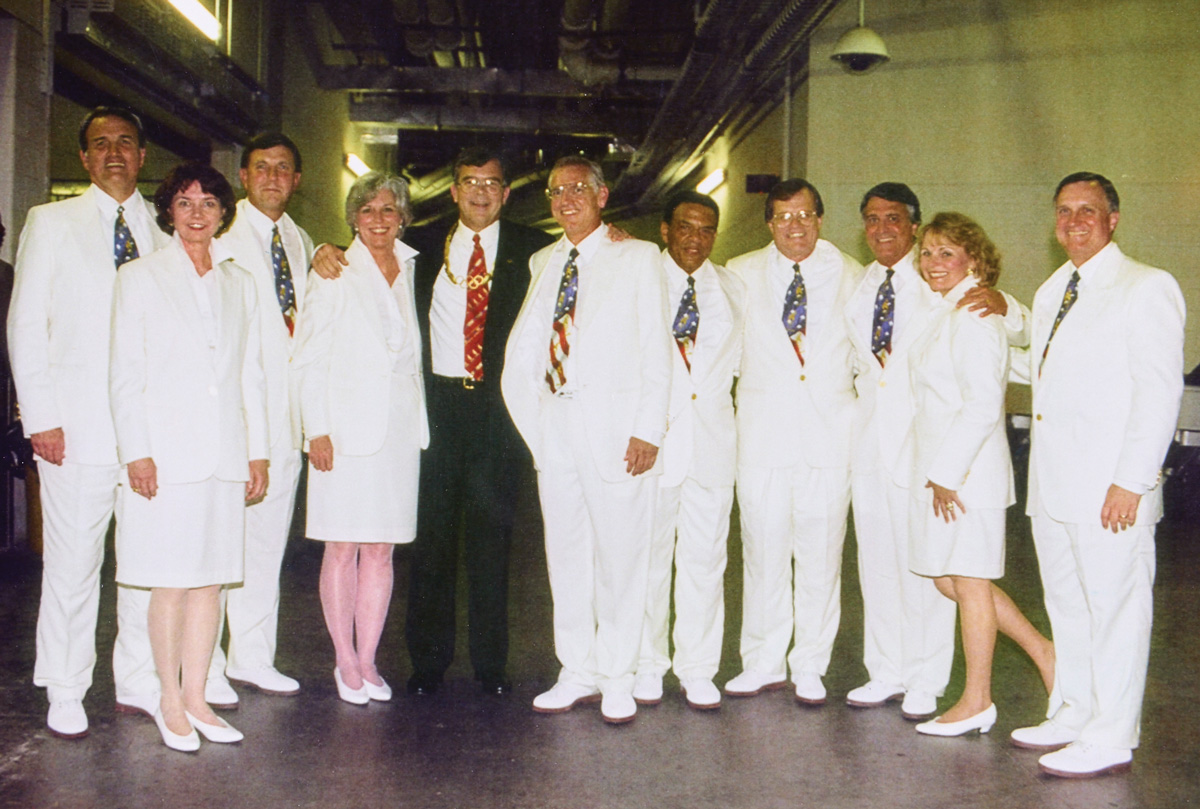
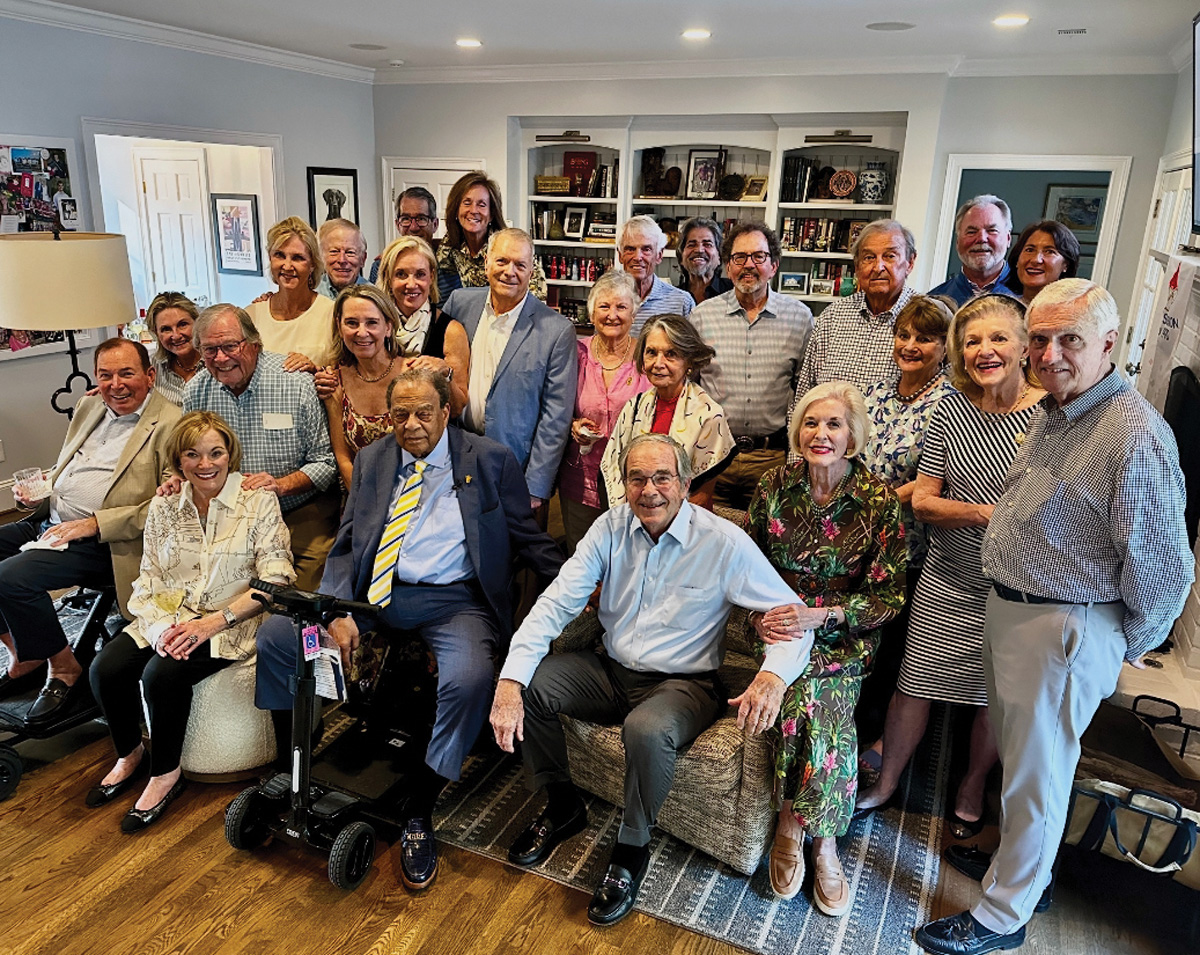
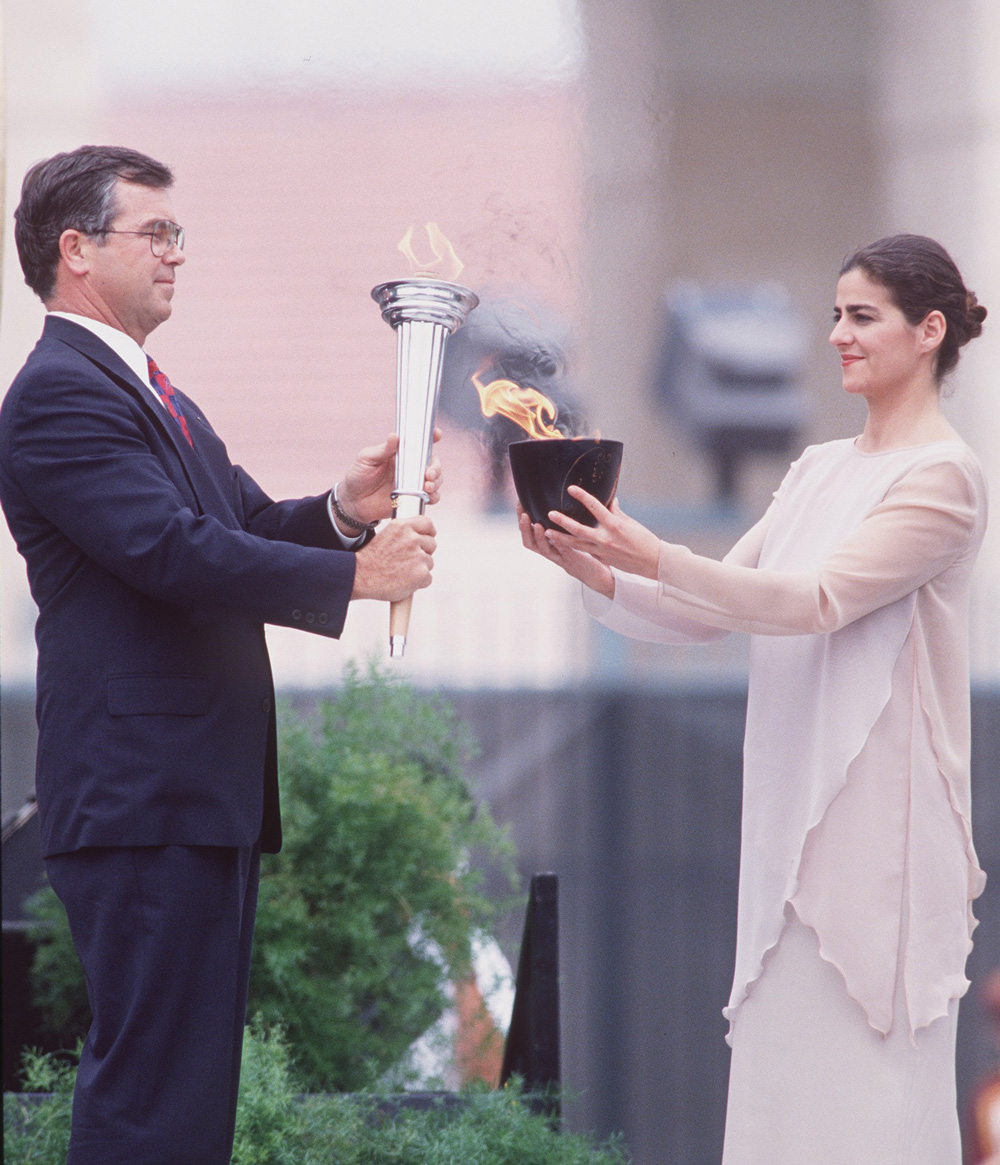
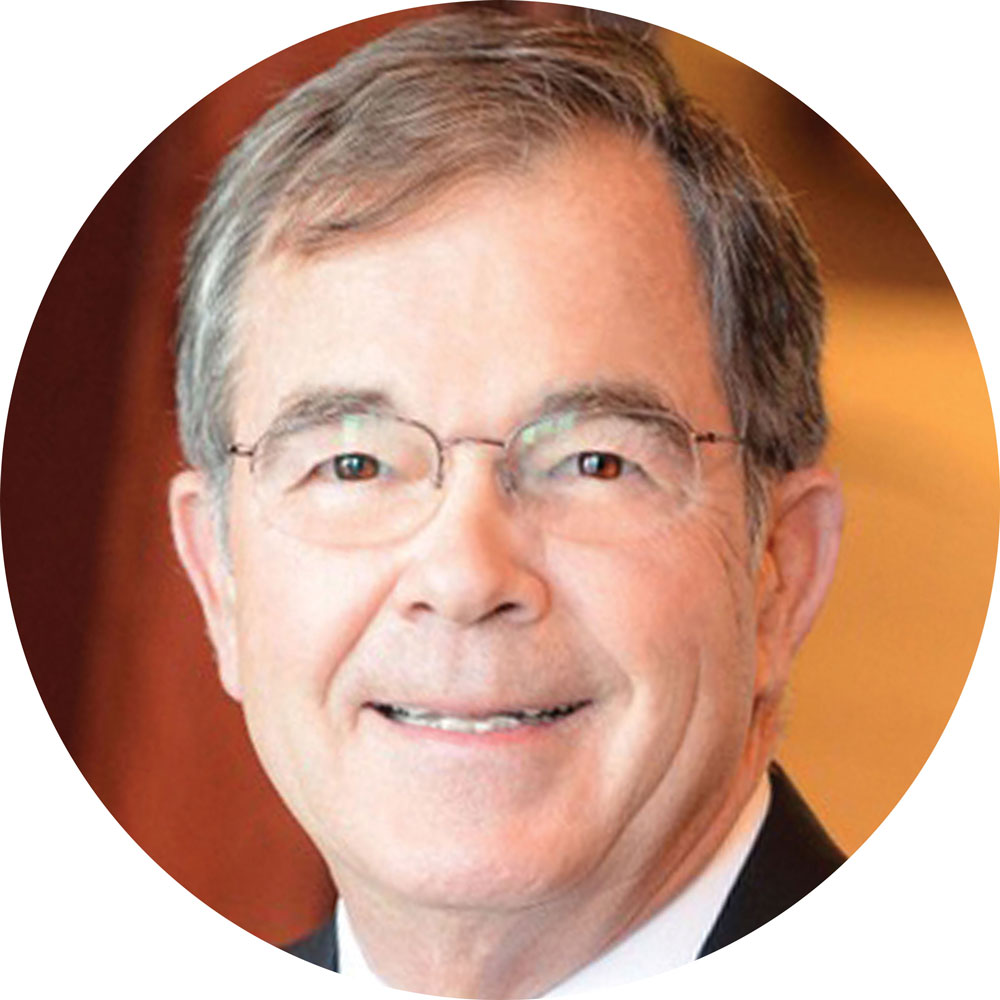
 Peter
Peter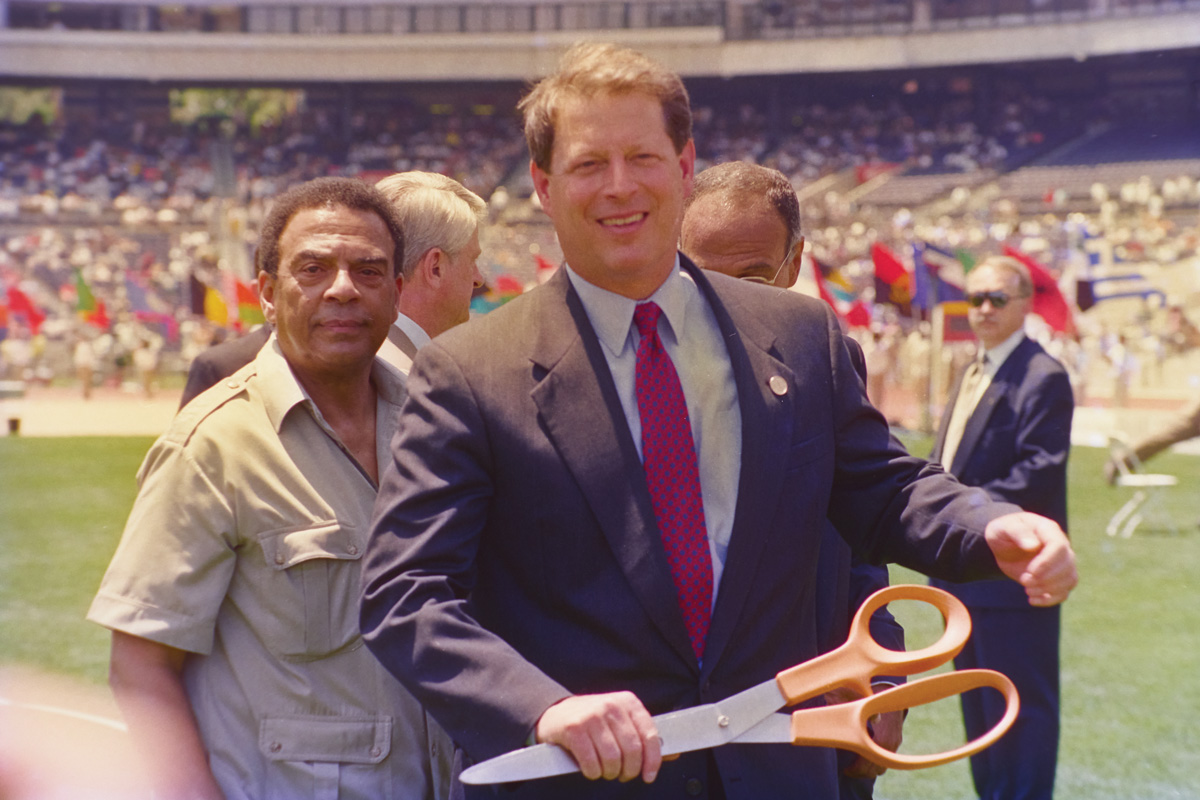
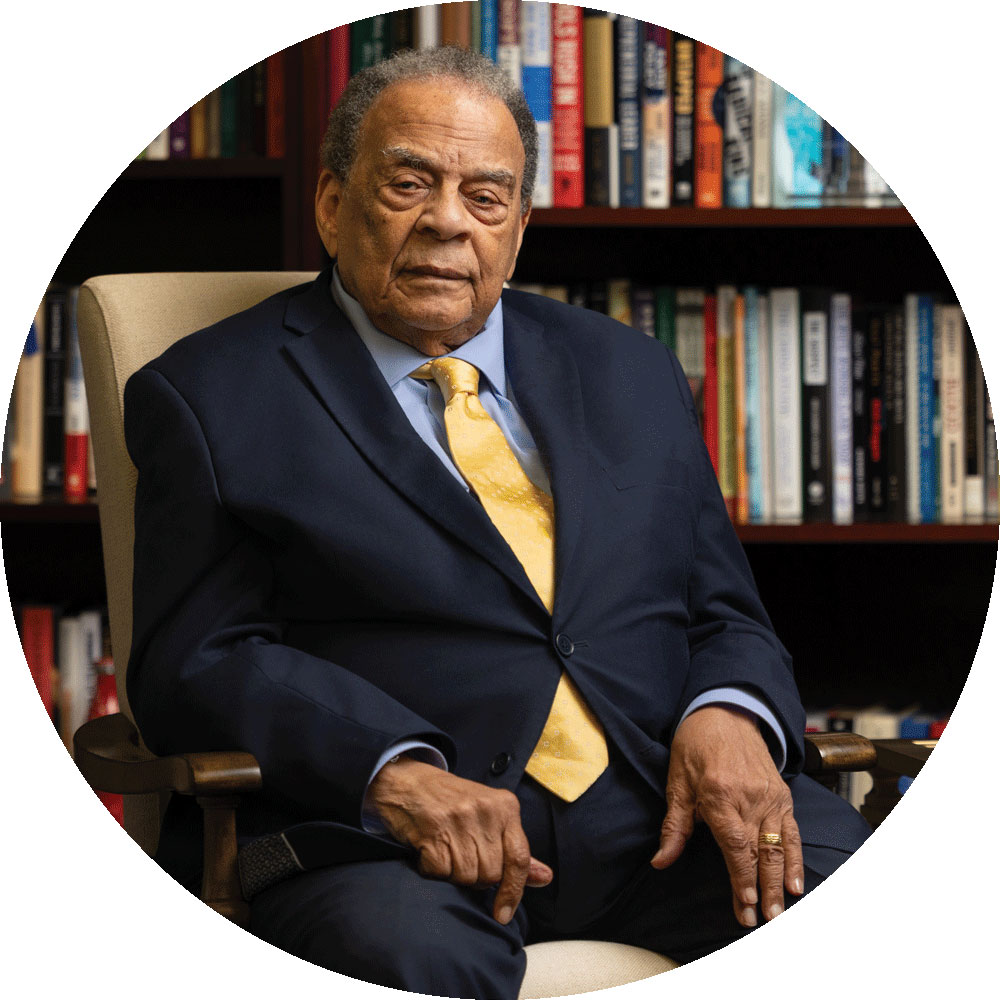
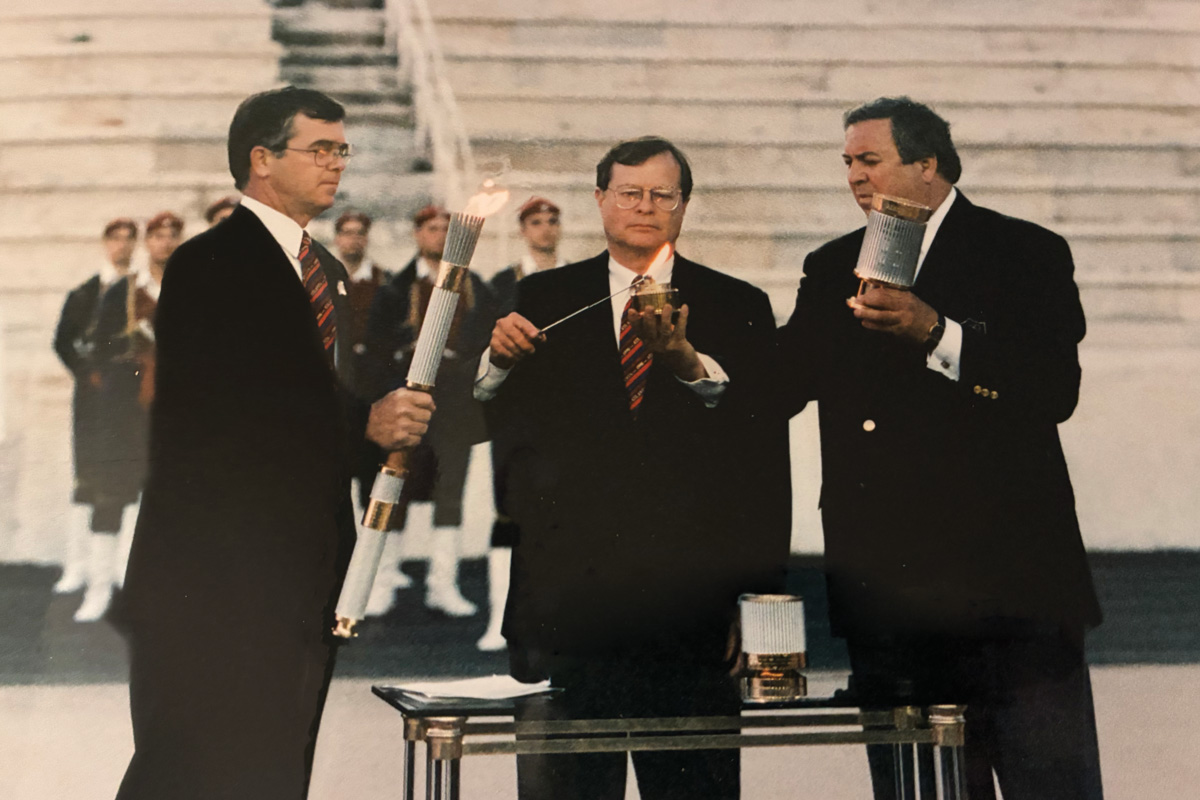

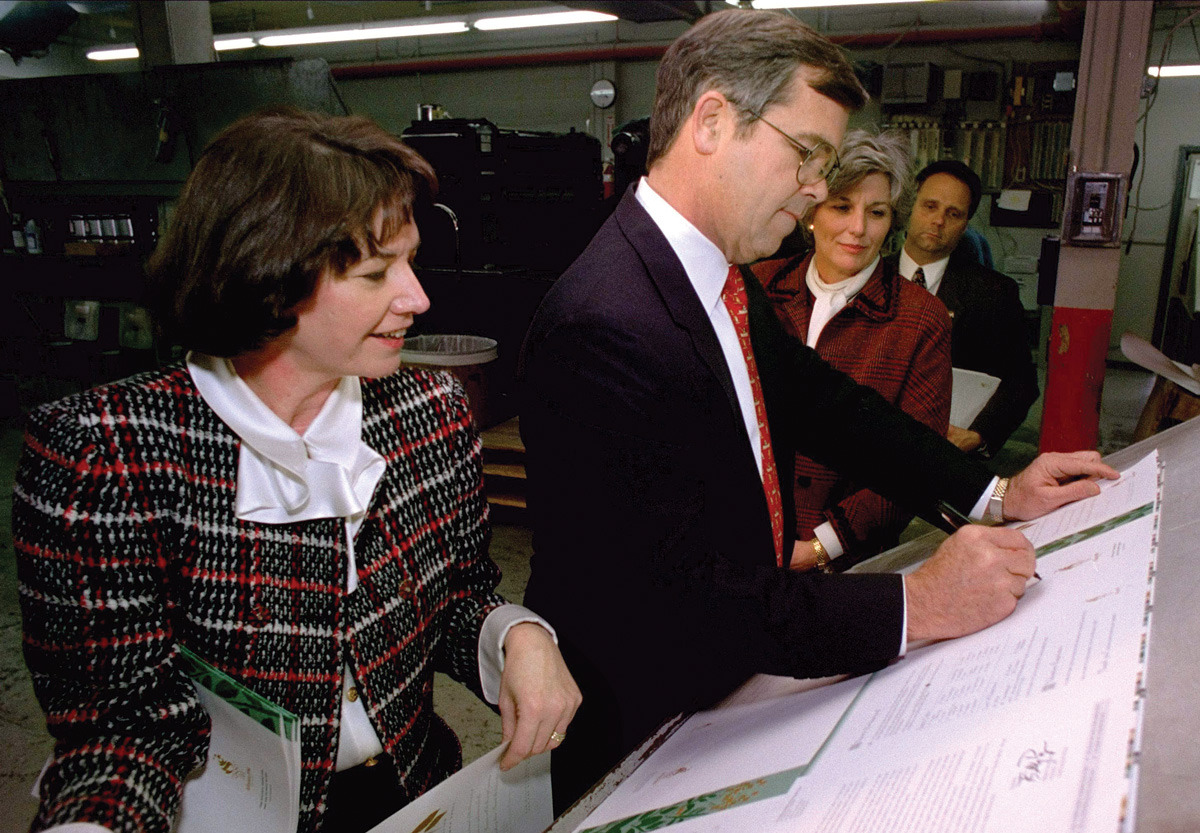
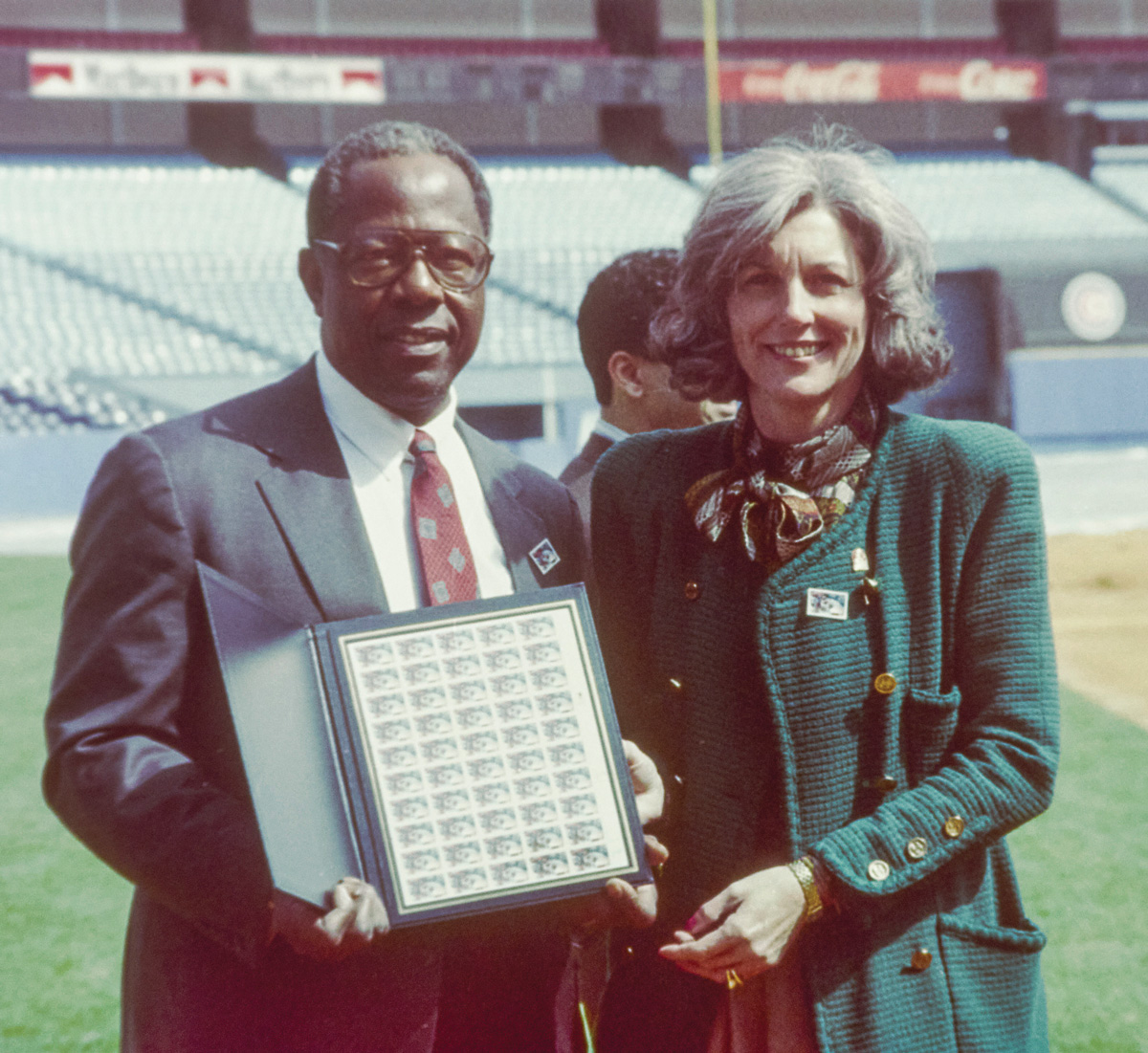
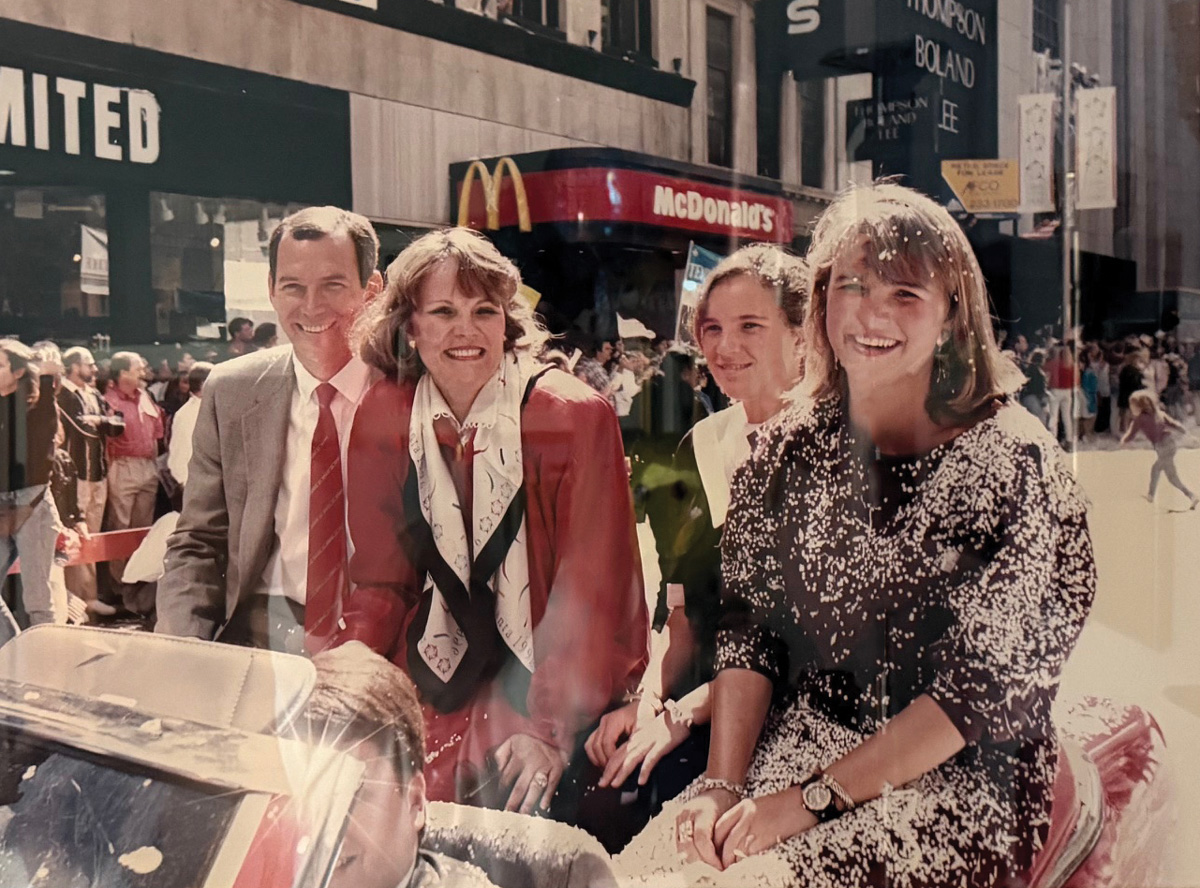
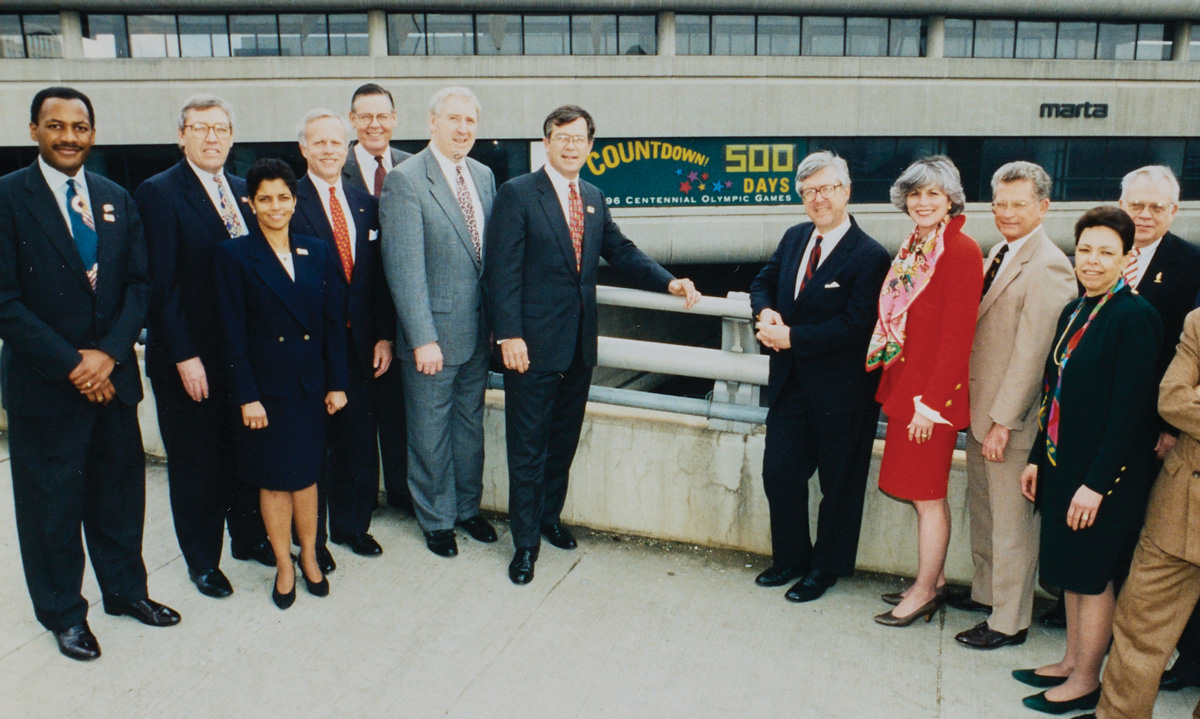
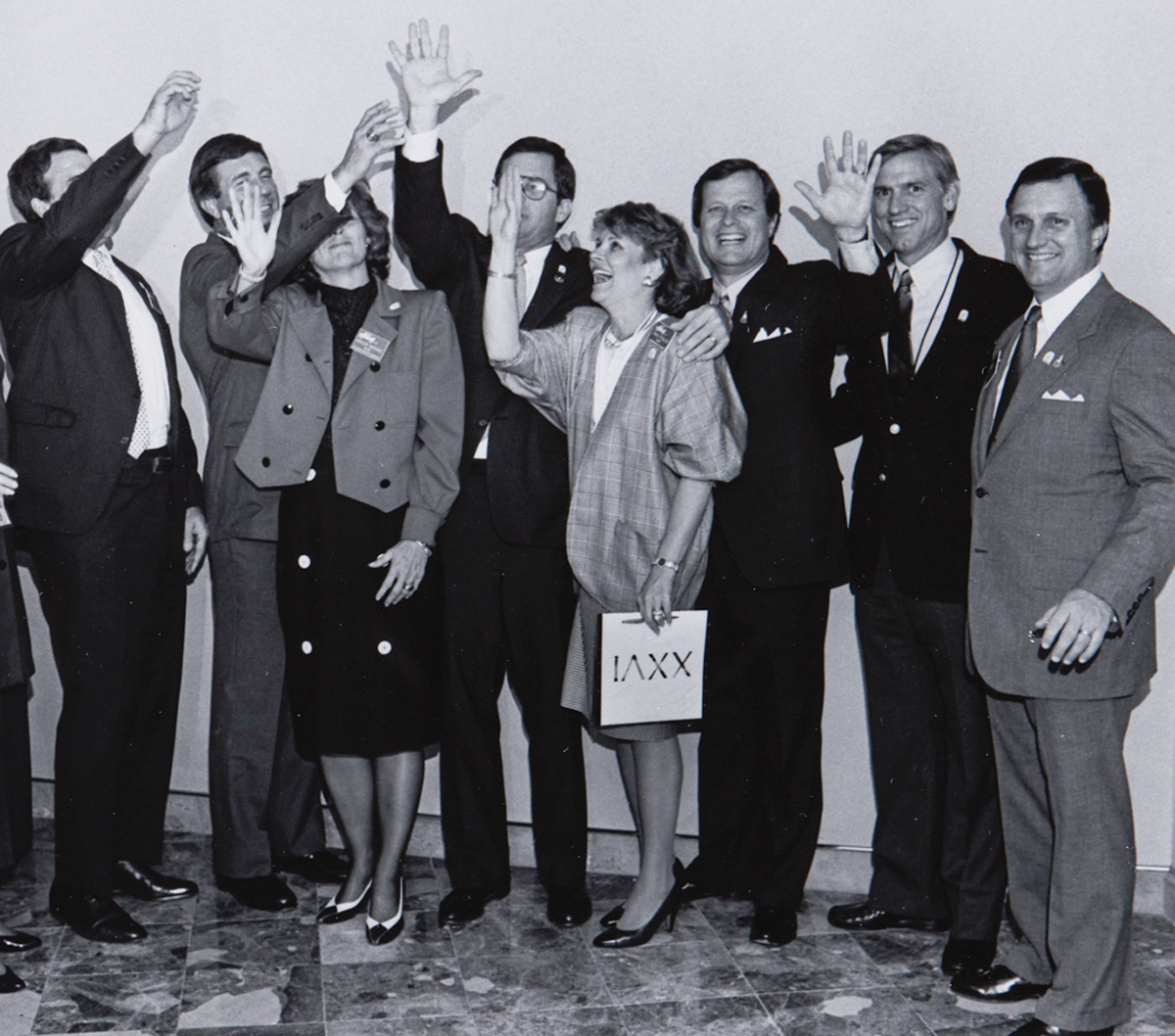
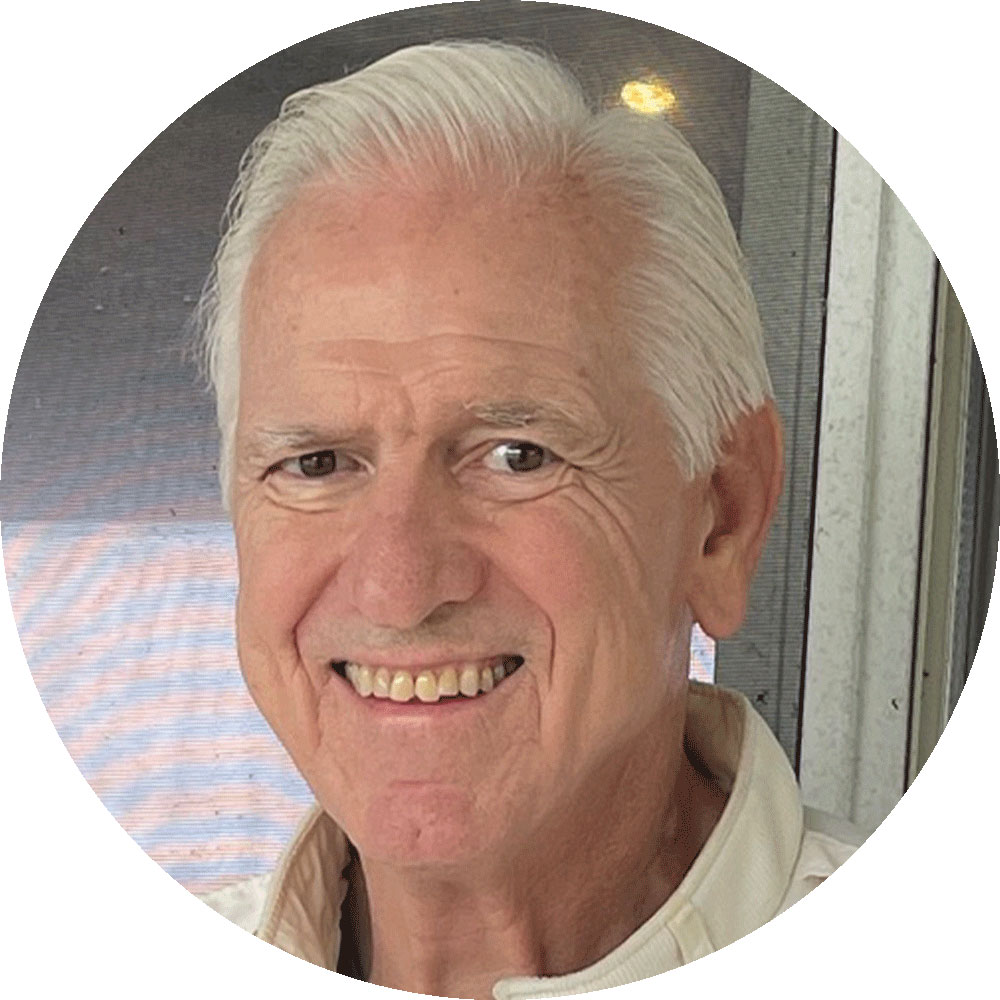
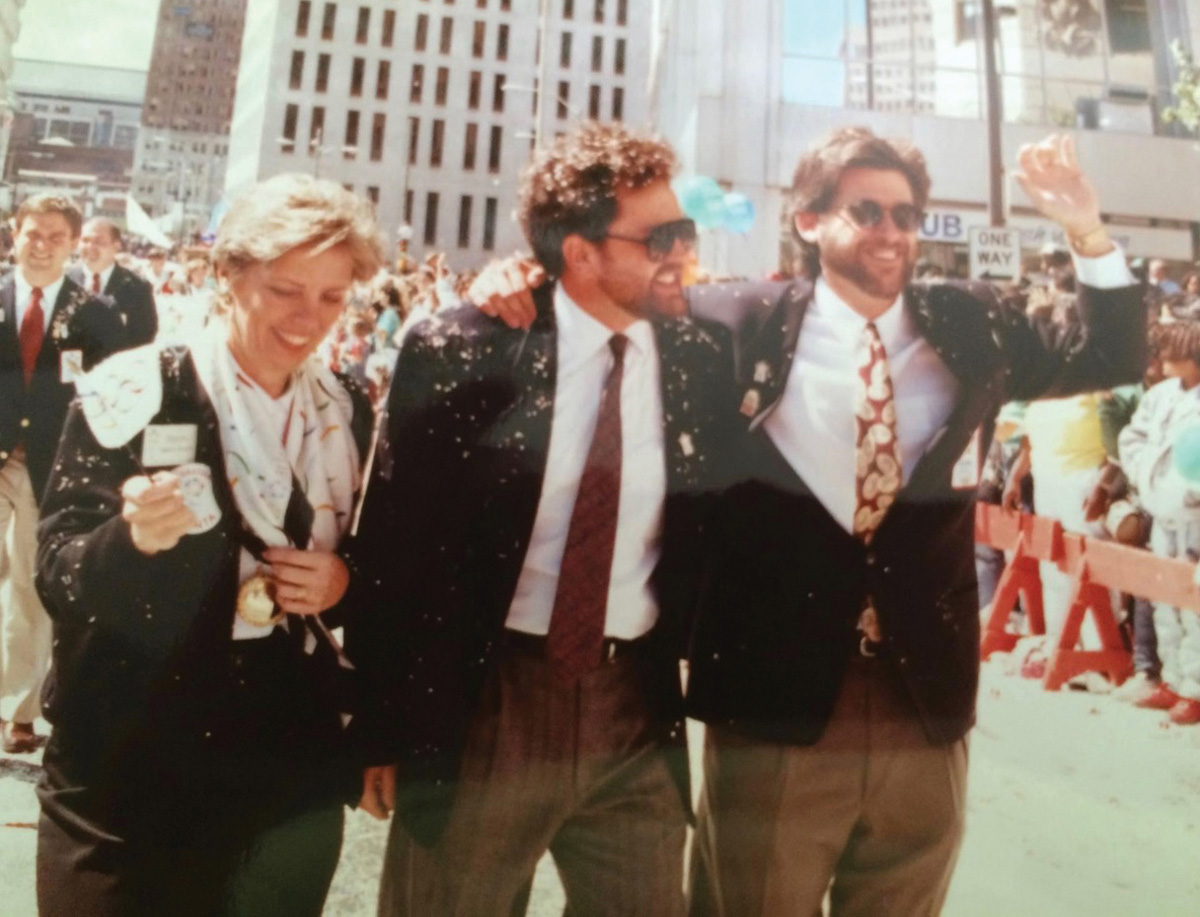
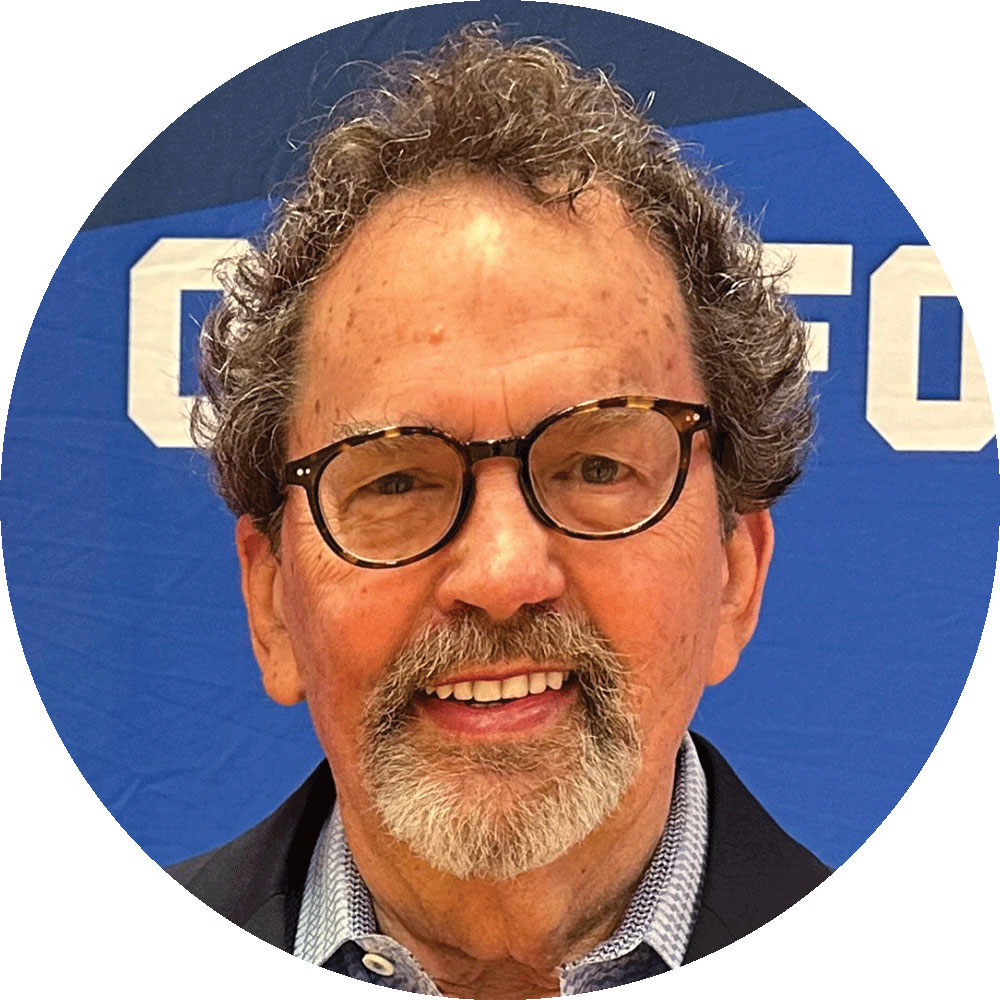
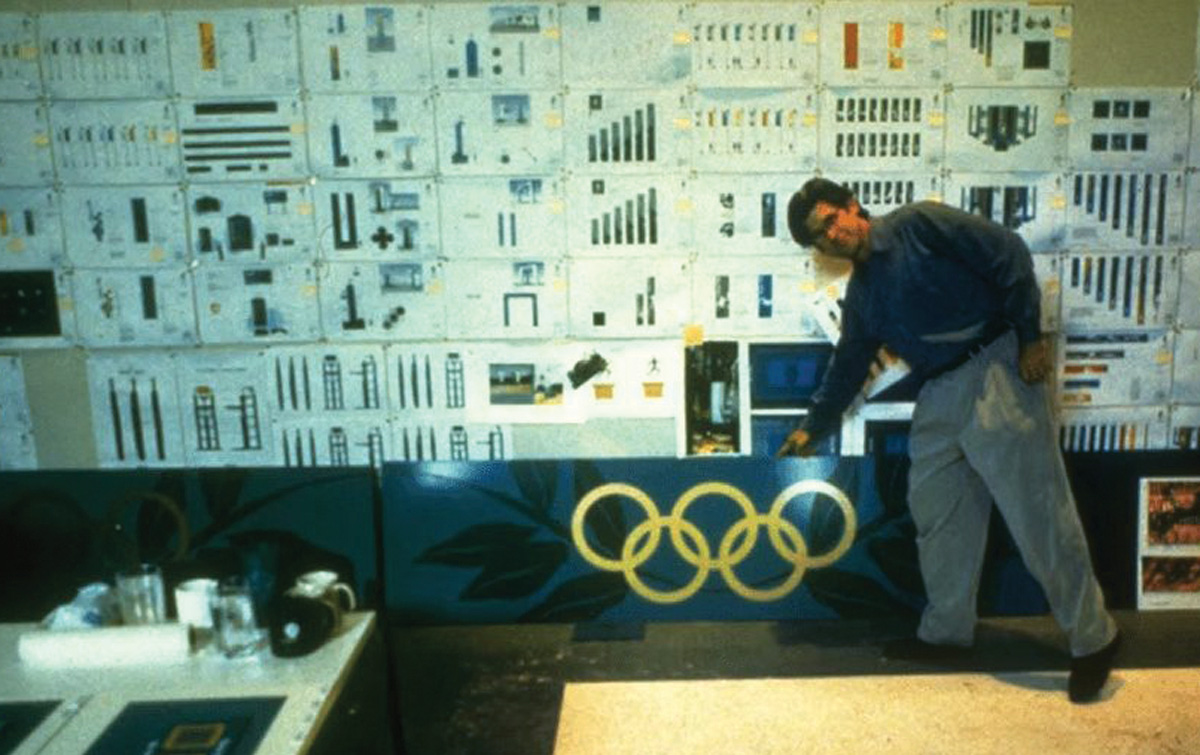
 Brad
Brad 
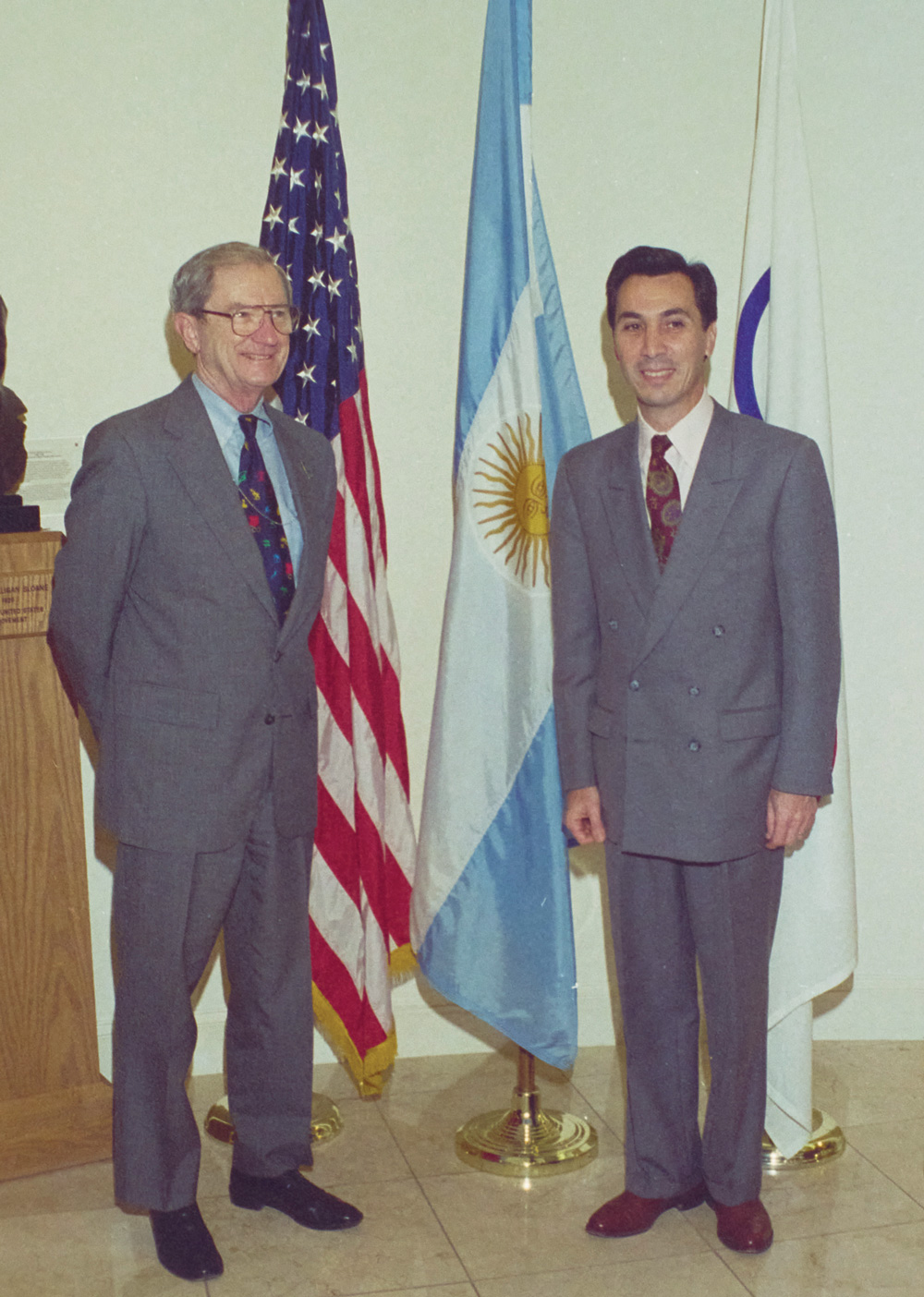
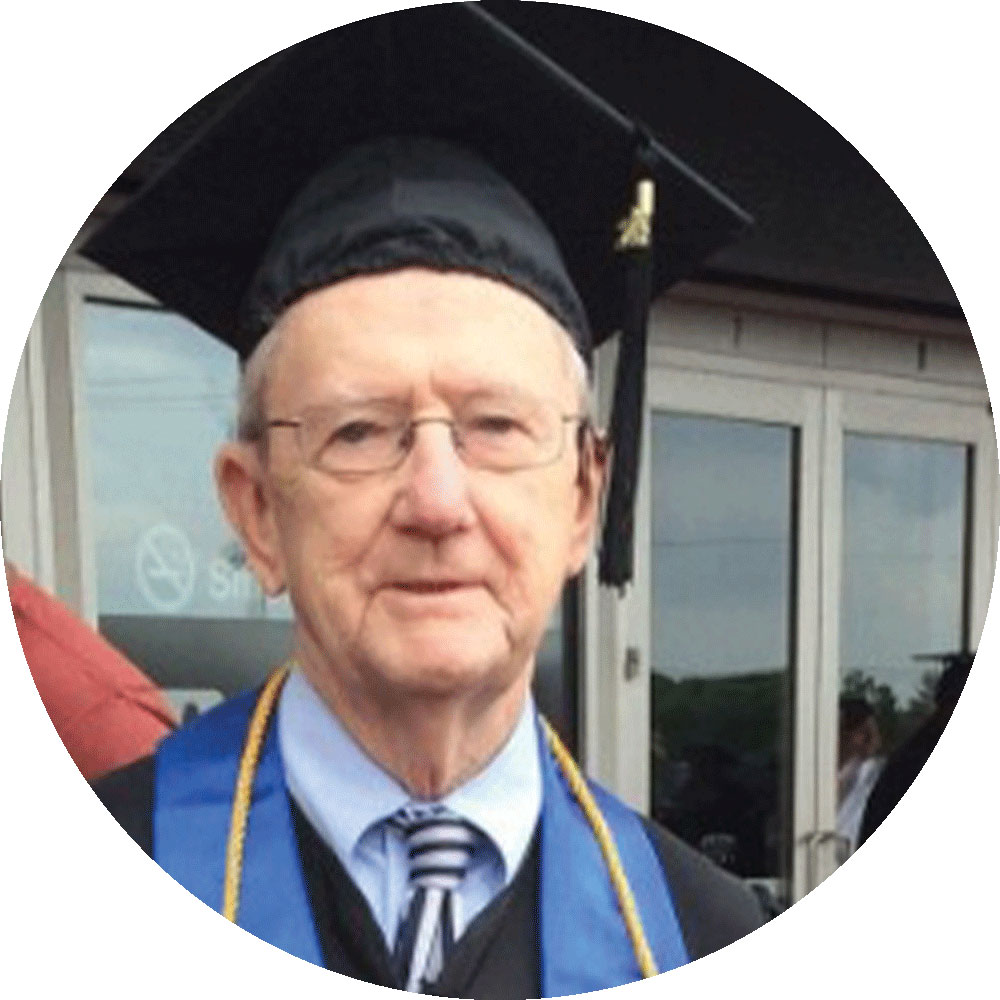



 Daniel Driffin takes off his blue tweed blazer


 Tom Junod


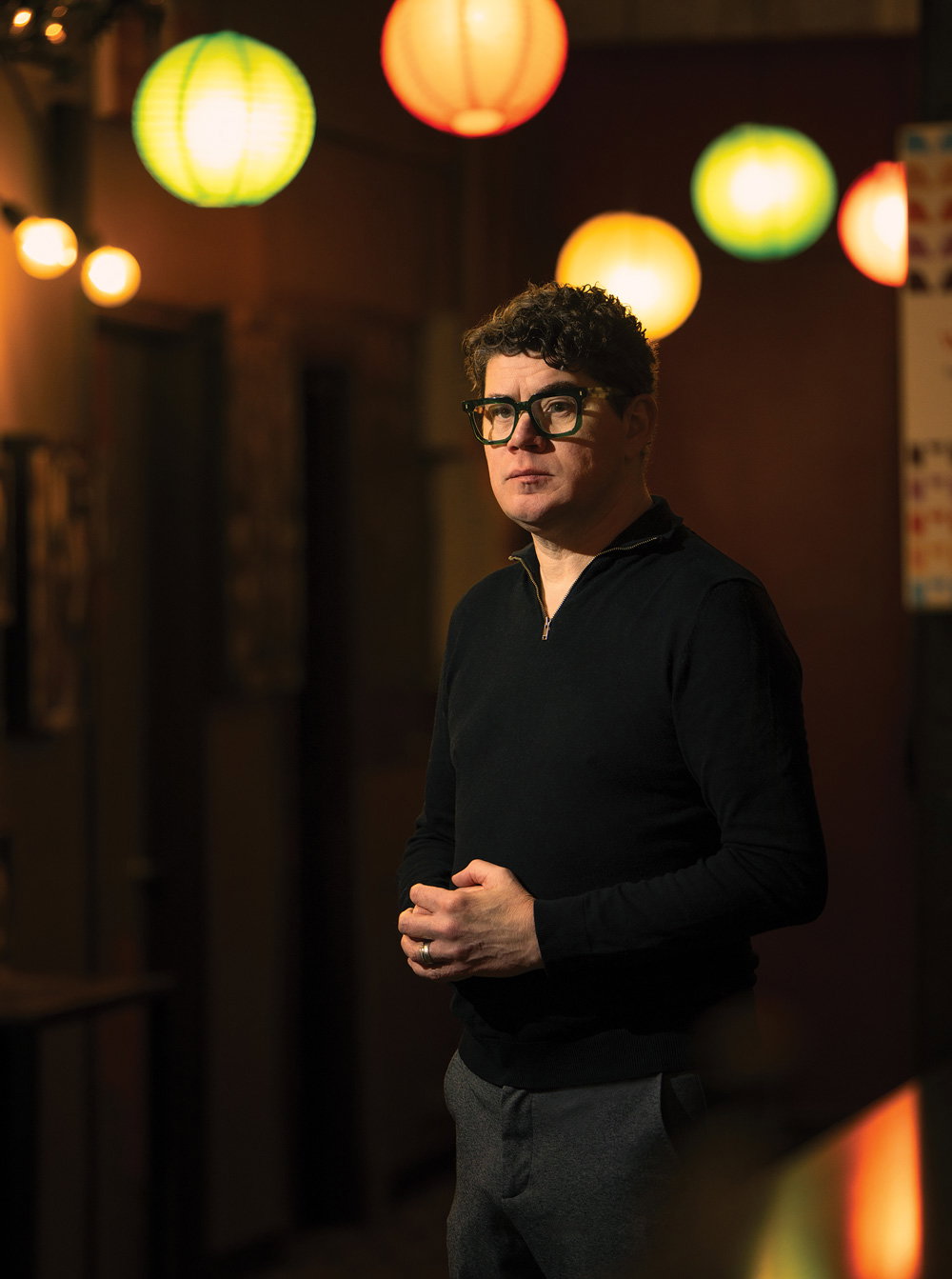

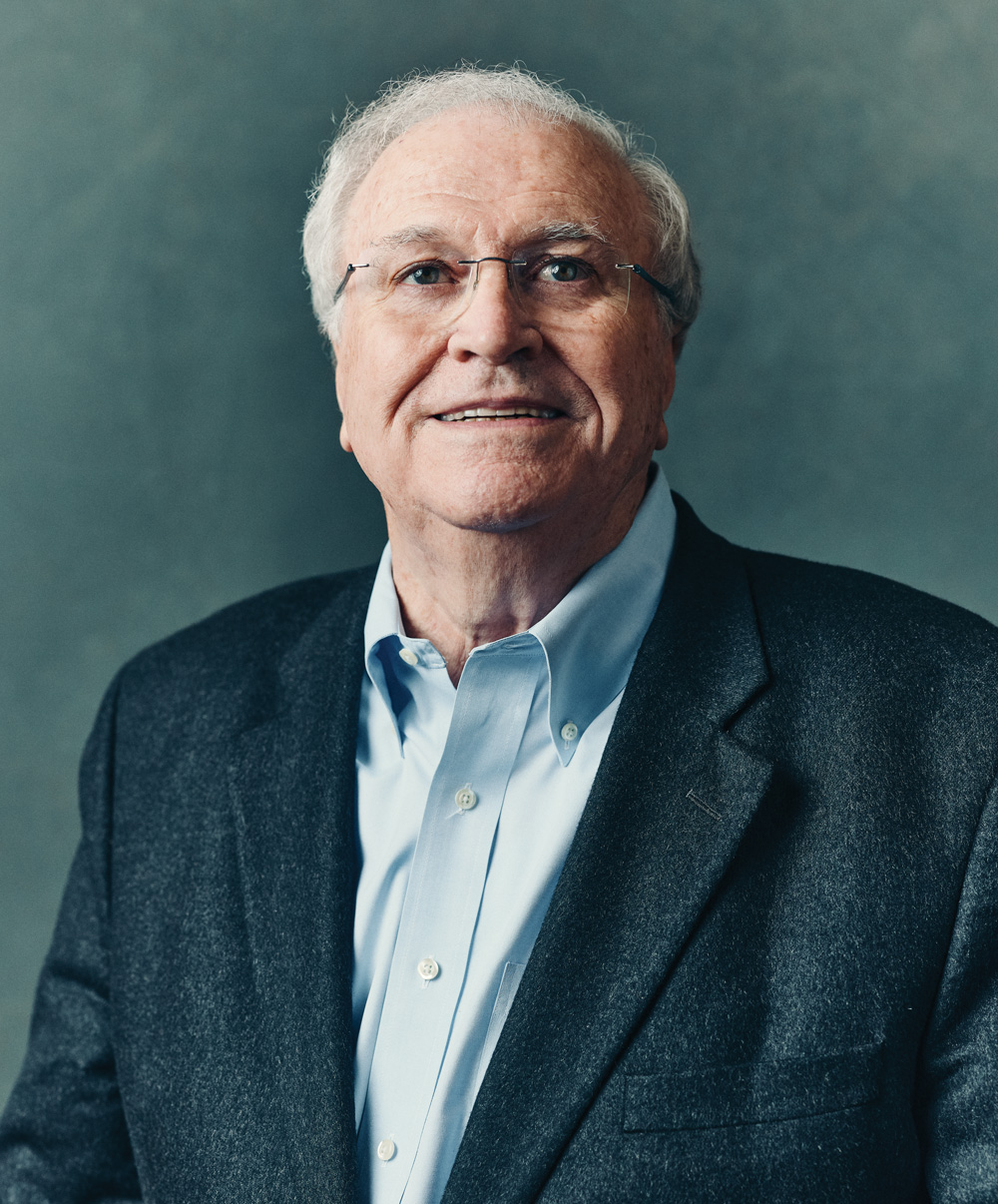 When Tom Johnson decided to write a memoir, he sent the first draft to his friend Bill Moyers. They had worked together during the 1960s when Johnson was a White House fellow and Moyers was press secretary to President Lyndon B. Johnson. It was Moyers—once Billy Don Moyers of Marshall, Texas—who suggested that Tommy Johnson of Macon, Georgia, become Tom. Sounded more serious. After their stints in government, both went on to exemplary careers in the media: Moyers as a public television eminence and Johnson as publisher of the Los Angeles Times and then president of CNN during its prime.