

Photograph by Martha Williams

Illustration by Graham Smith
My introduction to Atlanta cuisine began with a spring roll and a sweeping, street-level view of the city’s skyscrapers lighting up the pitch-black night.
The year was 1990, and I had flown in from Fort Lauderdale to interview for the food editor’s job at the Atlanta Journal-Constitution. A group of people who would become my future colleagues took me to dinner at Cha Gio, near the intersection of 10th and Peachtree streets, a few steps from where Margaret Mitchell wrote Gone with the Wind.
I don’t recall the details of our feast, other than those crispy cha gio (Vietnamese for “spring rolls”), but the experience left a lasting impression. After job-hopping around the Midwest and South Florida, I took comfort in knowing Atlanta could provide cornbread and barbecue true to my Mississippi upbringing—but I was more tantalized by the prospect of surprises like Cha Gio.
The 1996 Centennial Olympic Games, followed by the airport’s international terminal expansion, which made it the busiest commercial air hub in the world, sealed the city’s reputation as an international destination. But immigrants had been making inroads on Atlanta’s dining scene long before that.
At the turn of the 20th century, Joe Jung’s Chop Suey Restaurant, the Oriental Cafe, and other Chinese eateries opened downtown, creating a community of entrepreneurs that came to be known as Atlanta Chinatown. In 1961, the House of Eng opened at 10th and Peachtree streets. An ad for its grand opening promised “tantalizing Cantonese dishes prepared the way you like by real New York Chinatown chefs” and invited guests to enjoy cocktails in their “intimate Suzy Wong Lounge.” The Eng family went on to open other Chinese and Polynesian-themed restaurants around Atlanta.

In 1978, Cha Gio, often cited as the city’s first Vietnamese restaurant, opened on the same block. Its owner, Le Thi Hang, and her husband fled after the 1975 fall of Saigon. Upon arriving in Atlanta, she began building a clientele for the homemade spring rolls she sold from a rolling cart on her lunch hour from her job at a downtown hospital. Once she’d saved the money to open her own brick-and-mortar restaurant, she trained refugees in her kitchen so they could start businesses, too.
Cha Gio relocated several times before closing for good in 2004. By then, Vietnamese restaurants were commonplace, as were establishments run by immigrants from India, Jamaica, Ethiopia, and Lebanon.
During the Olympic construction boom, Atlanta’s Latino population grew faster than in any other U.S. metro area. Twenty years ago, I bought a condo in downtown Decatur partly for its proximity to Taqueria del Sol, where I became such a regular consumer of Eddie Hernandez’s famous cross-cultural menu that I convinced him to let me help him write his cookbook, Turnip Greens & Tortillas.

Courtesy of Green Olive Media
I’ve tasted plenty of trendy “fusion” food in Atlanta—much of it contrived. (Grits sushi, anyone?) Today’s chefs, many second-generation immigrants, are modernizing their menus with respect to their roots and the influences around them.
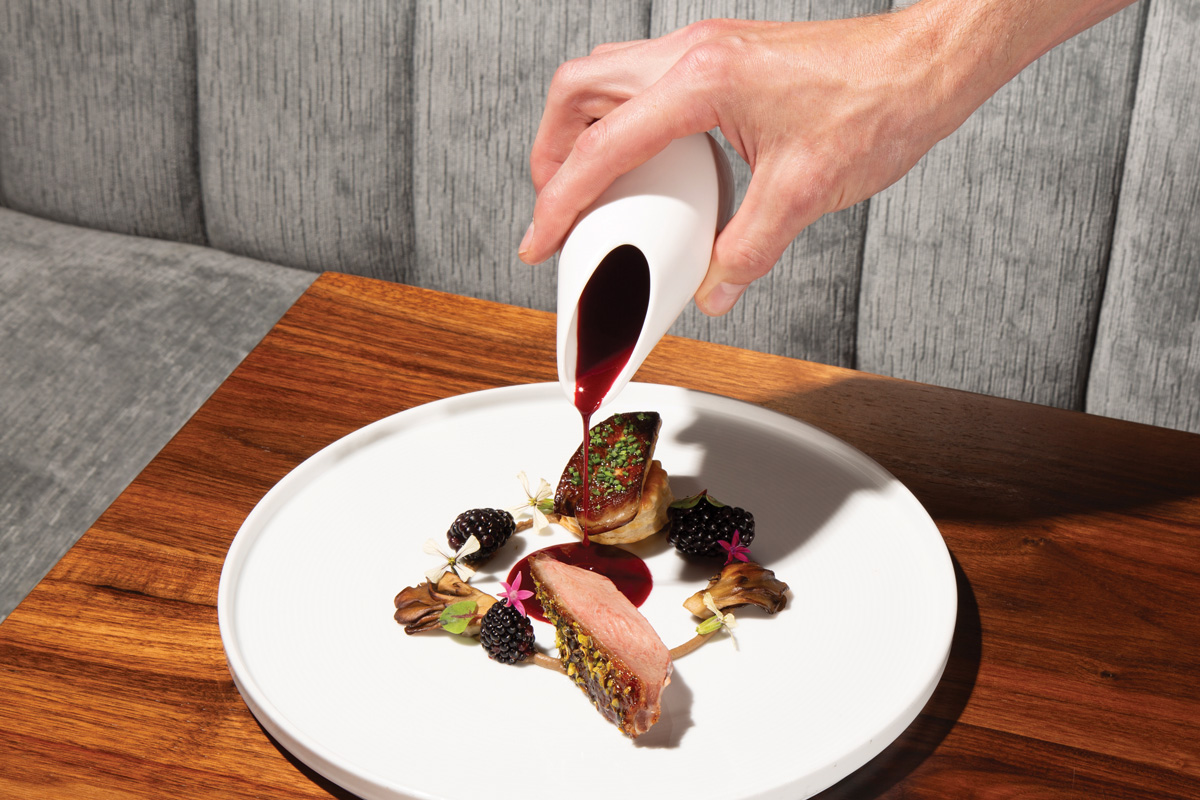
Ron Hsu is an example. His Michelin-starred restaurant, Lazy Betty, anchors the same storied intersection of Peachtree and 10th (which was also previously occupied by Empire State South, Hugh Acheson’s paean to contemporary local flavors). Hsu has created a tasting menu that incorporates elements of his early life growing up in his parents’ old-school Chinese restaurants scattered around Atlanta, where he was able to absorb lessons from gifted chefs while working alongside them.
It’s who he is. And a taste of what the city of Atlanta has become.
More on Atlanta dining
 “If I were to describe Atlanta’s food scene, I would compare it to L.A.’s. Our restaurants are very diverse and spread out. We may not have Hollywood in Atlanta, but we do have Buford Highway. And wherever you go here, there’s an element of hospitality you don’t see everywhere. We value the human connection in our restaurants, and it’s genuine. That’s something I learned very early from my mother, Betty. She always treated customers at her restaurants and the people who worked for her like family, and that’s what I try to do. Atlantans can filter through the BS very fast.” – Lazy Betty executive chef and founder, Ron Hsu
Back to 65 Years of Atlanta Magazine
This article appears in our May 2026 issue.